For eleven years, Raphael Ki had not slept lying down. The man other people feared enough to lower their voices around had been sleeping upright in a leather chair, one hand gripping the armrest whenever the room began to spin.
For three days, Raphael did nothing.
That frightened everyone more than anger would have.
The men who had worked under him for years were accustomed to decisions arriving quickly. Betrayal was punished. Disrespect was answered. Problems were eliminated before they had time to become threats.
But Raphael sat in his office overlooking the Hudson and watched the river move beneath a gray November sky.
On his desk were two folders.
The first contained everything his attorneys had assembled against Ugo, Dr. Bellini, and the former security officer who had helped conceal the truth about Raphael’s health.
The second contained something far more dangerous.
A list of every business, account, partnership, debt, favor, and arrangement still connected to Raphael Ki.
For most of his adult life, Raphael had believed that power was measured by how many names appeared in that second folder.
Now he wondered whether freedom might be measured by how many he could remove.
A knock sounded at the door.
“Come in.”
Livia entered wearing sweatpants over her ballet tights, her hair twisted into a messy bun.
“You missed dinner.”
“I wasn’t hungry.”
“You’re never hungry anymore.”
Raphael glanced at her.
She leaned against the doorway.
“Dory says when dancers stop eating before a performance, it usually means they’re scared.”
“I’m not a dancer.”
“No,” Livia said. “You’re worse.”
Raphael almost smiled.
Almost.
She crossed the room and noticed the two folders.
“What are those?”
“Work.”
“That’s what you call everything when you don’t want to explain it.”
She had inherited that from her mother—the ability to say something painfully accurate in a completely ordinary tone.
Raphael closed the folders.
“Your rehearsal is tomorrow.”
“You remember?”
“I bought the building, Livia. It would be embarrassing if I forgot what happens inside it.”
She smiled, but only briefly.
“Are you coming?”
Raphael looked toward the window.
Years earlier, he would have answered without hesitation. He would have said he was too busy and sent flowers afterward.
Now the answer mattered differently.
“Yes.”
Livia nodded as though she had expected nothing less.
Then she walked to the door.
“Dad?”
“Yes?”
“I don’t care what everyone else thinks you should be.”
Raphael’s eyes narrowed slightly.
“What does that mean?”
“It means you keep acting like there are only two choices. Be the man everyone fears, or become somebody else completely.”
She shrugged.
“Maybe you’re allowed to just be my dad for a while.”
Then she left.
Raphael remained alone with the folders.
For the first time in years, one of them suddenly seemed much heavier than the other.
The next afternoon, the dance studio was crowded.
Parents filled folding chairs along the mirrored walls. Younger students whispered backstage. Someone had brought too many cupcakes. Someone else had forgotten an extension cord.
Nothing about the room felt important enough to attract the attention of a man like Raphael Ki.
That was precisely why he liked it.
Dory moved among the students with a clipboard, fixing costumes, adjusting music, and reassuring a terrified eight-year-old who had decided she had forgotten every dance step she had ever learned.
When she spotted Raphael near the back wall, she stopped.
He wore a dark suit, but no bodyguards stood beside him.
That was unusual.
“You came alone,” she said.
“Apparently I’m capable of crossing a parking lot without six armed men.”
“I’m happy for you.”
“You don’t sound impressed.”
“I teach teenagers. Very little impresses me anymore.”
Raphael smiled.
It had become easier lately.
Dory glanced toward the rehearsal floor.
“Livia’s nervous.”
“She hides it well.”
“She gets that from you.”
Raphael watched his daughter warming up near the barre.
“No. Her mother.”
Dory heard the shift in his voice and did not ask anything more.
The rehearsal began.
Livia moved differently when she danced.
Raphael had always known she was talented, but he had never understood what that meant until now. She was not simply performing steps. She became fearless in a way she rarely allowed herself to be anywhere else.
Halfway through the final sequence, Raphael’s phone vibrated.
He ignored it.
It vibrated again.
Then a third time.
Dory noticed.
“You should probably answer.”
“No.”
“That sounds important.”
“So is this.”
For eleven years, Raphael’s life had been organized around emergencies.
He had finally begun to understand that some emergencies survived perfectly well without him.
When the rehearsal ended, Livia ran toward him, breathing hard.
“You stayed.”
Raphael frowned.
“You invited me.”
“That has never stopped you before.”
That one hurt.
He nodded slowly.
“You’re right.”
Livia waited for an excuse.
He did not give one.
“I’m sorry.”
Her expression changed.
Raphael Ki had apologized to very few people in his life.
Livia understood what it cost him.
“Okay,” she said quietly.
Then she hugged him.
Raphael stood stiffly for one surprised second before wrapping his arms around her.
Across the room, Dory looked away to give them privacy.
His phone vibrated again.
This time Raphael answered.
It was Carlo, one of the few senior men Raphael still trusted.
“We have a problem.”
Raphael stepped into the hallway.
“What happened?”
“Ugo’s people are moving.”
Raphael’s expression hardened.
“What people?”
“Three crews that used to answer through him. They think the arrest created an opening.”
Raphael stared through the studio window at Livia laughing with another dancer.
“What do they want?”
“You.”
The old instincts arrived immediately.
Identify the leaders.
Isolate them.
Make an example.
Restore order.
For years, that sequence had been almost automatic.
“How many?” Raphael asked.
“Enough.”
“Where?”
“There’s a meeting tonight. They expect you to respond.”
Raphael closed his eyes.
This was the moment he had known would come.
Power did not disappear politely when a man decided he was tired of holding it.
Someone always reached for what he put down.
“What do you want me to do?” Carlo asked.
Raphael opened his eyes.
“Nothing.”
Silence.
“Boss—”
“I said nothing.”
“If we don’t move first, they’ll think you’re weak.”
Raphael almost laughed.
Eleven years of his life had been poisoned by those words.
Weak.
Sick.
Damaged.
Unfit.
He had spent so long fighting the appearance of weakness that he had never questioned who benefited from keeping him afraid of it.
“Let them think,” he said.
He ended the call.
Dory stood several feet away.
She had heard enough to understand that something serious had happened.
“Are you leaving?”
Raphael looked back through the glass.
“No.”
That night, he watched the entire rehearsal.
But by morning, the situation had worsened.
One of Raphael’s warehouses had been broken into. No one was seriously injured, but the message was clear.
Carlo arrived at Raphael’s house before sunrise.
“You can’t ignore this anymore.”
Raphael poured coffee.
“I’m not ignoring it.”
“What would you call it?”
“Thinking.”
Carlo paced across the kitchen.
“They’re testing you.”
“I know.”
“They think Ugo was right. They think you’re not the same man anymore.”
Raphael took a sip.
“They’re correct.”
Carlo stopped.
For a second, neither man spoke.
Raphael set down the cup.
“I spent half my life building something that required everyone around me to be afraid. Do you know what fear does, Carlo?”
“It keeps people loyal.”
“No. It keeps them obedient until they believe they can win.”
Raphael looked toward the windows.
“Ugo was obedient for twenty years.”
Carlo said nothing.
“And while I congratulated myself on his loyalty, he was waiting for me to become vulnerable.”
“So what are you saying?”
“I’m saying the system worked exactly as designed.”
Carlo stared at him.
Raphael continued.
“We built something where trust was weakness, honesty was dangerous, and everyone had a price. Then I acted surprised when someone bought my doctor.”
Carlo lowered his voice.
“You’re talking like you’re leaving.”
“I am.”
The words settled between them.
Carlo looked genuinely shaken.
“You can’t just leave.”
“Why?”
“Because people depend on you.”
“People depend on the money.”
“Same thing.”
“No. It isn’t.”
Raphael opened the second folder from his office and pushed several documents across the table.
Carlo looked down.
Legitimate companies.
Property transfers.
Asset sales.
Lawyers.
Tax specialists.
Compliance agreements.
“You’ve already started.”
“For weeks.”
Carlo looked up sharply.
“You didn’t tell me.”
“I didn’t know whether you were going to stop me.”
“Would it have mattered?”
Raphael considered that.
“No.”
Carlo sat down.
“What happens to everyone?”
“The legitimate companies stay open. Employees keep their jobs. Anything that cannot survive without threats, bribes, or violence ends.”
“You think everyone will accept that?”
“No.”
“And the crews challenging you?”
“I’ll deal with them.”
“How?”
Raphael did not answer.
That worried Carlo more than any threat would have.
The meeting happened that evening in an old restaurant Raphael’s father had once owned.
The dining room had been closed to the public.
Six men waited around a long table.
Carlo stood behind Raphael.
No one carried visible weapons, though Raphael was not naïve enough to believe that meant the room was unarmed.
At the opposite end sat Marcus Vale, the man who had organized most of the rebellion.
Marcus was younger than Raphael by nearly twenty years.
Ambitious.
Controlled.
Exactly the sort of man Raphael himself had once rewarded.
“You look well,” Marcus said.
Raphael sat.
“I am.”
“Heard about the miracle cure.”
“It wasn’t a miracle.”
Marcus smiled.
“That’s not what people are saying.”
Raphael leaned back.
Years ago, lying against the chair would have triggered the spinning.
Now he did it deliberately.
The gesture was small.
Everyone noticed.
“What do you want?” Raphael asked.
Marcus spread his hands.
“Clarity.”
“You attacked one of my properties for clarity?”
“I needed your attention.”
“You had my phone number.”
Several men around the table shifted uncomfortably.
Marcus’s smile vanished.
“We hear you’re dismantling things.”
“I am.”
“Things that belong to all of us.”
“No. Things that have made all of you money.”
“That sounds like the same thing.”
“It’s not.”
Marcus leaned forward.
“You don’t get to wake up one morning, decide you’ve found peace, and destroy the lives everyone else built around you.”
Raphael looked at him carefully.
There was anger there.
But also fear.
That surprised him.
“What are you afraid of, Marcus?”
Marcus laughed.
“Nothing.”
“That answer usually means everything.”
Raphael glanced around the table.
“How many of you have children?”
No one responded.
Raphael pointed to one man.
“Thomas. Two daughters.”
Then another.
“Eddie. A son at Rutgers.”
His gaze moved to Marcus.
“And you have a little girl. Four years old.”
Marcus’s eyes hardened.
“Leave my family out of this.”
“I’m trying to put them back into it.”
The room went quiet.
Raphael placed his hands flat on the table.
“For years, I told myself everything I did was for my family. That lie is convenient because it turns ambition into sacrifice.”
Marcus shook his head.
“You called us here for a sermon?”
“No.”
Raphael slid a folder down the table.
Marcus opened it.
Inside were financial records.
Evidence.
Enough to destroy several men in the room if delivered to federal investigators.
Marcus looked up slowly.
Raphael said, “That is everything I could use against you.”
Carlo stared at Raphael.
He had not known about the folder.
Marcus’s face tightened.
“You threatening me?”
“No.”
Raphael took out a second document.
“This is confirmation that copies were placed with my attorneys. They are instructed to release nothing as long as no one touches my family, my employees, or the legitimate businesses being transitioned.”
Marcus’s eyes narrowed.
“So it is a threat.”
“It is insurance.”
“And if we refuse?”
“Then you make your own decision.”
Marcus stared at him.
“You’ve gone soft.”
Raphael expected the words to hurt.
They didn’t.
Maybe that was when he finally knew he was free.
“I used to think softness was the opposite of strength,” Raphael said. “Then I spent eleven years unable to sleep because I trusted men who knew exactly how frightened I was of looking weak.”
He stood.
“I’m finished being ruled by that fear.”
Marcus did not move.
“What stops me from killing you right now?”
Carlo’s hand shifted toward his jacket.
Raphael raised one finger without looking back.
Carlo froze.
Raphael walked slowly around the table until he stood beside Marcus.
“Nothing.”
The answer disturbed everyone.
Raphael continued.
“You could do it. You might even take everything afterward.”
Marcus stared up at him.
“But then you inherit what I had. Every night wondering which cousin, friend, doctor, employee, or partner is waiting for you to become weak.”
Raphael leaned slightly closer.
“That is the kingdom you want.”
Then he straightened.
“I’m giving mine away.”
He walked toward the door.
Nobody stopped him.
Carlo followed.
They reached the parking lot before he spoke.
“That was either the bravest thing I’ve ever seen or the stupidest.”
Raphael unlocked his car.
“Probably both.”
“You really gave them the choice?”
“I spent my entire life taking choices away from people.”
Carlo looked back at the restaurant.
“And if Marcus comes after you?”
“Then we handle what actually happens instead of building our lives around everything that might.”
Carlo shook his head.
“I don’t recognize you.”
Raphael opened the driver’s door.
“That makes two of us.”
The following weeks were tense.
Raphael changed routes.
Livia temporarily had discreet security near the studio.
Attorneys worked around the clock separating legitimate businesses from anything that could not survive lawful scrutiny.
Several longtime associates walked away.
Two threatened him.
One begged him to reconsider.
Marcus did nothing.
That silence lasted nineteen days.
On the twentieth, Raphael found him sitting outside the dance studio.
Raphael stopped several yards away.
Marcus was alone.
“Interesting place to meet.”
Marcus looked through the window at a beginner class.
“My daughter wants to dance.”
Raphael said nothing.
Marcus stood.
“She saw some video online. Now she won’t stop spinning around our living room.”
Against his will, Raphael smiled.
“Sounds serious.”
Marcus looked embarrassed.
“She’s terrible.”
“She’s four.”
“Still terrible.”
For a moment they were simply two fathers talking about daughters.
Then Marcus’s face became serious.
“I looked at those records.”
“I assumed you would.”
“You could ruin me.”
“Yes.”
“But you haven’t.”
“No.”
Marcus studied him.
“Why?”
“Because I meant what I said.”
“And you trust me?”
Raphael shook his head.
“Not yet.”
Marcus nodded.
Fair enough.
“I shut down the crews that hit your warehouse.”
Raphael’s expression remained neutral.
“They won’t bother your people.”
“Why?”
Marcus glanced toward the studio.
“I went home after that meeting. My daughter was asleep on the couch.”
He paused.
“And I realized I couldn’t remember the last week when I hadn’t checked the front window before opening my own door.”
Raphael understood exactly.
Marcus rubbed a hand over his jaw.
“I don’t know what comes next.”
“Neither do I.”
“That’s not very reassuring.”
“It’s true.”
Marcus looked through the window again.
“Do you think Dory has space for another student?”
Raphael allowed himself a small smile.
“You’ll have to ask Dory. Owning the building did not make me foolish enough to interfere with her class lists.”
Six months later, Ugo went to trial.
The prosecution had assembled evidence of bribery, fraud, falsified medical documentation, conspiracy, and financial crimes. The former guard accepted a plea agreement and testified. The doctor lost his license before the criminal case was even completed.
Ugo’s attorney attempted to portray Raphael as a dangerous man seeking revenge.
Raphael expected that.
What he did not expect was how little he cared.
When called to testify, he answered every question he legally could.
He did not pretend to be innocent of every decision in his past.
He did not ask the jury to admire him.
He simply told the truth about what had been done to him.
At one point, Ugo looked directly at Raphael across the courtroom.
For years, Raphael had imagined what he would do if he ever discovered the person who had prolonged his suffering.
In those fantasies there had always been rage.
Instead, he felt grief.
Not for Ugo.
For the years both of them had wasted worshiping the same idea of power.
Ugo had wanted Raphael’s chair so badly that he had never noticed the man sitting in it could not even sleep.
The verdict came late in the afternoon.
Guilty on the major counts.
Livia squeezed Raphael’s hand.
Outside the courthouse, reporters shouted questions.
Raphael ignored most of them.
One called, “Mr. Ki, do you feel justice was served?”
Raphael stopped.
The old version of him would have kept walking.
Instead, he turned.
“Justice isn’t getting your lost years back,” he said. “It’s making sure someone can’t steal the next person’s.”
Then he left.
By spring, the dance studio had changed.
Dory convinced Raphael to renovate the neglected second floor.
He agreed on one condition.
“No marble.”
Dory stared at him.
“I wasn’t planning marble.”
“You looked like you were planning marble.”
“I teach ballet to seven-year-olds. Do you know what seven-year-olds do to floors?”
Raphael nodded solemnly.
“Finally, someone understands financial risk.”
She laughed.
Their friendship had grown slowly.
Dory never treated him like a wounded man she had saved.
Raphael appreciated that more than he could explain.
Sometimes they had coffee after classes.
Sometimes she told him things he did not want to hear.
Especially then.
“You still watch the doors,” she told him one evening.
They were sitting on the studio steps after everyone had gone home.
“Habit.”
“You also sit where you can see every entrance.”
“Good habit.”
“And you checked that parked car three times.”
“That car has been there for forty-seven minutes.”
Dory looked at it.
“It belongs to Mrs. Patterson. She’s waiting for her daughter.”
Raphael sighed.
“Fine.”
Dory smiled.
“Recovery isn’t only when the room stops spinning.”
He looked at her.
She continued.
“Sometimes your body gets better before your mind believes it’s allowed to.”
Raphael thought about his bedroom.
He slept lying down now.
Most nights.
There were still evenings when he woke suddenly and reached for the armrests of a chair that was no longer there.
“Does it ever stop?” he asked.
“What?”
“Waiting for something bad.”
Dory considered the question.
“I don’t think life promises that.”
Raphael frowned.
“Helpful.”
“But maybe peace isn’t believing nothing bad will happen.”
She looked toward the darkened studio.
“Maybe it’s knowing you don’t have to ruin today preparing for every possible tomorrow.”
Raphael was quiet.
“That sounds like something you stole from a greeting card.”
“I’m a dance teacher. We steal everything from greeting cards.”
He laughed.
A real laugh this time.
One year after the night his vertigo was treated, Raphael stood backstage at Livia’s recital.
The studio had grown.
There were scholarships now for students whose families could not afford lessons.
Dory had insisted Raphael not attach his name to the program.
He had agreed immediately.
That surprised her.
It surprised him too.
Livia was sixteen now.
Before going onstage, she found her father near the curtain.
“Nervous?” he asked.
“Yes.”
“Good.”
“That is terrible parenting.”
“I’m learning.”
She smiled.
Then her expression softened.
“Are you happy?”
Raphael looked at her.
It was not a question anyone had asked him when he was powerful.
People had asked whether he was winning.
Whether he was safe.
Whether he was respected.
Whether business was good.
Never happy.
“I think I’m learning that too.”
Livia hugged him quickly.
“Mom would’ve liked that answer.”
Raphael closed his eyes.
For years, thinking about his wife had felt like touching an open wound.
Now it still hurt.
But pain and love were no longer indistinguishable.
“I hope so.”
Music began beyond the curtain.
Livia stepped toward the stage, then turned back.
“Dad?”
“Yes?”
“Don’t leave before I’m finished.”
Raphael smiled.
“I won’t.”
And he didn’t.
He sat in the front row beside Dory and watched every minute.
He did not check his phone.
He did not watch the doors.
He did not measure the room for threats.
When Livia came onto the stage, Raphael simply watched his daughter dance.
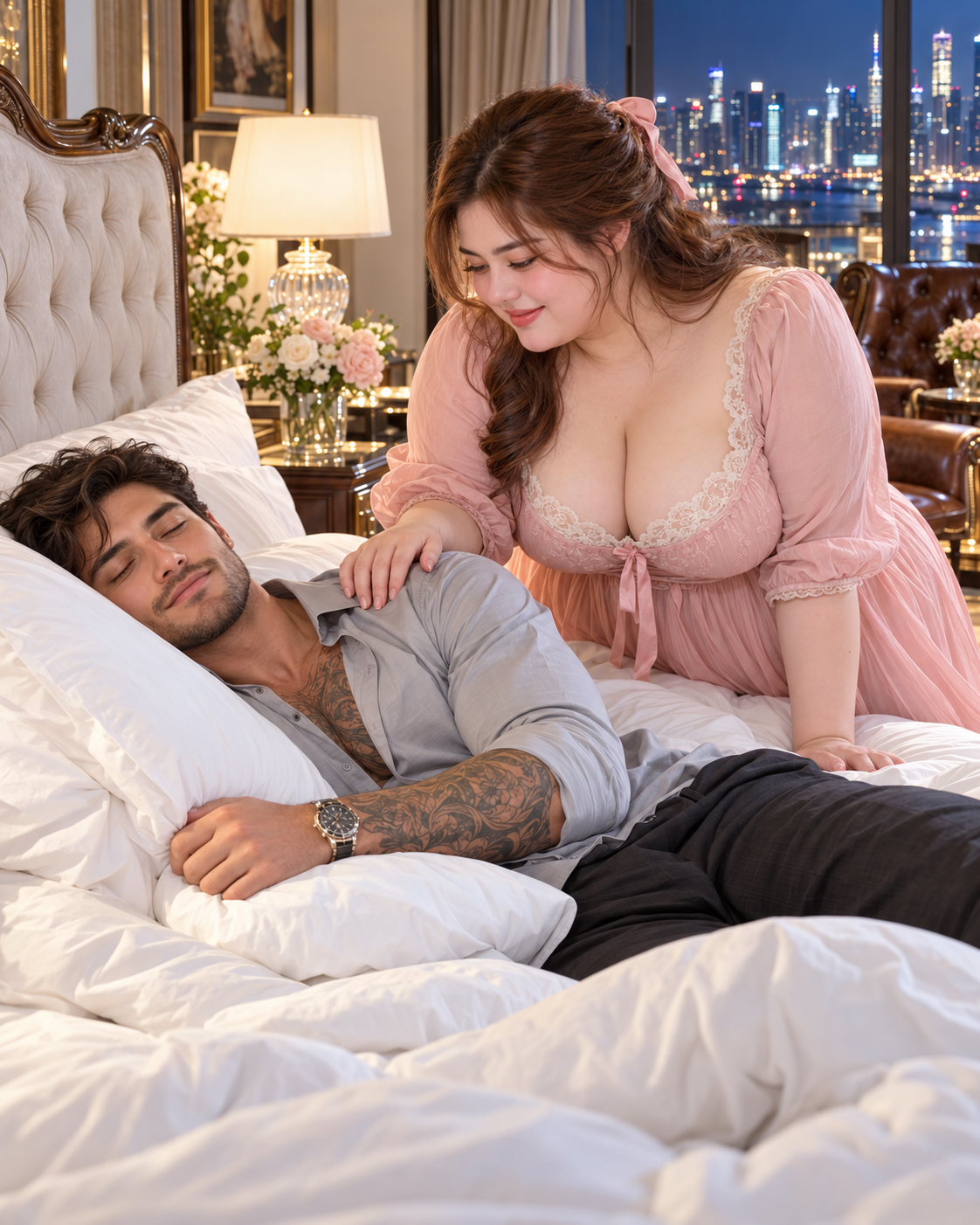
Later that night, after the applause, photographs, flowers, and chaotic cleanup, Raphael returned home alone.
He entered his bedroom.
The leather chair in which he had spent eleven sleepless years was gone.
Months earlier, he had donated it without ceremony.
For a while, the empty corner bothered him.
Now a small reading table stood there instead.
Raphael changed, turned off the lights, and climbed into bed.
He lay flat on his back.
The ceiling remained still.
Outside, wind moved through the trees.
Somewhere in the house, pipes settled with a quiet knock.
Years ago, every sound would have brought him upright.
Tonight he listened and allowed it to be nothing more than a sound.
He thought about Ugo.
About Marcus.
About Carlo, who now ran one of Raphael’s legitimate logistics companies and complained constantly about paperwork.
About Dory.
About Livia.
About his wife.
And finally, about himself.
Raphael had once believed the greatest thing a man could possess was control.
Control over people.
Control over money.
Control over fear.
But control had not saved him.
In fact, his obsession with appearing invulnerable had made him easier to manipulate.
He had been so ashamed of weakness that he accepted other people’s definitions of what was wrong with him.
He had been so afraid of losing authority that he nearly missed the life happening directly in front of him.
A dance teacher had recognized what powerful men had ignored.
A daughter had shown him that being needed was not the same as being loved.
Even an enemy had reminded him that sometimes the bravest decision was not winning the old game, but refusing to keep playing it.
Raphael turned onto his side.
No spinning.
No panic.
No hand gripping the mattress.
Just stillness.
For eleven years, he had imagined that if he could ever sleep normally again, that would be the moment he knew he was healed.
He understood now that he had been wrong.
Healing had begun earlier.
It began when he questioned the story everyone had told him about himself.
It continued when he allowed someone without power or status to teach him something.
It grew when he chose evidence over pride, justice over revenge, and his daughter over the demands of men who profited from his fear.
And perhaps healing would never be completely finished.
Perhaps that was all right.
Some wounds closed.
Some became scars.
Some simply taught you where not to walk again.
Raphael closed his eyes.
A few minutes later, he heard footsteps in the hallway.
Livia opened the door slightly.
“You awake?”
“Barely.”
“I forgot to say good night.”
“You’re sixteen.”
“And?”
“And you haven’t forgotten to say good night since you were six.”
She considered that.
“Then I came to make sure you were asleep.”
Raphael smiled in the darkness.
“You’re terrible at it.”
“Good night, Dad.”
“Good night, Livia.”
The door closed.
Raphael listened to her footsteps fade.
Then, for perhaps the first time in his adult life, there was nothing he needed to defend before morning.
No meeting he needed to control.
No reputation he needed to protect.
No enemy whose thoughts mattered more than his own peace.
The man who had once believed everyone needed to fear him finally understood something far more difficult.
Strength was not making sure no one could hurt you.
That was impossible.
Strength was knowing that being hurt did not give anyone the right to decide who you became afterward.
Raphael breathed slowly.
His body relaxed.
And while the house settled into silence around him, he slept.
Not like a mob boss.
Not like a widower.
Not like a man whose enemies had once mistaken illness for weakness.
He simply slept like a father whose daughter was safe upstairs, like a man who had finally stopped confusing power with peace, and like someone who had learned that sometimes the most important victory is not reclaiming the life that was taken from you.
It is choosing a better one.
THE END.