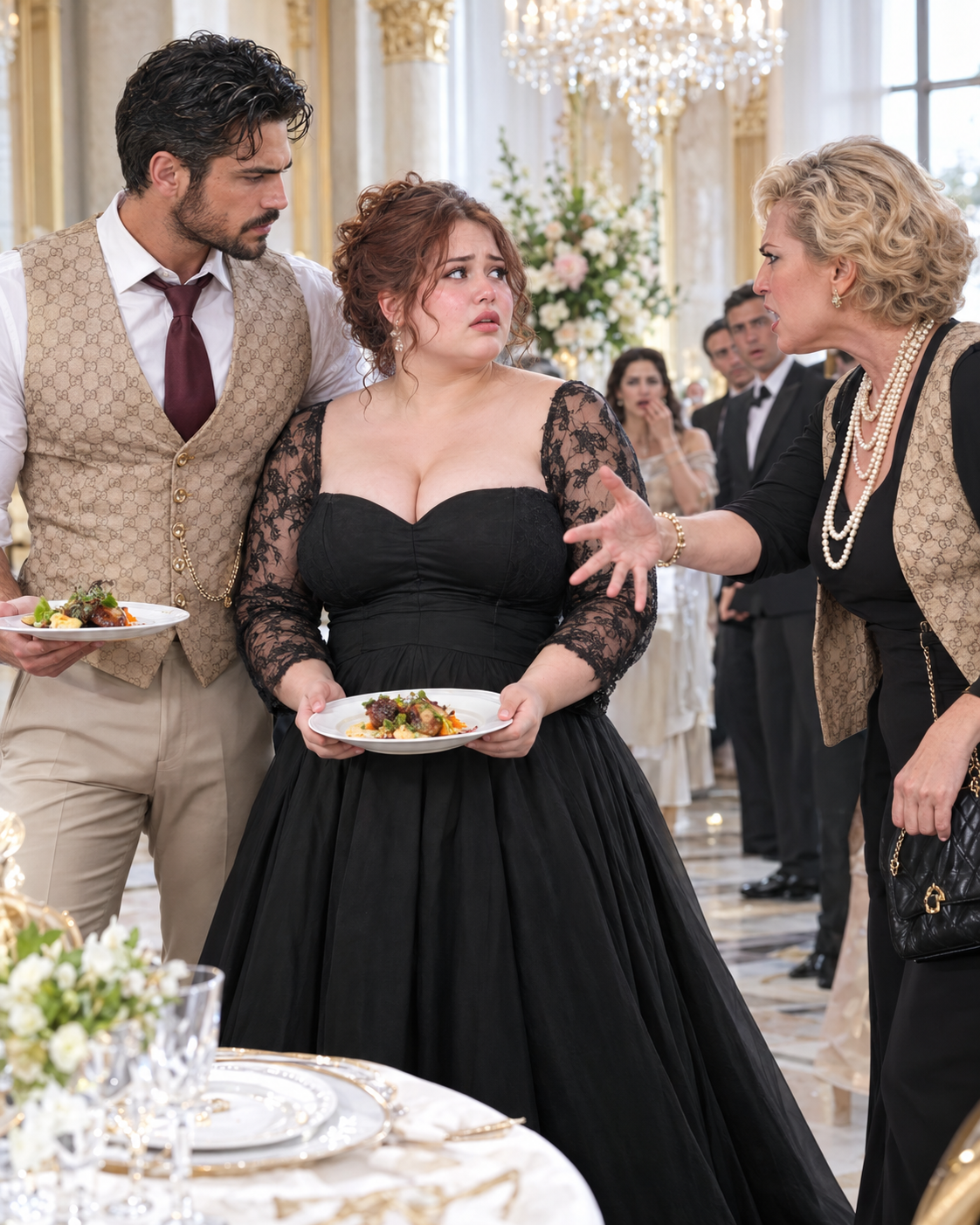
At her own grandfather’s funeral luncheon, Hannah was ordered out of the dining room while relatives who had never lifted a finger to help him sat down to eat.
The unfamiliar vehicle remained outside Hannah’s gates for three nights.
On the first night, she told herself it was probably a neighbor who had taken a wrong turn. On the second, she asked the groundskeeper, Mr. Ellis, whether he had noticed it. He had, but he only shook his head and said he would keep an eye on the road.
On the third night, the vehicle’s headlights flashed twice before it disappeared into the darkness.
Hannah stood at the upstairs window, one hand resting against the cold glass. Her grandfather’s house had always felt like the one place where she could breathe, even when her family made every other part of her life unbearable. Now, after everything she had fought to protect, she could no longer look out at the trees without wondering who might be watching.
Her phone rang.
It was Rocco Ferrante.
“Are you inside?”
“Yes.”
“Doors locked?”
“Yes, Rocco. What is this about?”
“I need you to listen carefully. Don’t go outside tonight, and don’t let anyone onto the property unless you know exactly who they are.”
Hannah’s stomach tightened. “You’ve found something.”
There was a pause on the other end.
“I’ve found enough to know that the people who watched your grandfather die may not be the only ones who want this estate.”
She gripped the phone harder.
“What does that mean?”
“It means I’m coming over.”
He arrived twenty minutes later with two men who remained near the front gate. Rocco entered the house alone, carrying a thin folder. He looked tired, his expression unusually grave.
Hannah led him into the study, where her grandfather’s photographs still lined the shelves.
“Tell me everything,” she said.
Rocco set the folder on the desk.
“The police have made progress on Marlene and Bram. The forged will was only part of it. Investigators believe they were trying to take control of the estate before your grandfather’s death, and the medication records give them reason to examine his final days much more closely.”
“Then why are we still being watched?”
“Because the investigation has uncovered a second problem.”
He opened the folder and slid a photograph across the desk.
It showed her grandfather standing beside a younger Rocco outside an old brick building. The picture had been taken decades earlier. Her grandfather looked almost unrecognizable without the gray hair and stooped shoulders Hannah remembered, but his hand rested on Rocco’s shoulder with unmistakable affection.
On the back, someone had written a date and a short message.
A debt is not a chain. Remember that.
Hannah looked up.
“What does this have to do with the car?”
“Your grandfather once helped me when I was in trouble. I was younger, angrier, and involved with people who thought fear was the same thing as respect. He gave me a place to recover after I was injured. He never asked who had hurt me or what I planned to do afterward. He simply made sure I lived long enough to make better choices.”
Rocco’s voice softened.
“He also helped a man named Victor Hale, someone who later became my business partner. Victor knew your grandfather trusted me. He knew about the old property, the land behind the house, and the documents your grandfather kept concerning it.”
Hannah frowned. “What documents?”
“That’s what I’m trying to find out.”
She turned toward the shelves. Her grandfather had kept everything, from tax receipts to handwritten grocery lists. Yet she had never heard him mention Victor Hale.
“Was Victor involved in the will?”
“Not directly, as far as we know. But a few days before your grandfather died, someone accessed an old company file connected to the property. The access came from an office associated with Victor.”
“Could he have been working with Marlene?”
“Possibly. We don’t have enough to say that yet.”
Hannah sank into her grandfather’s chair.
The estate was more complicated than she had imagined. She had inherited the house, the surrounding grounds, and the responsibility of preserving a place that had been part of her family for generations. She had not expected to inherit a web of old favors and unfinished business.
“Why didn’t my grandfather tell me any of this?”
Rocco considered the question before answering.
“Maybe he wanted you to have a life that wasn’t shaped by the mistakes he had seen. Or maybe he thought he had more time.”
That last possibility hurt the most.
For two years, Hannah had believed that if she could keep her grandfather comfortable, if she could manage every prescription and every appointment, she could somehow hold back the inevitable. She had blamed herself for the things she couldn’t control.
Now she wondered how much of his final suffering had been hidden from her.
“Did he know Marlene was doing this?”
“I believe he suspected something. But suspicion isn’t proof.”
Hannah stood and walked to the desk. The voice recorder was still there, resting beside the partially burned hospital wristband.
“My grandfather left us evidence,” she said. “Maybe he left us something else.”
Rocco followed her gaze.
“Then we look. Carefully.”
They searched the study until nearly midnight. Hannah opened drawers she had not touched since the funeral, checked the backs of framed photographs, and examined the spines of books her grandfather had collected over the years.
At last, she noticed a small brass key taped beneath the bottom drawer of his desk.
She had cleaned that desk a hundred times. She had never found it.
The key opened a narrow cabinet behind the old bookshelves. Inside lay a leather ledger, several sealed envelopes, and a small metal box.
Hannah recognized her grandfather’s handwriting on the top envelope.
For Hannah, when you are ready.
Her fingers trembled as she opened it.
“My dearest Hannah,” the letter began, “if you are reading this, then I have left you with questions I should have answered while I was still here. I am sorry for that.”
She stopped and pressed the paper to her chest.
Rocco said nothing. He stood beside the desk, giving her the space to cry.
When she could continue, she read aloud.
“Your grandmother and I bought this land with the hope that it would one day become a place where people who have nowhere else to go could find a little peace. Over the years, we set aside money to restore the old carriage house and turn it into a residence for people who need temporary shelter. I never finished the work, and I fear I have left the responsibility to you without asking whether you wanted it.”
Hannah stared at the letter.
The carriage house stood at the far end of the grounds, empty for years. As a child, she had imagined it was a secret castle. Her grandfather used to tell her that abandoned buildings were not always useless; sometimes they were simply waiting for someone to see what they could become.
She continued reading.
“The property is valuable, and there are people who will tell you that selling it is the sensible thing to do. You may decide to sell part of it, or all of it. I will not think less of you. But please remember that land is worth more than the price someone offers when it can give people a chance to begin again.”
The letter ended with a final paragraph.
“If you choose to keep it, do so because you believe in what it can become, not because you feel trapped by my wishes. Love should leave you free to choose.”
Hannah lowered the page.
For the first time since her grandfather’s death, the weight in her chest eased a little.
“He knew,” she whispered. “He knew I might feel obligated to stay.”
“He knew you loved him,” Rocco replied. “Sometimes people who love us worry that their wishes will become our burdens.”
She looked at the ledger.
Inside were records of donations, proposed renovation costs, and notes about a small charitable foundation her grandparents had established. The project had never been completed, but the money had been placed in a separate account years earlier.
At the back of the ledger, Hannah found a list of names.
One name appeared repeatedly: Victor Hale.
Beneath it was a handwritten note from her grandfather.
Victor wants the western parcel. He says it is only business. I do not trust the reason.
Hannah looked at Rocco.
“Your partner.”
His jaw tightened.
“Yes.”
For a moment, neither spoke.
“Did you know he wanted the land?”
“I knew he had asked about it years ago. Your grandfather refused. I thought that was the end of it.”
“And now someone is sitting outside my house.”
Rocco closed the ledger.
“I won’t make excuses for him. I’ll find out what he knows.”
Hannah watched him carefully.
“You keep saying you’ll protect me. But what if the danger comes from someone you trust?”
The question struck harder than she intended.
Rocco looked toward the darkened window.
“Then I’ll have to decide whether loyalty means protecting a friend from consequences or protecting someone who never deserved to be dragged into them.”
It was the first time Hannah had heard him admit that his own relationships might be part of the problem.
She wanted to believe him. But she had spent too many years trusting people simply because they were family.
“Don’t make decisions for me,” she said. “If this concerns my grandfather’s land, I need to know the truth, even if it makes your life difficult.”
Rocco met her eyes.
“That’s fair.”
The next morning, he arranged for the documents to be examined by an independent attorney and provided copies to the investigators handling the will fraud case. Hannah insisted on attending every meeting.
She would not be hidden away while men discussed her future as though she were another piece of property.
The legal process moved slowly. Marlene and Bram remained in custody while prosecutors assembled the case against them. Their attorney attempted to argue that the disputed will reflected their grandfather’s genuine intentions, but the recording, medical records, and wristband raised questions the defense struggled to explain.
The evidence also suggested that the corrupt notary had been paid to authenticate documents that were never properly signed.
As the investigation widened, Hannah learned that the estate’s western parcel had been the subject of quiet negotiations months before her grandfather died. A development company wanted to purchase it and build a private complex. The deal depended on acquiring the entire property, including the carriage house and the access road.
Victor Hale had introduced the developers to people who could influence the transaction.
That still did not prove he had arranged the surveillance or participated in the medication scheme. But it gave investigators a reason to question him.
Rocco, meanwhile, grew quieter.
He stopped taking calls in front of Hannah. He spent long hours away from the estate and returned with a tension in his shoulders that even his usual composure could not conceal.
One afternoon, she found him in the garden, standing beneath the oak tree where her grandfather used to sit.
“You’re keeping something from me,” she said.
Rocco didn’t deny it.
“Victor has been asking questions about the ledger. He claims your grandfather owed him money and that the western parcel was supposed to settle the debt.”
“Is that true?”
“I don’t believe so. But I’m checking the records.”
“Then why didn’t you tell me?”
“Because I wanted to be certain before I brought it to you.”
Hannah folded her arms.
“That’s exactly what everyone else did. Marlene decided what I could handle. Bram decided what I deserved. They all had reasons for keeping me in the dark.”
Rocco looked at her, and the regret in his expression was genuine.
“You’re right. I should have told you.”
“I don’t need you to make everything safe before I can hear about it. I need you to trust me enough to let me face it.”
He nodded slowly.
“I understand.”
She wasn’t sure he did, not completely. But he was listening, and that mattered.
That evening, Rocco told her everything he had learned.
Years earlier, Victor had invested in a small company with Rocco. The business had grown, and with it came disputes over money, property, and the people they employed. Rocco had eventually distanced himself from some of the company’s less respectable dealings, but Victor had continued building relationships with people who believed rules were obstacles to be removed.
Hannah’s grandfather had once helped Rocco walk away from that world.
Victor had never forgiven the old man for it.
“He thought your grandfather made me weak,” Rocco said. “He believed that helping someone without demanding anything in return was foolish.”
“And you?”
Rocco looked at the oak tree.
“I used to think kindness was something people exploited. Your grandfather made me question that. I owe him more than I can explain.”
Hannah thought of the letter in her pocket.
“Then don’t repay him by turning me into someone you have to rescue.”
Rocco was silent for a long moment.
Finally, he said, “Tell me what you want to do.”
She answered without hesitation.
“I want to finish what he started. I want the carriage house restored. I want to protect the land, and I want the people responsible for what happened to him held accountable.”
“Then that’s what we’ll work toward.”
“And if Victor is involved?”
Rocco’s face hardened.
“Then I won’t protect him from the truth.”
For the next several weeks, Hannah worked with the attorney, the investigators, and Mr. Ellis to understand what restoring the carriage house would require. The groundskeeper had cared for the estate for more than thirty years. He knew which roofs leaked, which trees were dying, and where her grandfather had planned to place a garden.
He also knew more about the old property disputes than anyone else.
One afternoon, while sorting through a storage room, Mr. Ellis found a stack of invoices from a construction company that had inspected the carriage house years earlier.
Several invoices had been altered.
The original amounts were modest, but the altered versions claimed that the estate owed substantial sums for work that had never been completed.
The company’s former accountant confirmed that the invoices had been changed after the company’s owner died. The altered records had been used to support Victor’s claim that Hannah’s grandfather owed money against the western parcel.
The evidence did not establish that Victor had forged the will or interfered with the medication. But it showed that someone had been preparing a financial claim against the estate long before the funeral.
The investigators added the records to their case.
Then came the night Hannah received a call from an unfamiliar number.
She answered cautiously.
A man’s voice said, “Your grandfather should have sold the land when he had the chance.”
Hannah went still.
“Who is this?”
“You have something that doesn’t belong to you.”
“What are you talking about?”
“The ledger. The western parcel. You think a few papers make you untouchable?”
She heard a faint sound in the background, as though the caller were standing outdoors.
Then he said, “People have lost much more than property for refusing to listen.”
The line went dead.
Hannah immediately called Rocco and the investigator assigned to the case. She did not delete the call or pretend it hadn’t frightened her.
Within an hour, the estate’s security arrangements were strengthened, and the investigators began tracing the number.
Rocco arrived shortly afterward.
When he saw Hannah sitting at the kitchen table with both hands wrapped around a mug she hadn’t touched, his expression changed.
“I should have moved you somewhere safer.”
“No,” she said. “You should help me make this place safe.”
He pulled out the chair opposite her.
For once, he did not argue.
The following morning, the investigators traced the number to a prepaid phone purchased near the county line. It was not enough to identify the caller, but the timing strengthened their suspicion that someone connected to the property dispute was trying to intimidate Hannah.
Victor denied any involvement.
He also denied knowing about the altered invoices, despite emails showing that he had received copies of the original estimates.
Rocco confronted him privately before handing over everything he knew to the investigators.
Hannah did not attend the meeting, but she later learned what happened.
Victor had laughed when Rocco accused him of using the estate dispute to pressure Hannah.
“You’ve changed,” Victor had said. “You used to understand how the world works.”
“I understand it better now,” Rocco replied.
Victor leaned back in his chair.
“You think an old man doing you a favor made you a better person? He made you sentimental. Sentiment gets people hurt.”
“No,” Rocco said. “Greed gets people hurt. Fear keeps them quiet.”
Victor’s smile disappeared.
He told Rocco that if he destroyed their partnership over a piece of land, he would lose more than money. He would lose his reputation, his connections, and the protection that had kept him comfortable for years.
Rocco stood.
“If the price of keeping those things is becoming the man you are, I don’t want them.”
He left the meeting and gave investigators access to the business records they requested.
The decision cost him. Several associates withdrew from their dealings with him. Accounts were frozen during the review, and business partners who had once answered his calls began avoiding them.
For the first time in years, Rocco found himself uncertain about what remained when influence no longer guaranteed cooperation.
Hannah understood the cost, even if she could not fully understand his world.
She also understood that he had made his choice without asking her to reward him for it.
The case against Marlene and Bram moved toward trial. Prosecutors presented the forged documents, the recording, the hospital evidence, and testimony from the notary, who eventually agreed to cooperate.
Marlene’s defense argued that she had acted out of concern for the family’s future. Bram claimed he had merely followed his mother’s instructions.
But neither explanation accounted for the missing medication or the attempts to falsify the will.
Hannah attended the hearings.
She listened as strangers discussed her grandfather’s final days in clinical language. She heard the evidence described, the timelines reconstructed, and the family conversations reduced to exhibits.
It was painful, but she refused to look away.
When the prosecutor asked her to describe the last two years of her grandfather’s life, Hannah spoke about the ordinary things first.
The soup he could still eat when nothing else appealed to him. The old westerns he watched even when he fell asleep halfway through. The way he squeezed her hand whenever he worried that he was asking too much.
Then she described the medication schedule, the sudden changes in his condition, and the explanations Marlene had given her.
“I trusted her because she was his daughter,” Hannah said. “I thought family meant that when someone was vulnerable, we protected them. I didn’t realize I was being asked to trust people who were using that trust against him.”
The courtroom fell quiet.
She did not claim to know every detail of what had happened. She did not exaggerate what the evidence could prove. She told the truth as she understood it, and she allowed the records to speak where her memory could not.
That was enough.
The criminal proceedings resulted in convictions for the will fraud and related offenses supported by the evidence. The notary lost his license and received a sentence for his role in the scheme. Marlene and Bram faced legal consequences for their participation in the fraud and the withholding of medication.
The precise circumstances surrounding every aspect of her grandfather’s death remained subject to the limits of the evidence. Hannah would never receive a complete answer to every question that haunted her.
That uncertainty was its own kind of grief.
But the court recognized the authentic will, and the estate remained hers.
When the final hearing ended, Hannah stepped outside into the afternoon sunlight. Reporters waited near the courthouse steps, calling her name and asking whether she felt vindicated.
She paused before answering.
“I’m relieved that the truth was heard,” she said. “But I would give up every dollar of this estate to have my grandfather back.”
Then she walked away.
The weeks that followed were quieter, though not always easier. The estate’s legal affairs required attention, and the investigation into Victor’s business dealings continued. His role in the intimidation and financial scheme remained under scrutiny, but Hannah refused to let suspicion become a substitute for proof.
She had spent enough of her life being judged by other people’s assumptions.
She would not build her future on the same habit.
One morning, she met with the attorney and reviewed her grandfather’s foundation records. There was enough money to begin repairing the carriage house, though not enough to complete the entire project at once.
The sensible choice would have been to sell part of the western land and use the proceeds to fund the renovation.
But that land included the access road and a stretch of woodland her grandfather had specifically wanted to preserve.
Hannah studied the plans for a long time.
“I don’t want to sell it just because someone says it’s the easiest solution,” she said. “But I don’t want to risk the whole estate trying to prove I can do everything myself, either.”
The attorney nodded.
“Then we develop a plan that doesn’t depend on either extreme. Start with the repairs that make the building safe. Apply for grants. Seek community support. Keep the land protected while you determine what the project can realistically sustain.”
It was the first proposal that felt like a choice rather than a test.
Hannah began with the roof, the electrical system, and the damaged foundations. She hired local contractors, consulted the county about zoning, and worked with a nonprofit housing adviser to design a small transitional residence.
Mr. Ellis helped her map the grounds and identify which old trees could be saved.
The first time they unlocked the carriage house together, dust rose in the shafts of sunlight. The rooms smelled of damp wood and forgotten seasons. There were cracked windows, rotting floorboards, and a staircase that would need to be rebuilt.
Mr. Ellis stood in the doorway.
“Your grandfather would have liked this,” he said.
Hannah looked around the empty building.
“He would’ve told me the roof was leaking before he said anything else.”
The old groundskeeper laughed, and the sound brought tears to her eyes.
For the first time, the future felt like something she could build instead of something she had to defend.
Rocco remained in her life, though their relationship changed. He no longer treated every uncertainty as a problem he had to solve before she encountered it. He asked what she needed, listened when she said no, and learned that protecting someone sometimes meant allowing them to take a risk.
Hannah, in turn, began to see the man behind the reputation. He was not harmless, nor did he pretend to have lived a spotless life. He had made choices he regretted, and some of those choices had left consequences that would not disappear simply because he wanted to become better.
What mattered was what he did next.
He provided financial support for the carriage house only after Hannah insisted that the arrangement be documented independently, with no claim on the property and no authority over the project. He accepted the terms without complaint.
“You don’t trust me,” he said once, looking over the agreement.
“I trust you to understand why I need this.”
He considered that, then nodded.
“That’s a better kind of trust anyway.”
Months passed.
The unfamiliar vehicle never returned, and the threatening calls stopped. Investigators continued pursuing leads connected to Victor, whose business empire began to unravel as records emerged and former associates cooperated. Rocco’s decision to disclose the company files cost him several lucrative relationships, but it also freed him from obligations he had spent years pretending were harmless.
He did not ask Hannah to tell him he had done the right thing.
She respected him more for that.
The carriage house opened the following spring, modest but warm. It had four small bedrooms, a shared kitchen, a sitting room, and a garden that Mr. Ellis helped the first residents plant. The project was not the grand refuge Hannah’s grandfather had imagined, but it was a beginning.
The first person to move in was a woman named Denise, who had left an abusive relationship with her teenage daughter and needed somewhere safe while she found work and permanent housing.
Hannah showed them their rooms and explained the practical details: how the heating worked, where the emergency supplies were kept, and whom to call if they needed help.
Denise listened with guarded eyes.
“I don’t know how long we’ll be here,” she said.
“You don’t have to know yet,” Hannah replied. “This place is for getting your feet under you. When you’re ready to move on, we’ll help you make a plan.”
After Denise and her daughter had settled in, Hannah walked through the garden alone.
She thought about the girl she had been at the funeral, standing outside a closed door while her relatives ate and pretended she did not exist. She remembered the humiliation, the anger, and the feeling that no matter how much she gave, her family would always find a way to make her feel she owed them more.
For years, she had confused endurance with love. She had believed that if she stayed quiet, worked harder, and forgave quickly enough, people might eventually treat her with kindness.
Her grandfather had loved her without asking her to earn it.
His final letter had reminded her that love was not supposed to be a chain.
Hannah still missed him every day. She still wished he had told her more, that she had noticed the warning signs sooner, that the last months of his life had been gentler.
But she no longer measured her worth by the amount of pain she could endure for other people.
That evening, she found Rocco standing beside the oak tree with two cups of coffee.
“Denise says her daughter wants to plant sunflowers,” he said.
“She can plant as many as she likes.”
“Your grandfather used to grow them along the eastern fence.”
“I remember.”
They stood together, watching the last light settle over the grounds.
After a while, Rocco asked, “Do you ever wish you’d sold the estate and walked away from all of this?”
Hannah considered the question honestly.
“Sometimes. Not because I regret keeping it, but because I wonder what my life would have looked like if I hadn’t spent so much time fighting for the right to make my own decisions.”
“And what do you think?”
“I think I would still have had to learn that lesson somewhere else.”
Rocco handed her the coffee.
“Probably.”
She smiled faintly.
Then she noticed a sealed envelope tucked beneath his arm.
“What is that?”
“Something the investigators released after reviewing the final documents from Victor’s office. They found it among your grandfather’s old correspondence.”
Hannah’s smile faded.
“What’s in it?”
“I haven’t opened it. It’s addressed to you.”
She took the envelope. Her grandfather’s handwriting was unmistakable, though the paper had yellowed at the edges.
Inside was a single sheet.
“Hannah,” it began, “if the people around you ever make you feel that your kindness was foolish, remember this: kindness is not the same as surrender. You can care for someone and still refuse to let them hurt you. You can forgive someone without inviting them back into your life. And you can protect what matters without allowing fear to decide what matters.”
She read the words twice.
At the bottom, her grandfather had added one final sentence.
“Build a life in which goodness has room to grow, but never forget that you are one of the people it must protect.”
Hannah lowered the letter.
For a long time, she said nothing.
Then she folded it carefully and slipped it into her pocket.
The estate was still imperfect. The legal battles had left financial and emotional scars. Some questions about her grandfather’s final days would remain unanswered, and there would be mornings when grief returned without warning. The carriage house would need repairs for years, and the people who came there would bring problems no single person could solve.
But the house was no longer a monument to a family that had tried to take everything from her.
It had become a place where people could begin again.
Hannah looked toward the windows of the carriage house. Warm light glowed behind the curtains. Somewhere inside, Denise’s daughter was laughing as she described the sunflower garden she planned to plant.
For the first time in a long while, Hannah felt her grandfather’s absence without feeling entirely alone.
She understood now that inheritance was not simply what someone left behind. It was also what their choices made possible in the lives of others.
Her grandfather had left her property, money, and a difficult truth about the people she had trusted. But he had also left her the freedom to decide what kind of person she would become after the betrayal.
She could have used her inheritance to build higher walls, to keep everyone at a distance, and to make certain no one ever had the power to hurt her again.
Instead, she chose to build a door that opened for people who needed a safe place to stand.
That did not mean she would trust everyone. It did not mean she would excuse cruelty or mistake sacrifice for virtue. She had learned that boundaries were not a failure of compassion. They were what allowed compassion to survive.
Rocco watched her return the letter to her pocket.
“Are you all right?” he asked.
Hannah looked at the house, the garden, and the old oak tree.
“No,” she said honestly. “Not every day.”
He waited.
“But I’m getting there.”
He nodded, accepting the answer without trying to improve it.
They walked back toward the house together, leaving the garden lights glowing behind them.
The next morning, Hannah would review the renovation budget, meet with the housing adviser, and answer the questions that still remained about Victor. She would continue building a life that belonged to her, one decision at a time.
There would be difficult days ahead. There would be people who mistook her patience for weakness and others who expected her to repay every act of kindness with unquestioning loyalty.
But she would no longer stand outside a closed door believing she had to earn the right to enter.
Her grandfather had taught her that a person’s worth was never measured by how much they could be made to suffer.
And Hannah had finally learned to live as though it were true.
THE END.