At her own engagement party, Francesca Lombardi stood in a room full of people who considered her a disgrace to the family name.
Francesca looked at Cosimo’s outstretched hand, then at the ballroom where broken glass glittered beneath the chandeliers. Only a few hours earlier, she had been a woman her own family considered an embarrassment. Now the most feared man in their world was waiting for her to decide what kind of queen she wanted to become.
She slipped her hand into his.
“I’ll stand beside you,” she said. “But if I’m going to help you rule this empire, things are going to change.”
Cosimo’s expression barely shifted, but the men standing nearby went still. Nobody had ever spoken to him that way and lived long enough to negotiate the details.
“What do you want changed?”
Francesca looked directly into his eyes. “Everything that made people like Marcus Dunmore possible. Starting with the way we do business.”
For a long moment, Cosimo said nothing. Then he lifted her hand to his lips.
“Then show me how.”
It was the first promise he had ever made her, and it would become the most dangerous one of his life.
The morning after their wedding, Francesca entered Cosimo’s private office carrying three folders, a laptop, and a cup of coffee she had forgotten to drink. She had slept less than two hours. Her mind was still working through the vulnerabilities she had uncovered during the attack, and the more she examined them, the more she realized Dunmore’s assault had exposed a problem far bigger than one rival syndicate.
Cosimo’s empire was powerful, but it was held together by personal loyalty, old grudges, and financial arrangements that depended on everyone believing he would always win. Some of his lieutenants had been skimming money for years. Others were financing private operations without his permission. A few had quietly maintained relationships with rival organizations.
None of that surprised her.
What surprised her was how much of it Cosimo already suspected.
He sat behind his desk while she spread the documents across the polished wood.
“You knew about these accounts,” she said.
“I knew something was wrong.”
“You knew your men were taking money?”
“I suspected.”
“And you let them continue?”
Cosimo leaned back. “I was waiting to find out who was stupid enough to betray me.”
Francesca stared at him.
“That isn’t a strategy. It’s a way to discover how much damage someone can do before you stop them.”
One of the guards near the door shifted uncomfortably. Cosimo glanced toward him, and the man immediately became interested in the floor.
“You have a better idea?” Cosimo asked.
“I have three.”
She opened her laptop and showed him a map of the organization’s financial structure. Red lines marked accounts with unexplained transfers. Yellow indicated questionable contracts. Blue represented legitimate businesses that could survive scrutiny without depending on intimidation or hidden ownership.
“We separate the legitimate operations from the criminal ones,” she explained. “We stop letting every decision depend on whether someone is afraid of you. We establish real oversight, independent audits, and rules that apply to everyone.”
“And if someone refuses?”
“Then they lose access to the resources they’re abusing.”
Cosimo studied the screen. “You want to make my organization behave like a corporation.”
“No. I want to make it harder for a dishonest man to destroy everything because he thinks you won’t notice.”
He looked at her for several seconds, then closed the folder nearest him.
“Do it.”
Francesca had expected resistance. She had not expected the first challenge to come from the man who had sworn to protect her.
Three days later, Cosimo’s oldest lieutenant, Raffaele Vitale, arrived at the office without an appointment. He had served Cosimo’s father before Cosimo inherited the organization, and he considered himself one of the few people entitled to speak freely to the boss.
He barely acknowledged Francesca.
“I hear we’re changing the books,” he said. “Closing accounts, reviewing contracts, asking questions that don’t need asking.”
Francesca continued typing. “If the accounts are clean, the review won’t hurt.”
Raffaele’s mouth tightened. “This family survived for decades without a woman telling us how to run it.”
Cosimo rose from his chair.
“Careful.”
But Francesca lifted a hand, stopping him.
“No, let him finish.”
Raffaele seemed almost pleased. He mistook her calmness for uncertainty.
He told her that people like her were useful for numbers, not decisions. He suggested that Cosimo had married her because he was fascinated by her reputation, and that sooner or later he would remember a wife was supposed to support her husband rather than question his judgment.
Francesca let him finish every word.
Then she turned her laptop toward him.
“Vitale Shipping reported a loss of four hundred thousand dollars last quarter,” she said. “Yet its owner purchased a waterfront property in cash. The company also paid consulting fees to three businesses registered to relatives of yours. Two of those businesses have no employees.”
Raffaele’s face changed.
“I can explain that.”
“I hope so. The audit begins tomorrow.”
He looked at Cosimo, expecting the old loyalty to rescue him.
Cosimo’s voice was cold. “You will cooperate.”
For the first time, Raffaele understood that Francesca’s position was not temporary. She was not a favored guest who could be ignored once her novelty wore off. Cosimo had handed her authority, and he intended to honor that decision.
Raffaele left without another word.
When the door closed, Francesca exhaled.
Cosimo approached her from behind and rested his hands lightly on her shoulders.
“You didn’t need me to defend you.”
“I needed you to let me defend myself.”
He lowered his head until his cheek brushed her hair.
“I can do that.”
She turned to face him. “And when I tell you something you don’t want to hear?”
“Especially then.”
It was a small exchange, but Francesca remembered it long after the office emptied that evening. She had spent years around powerful men who called obedience loyalty. Cosimo was offering her something more difficult: the freedom to disagree with him without losing her place beside him.
Still, promises were easy in a quiet office.
The real test arrived two weeks later.
A sealed envelope appeared on Francesca’s desk with no return address. Inside were copies of financial records, photographs of several meetings, and a handwritten note.
ASK YOUR HUSBAND WHAT HAPPENED TO YOUR FATHER.
Francesca read the sentence twice.
Her father, Enzo Lombardi, had died when she was seventeen. The family had always described his death as a tragic consequence of an ordinary business dispute. She remembered the funeral, her mother’s trembling hands, and her uncle telling her that asking questions would only reopen wounds that could never heal.
For years, she had accepted that explanation because she had been young and afraid of losing the only family she had left.
Now she examined the records.
One transfer caught her attention. It had been made three days before her father’s death, from a Lombardi-controlled company to an account connected to a business owned by Cosimo’s father.
The amount was enormous.
Francesca sat motionless until the numbers on the screen blurred.
When Cosimo entered the office that evening, she was still there.
He noticed the envelope immediately.
“Where did you get that?”
“Someone sent it to me.”
He picked up the documents, and his expression hardened as he recognized the account names.
Francesca watched him carefully.
“You know what these are.”
“Yes.”
The word landed between them like a dropped glass.
She stood. “Tell me.”
Cosimo put the papers down.
“My father and your uncle were involved in a dispute over a shipment. Your father discovered that money had been diverted from both families. He intended to expose the people responsible.”
“Who was responsible?”
“I don’t know everything that happened.”
“That’s not what I asked.”
He held her gaze, but she saw the hesitation before he answered.
“My father ordered your father to meet him. The meeting ended in gunfire. Your father died that night.”
Francesca felt the room tilt.
“And you knew?”
“I knew about the meeting. I was twenty-four. My father told me it was a negotiation that had gone wrong. I didn’t know he had ordered anyone to kill Enzo.”
“Did you ever investigate?”
Cosimo’s silence answered before he did.
“No.”
“Why?”
“Because I believed my father. And because I was busy trying to keep his organization from collapsing after his death.”
Francesca looked down at the documents. For years, she had imagined her father’s final days as a mystery that time had buried. Now the man she loved was standing in front of her, connected to the family that might have destroyed him.
“You promised me honesty,” she whispered.
“I am being honest now.”
“Now. After someone else forced the truth onto my desk.”
Cosimo reached for her, but she stepped back.
“Francesca—”
“Don’t.”
She gathered the documents and left the office.
That night, she slept in the guest room. Cosimo did not follow her.
He sat alone until dawn, staring at the empty chair where she usually worked, understanding for the first time that protecting someone from pain could become another way of taking their choices away.
The following morning, Francesca returned to her laptop with red eyes and a steady voice. She did not ask Cosimo for permission to investigate her father’s death. She simply told him what she was going to do.
“I need access to the old records.”
“You’ll have it.”
“I need every document connected to that meeting, even if it makes your father look guilty.”
“You’ll have that, too.”
“And if the evidence leads to you?”
Cosimo’s jaw tightened. “Then you’ll see it.”
She searched the archives for three days, following transfers through abandoned accounts and companies that had dissolved decades earlier. The financial trail was incomplete, but it revealed something important: the payment sent before Enzo’s death had not gone directly to Cosimo’s father. It had passed through an intermediary, a company secretly controlled by Francesca’s uncle, Salvatore Lombardi.
The more she examined the transactions, the clearer the pattern became.
Salvatore had been stealing from both families. Enzo had discovered the theft and intended to expose him. The meeting with Cosimo’s father had been arranged under false pretenses, with each side believing the other had requested it.
The resulting confrontation had allowed Salvatore to remove the one person who could prove his betrayal.
But one question remained. Who had actually ordered the gunmen to fire?
Francesca found the answer in an old encrypted message recovered from a backup archive. It contained a payment authorization signed with a set of initials she recognized from the documents her uncle had sent years earlier.
S.L.
Salvatore Lombardi.
He had not merely profited from her father’s death. He had arranged it, then used the resulting feud to keep both families distracted while he built his own network of hidden assets.
Francesca sat back, her hands trembling.
The man who had mocked her body, dismissed her intelligence, and treated her like a family inconvenience had spent decades profiting from the death of the father she loved.
And he was still alive.
She took the evidence to Cosimo.
He read every page without speaking. When he finished, he looked older than she had ever seen him.
“I’ll bring him to you,” he said.
“No.”
Cosimo’s eyes narrowed.
“He will answer for what he did,” Francesca continued. “But I’m not going to become the instrument of another private execution. I want the truth preserved. I want his money traced, his accomplices identified, and his victims protected.”
“He killed your father.”
“I know.”
“I could end this tonight.”
“And tomorrow, every person who fears us will tell the same story they’ve always told: that powerful men decide who deserves justice, and everyone else must live with it.”
Cosimo turned away, his hands clenched at his sides.
For a moment, Francesca thought he would refuse. She could see the old instincts fighting inside him, the certainty that vengeance was the only language his enemies understood.
Then he looked back at her.
“What do you need?”
“Your resources. Your protection. And your word that Salvatore will face the consequences of what he did, not simply disappear because you decided he should.”
Cosimo studied her face.
“You understand what you’re asking of me?”
“Yes. I’m asking you to trust me with something you can’t control.”
He walked toward her slowly.
“I don’t know if I can give you everything you want.”
“I know.”
“But I won’t stop you.”
It wasn’t a perfect promise. It was a beginning.
Within a week, Francesca had assembled enough evidence to expose Salvatore’s financial network. She uncovered stolen assets, fraudulent contracts, and payments linking him to several violent operations. She also found evidence that some of his money had passed through legitimate businesses owned by people who had no idea what they were financing.
Those people frightened her more than the men who had knowingly served him.
They were ordinary workers, accountants, drivers, and small business owners who would suffer if the network collapsed without warning.
So she built a plan that would do more than destroy Salvatore.
She arranged for legitimate funds to be separated from disputed assets, identified accounts that could be preserved through lawful proceedings, and provided investigators with records that connected the financial crimes to the people who had authorized them.
It took longer than Cosimo wanted. It was messier than vengeance. But it gave the people caught in Salvatore’s web a chance to escape it.
The final confrontation took place at a private estate in Westchester, where Salvatore had agreed to meet Francesca after receiving an invitation he believed came from a frightened niece desperate to negotiate.
He arrived wearing a charcoal suit and the same smug expression she remembered from childhood.
“You’ve caused quite a disturbance,” he said. “Your husband should have taught you that some matters are best left alone.”
Francesca sat across from him at a long table. Cosimo stood near the windows, silent and watchful. Behind them, investigators waited with the documents that would end Salvatore’s freedom.
“I spent years believing you were the only person in my family who would tell me the truth,” Francesca said.
Salvatore shrugged. “You were a child. Children need simple explanations.”
“You told me my father died because he trusted the wrong people.”
“He did.”
“He trusted you.”
For the first time, Salvatore’s expression flickered.
Francesca placed a copy of the payment authorization on the table.
“I know about the money. I know about the meeting. I know you arranged the conditions that led to his death.”
Salvatore looked at the paper, then at Cosimo.
“You’re letting her do this?” he demanded. “She’s destroying her own family.”
Cosimo didn’t move.
Francesca leaned forward.
“You destroyed my family when you decided my father was worth less than the money he could expose. Everything after that was just you trying to make sure nobody discovered it.”
Salvatore began to deny the accusation, but the documents left him with little room. When he realized that his accounts were being traced and his associates were already cooperating, his confidence dissolved into anger.
He called Francesca ungrateful. He called her weak. He told her that without the Lombardi name, she would have been nothing.
She listened until he ran out of insults.
Then she stood.
“The name gave you power,” she said. “You used it to make people afraid of you. I spent my life believing that meant you were strong. Now I know the difference.”
Salvatore was taken away to face the consequences of his crimes. He would not be permitted to quietly purchase his way out of every accusation, and his victims would no longer have to wonder whether the truth had been buried forever.
As the estate emptied, Francesca remained by the table, staring at the place where her uncle had sat.
She had imagined feeling triumphant. Instead, she felt the heavy, unfamiliar ache of finally learning the truth about someone she had loved.
Cosimo approached but didn’t touch her.
“Do you regret it?” he asked.
“Knowing the truth?”
“Everything that came with it.”
Francesca thought for a long time.
“I regret that my father died. I regret that I spent years believing the wrong people. I regret that so much of our world has been built on secrets.” She looked at him. “But I don’t regret choosing what happens next.”
He nodded.
For once, neither of them needed to fill the silence.
The months that followed changed their marriage in ways neither had expected. Francesca continued restructuring the organization’s legitimate businesses, cutting off corrupt associates and replacing personal favors with transparent agreements. Some of Cosimo’s oldest allies left. Others tested her authority, assuming that the crisis would eventually force Cosimo to restore the old order.
It didn’t.
He stood behind her decisions even when they cost him money, influence, or the friendship of men who had once been indispensable.
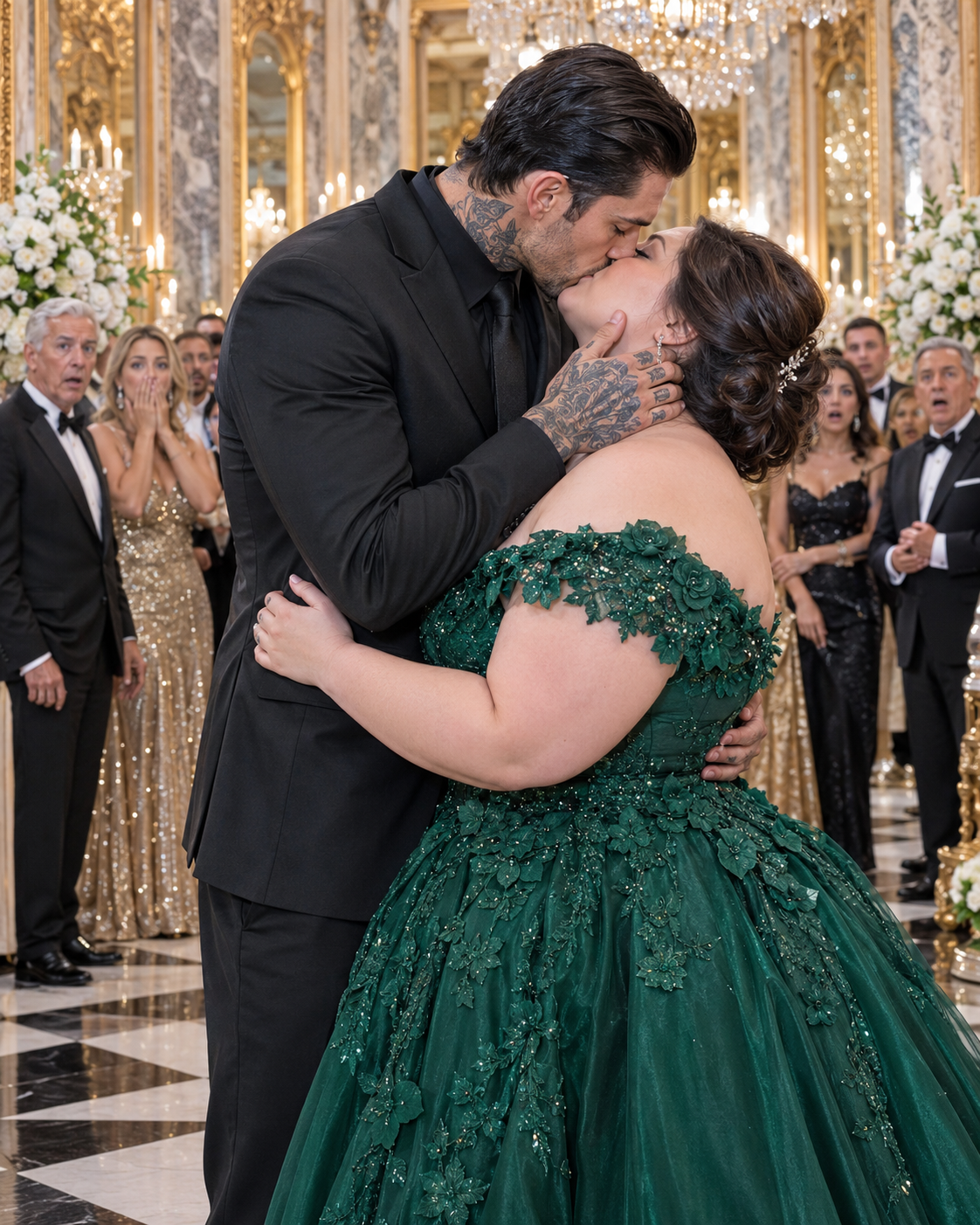
Their empire became less dependent on fear and more difficult to manipulate. Francesca insisted that employees of legitimate businesses be paid on time, that contracts be honored, and that people who had been dragged into criminal schemes receive a way out whenever possible.
She could not erase the violence that had shaped their world. She could not pretend that a few good decisions made everything around her innocent. But she could refuse to treat cruelty as a necessary price of power.
The hardest test came when Raffaele Vitale’s audit revealed that several senior members had been using company resources to fund operations Cosimo had never approved. Some had been involved in intimidation and extortion. Others claimed they had simply followed orders from men who were now dead or imprisoned.
Cosimo wanted the responsible people removed immediately.
Francesca insisted that the evidence be examined before anyone was punished. She would not let loyalty become an excuse for injustice, but she would not let suspicion become one either.
The investigation lasted weeks. Two men were dismissed and referred to authorities for their actions in legitimate business affairs. Another cooperated with investigators and provided information that prevented further harm. Raffaele, whose own financial misconduct had been confirmed, lost his position and the privileges he had enjoyed for decades.
He came to Francesca’s office on his final day.
“I thought you would want to humiliate me,” he said.
“I don’t need to humiliate you.”
“You could have destroyed me.”
“I could have. That doesn’t mean I should.”
He studied her, searching for the cruelty he had once assumed power required.
“You really believe you can change this family.”
Francesca glanced at the files on her desk.
“No. I believe I can change the choices I make while I’m in it.”
Raffaele left without an argument.
That evening, Cosimo found Francesca on the terrace of their home, watching the city lights emerge against the darkening sky. He had removed his jacket and rolled up his sleeves. Without the men who usually surrounded him, he looked less like a feared boss and more like a man who had spent years carrying responsibilities he had never learned how to share.
“You made an enemy today,” he said.
“I made several.”
He stood beside her. “You don’t seem concerned.”
“I am. I’m just no longer willing to confuse being afraid with being wrong.”
Cosimo looked out over the city.
“When my father was alive, I believed a leader had to be the most dangerous person in every room. If people feared you enough, they wouldn’t challenge you. If they didn’t challenge you, you could keep everything under control.”
“And now?”
“Now I think fear makes people hide the truth until it’s too late to do anything about it.”
Francesca turned toward him.
“That sounds almost like wisdom.”
“Don’t tell anyone. I have a reputation.”
She laughed, and the sound surprised them both.
Cosimo took her hand.
“I know I can’t undo what happened to your father. I can’t give you back the years you spent believing your family would protect you. And I can’t promise that the world around us will become safe just because we’ve decided to do things differently.”
“I wouldn’t believe you if you did.”
“But I can promise that you won’t have to earn your place beside me by becoming someone else.”
Her expression softened.
For years, Francesca had thought love would arrive only after she became more acceptable to the people around her. She had tried to make herself smaller in rooms where others took up all the space. She had mistaken their approval for evidence that she was worth something.
Cosimo had not made those old wounds disappear. His devotion could not replace the work she had done to understand herself, and his power could not guarantee that every person she met would treat her fairly.
But he had given her something she had rarely experienced: a relationship in which she could be difficult, brilliant, uncertain, angry, and imperfect without being asked to apologize for taking up space.
“I don’t need you to make the world gentle,” she told him. “I need you to remember that being strong doesn’t give us the right to be cruel.”
He raised her hand to his lips.
“Then remind me whenever I forget.”
“I will.”
“And I’ll listen.”
She believed him, not because he was powerful, but because she had watched him begin to change when changing cost him something.
A year after the wedding, the Lombardi name no longer commanded the same unquestioned loyalty it once had. Some people considered Francesca a dangerous reformer. Others called her naive. A few quietly admired her for accomplishing what generations of men had claimed was impossible.
Within the legitimate businesses she helped rebuild, employees began to know her not as the woman who had married Cosimo Ferraro, but as the person who insisted that their work mattered and their futures should not depend on the whims of a powerful man’s temper.
She remained Cypher, though she no longer used the name to hide from people who might mock her. It became a symbol of the mind that had always been hers, long before anyone powerful recognized its value.
Cosimo still ruled through a world that demanded hard choices. There were nights when old enemies threatened their lives, mornings when another betrayal surfaced, and moments when Francesca wondered whether the future she wanted could ever fully exist inside the empire she had inherited.
She didn’t pretend those contradictions had vanished.
Instead, she kept asking questions, examining the evidence, and insisting that the people around her be accountable for their decisions. She knew that power could protect the vulnerable, but it could also become a convenient excuse for those who wanted to control them.
On the anniversary of their wedding, Cosimo arranged a private dinner in the same ballroom where her relatives had once laughed at her. The chandeliers had been restored, the walls repainted, and the tables filled with people who had earned their invitations rather than inherited them.
There was no parade of speeches about loyalty. No one was asked to prove their devotion by insulting an enemy or praising a boss.
Halfway through dinner, Cosimo rose and offered Francesca his hand.
She smiled as she accepted it.
“You know,” she whispered as they stepped onto the dance floor, “when we first met, I thought you were going to make my life considerably more complicated.”
“I did.”
“You could at least pretend to deny it.”
“I’ve learned not to argue with the most intelligent person in the room.”
She rested her head against his shoulder, laughing softly.
For the first time in her life, she wasn’t measuring her worth by the faces watching her. She wasn’t wondering whether her body was acceptable, whether her voice was too sharp, or whether her mind would make someone else uncomfortable.
She was simply Francesca.
And that was enough.
As the music carried them across the floor, Cosimo held her with a tenderness no one who knew his reputation would have expected. He had once believed that devotion meant protecting what belonged to him. Francesca had taught him that real devotion meant respecting what never belonged to anyone else in the first place: another person’s dignity, choices, and freedom.
She had entered his world believing she needed a powerful man to stand between her and the people who had hurt her. She left behind the belief that her worth depended on anyone’s permission.
Together, they had built something imperfect, complicated, and still vulnerable to the darkness that surrounded it. But they had also learned that an empire could be measured by more than territory, money, or the number of people who feared its ruler.
It could be measured by the lives it protected, the injustices it refused to excuse, and the courage required to change a system that had once rewarded cruelty.
Francesca Lombardi had never needed to become smaller to deserve love. She had never needed to become beautiful by someone else’s standards to deserve respect. And she had never needed to wait for permission to use the extraordinary mind she had spent a lifetime developing.
The woman her family once treated as an embarrassment had become the most influential strategist in their world. Yet her greatest victory was not the fortune she controlled or the rivals she had outmaneuvered.
It was the moment she understood that being powerful did not mean becoming the person who had hurt her.
It meant having the freedom to choose differently.
And when the music ended, Francesca lifted her eyes to Cosimo’s and smiled, knowing that whatever came next, she would meet it as an equal—not because a feared man had claimed her, but because she had finally claimed herself.
THE END.