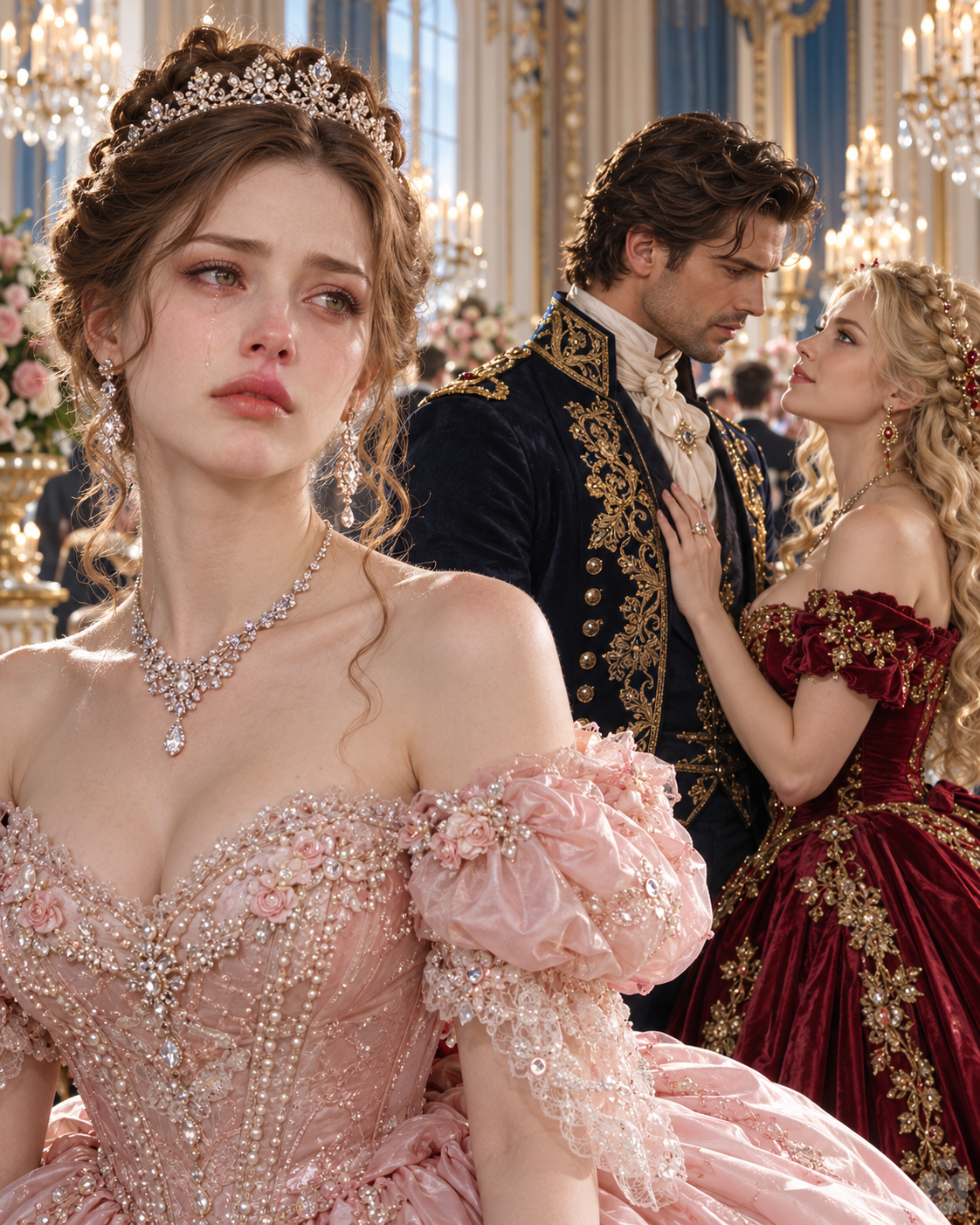
After twenty years of marriage, Clara Whitmore’s husband announced to thirty dinner guests that he had never truly known how to love her.
For several seconds, Clara Whitmore stood motionless in the estate office, listening to the silence that followed Eleanor Ashford’s words. Beyond the tall windows, the morning sun illuminated the courtyard, where a servant was carrying fresh flowers toward the house. Everything looked painfully ordinary. Yet the woman standing outside the door had just spoken of a death Clara had mourned for seventeen years.
Thomas Greer reached for the back of his chair. His knuckles had turned white.
“Let her in,” Clara said.
The door opened slowly.
Eleanor Ashford entered wearing a dark green traveling dress, her gloves clasped tightly in one hand. She was beautiful in an understated way, with chestnut hair arranged beneath a modest hat and gray eyes that seemed to have forgotten how to rest. Clara had seen her twice before, always surrounded by polite conversation and charitable acquaintances. This morning, however, Eleanor looked as though she had not slept.
Her gaze moved from Clara to the open folder on the desk.
“So he kept them,” she whispered.
Clara remained standing.
“You have thirty seconds to explain what you meant.”
Eleanor glanced toward the corridor. Thomas closed the door without being asked.
“Margaret Bellamy did not die where your husband told you she died.”
Clara felt the cold brass key pressing into her palm.
“She died here?”
Eleanor nodded.
“In the west wing. On the night she was supposed to leave for the coast.”
The clock continued ticking. Clara remembered receiving Margaret’s farewell letter, remembered the careful handwriting and the apology for leaving without a proper goodbye. She had kept that letter inside her jewelry box for years.
“How do you know?”
Eleanor lowered her eyes.
“Because my mother was there.”
Clara studied her face. The resemblance was faint but suddenly unmistakable: the same gray eyes, the same delicate curve of the mouth. She remembered a quiet woman named Mrs. Vale, who had once worked as a companion to Margaret’s widowed aunt.
“Your mother was Catherine Vale?”
“Yes.”
“And she told you this?”
“Not until she was dying.”
Eleanor opened her handbag and removed a narrow envelope, its edges softened by age. The wax seal had been broken, but the handwriting on its surface was clear.
For Mrs. Clara Whitmore, should the truth become necessary.
Clara recognized Margaret’s writing.
She reached for the envelope, then stopped.
“Why did you become involved with my husband?”
Eleanor’s fingers tightened around the leather handle of her bag.
“At first, because I wanted him to trust me.”
“And afterward?”
A faint tremor passed across Eleanor’s mouth.
“Afterward, I made choices I cannot defend.”
Clara took the envelope.
She did not offer forgiveness. She did not ask for another explanation.
She opened the letter.
Margaret’s words began without ceremony. She had discovered that Adrienne was using Whitmore estate accounts to transfer money into private investments controlled by men whose names appeared nowhere in the household records. Several of those investments had failed, leaving substantial debts concealed beneath charitable expenditures.
Margaret had learned the truth accidentally while helping Clara organize documents for a winter fundraising event.
She had confronted Adrienne privately, believing he would correct the accounts before Clara suffered the consequences.
Instead, he had offered Margaret a house and a generous allowance in exchange for her silence.
The proposed arrangement had been prepared by Thomas Greer.
Margaret had refused.
Clara turned the page.
The final paragraph had been written in a hurried, uneven hand.
“If I disappear, Clara, do not believe that I abandoned you. There are papers in the west-wing room that he cannot afford for you to find. I have hidden them where we used to leave our childhood treasures. Forgive me for not telling you sooner.”
Clara stared at the last sentence.
Their childhood treasures.
She remembered two little girls visiting Whitmore Hall long before her marriage, hiding ribbons, pressed flowers, and secret notes beneath a loose wooden panel in the old conservatory.
But Margaret had mentioned the west wing.
Clara looked at Eleanor.
“What happened that night?”
Eleanor drew a slow breath.
“My mother heard an argument. Margaret threatened to leave with the documents. Adrienne tried to stop her.”
“Did he kill her?”
“I don’t know.”
The answer came without hesitation.
Clara believed that much.
“My mother heard something fall,” Eleanor continued. “When she entered the room, Margaret was lying beside the fireplace. There was blood beneath her head. Your husband was kneeling beside her.”
Clara’s eyes moved toward the photograph.
“And he sent for a doctor?”
Eleanor looked away.
“He sent for his solicitor.”
The words settled between them with a weight no one attempted to soften.
Clara folded Margaret’s letter carefully.
“Take me to the room.”
Thomas stepped forward.
“Madam, Lord Whitmore may return at any moment.”
“Then we should not waste the morning.”
They crossed the long gallery together, their footsteps echoing beneath portraits of Whitmore ancestors. Clara had walked this corridor thousands of times, often carrying flowers or directing servants before a gathering. Today, every familiar object seemed to belong to a house she had never truly entered.
At the west-wing doors, Eleanor stopped.
The corridor beyond smelled faintly of old timber and lavender polish. Dust lay along the window ledges, but the floor showed recent marks where shoes had disturbed it.
Clara noticed.
Someone had been here.
The key turned smoothly in the lock.
Inside, pale daylight fell across furniture concealed beneath linen sheets. A tall mirror stood beside the fireplace, and a narrow writing desk faced the garden.
Clara remembered the room.
Margaret had once used it to paint watercolors.
A small blue ribbon still hung from the brass handle of a cabinet.
Clara approached the fireplace.
There was no visible stain on the stone. No obvious evidence of violence. Only a faint scratch along the polished edge of the mantel.
Eleanor remained near the doorway.
“My mother said Margaret was still breathing when she found her.”
Clara turned.
“What?”
“She said Margaret opened her eyes. She tried to speak.”
Thomas made a small sound behind them.
Eleanor continued.
“Adrienne ordered my mother to leave. When she returned with water, the door was locked.”
Clara looked at Thomas.
“Did you know?”
He shook his head.
“I knew there had been an accident. I was told she died afterward, at a physician’s house.”
“And you accepted that?”
His face tightened.
“I had a wife and two young sons. Lord Whitmore threatened to dismiss me without a reference if I questioned him.”
Clara looked back toward the fireplace.
Seventeen years of silence had not been maintained by one man alone. It had survived through fear, convenience, and the small compromises of people who convinced themselves they had no choice.
She approached the writing desk.
Beneath its surface was a narrow decorative panel carved with roses.
Clara knelt.
When she was a girl, Margaret had discovered that the third rose could be pressed inward to release a hidden compartment. They had filled it with childish treasures, imagining themselves clever enough to fool the entire household.
Clara pressed the carved flower.
Nothing happened.
She tried again, applying pressure near the stem.
A quiet click sounded.
The panel shifted.
Inside lay a small tin box wrapped in faded blue cloth.
Clara lifted it into the light.
For a moment, she remembered Margaret laughing in the summer garden, her hands stained with ink and blackberry juice.
Then she opened the box.
There were bank documents, correspondence, and a narrow notebook filled with Margaret’s handwriting.
Clara turned the pages.
Names.
Dates.
Amounts.
Transfers made through charitable accounts into private holdings.
Several entries carried Adrienne’s signature.
Others bore signatures that appeared to belong to Clara.
She had never written them.
At the bottom of one page, Margaret had drawn a small cross beside the name of a solicitor.
Edmund Voss.
Clara recognized him immediately.
He had handled the legal arrangements surrounding Margaret’s death.
He was also the man who had recently advised Adrienne on restructuring the Whitmore estate.
A carriage door slammed outside.
Thomas hurried to the window.
“Lord Whitmore has returned.”
Clara closed the notebook.
“Then he is earlier than expected.”
Eleanor’s expression changed.
“He must not see those papers.”
Clara placed the documents inside her handbag.
“He has spent seventeen years deciding what I may see. That privilege has ended.”
Adrienne found them in the west-wing corridor.
He stopped so abruptly that the silver head of his walking stick struck the floor.
His eyes moved from Eleanor to Thomas, then settled on the open door.
“What is the meaning of this?”
Clara stood beside the threshold.
“I was hoping you might tell me.”
Adrienne’s face hardened.
“That room is unsafe.”
“The floor seems perfectly sound.”
“Clara, this is not amusing.”
“No. It isn’t.”
He looked at Eleanor.
“You had no right to come here.”
Eleanor did not answer.
For the first time, Clara saw fear beneath her husband’s carefully controlled expression.
Not embarrassment.
Not irritation.
Fear.
She took Margaret’s letter from her handbag.
“Do you remember this handwriting?”
Adrienne’s gaze fixed on the page.
His fingers tightened around the walking stick.
“Where did you find that?”
“In a place you overlooked.”
He stepped closer.
“Give it to me.”
Clara remained still.
“No.”
The single word seemed to surprise him more than any accusation could have done.
“Clara, you don’t understand what you’re holding.”
“Then explain it.”
His eyes moved toward Thomas.
“Leave us.”
Thomas hesitated.
Clara spoke before he could obey.
“Stay.”
Adrienne turned toward her.
“This is a private matter between husband and wife.”
“It stopped being private when Margaret Bellamy died.”
The silence was immediate.
Eleanor lowered her gaze.
Adrienne’s expression changed so slightly that Clara might once have missed it. His lips parted, then pressed together. He looked toward the staircase, calculating the distance to the entrance.
“Margaret had an accident,” he said.
“Then why did you summon Edmund Voss before a physician?”
His eyes sharpened.
“Who told you that?”
“Answer me.”
Adrienne looked at Eleanor.
“You’ve been speaking to her.”
“She deserves to know,” Eleanor said.
He gave a short, bitter laugh.
“You think she deserves the truth? You came to me with lies and threats, Eleanor. You wanted money.”
Eleanor’s face flushed.
“I wanted to know what happened to my mother.”
Clara looked between them.
“Your mother?”
Eleanor swallowed.
“She died two years after Margaret. She had been frightened for months. She believed someone was watching her.”
Adrienne shook his head.
“Your mother was ill.”
“She was frightened of you.”
Clara raised one hand.
“Enough.”
Both fell silent.
She turned toward her husband.
“Did Margaret die in that room?”
Adrienne looked at the open doorway.
After several seconds, he nodded.
“Yes.”
“Was she alive when Catherine Vale found her?”
His face lost color.
“Clara—”
“Was she alive?”
“Yes.”
Clara felt the weight of the notebook against her wrist.
“Why did you not call a doctor?”
Adrienne’s shoulders sank.
“I did.”
“After your solicitor arrived?”
He said nothing.
That silence was answer enough.
Clara stepped away from him.
She had imagined that discovering the truth might bring some fierce satisfaction. Instead, she felt a quiet, terrible exhaustion.
“Margaret trusted you,” she said.
Adrienne looked toward the window.
“Margaret threatened to destroy everything.”
“She wanted you to stop stealing.”
“I was trying to save this estate.”
“With money meant for widows?”
His jaw tightened.
“You know nothing of what it takes to maintain a house like this.”
Clara glanced at the portraits lining the corridor.
“Then perhaps the house was never worth maintaining.”
Adrienne stared at her.
For the first time in their marriage, he seemed unable to find words that would place him above the conversation.
Then he reached for her handbag.
Clara moved back.
Thomas stepped between them.
Adrienne’s face darkened.
“Remember who employs you, Greer.”
Thomas stood rigidly.
“I do, my lord.”
“Then move.”
“No, my lord.”
The words were quiet.
But they changed the room.
Adrienne looked from one face to another and seemed to understand that the familiar arrangement of obedience had finally begun to collapse.
He turned and walked away.
Clara listened until his footsteps disappeared down the staircase.
Then she looked at Thomas.
“Send a messenger to Sir Henry Wycliffe. Tell him I require his presence immediately.”
Sir Henry was a retired magistrate and an old friend of Clara’s father, known for his careful judgment and dislike of social theatrics.
Thomas nodded.
“And Mr. Greer?”
“Yes, madam?”
“Do not inform my husband where the messenger is going.”
By late afternoon, Whitmore Hall had become a house divided by closed doors.
Adrienne remained in his study.
Eleanor waited in the morning room.
Thomas quietly gathered estate records, while Clara sat at her writing desk examining Margaret’s notebook.
The entries revealed more than financial misconduct.
They showed a pattern of deliberate concealment.
Adrienne had used charitable funds to cover speculative losses, then created false invoices to explain missing money. When Margaret discovered the irregularities, he offered her a private property and an allowance.
When she refused, he attempted to frighten her into silence.
But the final pages contained something unexpected.
Margaret had written that she intended to leave the documents with Clara on the morning after their confrontation.
She had also arranged to meet a physician named Dr. Samuel Hartley.
Clara recognized the name.
Hartley had retired years earlier to a village forty miles away.
She rang for a servant.
“Have a carriage prepared.”
Before she could leave, a knock sounded.
Sir Henry Wycliffe entered carrying a dark leather case.
He listened without interruption as Clara explained the letters, the hidden accounts, and Margaret’s death.
When she finished, he examined the documents beneath the afternoon light.
“These are serious allegations,” he said.
“I know.”
“And your husband may attempt to destroy whatever remains.”
“I know that too.”
Sir Henry looked at her.
“Then we must act before he realizes how much evidence you possess.”
Clara placed Margaret’s notebook before him.
“I want the truth established properly. Not whispered through drawing rooms.”
Sir Henry nodded.
“I will contact the appropriate authorities. But first, we should speak to Dr. Hartley.”
They traveled before sunset.
The road wound through wet fields and villages where smoke rose from cottage chimneys. Clara sat opposite Sir Henry, watching the countryside pass without truly seeing it.
At the physician’s modest home, an elderly housekeeper admitted them into a small sitting room.
Dr. Hartley appeared several minutes later, leaning on a cane.
When Clara mentioned Margaret Bellamy, his expression changed.
“I wondered whether someone would come,” he said.
Sir Henry leaned forward.
“Did you attend Miss Bellamy on the night of her death?”
Hartley nodded.
“I was summoned to Whitmore Hall shortly before midnight.”
Clara’s fingers became still.
“Was she alive?”
“Yes.”
The word seemed to suspend the room.
“She had suffered a severe injury to the head,” Hartley continued. “She was unconscious when I arrived, but breathing.”
“Could she have survived?”
He looked down.
“I cannot say with certainty. But she needed immediate treatment. She had already lost considerable blood.”
Clara closed her eyes briefly.
“And my husband?”
“He insisted that she be moved.”
“Why?”
“He said a death at Whitmore Hall would cause unnecessary scandal.”
Sir Henry’s expression hardened.
Hartley continued.
“I objected. Moving her was dangerous. But Mr. Voss arrived and informed me that the family had authorized the transfer.”
Clara opened her eyes.
“What family?”
“Your husband claimed you had given permission.”
She stared at him.
“I knew nothing.”
Hartley’s hand tightened around his cane.
“Then I owe you an apology, Mrs. Whitmore.”
He explained that Margaret had been transported to a private residence outside the village. She died before dawn.
The official report described an accidental fall.
But Hartley had kept his original medical notes.
He rose slowly and retrieved a small leather journal from a locked cabinet.
Inside were observations written on the night of Margaret’s death.
One detail made Sir Henry stop reading.
There were two injuries.
A severe wound to the back of Margaret’s head, consistent with striking the fireplace.
And bruising around her wrist.
Hartley looked at Clara.
“I could not determine whether she fell or was pushed. But someone had held her arm with considerable force.”
Clara remembered Adrienne’s hand reaching for her handbag that morning.
The same impatient movement.
The same assumption that anything he wanted could be taken.
Sir Henry closed the journal.
“Doctor, would you be willing to make a formal statement?”
Hartley nodded.
“I should have done so seventeen years ago.”
They returned to Whitmore Hall after dark.
A cold wind moved through the trees, and the windows of the great house glowed against the gathering mist.
But something was wrong.
The front doors stood open.
Servants had gathered in the entrance hall.
Thomas hurried toward Clara as she stepped from the carriage.
“Madam, Lord Whitmore has gone.”
Clara stopped.
“Gone where?”
“We don’t know. He ordered a carriage, but the driver says he dismissed him at the north gate.”
Sir Henry looked toward the study.
“Has anything been taken?”
Thomas hesitated.
“His personal papers. And several account books.”
Clara felt the old instinct to protect the family’s reputation rise within her.
For twenty years, she had smoothed over Adrienne’s absences, excused his temper, and quietly repaired the damage left by his decisions.
She had mistaken endurance for loyalty.
Not tonight.
“Send word to the magistrate,” she said.
Then Eleanor appeared at the top of the staircase.
Her face was pale.
“He went to the garden house.”
Clara looked up.
“How do you know?”
Eleanor held a folded note.
“He left this in my room.”
The message was brief.
Meet me where this began. Come alone, or the remaining papers will burn.
Clara read it twice.
Sir Henry reached for the note.
“You will not go alone.”
Clara looked toward Eleanor.
“Neither will she.”
An hour later, their carriage stopped beneath the trees bordering Ashford Cottage.
The garden house stood beyond a narrow path, its windows glowing with lamplight.
Clara stepped down beside Sir Henry. Two constables, summoned discreetly, followed at a distance.
Eleanor remained near the gate.
From inside came the sound of furniture being moved.
Then glass shattered.
Clara approached the terrace.
Through the window, she saw Adrienne standing beside the fireplace, feeding papers into the flames.
His coat was unbuttoned, his hair disordered.
He looked older than he had that morning.
She opened the door.
“Adrienne.”
He turned sharply.
For a moment, surprise replaced anger.
“You came.”
“Of course.”
His gaze moved toward the dark garden.
“Alone?”
“No.”
His expression hardened.
“You never could trust me.”
Clara looked at the burning documents.
“You have given me little reason.”
He laughed without humor.
“Do you think you understand what happened? Margaret wanted to ruin me. She threatened to expose everything.”
“She wanted to protect people you had stolen from.”
“I made mistakes.”
“You made decisions.”
Adrienne stepped toward her.
“I built this estate into something respectable. I gave you everything.”
Clara looked around the elegant garden house, at the expensive furnishings purchased with money intended for vulnerable women.
“You gave me a beautiful prison and called it generosity.”
He stopped.
For a moment, the fire was the only sound.
Then Clara asked the question she had carried since morning.
“Did you push Margaret?”
Adrienne looked at the flames.
“She was leaving. She had the papers. I caught her wrist.”
Clara waited.
“She pulled away,” he continued. “I tried to take the documents. She stumbled.”
“Did you push her?”
“I don’t know.”
His voice broke on the final word.
For the first time, Clara heard uncertainty that did not sound rehearsed.
“She fell against the fireplace,” he whispered. “There was blood. I thought she would wake.”
Clara watched him.
“And when she did not?”
“I panicked.”
“You called your solicitor.”
“I needed help.”
“Margaret needed help.”
Adrienne covered his face with one hand.
“I know.”
Clara had waited years for him to admit wrongdoing, though she had never imagined the scale of it.
Now the admission offered no relief.
He looked at her.
“I loved you, Clara.”
She felt no anger at the words.
Only distance.
“Perhaps you loved the woman who never questioned you.”
He lowered his hand.
“I never wanted any of this.”
“But you chose it every time you had an opportunity to stop.”
Sir Henry entered behind her.
Adrienne looked toward the constables waiting outside.
His shoulders sagged.
“Is this what you want?”
Clara considered the question.
She had once wanted a peaceful marriage, a home filled with affection, and a husband who would meet her eyes without hiding anything.
Now she wanted something simpler.
For Margaret’s death to be acknowledged.
For the stolen funds to be returned.
For the women who had depended on her charity to receive what had been promised.
And for her own life to belong to her.
“I want the truth,” she said.
Adrienne looked at Sir Henry.
Then, slowly, he placed the remaining documents on the table.
The constables approached.
He did not resist.
As they escorted him toward the door, he paused beside Clara.
“Will you ever forgive me?”
She looked at the man she had married twenty years earlier.
The face was familiar.
The person before her was not.
“I don’t know,” she answered. “But forgiveness will not make what you did disappear.”
He lowered his eyes and walked into the night.
The investigation lasted several months.
Adrienne’s financial misconduct was established through the surviving records, Thomas’s testimony, and documents recovered from the garden house.
Edmund Voss was questioned about his role in concealing the transfers and arranging Margaret’s removal from Whitmore Hall.
Dr. Hartley’s original notes became central to the renewed inquiry into her death.
The authorities concluded that Margaret had died following a violent confrontation, though the passage of seventeen years prevented every detail from being established with certainty.
Adrienne admitted restraining her and delaying medical assistance while attempting to conceal the circumstances.
He faced criminal proceedings for his financial offenses and his actions surrounding Margaret’s death.
Clara attended the hearings.
She sat quietly, wearing a simple dark dress, listening as strangers discussed the most intimate failures of her marriage.
Sometimes reporters waited outside.
Sometimes former friends crossed the street rather than greet her.
She discovered that society could forgive a man’s misconduct more readily than a woman’s refusal to conceal it.
But she no longer arranged her life around their comfort.
The estate accounts were examined independently.
Properties acquired through improper transfers were sold, and recovered funds were directed toward restitution.
The garden house passed out of Eleanor’s possession.
She did not protest.
One afternoon, Eleanor visited Clara before leaving the county.
They met in the small drawing room overlooking the rose garden.
For a while, neither spoke.
At last Eleanor placed her gloves on her lap.
“I should have told you sooner.”
Clara watched a bird settle on the stone fountain.
“Yes.”
“I thought I could make him confess. Then I became afraid of losing what he had given me.”
Clara turned toward her.
“That is how silence grows. One small reason at a time.”
Eleanor lowered her eyes.
“I don’t expect your forgiveness.”
“Then perhaps you are finally asking the right thing of me.”
Eleanor looked up.
Clara’s expression softened slightly.
“Make something better of your life. That is all I can offer.”
Eleanor left before sunset.
They never became friends.
But Clara no longer needed every wound to end in reconciliation.
Some endings required only honesty.
The following spring, Whitmore Hall opened its doors to visitors for the first time in years.
Not for a ball.
Not for a dinner party.
Clara had converted part of the estate into a residence and training center for women seeking financial independence after widowhood, abandonment, or hardship.
The charitable accounts were overseen by independent trustees, with every expenditure documented and available for inspection.
Thomas Greer remained as estate manager, though Clara required him to train two younger assistants to review the books alongside him.
“No more secrets hidden in tidy columns,” she told him.
He smiled faintly.
“No, madam.”
The west-wing room was restored.
The damaged fireplace remained, but the walls were repainted and the windows opened to the garden.
Clara placed Margaret’s watercolor paintings there, along with a small brass plaque bearing her name.
No elaborate tribute.
No attempt to turn tragedy into something beautiful.
Only a room where the truth was no longer forbidden.
One evening, nearly a year after the dinner party, Clara sat beside the conservatory window with Margaret’s final letter in her hands.
The garden was quiet.
Beyond the glass, the last light of the day rested on the roses.
She read the closing words once more.
“Forgive me for not telling you sooner.”
For years, Clara had believed love meant protecting those closest to her from discomfort.
She had excused small dishonesty because confronting it seemed unkind. She had accepted silence because questions might disturb the peace.
Now she understood how expensive that peace had been.
Margaret had tried to protect her.
Thomas had been afraid.
Eleanor had made compromises.
And Adrienne had built an entire life upon the expectation that others would remain quiet.
Clara folded the letter and placed it in a wooden box beside her chair.
A young woman appeared at the conservatory door.
She was one of the residents, recently widowed, with two children and little money of her own.
“Mrs. Whitmore?”
Clara looked up.
“Yes, Anna?”
“I wanted to thank you. The trustees approved my apprenticeship.”
Clara smiled.
“I’m pleased.”
Anna hesitated.
“They told me I might be able to open a small shop one day.”
“Then you should begin planning for it.”
The young woman’s eyes brightened.
After she left, Clara remained beside the window, listening to footsteps moving through the hall.
Life continued in small, ordinary sounds.
A door closing.
Someone laughing in the kitchen.
The distant ringing of a bell.
She had once feared that losing her marriage would leave her with nothing.
Instead, she had discovered how much of herself she had surrendered to preserve it.
Clara rose and opened the conservatory doors.
The evening air smelled of damp earth and new roses.
She stepped into the garden without waiting for anyone to accompany her.
Behind her stood the great house, with its portraits, memories, and rooms that had witnessed more suffering than she had understood.
Ahead lay a path she had not yet walked.
For the first time in twenty years, she did not need to know where it would lead.
She only needed to know that the choice was hers.
And as the last sunlight slipped beyond the trees, Clara understood the lesson Margaret had tried, at such terrible cost, to leave behind.
Love without truth is not safety. Loyalty without conscience is not virtue. And peace purchased by silence eventually demands a price no one should have to pay.
A life can be rebuilt after betrayal, but only when the person living it stops mistaking endurance for love.
Clara closed the garden gate gently behind her.
This time, she was not walking away from her life.
She was finally walking into it.
THE END.