On Christmas Eve, I found my secretary lying in the snow outside my motorcycle shop, barely alive. When I tried to take the leather notebook from her frozen hands, she begged me not to let anyone else touch it.
For a moment, the only sound in my office was the wind rattling the windows.
I looked at Emily, then at the leather notebook lying between us.
“What do you mean the money isn’t going where I think it is?”
Emily swallowed hard. Her fingers were still trembling around the coffee mug I’d given her.
“Sean, I think someone has been stealing from the veterans’ fund. And I think they’ve been doing it for almost eighteen months.”
I felt something cold settle in my stomach.
The Dawson Veterans Relief Fund wasn’t some charity I ran for publicity. I’d started it six years earlier after my best friend, Marcus Bell, came home from Afghanistan and couldn’t afford to keep his electricity on.
Marcus had survived two deployments, a roadside bomb, and eleven surgeries. What nearly destroyed him was coming home to a country that seemed to have forgotten him.
I’d promised him that wouldn’t happen to anyone else if I could help it.
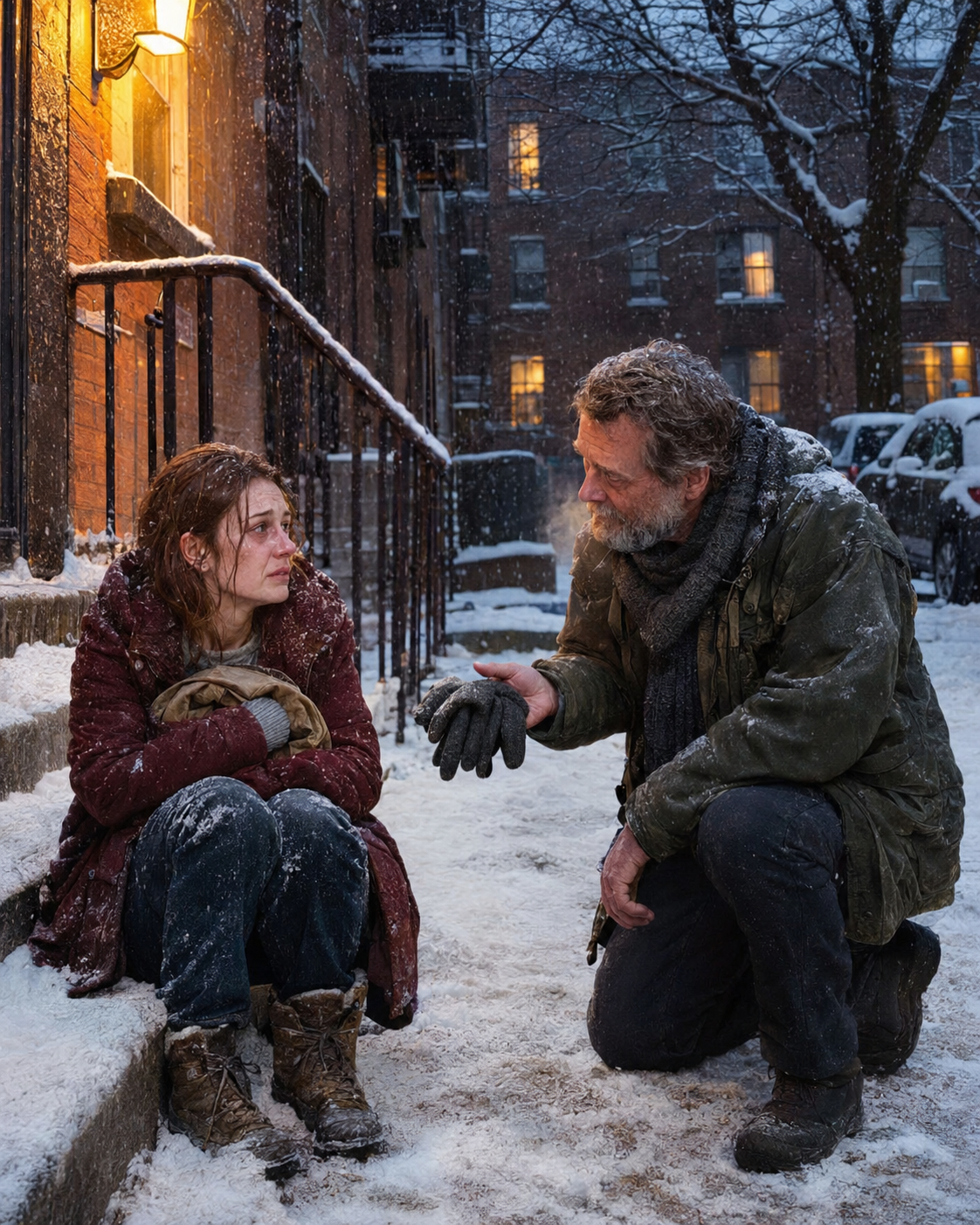
Now Emily was telling me someone had turned that promise into a paycheck.
“Show me,” I said.
She opened the notebook.
The pages were filled with handwritten dates, invoice numbers, bank deposits, and names of companies I’d never heard of.
“My father was an accountant,” she explained. “Before he died, he taught me to follow money by looking for patterns. People can lie, but numbers usually leave a trail.”
She pointed to three entries.
“These are payments from the veterans’ fund to a company called Northern Ridge Logistics. According to the invoices, they delivered emergency heating equipment and winter supplies.”
I nodded slowly.
“We’ve ordered supplies through outside vendors before.”
“I know. But Northern Ridge doesn’t appear to have a real warehouse. The business address belongs to a mailbox rental store in Helena.”
I leaned closer.
“And there’s something else.”
She turned another page.
“The invoices were approved using your electronic signature.”
I stared at the familiar signature printed beside each payment.
“I never approved these.”
“I know,” Emily whispered. “That’s why I started investigating.”
Before I could answer, headlights swept across the office windows.
Emily flinched so violently that hot coffee spilled onto her blanket.
I crossed the room and looked down at the parking lot.
A dark pickup truck rolled slowly past the shop.
It didn’t stop.
But it didn’t need to.
Emily had already recognized it.
“Ryan,” she whispered.
I reached for my phone.
“I’m calling the police.”
“Please, Sean. He knows people. He’ll say I’m unstable. He’ll tell them I stole those records.”
“Then we’ll make sure the truth gets there first.”
I called 911, reported Emily’s condition, the suspected assault, and the truck outside my business.
Then I called the one person I trusted to tell me whether those invoices were real.
Marcus Bell.
He answered on the fourth ring.
“Sean? It’s Christmas Eve. You better not be calling to ask me to fix another motorcycle.”
“Marcus, I need you at the shop.”
Something in my voice changed his tone.
“What happened?”
“Someone’s been stealing from the fund.”
There was a long silence.
Then he said, “I’m on my way.”
I hung up and turned back to Emily.
She was staring at the notebook.
“There’s something I haven’t told you,” she said.
I pulled a chair beside her.
“Tell me now.”
“Ryan didn’t just want my property. He wanted my father’s house.”
“Why?”
“Because my father kept copies of financial records there. Records from before I started working for you.”
I frowned.
“What records?”
Emily looked toward the door again.
“Ryan used to work for a company that handled charitable donations. My father audited them before he died.”
“And?”
“He found missing money.”
My chest tightened.
“Was Ryan involved?”
“I don’t know. But three weeks ago, Ryan found out I still had Dad’s old files. After that, he started asking me to sign the house over to him.”
She took a shaky breath.
“Tonight, when I refused, he grabbed my arm and shoved me against the kitchen counter. Then he took my phone and car keys.”
I felt my jaw clench.
“How did you get here?”
“I waited until he went upstairs. I took the notebook and ran through the back door. I thought I could make it to the shop.”
“In this weather?”
“It was the only place I knew he’d never expect me to fight back.”
Her voice broke.
I looked at the young woman who had spent four years keeping my business running, remembering customers’ birthdays, organizing charity deliveries, and making sure I ate something besides gas station sandwiches.
She had nearly frozen to death trying to protect people she’d never met.
“You’re safe here,” I told her.
She shook her head.
“Not if he knows what I found.”
A few minutes later, the police arrived with paramedics.
Emily resisted when they suggested taking her to the hospital.
“I can’t leave the notebook.”
I held out my hand.
“Then let me protect it.”
She hesitated.
“Sean, promise me you won’t do anything reckless.”
I almost smiled.
People saw the tattoos, the leather vest, the motorcycle club patches, and assumed I solved problems with my fists.
Twenty years earlier, they might have been right.
But I’d learned that losing your temper was often the fastest way to lose everything else.
“I promise,” I said. “We’ll do this the right way.”
She handed me the notebook.
Before the paramedics carried her downstairs, she caught my sleeve.
“There’s a blue folder in my desk drawer.”
“What folder?”
“The original invoices. I printed them before someone could delete them.”
Then she was gone.
I stood alone in my office, listening to the ambulance pull away through the snow.
For the first time in years, I was afraid.
Not for myself.
For everyone who had trusted me.
Marcus arrived forty minutes later, covered in snow and carrying a thermos of coffee.
He’d lost part of his left leg overseas, but he still moved through the shop with the confidence of a man who refused to let the world define him by what was missing.
I showed him the notebook.
He read silently.
Then he stopped at a familiar name.
“Sean.”
“What?”
He tapped one of the invoices.
“Look at the person who authorized the vendor account.”
I leaned over.
Daniel Mercer.
My business manager.
The man I’d trusted with my books for seven years.
The man who’d stood beside me at Marcus’s wedding.
The man who’d helped organize every veterans’ fundraiser since the beginning.
I stared at the name.
“There has to be an explanation.”
Marcus looked at me.
“Maybe. But you need to be prepared for one you won’t like.”
I opened Emily’s desk and found the blue folder exactly where she’d said.
Inside were copies of payment requests, delivery receipts, and account statements.
One receipt caught my attention.
It claimed that forty emergency generators had been delivered to a veterans’ housing facility outside Billings.
I knew that facility.
I’d been there three days earlier.
They had six generators.
Four were broken.
I called the facility director, a retired Army nurse named Linda Carver.
She answered sounding half asleep.
“Sean? Is everything okay?”
“Linda, did you receive forty generators in October?”
“Forty?”
She laughed once, then stopped.
“Sean, we’ve been begging for two working generators since September.”
My stomach dropped.
“Did anyone tell you the fund had already paid for them?”
“No.”
I closed my eyes.
The money wasn’t just disappearing.
People were going without things they’d been promised.
Marcus watched my expression.
“How bad?”
“Worse than I thought.”
He sat heavily in the chair across from me.
Then he said something I’ll never forget.
“Sean, the worst part of betrayal isn’t finding out somebody lied. It’s realizing your trust helped them get close enough to hurt other people.”
I didn’t answer.
Because he was right.
At 10:17 that night, Daniel called.
“Merry Christmas, brother,” he said cheerfully. “You still at the shop?”
I looked at Marcus.
“Yeah.”
“Crazy weather. You should get home.”
“I’m finishing some paperwork.”
There was a pause.
“What paperwork?”
“Year-end stuff.”
Another pause.
Then Daniel laughed.
“Leave that boring garbage to me. That’s what you pay me for.”
I looked down at his name on the invoice.
“Daniel, did we order forty generators for the veterans’ housing facility?”
Silence.
Then a small cough.
“Forty? I don’t remember the exact number.”
“Linda says they never arrived.”
“Well, shipping delays happen.”
“The invoice says they were delivered in October.”
His voice changed.
“Sean, why are you digging through accounts on Christmas Eve?”
“Because somebody needs to.”
“Look, if Emily’s been filling your head with nonsense—”
I froze.
I hadn’t mentioned Emily.
“How do you know Emily’s involved?”
Daniel didn’t answer immediately.
Then he said, “Ryan called me earlier. Said she’s been acting strange.”
I looked at Marcus.
Ryan and Daniel knew each other.
Of course they did.
Ryan had attended company Christmas parties. Daniel had introduced him to several local contractors.
I’d never thought much about it.
Now every ordinary memory seemed to have another meaning.
“Where is Ryan?” I asked.
“No idea.”
“Then why did he call you?”
“Sean, you’re making this into something it isn’t.”
“Maybe.”
I ended the call.
Marcus leaned forward.
“He knows.”
“Yeah.”
“And now he knows we know.”
I called the detective assigned to Emily’s assault report and told him about the financial records. He instructed me not to confront either man and arranged for an investigator to collect copies the next morning.
We secured the original notebook and documents, made backup copies, and locked everything away.
Then Marcus asked me a question.
“What about tomorrow’s Christmas deliveries?”
I looked at the whiteboard downstairs.
Twenty-three families were expecting food, heating supplies, and gifts for their children.
Some had nothing else coming.
“We make the deliveries,” I said.
“With what money?”
I glanced around my shop.
At the motorcycles I’d built.
At the tools I’d collected.
At the business that had taken me twenty-five years to create.
“Mine.”
Marcus stared at me.
“Sean, you can’t personally replace everything that might be missing.”
“No. But I can make sure those kids have Christmas.”
He shook his head, then smiled faintly.
“You stubborn old fool.”
“That’s why you like me.”
“No,” he said. “That’s why I keep extra coffee around.”
By morning, the blizzard had weakened.
Christmas Day arrived under a pale gray sky.
Marcus and I loaded my truck with groceries, blankets, space heaters, and wrapped presents.
Three members of my motorcycle club volunteered to help.
We weren’t riding bikes in that weather, so we used trucks and SUVs.
At our first stop, a little boy opened the door wearing pajamas two sizes too big.
His mother stood behind him, looking exhausted.
When he saw the presents, his face lit up.
“Mom! Santa found us!”
His mother covered her mouth.
I turned away before she could see my eyes.
For a few hours, I almost forgot about Daniel, Ryan, and the notebook.
Then we reached the home of a veteran named Thomas Reed.
Thomas had served in Iraq. He lived with his wife and two daughters in a small house with peeling paint and a furnace that barely worked.
He greeted me wearing three layers of clothing.
“Sean, you didn’t have to come all the way out here.”
“Yeah, I did.”
We carried supplies inside.
His youngest daughter, maybe seven years old, held up a small stuffed bear we’d brought.
“Is this really mine?”
“All yours, sweetheart.”
She hugged it so tightly I thought the stuffing might burst.
Then Thomas pulled me aside.
“Can I ask you something?”
“Sure.”
“Did the fund stop helping families with housing?”
I frowned.
“What do you mean?”
“I applied for emergency rent assistance in November. Got a letter saying the program was out of money.”
I felt the floor shift beneath me.
“Who sent the letter?”
“Some office administrator. Daniel something.”
I asked to see it.
Thomas brought me a folded piece of paper.
There was Daniel’s signature.
And a sentence that made my blood boil.
Due to insufficient charitable contributions, emergency housing assistance has been temporarily suspended.
Insufficient contributions.
We’d raised more than $400,000 that year.
I knew because I’d personally thanked nearly every major donor.
I folded the letter carefully.
“Thomas, listen to me. I’m going to look into this.”
He lowered his eyes.
“I’m not asking for special treatment.”
“I know you’re not.”
“I just don’t want my girls to lose their home.”
I put a hand on his shoulder.
“They won’t be forgotten.”
When I returned to the truck, Marcus saw my face.
“What happened?”
I showed him the letter.
He read it.
Then he stared through the windshield for a long time.
Finally, he said, “We need to find out exactly how much is gone.”
The next two days moved faster than I could process.
Emily remained in the hospital overnight for hypothermia and bruising. She was released into the care of her aunt, who lived outside town.
Ryan had disappeared.
His truck was found abandoned near a motel south of Billings.
Daniel stopped answering his phone.
Meanwhile, investigators began reviewing the fund’s accounts.
I hired an independent forensic accountant named Rebecca Hale, a sharp-eyed woman in her fifties who’d spent twenty years investigating financial fraud.
She arrived at my office carrying a laptop and a folder thick enough to stop a door.
After six hours, she looked at me across the desk.
“Mr. Dawson, I need you to understand something.”
I didn’t like her tone.
“How much?”
“Based on the records available so far, approximately $287,000 appears to have been diverted through questionable vendors.”
I stared at her.
Two hundred eighty-seven thousand dollars.
Money donated by ordinary people.
Money raised at pancake breakfasts, motorcycle rides, raffles, and community dinners.
Money given by widows who mailed twenty-dollar checks because they remembered what military service had cost their husbands.
Rebecca continued.
“Some transactions may be legitimate, but several vendors appear connected to the same individuals.”
“Daniel?”
“Yes.”
“And Ryan?”
She turned her laptop toward me.
“Ryan Collins is listed as an authorized representative for Northern Ridge Logistics.”
I felt my hands curl into fists.
Rebecca pointed to another document.
“But there’s something more concerning.”
A property record appeared on the screen.
It showed a pending transfer involving Emily’s father’s house.
The proposed buyer was a company called Clearwater Holdings.
Rebecca opened another page.
“Clearwater is connected to Ryan.”
I leaned back.
“Why would he need the house?”
“Possibly to obtain the financial records Emily mentioned. But there’s another possibility.”
She showed me a financing application.
Ryan had apparently tried to use the property as collateral for a business loan.
The application contained Emily’s name.
And a signature that looked nothing like hers.
I stared at it.
“He forged her signature.”
“That is a possibility investigators will need to establish.”
I stood up.
Rebecca watched me carefully.
“Mr. Dawson, I know you’re angry.”
“You have no idea.”
“Then listen carefully. These people may be counting on you to react emotionally.”
I looked at her.
“What do you mean?”
“If you threaten them, destroy something, or confront them physically, you give them a distraction. Suddenly the story becomes your behavior instead of their financial records.”
I thought about Emily lying in the snow.
About Thomas Reed’s daughters.
About every veteran who’d trusted my word.
Then I sat back down.
“Tell me what you need.”
Rebecca nodded.
“That’s the right question.”
That afternoon, Emily came to the shop with her aunt.
She looked pale, but stronger.
When she saw the accounting reports spread across my desk, her face tightened.
“You found it.”
“Most of it.”
She sat down.
“Sean, there’s something else.”
I almost laughed from exhaustion.
“I’m starting to hate those words.”
She reached into her coat and pulled out a small envelope.
“My father wrote me a letter before he died. I didn’t understand it until now.”
She handed it over.
Inside was a single handwritten page.
Her father had warned her about a financial arrangement involving Ryan’s former employer. He believed someone was using charitable organizations to move money through shell companies.
He hadn’t been able to prove who was responsible.
But one sentence stood out.
If anyone pressures you to surrender the house or my records, contact an attorney immediately. Do not trust explanations that require you to sign first and ask questions later.
Emily’s eyes filled with tears.
“I thought Dad was being paranoid.”
“He was trying to protect you.”
She nodded.
“Ryan knew about the letter. He told me Dad had become confused before he died.”
I felt a familiar anger rise.
“He made you doubt your own father.”
“He made me doubt myself.”
For a moment, nobody spoke.
Then Emily looked at me.
“I was embarrassed to tell you how bad things had gotten.”
“Why?”
“Because I’m supposed to be smart. I manage your office. I catch mistakes all day. But I couldn’t see what was happening in my own relationship.”
I shook my head.
“Emily, being good at your job doesn’t make you immune to somebody lying to you.”
She wiped her cheek.
“I kept thinking if I explained things better, Ryan would understand.”
“Some people don’t misunderstand your boundaries,” I said. “They just don’t like them.”
She looked at me for a long moment.
Then she nodded.
Two days later, Detective Laura Bennett called.
“We located Ryan Collins.”
“Where?”
“At a rental property outside Livingston. He’s being questioned.”
“And Daniel?”
“We’re working on that.”
Her voice became more serious.
“Mr. Dawson, there’s something you should know. Ryan claims Emily stole confidential financial information and fabricated the allegations because their relationship ended.”
I glanced toward Emily, who was organizing receipts at the far end of my office.
“Of course he does.”
“We’re examining the evidence. Please don’t contact him.”
“I won’t.”
But the next morning, the story appeared online.
A local social media page posted a photograph of my shop with a headline accusing the veterans’ fund of financial misconduct.
Within hours, comments flooded in.
Some people defended us.
Others demanded answers.
A few accused me of stealing from veterans myself.
One comment said, “Funny how the guy with the expensive motorcycles claims he’s helping poor families.”
I stared at those words longer than I should have.
Marcus found me sitting alone in the showroom.
“You reading that garbage?”
“People have a right to be angry.”
“At whoever stole the money.”
“They trusted my name.”
Marcus sat beside me.
“Then give them the truth.”
“I don’t have all of it yet.”
“Then tell them what you know. And what you don’t.”
That evening, I stood in front of a camera inside Dawson Custom Motorcycles.
No polished speech.
No public relations consultant.
Just me, wearing an old black work shirt, with grease still beneath one fingernail.
I told the community that serious financial irregularities had been discovered.
I explained that outside investigators and law enforcement were reviewing the accounts.
I promised to cooperate fully.
And I announced that all remaining fund money would be placed under independent oversight until the investigation was complete.
Then I said something I hadn’t planned.
“If you donated five dollars or five thousand, you trusted us to use it for the people who needed it. I can’t promise every dollar will be recovered. But I can promise I won’t hide from what happened under my watch.”
I paused.
“And to the families who were turned away, I’m sorry. You deserved better.”
The video spread across town.
Some people still criticized me.
But others began calling.
A local hardware store offered donated heaters.
A grocery owner pledged food for twenty families.
A retired bookkeeper volunteered to help organize records.
And a woman I’d never met walked into the shop carrying an envelope.
Inside was forty-three dollars.
She told me she’d saved it from her grocery budget.
“My husband served in Vietnam,” she said. “He would’ve wanted me to help.”
I tried to return the money.
She closed my fingers around the envelope.
“Don’t let the thieves decide what kind of town we become.”
I watched her leave with tears burning behind my eyes.
For the first time since Christmas Eve, I felt something other than anger.
Hope.
The breakthrough came on January 6.
Rebecca discovered that several fraudulent payments had been routed through an account Daniel controlled.
Bank records obtained by investigators also connected Ryan to withdrawals from that account.
But the most damaging evidence came from an unexpected place.
A former employee of Northern Ridge Logistics contacted Detective Bennett.
His name was Peter Lawson.
He’d worked briefly as a dispatcher before realizing the company barely operated.
According to Peter, Daniel and Ryan had used fabricated delivery confirmations to justify payments from charitable organizations.
He had kept copies of emails because he feared being blamed.
Those emails contained detailed instructions about invoice amounts, fake shipment dates, and which accounts should receive payment.
One message referred specifically to Dawson Veterans Relief Fund.
Another mentioned Emily.
I learned about that one when Detective Bennett visited the shop.
She sat across from me, her expression grim.
“Mr. Dawson, we have evidence that Ryan knew Emily was reviewing the invoices.”
My stomach tightened.
“How long?”
“At least three weeks before Christmas.”
She opened her notebook.
“There was a message discussing how to prevent her from accessing additional records.”
I looked toward the office door.
“Was Daniel involved?”
“We have reason to believe he was aware.”
I stood and walked to the window.
Outside, snow covered the motorcycles parked along the building.
For years, I’d believed danger announced itself loudly.
A threatening stranger.
A raised fist.
An angry voice.
But sometimes danger wore a friendly smile, remembered your birthday, and offered to handle the paperwork.
“Is Emily safe?” I asked.
“We’ve discussed protective measures with her and her attorney. Ryan is facing charges related to the assault, and the financial investigation is continuing.”
“And Daniel?”
“We expect to speak with him soon.”
Daniel was arrested three days later after investigators located him at a relative’s property in Idaho.
The news reached me while I was replacing a clutch assembly.
I turned off my tools and sat on a stool.
I expected satisfaction.
Instead, I felt exhausted.
Marcus came over.
“You okay?”
“I trusted him.”
“I know.”
“He ate dinner at my house.”
“I know.”
“He knew what that fund meant to me.”
Marcus rested a hand on my shoulder.
“Sean, his choices belong to him. Your responsibility is what you do now.”
I looked around the shop.
At the men working on engines.
At the photographs of charity rides hanging on the wall.
At the framed picture of Marcus standing beside me when we delivered our first truckload of supplies.
For years, I’d believed strength meant carrying every burden without asking for help.
Now I was learning that strength sometimes meant admitting you couldn’t carry something alone.
Over the following months, the case moved slowly.
Investigators traced transactions, interviewed witnesses, and reviewed thousands of pages of records.
Ryan and Daniel eventually entered guilty pleas to charges arising from the financial scheme. Ryan also pleaded guilty to an assault charge connected to what happened to Emily.
Their sentences included prison time and restitution obligations.
But the court proceedings didn’t magically repair everything.
Some money was recovered.
Some wasn’t.
A few donors never trusted the fund again.
I couldn’t blame them.
We rebuilt the organization with an independent board, outside accounting reviews, and a system requiring multiple approvals for significant payments.
No single employee, including me, could move large sums without oversight.
At first, I hated the extra paperwork.
Then I remembered Thomas Reed’s daughters sleeping in a freezing house.
Paperwork suddenly seemed like a small price to pay.
Emily didn’t return to work immediately.
She spent several months recovering, attending counseling, and working with an attorney to protect her property.
Her father’s house remained hers.
When she finally came back to Dawson Custom Motorcycles, she walked through the front door carrying a small box.
I looked up from my workbench.
“You moving in?”
She smiled.
“Just bringing back my desk stuff.”
“You know you don’t have to rush.”
“I know.”
She set the box down.
Then she looked at me.
“Sean, I want to help with the new financial procedures.”
I raised an eyebrow.
“You sure?”
“Very.”
She took a breath.
“For a long time, I thought the worst thing Ryan did was make me afraid of him.”
I waited.
“But it wasn’t. The worst thing was making me afraid to trust my own judgment.”
Her voice steadied.
“I don’t want to live that way anymore.”
I nodded.
“Then we’ll make sure you never have to work in a place where asking questions gets you punished.”
She smiled.
“Even if the questions are about your paperwork?”
“Especially then.”
By spring, the veterans’ fund had begun earning back the community’s confidence.
We held a public meeting to explain the new safeguards.
Rebecca presented the financial reports.
Marcus spoke about the families we’d helped.
Emily explained how suspicious invoices could be reported confidentially.
I stood in the back and watched.
For once, I didn’t need to be the man at the microphone.
I needed to be the man who made sure the right people could speak.
That summer, Thomas Reed called me.
He sounded different.
Lighter.
“Sean, I’ve got some news.”
“Good news, I hope.”
“I got the maintenance supervisor job at the community college.”
I grinned.
“That’s great, brother.”
“And we caught up on the mortgage.”
I leaned against my workbench.
“I’m glad.”
He hesitated.
“There’s something else.”
“What?”
“My oldest daughter wants to volunteer at your next fundraiser.”
“Why?”
“She said she remembers the Christmas you showed up when we thought nobody was coming.”
I couldn’t speak for a moment.
Thomas continued.
“She says when she grows up, she wants to help people the way you helped us.”
After we hung up, I sat quietly for a long time.
I’d spent months thinking about the money we’d lost.
The betrayal.
The embarrassment.
The damage to my reputation.
But Thomas’s daughter reminded me that the true value of the fund had never been measured only in dollars.
It was measured in what happened when somebody needed help and another person answered.
The following Christmas Eve, exactly one year after I found Emily in the snow, Billings was covered in fresh white powder.
The shop was warm and crowded.
Motorcycle club members, veterans, families, and volunteers filled the showroom with laughter.
Someone had brought homemade chili.
Someone else had brought enough cookies to feed a small army.
Near the front counter stood a Christmas tree decorated with tiny motorcycle ornaments.
Emily was helping a little girl hang a silver star.
She looked healthy.
Happy.
And, most importantly, unafraid.
Marcus rolled up beside me in his wheelchair, which he used on longer days when his prosthetic became uncomfortable.
“Remember last Christmas?” he asked.
“How could I forget?”
He looked around the room.
“Pretty different this year.”
“Yeah.”
He handed me a cup of coffee.
“Still think you have to do everything yourself?”
I laughed.
“Don’t push your luck.”
Then Emily approached us.
“Sean, there’s someone here to see you.”
I turned.
Standing near the entrance was the woman who’d donated forty-three dollars.
She held a small wrapped package.
“I hope I’m not interrupting.”
“Not at all,” I said.
She handed me the gift.
Inside was a simple wooden plaque.
On it were the words:
The strongest people aren’t the ones who never fall. They’re the ones who make sure others don’t fall alone.
I read it twice.
Then I looked up.
“Thank you.”
She smiled.
“My husband used to say that.”
I hung the plaque behind the front counter, where everyone could see it.
Later that evening, after the last family had collected their gifts and the volunteers began cleaning up, I stepped outside.
Snow drifted gently beneath the streetlights.
The same parking lot.
The same Montana winter.
But everything felt different.
A year earlier, I’d found Emily lying helpless in the snow, clutching a notebook that threatened to destroy everything I’d built.
I’d thought the greatest danger was losing the fund.
I was wrong.
The greatest danger would’ve been protecting my pride instead of facing the truth.
I’d trusted the wrong man.
I’d missed warning signs.
I’d allowed a system to depend too heavily on my name.
Those were painful lessons.
But they were lessons worth learning.
Behind me, the shop door opened.
Emily stepped outside wearing a thick winter coat.
“You okay?” she asked.
I nodded.
“Just thinking.”
“About last year?”
“Yeah.”
She stood beside me.
For a while, we watched the snow fall.
Then she said, “I used to think you were the toughest man I’d ever met.”
I smiled.
“Used to?”
She laughed softly.
“I still do. Just not for the reasons I thought.”
“What reasons now?”
“Because you weren’t afraid to admit something was wrong. And because you helped me when you didn’t know what it might cost you.”
I looked at her.
“You would’ve done the same for me.”
She nodded.
“I hope so.”
We went back inside, where Marcus was arguing with a volunteer about who made the best chili.
Laughter filled the room.
The Christmas tree lights reflected off polished motorcycle tanks.
And for the first time in a long time, I felt completely at peace.
I couldn’t undo what Ryan and Daniel had done.
I couldn’t recover every stolen dollar or erase the fear Emily had lived through.
But I could keep showing up.
I could listen when someone spoke.
I could build safeguards instead of relying blindly on trust.
And I could remember that the people who seem quietest are sometimes carrying the heaviest burdens.
That Christmas Eve taught me something no motorcycle, military medal, or hard-earned reputation ever could.
Real strength isn’t about how much power you have over other people. It’s about what you choose to do when someone vulnerable places their trust in you.
And sometimes, the most important thing you’ll ever save isn’t a business, a bank account, or even your reputation.
It’s the person standing in front of you, hoping somebody will finally believe them.