My mother deleted all 88 of my wedding invitations three days before I walked down the aisle
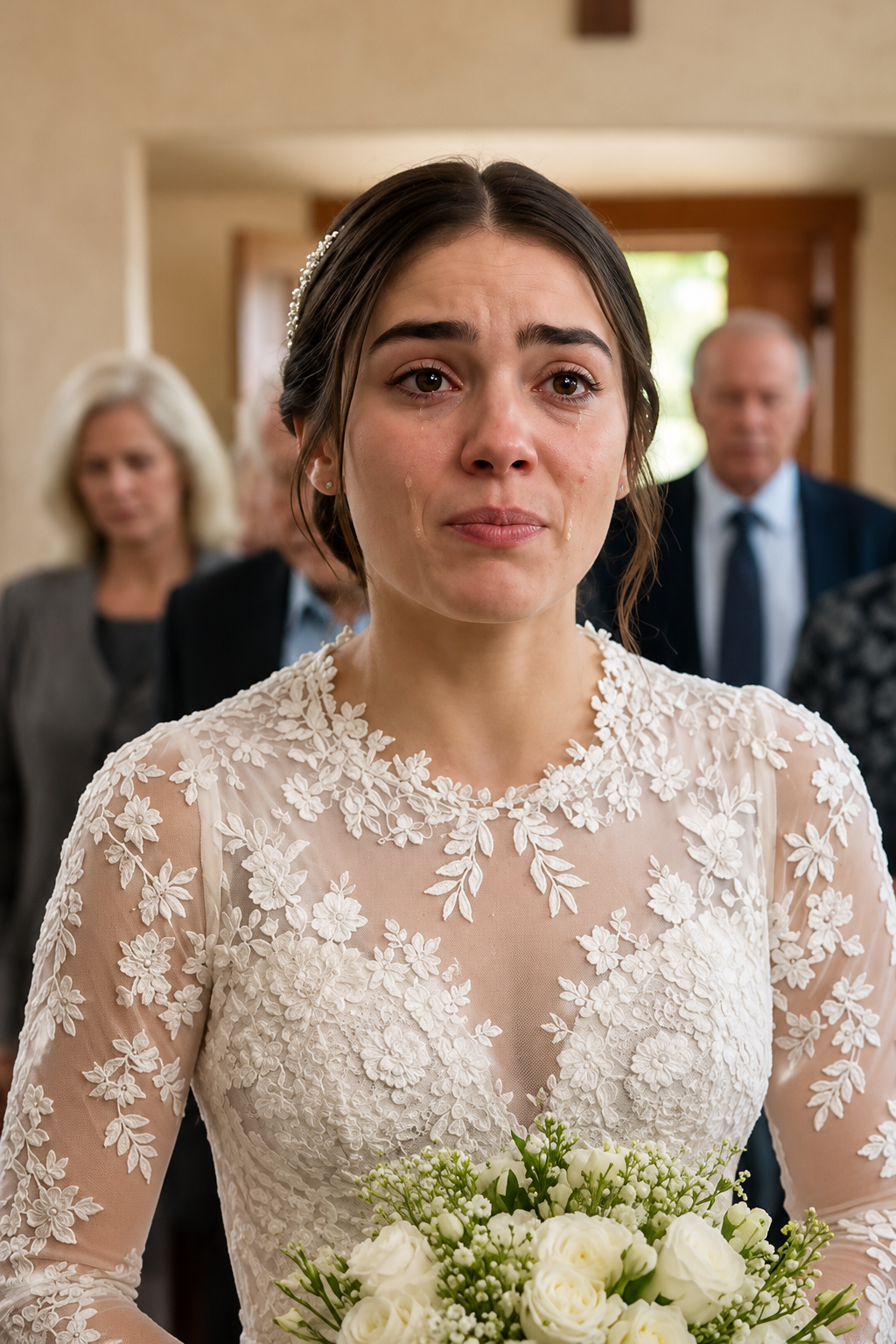
The first person through the chapel doors was a man I hadn’t seen in almost fifteen years. His name was Thomas Reed. When I was little, he used to manage the original Castell Building Supply warehouse. He had broad shoulders, a crooked nose, and a laugh so loud my grandfather claimed it could wake the dead. But Thomas wasn’t laughing now. He wore a dark blue suit, and in his hands was a small wooden box I recognized immediately. It had belonged to my grandfather. Behind him came his wife, two former warehouse employees, my grandfather’s longtime accountant, and a woman in a gray blazer carrying a leather briefcase. Then more people entered. Neighbors. Old family friends. Several nurses from the hospice. People I hadn’t invited because I assumed they wouldn’t remember me. Within minutes, the chapel was filling with voices, footsteps, and the unmistakable sound of people who had come for one reason. They wanted to be there. I stood frozen beside Owen. Thomas approached me slowly. “Your grandfather told me something about you once,” he said. I swallowed. “What?” “He said you were the only person in that family who understood the difference between being needed and being loved.” My eyes filled. Thomas glanced at the empty pews that were no longer empty. “He also said that if anyone ever tried to make you feel alone, we were supposed to remind you that you weren’t.” I looked past him. More guests were coming through the doors. And outside, my mother was watching every single one of them. Her face had gone completely white. I didn’t understand why until Thomas leaned closer. “Your grandfather left instructions, Nora. Very specific instructions.” “What instructions?” He glanced toward the woman with the briefcase. “That’s something you’ll understand on Monday.” Before I could ask another question, Owen took my hand. “Hey,” he whispered. “Look at me.” I turned. His eyes were wet. “We’re getting married today. Whatever your mother planned, she doesn’t get to take this from us.” I nodded, trying not to fall apart. Then the chapel doors opened again. This time, my father walked in. Alone. My mother remained outside. Dad stopped halfway down the aisle, looking like a man who had aged ten years overnight. He approached me cautiously. “Nora, honey…” I hadn’t heard him call me that in years. “Did you know?” I asked. His face crumpled. That was answer enough. “Did you know she told everyone I stole from Grandpa?” He looked down. “I knew she was telling people the wedding was canceled.” “And you said nothing?” “Your mother told me there were things happening with Warren’s estate. She said you were under investigation.” I stared at him. “I’m your daughter.” “I know.” “Apparently, that wasn’t enough.” He opened his mouth, but nothing came out. For the first time in my life, I didn’t feel responsible for making him comfortable. I stepped away. “Please sit down, Dad. Or leave. But I’m getting married.” He nodded and took a seat near the back. When the music began, Thomas offered me his arm. “May I?” I looked toward my father. He was staring at the floor. Then I looked at Thomas, the man who had driven my grandfather to chemotherapy appointments when his own children were too busy. “Yes,” I whispered. “I’d like that.” And as Thomas walked me down the aisle, I finally understood something. Family wasn’t always the people who shared your blood. Sometimes it was the people who showed up when your blood relatives tried to destroy you. Owen was waiting beneath the stained-glass window. He took my hands, smiled through his tears, and whispered, “You look beautiful.” I laughed shakily. “You look like you haven’t slept.” “Because I haven’t.” “Neither have I.” “Good,” he said. “We’ll be exhausted together.” That was Owen. Even when the world was burning, he could make me smile. We exchanged vows in front of forty-seven people who had arrived without receiving a single invitation from me. When the minister pronounced us husband and wife, the applause was so loud that I actually startled. For one perfect moment, I forgot everything. My mother’s lies. The complaint against my license. The will reading waiting on Monday. I was simply Nora. And I was married to the man I loved. But happiness lasted exactly seventeen minutes. We were taking photographs outside when my mother approached. She had changed into a black dress. Not the champagne-colored one she’d shown me weeks earlier. Black. As though she were attending a funeral. “Congratulations,” she said coldly. Owen stepped closer to me. “That’s enough, Elaine.” My mother ignored him. She looked directly at Thomas. “You had no right to interfere.” Thomas didn’t move. “I followed Warren’s instructions.” “My father was heavily medicated when he made those arrangements.” “Your father knew exactly what he was doing.” Her expression tightened. Then she turned to me. “Nora, we need to talk privately.” “No.” Her eyes flashed. “This is serious.” “So was my wedding.” “You don’t understand what’s happening.” “Then explain it here.” She glanced around at the guests. “I can’t.” “Then I guess we’re done.” I started to walk away. Her next words stopped me. “Your grandfather didn’t leave you what you think he did.” I turned slowly. “What is that supposed to mean?” She smiled. And somehow, that smile frightened me more than her anger. “Enjoy your little celebration. Monday is going to be very difficult for you.” Then she walked away. Thomas watched her leave. “Don’t let her frighten you,” he said. “Should I be frightened?” He hesitated. “Be prepared.” That night, Owen and I didn’t go on our honeymoon. We canceled the cabin we’d rented in Vermont and returned to our small house instead. At nine thirty, my phone rang. It was the woman from the chapel. “Mrs. Mercer? My name is Evelyn Price. I was your grandfather’s attorney.” My heart started pounding. “Is something wrong?” “I need to speak with you before Monday.” “About the will?” “About your safety.” I sat down. Owen immediately noticed. “What kind of danger?” Evelyn was quiet for several seconds. “Have you received any unusual documents recently? Anything involving your grandfather’s medical care?” I thought about the nursing complaint. “My aunt accused me of stealing medication and manipulating Grandpa’s treatment records.” “Did she provide evidence?” “I haven’t seen it.” “Then listen carefully. Do not sign anything your mother or her siblings give you. Do not meet them alone. And preserve every message you’ve received.” “Why?” “Because someone has been trying to make you legally responsible for things that happened before your grandfather died.” The room seemed to tilt. “What things?” “I can’t explain everything over the phone. Can you come to my office tomorrow at ten?” “Yes.” “And Nora?” “Yes?” “Your grandfather knew this might happen.” The call ended. I stared at the screen. Owen sat beside me. “What did she say?” I told him. He listened without interrupting. When I finished, he took my phone and placed it on the coffee table. “Tomorrow, we find out what this is.” I leaned against him. “I keep thinking I must have missed something.” “You were taking care of a dying man.” “But I was there every day.” “Exactly,” Owen said. “You were there. They weren’t.” The next morning, Evelyn’s office smelled like coffee and old books. Thomas was already waiting. So was a man named Daniel Brooks, a forensic accountant who had worked with my grandfather during the final six months of his life. Evelyn closed the conference room door. “Before we begin, Nora, I need you to understand something. Your grandfather did not ask me to keep secrets from you because he distrusted you.” “Then why?” “Because he wanted you to have a chance at a normal life before all of this began.” Daniel opened a thick folder. Inside were bank statements, invoices, and copies of company records. “Over the past four years,” he said, “approximately 2.8 million dollars was diverted from Castell Building Supply.” I blinked. “Diverted?” “Stolen.” I looked at Thomas. He nodded grimly. “Your grandfather discovered it after an outside audit.” “Who stole it?” Daniel slid three photographs across the table. My mother. My aunt Corrine. My uncle Patrick. For several seconds, I couldn’t speak. “That’s impossible.” “I wish it were,” Evelyn said. Daniel explained that the money had moved through fake supplier accounts, inflated consulting fees, and payments to businesses controlled by my relatives. My uncle Patrick had been the company’s chief financial officer. Corrine handled vendor relationships. My mother had access to several family investment accounts and served as a trustee for a business reserve fund. Together, they had quietly drained money from the company. “When Warren discovered the irregularities,” Daniel continued, “he demanded an independent investigation.” “What happened?” “Your family told him the accountants had made mistakes. Then they began questioning his mental capacity.” I remembered those months. My grandfather had been furious about something, but whenever I asked, he changed the subject. Once, he’d gripped my wrist and said, “Nora, never let anyone convince you that kindness means surrender.” I’d thought he was talking about his illness. Now I wasn’t so sure. Evelyn placed another folder in front of me. “Your grandfather changed his estate plan eight months before he died. He did so with independent medical evaluations confirming his decision-making capacity.” My hands trembled. “Did he leave me the company?” “Not exactly.” She opened the folder. “He placed his controlling ownership interest into a trust. You are the primary beneficiary, and you will have the right to appoint the majority of its trustees.” I stared at her. “Why would he do that?” “Because he wanted the business protected from the people who had been stealing from it.” My stomach twisted. “I don’t know anything about running a building supply company.” Thomas smiled sadly. “He knew that. That’s why he established a professional management team. He wasn’t asking you to operate forklifts or negotiate lumber contracts.” “Then what was he asking?” “To make sure the company stayed honest.” Evelyn continued. “Your grandfather also directed that a substantial portion of future distributions support employee scholarships, emergency medical assistance, and community hospice care.” My eyes burned. “He never told me.” “He wanted you to choose your own future.” Then Daniel turned to another page. “And there’s something else.” I was beginning to hate those words. He showed me a transfer authorization bearing my signature. According to the document, I had approved the withdrawal of $186,000 from one of my grandfather’s accounts. I stared at it. “I’ve never seen this.” “We believe your signature was forged.” The date caught my attention. It was from a Tuesday in March. I remembered that Tuesday. My grandfather had been hospitalized with pneumonia. I’d spent fourteen hours at his bedside. “I was at the hospital that day.” “We know,” Daniel said. “How?” “Your grandfather kept copies of the hospital visitor logs.” My throat tightened. Even while dying, he’d been protecting me. Evelyn folded her hands. “We believe your relatives planned to accuse you of financial exploitation if you challenged the estate.” “And the nursing complaint?” “Likely part of the same strategy. But we need evidence connecting them.” I thought of my mother’s warning outside the chapel. Monday is going to be very difficult for you. Suddenly, I understood. She wasn’t threatening to take my inheritance. She was threatening to make sure I never received it. I left Evelyn’s office feeling like someone had opened a trapdoor beneath my childhood. All those years, I’d believed my mother was simply demanding. Critical. Difficult to please. Now I wondered how many times she’d deliberately manipulated me. When I was sixteen, she told me my grandfather didn’t want me visiting because I was distracting him from work. When I graduated nursing school, she claimed he’d forgotten the ceremony. Years later, Grandpa admitted he’d never been told the date. I had dismissed those incidents as misunderstandings. But what if they weren’t? That afternoon, I drove to my grandfather’s house. It had been empty since his death. Evelyn had arranged for the locks to be changed, and Thomas met me there. Inside, everything looked painfully familiar. His reading glasses sat beside his favorite chair. A crossword puzzle lay unfinished on the table. His old cardigan still hung over the kitchen chair. I touched the fabric. And finally, I cried. Not the careful tears I’d allowed myself at the funeral. Not the quiet tears I’d swallowed while preparing medications or changing sheets. I cried so hard my knees gave out. Thomas knelt beside me. “He loved you, Nora.” “I know.” “No. I don’t think you understand how much.” He waited until I could breathe again. Then he handed me the wooden box from the wedding. Inside was a small brass key and an envelope. My name was written across the front in my grandfather’s familiar handwriting. I opened it. “My dearest Nora, If you’re reading this, someone has tried to turn your kindness into a weakness. I wish I could have protected you from that. But there are some truths a person must see with their own eyes. The key opens the bottom drawer of my desk. Whatever you find there, remember that justice and revenge are not the same thing. One protects what is right. The other lets anger decide who you become. I love you, sweetheart. Grandpa.” I read the letter three times. Then Thomas and I went upstairs. The bottom drawer contained a sealed envelope marked FOR EVELYN PRICE, a small digital recorder, and a photograph. The photograph showed my mother standing beside my grandfather in the hospital. On the back, he’d written one sentence. “Elaine came to ask for forgiveness. She left asking for money.” My hands went cold. Thomas looked away. “There’s something you should know about that visit.” “What?” “Your grandfather told me she threatened to have you removed from his care.” I felt sick. “Why?” “Because you were the only one who could tell whether he was being pressured.” I picked up the recorder. “What’s on this?” “I don’t know. Warren told me never to touch it.” We brought everything directly to Evelyn. She examined the recorder, documented where we’d found it, and asked an investigator to make a forensic copy. The recording was nearly forty minutes long. I listened to only twelve. That was enough. My mother’s voice came through the speaker first. “You can’t cut us out, Dad. We’re your children.” Grandpa sounded exhausted. “I haven’t cut anyone out. I’ve stopped you from stealing.” Patrick spoke next. “You don’t understand the financial arrangements.” “I understand missing money.” Then Corrine. “Nora has been influencing you.” My grandfather’s voice sharpened. “Leave her out of this.” My mother laughed. “She’s a nurse, Dad. She knows exactly how to make a confused old man dependent on her.” There was a long silence. Then Grandpa said something I’ll never forget. “Elaine, your daughter has given me more love in two years than you’ve given me in twenty.” My mother’s response was immediate. “Then maybe she should pay for it.” I covered my mouth. The recording continued. Patrick suggested declaring my grandfather incompetent. Corrine discussed finding someone willing to question my nursing practices. My mother said, “If Nora stands in our way, we’ll make sure nobody believes her.” Evelyn stopped the playback. Nobody spoke. Finally, I whispered, “They planned this before he died.” “Yes,” she said. I looked at the recorder. “Can we use it?” “Possibly. We need to verify the recording’s authenticity and whether it was lawfully made. But combined with the financial records, it gives investigators important leads.” For the first time since the messages began arriving, I felt something stronger than fear. I felt anger. Not the explosive kind. The kind that makes your hands steady. “What do we do now?” Evelyn looked at me. “We tell the truth.” Monday morning arrived beneath a gray November sky. The will reading was scheduled for eleven. I wore a navy dress and my grandfather’s old silver watch. Owen insisted on coming. Thomas and Daniel were there too. When we entered the conference room, my mother was already seated beside Patrick and Corrine. They looked almost cheerful. My mother examined my face. “Rough weekend?” I sat across from her. “Actually, I got married.” Her smile vanished. Patrick leaned back. “Let’s get this over with.” Evelyn entered carrying several folders. A second attorney accompanied her, along with the professional trustee named in my grandfather’s documents. She began by explaining the structure of the estate. Personal belongings. Property. Business interests. Trust arrangements. Then she announced that the controlling interest in Castell Building Supply had been transferred into the trust established for my benefit. Patrick shot to his feet. “That’s ridiculous!” Evelyn remained calm. “Please sit down.” Corrine stared at me. “You manipulated him.” I said nothing. My mother leaned forward. “She was administering his medications. She had complete access to him. You expect us to believe he made those decisions independently?” Evelyn opened another folder. “Mr. Castell underwent two independent capacity evaluations. Both found him competent to make these decisions.” “Those doctors were paid by Nora!” Patrick shouted. “No,” Evelyn replied. “They were retained through my office.” My mother turned toward me. “You think you’ve won?” I looked at her. “I didn’t know we were competing.” Her face twisted. Then she reached into her purse and removed a thick envelope. “Fine. Let’s talk about what Nora really did.” She slid several papers across the table. “There are financial transfers she authorized. And a formal complaint regarding her abuse of an elderly patient.” Owen stiffened beside me. Evelyn didn’t even glance at the documents. “We’re familiar with those allegations.” My mother blinked. “What?” “Copies were delivered to my office last week.” Corrine’s mouth fell open. Evelyn continued. “The purported transfer authorization has been referred for forensic document examination. The relevant bank has also been notified.” Patrick’s face turned red. “You’re making accusations without proof.” “Actually,” Daniel said, “we’ve identified a payment trail linking the transfer to an account controlled by a company registered to you.” Silence. My mother looked at Patrick. He wouldn’t meet her eyes. Then Evelyn said, “There’s another matter.” She placed a document on the table. “Mr. Castell instructed us to refer evidence of suspected financial misconduct to the appropriate authorities. That referral has already been made.” Corrine stood. “You can’t do that!” “It was done before today’s meeting.” Patrick grabbed his briefcase. “This meeting is over.” “You’re free to leave,” Evelyn said. “But leaving won’t change the records.” My mother remained seated. Her eyes were fixed on me. “You did this.” For thirty-four years, that sentence would have broken me. I would have apologized. Explained. Begged her to understand. But I was tired. So terribly tired. “No, Mom,” I said quietly. “You did.” She stared at me. “Everything that happens next is because of the choices you made.” Her expression changed. For a moment, I saw something that looked like panic. Then she whispered, “You don’t know what your grandfather was really like.” I felt my heart tighten. “Then tell me.” She opened her mouth. But Patrick interrupted. “Elaine, shut up.” And that was when I realized there was still something they were hiding. My mother looked at him with pure hatred. “You promised me nobody would find out.” Patrick stood completely still. Evelyn leaned forward. “Find out what?” My mother began to cry. At first, I thought it was another performance. Then she said, “The insurance money.” Daniel’s head snapped up. “What insurance money?” Patrick lunged toward her. “Don’t say another word.” But she was already talking. “After Dad’s first hospitalization, Patrick said the company was going to collapse. He said we needed to borrow against the insurance policy to keep everything running.” Daniel slowly closed his folder. “There was no authorized loan against that policy.” Patrick looked toward the door. Thomas stepped aside, leaving the exit clear. Nobody tried to stop him. But Patrick didn’t move. My mother kept speaking. “He told me the money would be replaced before Dad died.” Corrine was shaking her head. “Elaine, please.” “And when it wasn’t, he said Nora could be blamed for the missing funds because she had access to Dad’s personal documents.” My blood turned cold. “You knew I was innocent?” My mother looked at me. Tears streamed down her cheeks. “Patrick said it was the only way to protect the family.” I stared at her. “The family?” She nodded desperately. “We could have lost everything.” “You were willing to let me lose my nursing license.” “Nora…” “My career. My marriage. My freedom.” “I didn’t think it would go that far.” I laughed. It was an ugly, broken sound. “You told people I stole from a dying man.” She reached toward me. I pulled away. “Don’t.” Evelyn ended the meeting shortly afterward. She explained that the new disclosures would be documented and investigated, and that no one should destroy records or attempt to influence witnesses. Outside the office, reporters were not waiting. There were no dramatic arrests. No handcuffs. No instant justice. Real life rarely gives you a clean ending on the day you discover the truth. Instead, there were months of interviews, document requests, legal fees, and sleepless nights. The nursing board reviewed the complaint against me. My grandfather’s medical records, medication logs, and testimony from his physicians supported the care I’d provided. Eventually, the complaint was dismissed without disciplinary action. I cried when I received the letter. Not because I had doubted my innocence. Because I hadn’t realized how much fear I’d been carrying. The financial investigation took longer. Forensic accountants traced the diverted funds through multiple companies. The disputed signatures were examined. Bank employees were interviewed. The recording from my grandfather’s desk became one piece of a much larger body of evidence. Patrick was eventually charged with financial crimes related to the company. Corrine faced charges connected to falsified invoices and records. My mother entered a plea agreement after cooperating with investigators. She received a sentence that included restitution, probation, and court-ordered community service. Patrick received prison time. Corrine’s case resulted in a shorter custodial sentence. The legal consequences were significant. But the emotional consequences were harder to measure. My father filed for divorce. When he told me, he looked ashamed. “I should have protected you.” I studied him. “Yes,” I said. He nodded. “I know.” It was the first time he had admitted his failure without making an excuse. I didn’t forgive him that day. But I agreed to have coffee with him the following month. Sometimes rebuilding trust begins with something small. And sometimes it doesn’t begin at all. Six months after the wedding, my mother sent me a letter. It was twelve pages long. The first eight explained how frightened she’d been of losing her lifestyle. How Patrick had manipulated her. How she’d felt overlooked by her father. How she’d convinced herself that I was his favorite and that she’d been cheated out of what she deserved. I nearly stopped reading. Then I reached page nine. “For most of your life, Nora, I treated your goodness like an accusation against me. Every time you showed your grandfather patience, I saw what I had failed to give him. Instead of becoming better, I tried to make you smaller.” I read that sentence again. And again. For the first time, my mother had named what she’d done without blaming me. At the end, she wrote: “I don’t expect you to forgive me. I just want you to know that I finally understand why you might never want to see me again.” I folded the letter. Then I put it in a drawer. I didn’t respond. Not because I wanted to punish her. Because I finally understood that an apology didn’t create an obligation. Healing wasn’t something I owed the person who hurt me. It was something I owed myself. Meanwhile, Castell Building Supply was changing. The professional management team stabilized the business. Thomas became chairman of its advisory board. Employees who had feared losing their jobs began receiving updates about the company’s finances. The scholarship fund awarded its first grants. And with Evelyn’s help, I established the Warren Castell Hospice Support Fund. Its purpose was simple. To help families who couldn’t afford the equipment, transportation, or respite care they needed while someone they loved was dying. The first recipient was a single father named Marcus. His wife had advanced cancer. They had two young children. When he learned the fund would cover a hospital bed and several weeks of home assistance, he sat down in my office and cried. “I don’t know how to thank you,” he said. I thought about my grandfather. “You don’t have to.” A year after our wedding, Owen and I returned to the chapel. This time, there were no lies. No threats. No relatives trying to destroy our happiness. We brought a small cake, invited the people who had shown up for us, and celebrated the anniversary we’d almost lost. Thomas arrived carrying a framed photograph. It showed my grandfather standing in front of the original Castell warehouse, wearing work boots and a ridiculous yellow hard hat. On the back was a note. “Warren asked me to give you this when you were ready,” Thomas said. I turned the frame over. In my grandfather’s handwriting were eleven words. “Build something worth leaving behind. It doesn’t have to be a company.” I pressed the photograph against my chest. And for the first time, thinking about Grandpa didn’t make me feel only grief. It made me feel grateful. Later that evening, Owen and I sat on the chapel steps beneath a sky full of stars. “Do you ever wish none of it had happened?” he asked. I thought about the empty pews. My mother’s face outside the doors. The forged documents. The courtroom. The months when I woke up wondering whether someone would find another way to hurt me. “Of course,” I said. “Would you change anything?” I considered that. “I’d give anything to have Grandpa back. And I wish my mother had chosen differently.” Owen squeezed my hand. “But?” “But I wouldn’t trade what I learned.” He waited. “I spent most of my life thinking love meant being useful. Being agreeable. Forgiving quickly. Keeping everyone happy.” “And now?” “Now I know love doesn’t require me to abandon myself.” He kissed my forehead. “Your grandfather would be proud.” I smiled. “I hope so.” Two weeks later, I received another letter from my mother. This one was only three sentences. “I heard about the hospice fund. Your grandfather would have loved that. I hope you’re happy, Nora.” I placed it beside the first letter. I didn’t tear it up. I didn’t answer. Maybe someday I will. Maybe someday we’ll sit across from each other and have a conversation that doesn’t end in blame. But if that day comes, it will be because real change has happened, not because time has passed or because we’re related. I no longer confuse forgiveness with reconciliation. I can release the anger without handing someone the keys to my life again. And I can wish my mother peace without allowing her to disturb mine. The strangest part of everything is that I still think about those eighty-eight invitations. For weeks, I imagined them as eighty-eight pieces of happiness my mother had stolen. But now, when I remember my wedding, I don’t see the empty chapel. I see Thomas standing in the doorway with my grandfather’s wooden box. I see nurses who had worked double shifts showing up in their best clothes. I see warehouse workers wiping tears from their eyes. I see Owen waiting for me, refusing to let fear steal our future. And I remember the sound of those footsteps. Dozens of people walking toward me when someone had worked so hard to make sure I stood alone. My mother thought she could erase my wedding by erasing the invitations. She thought she could erase my reputation with a lie. She thought she could erase my grandfather’s wishes by making me afraid. But she misunderstood something important. A person’s worth isn’t determined by who tries to destroy them. It’s revealed by what they choose to build afterward. My grandfather spent his life building a company. In his final years, he taught me how to build something far more valuable. A life where kindness has boundaries. Where loyalty is earned through actions. Where truth matters more than appearances. And where love is never supposed to cost you your dignity. I used to believe the saddest thing about my wedding was that my own mother tried to leave me standing in an empty church. Now I know the real tragedy was that she had so many chances to stand beside me, and chose to stand against me instead. But her choice didn’t have to become my future. That was the gift my grandfather left me. Not the company. Not the money. Not even the evidence that eventually exposed the truth. He left me the courage to stop begging for love from people who only knew how to use it against me. And if there’s one thing I hope anyone hearing my story remembers, it’s this: You can love someone and still refuse to let them hurt you. You can forgive without forgetting. You can move forward without pretending the past never happened. And sometimes, the family you deserve begins with the people who walk through the door when everyone else has been told to stay away. My mother tried to make sure nobody came to my wedding. But the people who mattered found their way there anyway. And when I finally walked down that aisle, I wasn’t walking toward an inheritance, a victory, or revenge. I was walking toward a life that belonged to me. For the first time, that was enough.