My parents accidentally called me while they were laughing about how easy I was to manipulate.
“DON’T LET HER HANG UP! TELL HER WE KNOW WHAT SHE DID!”
My mother’s voice cut through the noise so sharply that even the conversations in the background seemed to stop.
I sat on my couch, staring at the Christmas lights glowing in my apartment window.
For a moment, I almost laughed.
Not because anything was funny.
Because somehow, even now, my parents had managed to turn their own cruelty into something I had supposedly done to them.
Dad lowered his voice.
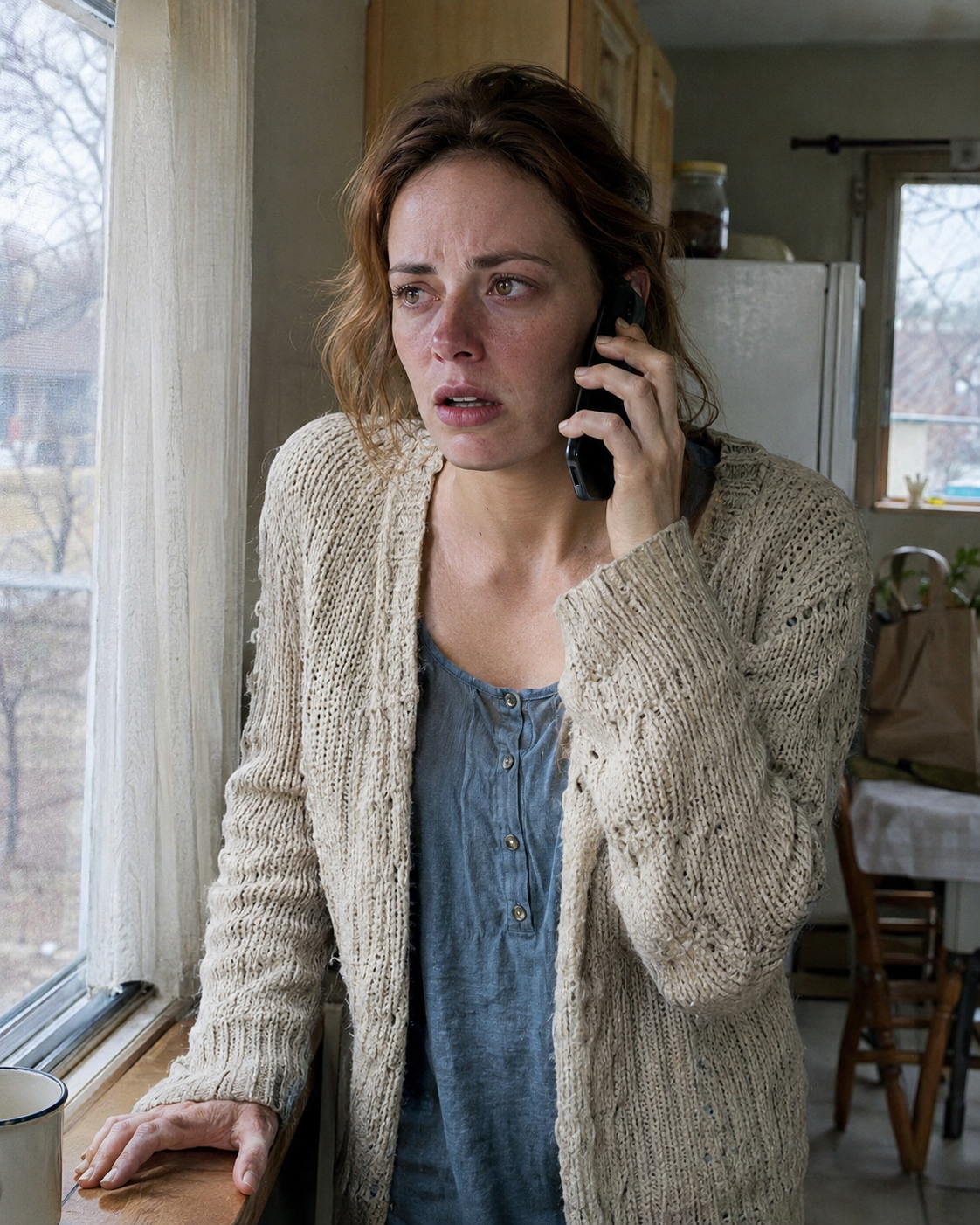
“Sweetheart, I don’t know what happened with the catering company, but we have thirty-four people here. Your mother is having a breakdown. Can you please call them and fix this?”
I looked at the small plate of cheese and crackers sitting beside me.
For the first time in seven years, I wasn’t spending Christmas Eve running around making sure everyone else had enough.
I had ordered Chinese food for myself. It was supposed to arrive at six.
“I canceled the order, Dad.”
Silence.
Then I heard him breathe.
“You what?”
“I canceled it on December eighth. They refunded the entire amount.”
Another silence.
This one lasted longer.
“Why would you do something like that?”
I could hear the anger building in his voice, but underneath it was something else.
Fear.
Not fear that his daughter was hurting.
Fear that his carefully arranged Christmas was falling apart.
“Because I heard you and Mom talking on December sixth.”
I let those words settle.
“About how desperate I am to feel useful. About how easy I am to manipulate. About how you didn’t want me at Christmas dinner.”
The background noise disappeared.
Then Dad whispered, “What are you talking about?”
“The phone call, Dad. Mom accidentally called me. I heard everything.”
For several seconds, there was nothing.
Then he said the most predictable thing imaginable.
“You misunderstood.”
I closed my eyes.
There it was.
The sentence that had explained away almost every hurtful thing my parents had done since I was a teenager.
I misunderstood when Mom forgot my college graduation.
I misunderstood when Dad borrowed money and never paid it back.
I misunderstood when Caleb received a car for his twenty-fifth birthday while I got a card with twenty dollars inside.
And apparently, I had misunderstood two people laughing about exploiting me.
“No, Dad. I understood perfectly.”
His voice hardened.
“You’re going to ruin Christmas over one private conversation?”
“No,” I said quietly. “I’m just not paying for it anymore.”
Before he could answer, Mom grabbed the phone.
“You selfish little girl!”
I pulled the phone away from my ear.
“You have humiliated us in front of the entire family! Do you have any idea how embarrassing this is?”
I stared at the wall.
“Not as embarrassing as finding out your own parents think you’re pathetic.”
Mom made a disgusted noise.
“Oh, stop being dramatic. You always twist everything into some tragedy.”
Then she said something that changed the entire conversation.
“And after everything we’ve done to protect you from the truth about yourself, this is how you repay us?”
My heart began beating faster.
“What truth?”
She went quiet.
In the background, I heard Dad say, “Nora. Stop.”
But I wasn’t going to let it go.
“What truth, Mom?”
“Nothing. Forget it.”
“No. You brought it up.”
Then another voice appeared.
A woman’s voice.
Older. Firm. Familiar.
“Put the phone on speaker, Nora.”
My aunt Dorothy.
Mom snapped, “This is none of your business.”
Dorothy answered, “Considering I’ve been sending you money for your daughter’s treatment for three years, I think it’s very much my business.”
I stopped breathing.
Treatment?
My treatment?
I stood up so quickly that my coffee table rattled.
“What treatment?”
Nobody answered.
Then Aunt Diane spoke.
“Nora, what exactly have you been doing with our money?”
And just like that, Christmas Eve became something none of us would ever forget.
Mom started crying.
Not soft, genuine crying.
The dramatic kind she used whenever someone asked a question she didn’t want to answer.
“I cannot believe everyone is attacking me on Christmas!”
But Dorothy wasn’t having it.
“Nora, answer the question.”
Dad tried to intervene.
“Dorothy, this isn’t the time.”
“Then when is the time, Frank? Because I’ve been asking for receipts since September.”
I felt the room tilt around me.
Receipts?
Money?
A program?
I remembered the conversation I’d overheard.
“At least Dorothy and Diane are still sending money for that program.”
My stomach twisted.
“Dad,” I said, “what program have you been telling people I’m in?”
He didn’t answer.
Then Caleb’s voice came through.
“Can somebody please explain why there’s no food?”
I almost laughed again.
Of course.
Even with the family exploding around him, my brother’s biggest concern was dinner.
Mom shouted, “Because your sister decided to punish us!”
And then she said it.
“She knows perfectly well that we’ve spent years helping her with her emotional problems, and now she’s having another episode!”
I felt something inside me go completely still.
Emotional problems?
Another episode?
I had never been in a treatment program.
I had never asked my parents for psychiatric help.
I had never even told them I was struggling emotionally.
Because whenever I tried, Mom accused me of being ungrateful.
Dorothy spoke again.
“Wait. She’s on the phone right now?”
“Yes,” Dad muttered.
“Then let me talk to her.”
There was shuffling.
Someone protested.
Then Dorothy’s voice came through clearly.
“Honey, are you all right?”
It was such a simple question.
And it was the first time that evening anyone had asked it.
My throat tightened.
“I don’t know, Aunt Dorothy.”
She took a breath.
“Sweetheart, have you been attending the Willow Creek Recovery and Wellness Program?”
“No.”
The silence that followed was terrifying.
“Have you ever attended any program by that name?”
“No. I’ve never even heard of it.”
Dorothy whispered something I couldn’t make out.
Then she asked, “Have your parents been paying for your medical treatment?”
“No. I’ve been paying them eight hundred dollars a month because Dad said they were behind on the mortgage.”
Someone gasped.
Diane said, “What?”
I continued, my voice shaking.
“And I’ve been paying for Christmas for seven years.”
Aunt Dorothy didn’t speak for a moment.
Then she said, very carefully, “Honey, I need you to listen to me. Don’t send your parents another penny.”
Mom screamed something in the background.
Dorothy ignored her.
“And tomorrow, we’re going to talk.”
The phone disconnected.
I stood in the middle of my apartment, holding a silent phone, realizing that canceling one Christmas dinner had uncovered something much bigger than I had imagined.
I didn’t sleep that night.
At 11:38 p.m., Caleb sent me a text.
Hope you’re happy. Grandma cried. The kids didn’t get their Christmas dinner because of you.
I stared at the message.
Then I typed:
Did you know Mom and Dad were collecting money for a treatment program I never attended?
The typing dots appeared.
Disappeared.
Appeared again.
Then nothing.
At 12:07 a.m., he replied.
You need to stop making accusations.
I saved the message.
Something told me I would need it.
Christmas morning, I woke to seventeen missed calls.
Six from Mom.
Four from Dad.
Three from Caleb.
Two from relatives whose numbers I barely recognized.
And two from Aunt Dorothy.
I called Dorothy first.
She answered immediately.
“Can you come to my house this afternoon?”
I hesitated.
“I don’t know if I can handle another family confrontation.”
“This isn’t a confrontation,” she said. “It’s a conversation you should have been included in years ago.”
At two o’clock, I pulled into her driveway.
Aunt Diane’s car was already there.
When Dorothy opened the door, she hugged me so tightly that I almost broke down.
She had always been different from Mom.
Less concerned with appearances.
More interested in whether people were actually okay.
Inside, Diane sat at the dining room table beside a thick blue folder.
I recognized the expression on her face.
She was furious.
But not with me.
Dorothy poured coffee, sat down, and pushed the folder toward me.
“Before we show you this, I need to apologize.”
I frowned.
“For what?”
“For believing your mother without ever speaking to you.”
She opened the folder.
Inside were printed emails, bank transfer confirmations, and several documents with my name on them.
The first email was dated March 2021.
It was from Mom to Dorothy and Diane.
Subject: Please keep this confidential.
My hands trembled as I read.
Mom claimed I had been diagnosed with a severe emotional disorder.
She said I was struggling to maintain employment, making impulsive financial decisions, and refusing to accept professional help.
She described a residential treatment program that supposedly cost thousands of dollars each month.
And then came the sentence that made me feel physically sick.
Please don’t contact her about this. Her therapist says direct conversations about her condition could trigger a dangerous setback.
I looked up.
“She told you I was dangerous?”
Diane shook her head.
“She told us you were fragile.”
Dorothy continued.
“She said you were ashamed of your condition and didn’t want the family involved. We thought we were respecting your privacy.”
I looked back at the papers.
There were more emails.
More stories.
According to my mother, I had been hospitalized twice.
I had lost three jobs.
I had accumulated enormous credit card debt.
And my parents had supposedly sacrificed their retirement savings to keep me stable.
None of it was true.
I had worked at the same insurance company for nine years.
I had received two promotions.
I had excellent credit.
And until recently, I had been saving for a down payment on a house.
I turned another page.
There were screenshots of bank transfers.
Dorothy had sent $18,600.
Diane had sent $14,400.
Together, they had given my parents $33,000.
For treatment that never existed.
I covered my mouth.
“Oh my God.”
Dorothy reached for my hand.
“We believed we were helping you.”
I looked at the dates.
The transfers started in 2021.
Two years before Dad began asking me for mortgage assistance.
For a moment, I couldn’t understand why my parents would need so much money.
Then I remembered Caleb’s truck.
The expensive wheels.
The leather seats.
The way he had casually mentioned paying cash for upgrades.
“Do you know where the money went?” I asked.
Diane exchanged a glance with Dorothy.
“We have suspicions.”
She pulled out another document.
A copy of an invoice supposedly issued by Willow Creek Recovery and Wellness.
It had a logo, an address, and a telephone number.
Diane pointed at the bottom.
“I tried calling this number last month. It was disconnected.”
Dorothy added, “I searched the address. It’s a vacant office building.”
I stared at the invoice.
It looked official.
Until I noticed something strange.
The billing contact was listed as C. Bennett.
Caleb Bennett.
My brother.
I felt cold all over.
“Caleb made these?”
“We don’t know,” Dorothy said. “But his initials are on every invoice.”
I leaned back.
For years, I had assumed Caleb was simply the favorite.
The son who could do no wrong.
The one who got second chances without asking.
But this was different.
This wasn’t favoritism.
This was a coordinated lie.
And I was the excuse they used to collect money.
I asked Dorothy to forward every document to my email.
Then I told them everything.
The Christmas payments.
The monthly mortgage assistance.
The way Mom had repeatedly discouraged me from buying a home because she said I needed to focus on family obligations.
When I finished, Diane had tears in her eyes.
“Your mother told us you were unemployed.”
I stared at her.
“What?”
“She said she didn’t want you to feel embarrassed around the family. That’s why she stopped inviting you to certain gatherings.”
Suddenly, dozens of memories rearranged themselves.
The birthdays I heard about afterward.
The family vacations I was never invited to.
The relatives who spoke to me with uncomfortable sympathy.
The strange questions about whether I was “doing better.”
I had assumed everyone was busy.
Or that I had become less important as the family grew.
But Mom had been telling them I was unstable.
And then using that lie to keep them away from me.
“Why?” I whispered.
Dorothy squeezed my hand.
“Because if people talked to you, they might discover the truth.”
I drove home that evening feeling like someone had taken my entire childhood and held it under a different light.
Every sacrifice suddenly looked different.
Every compliment from Mom seemed calculated.
Every time Dad called me his “responsible girl,” I wondered whether he meant responsible or profitable.
The next morning, I called my bank.
I canceled the recurring eight-hundred-dollar transfer.
Then I gathered seven years of Christmas receipts.
Catering.
Decorations.
Rental chairs.
Desserts.
Children’s gifts.
Holiday cleaning services.
Everything.
The total was $38,740.
Add the $9,600 I had sent for the house since January, and my parents had received $48,340 from me.
That didn’t include the $33,000 from my aunts.
More than eighty thousand dollars.
And that was only what we could document.
I sat at my kitchen table staring at the numbers.
I had spent years feeling guilty for not doing enough.
Meanwhile, I had been doing far more than anyone ever asked of Caleb.
That afternoon, Dad appeared at my apartment.
He knocked for almost ten minutes.
I finally opened the door, leaving the security chain attached.
He looked exhausted.
“Can we talk?”
“About what?”
He rubbed his face.
“Your mother is very upset.”
“I’m sure she is.”
“She’s been crying for two days.”
I waited.
He looked at me as if expecting sympathy.
When I didn’t offer any, he sighed.
“Look, things got out of hand.”
I felt my jaw tighten.
“Did you tell Dorothy and Diane I was in treatment?”
He looked away.
“Your mother handled most of that.”
“Did you know?”
He said nothing.
“Dad.”
“Yes.”
One word.
So small.
So devastating.
“Did you know the program was fake?”
He stared at the floor.
Then he whispered, “We never thought it would go this far.”
I laughed once.
A broken, humorless sound.
“Thirty-three thousand dollars is pretty far.”
His eyes widened.
“You’ve been talking to your aunts.”
“Yes.”
His expression changed immediately.
“You shouldn’t involve other people in private family matters.”
“You involved them when you took their money.”
He stepped closer to the door.
“Sweetheart, you don’t understand the pressure we’ve been under.”
“Then explain it.”
He hesitated.
Then he told me something I hadn’t expected.
Caleb had gotten into serious financial trouble in 2020.
He had started a small contracting business with a friend, borrowed heavily to buy equipment, and lost several major jobs.
Instead of admitting he couldn’t afford the business, he continued spending.
Eventually, he owed money to creditors, suppliers, and people he knew personally.
Mom and Dad began helping him.
Then helping became rescuing.
And rescuing became lying.
At first, they borrowed from their savings.
Then Mom came up with the story about my treatment.
“She said Dorothy and Diane would never give Caleb money,” Dad explained. “But they’d help you.”
I stared at him.
“So you used my name.”
He swallowed.
“We planned to pay it back.”
“Did you?”
“No.”
“Did you ever intend to tell me?”
He didn’t answer.
I looked at the man who had taught me to ride a bicycle.
Who used to check my tires before long road trips.
Who told me honesty was the foundation of a good life.
And I realized he had become someone I didn’t recognize.
“Why did you start taking eight hundred dollars from me?”
He looked ashamed.
“Because the house payments were getting difficult.”
“Because of Caleb?”
He nodded.
I closed my eyes.
Then another question came.
“Why didn’t Mom want me at Christmas?”
Dad’s face changed.
He looked genuinely uncomfortable.
“Caleb was worried you might ask questions about the truck.”
I stared at him.
“That was it?”
“And your mother thought you’d been getting too independent lately.”
I almost couldn’t process the words.
“Too independent?”
“She said you were talking about buying your own house. She was afraid you’d stop helping us.”
There it was.
The truth beneath every excuse.
They hadn’t excluded me because I was difficult.
They excluded me because I was becoming harder to control.
I looked at Dad through the narrow opening.
“Leave.”
His eyes filled.
“Please don’t do this.”
“You did this.”
He stood there another moment.
Then he said something I will never forget.
“But we’re your parents.”
I looked straight at him.
“I know. That’s what makes it so much worse.”
I closed the door.
Three days later, Dorothy called.
She and Diane had consulted an attorney.
The attorney believed the fake invoices and written requests for money were serious enough to warrant a formal investigation.
Dorothy asked whether I would be willing to provide a statement.
I said yes.
Not because I wanted revenge.
Because I was beginning to understand that silence was exactly what had allowed this to happen.
The following week, Caleb called me.
I almost ignored it.
But curiosity won.
He didn’t bother with hello.
“You need to tell Dorothy to back off.”
I sat down.
“Why?”
“Because she’s threatening to go to the police.”
“She has every right to.”
“You have no idea what you’re doing.”
“Then explain it.”
He exhaled angrily.
“Mom and Dad were just trying to help me get back on my feet.”
“With money they stole using my name?”
“They didn’t steal anything. Dorothy and Diane gave it voluntarily.”
“Based on fake invoices and lies about my health.”
He went quiet.
Then he said, “You’re really going to destroy this family over money?”
That sentence made everything clear.
To Caleb, the family wasn’t being destroyed by deception.
It was being destroyed by someone refusing to tolerate it.
“Did you make the invoices?” I asked.
He didn’t answer.
“Caleb?”
“Mom needed something official-looking.”
My chest tightened.
“So you did.”
“It wasn’t supposed to hurt anybody.”
I looked at the documents spread across my desk.
“You told people I was mentally ill. You helped convince our aunts to send thousands of dollars. You let me pay for Christmas while you bought a truck.”
He snapped.
“Don’t bring my truck into this.”
“Why not?”
“Because I worked for that truck!”
I almost smiled.
There was something astonishing about hearing a man defend his luxury purchase while admitting he’d helped create fraudulent medical bills.
“Then you should have no problem showing where the money came from.”
He hung up.
Two days later, Mom sent a family-wide email.
The subject line read:
A Mother’s Broken Heart.
It was three pages long.
She accused me of becoming obsessed with money.
She claimed I had always been jealous of Caleb.
She said I had deliberately ruined Christmas to embarrass her.
And she described my questions about the fake treatment program as evidence that I was emotionally unstable.
For the first time in my life, I didn’t feel compelled to defend myself immediately.
Instead, I forwarded the email to Dorothy.
She called ten minutes later.
“Are you ready to let everyone know?”
I looked at the stack of documents.
“Yes.”
That Sunday, Dorothy invited the family to her house.
Not all thirty-four people came.
But seventeen did.
Including Mom, Dad, and Caleb.
I wasn’t sure I could walk through the door.
My hands shook as I parked.
Then Diane came outside.
“You don’t have to do this,” she said.
“I know.”
“But if you want to, we’re right here.”
I followed her inside.
The living room went silent when I entered.
Mom sat on the couch, clutching tissues.
Caleb stood by the fireplace.
Dad stared at his shoes.
I recognized the setup immediately.
Mom was going to be the victim.
I was supposed to be the villain.
But Dorothy had other plans.
She placed a folder on the coffee table.
“I’ve asked everyone here because serious lies have been told about my niece.”
Mom interrupted.
“This is completely inappropriate.”
Dorothy looked at her.
“Then you should have no trouble explaining these documents.”
She distributed copies of the emails and invoices.
I watched faces change as people read.
Confusion.
Shock.
Disbelief.
My cousin Melissa looked up.
“Wait. She’s not in treatment?”
“No,” I said.
Melissa blinked.
“But Aunt Nora told us you couldn’t come to Thanksgiving because you’d been hospitalized.”
“I was working that weekend. Nobody invited me.”
Across the room, Uncle Robert frowned.
“She told me you lost your job.”
“I’ve had the same employer for nine years.”
Someone else spoke.
“She said you borrowed money from them.”
I shook my head.
“I’ve been sending them eight hundred dollars a month.”
The room erupted.
Mom jumped to her feet.
“You’re all acting like I’ve committed some terrible crime!”
Dorothy’s voice was steady.
“You sent me invoices for a nonexistent medical program.”
Mom pointed at me.
“Because she needed help!”
I stood.
“Then name the doctor.”
Mom froze.
“Excuse me?”
“Name my doctor.”
She looked around.
“That’s confidential.”
“Then name the hospital where you said I was admitted.”
Her face flushed.
“You’re humiliating me.”
“No, Mom. I’m asking you to tell the truth.”
Caleb stepped forward.
“Enough. She’s your mother.”
I turned toward him.
“And you made the invoices.”
The room went silent again.
His face drained.
Dad whispered, “Caleb, don’t.”
But it was too late.
Dorothy looked at him.
“Is that true?”
Caleb stared at the floor.
Then he said, “I was just trying to help.”
I heard someone gasp.
Diane began crying.
Not loudly.
Just quiet, devastated tears.
Mom looked around the room and seemed to realize that her usual performance wasn’t working.
Then she did something I never expected.
She pointed at Dad.
“This was Frank’s idea!”
Dad looked up.
“What?”
“You were the one who said we needed money!”
“You wrote the emails, Nora!”
“You approved everything!”
Their voices rose.
For several minutes, they argued in front of everyone.
Years of secrets spilled out.
The fake treatment bills.
The money given to Caleb.
The unpaid mortgage.
The credit cards.
The truck.
At one point, Caleb shouted that Mom had promised the family would never find out.
I stood there watching them turn on each other.
And suddenly, I didn’t feel angry.
I felt exhausted.
Because I finally understood something.
There was no perfect explanation waiting behind their behavior.
No hidden sacrifice.
No misunderstanding.
They had made choices.
Repeatedly.
And those choices had hurt people who trusted them.
I picked up my coat.
Mom noticed.
“Where do you think you’re going?”
“Home.”
“You can’t just walk away from your family!”
I stopped at the doorway.
For years, that sentence would have worked.
It would have filled me with guilt.
It would have made me apologize for things I hadn’t done.
But not anymore.
“Mom, I spent seven years showing up for this family.”
My voice was quiet.
“I paid for the dinners. I helped with the house. I missed opportunities because I thought you needed me.”
Her expression flickered.
“And when you thought I wasn’t listening, you laughed about how easy I was to manipulate.”
Nobody spoke.
“I don’t hate you,” I continued. “But I don’t trust you. And I can’t keep sacrificing my life to protect yours.”
Then I left.
The investigation that followed wasn’t quick.
Dorothy and Diane submitted the emails, transfers, and fabricated invoices to the authorities.
Their attorney helped them organize everything.
I provided my financial records and a written account of what had happened.
For months, there were interviews, paperwork, and difficult conversations.
Mom tried calling me from different numbers.
Dad sent letters.
Caleb accused me of destroying his future.
I didn’t respond to the accusations.
Eventually, the investigation confirmed that the treatment invoices had been fabricated.
Caleb admitted creating them.
My parents acknowledged receiving money under false pretenses.
Rather than drag everyone through a prolonged court fight, Dorothy and Diane pursued a formal repayment agreement with legal assistance.
My parents agreed to repay the $33,000.
The agreement required them to sell assets and make scheduled payments.
Caleb sold his truck.
The nearly new truck I’d once admired disappeared from the driveway in March.
I expected to feel satisfied.
Instead, I felt strangely sad.
Not because he lost the truck.
But because it had taken something so serious for anyone in that house to face consequences.
The biggest surprise came from Dad.
In April, he sent me a letter.
Not a text.
Not a voicemail.
A handwritten letter.
It was six pages long.
For the first time, he didn’t ask me for money.
He didn’t accuse me of misunderstanding.
He didn’t tell me I was overreacting.
He admitted what he’d done.
He wrote about how ashamed he was of allowing Caleb’s problems to consume the family.
He acknowledged that he’d treated my reliability as something he could exploit.
And near the end, he wrote:
I spent so much time trying to save your brother from the consequences of his decisions that I made you pay for them. I don’t know how to make that right.
I read that sentence several times.
Then I cried.
Not because everything was fixed.
Because it was the first honest thing I’d heard from him in years.
I didn’t immediately forgive him.
I wrote back that I appreciated his honesty, but trust would require more than one letter.
He said he understood.
Mom never sent an apology.
Instead, she told relatives that I’d turned Dad against her.
For a while, that hurt.
Then I realized I was still waiting for her to become someone she had never shown herself willing to be.
And I stopped waiting.
By summer, my life had changed in ways I hadn’t expected.
Without the monthly payments to my parents, I could save again.
Without the pressure of financing Christmas, I had room in my budget for things I’d postponed.
I took a weeklong trip to Maine.
I walked along rocky beaches.
I ate lobster rolls.
I sat outside a little coffee shop one morning and realized I hadn’t checked my phone in three hours.
It was the first vacation I’d taken in nearly a decade without feeling guilty.
In September, I met with a mortgage lender.
I had been afraid I’d ruined my chances of owning a home.
But after reviewing my finances, she smiled.
“You’re in better shape than you think.”
I almost cried right there in her office.
For years, I’d imagined owning a small house.
Nothing extravagant.
Just somewhere with a porch, a garden, and a kitchen big enough to host people I loved.
That November, I found it.
A two-bedroom cottage on a quiet street.
White siding.
Blue front door.
A little maple tree in the yard.
The kitchen needed work.
The bathroom was outdated.
But when I walked inside, I felt something I hadn’t felt in a long time.
Possibility.
I made an offer.
It was accepted.
I closed on the house three weeks before Christmas.
The first person I called was Dorothy.
She cried.
Then Diane cried.
Then I cried.
Apparently, we had become a family of very emotional women.
That Christmas, I hosted dinner.
Not for thirty-four people.
Just nine.
Dorothy and Diane came.
Melissa brought her husband and their two kids.
Two close friends joined us.
And Dad came for dessert.
I had invited him after months of cautious conversations.
He had started counseling.
He was making his agreed payments.
And, most importantly, he had stopped asking me to fix his problems.
When he arrived, he stood on my porch holding a small potted rosemary plant.
“I didn’t know what to bring,” he said.
I smiled.
“It’s perfect.”
He looked around the living room.
At the secondhand furniture.
The mismatched decorations.
The tiny Christmas tree I’d bought on sale.
Then his eyes filled.
“You did all this yourself.”
I nodded.
“Yeah, Dad. I did.”
He swallowed.
“I’m proud of you.”
A year earlier, those words would have meant everything.
Now they were simply nice to hear.
I no longer needed them to believe in myself.
We ate dinner around a table that barely fit everyone.
The mashed potatoes were a little lumpy.
The rolls got slightly burned.
Melissa’s youngest spilled cranberry juice on my new tablecloth.
And nobody cared.
There was laughter.
Real laughter.
Not the kind that made someone else feel small.
At one point, Dorothy raised her glass.
“To the first Christmas in this house.”
Everyone smiled.
Then she added, “And to the person who finally learned she deserves a seat at her own table.”
I looked around.
At the people who had shown up without expecting anything.
At the food we’d all helped prepare.
At the little house I’d once believed I could never afford.
And I realized something that made my chest ache.
For seven years, I’d paid for a Christmas celebration where I was never truly welcome.
Now I was sitting at a much smaller table.
And for the first time, I belonged.
Later that evening, after everyone left, I found a small envelope tucked beneath my Christmas tree.
It was from Dad.
Inside was a check for eight hundred dollars.
And a note.
This doesn’t begin to repay what I owe you. But it’s a start. Merry Christmas, sweetheart.
I sat on the floor and held that note for a long time.
Then I placed it in a drawer.
Not because I wanted to forget.
Because I wanted to remember the difference between a promise and an action.
I still don’t know whether my relationship with my parents will ever be what it once was.
Mom and I remain estranged.
Caleb and I barely speak.
Dad and I are rebuilding something slowly, with boundaries neither of us fully understands yet.
And I’m okay with that.
Because healing doesn’t always mean putting everything back the way it was.
Sometimes it means accepting that the old version of your life was hurting you.
Sometimes it means letting people be disappointed when you stop giving them what they never had the right to demand.
And sometimes it means canceling a $2,950 Christmas dinner.
Not to punish anyone.
But because you’ve finally realized that love shouldn’t require you to buy your place in the family.
People have asked me whether I regret answering Dad’s call that Christmas Eve.
I don’t.
If I hadn’t answered, I might never have learned about the fake treatment program.
I might never have discovered how deeply my parents had manipulated everyone around them.
And I might still be sending money every month, believing that one more sacrifice would finally make me worthy of their love.
But here’s what I wish I’d understood years earlier.
Being needed is not the same as being loved.
Someone can depend on you, praise your generosity, and call you their greatest blessing while still taking advantage of you.
Real love doesn’t disappear when you stop paying.
Real family doesn’t make you earn your place through endless sacrifice.
And gratitude shouldn’t be something you have to beg for after giving everything you have.
Last Christmas, I spent almost forty thousand dollars over seven years trying to create happiness for people who didn’t appreciate me.
This Christmas, I spent less than four hundred dollars.
And I was happier than I’d been in years.
Because the most valuable thing I gave myself wasn’t a house, a vacation, or even financial freedom.
It was permission to stop confusing self-sacrifice with love.
I used to think being a good daughter meant never saying no.
Now I know that sometimes the most important word you can say to the people you love is exactly that.
No.
Not because you’re cruel.
Not because you’re selfish.
But because your life matters, too.
And if someone only welcomes you to their table when you’re paying for the meal, maybe it’s time to build a table of your own.
That’s exactly what I did.
And this time, I made sure there was a seat for me.