When my daughter pointed across the naval medical center lobby and screamed Evelyn’s name, I froze as the woman
Part 2
We met in a quiet consultation room after visiting hours.
The fluorescent lights hummed overhead.
Evelyn sat near the window, her hands resting loosely in her lap.
For several seconds, neither of us spoke.
Then she said, “I didn’t leave because I wanted to.”
My chest tightened.
“Then why did you leave?”
She took a breath that seemed to hurt.
“Because I didn’t know how to stay.”
I stared at her.
She told me the crash had fractured her spine.
There had been surgeries.
Complications.
Months of rehabilitation.
Weeks when she could not sit up without help.
Weeks when she needed someone to wash her hair, dress her, move her legs, lift her body from one surface to another.
“I was used to being the person who helped,” she said.
“I couldn’t stand being the person who needed help.”
Her voice cracked.
“I kept thinking about Mia.”
I said nothing.
“I pictured her seeing me like that.”
She looked down at her hands.
“Seeing me unable to walk.”
“Seeing me unable to pick her up.”
“Seeing me become someone she had to take care of.”
I felt my throat close.
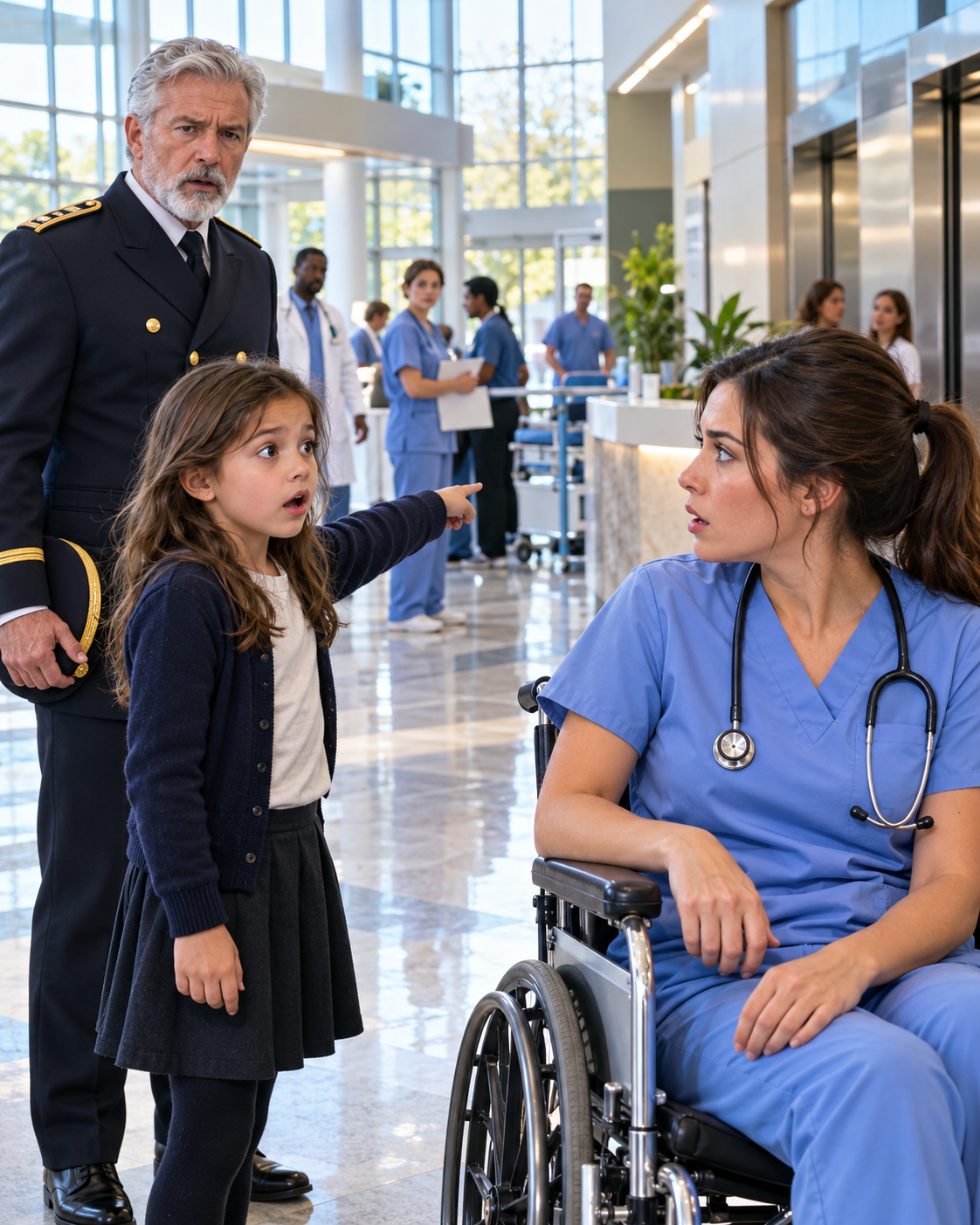
“You could have called me.”
“I know.”
“You could have told me the truth.”
“I know.”
“Then why didn’t you?”
She looked at me with tears gathering in her eyes.
“Because you would have come.”
The words hit harder than I expected.
She continued before I could answer.
“You would have dropped everything.”
“You would have brought Mia.”
“You would have tried to carry all of it.”
She wiped her cheek.
“And I couldn’t bear that.”
I sat back slowly.
“You thought you were protecting us.”
“I thought I was protecting you from watching me disappear piece by piece.”
She told me that when the doctors first gave her no clear answer about whether she would ever walk again, she made a decision.
She would rebuild herself without leaning on anyone she loved.
Not because she hated us.
Because she loved us so fiercely that the idea of becoming our burden terrified her.
She moved into long-term rehabilitation.
She learned how to transfer herself.
How to use adaptive equipment.
How to manage the smallest tasks people never think about until they suddenly cannot do them.
She cried in therapy rooms.
She threw things.
She had days when she hated her own body.
She had nights when she stared at the ceiling and wondered whether courage was supposed to feel this much like grief.
Then, from a hospital bed, she started taking online nursing courses.
“Why nursing?” I asked.
She gave me a tired smile.
“Because I needed my life to mean something beyond what my legs could or couldn’t do.”
She studied between therapy sessions.
She took exams in the same room where she had once learned how to hold a cup again.
She graduated months later.
Then she found work in rehabilitation.
She told me she had not planned to let me find her.
“I thought I’d wait until I was stronger.”
“How strong did you think you needed to be?”
She laughed softly through her tears.
“Strong enough that nobody would feel sorry for me.”
I looked at her chair.
“I don’t feel sorry for you.”
“I know.”
She hesitated.
“I was afraid you would.”
That was the moment I finally understood how long she had been carrying this alone.
She had not abandoned us because she stopped caring.
She had vanished because caring made her afraid of being seen as broken.
I leaned forward.
“Mia never forgot you.”
Evelyn closed her eyes.
“I know.”
“No, you don’t.”
I pulled out my phone.
There were years of photographs.
Mia at six.
Mia at seven.
Mia at school events.
Mia holding a birthday cake.
Mia standing in front of the same blue curtains in our kitchen where Evelyn had once told her stories during thunderstorms.
In every year, there was at least one picture where something made it obvious.
The memory was still alive.
That night, I went home and found Mia asleep at the kitchen table.
Beside her was a stack of old drawings.
I recognized the top one immediately.
It was a picture she had made when she was little.
Three figures beneath a yellow sun.
She had written the words in crooked red letters.
“My Evelyn.”
I picked it up carefully.
Something inside me broke.
The next morning, Mia insisted on going back to the medical center.
She carried the drawing in both hands.
When Evelyn saw it, she stopped breathing for a second.
Mia held it out.
“I saved this.”
Evelyn touched the paper with trembling fingers.
“You kept this all this time?”
Mia nodded.
“You told me not to throw away things that mattered.”
Evelyn laughed and cried at the same time.
Mia pointed to the drawing.
“That’s us.”
Evelyn looked at me.
For the first time since we had found her, I saw her stop apologizing with her eyes.
She simply let herself belong in the room.
I realized something then.
I couldn’t undo the years she spent alone.
I couldn’t erase the humiliation she felt inside her own body.
But I could stop allowing her to believe love always came with a debt she had to repay by suffering in silence.
I met with hospital leadership that week.
I asked what support existed for rehabilitation nurses living with major disabilities.
Then I asked a different question.
“What would it take to make sure Evelyn never has to choose between dignity and care again?”
We built a private medical support trust in her name.
It covered ongoing treatment, accessible transportation, equipment, therapy, and the practical costs that had forced her to choose independence through isolation.
I made one thing very clear.
It was not charity.
It was not pity.
It was gratitude.
Evelyn resisted at first.
She said, “I don’t want you paying me back for loving your family.”
I answered, “I’m not paying you back.”
I paused.
“I’m honoring what you gave us.”
That changed something between us.
Then came the part that surprised all of us.
The rehabilitation department offered Evelyn a teaching position focused on adaptive mobility.
She almost refused.
“I don’t know if I’m ready.”
The department director smiled.
“You’ve already taught yourself what most people spend years learning.”
So she accepted.
And she changed the room.
Veterans who arrived angry and exhausted began listening when Evelyn spoke.
She did not give speeches.
She didn’t pretend recovery was beautiful every day.
She simply told the truth.
“Some days, getting out of bed is the victory.”
“Some days, it isn’t.”
“Either way, you come back tomorrow.”
People trusted her because she understood the part nobody could explain from a textbook.
The humiliating moments.
The fear of being watched.
The rage at needing help.
The strange grief of missing a version of yourself that no longer existed.
She became more than a nurse.
She became an anchor.
And Mia became her little shadow again.
She visited after school.
She brought homework.
She brought stories.
She complained about vegetables.
She asked too many questions.
One afternoon, she handed Evelyn another drawing.
Evelyn unfolded it slowly.
This time there were two people in the picture.
Mia had drawn herself standing beside Evelyn’s wheelchair.
At the bottom, in large purple letters, she had written, “You took care of me; now we take care of you.”
Evelyn pressed the paper against her heart.
And I realized the years we had lost were not coming back.
But perhaps that was not the point.
Perhaps love was not measured by how perfectly a story stayed intact.
Perhaps it was measured by whether people were willing to find each other again after the story had broken.
Part 3
A year passed.
Not a perfect year.
A real one.
There were hospital appointments.
Bad days.
Missed calls.
Small arguments.
Long conversations.
Laughter returning in places where grief had lived for too long.
Evelyn and I became friends in a way neither of us had expected.
There was no romance waiting beneath the surface.
No secret replacement for the wife I had lost.
What existed between us was something quieter.
Trust.
Respect.
History.
And the kind of love that does not demand a label before it becomes permanent.
One Friday evening, Mia stood in the kitchen with flour on her cheek.
She looked at the clock.
“She’s late.”
I smiled.
“She’s five minutes late.”
“That’s late.”
Then the doorbell rang.
Mia ran to it.
I followed more slowly.
When I opened the door, Evelyn was there.
She wore a dark blue sweater.
Her chair was different now, lighter and built for her work.
She looked older than the woman in my memories.
Stronger too.
“Hi,” she said.
Mia threw her arms around her.
“You’re finally here.”
Evelyn laughed.
“I was invited to dinner, remember?”
“You were invited forever.”
Evelyn looked over Mia’s shoulder at me.
I smiled.
“She’s serious.”
Inside, the house looked almost exactly the same.
The blue curtains were still there.
The hallway still had the little dent from when Mia’s toy wagon crashed into the wall.
The refrigerator was still covered in magnets and school pictures.
But the air felt different.
There was no ghost in the room anymore.
Only memory.
Mia had made pancakes.
They were uneven.
One was burned.
Another was shaped vaguely like the state of Texas.
Evelyn stared at the plate.
“You remembered.”
Mia grinned.
“Strawberry pancakes.”
Evelyn touched the edge of the plate.
“I remember making these for you.”
Mia leaned against her chair.
“And I remember you making them when it rained.”
“You always asked for them when it rained.”
“Because they tasted better.”
Evelyn laughed.
“No, they didn’t.”
“Yes, they did.”
I watched them argue over pancakes in the same kitchen where Evelyn had once stood while I was away at sea.
And suddenly I remembered the sentence she had said years before.
You don’t thank family for staying.
I understood it differently now.
Family was not always the person who remained beside you every single day.
Sometimes family was the person whose place remained in the room even after they were gone.
Dinner lasted two hours.
We talked about everything and nothing.
Mia told Evelyn about school.
Evelyn told Mia about a veteran who had taken his first steps with an adaptive brace.
I told them about a ridiculous incident during deployment that made Mia laugh until she nearly choked on a pancake.
There was no grand apology.
No perfect speech.
No way to rewrite the years between us.
Some wounds don’t disappear because you finally understand them.
They become part of the architecture of your heart.
After dinner, Evelyn rolled toward the front door.
Mia followed her.
“Come back next week.”
Evelyn smiled.
“I will.”
“You promise?”
“I promise.”
Mia hugged her one more time.
Then Evelyn looked at me.
For a second, neither of us spoke.
“I should have told you,” she said quietly.
“Yes.”
“I was ashamed.”
“I know.”
“I thought disappearing was kinder than letting you see me struggle.”
I shook my head.
“You never had to earn your place with us.”
Her eyes filled with tears.
“I know that now.”
She rolled onto the porch.
The evening air was cool.
Our porch light cast a warm circle across the steps.
I stood in the doorway while Mia leaned against my side.
Evelyn stopped at the gate and looked back.
The blue curtains were visible through the front window.
The same curtains from years ago.
The same house.
The same little girl, no longer little.
And yet, somehow, everything had changed.
Mia whispered, “Dad?”
“Yeah?”
“She’s family, right?”
I looked at Evelyn.
She had heard the question.
She was smiling through tears.
“Yes,” I said.
“She is.”
Evelyn lifted one hand.
Mia waved back.
Then she rolled into the night.
I stayed there long after she disappeared from view.
For years, I had believed Evelyn’s absence was proof that people leave.
That love can vanish without explanation.
That sometimes the people who matter most simply choose a life without you.
But the truth was more painful and more beautiful.
Sometimes people leave because they are drowning.
Sometimes they disappear because they are ashamed to let you see them struggle.
And sometimes, when they finally return, they are not the person who left.
They are someone stronger.
Someone who learned to survive a life they never imagined.
Someone who can hold your hand without asking you to carry them.
Evelyn had not come back to our home as the housekeeper who once kept our mornings running.
She came back as the woman who had rebuilt herself from the wreckage.
A healer.
A teacher.
A friend.
A woman who had spent years convincing herself she had to face everything alone, only to discover that being loved was never the same thing as being helpless.
I looked at my daughter.
She was still watching the gate.
“You really never forgot her, did you?”
Mia shook her head.
“You can’t forget someone who made you feel safe.”
I felt those words settle somewhere deep inside me.
Safe.
Maybe that was what Evelyn had given us all those years ago.
And maybe, without realizing it, she had taught us another lesson when she left.
The people we love are not always asking to be rescued.
Sometimes they are asking to be seen.
Sometimes they need the freedom to rebuild themselves without shame.
And sometimes the greatest act of love is simply leaving the door open long enough for them to find their way home.
A year after finding Evelyn in that crowded hospital lobby, I finally understood that her absence had never erased her place in our family.
It had only changed the shape of it.
That night, before Mia went upstairs, she ran back into the kitchen and placed her newest drawing on the refrigerator.
There was no sunshine.
No perfect house.
No smiling cartoon family.
Just three figures standing beneath the same blue sky.
Evelyn in her wheelchair.
Mia beside her.
And me holding the door open.
At the bottom, Mia had written one sentence.
“We found each other again.”
I stood there staring at it until the house went quiet.
And for the first time in years, the silence did not feel empty.
It felt like home.