My fiancé dropped a leather folder onto the white tablecloth at a Manhattan steakhouse and called me a financial risk
Part 2
Gregory returned to the table looking ten years older.
He carefully closed the folder in front of him.
“Nathan,” he said, “we need to discuss this privately.”
Nathan shook his head.
“No.”
He kept staring at me.
“No, we don’t.”
His voice had changed.
The confidence was gone.
The casual superiority was gone.
All that remained was panic.
He walked toward me.
“Why didn’t you tell me?”
I looked at him.
“You never asked.”
“I thought you were…”
He stopped.
“What?”
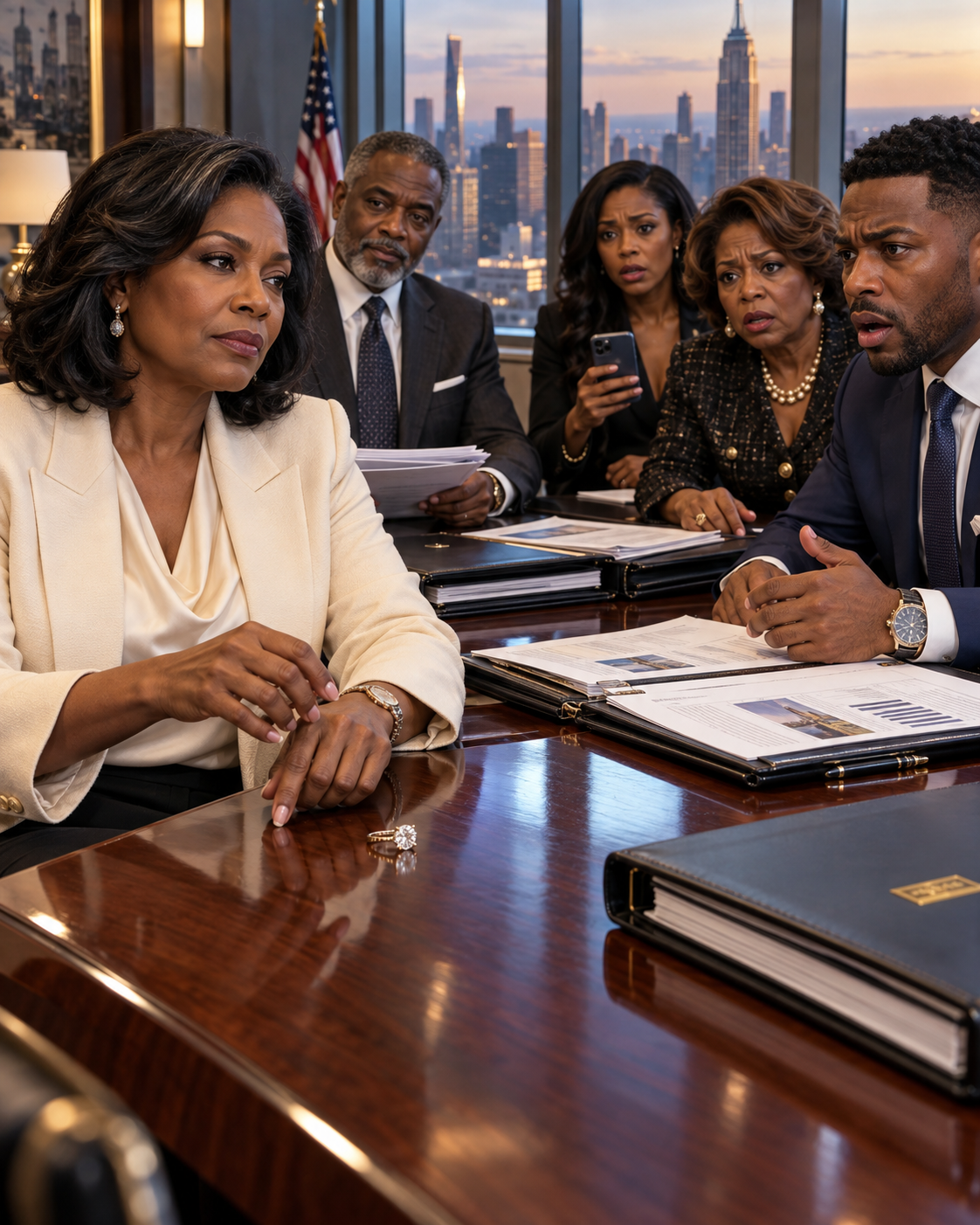
“Nothing.”
“No,” I said. “Finish the sentence.”
He looked away.
“I thought you were comfortable.”
“I was.”
“I thought you didn’t have much.”
“I didn’t advertise it.”
He swallowed.
Cynthia suddenly moved closer.
“Sweetheart, this is all a misunderstanding.”
I looked at her.
A week earlier, she had called sixty thousand dollars generous.
Now she was calling me sweetheart.
“Nathan’s intentions were never bad.”
I almost laughed.
“His intentions were printed in the contract.”
She flinched.
Nathan reached for my hand.
I moved it away.
“Please.”
“No.”
“You have to understand.”
“I understand perfectly.”
He lowered his voice.
“I was trying to protect what I’d built.”
“And you succeeded.”
He stared at me.
“What?”
“Your company is yours.”
“That’s not what I mean.”
“I know.”
Arthur slid the mutual agreement toward Nathan.
“The document is ready for execution.”
Nathan looked at it.
“You want to end this?”
I looked at the ring on my finger.
For two years, I had believed that ring represented a promise.
Now it felt like evidence from a crime scene.
“I want to make sure neither of us can claim the other’s property.”
Nathan shook his head.
“This is insane.”
“No,” Arthur said calmly. “It’s precise.”
Nathan looked at me.
“Forget the documents.”
I said nothing.
“Please.”
Still nothing.
“Forget the money.”
My chest tightened.
Because there it was.
The sentence I had been waiting for.
Not “forget the humiliation.”
Not “forgive me for judging you.”
Not “I was wrong about who you are.”
Forget the money.
He wanted me to believe that money was suddenly irrelevant because he had discovered mine was larger.
I looked at him for a long time.
Then I asked quietly, “If these numbers were reversed, would you be standing here?”
He didn’t answer.
That was my answer.
Cynthia began crying.
Not loudly.
Just enough to make everyone uncomfortable.
“Nathan loves you.”
I turned toward her.
“Then why did he need a contract designed to make sure I received almost nothing if he loved me?”
She had no response.
Gregory cleared his throat.
“Perhaps everyone should take a breath.”
Arthur looked at him.
“My client has already made her decision.”
Nathan stared at the agreement.
“If I sign this, it’s over.”
“Yes.”
“But if we don’t?”
“You can continue negotiating,” Arthur said.
Nathan looked at me.
“Would you?”
“No.”
The word was quiet.
It was also final.
He sat down.
His hands shook slightly as he picked up the pen.
I watched him sign his name.
Nathan Cole.
Three letters of a life I had imagined.
Three letters that suddenly meant nothing.
Arthur signed as witness.
I signed last.
Then I removed my engagement ring.
The diamond caught the overhead light.
For a moment, I remembered the night Nathan proposed.
We had stood beside the Hudson River in winter.
He had been nervous.
I had cried.
He had promised we would build a life where neither of us ever had to be afraid.
I had believed him.
I placed the ring on the table.
It made a tiny metallic sound.
Nathan stared at it.
“You don’t have to do this.”
“I already did.”
He looked broken.
And somehow, that hurt too.
Because part of me still loved the man I thought he was.
But love is not permission to abandon your own dignity.
I stood.
Cynthia reached for my arm.
I stepped away.
“Don’t.”
Her eyes filled with tears.
“We’re family.”
I looked at her.
“We were almost family.”
Then I walked out.
The elevator doors closed between us.
As they descended, I stared at my reflection in the mirrored wall.
I expected to see devastation.
Instead, I saw exhaustion.
And underneath it, relief.
My phone began vibrating before I reached the lobby.
Cynthia.
Then Beatrice.
Then Nathan.
I ignored them.
Outside, the rain had stopped.
The pavement reflected the city lights.
I stood beneath the awning and breathed in the cold air.
For the first time in weeks, I felt like I could breathe.
The calls continued that night.
Cynthia sent long messages about misunderstandings.
Beatrice apologized for the dinner.
Nathan sent one sentence.
“I don’t care about the money, I care about you.”
I stared at it for a long time.
Then I deleted it.
Not because I was cruel.
Because I finally understood that sometimes the most dangerous lie is the one that arrives after the truth has been exposed.
The wedding was cancelled the next morning.
There were deposits to recover.
Flowers to cancel.
Invitations to explain.
A venue manager who spoke to me in a whisper because she already knew.
Friends who asked what happened.
I didn’t give them a dramatic story.
I simply said, “We discovered we wanted different things.”
That was enough.
Nathan’s company continued for a while.
From the outside, nothing seemed different.
His website still announced new partnerships.
His social media still showed photographs of conferences and champagne.
He still wore the same expensive suits.
But business doesn’t care about appearances forever.
Three months later, the market turned.
Then investors became cautious.
Then one major client left.
Then another.
The infrastructure costs increased.
His company had always depended on aggressive growth and constant outside confidence.
Without the right capital at the right moment, the machinery began to slow.
I never interfered.
I never used my position against him.
I never called one investor.
I never made one threatening move.
I simply stayed away.
That mattered to me.
Because I hadn’t walked away to punish Nathan.
I had walked away because I refused to become the kind of person who needed revenge to feel whole.
Six months after the wedding that never happened, Arthur called me.
“Nathan’s company is downsizing.”
I sat quietly in my office.
“How badly?”
“Significantly.”
I closed my eyes.
“Does he know we’re not involved?”
“Yes.”
“Good.”
There was a pause.
“Do you want me to do anything?”
“No.”
I looked through the window at the city.
“Let him live with his decisions.”
And I did the same.
Part 3
A year after that night in Gregory’s office, I stood in a room filled with women who had survived financial disasters of their own.
Some had left marriages.
Some had escaped abusive relationships.
Some had lost businesses.
Some had simply spent decades being told they were too old, too cautious, too inexperienced, or too ordinary to start again.
I had created the Vance-Harrington Women’s Enterprise Grant with one purpose.
To give women access to capital without requiring them to prove they deserved dignity first.
The first recipient was a fifty-two-year-old woman named Elena who had spent twenty-seven years working for a company that disappeared beneath her after a bad acquisition.
She had a small manufacturing idea.
A good one.
But every lender wanted collateral she didn’t have.
I handed her the grant check myself.
She stared at it.
“I don’t know what to say.”
I smiled.
“Then don’t say anything.”
She began crying.
So did I.
Because I understood exactly what that check represented.
It wasn’t charity.
It was a door.
A door I had once needed, too.
Not financially.
Emotionally.
The door that says you are allowed to leave something that diminishes you.
You are allowed to begin again.
You are allowed to protect what you built.
You are allowed to say no without explaining your worth.
That evening, I returned home and found an envelope waiting in my mailbox.
There was no return address.
Inside was a single sheet of paper.
Nathan had written it himself.
“I finally understand what I did.”
I read the letter once.
Then twice.
He admitted that he had been terrified of losing everything he had built.
He admitted that Cynthia’s fears had influenced him.
He admitted that he had looked at my quiet life and assumed it meant weakness.
And he admitted that when he discovered my wealth, he had confused losing my money with losing me.
His final sentence was simple.
“I hope someday you can forgive me, even if you never come back.”
I folded the letter.
I didn’t burn it.
I didn’t frame it.
I put it in a drawer.
Some memories don’t need to be destroyed.
They just need to stop being allowed to control you.
Nathan eventually rebuilt part of his company on a smaller scale.
I heard that from someone else.
His mother stopped calling.
Beatrice sent one final apology and never contacted me again.
The city moved on.
So did I.
Sometimes people think strength means making the other person regret losing you.
I learned something different.
Strength is reaching the point where their regret no longer matters.
The fortune I had spent decades building was never the most valuable thing I owned.
The most valuable thing was the ability to walk away without selling my peace to the highest bidder.
I still drive my sensible sedan.
I still wear simple cashmere.
I still keep my father’s old watch on my wrist.
I still live quietly.
The difference is that now I know exactly what that quiet means.
It means I don’t need to prove anything.
Not to Nathan.
Not to Cynthia.
Not to the woman who once sat across from a leather folder and wondered whether she had been loved at all.
Because love that requires you to shrink is not safety.
Love that measures your value by your balance sheet is not devotion.
And a future built on someone else’s fear is not a future worth keeping.
A year after the wedding that never happened, I stood alone beside the Hudson River at sunset.
The water carried the last light across Manhattan.
I touched the place on my finger where the engagement ring had once been.
There was no ache anymore.
Only gratitude.
Not for what happened.
But for what it taught me.
Sometimes the door that closes in front of you is the one that saves your life.
Sometimes humiliation is simply truth arriving without permission.
And sometimes the greatest revenge is not watching someone fall.
It is building a life so peaceful, generous, and completely your own that you no longer care whether they ever look back.
I watched the sun disappear behind the skyline.
Then I turned toward home.
And for the first time, I wasn’t walking away from anyone.
I was finally walking toward myself.