At my parents’ Sunday dinner, my father slid my tuition check across the table and coldly told me to APOLOGIZE
Part 2
The emergency grant came through nine days later.
It was not enough to make life easy.
It was enough to keep me enrolled.
I stared at the confirmation email three times before I believed it.
Megan hugged me so hard I almost dropped my phone.
“You did it.”
“Not yet.”
“Still.”
I smiled.
“Still.”
I continued working at the clinic.
I arrived before sunrise and left after dark.
Some nights, I studied pharmacology at the kitchen table while Megan slept down the hall.
Other nights, I sat in the parking lot between shifts and cried because exhaustion had turned every small problem into a mountain.
But I kept going.
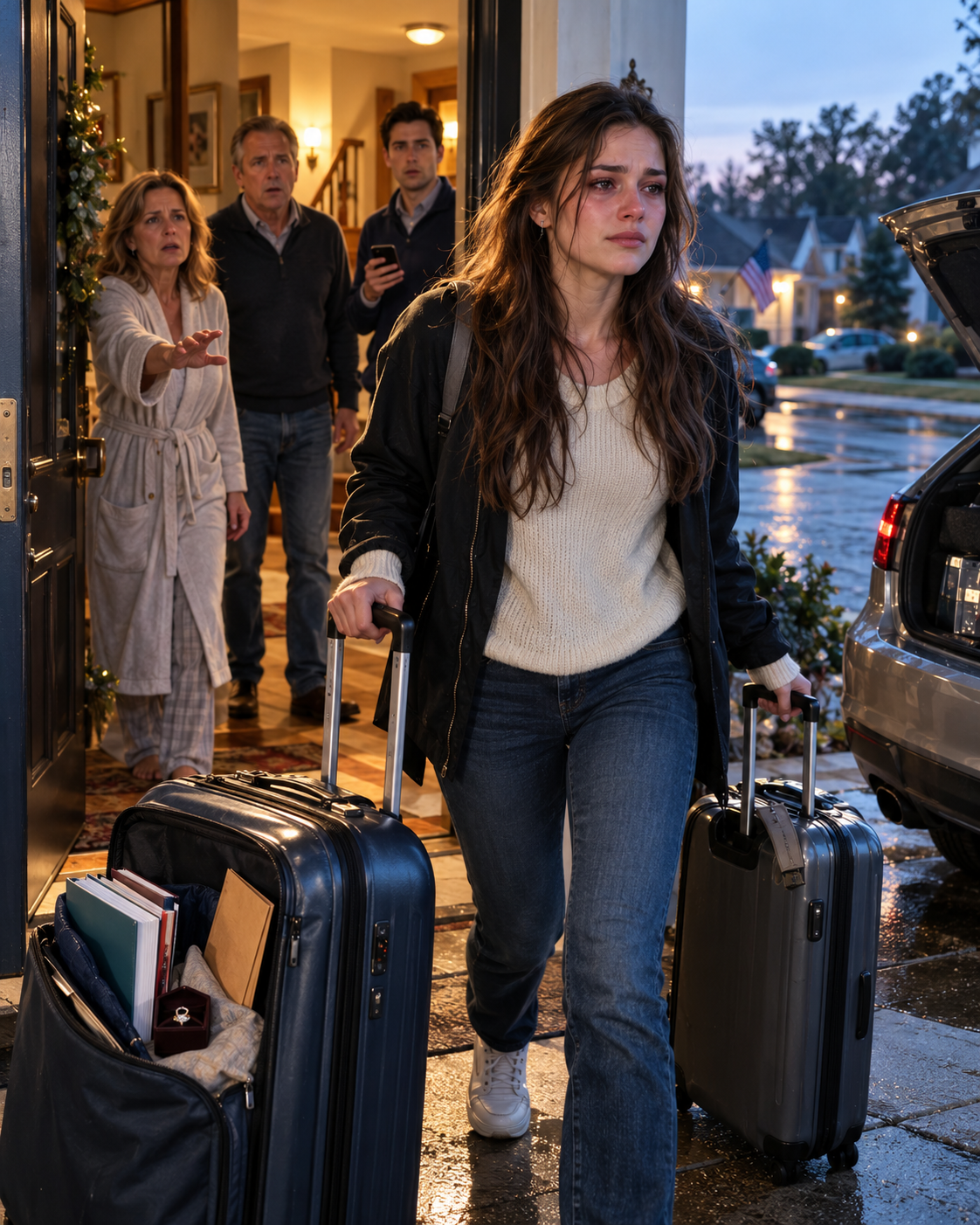
My professors noticed.
One of them pulled me aside after clinicals.
“You’ve changed.”
I thought she meant my grades.
She shook her head.
“You’re less afraid.”
That sentence stayed with me.
Because she was right.
I was still scared.
I was just no longer scared of disappointing people who had taught me to disappear inside their expectations.
Two weeks after I left, my father called.
I almost ignored it.
Then I answered.
He did not speak for several seconds.
When he finally did, his voice was quiet.
“I owe you an apology.”
I sat down.
He continued.
“Not the apology we demanded from you.”
I said nothing.
“The real one.”
Something in my chest tightened.
He told me he had spent days looking at old family photographs and recognizing a pattern he wished he had seen years earlier.
He remembered every time Tristan had blamed me.
Every time he had defended him automatically.
Every achievement of mine he had treated as less important because Tristan was the older son.
Every argument where he had told me to be the bigger person.
“I thought I was keeping the peace,” he said.
“You were keeping Tristan comfortable.”
He did not argue.
“You’re right.”
That hurt more than anger would have.
My father said he had spoken to Tristan again.
“He’s not talking much.”
I almost laughed.
“That’s new.”
“It is.”
There was a pause.
“He’s embarrassed.”
I looked out the window.
“Good.”
My father sighed.
“I don’t expect you to forgive us quickly.”
“That’s not the part I’m worried about.”
“What is?”
“Trust.”
He was quiet.
“I know.”
I believed him.
Not completely.
Not yet.
But enough to keep listening.
He told me he and my mother wanted to help with my tuition again.
I said no.
Not because I wanted punishment.
Because I wanted ownership.
“I have the grant.”
“I know.”
“And clinic hours.”
“I know.”
“Then let me finish this myself.”
My father whispered, “All right.”
It was strange hearing those words from him.
The same words I had said at dinner.
Only now they meant something different.
Not surrender.
Acceptance.
After we hung up, I opened the silver lockbox on my desk.
I had carried it with me from my parents’ house.
Inside was my grandmother’s ring and a folded photograph of her standing outside the little house where she had raised three children.
On the back, in faded ink, she had written one sentence.
“Build a life nobody can take from you.”
I read it again.
Then I put the photograph back.
The weeks passed.
My grades climbed.
My shifts increased.
My confidence returned in small pieces.
I stopped checking my mother’s messages every hour.
I stopped waiting for Tristan to explain himself.
I stopped replaying that barbecue conversation in my head.
Eventually, I realized I did not need to.
The truth had never depended on my defense.
It had simply been buried beneath everyone else’s need to protect a lie.
One afternoon, I received a message from Tristan.
No greeting.
No apology.
Just one line.
“You could have told us.”
I read it twice.
My first reaction was anger.
My second was exhaustion.
I replied with one sentence.
“You could have told the truth.”
He never answered.
That was the last meaningful exchange we had.
By the time spring arrived, I had enough money to move into a tiny apartment near the hospital where I hoped to work after graduation.
It was nothing fancy.
One bedroom.
Old hardwood floors.
A narrow kitchen.
A living room just large enough for a couch and a desk.
I signed the lease with shaking hands.
Then I stood alone in the empty apartment and laughed.
Nobody had approved it.
Nobody had funded it.
Nobody had chosen it for me.
It was mine.
I bought a used lamp.
A secondhand kitchen table.
Two mugs.
One set of cheap plates.
I placed my grandmother’s lockbox on the desk.
For the first time, it looked less like something I had escaped with and more like something I had carried toward a future.
Three weeks before graduation, my mother called.
She wanted to see me.
I agreed to meet her at a coffee shop.
When she arrived, she looked smaller than I remembered.
She apologized too.
Not elegantly.
Not perfectly.
She cried.
She admitted she had spent years believing that loving Tristan meant protecting him from consequences.
Then she said something I had never heard from her before.
“I think we protected the wrong thing.”
I did not know what to say.
So I told her the truth.
“I still love you.”
She cried harder.
“But I don’t want to go back.”
She nodded.
“Then don’t.”
For once, nobody asked me to make everyone comfortable.
That mattered.
Part 3
The day of my final clinical examination arrived with a cold blue sky outside the hospital windows.
I stood in the bathroom staring at my reflection in my nursing uniform.
I looked tired.
Older.
Stronger.
For a second, I thought about the girl sitting at that Sunday dinner table, staring at the tuition check.
She had believed losing her family’s support meant losing her future.
She had been wrong.
What she lost was the illusion that her future belonged to them.
I passed the exam.
When my professor shook my hand, I felt the tears before I realized I was crying.
“You earned this,” she said.
I smiled.
“Yeah.”
I went home that evening and placed my diploma folder on the desk.
Beside it sat the little silver lockbox.
I opened it one more time.
The ring was still there.
So was the photograph.
I thought about my father’s apology.
My mother’s tears.
Tristan’s silence.
None of them could rewrite the past.
But they no longer had to.
The past had stopped being a sentence.
It was simply the place I had started walking away from.
A few days later, my father came to see the apartment.
He stood in the doorway and looked around.
“This is nice.”
“It’s small.”
“It’s yours.”
I smiled.
“Yeah.”
He noticed the lockbox on the desk.
He knew immediately what it was.
“Your grandmother’s.”
I nodded.
He sat down.
For a while, neither of us said anything.
Then he said, “She would be proud of you.”
I looked at him.
“She always was.”
He lowered his eyes.
“I should have been.”
I reached over and squeezed his hand.
It was not forgiveness for everything.
It was not a clean ending.
It was simply the first honest gesture between us in a long time.
My father left before sunset.
I locked the door.
Then I stood in my quiet apartment and listened.
No arguing downstairs.
No one demanding that I apologize.
No one threatening my education.
No one deciding whether I deserved my own future.
Just silence.
For the first time, silence felt peaceful.
I made tea.
I opened the window.
The city moved below me, ordinary and loud and completely uninterested in my family history.
I placed my grandmother’s ring on my finger.
It fit.
That mattered more than I expected.
Because for years, I had thought self-worth was something other people confirmed when they praised me.
I thought being a good daughter meant swallowing discomfort.
Being a good sister meant accepting blame.
Being grateful meant never asking for fairness.
I know better now.
Love should not require you to betray yourself.
Family should not need your silence to survive.
And support should never come with a hidden leash.
I did not become stronger because my family failed me.
I became stronger because, when they asked me to choose between my dignity and their approval, I finally understood that those were never supposed to be opposites.
A month later, on the morning of graduation, I stood outside the auditorium with my classmates.
Families crowded the sidewalk.
Flowers everywhere.
Cameras flashing.
Parents crying.
I looked through the crowd and saw my mother and father.
They were standing together.
Neither of them waved me over.
They simply waited.
Respecting the distance I had created.
I walked toward them.
My mother reached for me, then stopped.
For a second, none of us moved.
Then I hugged her.
My father joined us.
It was imperfect.
It was awkward.
It was real.
And for once, real was enough.
That evening, I returned to my apartment alone.
I placed my nursing degree on the desk.
Then I opened the lockbox.
My grandmother’s ring rested inside.
I held it in my palm and thought about that night I drove away before sunrise, convinced I was leaving my family behind.
Now I understood.
I had not really been leaving them.
I had been returning to myself.
I closed the box and locked it.
The little click was quiet.
But it sounded final.
Not like a door shutting someone out.
Like a door closing behind me on a life where my future could be used as a bargaining chip.
I turned off the light.
My apartment went dark except for the glow from the street outside.
Tomorrow I would begin looking for my first full-time nursing position.
Tomorrow there would be new bills, new patients, new mistakes, new responsibilities, and probably new fears.
But they would be mine.
Every one of them.
And that was the gift I had fought hardest to keep.
My grandmother’s lockbox still sits on my desk every night.
I keep the ring inside, not because I need a reminder that I am loved, but because I need a reminder that I am no longer willing to trade my future for someone else’s approval.
Some people think walking away is an act of anger.
Mine was an act of survival.
And sometimes the most powerful thing you can do is quietly pick up what belongs to you, close the door, and leave before someone convinces you that losing yourself is the price of being loved.