At my father’s marble dining table in our Chicago home, he slid a marriage contract toward me
Part 2
For several seconds, nobody moved.
Then Daniel laughed.
It wasn’t a happy sound.
It was the sound of someone watching a perfect plan collapse.
“So that’s where you went,” he said.
I pulled my hand from Noah’s.
He reached for me.
I couldn’t breathe.
“You knew?”
“No.”
His answer came instantly.
“I swear, Emma, I didn’t.”
Richard stepped forward.
“You brought her here?”
Noah’s voice hardened.
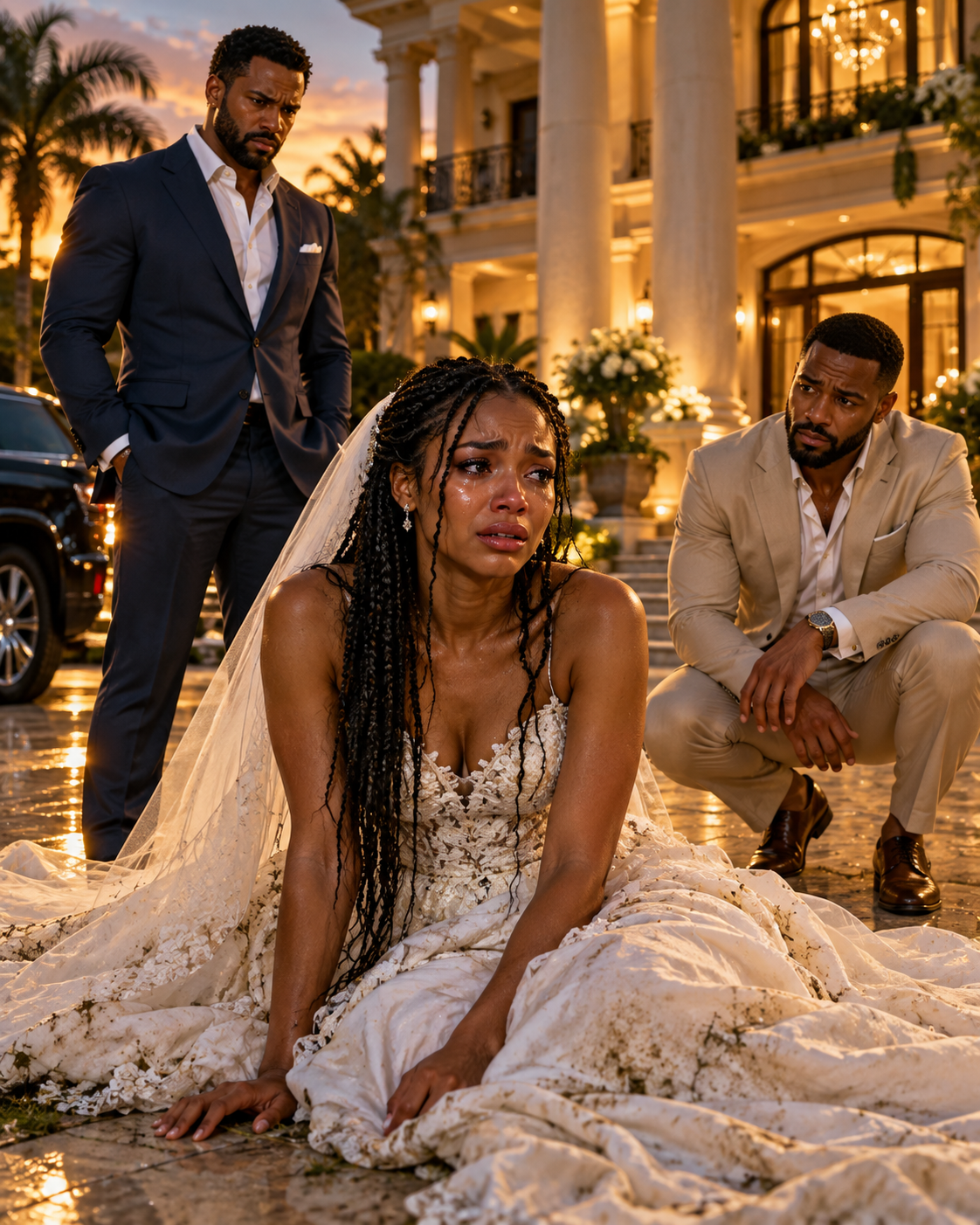
“Don’t speak to her like that.”
Richard looked at his youngest son with disbelief.
“Do you know what this woman has done?”
I stared at him.
“What have I done?”
Daniel stepped forward.
“You ran from an agreement.”
“I never agreed to anything.”
“My father saved your family from ruin.”
“By demanding my marriage.”
Daniel’s jaw tightened.
Richard lifted his hand.
“Enough.”
He looked at me.
“Your father knew the terms.”
“I didn’t.”
“That is not my problem.”
Noah moved beside me.
“It’s over.”
Richard turned toward him.
“You think love changes contracts?”
Noah answered, “No.”
Then he looked directly at his father.
“It changes people.”
Richard’s face went cold.
“I can destroy your father’s company.”
My heart sank.
Noah looked at me.
Richard continued.
“By Monday, Parker Holdings will lose everything.”
I watched Noah’s face.
There was no fear.
Only a decision forming behind his eyes.
That night, he drove me home in silence.
When we reached the guest house, he shut off the engine.
“I am sorry.”
I looked at him.
“For what?”
“For not telling you who my family was.”
“Why didn’t you?”
“Because every time I said my name, people saw the last name before they saw me.”
I understood that more than he knew.
He had spent years hiding from the same thing I had spent years fighting.
“We can end this,” I whispered.
He shook his head.
“I won’t let them buy your life.”
“What are you going to do?”
He looked toward the city.
“Something my father won’t expect.”
The next morning, Noah met with his private adviser.
I didn’t know what he had.
I only knew he started making calls.
By evening, he had sold a portfolio of private investments.
Then he sold the apartment building he had kept for rental income.
I tried to stop him.
“Noah, don’t.”
He shook his head.
“This isn’t about rescuing you.”
“It feels like it is.”
“No.”
He took my hands.
“This is about removing the weapon from my father’s hand.”
He arranged a transfer of the entire four point eight million dollars directly to my father’s company.
There was no condition.
No ownership stake.
No repayment schedule.
No clause requiring me to remain with him.
I stared at the transfer documents.
“You gave them everything.”
“I gave your family its freedom.”
“You could lose your father.”
“I already lost the version of him who believed money gave him the right to decide who you should marry.”
I started crying.
He pulled me close.
Then he said the words I would never forget.
“Your heart owes me nothing in return.”
The transfer cleared.
The bank lifted the foreclosure action.
The debt to Richard Reed was gone.
My father called.
His voice sounded broken.
“I don’t understand.”
“You don’t need to.”
“Noah did this?”
“Yes.”
There was a long silence.
Then my father said, “Why?”
I looked out the window.
“Because unlike you, he understands that love isn’t collateral.”
For the first time in weeks, my mother spoke to me without fear in her voice.
“I should have stood beside you sooner.”
“You don’t have to explain.”
“I do.”
She began crying.
“I was afraid of losing everything.”
I closed my eyes.
“So was I.”
“But your father forgot something,” she said.
“What?”
“You’re his daughter before you’re his bargaining chip.”
Those words stayed with me.
The family business survived.
Barely.
We sold equipment.
Restructured contracts.
Gave up luxuries.
But we stayed in our home.
My father stepped away from the company temporarily.
My mother finally had a voice in every conversation.
And I opened my architecture studio for real.
I worked twelve-hour days.
I designed a community arts center.
Then a library renovation.
Then three private residences.
People started hiring me because of my work, not because of my father’s name.
For the first time, my last name felt like mine again.
Then Daniel showed up.
He stood in the doorway of my studio one rainy afternoon.
I had not seen him since the Reed estate.
He looked exhausted.
“I won’t stay long.”
I didn’t invite him in.
He smiled sadly.
“I deserve that.”
“What do you want?”
“I want to apologize.”
I crossed my arms.
“For what?”
“For believing the arrangement made you mine.”
I said nothing.
He looked around at the sketches on the walls.
“You built all this.”
“Yes.”
“I heard you’re doing well.”
“I’m working.”
He nodded.
Then he said something I never expected.
“I thought if I came here, maybe you’d consider starting over.”
I almost laughed.
“Daniel.”
“I know.”
He swallowed.
“I know what you’re going to say.”
I looked at him carefully.
“You were never in love with me.”
He nodded.
“And I was never an escape route.”
“No.”
He looked down.
“I hated Noah for a while.”
“I know.”
“I thought he stole the woman promised to me.”
My voice softened.
“No one promised me.”
He looked up.
“And that’s the part I finally understand.”
He left without another argument.
I watched him disappear down the sidewalk.
That night, I told Noah what happened.
He listened.
Then he said, “I’m glad he finally saw you.”
I smiled.
“What about your father?”
Noah sighed.
“He still hasn’t spoken to me.”
“Maybe he will.”
“Maybe.”
We went on planning the wedding.
Quietly.
Carefully.
Without anyone else’s money deciding the details.
My mother chose the flowers.
My aunt, who had finally returned my calls, made the dessert.
Mrs. Greene insisted on sewing a tiny blue ribbon into the inside of my dress.
Noah chose a plain black suit.
There was no grand business celebration.
No merger announcement.
No contract.
Just two people choosing each other.
Still, there was one person whose absence I felt.
Richard Reed.
I kept imagining the old man sitting alone in his mansion, angry at a son he could not control.
The night before the wedding, I drove to the Reed estate.
I wasn’t invited.
I went anyway.
Richard opened the door himself.
He looked older.
Smaller.
I didn’t step inside.
“I came to say one thing.”
He said nothing.
“You can be angry with me.”
His jaw tightened.
“You can blame me.”
He looked away.
“But don’t let pride cost you your son.”
His eyes flicked toward mine.
“He loves you.”
“I know.”
I took a breath.
“And whether you like me or not, he is still your son.”
I turned to leave.
Richard called my name.
I looked back.
He didn’t apologize.
Not yet.
But his voice had changed.
“Good night, Emma.”
I nodded.
“Good night.”
The next morning, I stood at the altar with my hands shaking.
Not from fear.
From the weight of everything that had happened to get there.
My father sat in the front row.
My mother beside him.
Daniel sat two seats away.
I hadn’t expected him to come.
Then the doors opened.
Richard Reed walked in.
The room went silent.
He walked slowly down the aisle.
He took his seat.
He didn’t look at me.
But he had come.
Daniel lowered his head.
Noah squeezed my hand.
And for the first time, the room felt whole.
Part 3
When I looked at Noah, I didn’t see the wealthy heir everyone had assumed he was.
I saw the man who had stopped a car inches from my body in the rain.
The man who had handed me a towel instead of a lecture.
The man who remembered the names of people who worked for him.
The man who told me I owed him nothing.
The officiant smiled.
“Are you ready?”
Noah nodded.
I did too.
He spoke first.
“I promise I will never make you smaller so I can feel bigger.”
My eyes filled with tears.
“I promise to listen when you’re afraid, to respect your choices when they differ from mine, and to love the person you become, not the person I expect.”
I took his hands.
“I promise you will never have to earn the right to be yourself beside me.”
The room went quiet.
“I will not use money, fear, guilt, or silence to control you.”
Noah’s eyes softened.
“And I will build a life with you where freedom is part of the foundation.”
We exchanged rings.
Simple bands.
Nothing extravagant.
When the officiant pronounced us married, I heard my mother begin to cry.
Then everyone stood.
My father approached the microphone at the reception.
He looked older than I remembered.
For a long moment, he simply stood there.
Then he looked at me.
“I thought saving my family meant preserving everything we had.”
His voice shook.
“I was wrong.”
The room was silent.
“I treated my daughter like an asset because I was afraid of losing money, a house, a business, and a name.”
He swallowed.
“But none of those things were ever mine to place above her happiness.”
My mother reached for his hand.
He continued.
“Emma, I’m sorry.”
I cried before I could stop myself.
He raised his glass.
“To my daughter and the man who loved her without asking her to become smaller.”
The room applauded.
I looked at Richard.
He was clapping too.
Not enthusiastically.
Not dramatically.
Just enough.
Noah leaned close to me.
“Are you okay?”
I smiled through my tears.
“I’m home.”
He kissed my forehead.
Later that night, after the music stopped and most of the guests had gone, I stood outside beneath a string of warm lights.
The city was quiet.
Noah came beside me.
“You know what I keep thinking?”
“What?”
“That night in the rain.”
I smiled.
“I was terrified.”
“I know.”
“You barely knew me.”
“I knew enough.”
I leaned against his shoulder.
“Do you ever think about how strange it was?”
“Every day.”
“One wrong turn.”
“One missed turn.”
“One almost accident.”
He smiled.
“One good decision.”
I looked back through the glass doors.
My father was talking with my mother.
Daniel was helping stack chairs.
Richard stood alone for a moment before Mrs. Greene said something that made him smile.
Everything was imperfect.
Nothing had been magically repaired.
Trust would take time.
Forgiveness would take work.
Some scars would never disappear.
But none of that changed the truth.
My life had nearly been traded away as a business solution.
I had once believed that meant my family had the power to decide my future.
They didn’t.
The contract had never been the beginning of my story.
It had only been the moment I finally understood that I was allowed to say no.
Months later, my studio moved into a larger building.
I kept the original sign from the tiny office.
Parker & Stone Design.
The letters were slightly crooked.
I loved them anyway.
I framed the first sketch I had drawn after leaving my father’s house.
It was a rough design for a home built around a central courtyard.
Lots of light.
Open doors.
No locked hallways.
No hidden rooms.
People sometimes asked why I had chosen architecture.
I used to say I loved the beauty of structures.
Now I knew the deeper reason.
Architecture was about deciding what could support you and what needed to come down.
Some walls protect.
Some walls imprison.
The skill is knowing the difference.
I thought about that whenever I looked at Noah.
He never asked me to live inside his world.
He built space for mine.
That was the difference between control and love.
Control asks, “How much can I take from you?”
Love asks, “What do you need to remain yourself?”
I had once been terrified that choosing myself would cost me everyone I loved.
Instead, it showed me who was capable of loving me freely.
My mother learned.
My father learned.
Daniel learned.
Even Richard, slowly, began to learn.
And I learned something too.
You can lose money and recover.
You can lose a house and rebuild.
You can lose a family business and create another.
But the moment you surrender your right to choose your own life, the loss becomes much deeper.
That is why I remember the sound of that contract hitting the marble table.
Not because it destroyed me.
Because it woke me.
Years later, when young architects visited my studio and told me they felt trapped by their families’ expectations, I always told them the same thing.
“Your life is not a debt you owe someone else.”
Some laughed.
Some cried.
Some looked at me like they were hearing the words for the first time.
And maybe that was why I had survived all of it.
Not because I was stronger than everyone who tried to control me.
Not because I never felt afraid.
I was terrified.
I shook.
I ran into the rain.
I almost gave up.
But I kept choosing the next right thing.
One decision.
Then another.
Then another.
That was how freedom returned.
Not all at once.
Piece by piece.
The last time my father asked me whether I regretted running that night, I told him no.
He nodded slowly.
“Neither do I.”
I smiled.
He looked embarrassed.
“I regret making you believe you had to.”
I reached for his hand.
“That’s enough.”
And it was.
Because forgiveness, I learned, does not erase the past.
It simply refuses to let the past decide what happens next.
On the night of our anniversary, Noah and I stood on the balcony of our home.
The rain had started again.
He wrapped his arms around me.
“Cold?”
“A little.”
He pulled me closer.
I watched the headlights move through the streets below.
For a second, I remembered the road where I had stood trembling in the rain, convinced my life was over.
Then I looked at the man beside me.
The man I had chosen.
Not because a contract demanded it.
Not because a debt required it.
Not because someone richer or louder had decided it for me.
Because I wanted him.
Because he wanted me free.
I rested my head against his chest.
And I finally understood the strangest gift the whole nightmare had given me.
It had taught me that love does not arrive with a price tag.
It does not need a signature to become real.
And it certainly does not require you to disappear so someone else can feel powerful.
Sometimes the bravest thing a person can do is walk away from the life everyone else has arranged for them.
Then, in the quiet that follows, build a life so fully your own that nobody can ever mistake love for ownership again.