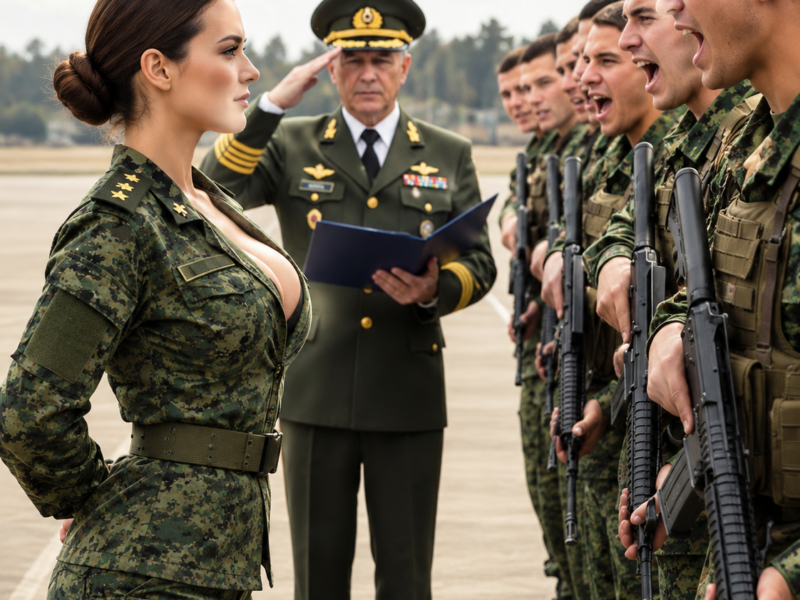
“They stripped the SEAL insignia from my uniform, escorted me off the team, and told a thousand people I wasn’t fit to serve beside them
The signature belonged to Commander Hayes, but the date beneath it was six years old.
I stared at the document, trying to understand why a man who had just removed me from an elite operational team had signed an order connected to a classified incident from long before I joined the unit.
“What am I looking at, Admiral?”
Rear Admiral Jonathan Mercer didn’t answer immediately.
He turned the document toward me.
“An authorization to transfer a witness into protective custody under a designation that officially doesn’t exist.”
I read the name beneath the authorization.
Daniel Price.
For a moment, the room seemed to lose its air.
“That’s impossible,” I said. “Daniel died six months ago.”
Mercer folded his hands.
“That’s what the official record says.”
I looked up.
“Are you telling me he was alive six years ago?”
“I’m telling you that six years ago, Daniel Price was involved in an operation that exposed an unauthorized intelligence program. He was supposed to disappear afterward. Someone changed the records, redirected the communications, and made sure the people who knew what happened could never compare notes.”
My eyes returned to the signature.
Hayes.
The man who had stripped my insignia from my uniform.
The man who had stood in front of my team and called me a liability.
“Why would Hayes authorize Daniel’s protection and then destroy his career?”
Mercer pushed another folder across the desk.
“Because the authorization was never completed.”
Inside were three pages of operational correspondence, a personnel transfer request, and a photograph.
I recognized Daniel immediately.
He looked younger, his hair shorter, his face thinner. He was standing beside a woman in civilian clothes outside a concrete building. On the back, someone had written a date and a location in a language I couldn’t read.
The woman was identified as Mara Voss, a civilian signals analyst attached to a joint intelligence task force.
I turned the photograph over.
“Where is she?”
“Missing.”
“Since when?”
“Six years.”
I looked at Mercer.
“And Daniel?”
“His name was placed on a restricted witness list. He was transferred out of the operation, but the transfer was never properly recorded. He returned to active duty under a different assignment history.”
My throat tightened.
“So he was hiding.”
“He was working under restrictions. He wasn’t supposed to discuss the operation with anyone outside a very small circle.”
“Then why did he tell me?”
Mercer studied me.
“Because he believed the people responsible had found him.”
I remembered the last conversation Daniel and I had before his death.
We’d been standing outside the base gym. He’d looked exhausted, distracted, and unusually serious.
“If they ever tell you I died because of a mistake,” he’d said, “don’t accept the first explanation.”
I’d thought he was talking about some old deployment incident.
I hadn’t understood that he was warning me about his own future.
“What was the operation?” I asked.
Mercer opened the thickest folder.
“Six years ago, a joint team was tasked with identifying a network that had been intercepting military communications and selling access to private contractors. The network had compromised several transmission routes. It wasn’t just collecting information. It was changing what people heard.”
“Changing orders?”
“Changing orders, coordinates, extraction windows. Anything that could make a team believe it was operating with accurate information when it wasn’t.”
My stomach tightened.
“That’s what happened to my team three weeks ago.”
“Exactly.”
I looked down at the file.
The operation six years earlier had been called BLACK HARBOR.
Daniel Price had been assigned to communications security. Mara Voss had identified a pattern in the corrupted transmissions. Together, they’d discovered that the access wasn’t coming from an outside hacker.
It was coming from inside the command structure.
A senior officer had been using legitimate credentials to redirect traffic through a private relay. The relay was hidden inside a contractor-managed communications system, making the changes appear to be routine maintenance.
The officer’s name had been redacted.
“Who was it?” I asked.
Mercer didn’t answer.
I looked at him.
“Admiral, I need a name.”
“Vice Admiral Charles Rourke.”
I knew the name. Everyone in the command knew it. Rourke had overseen several major modernization programs and had been praised for pushing advanced communications technology into operational units.
He had also retired two years earlier with a ceremony attended by half the senior leadership in the building.
“You’re saying a retired vice admiral was selling access to military communications?”
“I’m saying evidence connected him to the network. But the evidence disappeared before investigators could secure it.”
“And Daniel?”
“He kept a copy.”
I sat back.
The pieces began to fit, but not comfortably.
“Then why wasn’t he protected?”
“Because someone inside the protective chain gave away his location.”
Mercer pointed to the transfer authorization.
“Hayes signed the request to move Daniel into a protected assignment. The order was never executed. It was intercepted and buried.”
“Did Hayes know?”
“That’s what we’re trying to establish.”
I remembered Hayes’s expression when he removed me from the team. It hadn’t looked like anger alone. There had been something else beneath it.
Fear.
“Why did he remove me?”
Mercer turned to another page.
“Your team was exposed because the same communications route used in BLACK HARBOR was activated again. Your copy of the transmission record showed that the redirection came from an authenticated command terminal.”
“I preserved it before the system wiped the logs.”
“Yes. And the moment you did that, you became a problem for whoever was controlling the system.”
“So Hayes removed me to protect me?”
“Possibly.”
“That’s a generous interpretation.”
“I didn’t say he handled it well.”
I leaned forward.
“Then why did he let the whole team watch?”
Mercer held my gaze.
“Because a quiet reassignment would have triggered a formal review. A public removal created the appearance that you had lost access and credibility. It also gave the people watching you a reason to believe you no longer had anything worth protecting.”
I thought of the insignia being taken from my uniform.
The faces of my operators.
The silence as I walked out.
“So he sacrificed my reputation.”
“He may have believed it was the only way to keep you alive.”
“Did he tell you?”
“No.”
“Then how do you know?”
Mercer opened a small envelope and removed a handwritten note.
“Because he sent this to me at 0440 this morning.”
The note was brief.
BROOKS HAS THE SECOND FILE.
THE NETWORK IS ACTIVE.
DO NOT LET HER RETURN TO THE TEAM.
HAYES.
I read it twice.
“What’s the second file?”
Mercer glanced at the folder on his desk.
“You tell me.”
I shook my head.
“I only have the transmission record.”
“Not according to the person who sent you the message.”
My phone had been locked in a secure pouch when I entered the office. Mercer nodded toward it.
“Captain Lewis has it. He said you received a message last night.”
I looked toward the door.
“Who sent it?”
“We don’t know.”
“Then we need to find out.”
Mercer stood.
“We need to do more than that. Someone has access to the command network, someone knows what you preserved, and someone has already demonstrated that they can reach people under protective restrictions.”
He paused.
“Before we move, I need to ask you something. Did Daniel ever give you anything to hold?”
I thought about the months before his death.
A coffee mug.
A spare key.
A small black notebook he had once left in my apartment and retrieved the next morning.
Then I remembered the photograph.
He had given it to me on my birthday, six months before he died. I’d kept it in a drawer because it was one of the few pictures we had together.
“There was a photograph,” I said. “He was standing with a woman. I thought she was someone from his old unit.”
Mercer looked at the photograph in the folder.
“Was it this one?”
I leaned closer.
It was the same picture.
“No,” I whispered. “Mine had a different background.”
Mercer froze.
“Where is it?”
“In my apartment.”
“Who has access?”
“Captain Lewis. My building manager. A few people from the unit have been there.”
Mercer picked up the secure phone.
“Get Captain Lewis here. Now.”
Twenty minutes later, Lewis entered the office carrying a small evidence bag.
Inside was a photograph.
My photograph.
But the woman beside Daniel wasn’t the only difference.
On the back, in Daniel’s handwriting, were six words:
THE SECOND FILE IS NOT DIGITAL.
I stared at it.
“Where did you find this?”
“In your apartment,” Lewis said. “Behind the frame.”
I had never noticed the frame had a false backing.
Lewis placed a small metal key on the desk.
“Your building manager found it when he was checking the smoke detector. He called the number listed on your emergency contact form.”
I looked at Mercer.
“Did you know?”
“No.”
I picked up the key.
It was old, brass, and stamped with a number: 214.
“Does that mean anything?”
Lewis shook his head.
Mercer reached for another folder.
“Possibly.”
He opened it to a page listing storage facilities and restricted evidence lockers associated with BLACK HARBOR.
One entry had been circled.
LOCKER 214 — NAVAL RECORDS ANNEX.
The room went quiet.
“That’s where the original evidence was supposed to be stored,” Mercer said. “But the locker was recorded as empty.”
“Then why would Daniel leave a key?”
“Because he knew the record was false.”
I stood.
“We need to go there.”
Mercer looked at Lewis.
“Take two people you trust. No one from the operations staff. No electronic access requests. We don’t put this into the system.”
Lewis nodded.
I reached for my uniform jacket.
Mercer stopped me.
“Lieutenant Commander, you’re not going in as an operator.”
“Then what am I going in as?”
“A witness.”
I almost laughed.
“I’m not very good at standing still.”
“I’ve noticed.”
He looked at the photograph again.
“Brooks, if Daniel left something there, it may tell us who ordered the network activated. It may also tell us why he died.”
The last words hit harder than I expected.
I put the key in my pocket.
“Then let’s stop guessing.”
The Naval Records Annex was a low concrete building behind a maintenance facility. It had no sign outside, only a security gate and a small camera mounted above the entrance.
Lewis parked two blocks away.
He had brought Senior Chief Miller and a civilian investigator named Rebecca Lawson, who had been assigned to the independent inspector general’s office.
Miller gave me a quick nod.
“Didn’t think I’d see you back in a restricted building so soon.”
“I’m not back on the team.”
“Didn’t say you were.”
There was something in his voice that made me look at him twice.
“You knew Daniel?”
Miller’s expression changed.
“I knew enough.”
“Why didn’t you tell me?”
“Because Daniel asked me not to.”
I stared at him.
“He trusted you?”
“He trusted me to keep you alive if the people looking for him ever came around.”
The words landed between us.
“Did you know he was going to die?”
“No.”
“Did you know someone was following him?”
Miller looked toward the annex.
“I saw a vehicle outside his apartment twice. I reported it. The report disappeared.”
“Who did you report it to?”
“Hayes.”
I felt my anger rise again.
“And he did nothing?”
“He told me to stop asking questions.”
Miller opened the passenger door.
“That’s why I stayed close to you.”
The locker room was in the basement. A single clerk escorted us down a corridor, checked the number on the key, and left us with a mechanical lock that looked older than the building itself.
Locker 214 opened with a sharp metallic click.
Inside was a narrow steel case.
No papers.
No drive.
Just a small notebook, a sealed envelope, and a second key.
Rebecca photographed everything before touching it.
The notebook contained dates, transmission identifiers, and names. Some were written in shorthand, others in full.
I recognized several of the communications routes from my recent mission.
The final pages contained a list of people who had accessed the private relay.
One name appeared repeatedly.
Charles Rourke.
Another appeared beside it.
Commander Martin Hayes.
I looked up.
“Hayes was involved.”
Rebecca studied the entries.
“His access credentials were used. That doesn’t prove he personally made the changes.”
“But it proves he knew about the system.”
“Maybe. We need the original logs.”
I opened the envelope.
Inside was a letter addressed to me.
Elena,
If you’re reading this, then I couldn’t get the truth to you in person.
I tried to report what we found. Every route led back to someone who could make the evidence disappear.
I don’t know whether Hayes is protecting me or protecting the people who want me silent. I know he helped me once, but I also know he has been afraid ever since.
The second file is stored separately. Don’t trust the first copy. Don’t trust anyone who tells you the investigation is closed.
Most importantly, don’t let them convince you that I died because I made a mistake.
Daniel.
I read the last sentence again.
My hands were shaking.
Rebecca took the letter and placed it in an evidence sleeve.
“There’s another key,” she said.
The second key was smaller, marked with the initials M.V.
Mara Voss.
Lewis looked at the locker inventory.
“Where would she have stored something?”
Rebecca checked the old file index.
“There was a secondary evidence vault at the joint intelligence facility. It was closed after BLACK HARBOR.”
“Can we get in?”
“Not through the normal process.”
I looked at her.
“Then we don’t use the normal process.”
Rebecca gave me a sharp look.
“That’s exactly the kind of sentence that gets evidence thrown out.”
She was right.
We needed authorization, documentation, and a chain of custody that couldn’t be challenged later.
For the first time that morning, I forced myself to slow down.
“Then we do it correctly.”
Rebecca called the inspector general’s office from a secure line. Mercer confirmed the request and obtained emergency access through the appropriate authority.
It took nearly three hours.
By the time we reached the secondary vault, the facility’s security chief was waiting for us.
His name was Robert Hale.
I’d seen him once before, standing beside Hayes during my removal.
He looked at the key in Rebecca’s hand.
“That’s an obsolete access credential.”
“Then it shouldn’t open anything,” Rebecca replied.
Hale smiled.
“Exactly.”
He led us down a narrow hallway.
The vault door was already unlocked.
Rebecca stopped.
“Who opened it?”
“No one,” Hale said.
“Then why is the access indicator green?”
Hale’s smile disappeared.
Lewis moved closer to the door.
Miller took a position behind him.
I watched Hale’s right hand drift toward his jacket.
“Don’t,” I said.
He looked at me.
“You have no authority here, Lieutenant Commander.”
“I’m not asking you to recognize my authority.”
I stepped away from the doorway.
“I’m asking you to keep your hands where I can see them.”
For one long second, nobody moved.
Then Hale reached inside his jacket.
Miller grabbed his wrist before he could pull anything free.
The object fell to the floor.
It was a small encrypted access device.
Rebecca ordered Hale away from the door and secured him while Lewis called the facility security office.
The vault contained three cabinets.
Two were empty.
The third held a sealed data cartridge and a paper record of the original BLACK HARBOR investigation.
Rebecca photographed the contents before opening the cabinet.
The cartridge had a handwritten label.
MARA VOSS — ORIGINAL RELAY LOGS.
I looked at the paper record.
There was a transfer authorization attached to it.
The same form Mercer had shown me.
This time, the final page carried another signature.
Not Hayes.
Charles Rourke.
He had approved the transfer of Daniel Price into a protected witness program.
Then, in a separate handwritten note, he had ordered the transfer suspended.
The reason was listed as operational necessity.
I felt cold.
“He signed both.”
Rebecca nodded.
“That’s what it looks like.”
“Why would he protect Daniel and then abandon him?”
“Maybe he needed Daniel alive until he found the evidence. Maybe he wanted the evidence more than he wanted the witness.”
A voice came from behind us.
“That’s not what happened.”
I turned.
Commander Hayes stood in the hallway.
Two security officers were behind him.
His face looked exhausted.
“Put your hands where we can see them,” Lewis ordered.
Hayes raised both hands.
“I came to surrender.”
Rebecca didn’t lower her weapon.
“Then you can explain why your signature is on a six-year-old transfer authorization.”
Hayes looked at the document.
“Because I signed it.”
“Did you know Rourke had canceled the transfer?”
“Yes.”
“Why didn’t you report it?”
“Because the person who canceled it had enough influence to bury the report and enough access to find Daniel before we could move him.”
I stepped forward.
“You told me Daniel was dead.”
Hayes looked at me.
“I was told he was dead.”
“You knew he was being hunted.”
“I knew he was in danger.”
“And you said nothing.”
“I was trying to keep you out of it.”
“You don’t get to decide what I deserve to know.”
His expression tightened.
“No. I don’t.”
For a moment, the commander who had humiliated me in front of my team seemed to disappear.
What remained was a man who had been carrying something too heavy for too long.
“Why did you remove me?” I asked.
“Because Rourke’s people had access to the personnel system. They knew you had the transmission record. If I quietly reassigned you, they would have followed the transfer. If I removed you publicly, they would believe the evidence was gone and that you had lost access.”
“You could have told me.”
“I couldn’t risk you reacting before we knew who was watching.”
“So you made me look guilty.”
“I made you look finished.”
I stared at him.
“You made me look alone.”
Hayes lowered his eyes.
“I know.”
Rebecca stepped between us.
“Commander, you’re going to give a complete statement. Every contact, every order, every person you believe was involved.”
Hayes nodded.
Then he looked at me again.
“Daniel left something else.”
I felt my chest tighten.
“What?”
“A recording.”
“Where?”
“He gave it to me the night before he disappeared. I hid it because I didn’t know who I could trust.”
“Where is it now?”
Hayes hesitated.
“Inside the old training building. Behind the wall panel in the communications classroom.”
Rebecca immediately radioed the inspector general’s team.
No one was going to touch it without proper authorization.
We returned to the facility with an evidence team.
The recording was found exactly where Hayes said it would be.
It was a small digital recorder sealed inside a plastic evidence pouch.
The file was dated six years earlier.
Rebecca played it through an isolated system.
Daniel’s voice filled the room.
“If this recording is being played, then the network is still active. Rourke is not acting alone. The relay is being maintained by people who believe the system is too valuable to shut down.”
There was a pause.
Then another voice.
I recognized it immediately.
Charles Rourke.
“You were hired to identify vulnerabilities, Price. Not decide which operations should be allowed to use them.”
Daniel answered quietly.
“You redirected a team into a compromised corridor.”
“I redirected an operation to protect a larger objective.”
“You got two people killed.”
“They were losses.”
The recording ended.
Nobody spoke.
I stared at the blank screen.
Daniel had known.
He had carried that knowledge for six years, and the people responsible had made sure he couldn’t bring it into the open.
Rebecca stopped the recording.
“We have enough to open a full criminal investigation.”
“Enough to prove Rourke ordered the redirection?” I asked.
“Enough to establish a serious case. The original logs, the transfer records, the recording, and Hale’s possession of an unauthorized access device all support it. We’ll need independent authentication and witness testimony.”
“Where is Rourke now?”
“Retired. Private residence in Virginia.”
Mercer joined the secure call.
“Do not approach him without a coordinated team,” he said. “The inspector general and federal investigators are taking lead.”
I looked at Hayes.
“Did you know Daniel was going to die?”
He shook his head.
“No.”
“Did you know he was in danger the night he disappeared?”
“Yes.”
The answer was almost too quiet to hear.
“What did you do?”
“I tried to move him. The request was denied. I sent a team to his location, but the address had already been compromised.”
“By whom?”
“I don’t know. The team arrived after he was gone.”
“And six months ago?”
Hayes looked away.
“I received a report that Daniel had died in a vehicle accident. The report came through a restricted channel. I was told not to reopen it.”
“You believed it?”
“I wanted to.”
That answer hurt more than a denial.
Because it meant he had chosen the easiest explanation when the truth was too dangerous.
I walked out of the room.
Lewis followed me.
“You okay?”
“No.”
He didn’t pretend otherwise.
We stood in the corridor while the evidence team worked behind us.
“I thought if I found out what happened to Daniel, everything would make sense,” I said.
“Does it?”
“No. It just gives the pain a name.”
Lewis leaned against the wall.
“That’s still something.”
I looked at him.
“Do you think Hayes was trying to protect me?”
“I think he made decisions based on fear. Some of them may have helped you. Some of them hurt you. Both things can be true.”
I looked through the glass at the room where Daniel’s voice had just been heard again.
“I don’t know if I can forgive him.”
“You don’t have to decide today.”
The investigation moved quickly after that, though not as quickly as I wanted.
Hale was detained and charged with unauthorized possession of classified access equipment. His devices revealed attempts to contact an account associated with Rourke’s former contractor network.
Hayes surrendered his communications records and was removed from command pending investigation. His cooperation helped establish the chain of events, but it did not erase the years he had spent withholding information.
Rourke was located and interviewed by federal investigators.
He denied ordering anyone to harm Daniel.
He claimed the relay system had been designed to protect operations from hostile interception and that the altered transmissions were emergency adjustments.
The original logs contradicted parts of his statement.
The recording contradicted more.
Mara Voss was eventually located under a protected identity. She agreed to testify after investigators confirmed that the network responsible for the original compromise had been dismantled.
Her testimony established that Daniel had tried to report the operation through official channels before his disappearance. She also identified the contractor who had maintained the private relay.
But there was one question no one could answer.
Who had caused Daniel’s vehicle to leave the road six months earlier?
The accident investigation had been incomplete. Its original photographs were missing, and the vehicle had been destroyed before an independent examination.
Investigators reopened the case, but they could not prove that his death had been deliberate.
I hated that uncertainty.
I wanted a name.
I wanted a person I could look at and ask why.
Instead, I got a file number and a promise that the investigation would continue.
Three weeks after the annex incident, Admiral Mercer called me into his office again.
This time, there was no sealed envelope on his desk.
He stood when I entered.
“Lieutenant Commander Brooks.”
“Admiral.”
He gestured toward the chair.
“Your removal has been formally reversed. Your record will reflect that the allegations of loss of confidence were unsupported.”
I sat down.
“And my team?”
“They’ve been briefed on the findings that can be shared. They’re waiting for you.”
I looked at him.
“Am I being returned to operational command?”
“That’s your decision. Your qualifications remain intact, but you have been through a significant investigation.”
“I want to go back.”
Mercer nodded.
“Then you will.”
He paused.
“One more thing.”
He opened a drawer and placed a small velvet box on the desk.
Inside was my SEAL insignia.
The same insignia that had been removed from my uniform in front of my team.
I picked it up.
“Where did you get this?”
“Commander Hayes turned it in after your removal. He requested that it be returned if the investigation cleared you.”
I looked at the insignia for a long time.
It wasn’t the metal that mattered.
It was what it represented.
The work.
The people.
The years of earning a place beside men and women who trusted me with their lives.
I closed the box.
“Thank you, sir.”
Mercer stood again.
This time, I understood why he had saluted me the first time.
It hadn’t been because I was a hero.
It had been because he had read a file that showed how many times I had been asked to carry a burden without being told why.
And because, despite everything, I had refused to sign a lie.
When I returned to the team, nobody applauded.
Nobody made a speech.
Senior Chief Miller simply stepped forward and held out his hand.
“Welcome back, ma’am.”
I shook it.
Then the others followed.
Some looked embarrassed.
Some looked relieved.
A few couldn’t meet my eyes.
I didn’t ask them to explain.
Trust wasn’t something I could demand back because a report had been corrected.
It would have to be rebuilt.
That evening, I went to the memorial wall.
Daniel’s name was there, carved into a panel with the names of others who had died in service.
I placed the small photograph beside the base of the wall.
For six months, I’d carried the belief that I had failed him by not understanding his warning.
Now I knew he had been fighting a battle long before I ever saw the battlefield.
I touched the edge of the photograph.
“You should’ve told me more,” I whispered.
The wind moved through the trees.
There was no answer.
But I no longer needed to imagine that his final warning had been meaningless.
It had brought the truth into the open.
Not all of it.
Not yet.
But enough to make sure his name would not remain buried beneath a convenient explanation.
A week later, I received a sealed letter from Hayes.
I didn’t open it immediately.
I waited until I was alone.
Inside was a single page.
Elena,
I know an apology cannot restore what I took from you. I believed silence was protection. I was wrong about what it would cost you.
Daniel trusted me with the truth, and I failed to get him somewhere safe.
I cannot ask you to forgive me.
I can only tell you that I will give investigators everything I know, even if it ends my career.
You deserved better from your commander.
Martin Hayes.
I folded the letter and placed it in the drawer beside Daniel’s photograph.
I didn’t forgive Hayes that night.
Maybe I never would.
But I no longer needed him to explain why I had been removed from the team.
I knew what had happened.
And I knew what I would do next.
The following morning, I stood in front of my operators in the same briefing room where Hayes had stripped away my insignia.
My uniform was complete again.
My name was back on the roster.
I looked around at the faces watching me.
“There’s something I want you to understand,” I said. “A mission can survive a bad call. A team can recover from a mistake. But neither can survive if we decide that silence is more important than the truth.”
No one moved.
“From now on, if something doesn’t add up, we document it. We report it. And we stand beside the person brave enough to say it out loud.”
Miller nodded once.
I looked at the empty chair Daniel used to occupy during joint training sessions.
Then I turned back to my team.
“Gear up. We have work to do.”
For the first time in six months, I felt the weight on my shoulders settle into something I could carry.
Daniel’s death still hurt.
The investigation was still open.
And somewhere beyond the walls of that building, people who had once believed themselves untouchable were finally being forced to answer questions.
But I was no longer standing alone.
I pinned the insignia back onto my uniform.
This time, nobody would take it from me without hearing the truth first.
The end.









