The ranch owner threw my belongings into the snow before his entire crew, calling me a fraud, but the dead woman’s letter concealed a terrifying betrayal.
The upstairs window went dark, and for one terrifying second, I forgot how to breathe.
I had seen that little girl’s face before.
Not in a photograph or a dream, but in the bathroom mirror when I was seven years old, wearing my mother’s Sunday dress and pretending to be a princess.
The resemblance was impossible.
And yet she had been standing there, watching me from a bedroom that nobody had entered since Clara disappeared.
I pulled away from Clara and ran toward the staircase.
Behind me, Holt shouted my name, but I was already climbing, my boots striking the wooden steps.
The hallway smelled of dust, lavender, and something else.
Smoke.
A thin ribbon of gray smoke curled beneath the door at the end of the corridor.
I twisted the handle.
Locked.
“Open the door!” I screamed.
Something crashed inside.
Then I heard a child’s frightened sob.
Holt reached me seconds later, carrying an iron poker from the fireplace.
He struck the lock twice before the door splintered inward.
Smoke poured into the hallway.
The curtains were burning, their flames climbing toward the ceiling, but the little girl was nowhere to be seen.
I grabbed a blanket and smothered the fire while Holt searched beneath the bed and inside the wardrobe.
Then I noticed a narrow opening behind the wardrobe.
A hidden passage.
Fresh scratches marked the wooden floor where someone had dragged the heavy furniture aside.
Holt stared into the darkness.
“That passage was sealed twenty years ago.”
A cold draft brushed my face.
From somewhere below us came the distant sound of a door slamming.
Someone had escaped.
And whoever had taken the child had set the room on fire to stop us from following.
By the time we reached the yard, Amos was conscious.
Blood had soaked through his coat, but the bullet had only grazed his shoulder.
I knelt beside him, pressing a folded kitchen towel against the wound.
“Who shot you?”
His lips trembled.
“Mercer wasn’t alone.”
“Who was with him?”
Amos swallowed, his eyes filling with a fear I had never seen in that weather-beaten face.
“Thomas.”
My hands stopped moving.
Thomas was the youngest ranch hand, the boy I had rescued from the barn during the blizzard.
The same boy who had cried when I gave him his first proper meal.
The boy who called me Miss Lena and always saved the last biscuit for Holt.
I looked toward the stables.
His horse was gone.
Holt’s expression hardened.
“He was inside this house all morning.”
Clara covered her mouth.
“Then Mercer knows we’ve found the map.”
I looked between them, struggling to understand how a boy who seemed so frightened of disappointing everyone could betray the people who had taken him in.
But the memory of his thin wrists and constant hunger returned to me.
Thomas had once told me that he sent half his wages to his younger sister.
I wondered what Mercer had promised him.
Or threatened to take away.
We carried Amos into the kitchen, where I cleaned his wound with boiled water and wrapped it tightly in fresh linen.
My medical knowledge came mostly from common sense and the emergency training I had received at the bakery.
For the first time since waking in 1875, I desperately missed antibiotics, hospitals, and the comforting certainty that someone more qualified could take over.
Holt sat beside Amos while Clara paced near the stove.
Outside, the sky darkened again.
I could feel another storm approaching.
Finally, Holt turned toward his wife.
“Tell me everything.”
Clara stopped pacing.
Her face was pale beneath the lamplight.
“Twenty-five years ago, my father discovered something beneath the northern chapel.”
She explained that a strange mineral deposit had been exposed during a landslide.
The surrounding rock contained rich veins of silver, but it was not the silver that frightened her father.
Deep beneath the chapel stood an underground chamber where time seemed to behave differently.
A person could enter one doorway and emerge decades into the future.
Sometimes centuries.
Sometimes they never returned.
Her father had kept the discovery secret, fearing what greedy men might do with such a place.
But Silas Mercer had learned about the silver and the chamber from an old surveyor.
He wanted the land.
He wanted the wealth.
And eventually, he wanted control over the doorway itself.
I gripped the back of a chair.
“That’s how I got here.”
Clara nodded.
“I arranged for someone in your time to deliver a package containing the locket and the letter.”
I remembered a parcel arriving at my Chicago apartment the evening before everything changed.
There had been no return address.
Inside was a silver locket and a handwritten note asking me to keep it safe.
I had put the necklace on without knowing why.
That night, I dreamed of falling snow.
When I woke, the world had changed.
Clara’s eyes filled with tears.
“I never meant to frighten you.”
I stared at her.
“You took me away from my entire life.”
She lowered her head.
“I know.”
“My friends, my work, everything I built.”
“I know, Lena.”
I wanted to hate her.
But then I remembered the little girl at the window.
“Tell me about my mother.”
Clara pulled out a chair and sat down heavily.
“Her name was Eleanor Whitcomb.”
The room seemed to tilt.
My mother had always called herself Eleanor Carver.
She told me she had grown up in foster homes and never knew her real parents.
Clara continued softly.
“Eleanor was seven when she discovered her father helping Mercer move stolen deeds through the chapel.”
My grandfather had apparently been the county clerk, a man who forged signatures and altered land records in exchange for money.
When he realized Mercer intended to kill anyone who knew the truth, he tried to flee with his daughter.
Mercer’s men caught him.
Eleanor escaped through the underground doorway.
She emerged in the twentieth century, alone and terrified.
Clara’s father spent years searching for her, but the passage opened unpredictably.
Eventually, he learned that Eleanor had survived.
She had grown up, married, and become my mother.
I stared into the fire.
All my life, I had believed her sadness came from something ordinary.
A difficult childhood.
A broken family.
Now I understood why she never spoke about where she came from.
She had spent her entire life hiding from a past that could literally reach through time.
“Did she know about you?” I asked.
Clara nodded.
“We exchanged letters whenever the passage opened.”
Something inside me broke.
My mother had died three years earlier, believing I would never understand her secret.
And now, somehow, I was standing in the very house where that secret began.
“Why didn’t she tell me?”
Clara reached across the table.
“Because she wanted you to have a life untouched by the people who destroyed hers.”
I pulled my hand away.
“Then why did you bring me back?”
Clara looked toward Holt.
“Because Mercer found Eleanor’s letters.”
Her voice dropped.
“And he knows she had a daughter.”
That evening, I found Holt standing alone in the barn.
He was brushing the mane of Clara’s old mare, though the animal had long since been cleaned.
His shoulders looked impossibly heavy.
For a while, I stood beside him without speaking.
Then he said something I hadn’t expected.
“I spent six months believing my wife was dead.”
I looked at him.
“And now she’s back.”
He nodded.
“But I don’t know whether I can forgive her for letting me mourn.”
His voice trembled on the last word.
I understood him more than I wanted to.
Clara had sacrificed his peace to protect a secret.
She had sacrificed mine, too.
Yet I had seen the bruises on her wrists.
Whatever she had done, she had paid for it.
“Maybe forgiveness doesn’t have to happen today,” I said.
Holt stopped brushing.
“My men think I’m made of stone.”
I smiled sadly.
“They’re wrong.”
He looked down.
“I was a general because I knew how to give orders.”
His fingers tightened around the brush.
“But when Clara vanished, I couldn’t even keep my own house standing.”
I thought of the ruined kitchen, the hungry ranch hands, and the endless silence that had greeted me when I arrived.
“You kept everyone alive.”
“Barely.”
“Sometimes barely is enough.”
He looked at me then, really looked at me.
For the first time, there was no suspicion in his expression.
Only gratitude.
“You didn’t have to stay, Lena.”
I wanted to laugh.
Where could I have gone?
But I knew what he meant.
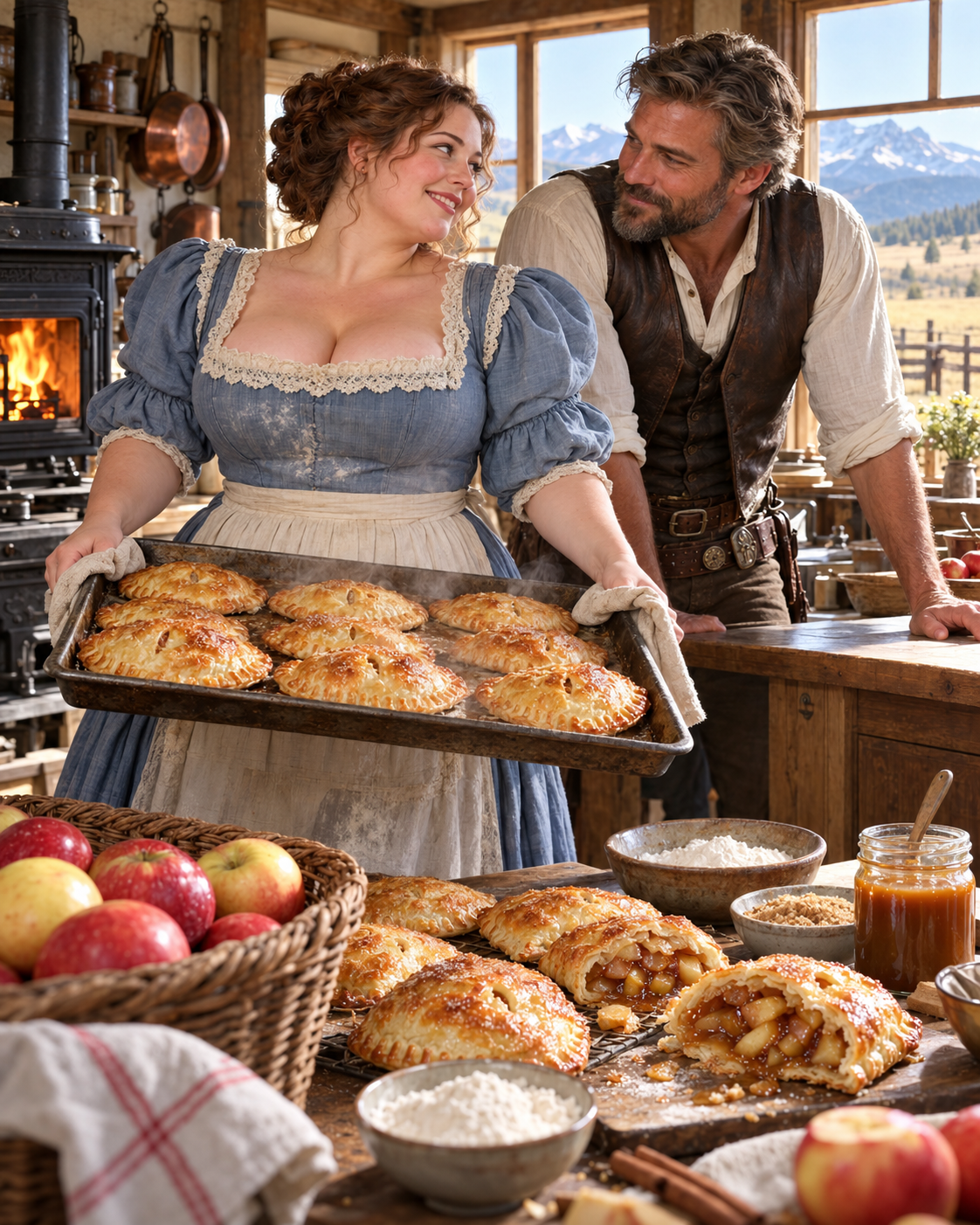
I had been given every reason to abandon that house.
Instead, I had baked bread, patched wounds, and found a place among people who had forgotten what kindness felt like.
“I stayed because you needed help,” I whispered.
Holt stepped closer.
“And who helps you?”
The question hurt more than I expected.
For years, I had been the dependable daughter, the reliable employee, the woman who solved everyone’s problems.
After my mother died, nobody had asked whether I was lonely.
Nobody had noticed how often I worked until midnight simply to avoid returning to an empty apartment.
I felt tears rise before I could stop them.
Holt gently took my hand.
“You don’t have to carry everything alone.”
For one brief moment, the world felt quiet.
Then the barn door slammed open.
Amos stood outside, pale and breathless.
“General, we’ve found Thomas.”
We discovered him near the frozen creek, lying beside his exhausted horse.
His coat was torn, and his face was swollen from a brutal beating.
When Holt lifted him, Thomas began crying.
“Please don’t let Mercer take Annie.”
Annie was his ten-year-old sister.
Mercer had taken her from the boardinghouse where she lived and threatened to sell her into forced labor unless Thomas spied on the ranch.
Thomas had given Mercer information about our supplies and the chapel.
But when Mercer ordered him to set the upstairs bedroom on fire, the boy refused.
Mercer’s men beat him and abandoned him in the snow.
“Who started the fire?” I asked.
Thomas wiped blood from his mouth.
“Mercer sent a man through the hidden passage.”
“And the little girl?”
Thomas looked confused.
“What little girl?”
My stomach tightened.
“The child at the upstairs window.”
His face went white.
“Miss Lena, there wasn’t any child.”
I stared at him.
He shook his head desperately.
“I saw Mercer’s man carrying an old portrait out of the room.”
A portrait.
Not a living child.
But I had seen her move.
I had watched her raise her hand.
Clara stepped forward.
“Was the portrait framed in silver?”
Thomas nodded.
She closed her eyes.
“Oh, Eleanor.”
The silence afterward felt unbearable.
Clara explained that the chapel’s strange power sometimes left impressions of people who had crossed through it.
Memories could appear in places where time had been disturbed.
Perhaps what I had seen was my mother as a child.
A moment from the past bleeding into the present.
For the first time, I realized that she might have been closer to me than I knew.
Not alive.
Not truly there.
But somehow, not entirely gone.
The next morning, we made our plan.
Mercer had arranged to meet his partners at the northern chapel before sunset.
He intended to destroy the original deeds, then use forged documents to claim the ranch once the tax payment could be challenged.
The payment Clara had secretly made would buy us time, but it would not stop a man willing to falsify the county records.
We needed the original documents.
And we needed witnesses.
Holt sent Amos toward town with two trusted ranch hands and a sealed statement describing Mercer’s crimes.
The rest of us prepared to reach the chapel through an old cattle trail.
I packed provisions in the kitchen.
Bread.
Dried meat.
Apples.
A small tin of honey.
And a heavy iron skillet.
Holt watched me place the skillet inside my satchel.
“Planning to cook dinner?”
“Only if our guests behave.”
He almost smiled.
Clara gave me the brass key she had pressed into my palm.
“It opens the stone cabinet beneath the chapel.”
Then she hesitated.
“Lena, there is something else.”
I looked up.
“The passage may open tonight.”
My heart stopped.
“You mean I can go home?”
She nodded.
“But it may be your only chance.”
For hours afterward, I could think of nothing else.
Chicago.
Electric lights.
Hot showers.
My little apartment with its crooked bookshelf and half-dead houseplant.
A world where winter didn’t kill people because they lacked firewood.
A world where I belonged.
Yet every time I imagined leaving, I saw Holt standing alone in the barn.
I saw Amos crying over a biscuit.
I saw Thomas asking whether his sister would be safe.
And I hated how much that mattered.
We reached the chapel as dusk settled over the mountains.
It stood on a rocky rise, its wooden steeple leaning against a bruised purple sky.
The doors were chained.
Holt broke the chain with an ax.
Inside, dust covered the pews, and a cracked stained-glass window scattered faint colors across the floor.
Clara guided us toward the altar.
Behind it was a narrow staircase descending into darkness.
The air grew warmer as we climbed down.
That frightened me more than the cold.
Deep beneath the frozen mountains, the stone walls seemed to breathe.
At the bottom stood an iron door.
Beyond it, I heard voices.
Mercer.
And another man.
“We destroy everything tonight,” Mercer said.
“No deeds, no witnesses, no claim.”
The other man laughed.
“And the girl?”
“She’ll come.”
My blood turned cold.
Mercer knew I was there.
Before Holt could stop me, I stepped backward onto a loose board.
It cracked loudly beneath my boot.
The voices stopped.
Then Mercer called out.
“Miss Carver, I was beginning to think you’d disappointed me.”
The iron door swung open.
Mercer stood inside holding a revolver.
Beside him was a gray-haired man wearing a county clerk’s badge.
Behind them, tied to a wooden chair, sat a little girl with frightened brown eyes.
Annie.
Thomas pushed past me.
“Annie!”
Mercer raised his gun.
“One more step, boy.”
Holt moved in front of us.
“Let the child go.”
Mercer smiled.
“You should have sold me this ranch when I first offered.”
“You’re not getting it.”
“Then I’ll take it.”
His gaze shifted toward me.
“And the lady can help.”
I felt the silver locket warming against my skin.
The chamber behind Mercer pulsed with an eerie blue light.
It looked like moonlight trapped beneath water.
Mercer pointed toward a stone cabinet.
“Open it.”
I hesitated.
He pressed the gun against Annie’s head.
My fingers shook as I inserted Clara’s brass key into the lock.
Inside lay a stack of documents wrapped in oilcloth.
A leather journal.
And a small wooden box.
Mercer reached for them.
But before he could touch the papers, Clara spoke.
“Those documents won’t help you.”
Mercer turned sharply.
“You.”
She stepped forward.
“The originals were copied years ago.”
His expression changed.
“You’re lying.”
“Ask the clerk.”
The gray-haired man beside him suddenly looked sick.
I understood.
Clara was buying us time.
Then something unexpected happened.
Thomas moved.
He threw himself against Annie’s chair, knocking them both sideways as Mercer fired.
The gunshot exploded inside the chamber.
Holt lunged at Mercer.
I grabbed the iron skillet from my satchel and struck the clerk’s wrist as he tried to pull another pistol.
He screamed.
The weapon clattered across the floor.
For several seconds, everything became noise.
Shouting.
Scraping boots.
Annie crying.
Then Mercer slammed Holt against the stone wall and raised his revolver again.
I saw the barrel point toward Holt’s chest.
There was no time to think.
I threw the skillet.
It struck Mercer’s shoulder.
His shot went wide.
The bullet hit the chamber wall.
The blue light surged.
A terrible vibration shook the floor.
And the passage opened.
The world seemed to tear apart.
Images flashed inside the glowing doorway.
A crowded Chicago street.
A moving train.
A woman carrying groceries beneath electric signs.
My breath caught.
It was home.
My home.
Mercer stared at the visions with naked greed.
“So it’s real.”
He rushed toward the doorway.
Clara grabbed his coat.
“Don’t!”
He struck her across the face.
Holt caught her before she fell.
Mercer turned toward me.
“You know how to control it.”
“I don’t.”
“Then you’ll learn.”
He seized my wrist.
The locket burned against my chest.
As he dragged me toward the light, I heard my mother’s voice.
Not from the doorway.
Not from the chamber.
From a memory buried so deeply that I had almost forgotten it.
I was eight years old, crying over a cake that had collapsed in the oven.
My mother knelt beside me, flour on her cheeks.
“Sweetheart, when everything falls apart, don’t just stare at the mess.”
She had wiped my tears.
“Look for what can still be saved.”
I opened my eyes.
Mercer was pulling me closer to the doorway.
The wooden box lay on the floor beside us.
Its lid had cracked during the struggle.
Inside was a silver pocket watch.
The hands were spinning backward.
Clara shouted something about the watch controlling the opening.
I understood only one thing.
Mercer wanted the doorway more than the ranch.
And he would destroy everyone to possess it.
I grabbed the watch and hurled it into the glowing chamber.
Mercer screamed.
“No!”
He released me and lunged after it.
For one terrible second, I saw his silhouette suspended between two worlds.
Then the light collapsed inward.
A sound like a thousand breaking windows filled the room.
Mercer vanished.
The doorway sealed.
And the chamber fell silent.
I woke on the chapel floor with Holt kneeling beside me.
His hands were shaking as he brushed dust from my face.
“Lena?”
I tried to speak.
My throat hurt.
“Did we win?”
He laughed once, a broken sound mixed with tears.
“You nearly got yourself killed.”
“That wasn’t my question.”
He pressed his forehead against mine.
“Yes.”
Across the chamber, Thomas held Annie so tightly she could barely breathe.
Clara sat beside the unconscious clerk, binding his wrists with rope.
The documents were still inside the cabinet.
The original land deeds.
The forged tax records.
And letters proving Mercer’s involvement in several disappearances.
Among them was a signed confession from the clerk.
He had written it years earlier, then hidden it instead of reporting Mercer.
There was enough evidence to expose the entire scheme.
But as I examined the papers, something slipped from the leather journal.
A small photograph.
My mother stood in front of a Chicago bakery.
She was older than she had been when she entered the passage, but younger than I remembered.
Beside her stood Clara.
On the back was a date.
June 14, 1989.
Clara had crossed into my world.
She had met my mother.
She had watched me grow up.
I turned toward her.
“You knew me before I came here.”
Her eyes filled with tears.
“Yes.”
“How long?”
She hesitated.
“Since you were born.”
The betrayal hurt more than I expected.
All those years, someone had been watching from the edges of my life, holding answers I never knew to ask for.
“Why didn’t you tell me?”
“Your mother asked me not to.”
I looked at the photograph again.
My mother’s smile was warm and familiar.
I could almost hear her laughing.
Clara spoke softly.
“She wanted you to choose your own future.”
I swallowed.
“But you brought me here.”
“I did.”
She looked ashamed.
“And I was wrong to decide for you.”
For a long moment, neither of us spoke.
Then she reached into her coat and handed me a folded letter.
It was addressed in my mother’s handwriting.
My hands began to shake.
I waited until we returned to the ranch before opening it.
The house was warm.
Amos had survived his wound, and the ranch hands were gathered around the kitchen table.
Thomas and Annie sat together near the stove, sharing a bowl of apple pudding.
Holt had insisted that everyone eat before discussing anything else.
For once, nobody argued.
I climbed to my room and sat beside the window.
Outside, snow covered the valley in a soft white blanket.
Then I unfolded my mother’s letter.
My darling Lena,
If you’re reading this, the mountains have finally found you.
I spent most of my life running from the place where I was born.
I thought forgetting would keep me safe.
But some things follow us no matter how far we travel.
Fear is one of them.
Love is another.
I never told you the truth because I wanted you to grow up without carrying my nightmares.
Perhaps that was selfish.
Perhaps every parent makes mistakes while trying to protect the person they love most.
But there is something I hope you’ll understand.
Home is not always where your story begins.
Sometimes it is where you discover the person you were meant to become.
If you ever find yourself in my mountains, don’t let my fear become yours.
Choose the life that makes your heart feel brave.
And remember, my sweet girl, you were never born to spend your whole life rescuing everyone else.
You deserve to be loved, too.
By the time I finished, tears had soaked the paper.
I held the letter against my chest.
For three years, I had wished for one more conversation with my mother.
One more chance to tell her I loved her.
Now, across the distance of time itself, she had somehow given me the words I needed most.
The weeks that followed changed everything.
The county authorities arrested the corrupt clerk after Amos delivered the documents and witness statements.
Mercer’s partners fled, but several were captured before reaching the territorial border.
The tax payment was confirmed, and the forged claim against Holt’s property was canceled.
Annie remained at the ranch with Thomas.
Holt offered them a permanent home, though the boy insisted he would work to repay what he believed he owed.
Holt placed a hand on his shoulder.
“You owe us honesty, Thomas.”
The boy lowered his eyes.
“And nothing more.”
Clara stayed as well.
Her return was not the miracle everyone imagined.
There were difficult conversations.
Long silences.
Nights when Holt slept in the study because he could not bear the memories of mourning her.
They had loved each other once.
But love did not erase betrayal simply because the person responsible was sorry.
I watched them slowly learn to speak again.
Sometimes forgiveness looked less like an embrace and more like two wounded people choosing to share breakfast.
And perhaps that was enough.
Spring arrived gradually.
The snow retreated from the fields, exposing dark soil and the first stubborn blades of green.
The ranch hands repaired the fences.
The horses grew restless in the warmer air.
And the kitchen became the heart of the house.
I taught Annie to make honey cakes.
Thomas learned to knead bread without turning the dough into something resembling a brick.
Amos insisted my cinnamon rolls were worth more than cattle.
Soon, neighboring families began arriving on Sundays, carrying milk, eggs, and whatever they could trade for fresh pastries.
Holt helped me convert an unused storage room into a small bakery.
He built the shelves himself.
The first morning we opened, six customers stood outside before sunrise.
By noon, we had sold everything.
I laughed until my sides hurt.
For the first time in years, I wasn’t baking because someone demanded perfection.
I was baking because it brought people together.
Because warmth could change a room.
Because a loaf of bread, shared at the right moment, could convince a lonely person that tomorrow might still be worth living.
One evening, Holt found me standing outside the bakery, watching the sunset turn the mountains gold.
He carried a small wooden box.
“I made something for you.”
Inside was a silver bracelet.
At its center hung a tiny charm shaped like a rolling pin.
I smiled.
“General Danner, is this your way of asking for free pastries forever?”
He looked unusually nervous.
“No.”
My smile faded.
He took a slow breath.
“I don’t know what your future holds.”
Neither did I.
The doorway beneath the chapel had remained sealed since Mercer’s disappearance.
Perhaps it would never open again.
Perhaps I would never see Chicago.
The uncertainty frightened me, but it no longer ruled every waking thought.
Holt continued.
“I know you came here against your will.”
He looked toward the bakery.
“And I know you’ve given this place more than any of us deserved.”
His voice softened.
“But I don’t want gratitude to become another chain around your heart.”
I stared at him.
He gently took the bracelet from the box.
“If you ever find a way home, I will help you take it.”
A tear slipped down my cheek.
“Even if I want to stay?”
He smiled sadly.
“Especially then.”
For a moment, I remembered the man who had thrown my belongings into the snow and called me a fraud.
He had been a stranger drowning in grief.
Now he stood before me offering the one thing nobody had thought to give me since I arrived.
A choice.
I held out my wrist.
He fastened the bracelet carefully.
And when he leaned forward, I rested my forehead against his.
Nothing else was necessary.
That summer, Clara came into the bakery carrying the silver locket.
The metal was warm.
I knew what it meant before she spoke.
“The passage has opened again.”
My heart began to pound.
She told me the doorway might remain open until midnight.
There was no promise of another chance.
I spent the afternoon walking through the ranch.
I touched the kitchen table where I had served my first meal.
The barn door Holt had repaired after the storm.
The fence where Amos liked to sit at sunset.
Every familiar corner reminded me how thoroughly my life had changed.
At dusk, I found Holt beside the horses.
He didn’t ask me to stay.
He simply saddled two animals.
We rode toward the northern chapel beneath a sky filled with stars.
Clara waited at the entrance.
The chamber glowed softly below.
Through the doorway, I could see my old Chicago apartment.
My kitchen counter.
My favorite blue coffee mug.
The world I had lost was waiting on the other side.
I stepped toward it.
Then I stopped.
For years, I had believed happiness was something I would find once everything in my life was perfect.
Once the bakery succeeded.
Once the bills were paid.
Once the grief stopped hurting.
But I had crossed a century and discovered something far simpler.
Happiness was the sound of people laughing around a dinner table.
It was having someone notice when you were tired.
It was knowing your presence mattered, not because of what you could accomplish, but because you were loved.
I turned toward Holt.
He stood silently near the stairs.
His eyes were wet.
“You should go if that’s what you want,” he said.
I looked at the doorway one final time.
Then I smiled through my tears.
“I spent my whole life trying to find somewhere I belonged.”
I stepped away from the light.
“I think I finally have.”
Holt crossed the chamber and wrapped his arms around me.
I held him tightly, listening to the steady rhythm of his heart.
Behind us, the doorway flickered.
Then it closed.
And I felt no regret.
Years later, people would tell stories about the strange young woman who arrived at Danner Ranch during the winter of 1875.
They would say she could turn ordinary flour into magic.
That she saved a ranch from foreclosure.
That she helped expose a criminal who vanished without a trace.
Some would even whisper that she came from another time.
I never corrected them.
The truth was stranger than any story.
Holt and I eventually married beneath the cottonwood trees in early autumn.
Clara stood beside us with quiet tears in her eyes.
By then, she and Holt had found a peaceful understanding, and their marriage had been formally dissolved.
The love they had once shared had changed into something gentler.
They no longer belonged to each other, but they had finally stopped punishing themselves for the past.
Clara became the keeper of the chapel, protecting the secret her family had guarded for generations.
Thomas grew into a kind, hardworking man.
Annie became my finest apprentice.
And Amos lived long enough to complain about my biscuits at least ten thousand times.
Our bakery expanded into a proper business, welcoming travelers from every direction.
Above its entrance, Holt carved a wooden sign.
CARVER’S KITCHEN — EVERYONE DESERVES A PLACE AT THE TABLE.
I cried when I saw it.
Not because the words were beautiful.
But because I finally understood them.
The first day I arrived, I had been a frightened stranger wearing a dead woman’s clothes, desperate to convince someone I was worth keeping.
Now I knew my worth had never depended on whether anyone allowed me to stay.
On a cold October evening, many years after my arrival, I found my daughter sitting beside the kitchen window.
She was seven.
She had my mother’s dark eyes and Holt’s stubborn chin.
In her hands was the old silver locket.
“Momma,” she asked, “is it true you came from the future?”
I sat beside her.
Outside, snow began falling over the Montana mountains.
I thought about Chicago.
About my mother.
About the impossible road that had brought me to this little kitchen.
“Yes, sweetheart.”
She considered that carefully.
“Do you miss it?”
I watched Holt through the window, helping our son carry firewood toward the house.
Clara stood beside the barn, laughing at something Amos had said.
I could smell warm cinnamon bread cooling on the counter.
“Sometimes,” I answered.
My daughter leaned against me.
“Then why didn’t you go back?”
I kissed the top of her head.
“Because going back isn’t always the same as going home.”
She looked puzzled, but she smiled anyway.
I held her close, knowing that one day she would understand.
I had spent years believing the greatest tragedy was losing the life I had planned.
But sometimes the life we never imagined is the one that teaches us how deeply we can love.
And sometimes the people who need saving are the very ones who end up saving us.
That night, after everyone had gone to bed, I placed my mother’s letter inside the little wooden box beside my pillow.
The final line had faded with time, but I still knew every word.
You deserve to be loved, too.
I closed the box and blew out the candle.
Then I slipped beneath the blankets beside the man who had once tried to send me away.
Holt reached for my hand in his sleep.
And as the winter wind whispered against our windows, I realized that my mother had been right all along.
Home wasn’t a place waiting for me somewhere in the past or the future.
It was the life we had built together, one act of courage, one forgiveness, and one shared meal at a time.
For the first time in my life, I was no longer afraid of what tomorrow might bring.
Because whatever century the world believed I belonged to, I knew exactly where my heart had chosen to stay.
THE END.
Viết tiếp phần còn lại của câu chuyện này với độ dài khoảng 2500 – 3000 từ, viết trong 1 lần trả lời duy nhất.
Viết từ đoạn còn dang dở của câu chuyện tôi gửi cho đến kết thúc của câu chuyện.
Câu chuyện có nhiều tình tiết, có cao trào, lôi cuốn, hấp dẫn, khiến người đọc cảm thấy nghiện, thu hút.
kết thúc của câu chuyện phải có ý nghĩa hoặc 1 bài học gì đó hoặc mang lại một giá trị gì đó.
Viết đúng theo mạch cảm xúc, đúng phong cách, viết bằng tiếng Anh.
Không được viết 1 đoạn quá dài dính liền nhau mà hãy viết theo cách của bạn sao cho hợp lý nhất, ko quá ngắn ko quá dài.
Tuyệt đối không được lặp đi lặp lại 1 câu nhiều lần liên tiếp nhau.
Giữa các dòng tuyệt đối ko cách nhau bởi bất kì một dòng trắng nào.
The upstairs window went black, and the scream caught in my throat before I could make a sound.
For one impossible second, I stood frozen in the Montana snow, staring at the place where a little girl with my face had been watching me.
Then I ran.
I barely heard Holt calling after me as I stumbled through the front door and raced toward the staircase.
The house seemed strangely quiet, as though every wall were holding its breath.
Halfway upstairs, I smelled smoke.
A thin gray ribbon curled beneath the door at the end of the hallway.
“There’s someone inside!” I shouted.
Holt reached me moments later, carrying an iron fireplace poker.
He struck the lock until the wood splintered, then threw his shoulder against the door.
Smoke rolled into the corridor.
The curtains were burning, their flames climbing toward the ceiling.
But the little girl was gone.
I grabbed a wool blanket and smothered the fire while Holt searched the room.
The bed was untouched.
The windows were locked.
Yet a small wooden wardrobe stood several inches away from the wall.
Behind it, we discovered a narrow passage disappearing into darkness.
Holt stared at the opening.
“That passage was sealed before Clara and I married.”
Fresh scratches marked the floor.
Someone had moved the wardrobe recently.
I stepped toward the darkness, but Holt caught my arm.
“Don’t.”
His voice held something I had never heard before.
Fear.
Downstairs, a door slammed.
We rushed outside just as a horse galloped beyond the tree line.
A black coat disappeared between the pines.
Then I saw Amos lying near the barn.
Blood stained the snow beneath his shoulder.
I dropped beside him and pressed my hand against the wound.
“Amos, stay with me.”
His eyes fluttered open.
He tried to speak, but only a painful gasp escaped.
Holt knelt beside us.
“Who did this?”
Amos caught his sleeve.
“Thomas.”
The name struck me harder than the cold.
Thomas was the youngest ranch hand, the boy whose hands had shaken when I first taught him to knead bread.
He was seventeen, painfully thin, and always saving part of his supper for someone else.
I remembered how he had helped me carry water during the blizzard.
How he had called me Miss Lena with a shy smile.
And how he had disappeared that morning.
“Thomas wouldn’t shoot you,” I whispered.
Amos gripped my wrist.
“Mercer has his sister.”
Then his eyes closed.
For one terrible moment, I thought we had lost him.
But he was breathing.
We carried him inside.
And while I cleaned his wound with boiled water and wrapped it in fresh linen, I realized the danger surrounding Danner Ranch had become far worse than a tax lien.
Someone wanted us dead.
Someone knew about the hidden passages.
And someone had deliberately brought me across one hundred and forty-nine years to stand in the middle of it.
Clara waited until Amos was sleeping before she finally told us the truth.
She sat at the kitchen table, her fingers wrapped tightly around a cup of tea.
Holt stood across from her.
He had not touched her since she returned.
Six months of mourning had changed him.
And although his wife was alive, the woman sitting before him was still a stranger carrying secrets he had never been allowed to know.
“Start from the beginning,” he said quietly.
Clara lowered her eyes.
“My father discovered the passage beneath the northern chapel thirty years ago.”
I felt the silver locket warm against my chest.
She explained that a landslide had exposed a chamber beneath the mountain, where strange blue light shimmered between two walls of black stone.
At first, her father believed it was some unusual natural phenomenon.
Then one of his workers stepped through the light.
He disappeared.
Three days later, the man returned carrying a newspaper dated 1921.
I stared at her.
“That’s impossible.”
Clara gave me a sad smile.
“So is a woman from 2024 standing in my kitchen.”
She continued.
Her father had hidden the discovery, afraid that powerful men would exploit it.
But Silas Mercer learned about the chamber while surveying the land for silver deposits.
He wanted the silver.
Then he discovered the passage.
And suddenly, the land itself became worth more than any fortune buried beneath it.
“Mercer started altering property records,” Clara said.
“He bribed the county clerk and forged deeds belonging to several neighboring families.”
Holt’s face tightened.
“That’s why he wanted my ranch.”
Clara nodded.
“The chapel sits above the entrance.”
“But what does my mother have to do with this?” I demanded.
Clara’s expression changed.
She reached into her coat and unfolded a faded photograph.
A little girl stood beside an older man outside the chapel.
The child’s dark curls were tied with a blue ribbon.
Her eyes were unmistakable.
My mother’s eyes.
“Her name was Eleanor Whitcomb,” Clara whispered.
“She was born here in 1868.”
My heart hammered.
My mother had always told me she grew up in Chicago.
She never spoke about her parents.
Whenever I asked about her childhood, she changed the subject.
I had assumed there were painful memories she wanted to forget.
Now I wondered whether every story she’d told me had been carefully constructed to hide something impossible.
“Eleanor’s father was the county clerk,” Clara continued.
“He helped Mercer forge documents until he discovered that Mercer intended to kill the rightful landowners.”
One winter night, the clerk tried to escape with his daughter.
Mercer’s men caught him.
But Eleanor ran into the chapel.
She stumbled through the passage.
And vanished into the future.
“She was seven,” Clara said.
“She arrived in 1975, alone and terrified.”
My vision blurred.
I remembered my mother standing beside our kitchen window when I was little.
She would watch the snow and whisper that some winters never really ended.
I had never understood.
“Did you know her?” I asked.
Clara nodded.
“I found her years later.”
“How?”
“The passage opened again.”
Clara pulled another photograph from her coat.
It showed my mother standing outside a Chicago bakery.
Beside her was a younger Clara, wearing a dress from the 1980s.
My knees weakened.
“You went to my world.”
“Yes.”
“And you knew me?”
Clara began crying.
“I held you when you were a baby.”
I stepped backward.
All my life, someone had known the truth.
Someone had watched me grow up.
And when I finally had a career, friends, and a life of my own, that person had taken it away.
“You brought me here.”
Clara could barely meet my eyes.
“I sent the package.”
“The locket?”
She nodded.
“And the letter appointing me your housekeeper?”
“Yes.”
I felt something inside me fracture.
“You had no right.”
“I know.”
“You didn’t ask me.”
“I couldn’t.”
“That’s not an excuse!”
My voice echoed through the kitchen.
Holt moved toward me, but I raised my hand.
I didn’t want comfort.
I wanted answers.
Clara wiped her cheeks.
“Mercer found Eleanor’s letters before she died.”
I went still.
“He learned she had a daughter.”
“Why would he care about me?”
“Because the passage responds to bloodlines connected to its first discovery.”
She looked at my locket.
“Your grandfather helped build the mechanism that stabilized it.”
My stomach turned.
“Mechanism?”
Clara nodded.
“An old silver watch. Without it, the passage opens unpredictably.”
She leaned closer.
“Mercer believes your blood and that watch can help him control where the passage leads.”
The kitchen suddenly felt too small.
I thought of the little girl at the window.
The hidden passage.
The fire.
Mercer’s demand for my locket.
Then I remembered something far worse.
“What happened to the child I saw?”
Clara looked toward the staircase.
Her expression darkened.
“I don’t know.”
We found Thomas at dawn.
He was lying beside the frozen creek, his coat torn and his face swollen from a beating.
Holt lifted him onto his horse while I wrapped the boy in my own scarf.
Thomas cried all the way home.
Not because of his injuries.
Because of his sister.
Her name was Annie.
She was ten years old and living at a boardinghouse outside town.
Mercer had taken her three days earlier.
He threatened to sell her into forced labor unless Thomas helped him spy on the ranch.
Thomas admitted he had given Mercer information about our supplies, our visitors, and the old chapel.
But when Mercer ordered him to start the bedroom fire, Thomas refused.
“He said he’d kill Annie,” the boy sobbed.
“I thought if I did what he wanted, he’d let her go.”
I sat beside him.
“Did you shoot Amos?”
Thomas shook his head desperately.
“No, ma’am. Mercer did.”
Holt studied him for a long moment.
Then he placed a hand on the boy’s shoulder.
“You should have come to me.”
Thomas lowered his head.
“I thought you’d throw me out.”
Those words hurt more than I expected.
Because I remembered standing outside this very house while Holt threw my belongings into the snow.
Fear had nearly destroyed us before.
And now it had almost destroyed a child.
Holt seemed to understand.
His voice softened.
“Nobody is throwing you out, son.”
Thomas began crying again.
Then he told us something that changed everything.
Mercer had taken Annie to the northern chapel.
He intended to meet the county clerk there at sunset.
And he planned to destroy the original property deeds hidden beneath the altar.
Once those documents disappeared, he could challenge the ranch’s tax payment and claim the estate through his forged records.
We had less than a day.
I spent the morning preparing food and supplies.
It was the only way I knew to control my fear.
I baked bread.
Wrapped dried meat.
Packed apples and clean bandages.
Then I slipped a heavy iron skillet into my satchel.
Amos watched from his chair beside the stove.
“Planning to feed the devil himself?”
“Only if he behaves.”
The old cowboy smiled weakly.
His shoulder was healing, though every movement clearly hurt.
“Miss Lena, you’ve done more for this place than anyone could ask.”
I kept packing.
“If we survive, you can thank me by washing dishes for a month.”
He laughed.
Then his expression turned serious.
“Be careful out there.”
I nodded, but I couldn’t promise anything.
Clara was waiting outside with the map.
She had marked a narrow trail leading behind the chapel.
Holt studied it while the ranch hands saddled the horses.
Before we left, he pulled me aside.
“There’s something you need to know.”
I looked at him.
“If the passage opens tonight, you should take your chance to go home.”
My throat tightened.
“You’re already sending me away?”
His expression changed.
“No.”
He took a breath.
“I’m trying not to become another person who decides your future for you.”
For a moment, I couldn’t speak.
The man who had once ordered me off his property now understood me better than almost anyone.
“You don’t even know if I want to leave,” I whispered.
Holt looked toward the snow-covered mountains.
“That’s what frightens me.”
His honesty was so unexpected that it hurt.
I wanted to reach for him.
But Clara called from the horses.
And the moment passed.
We reached the chapel just before sunset.
It stood among dead pine trees, its wooden walls gray with age.
The steeple leaned toward the mountains like a broken finger.
No birds sang.
No wind moved through the branches.
Even the horses seemed reluctant to approach.
We tied them behind a ridge and climbed toward the chapel on foot.
Inside, dust covered the pews.
A cracked stained-glass window scattered pale colors across the floor.
Clara led us behind the altar.
There, beneath a heavy wooden panel, was a narrow staircase.
Cold air rose from the darkness.
Holt lit a lantern.
We descended slowly.
The stone walls became warmer the deeper we went.
That frightened me more than the cold ever had.
At the bottom stood an iron door.
Voices echoed from the other side.
Mercer.
And another man.
“Burn the papers,” Mercer ordered.
“Once they’re gone, the land belongs to us.”
“What about the girl?” someone asked.
I froze.
Mercer’s reply was calm.
“She’ll come.”
Holt touched my shoulder.
I nodded.
Then I stepped forward and deliberately knocked against the iron door.
The voices stopped.
“Miss Carver,” Mercer called.
“I was wondering when you’d arrive.”
The door opened.
Mercer stood inside holding a revolver.
Beside him was a gray-haired man wearing a county clerk’s badge.
And behind them, tied to a chair, sat Annie.
Her face was streaked with tears.
Thomas rushed forward.
“Annie!”
Mercer raised his gun.
“One more step and she dies.”
The boy stopped.
I felt Holt tense beside me.
Clara stepped forward.
“Let the child go, Silas.”
Mercer’s smile vanished when he saw her.
“You should have stayed dead.”
Holt moved protectively in front of her.
Mercer laughed.
“Still defending her, General? Even after she made you bury an empty coffin?”
Holt’s jaw tightened.
“Whatever happened between us is none of your business.”
Mercer tilted his head.
“Everything on this land is my business.”
Then he pointed the gun toward me.
“Open the cabinet, Lena.”
Behind him stood a black stone wall containing a narrow silver door.
Beside it was a small cabinet carved into the rock.
Clara handed me the brass key.
I approached slowly.
My fingers shook as I turned the lock.
Inside lay a leather journal.
Several bundles of documents.
And a wooden box containing an old silver pocket watch.
The watch was unlike anything I had ever seen.
Its hands moved backward.
And beneath its glass, a tiny blue light pulsed like a heartbeat.
Mercer’s eyes widened.
“Give it to me.”
I hesitated.
He pressed the revolver against Annie’s temple.
“Now.”
I picked up the watch.
The moment my fingers touched it, a strange warmth rushed through my body.
The stone wall began to glow.
Blue light seeped through its cracks.
Suddenly, I heard my mother’s voice.
Not from the chamber.
From somewhere deep inside my memory.
I was eight years old again, standing in our Chicago kitchen beside a ruined birthday cake.
I had cried because the frosting collapsed.
My mother knelt in front of me.
“Sweetheart, when something falls apart, you don’t always have to throw it away.”
She smiled and handed me a spatula.
“Sometimes you can make something better from what’s left.”
The memory vanished.
I opened my eyes.
Mercer was reaching for the watch.
Then Thomas moved.
He threw himself against Annie’s chair, knocking her sideways just as Mercer fired.
The gunshot exploded through the chamber.
Holt lunged.
I stumbled backward.
The county clerk grabbed Clara, pressing a knife against her throat.
Everything happened at once.
Annie screamed.
Holt slammed Mercer against the wall.
The lantern shattered.
Fire spread across the floor.
I reached into my satchel and pulled out the iron skillet.
Before the clerk could hurt Clara, I struck his wrist.
He screamed.
The knife fell.
Clara pushed him away.
Mercer broke free from Holt and raised his revolver again.
This time, the barrel pointed directly at Holt’s chest.
I didn’t think.
I swung the skillet with everything I had.
It struck Mercer’s shoulder.
The gun fired.
The bullet hit the silver door.
A terrible sound filled the chamber.
The blue light erupted.
And suddenly, the wall disappeared.
Beyond the doorway, I saw Chicago.
My Chicago.
Cars moved beneath electric streetlights.
People hurried across an intersection.
A yellow taxi stopped outside a familiar coffee shop.
I could even see the bakery where I had worked.
For a moment, the world I had lost was close enough to touch.
My knees nearly gave way.
Mercer stared at the doorway.
His face transformed.
Greed replaced fear.
“It’s real,” he whispered.
He rushed toward me.
“Give me the watch!”
I backed away.
He seized my wrist and twisted it until I cried out.
Holt shouted my name.
But Mercer held the revolver against my ribs.
“No one moves!”
The chamber trembled.
Loose stones fell from the ceiling.
The passage was becoming unstable.
Clara screamed that the watch needed to be returned to its place inside the cabinet.
Otherwise, the opening could collapse and bury everyone.
Mercer wasn’t listening.
He was staring into the future.
A world of machines.
Electricity.
Wealth beyond his understanding.
I could almost see him imagining how much power he might steal from it.
“You’ll take me there,” he ordered.
I looked at Holt.
His face was pale with helpless fury.
Then I looked at Annie, trembling against Thomas’s chest.
And I understood.
Mercer would never stop.
If he reached my world, he would find new people to threaten.
New lives to ruin.
New ways to turn fear into money.
I couldn’t let him.
I loosened my grip on the watch.
Mercer’s eyes followed it.
Then I threw it toward the cabinet.
He lunged after it.
The watch struck the stone floor and rolled into the open compartment.
A violent pulse of light filled the room.
The doorway twisted.
Mercer screamed and stumbled forward.
For one terrible moment, his body was suspended between two worlds.
Then the blue light folded inward.
The stone door slammed shut.
And Mercer vanished.
The chamber went silent.
I woke with my cheek pressed against cold stone.
Someone was calling my name.
“Lena.”
A hand brushed my hair.
“Lena, please.”
I opened my eyes.
Holt was kneeling beside me.
His face was covered in dust.
There was blood on his sleeve.
His eyes looked frightened.
I tried to speak, but my throat burned.
“Did we save Annie?”
He nodded.
“She’s safe.”
“And the documents?”
“Safe.”
I closed my eyes.
Only then did I realize I was crying.
Holt gathered me against his chest.
I felt his heart beating beneath my cheek.
For once, I let someone else hold me together.
Nearby, Thomas was untying Annie’s wrists.
Clara had secured the unconscious clerk with rope.
The documents were intact.
Among them were the original land deeds, records of the stolen taxes, and letters bearing Mercer’s signature.
There was enough evidence to expose the entire scheme.
But something else lay inside the leather journal.
A photograph.
It showed my mother standing outside a bakery in Chicago.
Beside her was Clara.
On the back, written in my mother’s handwriting, were four words.
For Lena, when ready.
I turned the photograph over again.
Something thin was tucked behind it.
A letter.
My hands began shaking.
Clara watched silently as I unfolded the paper.
I recognized my mother’s handwriting immediately.
The same soft curves.
The same careful way she formed my name.
I wanted to read it there.
But I couldn’t.
Not surrounded by broken stone and the smell of gunpowder.
I folded the letter and pressed it against my heart.
“I need to go home,” I whispered.
Holt helped me stand.
And for the first time, I realized I no longer knew which home I meant.
Three days later, the county sheriff arrived with two deputies.
The corrupt clerk confessed after Amos delivered the recovered documents and Thomas testified about Annie’s kidnapping.
Mercer’s associates were arrested.
The forged tax claim was canceled.
Danner Ranch was legally secure.
And for the first time since I had arrived, the house felt peaceful.
But peace did not mean everything was healed.
Clara and Holt still struggled to speak to each other.
Some evenings, I found him staring at the photograph of their wedding.
Other nights, Clara sat alone in the parlor, crying quietly when she believed nobody could hear.
They had once loved each other.
But six months of grief and years of secrecy had changed them.
One evening, I overheard Clara speaking to Holt.
“I thought disappearing was the only way to protect you.”
His voice was tired.
“You protected the ranch.”
She nodded.
“But I destroyed my marriage.”
Holt was silent for a long time.
Then he answered.
“I loved you, Clara.”
She began to cry.
“I know.”
“But I don’t know how to be your husband anymore.”
I walked away before hearing anything else.
Some wounds did not heal simply because the person who caused them apologized.
And sometimes love changed into something that could no longer be called marriage.
Still, I admired the way they eventually treated each other.
There was no shouting.
No cruelty.
Only two broken people accepting that the life they had shared was gone.
They chose kindness instead of bitterness.
And in time, that became its own kind of forgiveness.
One afternoon, I finally opened my mother’s letter.
I was sitting beside the kitchen window.
Outside, the first signs of spring were appearing beneath the melting snow.
The house smelled of fresh bread.
Holt was repairing a broken fence.
Thomas and Annie were laughing near the barn.
And for the first time, I felt safe enough to face whatever my mother had left behind.
My darling Lena,
If this letter has reached you, then the mountains have finally found their way into your life.
I spent many years running from where I was born.
I believed that if I traveled far enough, the past would stop following me.
But some things never leave us.
Fear is one of them.
Love is another.
I never told you the truth because I wanted your childhood to belong entirely to you.
Not to the men who hurt my family.
Not to the secrets beneath the mountains.
And certainly not to the terror I carried through that doorway when I was seven years old.
Perhaps I was wrong.
Perhaps you deserved to know.
But I hope you can forgive me for wanting you to grow up believing the world was a safe place.
There is something I need you to understand.
You were never born to repair every broken person you meet.
You do not have to earn love by exhausting yourself.
You do not have to become useful before you become worthy.
And if life ever takes you somewhere you never intended to go, remember this.
Home is not always the place where your story began.
Sometimes it is the place where you finally stop pretending to be someone else.
Choose your life, Lena.
Do not let my fear choose it for you.
And never forget that you deserve happiness simply because you exist.
All my love,
Mom.
By the time I finished, tears had soaked the page.
I pressed the letter against my chest.
For three years, I had wished for one more conversation with my mother.
One more chance to tell her how much I missed her.
Now, across the impossible distance between centuries, she had somehow reached me.
Not with answers to every question.
But with the words I needed most.
I sat there until the afternoon light faded.
Then I carefully folded the letter and placed it inside the wooden box beside my bed.
That night, I slept without dreaming of Chicago.
Spring transformed Danner Ranch.
Snowmelt filled the creeks.
Grass spread across the valley.
The cattle returned to the northern pastures.
And the kitchen became busier than ever.
I began selling bread, pies, and biscuits to passing wagon drivers.
At first, Holt insisted I didn’t need to work so hard.
Then I showed him our earnings.
He stared at the coins on the table.
“All this from pastries?”
I smiled.
“Never underestimate hungry men and good cinnamon rolls.”
Within a month, neighbors began arriving from miles away.
Some came for fresh bread.
Others came because they’d heard about the strange woman who could make cakes without the expensive ingredients fashionable households demanded.
I used whatever the ranch had.
Apples.
Honey.
Cream.
Flour.
Dried berries.
And the stubborn creativity that had carried me through years of working in professional kitchens.
Soon, I converted an unused storage room into a small bakery.
Holt built the shelves.
Thomas repaired the windows.
Annie painted flowers on the wooden sign.
Amos insisted on being our official taste tester.
The first morning we opened, seven customers stood outside before sunrise.
By noon, we had sold everything.
I stood behind the counter, exhausted and laughing.
For the first time in years, my work felt like joy instead of obligation.
I remembered the woman I had been in 2024.
The pastry chef who accepted every extra shift.
Who worked through holidays.
Who believed perfection would somehow fill the loneliness waiting in her apartment.
I had spent so much time making beautiful things for other people that I had forgotten how to enjoy my own life.
Now I baked because I wanted to.
Because the smell of cinnamon could make Amos smile.
Because Annie loved decorating little cakes with dried flowers.
Because Thomas had finally stopped looking over his shoulder every time someone raised their voice.
And because Holt sometimes stood in the doorway simply to watch me work.
One evening, he brought me a small wooden box.
Inside was a silver bracelet.
At its center hung a tiny charm shaped like a rolling pin.
I laughed.
“General Danner, is this an attempt to secure free pastries for life?”
His expression softened.
“No.”
He took the bracelet from the box.
“I wanted you to have something that belongs only to you.”
I held out my wrist.
He fastened it carefully.
His fingers lingered against my skin.
Then he said something that made my chest ache.
“You’ve spent so much time giving this house a second chance.”
He looked into my eyes.
“I hope someone gives you one, too.”
For a moment, I couldn’t speak.
Then I reached for his hand.
“Maybe someone already has.”
Summer arrived with warm winds and long golden evenings.
Clara moved into a small cottage near the northern chapel.
She devoted herself to studying the passage and protecting its secrets.
She and Holt reached a peaceful understanding, and their marriage was legally dissolved.
There was sadness in their decision.
But there was relief, too.
They no longer had to pretend that time and grief had left them unchanged.
One afternoon, Clara visited the bakery.
She looked nervous.
In her hands was the silver locket.
“The passage has opened again,” she said.
My heart stopped.
I stared at her.
“Are you certain?”
She nodded.
“It may remain open until midnight.”
For several seconds, I couldn’t move.
Chicago.
My apartment.
My friends.
My unfinished life.
Everything I believed I had lost.
Suddenly, it was possible to return.
Clara placed the locket on the counter.
“I won’t make this decision for you.”
Then she left.
I spent the rest of the afternoon walking through the ranch.
I touched the kitchen table where I had served my first meal.
The stove where I had burned my fingers trying to understand its heat.
The doorway where Holt had once stood and ordered me to leave.
The barn where he had risked his life during the blizzard.
Every corner carried a memory.
Every memory carried someone I had come to love.
At sunset, Holt found me near the pasture fence.
He already knew.
“Clara told me.”
I nodded.
He stood beside me, watching the horses graze.
For a long while, neither of us spoke.
Then he said quietly.
“I’ll take you to the chapel.”
I looked at him.
“Even if I never come back?”
His jaw tightened.
“Even then.”
Tears burned behind my eyes.
“Why?”
He turned toward me.
“Because loving someone doesn’t mean owning their future.”
His words broke something open inside me.
I had spent years believing love meant sacrifice.
That being needed was the same as being cherished.
But Holt was offering me something different.
The freedom to leave.
Even though it might break his heart.
I stepped closer.
“And what if I want to stay?”
His eyes searched mine.
“Then stay because it makes you happy.”
I took his hand.
We stood together until the first stars appeared.
That night, we rode to the chapel.
The mountains were quiet beneath the moonlight.
Clara waited near the entrance.
Inside the chamber, the silver doorway shimmered.
Through it, I could see my Chicago apartment.
My favorite blue coffee mug sat on the counter.
A folded jacket lay across the sofa.
The clock above my refrigerator showed that only one night had passed since my disappearance.
I stepped closer.
My breath caught.
Everything was exactly as I had left it.
The world had continued waiting for me.
I could return to the bakery.
Resume my career.
Walk familiar streets.
Live in a century where medicine, technology, and comfort made everyday life easier.
The choice should have been simple.
But I turned around.
Holt stood near the staircase.
He wasn’t crying.
Yet his expression held a sadness that frightened me more than tears.
Clara watched silently.
Neither of them spoke.
Neither tried to persuade me.
I looked back into the doorway.
For years, I had believed my happiness existed somewhere ahead of me.
After the next promotion.
After the next successful cake.
After the next achievement that would finally prove I was enough.
But in Montana, I had discovered something I never found in Chicago.
Not perfection.
Not an easy life.
Belonging.
I remembered Amos crying over fresh biscuits.
Thomas holding Annie after we rescued her.
Clara finding the courage to face the pain she had caused.
Holt standing beside me in the barn, asking who would take care of me.
I stepped away from the light.
Holt’s eyes widened.
“Lena?”
I smiled through my tears.
“I’ve spent my whole life waiting to feel at home.”
I reached for his hand.
“I think I’m already there.”
For the first time, Holt Danner seemed completely speechless.
Then he wrapped his arms around me.
I held him tightly, burying my face against his chest.
Behind us, the silver doorway flickered.
The clock in my Chicago apartment disappeared.
And the chamber fell dark.
I didn’t know whether the passage would ever open again.
But I knew something more important.
For once, the choice had been mine.
Years later, people would tell stories about the strange young woman who arrived at Danner Ranch during the winter of 1875.
Some claimed I was a runaway heiress.
Others believed I had escaped a terrible marriage.
A few whispered that I came from another century.
I never corrected them.
Holt and I married beneath the cottonwood trees the following autumn.
Clara attended the ceremony.
She cried quietly when Holt kissed my forehead.
Afterward, she hugged me and whispered.
“Your mother would have been proud.”
I believed her.
Thomas grew into a strong and generous man.
Annie became the finest baker I ever trained.
Amos lived long enough to complain about my biscuits more times than I could count.
Our little bakery grew into a successful business, welcoming travelers from every direction.
Above its entrance, Holt carved a wooden sign.
CARVER’S KITCHEN — EVERYONE DESERVES A PLACE AT THE TABLE.
I cried when I saw it.
Not because the words were beautiful.
But because I finally understood what they meant.
On the day I arrived, I was a frightened stranger wearing another woman’s clothes, desperate to convince someone I deserved shelter.
Now I knew I had never needed to prove my worth by rescuing a ranch, feeding hungry men, or protecting a family.
Those things mattered.
But they were not the reason I deserved love.
I deserved love because I was human.
Because I had a heart capable of breaking and healing.
Because even when I made mistakes, I was still worthy of kindness.
One cold October evening, many years after my arrival, I found my daughter sitting beside the kitchen window.
She was seven years old.
She had my mother’s dark eyes and Holt’s stubborn chin.
In her hands was the silver locket.
“Momma, is it true you came from the future?”
I sat beside her.
Outside, snow drifted across the Montana mountains.
The house smelled of warm cinnamon bread.
Holt was helping our son carry firewood toward the kitchen.
I smiled.
“Yes, sweetheart.”
She studied my face.
“Do you miss it?”
I thought about Chicago.
My little apartment.
The city streets after rain.
The people I had known.
And the mother whose love had followed me farther than time itself.
“Sometimes,” I admitted.
My daughter leaned against my shoulder.
“Then why didn’t you go back?”
I looked toward the window.
Holt lifted his hand and waved.
Our son laughed as a log slipped from his arms.
I could hear Annie singing in the bakery.
And somewhere beyond the hills, the old chapel stood silent beneath the snow.
I kissed my daughter’s hair.
“Because going back isn’t always the same as going home.”
She frowned thoughtfully.
“Will I understand when I’m older?”
I smiled.
“I hope so.”
That night, after the children had gone to bed, I opened the wooden box where I kept my mother’s letter.
The paper had yellowed.
The ink had faded.
But the final words remained clear.
You deserve happiness simply because you exist.
I traced them with my finger.
Then I looked around the warm kitchen.
At the bread cooling on the counter.
At the little wooden toys scattered near the fireplace.
At the man standing in the doorway, smiling at me as though I were the most extraordinary thing he had ever seen.
For so many years, I had believed losing my old life would be the greatest tragedy I could ever face.
But sometimes life takes everything familiar away so we can discover what truly matters.
Sometimes the people we rescue are the ones who teach us how to live.
And sometimes the greatest act of courage isn’t fighting to change the past.
It’s choosing to build a future with whatever love remains.
Holt came toward me and held out his hand.
“Come to bed, Lena.”
I folded my mother’s letter and placed it safely inside the box.
Then I reached for him.
Outside, winter whispered against the windows.
Inside, our children slept peacefully.
And as Holt wrapped his arms around me, I finally understood that home was never simply a place on a map, or a year on a calendar.
Home was where fear no longer made our choices.
Where forgiveness could grow without erasing the truth.
Where love was given freely, not earned through suffering.
I had crossed one hundred and forty-nine years searching for answers I never knew I needed.
And in the end, the greatest secret wasn’t hidden beneath a mountain, inside a silver locket, or behind a doorway through time.
It was something my mother had tried to teach me all along.
You cannot always choose what life takes from you, but you can choose what you build from what remains.
And that was how a lost pastry chef from 2024 found her forever in the mountains of 1875.
THE END.