Charles Vickers humiliated me before the entire Cheyenne supply store, laughing at my winter warnings, unaware I’d discovered something terrifying in the mountains.
For seventeen years, I had believed my mother was buried beneath a lonely cottonwood tree outside Laramie, and now a single sentence on the back of a forged document threatened to tear apart everything I knew about my family.
I stood in our crowded barn, holding that piece of paper while fourteen frightened neighbors watched me struggle to breathe.
My father had died when I was twenty, just three months after my mother supposedly passed away from a fever.
I had mourned them both, carrying their memories through every winter, every lonely night, and every hard year of my marriage.
Yet someone had written a message suggesting that my mother had never died at all.
“Ask your mother why she disappeared.”
The words seemed to move across the paper as my hands trembled.
Tom reached toward me, but I pulled away.
“Did you know about this?”
His expression changed from confusion to something that looked painfully close to fear.
“Maggie, I swear I don’t know what that means.”
I wanted to believe him, but I had already learned how easily a familiar face could conceal an unfamiliar truth.
Charles Vickers stood near the barn door, twisting his hat between his fingers.
The man who once laughed at my weather records now seemed terrified of a document he had helped bring into our home.
“Charles, who gave you this?”
He looked toward the gathering darkness outside.
“A man named Edwin Mercer.”
The name struck me like a physical blow.
Edwin Mercer had been my father’s closest friend.
He had attended my parents’ funerals, helped arrange their estate, and told me that my father’s final wish was for me to keep the ranch.
I remembered him placing a comforting hand on my shoulder beside my mother’s grave.
I remembered his gentle voice.
And suddenly, I remembered something else.
There had never been an open casket.
My mother had supposedly died while visiting relatives in Laramie, and Mercer had insisted that the illness made a proper viewing impossible.
At twenty, drowning in grief, I had accepted his explanation without question.
Now, seventeen years later, I wondered whether I had spent half my life mourning a woman who was still breathing somewhere.
“Where is Mercer now?”
Charles swallowed.
“He came through Cheyenne two weeks before the storm.”
He hesitated before continuing.
“He told me the railroad would pay twice the value of your northern pasture once the creek was diverted.”
Samuel Reed stepped forward.
“And you helped him?”
Charles lowered his eyes.
“I thought he was buying land, Samuel, not destroying families.”
“Then why did you hide our supplies?”
Charles looked toward his wife, Eleanor, who stood silently beside the stable wall.
Her thin fingers tightened around her shawl.
“Mercer said the wagon would be released once Maggie agreed to sell, and that nobody would suffer.”
Samuel lunged toward him.
Tom caught Samuel’s arm before he could strike.
“My daughter nearly froze to death.”
Charles did not defend himself.
He simply whispered, “I know.”
I should have felt satisfaction watching him crumble.
Instead, I felt exhausted by the terrible ease with which ordinary people could convince themselves that cruelty was harmless when someone else carried the consequences.
I looked down at the forged document again.
My father’s signature was nearly perfect, but the final stroke curved upward.
My father always finished his name with a downward flourish.
He had taught me to notice such details when I was a little girl.
“Every mark tells you something, Maggie,” he used to say.
“Most folks just never bother looking.”
That memory gave me something stronger than fear.
It gave me a place to begin.
The following morning, I took my father’s old cedar chest from beneath our bed.
Inside were family letters, tax receipts, photographs, and a small Bible with my mother’s name written on the first page.
I spent hours comparing signatures beneath the weak winter sunlight.
Tom worked quietly beside me, sorting papers without offering excuses for the conversation I had witnessed behind our barn months earlier.
Near noon, I discovered an envelope concealed beneath the chest’s loose wooden lining.
The paper had yellowed, and the seal was broken.
Across the front, written in my father’s careful hand, were four words.
“For Maggie, when necessary.”
Inside lay a letter dated September 3, 1870.
My father had written it just weeks before his death.
“My dearest daughter, there may come a day when you hear terrible things about your mother, and I pray you will remember that love sometimes makes frightened people choose silence.”
I read those words three times before continuing.
“The northern pasture contains something Mercer desperately wants, though he believes I do not understand its value.”
“He has threatened to destroy your mother’s reputation unless I surrender the land.”
“I have refused him.”
The final paragraph had been written with such trembling strokes that I barely recognized my father’s handwriting.
“If anything happens to me, trust your mother’s courage, and remember what lies beneath the stone at Willow Creek.”
The letter ended there.
No explanation.
No goodbye.
Only a warning buried inside a chest for seventeen years.
Tom found me sitting on the floor, the letter pressed against my chest.
He knelt beside me without speaking.
Finally, I asked the question that had been burning through me since the barn.
“Did you meet Mercer last summer?”
Tom nodded.
“Yes.”
My throat tightened.
“Why didn’t you tell me?”
He looked toward the window.
“Our cattle were sick, the bank wanted payment, and I thought losing the ranch would break you.”
His voice cracked.
“Mercer offered enough money to clear everything.”
I waited.
“I listened to him longer than I should have.”
The admission hurt more than an excuse would have.
“But when he said the creek would be redirected, I refused.”
Tom reached into his pocket and handed me a folded letter.
It was Mercer’s offer, marked across the bottom with Tom’s own handwriting.
“Rejected. This property belongs to Margaret Whitmore.”
I stared at those words.
For years, I had believed my husband respected my strength only when circumstances forced him to.
Yet he had refused a fortune to protect something that legally belonged to me.
Still, his silence had nearly cost us our lives.
“You should have told me.”
“I know.”
“Not because I’m your wife, Tom, but because I’m your partner.”
He nodded, tears gathering in his eyes.
“I understand that now.”
For the first time since the storm, I believed he truly might.
Three days later, we traveled to Willow Creek.
The thaw had softened the snow, but great sheets of ice still clung to the banks.
Tom brought a shovel, while Samuel accompanied us with his rifle.
The old creek curved through my northern pasture beneath a stand of bare cottonwoods.
I remembered playing there as a child, collecting smooth stones while my mother read beneath the summer branches.
Near the water stood a broad sandstone marker engraved with a simple cross.
My father had placed it there before I was born.
I knelt beside it, brushing away frozen mud.
Beneath the stone was a narrow cavity lined with oilcloth.
Inside lay a rusted metal box.
My heart pounded so loudly that I barely heard Tom call my name.
We carried the box home before opening it.
The lock yielded after several careful blows.
Inside were survey maps, mineral reports, and a leather-bound journal belonging to my mother.
Her handwriting was unmistakable.
The first entry was dated April 1869.
She wrote about Edwin Mercer discovering valuable coal seams beneath the northern ridge and attempting to purchase the surrounding water rights before anyone understood their worth.
The maps confirmed that the creek supplied not only our ranch but nearly every farm downstream.
Without its water, those families would eventually be forced to abandon their land.
Mercer intended to acquire their properties cheaply, then profit from the coal deposits and whatever railroad interest they attracted.
But the worst discovery lay halfway through my mother’s journal.
She had discovered that Mercer was falsifying ownership records with the assistance of a territorial land clerk named Nathaniel Briggs.
When she threatened to expose them, Mercer accused her of stealing money from a local charitable fund.
He had manufactured documents supporting the accusation.
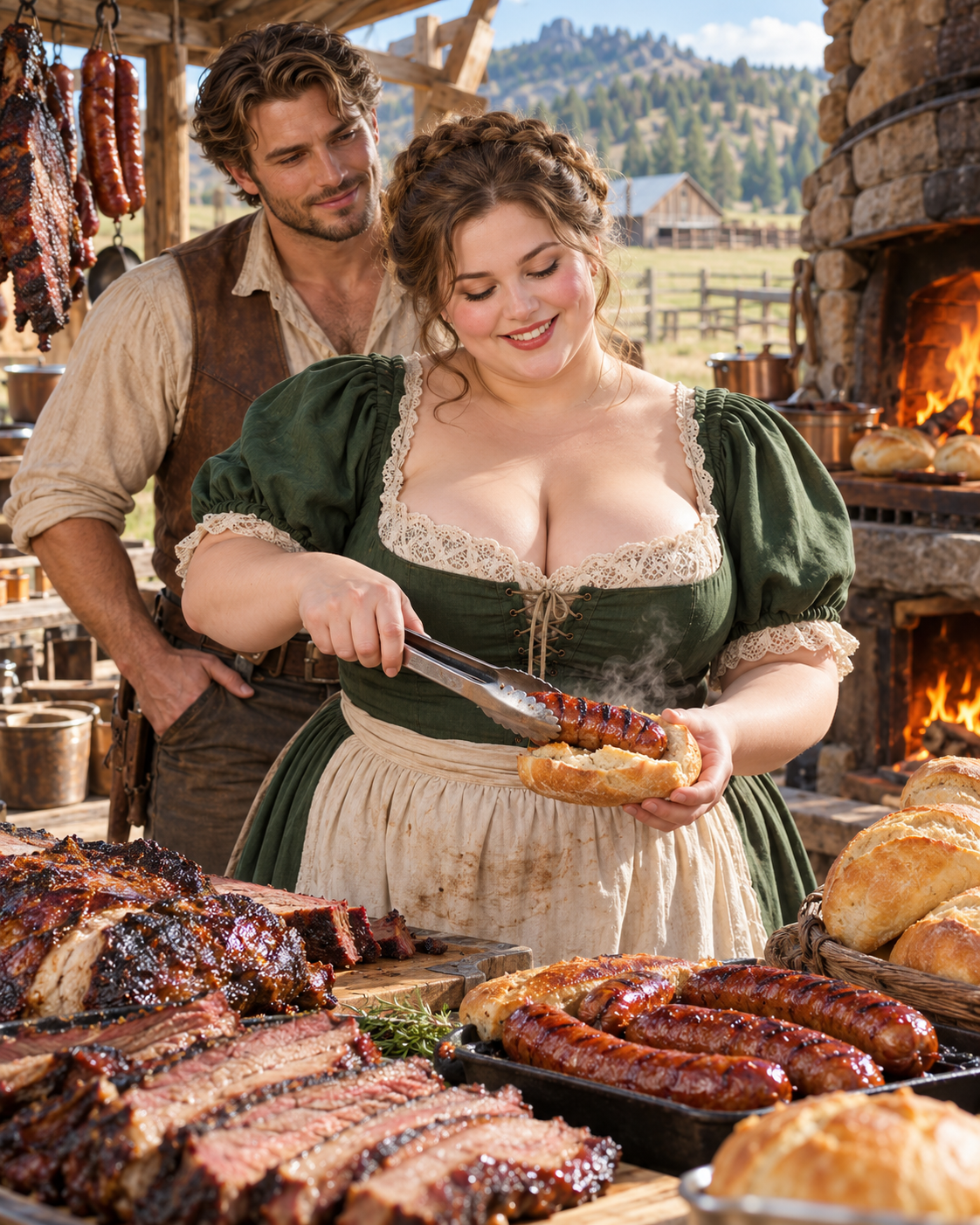
My mother wrote about neighbors turning away from her in the street.
She wrote about whispers following her through church.
And she wrote about my father begging her not to surrender.
Then came an entry that made my blood run cold.
“Edwin says that if I do not leave Wyoming, Maggie will suffer for my disobedience.”
I stopped reading.
The kitchen seemed suddenly airless.
The next page explained that my mother had agreed to travel east under another name while my father gathered enough evidence to expose the fraud.
They intended to reunite after the danger passed.
But my father died before he could bring her home.
Mercer had controlled the funeral arrangements.
He had told me my mother was dead.
And apparently, he had told her the same terrible lie about me.
The final entry contained an address in Nebraska.
A boardinghouse in a small town near the Platte River.
Dated November 1870.
For several minutes, I could only stare.
My mother might have spent seventeen years believing her daughter had been buried alongside her husband.
Tom placed his hand over mine.
“We’ll find her.”
I looked at him.
“What if she’s already gone?”
He swallowed.
“Then we’ll find out what happened.”
That evening, Samuel rode to Cheyenne carrying copies of the documents.
He intended to contact the territorial authorities and a newspaper editor he trusted.
Meanwhile, Tom and I prepared to travel east.
But before we could leave, something happened that reminded me how dangerous the truth could be.
At midnight, our dog began barking.
I woke to the smell of smoke.
Flames were crawling along the outside wall of our barn.
Tom grabbed his boots while I rushed downstairs.
Through the window, I saw a rider disappearing toward the northern ridge.
“Someone set it deliberately!”
We ran into the yard with buckets, but the winter-dried hay caught fire faster than we could carry water.
The horses screamed inside.
Tom forced open the doors while I dragged a frightened mare into the snow.
The heat struck my face like an open furnace.
Our neighbors appeared through the darkness, carrying shovels, blankets, and every bucket they could find.
Charles Vickers came with them.
He ran straight into the burning barn.
For one terrible moment, I thought the roof would collapse with him inside.
Then he emerged, coughing violently, leading our last frightened horse.
His coat was burning at the shoulder.
Samuel threw snow over him.
Together, we fought until dawn.
By sunrise, half the barn lay in blackened ruins.
Yet every animal was alive.
Charles sat against the fence, staring at his blistered hands.
I approached him quietly.
“Why did you go back inside?”
He looked toward our horses.
“Because your husband went into the storm for my wife.”
His voice grew unsteady.
“And because I should have been a better man long before someone needed saving.”
I had no answer for that.
Forgiveness was not something I could give simply because a man had finally felt ashamed.
But as the sun rose over the smoking ruins, I understood that remorse meant little until it became action.
Two days later, Charles came to our house carrying a packet of letters.
He had collected them during his dealings with Mercer.
They contained instructions concerning the supplies, the land purchases, and the forged ownership records.
One letter explicitly ordered Charles to delay provisions until desperate ranchers agreed to sell their properties.
Charles placed everything on our kitchen table.
“I’ll testify.”
Tom studied him carefully.
“Even if it means prison?”
Charles nodded.
“Even then.”
I saw his wife standing near the doorway, tears running silently down her cheeks.
She knew what his confession might cost their family.
But she also knew what his silence had already cost others.
With those letters secured, we finally began our journey to Nebraska.
The trip took nearly two weeks.
The roads were treacherous, bridges damaged, and every town carried its own stories of hardship from the brutal winter.
We passed families who had lost homes, livestock, and loved ones.
I thought of my notebooks tucked safely inside our wagon.
Once, they had seemed like a collection of ordinary observations.
Now I understood how much suffering might be prevented when people paid attention before disaster arrived.
At last, we reached the little Nebraska town named in my mother’s journal.
The boardinghouse stood beside a narrow street lined with muddy wagon tracks.
Its porch sagged, and the windows were clouded with dust.
An elderly woman answered our knock.
When I asked about a woman named Elizabeth Whitmore, her expression changed.
“Elizabeth?”
My knees weakened.
“Do you know her?”
The woman studied my face for several seconds.
Then she pressed a hand over her mouth.
“Good Lord.”
She stepped backward.
“You have her eyes.”
I gripped the doorframe.
“Where is she?”
The woman introduced herself as Mrs. Bell.
She had owned the boardinghouse since before the war.
Elizabeth had arrived in the autumn of 1870 under the name Elizabeth Warren.
She had been frightened, nearly penniless, and terribly ill from the journey.
Mrs. Bell had taken her in.
My mother stayed for almost six years.
She worked as a seamstress, taught children to read, and wrote countless letters to Wyoming.
None received an answer.
Eventually, she stopped writing.
“She believed you were dead,” Mrs. Bell whispered.
I felt Tom’s hand steady me.
“Where did she go?”
Mrs. Bell disappeared upstairs and returned carrying a small address book.
“She moved to a settlement outside North Platte, where she helped establish a school.”
My voice came out barely above a whisper.
“Is she still alive?”
Mrs. Bell looked at me with such tenderness that I began crying before she answered.
“She was last Christmas.”
We continued westward the following morning.
I barely slept that night.
Every time I closed my eyes, I imagined my mother standing behind a door, older and unfamiliar, perhaps unable to recognize the daughter she had last held seventeen years earlier.
I remembered the warmth of her hands.
Her quiet singing.
The smell of lavender that clung to her Sunday dresses.
I also remembered being twenty years old, alone beside two graves, believing the world had taken everyone who loved me.
By late afternoon, we reached a modest white schoolhouse beside a cluster of farm buildings.
Children were playing outside.
A woman with silver threaded through her dark hair stood near the entrance, carrying a stack of books.
She turned when our wagon approached.
The books slipped from her arms.
I climbed down before Tom could stop the horses.
For a heartbeat, neither of us moved.
Then she whispered my childhood nickname.
“Magpie?”
No one had called me that since my father died.
I tried to answer, but the words dissolved into sobs.
My mother crossed the yard with both hands pressed against her mouth.
She touched my face as though afraid I might disappear.
“My Maggie?”
I nodded.
And suddenly, I was twenty years old again, clinging to the woman I had buried in my heart.
She held me so tightly that I could feel her shaking.
“I thought they took you from me.”
I buried my face against her shoulder.
“I thought you were gone.”
We stood there while the children watched silently, two women trying to reclaim seventeen stolen years beneath an ordinary Nebraska sky.
That night, my mother told us everything.
Mercer had threatened to have me imprisoned under false accusations if she returned to Wyoming.
He had sent her a forged newspaper notice reporting my death from scarlet fever.
She showed it to me.
There was my name, printed in black ink.
Margaret Whitmore.
Beloved daughter.
Departed October 1870.
I stared at my own obituary with a strange, sickening disbelief.
A few lines of ink had stolen almost half our lives.
My mother had kept the clipping inside her Bible.
She confessed that she had nearly returned several times, but fear had always defeated her.
Then, after the years passed, she convinced herself there was nothing left to find.
I wanted to ask why she had not searched harder.
Why she had believed a newspaper notice instead of returning home.
But when I looked at the woman before me, I saw the terrible burden of a mother who had been frightened into choosing between dangers she could not measure.
She had not abandoned me because she lacked love.
She had been manipulated by a man who understood exactly how to turn love into fear.
“I should have come back,” she whispered.
I took her hands.
“You’re here now.”
The following morning, I showed her the journal and the forged land records.
She studied them in silence.
Then she opened an old trunk and removed a bundle of documents tied with faded blue ribbon.
“I kept these because I hoped someone would need the truth one day.”
They were original records from the county office, copied before Briggs altered the official books.
Among them was a sworn statement from a former clerk who had witnessed Mercer paying bribes.
Together with the letters Charles supplied, the evidence formed a clear account of Mercer’s fraud.
My mother also revealed one final secret.
Edwin Mercer had never been acting entirely alone.
Nathaniel Briggs had become a powerful official in another county, and the two men continued buying distressed properties through intermediaries.
If we exposed Mercer carelessly, Briggs could destroy the remaining records and warn their associates.
We needed someone beyond their influence.
So we traveled to Cheyenne together.
When my mother stepped through our farmhouse door, Tom removed his hat and welcomed her as though she had always belonged there.
I watched her touch the kitchen table, the stove, the embroidered curtains.
She looked at the shelves of preserved food and the stacks of weather notebooks.
“You learned to watch the seasons.”
I smiled through tears.
“Father taught me to notice things.”
She shook her head.
“No, Maggie. You were born noticing.”
For the first time in years, I felt a kind of peace that did not depend on whether the weather would remain kind.
But our struggle was not over.
Samuel had already contacted a territorial investigator, and the evidence was placed in his hands.
After reviewing the documents, the investigator arranged for Mercer to attend a meeting concerning the railroad’s proposed land purchases.
Mercer arrived expecting negotiations.
Instead, he found a room filled with the farmers whose futures he had tried to purchase through suffering.
Charles Vickers stood beside the investigator.
My mother sat next to me.
Mercer froze when he saw her.
For the first time, the man who had ruled our lives through fear looked genuinely powerless.
“Elizabeth?”
My mother rose slowly.
“You told my daughter I was dead.”
Mercer opened his mouth, but she continued.
“You told me she was dead.”
The room went silent.
I watched him search for an explanation, some clever phrase that might make his actions seem necessary.
But nothing came.
The investigator presented the forged documents, the supply orders, and the witness statements.
Mercer tried to blame Briggs.
Then he claimed Charles had misunderstood his instructions.
Finally, he insisted the entire matter was a private business dispute.
Samuel stepped forward with Ruth in his arms.
The little girl’s cheeks had regained their color, but she still carried a pale scar from frostbite along one finger.
“Was my daughter’s life business too?”
Mercer could not look at her.
He was taken into custody that afternoon.
Briggs was arrested several weeks later after investigators secured the remaining land records.
Their prosecution would take time, and no verdict could restore the years they had stolen.
But the fraudulent transfers were challenged, the water-rights claims suspended, and the threatened diversion of Willow Creek halted while the courts examined the evidence.
Charles also faced charges for his role in withholding the supplies.
He accepted responsibility and testified fully.
I did not ask the authorities to excuse him.
His courage during the barn fire could not erase what he had done, just as his wrongdoing could not erase the life he had saved.
People are seldom as simple as the stories told about them.
That spring, the snow finally surrendered its grip on Wyoming.
Water rushed through Willow Creek, carrying broken branches and winter’s last fragments of ice.
The surviving cattle returned to the pasture.
Grass emerged from ground that had seemed lifeless for months.
Our barn was rebuilt with help from neighbors who arrived carrying lumber, tools, and food.
Samuel brought his eldest boys.
Martha cooked enormous pots of stew for the workers.
Even Eleanor Vickers came each morning, bringing fresh bread without once asking us to forget her husband’s part in our suffering.
Some wounds were too deep for easy forgiveness.
But healing, I discovered, did not always begin with an apology.
Sometimes it began with someone showing up when there was work to do.
My mother remained with us.
She took the sunny bedroom overlooking the orchard and began teaching the neighboring children every afternoon.
Ruth Reed became her most devoted pupil.
Whenever the little girl stumbled over a difficult word, my mother patiently helped her begin again.
Watching them together, I sometimes wondered how many ordinary afternoons my mother and I had lost.
Birthdays.
Harvest suppers.
Christmas mornings.
Quiet conversations that should have belonged to us.
At first, those missing years filled me with anger.
Then, one morning, I found her sitting beside my father’s grave.
She had brought wildflowers and placed them carefully against the weathered stone.
I stood a short distance away, unwilling to disturb her.
“I came back, William,” she whispered.
Her shoulders trembled.
“I brought our girl home.”
I knelt beside her, and together we cried for the man who had tried so desperately to protect us.
Later, I told her something I had carried in my heart since discovering his letter.
“Father was afraid, but he never stopped fighting for us.”
She touched the grass covering his grave.
“Bravery isn’t the absence of fear, Maggie.”
Her voice softened.
“It’s deciding that someone else’s future matters more than your fear.”
Those words stayed with me.
By autumn, our ranch was stronger than it had been in years.
The creek flowed freely.
The Reeds had rebuilt their home.
The surviving families worked together to establish a community storehouse stocked with flour, beans, medicine, and firewood.
No family controlled it alone.
Each household contributed what it could, and every family could receive help during an emergency.
I insisted that the building have two locks, with keys held by different neighbors.
Samuel laughed when I explained why.
“Still don’t trust anyone, Maggie?”
I smiled.
“I trust people enough to make sure no one carries the whole burden.”
Tom built shelves for my weather journals inside the storehouse.
He also helped me organize observations from families across the valley.
People began recording first frosts, snow depths, animal migrations, and creek levels.
For years, men had laughed at the woman who studied rabbits and clouds.
Now ranchers stopped by our kitchen to ask what my records suggested about the coming season.
I never pretended I could predict every storm.
Nature was too complicated for that.
But I knew careful observation could offer warnings, and warnings gave people time to prepare.
One evening, as the sun lowered behind the mountains, Tom found me writing beside the window.
He placed a cup of coffee near my elbow and sat quietly across from me.
“Do you remember what Charles said in the store?”
I nodded.
“That weather was men’s business.”
Tom looked ashamed.
“And I let him say it.”
For a moment, the old hurt returned.
Then he took my hand.
“I thought being a good husband meant making every important decision.”
He paused.
“But you were making the important decisions while I was too proud to listen.”
I closed my notebook.
“You listened when it mattered.”
“Not soon enough.”
“No,” I answered gently.
“Not soon enough.”
We sat with that truth between us.
Love did not require me to pretend his silence had never hurt.
And forgiveness did not require him to forget the cost of his pride.
Finally, he smiled.
“Next time you tell me the squirrels are worried, I’ll start chopping wood.”
I laughed, a sound that surprised us both.
Outside, the evening wind moved softly through the grass.
Our dog slept beneath the stove, no longer frightened by every change in the weather.
My mother was reading to Ruth in the next room.
From the kitchen, I could hear the little girl’s delighted voice repeating a difficult passage.
The ordinary warmth of that moment felt almost unbearable.
There had been a time when I thought happiness meant nothing terrible could happen.
Now I understood that terrible things could happen even in the most carefully prepared life.
A storm could destroy a home.
A lie could separate a family.
A husband’s silence could wound a marriage.
And a stranger’s greed could place innocent children in danger.
But I had also seen what happened when people chose to act differently.
A frightened husband could learn humility.
A guilty neighbor could accept responsibility.
A mother could return after seventeen years.
And a community that once mocked preparation could learn to protect its most vulnerable members.
That winter, the first snow arrived gently.
I stood on our porch watching white flakes settle across the repaired barn roof.
Tom stepped outside carrying my old wool shawl.
He wrapped it around my shoulders without being asked.
“Another hard winter?”
I studied the quiet pasture, the drifting clouds, and the cattle resting peacefully near the fence.
“Not like the last one.”
He nodded.
Then he glanced toward the storehouse, where lantern light glowed through the windows.
“But we’re ready anyway.”
I leaned against him.
For the first time, those words meant more than full shelves and stacked firewood.
They meant we had learned to listen.
They meant the weak would not be forgotten.
They meant no one would have to choose between pride and survival.
Years later, people would speak of the winter of 1887 as the season that nearly destroyed our valley.
Some would remember the blizzard.
Others would remember the exposed fraud, the arrests, or the remarkable return of a mother everyone believed was dead.
But whenever someone asked what had saved us, I thought of something much smaller.
A notebook.
A frightened rabbit.
A husband willing to admit he was wrong.
A neighbor willing to knock on our door.
And the quiet decision to prepare for suffering we hoped would never come.
I still keep my father’s final letter pressed between the pages of my first weather journal.
Sometimes, when the nights grow cold, I read his words again.
“Every mark tells you something, Maggie.”
He was right.
The world is always speaking, through shifting winds, troubled animals, frightened faces, and truths people are too comfortable to hear.
The tragedy is not that warnings are sometimes difficult to understand.
It is that we so often dismiss them because they come from someone we have been taught not to respect.
And whenever I remember Charles laughing in that crowded Cheyenne store, I no longer hear only his cruel words.
I remember the silence of the men around him.
I remember my husband’s lowered eyes.
And I remember the woman I was, standing alone with a notebook, knowing what was coming but unable to make anyone listen.
I wish I could reach back through time and place a hand on her shoulder.
I would tell her that courage does not always look like a raised voice or a drawn gun.
Sometimes, courage is a woman quietly carrying another sack of flour into the cellar while the whole town laughs.
Sometimes, it is opening your door to the man who humiliated you because his wife is freezing.
Sometimes, it is choosing to uncover a painful truth instead of preserving a comfortable lie.
And sometimes, the greatest victory is not watching the people who doubted you finally admit you were right.
It is seeing the children they love survive because you refused to stop caring.
On the first anniversary of the storm, Ruth Reed visited our home carrying a small wooden box.
Inside was a notebook with a blue cloth cover.
On the first page, she had written in careful, crooked letters:
“For the things grown-ups forget to notice.”
I looked at the little girl who had once been carried half-frozen through our doorway.
Her hands were warm.
Her eyes were bright.
She had a future.
I held her close, and tears fell onto the blue cover.
Then I opened the notebook and handed her a pencil.
Outside, snow began drifting across the Wyoming prairie.
“Come here, sweetheart,” I whispered.
“Let me teach you how to listen to the world.”
Because the greatest thing we leave behind is not the land we own, the money we save, or the praise we receive.
It is the wisdom we share, the lives we protect, and the courage we give others to trust what they know.
And as Ruth bent over her first page, carefully recording the date of that winter’s snowfall, I realized my father’s most precious inheritance had never been the ranch.
It was the belief that even the smallest observation, made by someone the world refuses to hear, can one day save an entire community.
THE END.