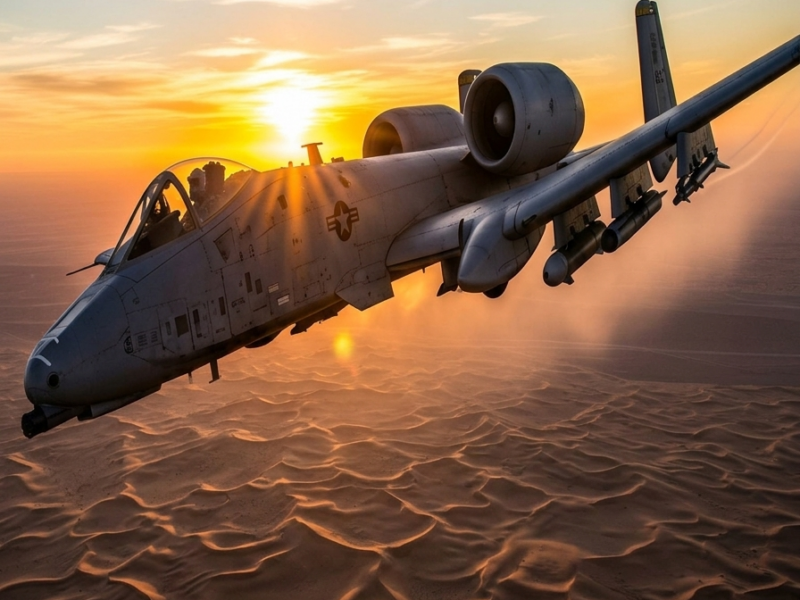
The moment General Hayes ordered me to bomb forty-seven American soldiers trapped beneath the burning cliffs of Afghanistan
The sky above the mountains did not look like heaven; it looked like a furnace filled with black grease and powdered bone. At 14,000 feet, the canopy of my A-10 Thunderbolt II—the “Warthog”—was the only glass barrier separating my skin from an icy, oxygen-starved slipstream that screamed across the titanium bathtub protecting my seat. Far below, the jagged teeth of the Hindu Kush tore open the gray cloud cover. The valley of Tangi Pass was drowning in a soup of burning diesel, pulverized limestone, and dark, oily smoke.
“Falcon One, this is Vanguard Control,” General Hayes’s voice cut through my helmet, flat and stripped of human resonance. It was the voice of a man sitting in an air-conditioned command trailer at Bagram, holding a ceramic mug of lukewarm coffee while staring at high-definition satellite feeds. “Confirm target lock on grid Victor-Zulu-Nine-Eight. You are cleared hot for a full payload strike. Cluster munitions and heavy thermobarics. Burn the grid.”
I looked down at the tactical overlay on my multi-function display. The glowing green vector box was centered squarely on an ancient, sun-baked clay-and-stone compound wedged into a blind gorge beneath a crumbling cliff face. The flight computer calculated the wind speed, air density, and drop trajectory. Everything was ready. My thumb rested gently over the red weapon-release button on the flight stick.
“Command, Falcon One,” I said, my voice raspy against the rubber seal of my oxygen mask. “I have visual on the target area. Thermal optics indicate heat signatures inside the main structure. High concentration of bodies. I need a re-verification of hostile status before pickle.”
“Target status is confirmed, Captain Miller,” Hayes snapped back instantly, without a heartbeat of delay. “Hostile insurgent stronghold. They have captured a munitions cache. The compound is saturated with anti-aircraft weapons and foreign fighters. You are clear hot. Do not delay. Execute.”
Beside me in the cramped cockpit, my weapons systems officer, Lieutenant Sarah “Vixen” Chen, leaned forward as far as her harness allowed, her eyes glued to the high-resolution infrared pod monitor. Her fingers danced across her armrest console, fine-tuning the thermographic filters.
“Wait… Captain,” Sarah muttered, her voice dropping into a register of sheer terror. “Look at the thermal footprint. Look at the perimeter formation.”
I shifted my eyes from the HUD to the pod display. The white-hot glowing shapes huddled inside the courtyard of the mud-brick fort were not arranged in a defensive perimeter fighting outward. They were huddled together in tight, concentric circles around three prone shapes—litter bearers. And along the outer stone wall, five figures were kneeling, laying down suppressing fire toward the ridge above them.
They were using standard NATO bounding overwatch maneuvers. They weren’t holding weapons like militia fighters; they were shouldering M4 carbines with infrared laser aimers pointing upward into the rocks.
“They’re taking fire from the ridge, not the compound,” I whispered. My stomach dropped into a void colder than the mountain air outside. “Command, those are friendlies! I repeat, grid Victor-Zulu-Nine-Eight contains friendly forces down in the courtyard. Requesting immediate hold on strike coordinates!”
“Captain Miller, you are misinterpreting the optics,” Hayes answered, his voice dropping into a low, lethal register. “The enemy is utilizing captured uniform gear and tactics to confuse air support. You have your orders. If those munitions fall into enemy hands, the entire sector is lost. Drop the payload now.”
“General, I am looking right at them!” I yelled over the radio, forcing the Warthog into a tight bank to keep the compound in my sightline. “These aren’t insurgent signatures! They are wearing body armor plates! They have short-barrel carbines! There are forty-seven men down there!”
“You are out of line, Falcon One,” Hayes barked. “Release the payload, or I will hand down a court-martial for treason before your wheels touch the runway at Bagram. That is a direct order from the Joint Task Commander.”
Before I could reply, a burst of harsh screeching static overwhelmed the primary command channel. A secondary emergency tactical frequency—the short-range ground-to-air net—began to crackle wildly in my earpieces.
“Mayday, Mayday! Any station, any station, this is Outlaw Actual!” a voice screamed through the white noise. It was choked with dust, breathlessness, and the rhythmic, deafening thump-thump-thump of a heavy machine gun tearing through concrete nearby. “We are pinned down in the quarry complex! Taking heavy mortar fire from the high ground! We have nineteen wounded, six urgent surgical! Where is our close air support? Falcon One, if you are up there, we are bleeding out down here!”
My entire body went numb. The blood in my veins turned to liquid nitrogen.
I knew that voice. I had heard that voice every morning of my childhood across the breakfast table in Ohio. I had heard that voice three years ago, cracked with tears, promising me at our father’s funeral that he would stay safe in the infantry.
“Daniel…” I whispered, my thumb freezing over the red button.
“Falcon One, this is Sergeant Miller!” the radio barked again, background explosions rocking the transmission. “We can hear your engines! We are laying down blue smoke in the courtyard! Do not bomb the compound! I repeat, do not bomb the compound! The high ridge is where the threat is coming from!”
“General Hayes!” I screamed into the command channel, dropping all military decorum. “My brother is down there! Outlaw Company is down there! The coordinates you gave me are centered directly on American soldiers!”
“Captain Miller, you will obey your orders!” Hayes’s voice was no longer that of an officer; it was the cold, hollow bark of an executioner. “The unit in that valley has been classified as compromised. No rescue operation is authorized. You will sanitize the grid immediately.”
Sanitize. He didn’t say support. He didn’t say assist. He wanted forty-seven men vaporized under three thousand pounds of high-explosive ordnance, turning their flesh and bone into ash before anyone could ask what they had found in that gorge.
“Ma’am…” Sarah whispered from the seat beside me, her hands shaking on the weapon arming panel. “We have seventy seconds before the insurgents on the upper cliff breach their gate. If we drop, we kill Daniel. If we don’t drop, Hayes ruins our lives.”
I looked down at the dash. Taped right next to the altitude indicator was a faded polaroid photograph. It showed my brother Daniel standing on our front porch in his fresh Army combat uniform, his broad smile bright against the summer sun, his arm wrapped around our mother’s trembling shoulders. On the back, in his messy hand, he had written: Bring me home, Sis.
“Falcon One,” Hayes’s voice purred with icy finality. “Release payload in five… four… three…”
I reached forward, my fingers moving with absolute, terrifying calm. But I didn’t press the weapon release. Instead, I grabbed the heavy plastic collar of the primary satellite comms switch and ripped it backward, snapping the toggle clean off the console.
The command link to General Hayes went dead with a soft click.
“Captain!” Sarah gasped, her eyes wide with shock.
“Hold on to your stomach, Vixen,” I said, shoving the throttle levers all the way forward into maximum thrust. The dual General Electric turbofans behind my wings roared like hungry beasts. “We’re going down.”
The A-10 Thunderbolt II was not built for graceful aerobatics; it was an armored tank with wings, designed to fly low, take brutal punishment, and spit heavy depleted-uranium rounds into anything that moved on the ground. I slammed the control stick to the left and stomped on the rudder pedal. The jet rolled violent ninety degrees onto its wingtip, slicing through the thick cloud layer like a jagged razor.
The world turned upside down. Mountain walls of dark grey granite soared past my cockpit canopy at three hundred knots, so close I could see the individual scrub bushes clinging to the rocks.
“Falcon One to Outlaw Actual!” I shouted into the emergency short-range channel. “Daniel! Cover your eyes and get your men flat against the interior walls of the compound! I am coming in on a strafing run!”
“Maya?!” Daniel’s voice came back, shocked and broken over the crackling speaker. “Maya, what are you doing?! Command said air support was dropping heavy ordnance to clear the valley!”
“Command lied to us!” I roared, leveling the wings just thirty feet above the canyon floor. “They gave me coordinates to bomb you! Stay down!”
The sky around my plane exploded into a blinding mesh of red and green tracer rounds. The insurgents perched on the upper ridges had realized what I was doing. Heavy 14.5mm anti-aircraft machine guns ripped into the air from hidden alcoves in the rock.
Clang! Clang-clang-clang!
Solid metal slugs slammed into the titanium tub beneath my feet, sending violent shockwaves up my legs. Warning lights flickered yellow and red across my main display panel.
“Master Caution!” Sarah screamed, frantically flipping backup systems on. “Hydraulic Circuit B pressure is dropping! We’re taking heavy small-arms fire from the north ridge!”
“Ignore it!” I growled, pulling the nose up until the reticle of the massive 30mm GAU-8 Avenger cannon aligned with the upper mountain ridge towering above the compound.
The insurgents were lined up along the high rocks, firing RPGs down into Daniel’s position like archers on a castle wall.
I squeezed the trigger on the flight stick.
The sound was not like a gun firing; it was a deep, apocalyptic tear in the fabric of the atmosphere, sounding like a giant sheet of canvas being ripped in half by a thunderstorm. The 30mm cannon spun at four thousand rounds per minute, vibrating the entire airframe so violently that my teeth rattled against my tongue.
A stream of high-explosive incendiary shells smashed into the ridge. The top fifty feet of the mountain simply vanished in a continuous wall of orange fire, pulverized rock, and disintegrating shockwaves. The insurgent firing positions were wiped clean in less than two seconds.
“Outlaw Actual, the upper ridge is clear!” I yelled, pulling hard on the stick to clear the jagged stone peak ahead. “Get your men out of that courtyard and toward the south ravine now! I can’t hold this sky for long!”
“We have wounded who can’t walk, Maya!” Daniel shouted back, his voice competing with the sound of my jet roaring overhead. “Sergeant Vance lost his leg! We have three stretchers!”
“Then drag them!” I yelled, executing a razor-sharp combat turn that pushed six Gs of force into my chest, darkening the edges of my vision. “I’m coming back around for another pass!”
As I banked the aircraft over the southern lip of the valley, a bright yellow flash caught my eye from the far side of the ridge—a position two miles away from the main engagement zone.
It was not an insurgent mortar. It was an advanced, vehicle-mounted mobile radar array, tucked neatly inside an camouflage enclosure that belonged to no local militia. Beside it stood three military vehicles painted in matte black, with no national markings or tactical numbers.
“Vixen!” I barked. “Look at grid Victor-Zulu-Nine-Nine! What the hell is that?”
Sarah leaned over her targeting screen, zooming in with the high-resolution thermal camera. “That’s… that’s a NATO-standard satellite uplink truck! And an armored command vehicle! Captain, those aren’t enemy assets. That’s a mercenary tactical communications array!”
Before I could process what she was saying, a sudden metallic screech tore through our cabin.
A shoulder-fired surface-to-air missile, launched from a hidden position near the black vehicles, accelerated toward us at triple the speed of sound.
“MISSILE INBOUND! BEARING ZERO-NINE-ZERO!” Sarah screamed.
“Pumping flares!” I punched the countermeasure button violently.
White-hot magnesium flares spewed from the tail of the Warthog, painting the dark gorge in blinding light. The missile bitten into the cloud of decoy heat, exploding forty feet behind my tail section.
The shockwave tore through the air like a hammer blow. The tail section of my plane violently whipped to the left. The left engine sputtered, choked on metal fragments, and erupted into a column of thick black flame.
“Engine One fire!” Sarah yelled, her voice trembling as alarm sirens blared inside my helmet. “Hydraulic pressure dead on System A! Controls are freezing up!”
The cockpit was filling with the sharp, acrid smell of burnt wiring and hydraulic fluid. The controls felt like they were set in hardening concrete. Down below, in the courtyard, I could see Daniel and his men dragging the last of their wounded out through the rear gate, scrambling toward the temporary safety of a deep rock fissure.
They were clear of the target grid. They were alive.
“Maya!” Daniel’s voice came through the emergency radio, laced with panic. “You’re hit! You’re on fire! Get out of there!”
“Negative, Outlaw,” I gasped, fighting the control stick with every ounce of physical strength in my arms. “If I eject here, the wind takes me right into their lap. I’m riding this bird out of the pocket.”
“Maya, no!”
I didn’t answer. I slammed the throttle of the remaining right engine to maximum, forcing the screaming, crippled aircraft into a slow, agonizing climb toward the southern ridge, away from the compound, away from the black vehicles, and away from the men who had just ordered our execution.
The descent was not a dive; it was a controlled flutter of thirty thousand pounds of twisted metal and burning fuel.
The left wing was completely scorched, its aluminum skin peeling away in red-hot scales like the skin of a dying dragon. The right engine whined in protest, throwing sparks into the darkening Afghan sky.
“We aren’t going to clear the ridge!” Sarah screamed over the deafening blare of the crash warnings. She had both hands clamped onto the ejection handles between her thighs. “Maya, pull the handles! Pull them now!”
“If we eject over this ridge, General Hayes’s retrieval teams will find us before the sun sets!” I yelled back, my teeth covered in blood where I had bitten through my lip during the maneuver. “They will kill us and say we died in the impact! We have to put this plane down in the tree line near the old Russian tunnel!”
“You’re crazy! We’re flying a brick!”
“Hold on!”
I forced the nose down, using the last remaining drop of hydraulic fluid in the secondary emergency system to align the belly of the Warthog with a long, snow-covered dry riverbed that carved through the base of the southern mountain.
The pine trees at the edge of the valley rose up to meet us at a terrifying speed.
THWACK! THWACK! THWACK!
The tops of hundred-foot pine trees sheared off against the nose section, smashing through the reinforced windscreen and showering the cockpit in green needles, frozen mud, and shattered glass. The main landing gear, sheared off instantly by a massive boulder, sent a bone-shattering impact through the fuselage.
The plane bounced once, slammed hard into the frozen earth, and slid sideways for three hundred yards, plowing a massive trench through rock and ice before crashing into the reinforced concrete entrance of a collapsed Soviet-era military bunker.
Then, everything went black.
When my eyes flicked open, the world was silent, save for the rhythmic hiss of ruptured fuel lines dripping onto red-hot engine metal.
The cockpit canopy was completely gone, ripped away by the impact. The air smelled of bitter antifreeze, burnt pine, and copper. Blood was dripping down from my forehead, freezing into dark crusts near my eyelashes.
“Sarah…” I rasped, my chest burning as if my ribs had been cracked into splinters. “Sarah, talk to me…”
Beside me, Sarah was slouched forward in her harness. Her helmet was cracked down the side, but her chest was rising and falling in shallow, rapid breaths. She was conscious, but groaning in deep pain, clutching her left arm.
“I’m… I’m breathing,” she wheezed, her teeth stained with red. “Tell me… tell me we aren’t in hell.”
“Not yet,” I said.
I reached down, pulled the emergency harness release, and slid out of the crushed metal frame, landing heavily on the snowy ground below. My left leg collapsed beneath me, a deep surge of pain shooting up into my hip, but nothing was broken. I pulled Sarah free from her seat, lowering her gently into the deep snow beneath the shadow of the crushed wing.
I reached back into the ruined cockpit, ripping the emergency survival kit and the heavy service sidearms from their bulkheads. Tucked under the flight control panel was the hard-drive unit of our tactical flight recorder—the red box that captured every radio transmission, every sensor image, and every command given by Vanguard Control during the flight.
I unbolted the drive with my tactical knife, shoving it into my waterproof flight jacket pocket.
Suddenly, the soft crunch of boots on frozen snow echoed through the tree line fifty yards away.
I grabbed my Beretta pistol, pulled the slide back with a sharp metallic clack, and pulled Sarah behind the blackened wing section.
Through the thick gray smoke rising from the wreckage, three figures emerged from the forest. They were wearing non-standard tactical gear—black helmets, unmarked plate carriers, and silenced assault rifles. They didn’t look like local insurgents. They moved with the terrifying, synchronized discipline of elite western mercenaries.
“Search the canopy!” one of them barked in a flat American accent. “The General wants the flight recorder recovered and both pilots confirmed KIA. If they’re breathing, fix it.”
“Copy that,” another replied, raising his rifle as he approached the front of the aircraft.
I felt the blood in my heart freeze.
These weren’t rescue teams. Hayes hadn’t sent a Search and Rescue unit to save us. He had sent a cleanup crew to execute his own pilots before we could tell the world what had happened in Tangi Pass.
I raised my pistol, aiming directly at the lead mercenary’s chest plate. My finger tightened on the trigger.
Snap!
A shot rang out from the woods behind the mercenaries—not from my pistol, but from a heavy, long-range sniper rifle.
The lead mercenary’s head snapped backward as a high-caliber round shattered his helmet visor. He dropped into the snow like a sack of concrete.
Before the remaining two men could react, a volley of intense automatic rifle fire erupted from the dark foliage. Tracers cut through the smoke, knocking the second mercenary off his feet and forcing the third to dive behind a rock, screaming into his radio.
“Contact! We have hostile forces in the treeline! We are taking heavy—”
A shadow leaped over the rock. A heavy tactical combat boot smashed into the mercenary’s jaw, silencing him instantly.
A figure clad in shredded desert camouflage, covered in dried blood and black soot, stood over the fallen soldier. He held an M4 carbine with a smoking barrel, his tactical vest torn to shreds, his eyes wild with adrenaline and fury.
He turned slowly toward the burning plane.
“Maya!” Daniel screamed, dropping his rifle to his side and sprinting through the deep snow toward the wing. “Maya!”
He reached me before my legs could give out again. He caught me under the arms, pulling me into a chest-crushing hug that made my broken ribs scream in agony, but I didn’t care. I buried my face into his blood-soaked collar, feeling the steady, warm pulse of his heartbeat against my cheek.
“You’re alive,” I sobbed, the tears burning tracks through the grime on my face. “You’re alive, Daniel…”
“Because of you,” he breathed, pulling back to look at my bloody face with frantic concern. “You crazy bastard… you defied a three-star general and shot up a mountain to save my boys.”
Behind him, five more soldiers from Outlaw Company emerged from the treeline, carrying two improvised stretchers bearing their wounded brothers. They took up defensive perimeters around our crashed jet, their weapons pointed back toward the gorge.
“Daniel, we don’t have time,” I said, grabbing his tactical vest and pulling him close. “The men who shot down my plane weren’t Taliban. They were private military contractors working directly under Hayes. Look at their gear.”
Daniel walked over to the body of the mercenary his sniper had taken down. He flipped the man over with his boot, reaching down to pull the identification tags from his neck.
There were no military dog tags. Instead, hanging from a steel chain was a black plastic keycard stamped with a corporate logo: Aegis Global Defense Solutions.
“Contractors?” Daniel muttered, his brow furrowing in confusion. “What the hell are Aegis operators doing in an operational grid six miles from an active Army outpost?”
“They weren’t just monitoring the grid,” Sarah said, staggering out from beneath the wing while clutching her arm. “They had a high-frequency satellite uplink setup on the south ridge. They were directing signal jams to cut off your company’s long-range comms to main command.”
I pulled the heavy red flight recorder drive from my jacket and slapped it against Daniel’s chest.
“This holds everything,” I said. “Hayes’s direct orders to bomb your position. The thermal optics showing forty-seven American soldiers holding blue smoke markers. And the location of that Aegis comms array. Hayes didn’t send you into that compound to fight insurgents, Daniel. He put you in that compound so he could kill you.”
Daniel’s face drained of color. “Why? We were sent into that valley on a routine reconnaissance patrol! We found an underground storage chamber inside that old clay fort… filled with dozens of sealed titanium crates stamped with United States Department of Defense serial numbers.”
He reached into his chest pocket and pulled out a small, heavy steel thumb drive encased in a hardened military shell.
“Our comms guy, Miller, plugged his rugged laptop into one of the digital locks on those crates before the mortar attack started,” Daniel whispered, his voice trembling with a mixture of terror and disgust. “It wasn’t weapons inside those crates, Maya. It was raw lithium, rare earth minerals… and refined illegal opium shipments worth hundreds of millions of dollars, being routed through non-standard contractor logistics channels.”
The puzzle pieces snapped together with horrifying, sickening clarity.
Hayes wasn’t just a military commander conducting a war. He was running a multi-billion-dollar illicit syndicate under the cover of military operations, utilizing private defense contractors to export stolen resources out of the country.
And Daniel’s squad had stumbled right into his warehouse.
“He couldn’t risk you leaving that valley alive,” I said, the cold realization settling over us like a shroud. “If an infantry unit reported military-stamped crates filled with illegal cargo, the Pentagon would launch a full inspector-general investigation. But if Outlaw Company was ‘accidentally’ wiped out by an air strike during an intense enemy ambush… the evidence would be turned to glass, and the dead men wouldn’t be able to talk.”
“And when you refused to drop the bombs,” Daniel added, looking at the black keycard in his hand, “you became the only witness who could prove he gave the order.”
Suddenly, the static on the dead mercenary’s tactical radio burst into life.
“Team Leader, report,” a cold, mechanical voice echoed from the radio on the ground. “Vanguard Control has just authorized a high-altitude drone strike on your last known position to clear all remaining debris. ETA of Hellfire payload is four minutes. Confirm target destruction and vacate immediately.”
We looked up at the grey sky. Miles above the clouds, completely invisible to the naked eye, a Reaper drone was soaring in silent circles, holding us in its laser sights.
“They’re burning the entire site,” Sarah gasped. “They’re going to turn this entire crash site into dust!”
“Not if we aren’t here,” Daniel snapped. He turned to his men. “Grab the wounded! Move into the old Soviet tunnel network beneath the mountain! We move deep under the rock now!”
The blast from the Hellfire missiles hit the crash site two minutes later, shockwaves rattling the ancient concrete walls of the underground Soviet bunker deep beneath the mountain. Millions of tons of granite and earth collapsed behind us, permanently sealing the entrance and entombing my ruined A-10 Warthog in a mountain grave.
For eighteen hours, we crawled through the pitch-black darkness of the abandoned cold-war tunnels, carrying our wounded by the faint beam of a single tactical flashlight, guided only by Daniel’s compass and the grim determination to survive.
We emerged at dawn on the northern side of the ridge, four miles outside the military grid control zone, near an isolated civilian medical clinic run by an international aid agency.
While the medics rushed Outlaw Company’s wounded inside, Daniel took his remaining satellite phone and dialed a secure, encrypted civilian line—a private number given to him years ago by a former military prosecutor turned federal investigative reporter in Washington.
He stood under the morning sun, his hands trembling as he held the satellite phone to his ear, listening to the long dial tone echo across thousands of miles of ocean.
“Speak,” a voice answered on the third ring.
“My name is Sergeant Daniel Miller,” he said, his voice flat, exhausted, and sharp as flint. “I am standing with Captain Maya Miller, former pilot of Falcon One. We have the red box flight recorder from yesterday’s strike at Tangi Pass. We have the encrypted drive from crate inventory sector four. And we have the corporate keycards of Aegis contractors who were ordered to execute American troops.”
There was a long, heavy silence on the other end of the line.
“Sergeant…” the reporter whispered, his voice laced with sudden urgency. “Where are you? Official reports were published by Bagram Command two hours ago. General Hayes held a press conference. He announced that Captain Maya Miller suffered a severe tactical equipment malfunction during a low-altitude pass, resulting in a fatal crash into an enemy-controlled ridge. Your entire squad was listed as Killed in Action due to insurgent mortar fire.”
Daniel looked back at me. I was sitting on an wooden crate outside the clinic wall, my leg wrapped in tight bandages, my face covered in dried mud, holding the red drive tight against my lap.
“The General is mistaken,” Daniel said into the phone, his eyes cold as glass. “We’re very much alive. And we’re coming home.”
Three days later, in the peaceful suburbs of Columbus, Ohio.
The autumn leaves were falling softly across the front lawn of our childhood home. Inside, the living room was quiet, save for the soft hum of the television playing low in the corner.
Our mother sat near the window in her worn armchair, staring out at the empty driveway. On the coffee table beside her sat a dark brown envelope bearing the gold-embossed seal of the Department of Defense—a formal notification letter delivered by a military officer earlier that morning, expressing deep condolences for the tragic loss of her daughter in the line of duty.
Her hands were shaking as she reached out to touch the photograph of me tucked into the corner of the mirror frame.
Suddenly, her cell phone on the table began to buzz.
It showed no caller ID. No number appeared on the glowing screen—only the words UNKNOWN LOCATION.
Her breath hitched in her throat. She picked up the phone with trembling fingers, pressing it to her ear with a faint, terrified whisper.
“Hello…?”
For a second, there was nothing but the quiet, low hiss of encrypted satellite static.
Then, a clear, familiar female voice spoke softly into the receiver, sounding as if she were standing just beyond the horizon.
“Mom… don’t look at the letter on the table.”
Our mother stopped breathing. Tears welled up in her eyes, spilling over her wrinkled cheeks as her hand flew to her mouth to stifle a sob.
“Maya…?” she gasped, her voice breaking into pieces. “Oh God… Maya?! They told me… they told me your plane went down… they said you were gone…”
“I’m alive, Mom,” I whispered into the phone, standing in the shadows of a crowded international terminal five thousand miles away, wearing civilian clothes, a dark jacket pulled tight over my bandaged ribs. “Daniel is with me. He’s safe. He’s standing right next to me.”
“Where are you?!” she sobbed, holding the phone with both hands as if holding onto our very lives. “What is happening?! Why aren’t you coming home?!”
I looked across the terminal glass. On the overhead news screens hanging above the gates, a live news broadcast from Washington was flashing red banners across the screen:
BREAKING NEWS: PENTAGON LAUNCHES SWEEPING CORRUPTION INVESTIGATION INTO AFGHANISTAN COMBAT COMMAND.
GENERAL HAYES DETAINED BY MILITARY POLICE FOLLOWING LEAK OF CLASSIFIED FLIGHT AUDIO AND CONTRACTOR LOGISTICS FILES.
I took a deep, steady breath, feeling the heavy metal drive in my coat pocket—the physical evidence that had just brought down one of the most powerful generals in the United States military.
“We can’t come home yet, Mom,” I said gently, my voice calm, resolute, and unwavering. “The men who tried to kill us are being arrested, but this war isn’t over. There are others above Hayes. Others who signed off on those orders.”
“Maya, please…” she wept. “It’s too dangerous! Let someone else fight them!”
I looked over at Daniel. He was standing near the gate, holding two passports under a clean set of alias names, staring back at me with a quiet nod of absolute solidarity. We weren’t soldiers following corrupt orders anymore. We were the truth they could never bury.
“We promised you we’d come home together, Mom,” I whispered softly into the phone as the boarding call for our flight echoed over the terminal loudspeakers. “And we will. But first… we have to finish the job.”
Before she could speak another word, the line went dead.
The end.









