The banker held up the foreclosure notice in front of everyone at Cole Ranch, and Nathaniel coldly ordered me away before I discovered whose signature had doomed his daughter’s garden.
The stranger stood outside my restaurant with my dead mother’s wooden chest in his arms, and for one terrible moment, I felt seventeen years old again.
Rain ran down the brim of his black hat as he held the photograph against the window.
Behind me, Nathaniel Cole rose slowly from his chair, placing himself between Lucy and the door.
“Do you know that man?” he asked.
I shook my head, although something about the stranger’s face stirred a memory I couldn’t quite reach.
The wooden chest was unmistakable.
Its brass hinges were tarnished, its corners worn smooth, and a dark burn mark scarred the lid where my mother had once accidentally dropped a candle.
I had searched for that chest after her funeral.
Someone had taken it from our boardinghouse room before I could collect her belongings.
Now, nearly fifteen years later, it had returned.
And so had the questions I had spent half my life trying to forget.
“Stay with Lucy,” I whispered.
Nathaniel caught my wrist before I reached the door.
“Clara, you don’t owe a stranger your trust just because he’s carrying something familiar.”
He was right, but the photograph of my mother made it impossible to turn away.
I opened the door just far enough to speak.
The man removed his hat.
He was perhaps forty years old, with tired gray eyes, a narrow scar beneath his chin, and the exhausted expression of someone who had traveled a very long way without knowing whether he would be welcomed.
“Miss Bennett?”
“Who are you?”
“My name is Samuel Whitaker.”
He glanced toward Nathaniel, then back at me.
“I believe your mother saved my life.”
My fingers tightened around the door handle.
“You’re the little boy.”
Samuel’s expression changed.
“Then you’ve read Margaret’s letter.”
I stepped aside, allowing him into the warmth of the restaurant.
He placed the chest carefully on an empty table, as though it contained something fragile enough to break beneath his hands.
Lucy peered around her father’s coat.
Samuel noticed her and offered a small, uncertain smile.
“You must be Margaret’s daughter.”
Lucy nodded.
“Did you know my mama?”
“Not as well as I wish I had.”
Something in his voice made her step closer.
I brought him a towel and a cup of coffee, although my hands were shaking so badly that I spilled some onto the saucer.
He waited until I sat down.
Then he pushed the photograph toward me.
My mother stood outside a whitewashed boardinghouse, wearing the blue dress I remembered from childhood.
Beside her stood a little boy holding a wooden horse.
His face had been scratched almost completely away.
“Why would someone destroy his face?” I asked.
Samuel lowered his eyes.
“Because someone wanted to make certain nobody recognized me.”
The room seemed to grow colder.
Nathaniel pulled out a chair opposite him.
“Start at the beginning.”
Samuel looked at the chest for a long moment before speaking.
“My mother was named Rebecca Whitaker, and when I was four years old, she worked as a bookkeeper for a freight company outside Cheyenne.”
He explained that the company transported cattle, grain, and mining equipment across Wyoming.
Its owner, Charles Voss, was respected throughout the territory.
He donated money to churches, financed struggling ranchers, and served on the board of a regional bank.
People trusted him with their savings.
They also trusted him with their land.
But Rebecca had discovered something hidden inside the company’s accounts.
Voss had been purchasing overdue ranch mortgages through intermediaries, then manipulating repayment records to make struggling families appear further behind than they actually were.
When those families could not pay the inflated balances, their land was sold to companies secretly controlled by Voss.
The freight business was only one part of a much larger operation.
“My mother copied the records,” Samuel said.
“She thought she could take them to a territorial official who wasn’t connected to Voss.”
Instead, someone warned Voss before she could leave town.
Rebecca fled with Samuel, carrying a packet of copied ledgers and a handful of money.
She found Margaret, who was traveling to visit relatives, and begged her to shelter the boy until she could return.
Rebecca promised she would be gone only two days.
She never came back.
I looked toward the photograph again.
“What happened to her?”
Samuel swallowed.
“Nobody knows for certain.”
For years, he had believed his mother abandoned him.
The family that raised him told him she had been irresponsible, perhaps even dishonest.
Only after his adoptive father died did Samuel discover letters suggesting Rebecca had disappeared while trying to expose financial fraud.
He had spent the past six years following those letters.
His search eventually led him to Margaret Cole.
But Margaret was already gravely ill.
“She remembered my mother,” Samuel said quietly.
“She remembered the woman who helped her protect me.”
My chest tightened.
“Eleanor.”
He nodded.
“Your mother.”
I looked at Nathaniel, whose expression had become troubled.
“Why didn’t Margaret tell you any of this?”
“She tried,” he answered.
“Toward the end, she kept saying there were things I needed to understand, but I thought she was talking about the ranch.”
Samuel reached into his coat and withdrew a folded document.
“Margaret wrote to me shortly before she died, but the letter reached me months afterward.”
He laid it beside the photograph.
“She said Eleanor Bennett had kept something safe for my mother.”
I looked at the chest.
“The records?”
“Possibly.”
I remembered my mother’s final winter.
She had been weaker than usual, coughing through the night and refusing to spend money on a doctor.
One evening, I had awakened to find her kneeling beside the chest, carefully wrapping papers in oilcloth.
When she noticed me, she shut the lid.
“Some things are worth protecting even when they frighten you,” she had said.
I had forgotten those words until that moment.
Samuel reached into his pocket and placed a small brass key on the table.
“Your mother gave this to the boardinghouse owner for safekeeping.”
I stared at him.
“Then why did you take the chest?”
“I didn’t.”
His answer came quickly.
“The owner sold the boardinghouse after your mother’s death, and the chest passed through several hands.”
Samuel had traced it to a storage room behind a freight office in Laramie.
He had purchased it from a retired clerk who claimed it had been abandoned.
“How did you find me?”
“Margaret’s letter mentioned Cole Ranch, and a driver in Cheyenne told me about a cook named Clara Bennett who had opened a restaurant along this road.”
He gave a tired smile.
“I followed the smell of rosemary biscuits.”
Lucy smiled faintly, but Nathaniel remained serious.
“Who scratched the photograph?”
“I don’t know.”
Samuel paused.
“But I believe whoever did it also searched the chest.”
I inserted the key into the lock.
It turned with a stiff metallic click.
Inside lay a faded blue shawl, three recipe books, a bundle of letters, and a little cloth pouch containing the silver button I remembered.
Beneath them was a narrow wooden compartment.
It was empty.
Samuel leaned forward.
“Someone got there first.”
For a moment, disappointment overwhelmed me.
My mother had carried a secret for years, and now the evidence seemed to have vanished.
Then I noticed the bottom of the chest.
The lining had been replaced.
My mother had taught me to sew, and I knew her stitches better than I knew my own handwriting.
These were hers.
Small, careful, almost invisible.
I reached for the scissors beside my kitchen worktable.
Nathaniel watched as I cut through the lining.
Underneath was a thin packet wrapped in oilcloth.
Samuel stopped breathing.
I lifted it into the lamplight.
The packet contained copied account pages, several letters, and a handwritten statement signed by Rebecca Whitaker.
There were names, dates, mortgage numbers, and payments that had been entered twice.
But what frightened me most was the name written repeatedly in the margins.
Charles Voss.
And beside it, another name.
Edmund Pike.
Nathaniel went still.
“That’s the banker who came to the ranch.”
Samuel looked up sharply.
“Are you certain?”
Nathaniel nodded.
“Pike handled my original mortgage, and he was the one who tried to sell the garden acreage.”
The room fell silent.
Outside, the rain continued beating against the windows.
I understood then why the foreclosure notice had seemed so strange.
The incorrect penalty wasn’t simply an accident.
It might have been part of a scheme that had survived for twenty years.
Samuel studied the records.
“Voss died seven years ago, but Pike worked for him when he was younger.”
He turned another page.
“These documents suggest Pike helped prepare the false balances.”
Nathaniel leaned back, his face darkening.
“Margaret knew.”
“Perhaps she suspected,” I said.
I thought about the way she had searched through papers during her final weeks.
Perhaps she had recognized Pike’s name when Nathaniel brought home the mortgage documents.
Perhaps she had been trying to warn him.
Lucy looked at her father.
“Does this mean the bad man is going to take Mama’s garden?”
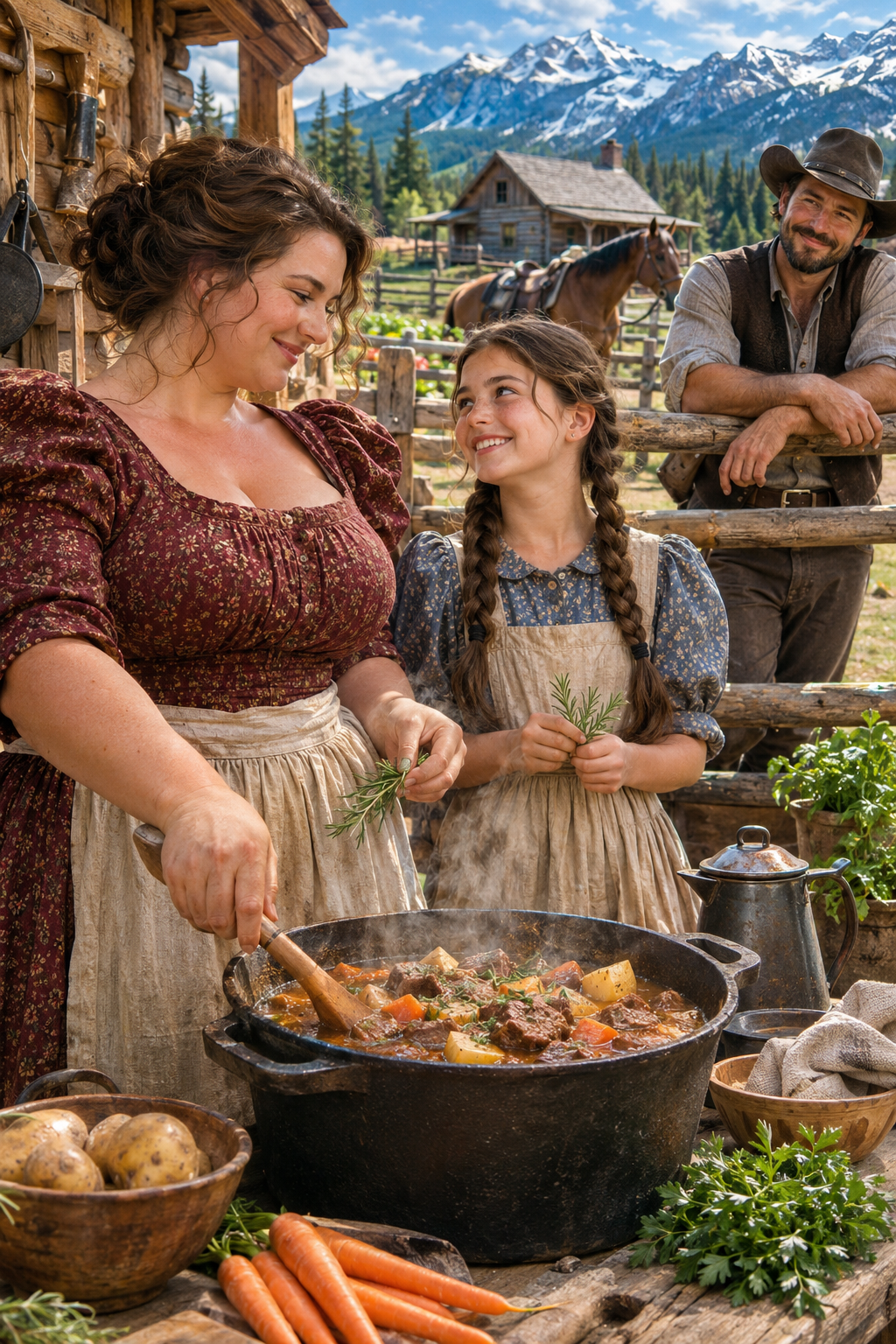
Nathaniel drew her into his arms.
“No, sweetheart.”
He kissed the top of her head.
“Not if I can help it.”
But I could see that he was afraid.
And so was I.
We had documents that could expose years of dishonesty.
We also had a banker who controlled loans, knew powerful men, and had already shown how easily he could threaten a family’s home.
Samuel wanted to ride immediately to Cheyenne.
Nathaniel insisted we needed someone trustworthy.
I remembered a freight driver who regularly stopped at my restaurant, a quiet older man named Thomas Reed.
He had once worked as a county clerk before an injury forced him to leave the position.
More importantly, he had spent twenty years watching how dishonest men used paperwork to take advantage of people who couldn’t afford lawyers.
I sent a message asking him to visit the following morning.
Until then, Samuel agreed to stay at the restaurant.
Nathaniel took Lucy home shortly before midnight.
Before leaving, he touched my shoulder.
“Lock the doors, Clara.”
I nodded.
But after he left, I sat beside my mother’s chest until the lamp burned low.
For the first time, I understood that her quiet life had contained a courage I had never fully recognized.
She had protected a frightened child.
She had sheltered a desperate young woman.
And she had kept evidence that powerful men wanted destroyed.
Yet she had never told me.
I wondered whether she had been protecting me, or whether she simply hadn’t known how to explain the danger.
The answer came the following morning.
Thomas Reed arrived before breakfast, carrying a leather satchel and wearing his usual worn brown coat.
He examined the documents in silence.
Then he asked Samuel to explain how he had obtained the chest.
Samuel told him everything.
Thomas studied Rebecca’s statement twice.
Finally, he looked at me.
“Miss Bennett, these papers may be important, but they won’t be enough by themselves.”
My heart sank.
“Why not?”
“Some are copies, and others are old enough that the people involved may be dead or difficult to locate.”
He tapped one page.
“But these account numbers can be compared with records still held by the county.”
Nathaniel had arrived while Thomas was speaking.
He stepped forward.
“Can we prove Pike falsified my mortgage?”
“Possibly.”
Thomas closed the folder.
“But we’ll need the original recorded mortgage and a complete payment history.”
He looked at Samuel.
“And we’ll need to establish whether Rebecca’s records are genuine.”
Samuel nodded.
“I’ll do whatever is necessary.”
Thomas offered to contact a lawyer he trusted in Cheyenne.
Her name was Abigail Foster, and she had helped several families challenge questionable land transactions.
But he warned us that the process would take time.
Time was something Nathaniel had already nearly run out of.
Three days later, Pike arrived at my restaurant.
I saw his carriage before he entered.
He wore a dark coat and polished boots, and his expression was almost pleasant.
“Miss Bennett.”
I stood behind the counter.
“Mr. Pike.”
He glanced around the room.
“Business appears to be improving.”
“It is.”
“That’s fortunate.”
He removed his gloves.
“I understand you’ve been entertaining a visitor from Laramie.”
My stomach tightened.
“Travelers stop here every day.”
“Of course.”
He smiled.
“But not every traveler carries old business records.”
I said nothing.
Pike stepped closer.
“Some documents can be misunderstood, especially by people unfamiliar with financial matters.”
I kept my voice steady.
“Then I suppose a proper investigation would clear everything up.”
His smile disappeared.
“Be careful, Miss Bennett.”
He placed a folded paper on the counter.
It was a notice claiming that my restaurant’s water access crossed land controlled by a company connected to the bank.
Unless I paid a substantial fee, he said, the access could be restricted.
I stared at the notice.
The water trough and well had been part of the property when I rented it.
Pike knew that.
He also knew I couldn’t afford a prolonged dispute.
“You wouldn’t want to lose everything you’ve worked for,” he said.
Then he turned and walked out.
I stood motionless until his carriage disappeared down the road.
Only then did I realize my hands were shaking.
For the first time since opening the restaurant, I considered closing it.
Not forever.
Just until the trouble passed.
But when I looked at the rosemary growing on the windowsill, I remembered Lucy’s face the day she believed her mother’s garden would be destroyed.
I couldn’t let fear make my decisions.
That evening, I showed Thomas the notice.
He examined the property description and frowned.
“This doesn’t establish that Pike can cut off your water.”
He explained that the lease referred to an existing water arrangement and that any dispute would require a proper legal process.
He advised me to keep copies of everything and avoid making payments without legal advice.
I felt a small measure of relief.
Then Nathaniel arrived.
He had heard about Pike’s visit from a freight driver.
“Why didn’t you send for me?”
“Because I knew you’d come riding in ready to fight him.”
Nathaniel looked offended.
“I would have spoken to him.”
“Very loudly.”
For the first time in days, he laughed.
The sound surprised both of us.
Then his expression softened.
“You shouldn’t have to face this alone.”
I looked away.
“I’ve been alone a long time, Nathaniel.”
He stood quietly beside the counter.
“That doesn’t mean you have to stay that way.”
I wanted to answer.
Instead, I reached for a clean cup and poured him coffee.
Some feelings were harder to admit than fear.
Especially when admitting them meant risking the life I had finally built.
Two weeks passed before Abigail Foster arrived from Cheyenne.
She was a practical woman in her forties, with sharp eyes and a habit of listening without interrupting.
She brought certified copies of several recorded land transactions.
The evidence was troubling.
Properties purchased by companies connected to Charles Voss had repeatedly been acquired after disputed defaults.
In several cases, Pike’s name appeared on the supporting documents.
But the discovery that mattered most concerned Cole Ranch.
The original mortgage had included a provision allowing Nathaniel to cure missed payments before any forced sale.
Pike’s later notices had omitted that provision.
Worse, the disputed penalty had been calculated using a fee that the original agreement did not authorize.
Abigail spread the documents across my kitchen table.
“Mr. Cole, you may have been pressured into selling land you were never legally required to surrender.”
Nathaniel stared at her.
“Then the garden was never truly lost?”
“The bank had legitimate claims for the money you owed,” she explained.
“But it appears someone overstated the amount and misrepresented your options.”
Nathaniel lowered his head.
For months, he had blamed himself for failing Margaret and Lucy.
Now he was learning that someone had used his grief and financial troubles against him.
I reached across the table and touched his hand.
“You did everything you could.”
He looked at me.
“No.”
His voice trembled.
“I nearly gave away the last place Margaret loved because I was too ashamed to ask for help.”
Lucy, who had been quietly drawing beside the stove, climbed onto his lap.
“But you didn’t, Papa.”
He held her tightly.
“No, sweetheart.”
He looked toward me.
“Because someone wouldn’t let me.”
Abigail prepared a formal challenge to the disputed charges and requested a full accounting from the bank.
She also sent copies of Rebecca’s records to the appropriate authorities for review.
Samuel traveled with her to provide a sworn statement about the chest and the letters.
I expected Pike to disappear once he learned what we had found.
Instead, he became more aggressive.
He contacted Nathaniel’s cattle buyers, questioning the ranch’s financial stability.
He told several freight drivers that my restaurant might soon close.
He even suggested that Samuel had stolen the documents.
But every attempt seemed to make more people curious.
Walter Briggs, the first driver who had ever purchased my stew, came into the restaurant one afternoon carrying a small stack of receipts.
“I heard you’ve been having trouble with that banker.”
I nodded.
Walter placed the receipts on the counter.
“These are from three ranchers who sold land after Pike told them their debts were worse than they thought.”
He scratched his beard.
“One of them is my brother.”
I stared at the papers.
“Why are you giving these to me?”
“Because your mother wasn’t the only woman who knew how to help somebody.”
He smiled.
“And because a good meal deserves a good turn.”
Within days, other people began coming forward.
Some brought letters.
Others brought old payment books.
One elderly widow arrived with a mortgage statement she had kept folded inside her Bible for twelve years.
She had lost forty acres after being told she owed a penalty she couldn’t explain.
Abigail examined her records and discovered the same suspicious fee.
The pattern became harder to dismiss.
The case was no longer about one ranch.
It was about families who had spent years believing their own failures had cost them everything.
Samuel found one final witness.
A retired bank employee named Henry Bell had worked under Pike during the years when Voss’s companies were purchasing distressed properties.
Henry had left after discovering that certain payments were being recorded late despite arriving on time.
He had kept copies of several instructions because he feared he might someday be blamed.
When Abigail brought him to my restaurant, he looked frightened.
“I’m not proud of staying silent,” he admitted.
“I had children to feed.”
I understood that fear.
But I also understood what silence had cost other families.
“Why speak now?” I asked.
Henry looked toward Lucy, who was watering the rosemary.
“Because I have grandchildren.”
His voice broke.
“And I don’t want them growing up thinking a man can do wrong forever just because he wears a fine coat.”
The following month, a formal investigation began.
Pike was questioned about the mortgage records, the unauthorized fees, and his connections to the companies that had acquired foreclosed land.
The bank suspended him while its records were examined.
Abigail warned us that the investigation could take months and that not every family would recover what had been lost.
But the pressure on Nathaniel ended almost immediately.
The bank corrected his balance and confirmed the revised repayment arrangement.
His ranch was secure.
The garden was safe.
And the debt that had once seemed impossible had become something he could manage.
The day the corrected documents arrived, Nathaniel rode to my restaurant carrying a small wooden box.
I thought it contained another letter.
Instead, he opened it to reveal a silver button.
It matched the one from my mother’s chest.
“Margaret kept this,” he explained.
“She said it belonged to someone who taught her that kindness wasn’t weakness.”
I took the button carefully.
My mother had once sewn matching buttons onto a little blue coat she wore during the coldest winters.
I remembered watching her mend that coat beside a boardinghouse stove.
She had never owned much.
Yet somehow she had given away more than people with fortunes.
Nathaniel reached into the box again.
There was a folded note.
It was written in Margaret’s handwriting.
He handed it to me.
The message was short.
“Eleanor once told me that the things we save are not always the things we own.”
I read it twice.
Then I pressed the paper against my chest.
For the first time since my mother’s death, I felt as though someone had returned a small piece of her to me.
That evening, Samuel came to say goodbye.
He had decided to remain in Wyoming for a while, helping Abigail identify families affected by the old transactions.
He still hoped to learn what had happened to Rebecca.
But he no longer believed she had abandoned him.
“Your mother gave me a life,” he said.
“I wish I could thank her.”
I looked at the rosemary on the windowsill.
“Maybe you already have.”
He smiled sadly.
Then he placed the old photograph in my hands.
“I think this belongs with you.”
I studied the scratched face of the little boy.
For years, someone had tried to erase him from the story.
Now he stood before me, grown, alive, and determined to help others.
I placed the photograph beside my mother’s recipe book.
Some mysteries ended with answers.
Others ended with the discovery that the truth had been waiting for someone brave enough to carry it forward.
Winter arrived early that year.
Snow covered the freight road, and business slowed as travelers hurried toward warmer towns.
I spent long evenings beside the stove, repairing tablecloths and planning the spring menu.
Nathaniel visited whenever ranch work allowed.
Sometimes he brought vegetables.
Sometimes he brought firewood.
Sometimes he brought nothing at all except a tired smile and a reason to sit beside my kitchen window.
Lucy began spending Saturday afternoons with me.
She learned to knead bread, measure spices, and write the day’s menu on a small slate.
She also insisted that every customer receive at least one rosemary biscuit.
“Because Mama said people remember kindness,” she explained.
One snowy afternoon, she asked me a question that nearly stopped my heart.
“Miss Clara, do you think Papa will ever smile the way he used to?”
I looked through the window.
Nathaniel was outside stacking wood beneath the porch.
He had grown quieter since the investigation, but the heaviness that once surrounded him had begun to lift.
“I think he’s learning how,” I answered.
Lucy considered that.
“Do you think he likes coming here because of the biscuits?”
I smiled.
“Perhaps.”
She shook her head with the certainty only a child could possess.
“I think he likes coming because you’re here.”
I nearly dropped the bowl I was holding.
Lucy continued kneading dough as though she had said nothing remarkable.
That evening, Nathaniel stayed after supper.
Lucy had fallen asleep in a chair beside the stove, wrapped in one of my old blankets.
Outside, snow drifted across the road.
Nathaniel stood near the window, watching the flakes gather on the fence.
“Margaret loved winter,” he said.
“She said snow made everything look as though the world had been given another chance.”
I joined him.
“She sounds like a remarkable woman.”
“She was.”
He paused.
“For a long time, I thought loving her meant I had to keep every part of our life exactly as she left it.”
I waited.
“But Lucy is growing, and the ranch is changing.”
He looked toward his sleeping daughter.
“And somehow, I’ve started looking forward to things again.”
My throat tightened.
“That’s not a betrayal, Nathaniel.”
“I know.”
He turned toward me.
“Margaret would have wanted us to be happy.”
He took a breath.
“I just didn’t know whether I was allowed to be.”
I looked at the man who had once greeted me with suspicion and told me to mind my own business.
He had been frightened then.
Not of losing money.
Not even of losing the ranch.
He had been frightened that moving forward meant leaving his wife behind.
“You don’t have to forget someone to make room for someone else,” I whispered.
Nathaniel reached for my hand.
“Clara, I don’t want to ask you to leave the life you’ve built.”
I shook my head.
“Then don’t.”
He looked confused.
I smiled through tears.
“I didn’t open this restaurant because I wanted to belong to nobody.”
I glanced around the room.
“I opened it because I wanted to build something of my own.”
“And you have.”
“Yes.”
I squeezed his hand.
“But having something of my own doesn’t mean I can’t share it.”
He stepped closer.
For a moment, neither of us spoke.
Then he kissed me.
It was gentle and uncertain, filled with the kind of hope that comes only after people have learned how much there is to lose.
When we separated, Lucy stirred in her chair.
She opened one eye.
“Finally,” she murmured.
Nathaniel laughed so loudly that she sat upright.
I covered my face, laughing and crying at the same time.
For the first time in years, the future did not feel like a road I had to travel alone.
Spring brought news from Cheyenne.
Pike had been charged in connection with falsified financial records and fraudulent transactions.
The proceedings would continue, and Abigail reminded us that a charge was not a conviction.
But the investigation had already uncovered enough irregularities for the bank to begin reviewing several disputed foreclosures.
Some families received corrected balances.
Others entered settlements.
A few were able to reclaim property that had not yet been transferred to new owners.
Not everyone received justice.
Some losses were too old, some records incomplete, and some people had died before the truth emerged.
That troubled me more than I expected.
One afternoon, I asked Abigail whether all our efforts had been enough.
She sat at my counter, stirring sugar into her coffee.
“Enough for what?”
“To make things right.”
She considered the question.
“Clara, you can’t give people back every year they lost.”
I looked down.
“But you can stop the same thing from happening to someone else.”
She reached across the counter and touched my hand.
“Sometimes that’s where justice begins.”
I thought about my mother.
She had not saved every frightened child.
She had not exposed every dishonest man.
She had simply helped the people who stood before her.
And because of that, a little boy had grown into a man.
A grieving woman had found a family.
A ranch had been saved.
And a cook with eighty-three dollars hidden in her boot had found a home she never expected.
By summer, my restaurant had become a familiar stop along the freight road.
I hired a young widow named Annie Miller to help in the kitchen.
She had two small children and had been turned away from three other jobs because she couldn’t always find someone to watch them.
I remembered how my mother had struggled to work while raising me.
So I cleared a little room behind the kitchen where Annie’s children could rest and play.
Some customers questioned the arrangement.
Most didn’t.
And the ones who did usually stopped complaining after tasting Annie’s apple pie.
Nathaniel helped me build a shaded porch.
Lucy planted rosemary along the fence.
Samuel returned occasionally with news from his work helping families gather old records.
He never found a final answer about Rebecca’s disappearance.
But he discovered that she had sent one last letter to a cousin shortly before she vanished.
In it, she wrote that she had placed Samuel somewhere safe and hoped he would someday understand why she could not return immediately.
Samuel kept that letter folded inside his coat.
He told me it was enough to know that his mother had loved him.
One evening, he stood beside the rosemary beds and said something I never forgot.
“I spent most of my life believing I was unwanted.”
He watched Lucy chasing butterflies through the garden.
“Turns out, I was loved by people whose names I didn’t even know.”
I thought of Margaret.
I thought of Eleanor.
And I wondered how many lives were held together by kindness that never received recognition.
That autumn, Nathaniel asked me to marry him.
He did it without an audience, without a grand speech, and without pretending that our lives had been simple.
We were standing in Margaret’s garden at sunset.
Lucy was inside the house preparing supper, determined to prove she could cook an entire meal without assistance.
Nathaniel held my hands beneath the yellow roses.
“I can’t promise there won’t be difficult winters,” he said.
I smiled.
“I’ve survived a few.”
“I can’t promise I’ll always know the right thing to say.”
“That much I already know.”
He laughed softly.
Then his eyes filled with tears.
“But I can promise you’ll never have to carry everything alone again.”
I looked toward the kitchen window.
Warm light spilled across the garden path.
Inside that house, a little girl was learning how to live with the memory of her mother without being swallowed by grief.
And beside me stood a man who had learned that love could return without replacing what came before.
“Yes,” I whispered.
Nathaniel closed his eyes.
When he opened them, I could see the relief and wonder in his expression.
Then Lucy burst through the kitchen door.
“Did she say yes?”
We both turned.
She stood on the porch wearing an apron dusted with flour.
Nathaniel stared at her.
“How long have you been listening?”
“Long enough.”
She ran down the path and threw her arms around us.
For a moment, the three of us stood beneath the roses, holding one another while the evening wind moved softly through the rosemary.
I thought of Margaret’s hands planting those flowers.
I thought of my mother’s hands stitching secret papers into an old wooden chest.
Neither woman had lived to see what their kindness would become.
But their love remained.
Not as something buried in the past.
As something growing.
We married the following spring in a small ceremony beside the garden.
Annie baked the cake.
Walter Briggs brought flowers from his wife’s yard.
Thomas Reed stood beside Samuel, who wore a new coat and looked happier than I had ever seen him.
Abigail traveled from Cheyenne and brought a gift wrapped in brown paper.
It was a framed copy of the first page of my mother’s handwritten recipes.
Beneath it, she had placed a simple inscription.
“Kindness is a debt the world can never fully repay.”
Lucy carried a bouquet of yellow roses.
When the ceremony ended, she placed one rose beside the small stone marker Nathaniel had set beneath Margaret’s favorite tree.
Then she returned to us.
“I think Mama would like today,” she said.
Nathaniel knelt and kissed her forehead.
“I think she would, sweetheart.”
I knelt beside them.
“And I think she’d be proud of you.”
Lucy smiled.
Then she took my hand.
“Can I call you Mama Clara?”
My heart seemed to stop.
I had never wanted to replace Margaret.
I had never wanted Lucy to feel that loving me meant loving her mother less.
So I held her close and whispered the only answer that felt right.
“You can call me whatever makes your heart happy.”
She wrapped her arms around my neck.
“Then Mama Clara.”
I cried without trying to hide it.
After the wedding, I kept my restaurant.
Nathaniel never asked me to give it up.
Instead, we arranged our lives around both places.
Some mornings, I cooked breakfast at the ranch before riding into town.
Other evenings, Nathaniel and Lucy joined me at the restaurant, where we ate supper after the last freight wagon had disappeared into the distance.
The work was exhausting.
The winters remained difficult.
There were bills to pay, fences to repair, and days when nothing seemed to go according to plan.
But the life we built was ours.
Not because it was perfect.
Because we had chosen it together.
Years later, when Lucy was old enough to help manage the restaurant, she asked me why I had kept the old wooden chest.
It stood in a corner near the kitchen, carefully polished, with my mother’s photograph resting on top.
I told her the story again.
About a frightened young woman.
A missing child.
A grieving rancher.
A little garden.
And a cook who had arrived with thirty days of work and no intention of staying.
Lucy listened quietly.
Then she opened the chest and lifted out the little silver button.
“Do you think Grandma Eleanor knew what would happen?”
I shook my head.
“No, sweetheart.”
I looked through the window at Nathaniel working beside the rosemary beds.
“I don’t think she knew any of it.”
Lucy turned the button between her fingers.
“Then why did she do so much for people she didn’t know?”
I smiled.
“Because she believed people were worth helping before they had done anything to deserve it.”
Lucy considered that for a long moment.
Then she placed the button carefully back inside the chest.
The following morning, I found her standing outside the restaurant with a young woman and two exhausted children.
Their wagon had broken down several miles away.
They had no money for repairs and hadn’t eaten since the previous afternoon.
Lucy brought them inside.
She served hot stew, fresh bread, and rosemary biscuits.
When the woman tried to explain that she couldn’t pay, Lucy simply shook her head.
“That’s all right.”
She smiled.
“Someone helped my family once.”
I watched from the kitchen doorway as the young mother began to cry.
Lucy sat beside her and listened.
Then she went outside to find Nathaniel, who was already gathering tools to repair the wagon.
I looked toward my mother’s photograph.
For so many years, I had believed that losing her meant losing the most important part of my life.
But standing there, watching Lucy offer a stranger the same kindness Eleanor had once offered Margaret, I finally understood something.
Love does not disappear when the person who gave it is gone.
It survives in the things they taught us.
In the doors we open.
In the meals we share.
In the courage we find when someone else is afraid.
And sometimes, if we’re fortunate, it grows into a life more beautiful than anything we could have planned.
That evening, after the travelers had gone, Nathaniel found me sitting beneath the rosemary outside our restaurant.
He lowered himself onto the bench beside me.
“What are you thinking about?”
I rested my head against his shoulder.
“My mother.”
He took my hand.
“Something good?”
I nodded.
“I think she would have liked this place.”
Nathaniel looked toward the warm windows, where Lucy was laughing with Annie’s children while clearing the supper dishes.
“She would have loved it.”
The evening breeze carried the scent of rosemary across the porch.
I closed my eyes and remembered the first time Lucy had told me that rosemary helped people remember.
She had been a lonely little girl then, afraid that the last pieces of her mother might disappear.
Now she was growing into a young woman who understood that remembering someone meant more than holding on to what they left behind.
It meant carrying forward what they had given.
Nathaniel squeezed my hand.
And as the last light faded over the Wyoming hills, I realized that my greatest dream had never truly been to own a restaurant.
I had wanted a place where no one would have to feel forgotten.
A place where a hungry traveler could find a warm meal.
Where a grieving child could laugh again.
Where a frightened stranger could discover that the world still held kindness.
I had spent years saving every penny because I thought happiness was something I would have to purchase with enough hard work.
But the most precious things in my life had arrived without a price.
A little girl’s trust.
A good man’s love.
A mother’s courage.
And the unexpected gift of belonging.
I looked at the rosemary growing beside the porch and smiled through my tears.
My mother had left me almost nothing that the world considered valuable.
Yet somehow, through the kindness she had given away, she had left me everything I would ever need.
And when Lucy called from the kitchen that supper was ready, Nathaniel stood and offered me his hand.
I took it.
Together, we walked toward the light.
For the first time in my life, I wasn’t afraid of what tomorrow might bring.
Because I finally knew that home wasn’t the land we owned, the money we saved, or even the walls that sheltered us.
Home was the place where love had been planted deeply enough to survive every winter.
And ours was still growing.
The years that followed were not without hardship, but they were filled with something I had once believed belonged only to other people: the quiet certainty that I was loved.
Our little roadside restaurant continued to welcome travelers through Wyoming’s bitter winters and golden summers, and Nathaniel never stopped finding reasons to visit me in the kitchen.
Sometimes he brought fresh vegetables from the ranch, sometimes flowers from Margaret’s garden, and sometimes he simply stood in the doorway watching me work until I laughed and told him to stop staring.
Lucy grew into a thoughtful young woman with her mother’s gentle eyes and a stubborn determination that reminded Nathaniel of me.
She learned every recipe in my mother’s old notebook, but she always insisted that the rosemary biscuits belonged to all three women who had shaped her life.
One spring morning, shortly after Lucy turned eighteen, she came into the restaurant carrying a folded letter and an expression I recognized immediately.
Something important was about to change.
“I’ve been offered a position at a boardinghouse in Cheyenne,” she said.
Nathaniel, who was repairing a chair near the window, stopped working.
I felt a sudden ache in my chest, remembering the little girl who had once clung to her mother’s garden because she feared losing everything she loved.
Now that same girl was standing before us, ready to build a life beyond the familiar fences of Cole Ranch.
“Do you want to go?” I asked.
Lucy looked at her father, then back at me.
“I think I do, but I’m afraid you’ll need me here.”
Nathaniel crossed the room and gently took her hands.
“Your mother planted that garden because she believed things should grow, sweetheart, not because she wanted them to stay small forever.”
Lucy began to cry, and I held her while Nathaniel pretended to be interested in the broken chair.
Three weeks later, we watched her board the stagecoach with a suitcase, her mother’s recipe book, and a little bundle of rosemary tied with blue thread.
She promised to write every Sunday.
She kept that promise.
Her letters described the crowded streets of Cheyenne, the difficult customers, the friendships she was making, and the satisfaction of earning money through her own work.
Sometimes she wrote about loneliness, and I reminded her that courage did not mean never missing home.
It meant knowing that home would still be waiting when she returned.
The following winter, Nathaniel fell ill after spending too many hours repairing fences during a freezing storm.
At first, he insisted it was nothing more than a stubborn cold.
But when his fever rose and he could barely stand, I sent for the doctor and remained beside his bed for three sleepless nights.
I had already buried my mother and watched too many good people disappear from the world before their stories were finished.
The thought of losing Nathaniel frightened me more than I could explain.
On the third night, he opened his eyes and found me sitting beside him with my mother’s old shawl wrapped around my shoulders.
“Clara,” he whispered, “you look as though you’re preparing to argue with heaven itself.”
I laughed through tears and pressed a cool cloth against his forehead.
“If heaven wants you, it can wait until you’ve finished repairing that kitchen roof.”
He smiled weakly.
“Then I suppose I’ll have to live another twenty years.”
And he did recover, slowly and stubbornly, just as he had faced every difficult season since the day I met him.
When spring returned, Nathaniel was strong enough to walk beside me through Margaret’s garden.
The rosemary had spread along the stone border, and the yellow roses were beginning to bloom.
He stopped beside the little wooden bench we had built years earlier.
“I used to think this garden was all I had left of Margaret,” he said.
I took his hand and waited.
“Now I understand that she left me something much greater.”
He looked toward the house, where Lucy had returned for a visit and was laughing with Annie over a batch of bread.
“She taught me how to love someone enough to let them go, and you taught me how to love again without being afraid.”
I leaned against his shoulder as the afternoon sunlight moved across the flowers.
For once, neither of us needed another word.
Years passed, and our restaurant became a place people spoke about along the freight roads.
Travelers came for the stew and biscuits, but many returned because they knew they would be welcomed whether their pockets were full or empty.
Lucy eventually came home with a young carpenter named Daniel Harper, whose kindness impressed Nathaniel far more than his ability to repair a fence.
They married beneath the same yellow roses where Nathaniel had once asked me to become his wife.
And when their first daughter was born, Lucy named her Eleanor Margaret Harper.
I held that little girl against my heart and cried for two women who had never met her but whose love had made her life possible.
One evening, many years later, I found my granddaughter sitting beside the old wooden chest, studying the silver button that had once belonged to my mother.
“Grandma Clara, why do you keep something so small when you have so many beautiful things?”
I sat beside her and gently closed her fingers around it.
“Because, sweetheart, some things are precious because of what they remind us to do.”
She looked puzzled.
So I told her about a frightened boy, a brave mother, a lonely little girl, and a rancher who nearly lost the garden his wife had loved.
I told her how a bowl of stew had helped save a home, and how a kindness given without expecting anything in return had traveled through generations.
When I finished, she looked at the silver button for a long time.
“Then I want to help people too,” she whispered.
I kissed her forehead.
“That would make your great-grandmothers very happy.”
That night, after everyone had gone home, Nathaniel and I sat together on the restaurant porch beneath a sky filled with stars.
His hair had turned silver, and my hands were no longer as steady as they had been when I first arrived at Cole Ranch with eighty-three dollars hidden in my boot.
But when he reached for my hand, I still felt the same warmth that had once made me believe a lonely heart could begin again.
“Do you ever regret coming to the ranch?” he asked.
I looked toward the rosemary growing beside the steps.
“Only that I didn’t find you and Lucy sooner.”
Nathaniel smiled and rested his forehead against mine.
“We found each other when we needed to.”
Inside, the old clock struck nine, and the familiar scent of fresh bread drifted through the open kitchen window.
I thought about all the years I had spent believing that success meant having enough money to never depend on anyone.
Now I knew that the richest moments of my life had come when I allowed others to stand beside me.
The world had not always been kind, and there were losses that no amount of love could undo.
But I had learned that grief and happiness could live in the same heart, just as Margaret’s roses and my mother’s rosemary grew together in the same garden.
Before we went inside, Nathaniel squeezed my hand and looked toward the warm light spilling across the porch.
“Come home, Clara.”
I smiled, remembering the woman I had been when I first heard those words from someone who cared.
Then I stood beside my husband and walked through the doorway, knowing that the home I had searched for all my life had never been waiting at the end of some distant road.
It had grown slowly from every meal shared, every promise kept, every frightened hand held, and every act of kindness offered when nobody was watching.
And if there was one thing I hoped my children and grandchildren would remember after Nathaniel and I were gone, it was this: the greatest inheritance we can leave behind is not the land we own or the money we save, but the love we teach others to give.
Because long after our names have faded from the world, the kindness we plant in another person’s heart can continue growing, just like the rosemary in Margaret’s garden.
And that, at last, was the ending I had never dared to dream would be mine.
THE END.