My Ex-Husband Walked Into My Courtroom as a Lawyer. He Had No Idea I Was the Judge.
My Ex-Husband Walked Into My Courtroom as a Lawyer. He Had No Idea I Was the Judge.
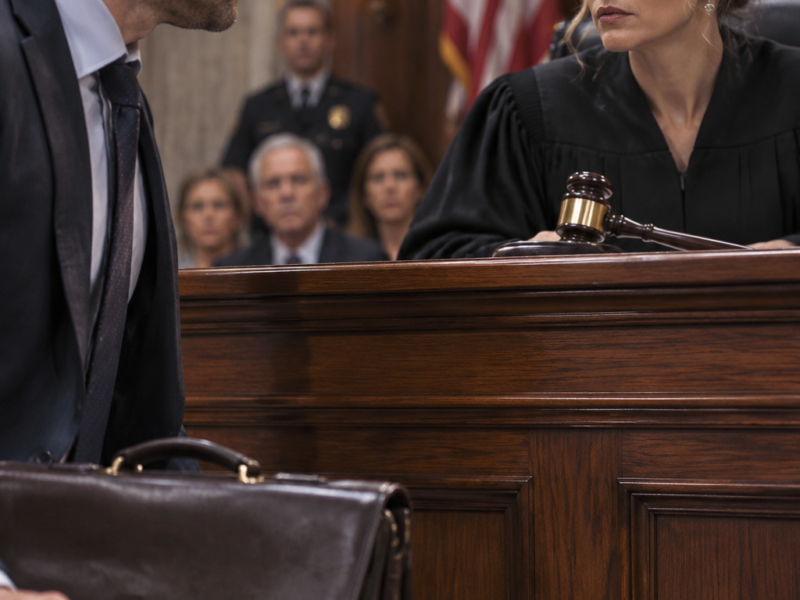
My ex-husband walked into my courtroom wearing a three-thousand-dollar suit, carrying an expensive leather briefcase, and wearing the same arrogant expression I remembered from the day he left our marriage. He looked like a man who had finally become everything he had once dreamed of being. His shoulders were straight, his shoes were polished, and his expensive watch caught the light as he adjusted his tie.
Then he looked up at the judge’s bench.
And suddenly, he forgot how to speak.
I hadn’t seen Daniel Bennett in almost eleven years. Time had changed him in small but noticeable ways. There was more weight around his middle, a few strands of gray had appeared at his temples, and his once perfectly styled hair was now cut shorter. But one thing hadn’t changed. Whenever Daniel wanted to look important, he had a habit of straightening his tie.
I remembered that habit because I’d watched him do it hundreds of times.
The young attorney standing beside him leaned closer and whispered, “Mr. Bennett, are we in the right courtroom?”
Daniel didn’t answer.
He was staring directly at me.
I looked down at the case file on my desk, deliberately allowing the silence to stretch for another second before lifting my eyes.
“Good morning, Mr. Bennett.”
His mouth opened slightly.
“Elizabeth.”
A few people in the courtroom turned their heads.
He cleared his throat, apparently remembering where he was.
“Your Honor.”
“Good morning.”
The young attorney beside him looked between Daniel and me, clearly trying to understand what was happening. I almost felt sorry for him. Nobody had warned him that his boss was about to encounter a piece of personal history he had probably spent years pretending no longer existed.
It was a Tuesday morning in September 2026, and I was presiding over the regular docket at Columbus Municipal Court in Ohio. Until Daniel walked through those doors, the most interesting case of the morning involved a man accused of damaging his neighbor’s car because he believed the neighbor had placed his trash cans too close to his driveway.
According to the defendant, the trash cans had started the whole thing.
I’d listened patiently, taken a few notes, and reminded him that property damage was still property damage, regardless of where someone placed their garbage.
Then Daniel arrived.
His law firm had recently taken over representation in a misdemeanor property damage case. Apparently, he hadn’t checked which judge was assigned to the docket. Or perhaps someone had told him and he simply hadn’t bothered to read the paperwork carefully.
That would have been entirely consistent with the Daniel Bennett I once knew.
I explained on the record that the attorney appearing before me and I had previously been married. Because of that prior relationship, I would not preside over the matter, and the case would be reassigned according to the court’s procedures.
I wasn’t going to turn my former marriage into an ethics complaint or allow anyone to question the fairness of the proceedings.
Daniel nodded stiffly.
“Understood, Your Honor.”
The clerk began arranging the reassignment while Daniel gathered his documents. For a moment, he seemed uncertain whether to leave immediately. Then he looked at me again.
“Elizabeth, I didn’t know you were…”
He glanced toward the bench.
“A judge,” I finished calmly.
He lowered his eyes.
I gave him a moment to collect himself.
“Any personal conversation will have to take place outside this courtroom, Mr. Bennett.”
“Yes, Your Honor.”
Then he walked out.
I returned to my docket and continued hearing cases. I handled three more matters before lunch, but I would be lying if I said I remembered much about them afterward.
Seeing Daniel again had brought back memories I hadn’t thought about in years.
Eleven years earlier, he had told me I wasn’t the kind of woman who could keep up with his ambitions.
Now he had stood in front of me, unable to do anything but call me Your Honor.
I won’t pretend I didn’t enjoy that moment.
I enjoyed it quite a bit.
But the satisfaction wasn’t really about seeing Daniel embarrassed. It was about remembering how far I had traveled from the woman he had once left behind.
To understand why that morning mattered, you have to understand what happened before Daniel became another woman’s husband.
Back in 2015, Daniel and I lived in a modest two-bedroom townhouse outside Columbus. We had been married for five years, and our life was far from glamorous.
I worked as a legal secretary at a small law firm. Daniel was an associate attorney who desperately wanted to move beyond the smaller cases assigned to him.
He dreamed of becoming a respected lawyer, earning a substantial income, and eventually joining one of the prestigious firms in the city.
I supported those ambitions.
I helped him prepare for his bar examination, proofread his resumes, reviewed his applications, and stayed late at work whenever we needed additional money.
There were evenings when I would arrive home exhausted, take off my shoes, and find Daniel complaining that dinner wasn’t ready.
He hadn’t always been that way.
That is something people sometimes misunderstand about unhappy marriages. They imagine that everything must have been terrible from the beginning. But relationships rarely begin with cruelty. Sometimes they begin with laughter, affection, shared dreams, and two people who genuinely believe they are building something together.
Daniel had once been thoughtful.
He used to leave ridiculous handwritten notes inside my lunch bag. He remembered exactly how I liked my coffee and would sometimes bring home my favorite pastry after a difficult day.
We had spent countless evenings sitting on the living room floor, eating inexpensive takeout and talking about our future.
I remembered telling him that I wanted to attend law school someday.
He had smiled and encouraged me.
At least, that was what he did in the beginning.
Then success became the only thing that mattered to him.
And then he met Vanessa Whitmore.
Vanessa was the daughter of Robert Whitmore, a prominent Columbus attorney whose reputation opened doors Daniel had spent years trying to reach.
She was sophisticated, attractive, confident, and comfortable in the expensive restaurants and private gatherings where Daniel still worried about whether he was using the correct fork.
At first, Daniel described her as an important professional contact.
Then she became a friend.
Then he began staying late at the office.
Eventually, the excuses became so predictable that I stopped asking questions.
One evening, Daniel came home wearing a new suit. It was noticeably more expensive than anything he had purchased before. He told me Vanessa had helped him choose it.
He stood in our kitchen, adjusted his cuffs, and announced that he wanted a divorce.
I remember looking at him for several seconds because I genuinely thought I had misunderstood.
“You’re what?”
“I think we both know this marriage isn’t working anymore, Liz.”
I looked at the expensive suit.
“Why now?”
He sighed as if I were making the conversation unnecessarily difficult.
“I’ve worked too hard to stay where I am.”
I didn’t understand.
“What does that have to do with our marriage?”
“Vanessa understands what I’m trying to build.”
“And I don’t?”
He looked at me with an expression I had never seen before.
“You’re comfortable with a smaller life, Liz. There’s nothing wrong with that. But I need more.”
Those words stayed with me.
I had spent years helping him build his career while putting my own ambitions aside. I had postponed law school, worked extra hours, and quietly convinced myself that there would be time for my dreams once his career became more stable.
Daniel knew all of that.
He knew I wanted to become an attorney.
He knew I had already started preparing a law school application.
He simply didn’t believe I would ever follow through.
I asked him one question.
“Are you leaving because you love Vanessa, or because you love her father’s client list?”
His expression hardened.
“That’s an incredibly unfair thing to say.”
“Is it?”
“You’re making this about money.”
“No, Daniel. I’m asking whether you understand what you’re giving up.”
He didn’t answer.
Our divorce became final in November 2015.
At the time, I was seven weeks pregnant.
Daniel walked out of my life without knowing that I was carrying his child.
I hadn’t told him.
Part of me was angry, part of me was frightened, and part of me simply needed time to understand what the pregnancy meant for my future.
I didn’t know whether I could raise a baby alone while pursuing the career I had wanted for so long.
In December, an acceptance email arrived from the law school I had applied to through its early admissions process.
I opened it at my small kitchen table.
Then I read it again.
And again.
I had been accepted.
For several minutes, I couldn’t move.
There was a glass of water beside my laptop, a stack of unpaid bills near the refrigerator, and a calendar on the wall with several medical appointments already marked.
I started crying.
Not because I didn’t want the baby.
I wanted that child more than I could explain.
I was crying because I wanted both things so badly, and I couldn’t imagine how I was going to manage either one alone.
But I decided I would try.
On July 19, 2016, my son Noah was born.
He weighed seven pounds and four ounces.
He had dark hair, tiny fingers, and an expression of deep suspicion that seemed entirely inappropriate for someone who had been alive for less than an hour.
When the nurse placed him in my arms, I looked at his face and knew that everything in my life had changed.
I also knew I had a responsibility I could no longer postpone.
Daniel deserved to know he had a son.
And Noah deserved the chance to know his father, if his father was willing to be part of his life.
Before law school began, I wrote Daniel a letter.
I included Noah’s full name, his birthday, and the fact that I believed Daniel was his father.
I explained that I wasn’t asking to reconcile or reopen our marriage. I simply wanted to discuss what would be best for our child.
I sent the letter by certified mail to Daniel’s law firm.
A few days later, the delivery confirmation arrived.
Someone had signed for it using the initials VW.
I didn’t think much about that at the time. Large law firms received hundreds of letters, and administrative employees routinely signed for correspondence.
I had no reason to believe anything unusual had happened.
Two weeks later, I received an email from the firm’s general administrative address.
It was short and impersonal.
It informed me that Daniel did not wish to have further personal contact with his former wife and requested that I stop contacting him through the firm.
I read the message several times.
I remember looking over at Noah, who was sleeping in his bassinet beside my desk.
Somewhere across town, I thought, Daniel had chosen not to know the little boy who looked so much like him.
I considered taking formal legal action.
I knew enough about the legal system to understand that an administrative email was not a parenting agreement. I also knew that the circumstances surrounding Noah’s birth could create legal questions that needed to be addressed.
But I was exhausted.
I was a single mother with a newborn, preparing to enter law school, and living on savings, student loans, and whatever part-time assignments I could manage.
Daniel had financial resources I didn’t have.
At the time, I convinced myself that I had done everything I reasonably could.
I placed my original letter, the delivery confirmation, and the email into a folder.
Then I stopped trying.
That decision would trouble me for years.
Fortunately, I wasn’t completely alone.
My neighbor, Margaret Collins, lived next door in a small house with a beautiful garden and a front porch that always seemed to have a fresh pot of flowers.
She had worked as a librarian for thirty-seven years, raised three children, and possessed an extraordinary ability to appear whenever I was about to lose my mind.
The first week after Noah came home, Margaret arrived carrying a casserole and a bag of groceries.
“I’ve raised three children,” she announced. “You can’t frighten me.”
Noah promptly spit up on her blouse.
Margaret looked down at the mess.
“Well, that’s a promising start.”
I laughed harder than I had in weeks.
From that moment, she became part of our family.
She helped when Noah developed a fever before an important examination. She picked up diapers when I was stuck at the library. She watched him when I had interviews or needed to attend classes.
During my second year of law school, Noah developed an ear infection the night before an important exam.
I spent most of the night holding him, checking his temperature, and wondering how I would possibly manage to study.
At seven the next morning, Margaret arrived wearing two different slippers.
I pointed them out.
She looked down at her feet.
“I wondered why I was walking crooked.”
Then she took Noah from my arms and ordered me to go to class.
There were dozens of moments like that.
They weren’t dramatic enough to make a movie, but they were important enough to keep a life together.
I graduated in 2019 and passed the bar examination.
Margaret gave me a simple silver wristwatch.
Inside the box, she had written a small message.
“For the woman who never quit.”
I wore that watch to my first day as an attorney.
I wore it when I began working in municipal prosecution.
And I wore it years later when I was sworn in as a judge.
Noah grew up through all of it.
He liked baseball, hated folding laundry, and had an unusual talent for remembering statistics that nobody had asked him to remember.
One afternoon, he informed me that a baseball had 108 double stitches.
“How do you know that?” I asked.
“I counted.”
“You counted all of them?”
“No. I looked it up afterward.”
At least he was honest.
I never told Noah that his father was dead or that he was unwanted.
I told him Daniel and I had divorced before he was born, and that I had tried to contact him.
When Noah became older, he started asking more questions.
I answered what I could.
What I didn’t know, I admitted.
For ten years, I believed Daniel had chosen not to be part of his son’s life.
That belief had become part of our family history.
Until September 2026.
After Daniel left my courtroom, I returned to my chambers.
My clerk knocked on the door a few minutes later.
“Judge Carter, is everything okay?”
“Yes, thank you.”
She hesitated.
“That attorney looked like he’d seen a ghost.”
I smiled.
“Something like that.”
A few minutes later, my phone rang.
It was Margaret.
“Well,” she asked, “how was court?”
I leaned back in my chair.
“Do you remember Daniel Bennett?”
There was a brief silence.
“Unfortunately.”
“He appeared in my courtroom this morning.”
Margaret gasped.
“As a defendant?”
“No. As an attorney.”
She laughed so loudly that I had to move the phone away from my ear.
“Oh, sweetheart. Please tell me somebody took a picture.”
“Margaret.”
“What? I’m old. I need entertainment.”
I laughed.
For a few moments, the day felt almost wonderful.
Then I received a message from Daniel asking whether we could talk.
I left it unanswered.
I had a son to pick up from school.
When I arrived at Noah’s school, his teacher asked whether we could speak privately.
She explained that Noah had been distracted recently.
“Nothing serious,” she said. “But something seems to be bothering him.”
I thanked her and promised to talk to him.
On the drive home, I glanced at Noah in the passenger seat.
He was looking out the window, holding his backpack between his feet.
“Everything all right, honey?”
He shrugged.
Then he asked a question that nearly made me miss my turn.
“Mom, do you know a lady named Vanessa?”
My hands tightened around the steering wheel.
“Why do you ask?”
“She came to school.”
I tried to keep my voice calm.
“What did she want?”
He shrugged again.
“She asked me about Dad.”
I pulled into the parking lot of a grocery store.
“Tell me exactly what happened.”
Noah explained that a woman had visited during a school book drive earlier that month.
She wore a name tag that said Vanessa Bennett.
She had approached him near the student reading display and asked whether his father lived with us.
Noah told her no.
Then she asked whether he had ever met him.
He told her the truth.
“No.”
“Did she ask anything else?”
Noah nodded.
“She asked if I wanted to meet him.”
“What did you say?”
“I said maybe.”
He picked at the wrapper of the granola bar in his hand.
“Then she said sometimes grownups leave things alone for a reason.”
I felt something cold settle in my stomach.
“Did she say anything else?”
“She said I didn’t have to tell you we talked.”
I looked at my son.
“Listen to me, Noah. You haven’t done anything wrong.”
“I know.”
“Adults should never ask you to keep secrets about your family from me.”
He nodded.
Then he asked, “Was she Dad’s wife?”
“Yes.”
He considered that for a moment.
“She’s kind of weird.”
I couldn’t argue with him.
But the strangest part was that Vanessa apparently knew exactly who Noah was.
And Daniel, as far as I understood, had known nothing about him.
At least, that was what I had believed for ten years.
That evening, I called Margaret again.
I asked whether she remembered the book drive.
“Of course,” she said. “They gave me a table next to the cookies and expected me to behave.”
“Did you see a woman talking to Noah?”
Margaret went quiet.
“Actually, yes.”
“What happened?”
“She was standing near the reading display. When I walked over, she looked uncomfortable.”
“Did you hear what she said?”
“No. I thought she was somebody’s aunt.”
“That was Vanessa Bennett.”
There was a pause.
“Daniel’s Vanessa?”
“Yes.”
Margaret sighed.
“That explains the expression. She looked like somebody had found a dead mouse in her purse.”
I didn’t laugh.
After we hung up, I went upstairs to Noah’s bedroom.
He was sitting on his bed, pretending he had finished his mathematics homework.
I sat beside him.
“Honey, did that woman know your name before you told her?”
He nodded.
“She said she already knew who I was.”
“Did she explain how?”
“No.”
He looked at me.
“Mom, why would Dad’s wife want to know about me if Dad doesn’t?”
I had no answer.
And for the first time in ten years, I began wondering whether Daniel had ever been given the opportunity to answer that question himself.
The following morning, I called Noah’s principal.
I introduced myself as Noah Carter’s mother, not Judge Carter.
I explained that an adult volunteer had questioned my son about his family and had suggested that he keep their conversation secret.
The principal was immediately concerned.
“Mrs. Carter, that shouldn’t have happened.”
“Was Vanessa Bennett an approved volunteer?”
“Her family’s foundation sponsored the book drive.”
“Was she supposed to interview students about their parents?”
“No.”
I asked the principal to document the incident, speak with the supervising staff, and ensure Vanessa would not approach Noah again.
She agreed.
Then I called Sarah Mitchell.
Sarah and I had been friends since law school. She practiced family law and possessed a remarkable ability to tell me when I was being unreasonable without making me want to hang up.
I explained everything.
She listened carefully.
When I finished, she said, “Bring me the old correspondence.”
“I already looked at it.”
“Wonderful. Bring it anyway.”
I sighed.
“Sarah, you know I can analyze evidence.”
“Exactly. You can analyze everybody else’s evidence until the cows come home. This time, you’re the mother. Let someone else be the lawyer.”
I hated when she made sense.
That afternoon, I arrived at her office carrying the folder I had kept for ten years.
She spread the documents across her desk.
My original letter.
The certified mail receipt.
The delivery confirmation.
And the email supposedly communicating Daniel’s wishes.
Sarah examined the delivery signature.
“VW.”
“Yes.”
“Could be Vanessa Whitmore. Could also be Victor Williams, a receptionist we’ve never met.”
“Exactly.”
“Which is why we’re not making accusations yet.”
She turned to the email.
“No name attached. Just the firm’s administrative address.”
I looked at the message.
“I thought Daniel had instructed someone to send it.”
“Maybe he did.”
She paused.
“Or maybe somebody decided what he should know.”
I stared at the papers.
For ten years, I had believed Daniel rejected his son.
That belief had become so familiar that I had stopped questioning it.
Now Sarah was suggesting that the evidence didn’t necessarily support my understanding of what had happened.
I wasn’t sure whether I wanted her to be right.
A few days later, Daniel contacted Sarah directly and asked whether we could speak.
He said he wanted to apologize for the divorce.
I almost refused.
But there were questions I needed answered, and avoiding them wouldn’t make them disappear.
We agreed to meet on Friday afternoon.
That meeting never happened.
On Thursday, Noah had a dental appointment downtown. Margaret took him while I finished work.
Afterward, they came to meet me near the public courthouse entrance before baseball practice.
I spotted them beside the steps.
Noah was wearing his team jacket and carrying a bag of pretzels.
Margaret was telling him something with the enthusiasm she usually reserved for neighborhood gossip.
Then I heard someone say my name.
“Liz.”
I turned.
Daniel stood a few feet away with a briefcase in one hand.
His expression was uncertain.
Then he looked at Noah.
I watched his attention move from the boy’s dark hair to his face.
“Who’s this?”
I placed my hand gently on Noah’s shoulder.
“This is my son, Noah.”
Daniel looked at me.
“How old is he?”
“Ten.”
He stood very still.
Noah looked up at him.
“Are you Daniel Bennett?”
Daniel nodded.
“Yes.”
Noah turned toward me.
“Mom, is this him?”
I took a breath.
“Yes, honey.”
Noah looked back at Daniel.
“Mom said you’re my dad.”
Daniel’s briefcase shifted in his hand.
“What?”
I could see him trying to calculate.
Noah had been born eight months after our divorce. Daniel knew the date our marriage had ended, but knowing a date and understanding what it meant were two different things.
He looked at me.
“Liz, I didn’t know.”
I had waited years to hear something from him.
An apology.
An explanation.
Anything.
I had never expected those particular words.
Noah studied his face.
Then, in the ordinary voice he used when questioning a referee’s call, he asked, “If you never knew about me, why did your wife come to my school?”
Daniel turned toward him.
“My wife?”
“Mrs. Bennett. She asked me about you.”
Daniel looked at me.
“Vanessa went to his school?”
“That’s what we’re trying to understand.”
His confusion seemed genuine.
I didn’t want to believe it.
That was the uncomfortable part.
I had spent years being angry at a man who had rejected his child. Now I was looking at a man who appeared to be learning that the child existed.
Noah shifted his weight.
“Did I say something wrong?”
I crouched beside him.
“No, sweetheart. You didn’t.”
Margaret stepped forward.
“Come on, Noah. We need to get you to practice before your coach starts charging late fees.”
“I don’t think he does that.”
“Then let’s not give him ideas.”
She led him toward the parking lot.
Daniel watched them leave.
Then he turned to me.
“Is he really mine?”
“Yes.”
I paused.
“You were seven weeks pregnant when we divorced.”
He rubbed his forehead.
“Why didn’t you tell me?”
I looked directly at him.
“I did, Daniel.”
He stared at me.
“I sent you a letter after he was born. Certified mail. Your office signed for it.”
“I never received a letter about a baby.”
“Your office emailed me two weeks later and told me to stop contacting you.”
Daniel shook his head.
“Vanessa told me you’d written.”
I went quiet.
“What?”
“She said you wanted a clean break. She told me you didn’t want either of us contacting you anymore.”
“Did she show you my letter?”
He hesitated.
“No.”
“Did you call me?”
He looked away.
“No.”
I stared at the man I had once loved.
“You didn’t know about Noah. But you knew where to find me.”
For once, Daniel didn’t argue.
I left him standing there.
That evening, Sarah received another call from Daniel.
He wanted a copy of my original letter.
After checking with me, she sent it through a secure email.
Twenty minutes later, he called again.
Sarah put him on speakerphone.
His voice sounded different.
Quieter.
“I’ve never seen this letter.”
Nobody spoke.
Then he continued.
“Vanessa told me Liz wanted me out of her life.”
I looked at the old delivery confirmation on Sarah’s desk.
The initials VW seemed larger than they had before.
Daniel continued.
“She told me there was nothing left to discuss.”
I asked him one question.
“Did she ever mention Noah?”
“No.”
His voice broke slightly.
“Never.”
I closed my eyes.
For ten years, Vanessa had known something Daniel didn’t.
And she had recently gone to my son’s school to discover what he knew.
This was no longer just about my former marriage.
It was about someone who had decided she could control my son’s life without either of his parents knowing.
Sarah warned me not to contact Vanessa directly.
I asked whether that included driving to her house.
“Especially that.”
“What about sending her a strongly worded Christmas card?”
“Liz.”
I sighed.
“I’m exploring my options.”
Sarah wasn’t amused.
Neither was I.
The first useful information came from Daniel.
He contacted the law firm where he had worked in 2016. Robert Whitmore had retired from active practice, but the firm still maintained archived correspondence records.
The managing partner agreed to arrange an independent review.
A few days later, Daniel’s attorney confirmed that the firm’s archives contained an entry for correspondence received from Elizabeth Carter in August 2016.
The scanned document matched my original letter.
It mentioned Noah by name, gave his birthday, and asked Daniel to contact me to discuss our son.
The record also showed that the letter had been routed through an administrative account associated with Vanessa’s office.
That did not automatically prove she had read it.
But it established that the letter had reached the firm and passed through a system she could access.
The next piece of information came from a former administrative employee named Patricia.
She had worked at the firm during the summer of 2016 and remembered an envelope addressed to Daniel from his former wife.
She also remembered Vanessa being upset about it.
According to Patricia, Vanessa had said, “Daniel doesn’t need another problem from his first marriage.”
Patricia couldn’t remember whether the envelope had already been opened when Vanessa took responsibility for handling it.
She hadn’t read the letter herself.
But she remembered Vanessa taking charge of the correspondence.
Sarah explained the distinction carefully.
“We can establish that the letter arrived. We can establish that Vanessa had access. Patricia remembers her involvement. But that still isn’t the same as proving every step.”
“I understand.”
“Do you?”
I looked at her.
She sighed.
“I just don’t want you making a mistake because you’re furious.”
I sat back in my chair.
Suddenly, I remembered that Tuesday afternoon in August 2016.
Noah had been sleeping in his bassinet.
I had been sitting at the small desk in my duplex, reading the email that supposedly came from Daniel’s office.
I remembered holding my breath because I had expected something different.
Even an angry phone call would have been better than that cold, impersonal message.
Instead, I had received a few sentences telling me not to contact him again.
I had closed my laptop and looked at my sleeping baby.
I remembered his tiny clothes folded on the couch.
I remembered the silence in the apartment.
And I remembered thinking that I would never beg a man to care about his own child.
I started crying in Sarah’s office.
Not gracefully.
Not quietly.
Sarah handed me a box of tissues and waited.
“I should have done more,” I whispered.
“You sent the letter.”
“I should have filed the paperwork. I knew one email wasn’t the law.”
“Liz, you were alone with a newborn.”
“I was also a legal secretary. I knew better.”
Sarah didn’t argue.
That was one reason I trusted her.
Sometimes the truth doesn’t become easier simply because somebody offers a comforting explanation.
I had made a mistake.
Vanessa had apparently used that mistake to her advantage.
And Daniel had done nothing to question what he had been told.
Three adults had made choices.
Noah had lived with the consequences.
Then we learned why Vanessa had suddenly become interested in him.
Earlier that year, the law firm had begun reviewing archived office records to determine which correspondence needed to be retained.
Vanessa learned about the review through former colleagues.
Around the same time, she saw a local newspaper article about my election as a municipal judge.
There was a photograph of me standing with Noah.
His name appeared in the caption.
Noah Carter, age ten.
Vanessa recognized the possibility that Daniel might also recognize him if he saw the photograph.
Apparently, she wanted to discover what Noah knew before anyone else became suspicious.
So she attended the foundation’s school book drive and questioned my son.
The principal completed her initial review and confirmed that Vanessa had approached Noah outside the planned volunteer activities.
Another staff member remembered seeing the conversation, although she hadn’t heard every word.
The school informed the foundation that Vanessa would not be permitted to participate in further student-facing events while the matter was being reviewed.
It wasn’t enough to satisfy me.
But it was a start.
Then Vanessa requested a meeting.
Sarah didn’t like the idea.
Neither did I.
Eventually, we agreed she could come to Sarah’s office with Sarah present.
Vanessa arrived wearing a navy suit and carrying a leather handbag that probably cost more than my first car.
She looked almost exactly as I remembered.
Perfect hair.
Perfect makeup.
The kind of smile that made you wonder whether you had just been insulted.
“Elizabeth,” she said.
“Vanessa.”
She sat across from us and crossed her legs.
“I think this has all become unnecessarily unpleasant.”
I waited.
“Daniel is very upset. Robert is concerned. And frankly, I think Noah is being dragged into something that could have remained private.”
I stared at her.
“You went to his school.”
“I was there for a charitable event.”
“And asked him questions about his father.”
“I was concerned.”
“About what?”
She glanced at Sarah.
“About the potential consequences of reopening an old family dispute.”
I leaned forward.
“He’s ten years old, Vanessa. He’s not an old family dispute.”
Her expression tightened.
“I didn’t mean it that way.”
“Then what did you mean?”
She took a breath.
“Elizabeth, we’re both educated women. Surely we can handle this without turning it into a spectacle.”
“You asked my son to keep a secret from me.”
“I never intended to frighten him.”
“Then why did you tell him not to tell his mother?”
For the first time since entering the room, Vanessa looked away.
She seemed uncertain.
Then she tried a different approach.
“I think you should consider your professional position. Judges have reputations to protect.”
Sarah’s pen stopped moving.
“Mrs. Bennett,” she said carefully, “I would advise you to be very careful about how you phrase that.”
Vanessa gave a small, irritated laugh.
“I’m not threatening anyone.”
“Good,” I replied. “Because I didn’t come here to discuss my reputation.”
She looked directly at me.
“Daniel was happy before all this.”
I said nothing.
“Before he found out he had a son. Before the past started interfering with everything we’ve built.”
There it was.
The same argument I had heard eleven years earlier.
The future mattered.
The career mattered.
The connections mattered.
Anything inconvenient could be pushed aside.
She continued.
“Daniel would never have become the man he is if he’d stayed with you.”
I allowed her words to sit between us.
Then I answered quietly.
“Maybe not. But he might have become a better one.”
Vanessa stared at me.
I asked one final question.
“Did you decide that Noah wasn’t part of Daniel’s future?”
She stood.
“I don’t think this conversation is productive.”
Sarah closed her notebook.
“Then we’ll continue through the appropriate channels.”
Vanessa collected her handbag.
At the door, she turned back.
“I did what I thought was best.”
“That’s the problem,” I replied. “You thought it was your decision.”
After she left, Sarah sat quietly for a moment.
Then she said, “Well, that went about as pleasantly as a root canal without anesthesia.”
I laughed once.
It was either that or throw something.
That evening, Daniel called Sarah again.
He had learned that the firm was taking the correspondence review seriously.
Vanessa had also told him that if he contradicted her publicly, he could lose an important corporate client opportunity connected to Robert’s professional network.
The arrangement would have been worth a substantial amount to his practice.
For a few days, Daniel apparently wavered.
I wasn’t surprised.
Eleven years earlier, professional ambition had mattered more to him than our marriage.
Now he was facing another choice.
Vanessa had reportedly told him, “You’re not going to throw away everything we’ve built over something that happened before we were married.”
Daniel finally answered, “It’s not something. It’s my son.”
The next morning, he signed a statement for the independent reviewer.
He confirmed that Vanessa had described my letter to him but had never shown it to him.
He admitted that he had accepted her explanation without checking.
He also acknowledged that he had ways to contact me but had chosen not to use them.
That statement didn’t make Daniel innocent.
But for the first time in eleven years, he was no longer allowing Vanessa to speak for him.
The foundation meeting took place in early October.
By then, the firm’s review had established that my original letter had entered its records and been routed through an administrative account available to Vanessa.
The rejection email sent to me had also originated from the same administrative system.
The reviewers couldn’t establish with certainty who had typed every word.
However, Vanessa’s explanation had changed several times.
First, she claimed she didn’t remember a letter.
Then she admitted remembering one but insisted it contained nothing important.
Finally, she claimed she had merely tried to protect Daniel from unwanted contact.
Those weren’t three versions of the same truth.
They were three versions of what she thought people might believe.
Robert Whitmore had received the firm’s findings concerning his daughter’s former administrative role.
The foundation’s board had also received the school’s report about Vanessa questioning Noah.
Robert requested a special board meeting.
I was invited to attend the public portion as Noah’s mother.
Sarah came with me.
I had taken personal leave. I wasn’t there as a judge, and I had no intention of acting like one.
The meeting was held in a downtown conference room.
About fifteen people were present, including trustees, the school principal, community representatives, and Daniel.
Vanessa sat near her father.
She looked composed.
I recognized that expression.
She had worn it throughout my divorce.
It suggested that everyone else was making an unfortunate fuss over something she could easily explain.
Robert opened the meeting.
He was a tall, silver-haired man who spoke slowly and rarely raised his voice.
He explained that the foundation had received a complaint involving a volunteer’s conduct during a school literacy event.
The principal described what the school had established.
Vanessa had spoken privately with Noah about his family.
She had asked questions unrelated to the book drive.
She had suggested that the conversation didn’t need to be shared with his mother.
The principal explained that the school had restricted Vanessa from further student-facing volunteer work while reviewing the matter.
Vanessa shifted in her chair.
“I think we’re making far too much of a harmless conversation.”
The principal answered politely.
“We don’t consider it harmless when an adult uses a school event to question a child about private family matters.”
“Surely context matters.”
“It does,” the principal replied. “And the context is why we’re here.”
Margaret had provided a written account of what she observed at the book drive.
She wasn’t present at the meeting, which was probably fortunate.
Margaret had opinions about Vanessa, and volume control had never been one of her strongest qualities.
Robert turned toward me.
“Mrs. Carter, would you explain how you learned of the conversation?”
I told them what Noah had said.
I kept it simple.
“My son came home believing an adult had asked him to keep a secret from me. He was confused and worried he had done something wrong. Whatever private concerns Mrs. Bennett had, my son’s school was not the place to investigate them.”
Vanessa turned toward me.
“Elizabeth, you know this was a family matter.”
“It became a school matter when you involved the school.”
She looked toward the trustees.
“Judge Carter has personal reasons for being upset with me.”
Sarah spoke immediately.
“Mrs. Carter is here as the child’s mother. Her professional position isn’t relevant to the complaint.”
Vanessa gave a tight smile.
“Naturally.”
Robert folded his hands.
“Vanessa, the board needs to understand why you questioned this child.”
She looked at Daniel.
I could almost see her expecting him to rescue her.
He had done it for years.
He had accepted her explanations, repeated her version of events, and benefited from her connections without questioning the price.
But Daniel remained silent until Robert addressed him.
“Mr. Bennett, is there anything you wish to clarify?”
Daniel looked tired.
He was wearing a dark suit, but there was no trace of the confidence I had seen in my courtroom.
“Yes.”
He glanced at me, then turned toward the trustees.
“Elizabeth sent a letter to my former firm in August 2016. It informed me that she’d given birth to my son.”
Vanessa interrupted.
“Daniel, this isn’t the place.”
He continued.
“I never saw that letter.”
Robert looked at his daughter.
“Vanessa.”
She lifted her chin.
“It was an extremely complicated situation.”
Daniel turned toward her.
“You told me Liz wanted no contact. You said she’d written because she wanted to make sure we stayed out of her life.”
“That’s what I understood.”
“You knew Noah existed.”
Vanessa said nothing.
Daniel continued.
“You went to his school. You asked him whether I knew about him.”
“Daniel, please.”
“I met my son for the first time outside a courthouse because he asked me why my wife knew him when I didn’t.”
Nobody moved.
I could hear a chair creak somewhere behind me.
Vanessa’s expression changed.
She was no longer smiling.
“I was trying to protect our marriage.”
Daniel stared at her.
“From a child?”
“From a situation that would have destroyed everything you were working toward.”
He shook his head.
“You didn’t get to make that decision.”
Her voice grew sharper.
“You know what your career looked like before my father helped you. Don’t pretend you would have gotten where you are without us.”
Daniel took a moment before answering.
“Maybe I wouldn’t have.”
That seemed to surprise her.
“But eleven years ago, I chose my career over my family. I’m not asking my son to watch me do it again.”
Vanessa looked toward Robert.
“Dad, please tell him he’s being ridiculous.”
Robert didn’t move.
Finally, he asked her a question.
“Did you know that Elizabeth’s letter concerned a child?”
Vanessa looked down.
“I knew she’d written.”
“That wasn’t my question.”
Her hands tightened around the edge of the table.
“I knew there were complications.”
“Did you know Daniel had a son?”
Several seconds passed.
Then she answered.
“Yes.”
Daniel closed his eyes briefly.
I felt Sarah’s hand rest against my arm.
Vanessa began speaking faster.
“Daniel was finally getting somewhere. He had clients, opportunities, people who respected him. Elizabeth had already decided to move on. I thought it was better for everyone.”
Robert looked at her.
“Everyone?”
She didn’t answer.
He continued.
“You’ve spent ten years telling yourself you protected a family, but you took away a father’s chance to know his son. And you took away a child’s chance to know his father.”
Vanessa spoke quietly.
“I thought I was doing the right thing.”
Robert answered, “You should have told the truth.”
An older trustee who had been silent until then finally spoke.
“Mrs. Bennett, our foundation works with children because we believe adults have a responsibility to protect them. You’re still talking about protecting yourself.”
That was the moment Vanessa understood she had lost the room.
There was no shouting.
Nobody stood up and applauded.
No one called the police.
Robert simply announced that the trustees would discuss the matter privately and that Vanessa would not participate in the decision concerning her position.
Vanessa stood.
“You can’t seriously expect me to accept this.”
Robert looked at her.
“I expect you to respect the board’s process.”
She collected her things.
For a moment, she looked directly at me.
There was anger in her face.
Perhaps she expected me to smile.
I didn’t.
I was thinking about the baby I had carried home in July 2016, the letter I had mailed, and the nights I had spent trying to understand how someone could refuse even to meet his own child.
Vanessa had watched those years pass while pretending she had done everyone a favor.
She left the room without another word.
After the closed session, the trustees announced that Vanessa had been removed from her foundation leadership responsibilities under its governing procedures.
She would no longer have access to its school programs or represent the foundation at community events.
Another trustee would take over the literacy initiative.
The book drive would continue.
That mattered to me.
Children shouldn’t lose books because an adult behaved badly.
Robert also informed Daniel that he would not interfere with the firm’s independent review or use his professional contacts to minimize what had happened.
Vanessa eventually resigned from the foundation entirely.
Daniel’s prospective corporate client arrangement fell apart after his relationship with the Whitmore family deteriorated.
He later told Sarah that he had begun making plans to leave the firm and establish an independent practice.
He and Vanessa separated.
None of that happened because I ordered it.
I hadn’t threatened anyone.
I hadn’t used my courtroom.
I had simply refused to let Vanessa make my son part of another secret.
Outside the conference center, Sarah and I stood beside my car.
“How do you feel?” she asked.
I considered lying.
” satisfied, I suppose.”
“Are you?”
“A little.”
She waited.
“Mostly tired.”
Sarah nodded.
I looked toward the building.
“For years, I imagined telling Daniel exactly what he’d missed.”
“What did you want to say?”
“That he missed Noah’s first steps. His first day of school. Every birthday. Every time he got sick. Every time he learned something new.”
I looked down at my hands.
“But now he knows.”
Sarah put her arm around my shoulders.
That evening, Margaret called.
“Did she lose her fancy title?”
“Yes.”
“Good. Maybe now she’ll have time to read one of those books she keeps donating.”
I laughed.
Then Margaret asked more gently, “And Daniel?”
“He’s trying to figure out what happens next.”
“That’s a new experience for him.”
Two days later, Sarah forwarded me a message from Daniel.
He wanted to address his legal and financial responsibilities toward Noah.
He also wanted to meet him properly.
At the end, he had written, “I don’t expect Noah to forgive me. I just want the chance to show up.”
I read that sentence several times.
Eleven years earlier, Daniel had walked away because family responsibility interfered with the life he wanted.
Now he was asking to become part of a life that had gone on without him.
I wasn’t sure what answer to give.
Then Noah came into the kitchen carrying his baseball glove.
“Mom, are we still going to the park Saturday?”
I looked at my son and realized that the next decision wasn’t really about Daniel.
The first thing I did was call Sarah.
Not because I wanted her to tell me whether Daniel deserved another chance. I already knew she couldn’t answer that.
I wanted to make sure Noah’s interests came first.
We reviewed the practical issues because Noah had been born within three hundred days of our divorce. There were legal parentage questions that needed to be addressed through the appropriate process.
Sarah checked the existing records and arranged for Daniel to obtain independent advice.
We didn’t settle anything in my courtroom.
I wasn’t involved as a judge.
Daniel cooperated with the legal review and agreed to begin making appropriate support payments while the remaining details were handled through the proper channels.
He also offered to set aside thirty-five thousand dollars toward Noah’s education.
When Sarah told me the amount, I sat quietly for a moment.
Then I said, “He can’t buy back ten birthday parties.”
“No,” she agreed. “But he can stop leaving you responsible for everything.”
She was right.
I didn’t reject the money just to prove a point.
Noah’s future mattered more than my pride.
We had the proposed education contribution documented separately from Daniel’s ongoing support responsibilities.
Meanwhile, the firm’s review confirmed that my letter had been received and mishandled. Its findings were preserved and referred for further independent assessment where appropriate.
There was no instant criminal case against Vanessa.
No miraculous disbarment.
No judge announcing that justice had finally arrived.
Real life rarely gives people that kind of ending.
But Vanessa’s foundation position was gone.
Her access to Noah’s school through its programs had ended.
Daniel had stopped allowing her to speak for him.
And the facts she had worked so hard to conceal were no longer under her control.
That was enough for me to begin moving forward.
It didn’t mean everything was fixed.
Especially not for Noah.
One evening, I found him sitting at the kitchen table, lining up baseball cards instead of doing his homework.
I pulled out the chair beside him.
“Can we talk about Dad?”
He looked up.
“Am I in trouble?”
“No.”
“Because I did finish my reading.”
“I know.”
“Most of it.”
I smiled.
“That’s a different conversation.”
He put down his cards.
I explained that Daniel wanted to meet him again. Not for a few minutes outside a courthouse, but for a proper visit somewhere Noah would feel comfortable.
“Do I have to?” he asked.
“No.”
He considered that.
“Would you be mad if I did?”
That question hurt more than I expected.
“No, honey.”
“Even though he was mean to you?”
I took a breath.
“Your father made some bad choices. That doesn’t mean you have to spend your life being angry with him for me.”
Noah thought about it.
“Does he play baseball?”
“I think so.”
“Is he any good?”
“I don’t remember.”
“Then maybe I can teach him.”
That settled it as far as Noah was concerned.
I still had concerns.
Daniel had never been part of Noah’s daily life. I wasn’t going to hand over parenting time simply because he had apologized.
We agreed to begin with a short visit at a neighborhood park, with me nearby.
Daniel accepted without arguing.
That was encouraging.
Not proof of anything.
Just encouraging.
On Saturday, October 24, Noah and I arrived at the park shortly before ten in the morning.
Margaret was already there.
She sat at a picnic table with a thermos and a paperback mystery novel.
“You’re early,” I said.
“At my age, being late feels like tempting fate.”
She nodded toward the baseball field.
Daniel was standing near the fence.
He wore jeans, sneakers, and an ordinary jacket.
No expensive suit.
No polished speech.
He had a small bag of sunflower seeds in his hand.
Margaret leaned toward me.
“I mentioned Noah liked those.”
“You’ve been talking to Daniel?”
“Briefly. Don’t look so worried. I didn’t invite him to Thanksgiving.”
Noah spotted Daniel.
“Mom, can I go?”
“Stay where I can see you.”
He nodded and ran toward the field.
Daniel crouched slightly when Noah approached.
I couldn’t hear everything they said, but I saw Noah point toward the bag.
Daniel handed it to him.
Then they walked onto the grass.
At first, they stood too far apart.
Daniel threw the baseball.
Noah caught it.
Noah threw it back.
Then Daniel threw one too hard.
The ball sailed past Noah and rolled toward the fence.
Noah put his hands on his hips.
“I’m ten, not on the Yankees.”
Daniel raised both hands.
“Sorry.”
Margaret laughed into her coffee.
“Good. Somebody finally told him.”
I watched them play.
Daniel looked nervous.
He missed a catch, then another.
Noah began giving him instructions.
“Bend your knees.”
Daniel tried.
“Not that much.”
I found myself smiling.
For several minutes, they looked like an ordinary father and son.
Eventually, Noah sat down on a bench.
Daniel joined him.
I stayed where I was.
Later, Noah told me what they had discussed.
He had asked Daniel whether he really hadn’t known about him.
Daniel said no.
Then Noah asked why he hadn’t called me.
Daniel could have blamed Vanessa.
He could have said the divorce was complicated.
He could have explained that he had been busy, that people had misled him, or that he had believed things that weren’t true.
Instead, he told Noah something I hadn’t expected.
“Because I was selfish. I believed something that was easier for me, and I didn’t ask enough questions.”
Noah asked whether he had been angry with me.
Daniel admitted that he had been angry during the divorce, but said it didn’t excuse the way he had behaved.
Then Noah asked, “Can you come to one of my games?”
Daniel said he would like to.
Noah warned him that the team lost a lot.
Daniel smiled.
“I’ve had some practice with that lately.”
When Noah told me this afterward, he laughed at the joke.
I didn’t.
Not immediately.
Because I knew Daniel meant it.
After forty minutes, Noah ran over to Margaret for a drink.
Daniel approached me.
“Thank you for today.”
“Thank Noah. He’s the one who wanted to come.”
Daniel nodded.
He looked toward the boy.
“He seems like a good kid.”
“He is.”
“You’ve done an incredible job raising him.”
I looked at Daniel.
For years, I had imagined hearing him say something like that.
Now it didn’t feel like a victory.
It was simply true.
Daniel took a breath.
“Liz, I owe you an apology.”
“You’ve already apologized.”
“Not properly.”
I waited.
“I left because I thought marrying Vanessa would give me the career I wanted. And when she told me you didn’t want contact, I accepted it because that was easier than dealing with what I’d done.”
He looked uncomfortable.
“I should have called you. I should have checked. I was a coward.”
I didn’t disagree.
He continued.
“I don’t expect you to forgive me.”
“Good.”
He gave a small, surprised laugh.
I almost smiled.
“Daniel, I don’t spend my evenings hating you. I haven’t for years.”
He looked relieved.
Then I added, “That doesn’t mean I trust you.”
His smile disappeared.
“And Noah doesn’t owe you a relationship just because you’ve decided you want one.”
“I understand.”
“Do you?”
He nodded.
“I think I’m starting to.”
I looked toward Noah.
He was explaining something to Margaret with both hands, probably another baseball statistic she had never asked to hear.
“If you want to be his father,” I told Daniel, “keep showing up. Not just when it feels good. Not just when people are watching.”
“I will.”
“I hope so.”
I didn’t promise him anything more.
Daniel mentioned that he and Vanessa were living separately. She had resigned from the foundation and was no longer involved in its school programs.
He didn’t know whether their marriage would survive.
I listened, then said, “That’s between you and Vanessa.”
He seemed to understand.
Our story was finished.
His next marriage was not my responsibility.
Before leaving, he glanced at the silver watch on my wrist.
“Is that the one Margaret gave you when you graduated?”
I looked down.
“Yes.”
“I remember seeing a picture of you wearing it.”
That surprised me.
“You saw my graduation picture?”
He nodded.
“Online, years ago.”
I thought about that.
He had known I graduated.
He had known I became an attorney.
He had probably known when I began working in prosecution.
Yet he had never contacted me.
I didn’t ask why.
There was nothing left in that answer that I needed.
Daniel said goodbye.
Then he walked across the field to tell Noah he would contact Sarah about arranging the next visit.
I got into my car without watching him leave.
For eleven years, some part of me had wanted Daniel to recognize what he had lost.
Now that he finally had, I discovered I didn’t need to stand there and enjoy it.
That evening, we ordered pizza.
Margaret stayed for dinner.
Noah spent most of the meal explaining why his baseball coach should let him pitch more often.
Margaret advised him to submit a written proposal.
I suggested he finish his vegetables first.
He accused us of forming a committee against him.
“Welcome to adulthood,” Margaret said. “Nothing gets done without a committee.”
After dinner, Noah sat at the kitchen table doing his homework.
I was putting away dishes when he asked a question.
“Mom?”
“Yes?”
“Was becoming a judge the best thing you ever did?”
I stopped.
I thought about law school.
The sleepless nights.
The day I passed the bar examination.
The first time someone called me counselor.
The election I’d nearly lost.
And the September morning when Daniel Bennett walked into my courtroom and discovered that the woman he had once considered beneath his ambitions was sitting on the bench.
For years, I had imagined how satisfying that moment would be.
I hadn’t been wrong.
It was satisfying.
But now, looking at my son sitting there with pencil marks on his fingers and pizza sauce on his sleeve, it seemed much smaller than I had once imagined.
“Second best,” I answered.
Noah grinned.
“Was I first?”
I pretended to think.
“Well, Margaret makes excellent peach cobbler.”
Margaret called from the living room.
“That’s right. Don’t make promises you can’t defend.”
Noah laughed.
I walked over and kissed the top of his head.
“Yes, honey. You were first.”
He hugged me.
Then he asked whether he could have ice cream.
I told him that was a separate legal matter.
He said he wanted an attorney.
Margaret immediately offered her services.
I told them both to finish cleaning the table.
And that was our Saturday night.
Not glamorous.
Not impressive.
Just ours.
Sometimes people think revenge means watching someone who hurt you lose everything.
For a long time, I thought that was what I wanted.
I imagined Daniel looking at my life and realizing that he had underestimated me. I imagined him discovering that the woman he had left behind had become someone he could no longer dismiss.
And I’ll admit, seeing him standing in my courtroom was satisfying.
But the greatest thing I built after our divorce wasn’t my career.
It wasn’t the title of judge, the office, the salary, or the respect that came with wearing a robe.
It was a life where my son felt safe asking questions.
A life where the people around us told the truth.
A home where nobody had to earn love by being useful, successful, wealthy, or connected to the right people.
Vanessa had spent years deciding what other people were allowed to know.
Daniel had spent years accepting answers because they were convenient.
I had made mistakes, too.
I couldn’t get those years back.
I couldn’t give Noah the birthdays, school events, and childhood memories he had missed with his father.
I couldn’t erase the uncertainty he had experienced when a stranger approached him at school and asked him to keep a secret from his mother.
But I could make sure the next years were different.
Daniel once told me he needed a woman who could open doors for him.
Eleven years later, I wasn’t interested in opening his doors anymore.
I had my own home.
My own work.
My own dreams.
And a little boy who knew exactly where he belonged.
The silver watch Margaret gave me still rests on my wrist most mornings.
Whenever I look at it, I remember the woman who sat alone at a kitchen table with a newborn, a stack of textbooks, and a future that seemed impossibly difficult.
She didn’t know whether she could finish law school.
She didn’t know whether she could raise a child alone.
She didn’t know whether she would ever stop hurting.
But she kept going.
And perhaps that is the part of the story I am proudest of.
Not that my ex-husband eventually called me Your Honor.
Not that the woman who interfered with my family lost her position.
Not even that Daniel finally admitted he had been wrong.
It is that I never allowed the choices they made to determine the person I would become.
My son didn’t need a perfect family.
He needed a mother who would tell him the truth, protect him when necessary, and remind him that he was never responsible for the mistakes adults made.
And I needed to understand that moving forward didn’t require me to hate the people who had hurt me.
It only required me to stop allowing them to decide what my future would look like.
Daniel had once walked away believing I was too ordinary for the life he wanted.
He eventually returned to discover that I had built a life without needing anything from him.
And when he finally stood in front of me, I wasn’t the frightened young woman he remembered.
I was a mother.
A lawyer.
A judge.
But most importantly, I was a woman who had learned that her worth had never depended on whether someone else recognized it.
I had spent eleven years building a life that no one could take away simply by walking out the door.
And every evening, when Noah came home from school, dropped his backpack near the kitchen table, and started telling me about baseball, homework, or some completely unnecessary statistic he had discovered, I knew I had already won the most important thing.
I had a home filled with honesty, laughter, and love.
And for the first time in a very long time, that was more than enough.









