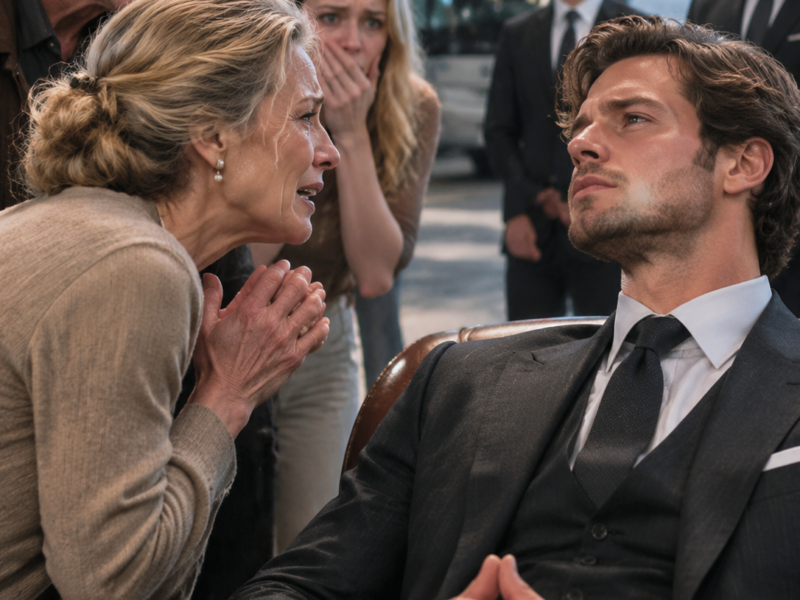
At 25, My Parents Drove Me To A Freezing Bus Depot And Demanded My $12,000 Savings For My Sister’s Lavish Wedding. When I Refused, Dad Looked Me In The Eyes And Said, “Sign The Check Or Walk Home.” I Walked Away And Built My Own Physical Therapy Clinic. Eight Years Later, My Mother Walked Into My Office Demanding Free Treatment For Dad, But She Had No Idea What My Brother Was About To Reveal…
At 25, My Parents Drove Me To A Freezing Bus Depot And Demanded My $12,000 Savings For My Sister’s Lavish Wedding. When I Refused, Dad Looked Me In The Eyes And Said, “Sign The Check Or Walk Home.” I Walked Away And Built My Own Physical Therapy Clinic. Eight Years Later, My Mother Walked Into My Office Demanding Free Treatment For Dad, But She Had No Idea What My Brother Was About To Reveal…
Part 1
At 6:15 on a freezing November evening, my father pulled his sedan into the Mansfield bus depot and put it in park. Rain tapped against the windshield, the temperature had fallen to 34 degrees, and my mother turned around with a blank check and a blue pen.
“Write twelve thousand dollars and sign it,” she said. “Then we’ll go home and forget this argument ever happened.”
I was twenty-five, exhausted after a long day treating patients, and carrying my overnight bag. My Honda had broken down at work, and my father had offered me a ride. I had accepted because I thought he was helping me. Instead, he had driven past the turn to my apartment and brought me here.
“That money is for my board exam and the clinic I’m trying to build. I’m not paying for Courtney’s wedding.”
My father met my eyes in the rearview mirror. “Sign the check or walk home.”
Neither parent moved. I could have begged or signed just to get warm, but I remembered how hard I had worked to save that money.
I worked full-time at a hospital clinic, lived in a tiny garage apartment, and watched every dollar. My $12,400 savings was the beginning of the independent physical therapy practice I dreamed of opening, where patients would receive real attention.
My younger sister, Courtney, had chosen a country-club wedding with a $36,000 price tag. My parents had already paid $8,000 in deposits, despite my father’s recent retirement and my mother’s modest pension. Now they expected me to rescue their plans.
This was not the first time my future had been treated as a family resource. In college, the $6,500 fund my parents had promised me disappeared into a car for Courtney. My mother explained that I was “the practical one” and would always find a way. I found one through student loans and extra shifts. I owed $64,000.
At the depot, I looked toward the heated waiting room. A bus to Worcester was due to leave at 7:40. My former clinical instructor, Dr. Patricia Lawson, lived near the stop and had always told me I could call if I needed help.
I left the pen untouched, opened the door, and stepped into the freezing rain. Then I leaned back toward the warm car.
“Drive safely,” I said.
My father drove away.
Inside the depot, I bought a one-way ticket for $14.50 and sat beside a rattling heater. My fingers found the wooden folding ruler in my bag. It had belonged to my grandfather, who suffered a stroke when I was seventeen. I used to help him practice walking down his hallway. He marked each improvement with blue tape and reminded me, “Measure twice, cut once. And never let anybody talk you into calling an inch a foot.”
Those afternoons inspired me to become a physical therapist and taught me that progress came one honest inch at a time.
Dr. Lawson met me in Worcester that night, gave me soup and a warm bed, and never demanded an explanation. I rebuilt my life there, passed my orthopedic specialty exam, paid down my loans, and saved until I could take over her retiring practice. With my savings and a business loan, I opened Stillwater Physical Therapy.
I built it slowly, hiring a small team and giving every patient the attention I once wished I could offer. Eight years passed without a call from my parents. Only my brother Chase stayed in touch, respecting the distance I needed.
At thirty-three, I believed the bus depot was behind me. Then, one gray Tuesday morning, my office manager told me an urgent new patient had arrived after knee replacement surgery.
The patient was my father.
My mother stood at reception, arguing about the deductible and demanding to see the owner. When I stepped into the lobby, she stared at my clinic logo, then at my face.
“Danielle,” she breathed. “Thank goodness. Tell them to put your father on the schedule and clear those ridiculous fees. We’re family.”
Part 2
I stayed calm. Dad needed rehabilitation, and old anger could not interfere. I offered every patient the same choices: pay the standard co-pay, apply for hardship with documents, or transfer to an in-network clinic. My mother paid for the visit, still expecting special treatment.
The next day, Courtney walked into the treatment area with food and announced she could work at my front desk. My mother then emailed a “family care agreement” demanding free sessions for Dad, a job for Courtney, and after-hours access to our schedule.
That evening, Chase revealed the truth. Years earlier, my parents had taken out a $42,000 home-equity loan for Courtney’s wedding. Courtney and her husband stopped paying after a few months. Later, my mother refinanced the debt to rescue their struggling landscaping business. Dad had never been told the full story.
On Friday, I met them with my attorney’s compliance letter, clinic records, and an in-network transfer plan. I explained that waiving relatives’ fees could put my license, staff, and clinic at risk. Then Chase told Dad about the debt.
My father turned toward my mother, stunned. Courtney blamed me, insisting none of it would have happened if I had given her the twelve thousand dollars eight years earlier.
Part 3
I placed two things on the table: my faded $14.50 bus ticket and Stillwater Physical Therapy’s state certificate. “That money paid for my exam, my first treatment tables, and this building’s deposit,” I said. “It was never yours.”
My mother apologized, then asked me to treat Dad so the church would not hear I had turned him away. She wanted a cleaner story, not a different relationship.
I refused. Dad could see my senior therapist under the normal agreement or take the in-network transfer. He chose the hospital and promised to examine the accounts himself. My parents sold their house to clear the debt. Courtney found extra work and apologized. Months later, Dad met me for coffee and admitted he should never have left me at the depot.
I accepted his words without pretending everything was repaired. My mother stayed distant. I kept my boundaries and my life.
One spring morning, I stood on the porch overlooking Stillwater Creek, my grandfather’s folding ruler resting on my desk inside. I thought of the cold curb where my family had left me—and smiled.
I had not lost my family that night. I had finally stopped measuring my worth by how much I was willing to give them.








