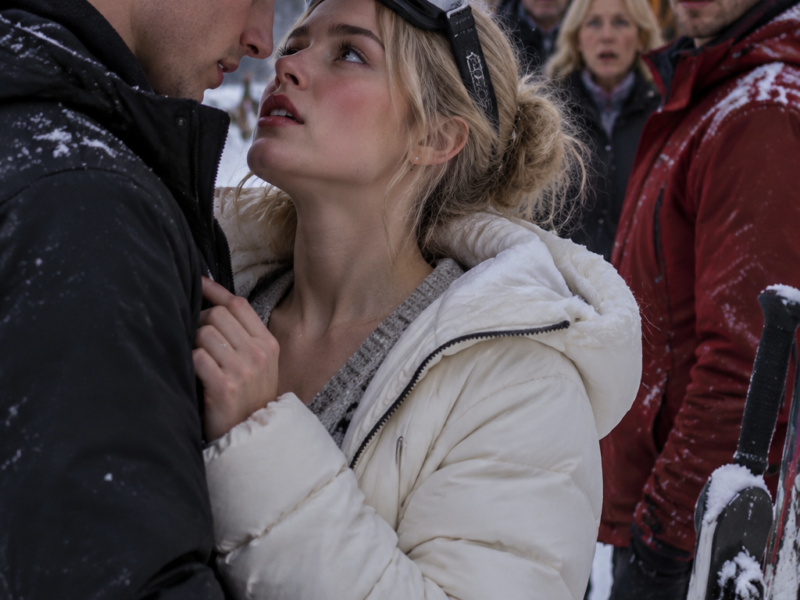
My Best Friend Asked Me to Pretend I Was Her Boyfriend at Her Family Ski Trip… Because Her Ex Was…
My Best Friend Asked Me to Pretend I Was Her Boyfriend at Her Family Ski Trip… Because Her Ex Was…
The front desk clerk slid the key card across the counter with a smile that suggested she was about to make someone’s weekend particularly memorable.
“Congratulations! You’ve got the Lakeview Suite.”
I stood there holding two duffel bags, one in each hand, and felt something inside me quietly reconsider every decision that had brought me to that moment.
Beside me, Ivy pressed her fingers against my arm.
“That’s wonderful. Thank you so much.”
She said it with such effortless sweetness that anyone watching would have assumed we were a couple celebrating a romantic weekend away. The receptionist certainly thought so. Her smile widened as she reached beneath the counter and handed Ivy a small envelope with our room number printed on it.
“It’s actually our last available room,” she explained. “With that storm coming in off Georgian Bay tonight, we’re completely booked. Full house all weekend.”
Ivy nodded appreciatively.
“Well, we’re lucky, then.”
Lucky.
That was one word for it.
The clerk leaned forward slightly, lowering her voice as though she were sharing a particularly delightful secret.
“You’re going to love it. It’s got a king-size bed, a gas fireplace, and a beautiful soaking tub overlooking the lake. Perfect for a winter getaway.”
I looked at Ivy.
Ivy looked at the clerk.
Then Ivy smiled again.
“Sounds perfect. Thank you.”
I picked up both bags and followed her toward the elevators without saying a word.
I was beginning to suspect that the universe had developed a personal interest in making my life unnecessarily complicated.
The Windward Lodge in Collingwood was exactly the sort of place people chose when they wanted to escape their ordinary lives and pretend they were living inside a Christmas movie. The lobby featured enormous cedar beams, natural stone walls, comfortable leather furniture, and a fireplace large enough to heat a small neighbourhood. The air smelled of burning wood, pine, and something sweet coming from the restaurant.
Through the enormous windows, snow was falling sideways across the frozen surface of the lake. The weather forecast had warned about a storm moving through the area, but seeing it in person made the warning feel considerably more serious.
Ivy pressed the elevator button for the third floor.
The doors closed.
“Don’t,” she said.
I glanced at her.
“I haven’t said anything.”
“You were about to.”
I was thinking several things, actually. Most of them were not suitable for polite conversation.
She looked at the ceiling, then at me.
“It’ll be fine, Mason.”
“Will it?”
“Yes.”
“It’s just a room,” she added.
I stared at her.
“The woman specifically said king-size bed.”
“We don’t know that.”
“She literally just told us.”
“Maybe there’s a pullout couch.”
“There isn’t.”
“You haven’t even seen the room.”
“I have a strong suspicion that a suite called the Lakeview Suite doesn’t come with a surprise sofa bed hidden behind the curtains.”
Ivy pressed her lips together, clearly trying not to laugh.
The elevator opened before she could respond.
She stepped out first, pulling off her knitted toque and shaking her long brown hair loose. I followed behind her, carrying both bags down a quiet hallway decorated with old black-and-white photographs of Collingwood during the winter.
At the very end stood our door.
There was a small wooden decoration hanging from it, painted with two intertwined initials inside a heart.
I stopped.
Ivy turned around.
“It’s decorative,” she said immediately.
“That’s what they all say before something terrible happens.”
“Mason.”
“I’m just observing.”
She took the key card from my hand and opened the door.
The room was beautiful.
That was the problem.
The fireplace was already burning, casting warm golden light across the stone wall. A thick white duvet covered an enormous bed positioned in the centre of the room. Two pine nightstands stood on either side, each with a softly glowing lamp.
Near the window was a comfortable chaise lounge overlooking the frozen lake. Beyond it, snow-covered trees disappeared into the grey afternoon.
There was also a luxurious soaking tub in the corner of the bathroom, partially visible through a frosted glass partition.
On the dresser sat a small wicker basket containing two miniature bottles of wine and a handwritten welcome card.
Welcome, friends.
I stared at the bed.
Then at the fireplace.
Then at the bed again.
Ivy set her bag down on the bench and slowly turned around, taking in the room.
“Okay,” she said quietly.
“Yeah.”
“It’s really nice.”
“Really nice.”
We stood there for several seconds.
Neither of us seemed particularly interested in being the first person to address the obvious.
Finally, Ivy picked up one of the miniature wine bottles, examined the label, and placed it back in the basket.
“There’s a chaise by the window,” she said. “You can have the bed.”
“I’m not taking the bed.”
“Mason, you’re six feet tall.”
“And?”
“And I’m not letting you sleep on a tiny chair.”
“You asked me to come on this trip.”
She paused.
For just a moment, something changed in her expression.
Then she turned toward the window.
“I know,” she said softly. “And I appreciate it. I really do.”
I wanted to tell her that she didn’t have to thank me.
Not for this.
Not for anything.
But I wasn’t sure how to explain that without revealing more than I was prepared to admit.
Four days earlier, Ivy had shown up at my apartment in Barrie carrying a cardboard box of Tim Hortons coffee and wearing an expression I had come to recognize over six years of friendship.
It was the expression she used whenever she had already decided I was going to help her with something but hadn’t yet bothered to explain what that something was.
I opened the door.
“Whatever it is, the answer is probably no.”
She walked past me.
“That’s a terrible way to greet a friend.”
“You brought coffee. That means you’re either apologizing or asking for a favour.”
“Can’t it be both?”
She placed the box on my kitchen table and removed her coat.
Ivy had a habit of making herself comfortable in my apartment. She knew where I kept the mugs, which cupboard contained the good coffee, and which drawer stuck whenever you tried to open it.
She had spent enough time there that I sometimes forgot she technically had her own place.
She sat down, pulled out two coffees, and handed me one.
“My dad’s retiring.”
I raised an eyebrow.
“That’s good news.”
“It is. He’s been talking about it for years. He’s finally doing it properly, so we’re having a big family weekend at the ski house.”
“Sounds nice.”
“It should be. My parents, Kevin, Aunt Ruth, Uncle Terry, the cousins. Everyone’s coming.”
“Okay.”
“I need you to come.”
I looked at her.
“Why?”
She stirred her coffee even though she hadn’t added anything to it.
Then she said the name.
“Dawson is going to be there.”
I put my cup down.
Ah.
Dawson.
I knew Dawson well enough to recognize the trouble that came with his name.
He had dated Ivy for nearly two years. They had broken up about eight months earlier, although calling it a breakup made it sound more decisive than it had actually been.
There hadn’t been one spectacular argument or some dramatic betrayal that everyone could point to.
It had been a slow, exhausting process.
Dawson was the sort of man who could make you feel unreasonable without ever raising his voice. He rarely disagreed openly. Instead, he would listen, smile, and then gently explain why your feelings were probably based on a misunderstanding.
If Ivy was upset, he told her she was overthinking.
If she disagreed with him, he reminded her how much he valued her intelligence before explaining why he believed she was wrong.
If she wanted something different from what he wanted, he would somehow turn the conversation into a discussion about how difficult compromise had become.
He never seemed particularly cruel.
That was what made him difficult to explain.
He was pleasant enough in public that people liked him. He remembered birthdays, brought good wine to dinner, and knew how to talk to Ivy’s father about business.
Ron, Ivy’s father, had developed a genuine friendship with him through golf and several shared real estate contacts.
Even after the relationship ended, Dawson remained a regular presence at family gatherings.
Your dad is still inviting him?” I asked.
Ivy nodded.
“Dad thinks it’s mature. Apparently, Dawson is just a friend of the family now.”
“And your mother?”
“Agrees with him.”
“Kevin?”
“Still likes him.”
I leaned back.
“So you’re the only person who doesn’t want him there.”
“Pretty much.”
“That’s ridiculous.”
“I know.”
She looked down at her coffee.
“Somehow, that makes me the difficult one.”
There was something in her voice that bothered me more than the situation itself.
Ivy was not someone who usually struggled to stand up for herself. She was confident, funny, intelligent, and more than capable of making a room listen when she had something to say.
But Dawson had managed to make her question things she had never questioned before.
And apparently, her family hadn’t noticed.
“So what do you want me to do?” I asked.
She looked up.
“Come with me.”
“That’s it?”
“That’s it.”
“Just show up?”
“Well, preferably wearing something that doesn’t make my mother ask whether you’ve given up on your life.”
I laughed.
She smiled.
Then she leaned forward.
“I need someone my family already knows. Someone they like. Someone who can keep things normal.”
I gave her a suspicious look.
“You’re making this sound very specific.”
“It is.”
“Go on.”
“You can talk hockey with Kevin, talk real estate with my dad, and remember that Aunt Ruth had hip surgery last year.”
“That’s your strategy?”
“Remembering Aunt Ruth’s hip surgery buys me approximately twenty minutes of uninterrupted conversation with her. It’s an excellent investment.”
I laughed again.
She continued.
“And you won’t make the weekend awkward.”
I looked at her for a long moment.
“Are you asking me to pretend we’re dating?”
Her expression changed slightly.
“Would that be a problem?”
I should have said yes.
I should have asked why she thought that was a good idea, whether Dawson would believe it, and what exactly she expected me to do when her mother started asking questions.
Instead, I remembered everything Ivy had done for me over the years.
When I lost my job at the Toronto firm, she had let me stay on her couch for two weeks without making me feel like a burden.
When my mother needed a medical procedure in Sudbury, Ivy had driven up with me and sat in a hospital waiting room for four hours. She had eaten vending-machine crackers, complained about the terrible coffee, and somehow made a frightening day feel manageable.
She had been there through enough difficult seasons that refusing a relatively simple favour felt wrong.
Besides, I had always been able to rely on her.
“Fine,” I said.
Her face brightened.
“Really?”
“Yes.”
She reached across the table and squeezed my hand.
“Thank you.”
I smiled.
“Just remember, I expect compensation.”
“What kind?”
“Unlimited coffee.”
“Done.”
“Good coffee.”
“You’re becoming difficult.”
“Apparently, that’s contagious.”
She threw a sugar packet at me.
At the time, I thought I was agreeing to spend a weekend pretending to be her boyfriend.
I hadn’t realized I was agreeing to spend a weekend discovering how much I wanted that arrangement to become permanent.
By the time we arrived at the Lakeview Suite, the first part of our performance had already begun.
The next morning, we drove to Ivy’s family’s ski house.
It was about eight minutes from the lodge, up a narrow road bordered by tall pine trees. Fresh snow covered the branches, and the occasional driveway disappeared beneath enormous drifts.
The house sat on a rise overlooking the water. It had a wraparound wooden deck, a hot tub, and windows that seemed designed to bring the entire winter landscape indoors.
Ivy had spent most of the drive explaining who would be there and what I needed to remember.
Her father, Ron, was a successful businessman who had spent nearly thirty years building his real estate company.
Her mother, Diane, was warm, attentive, and deeply invested in keeping everyone happy.
Kevin, Ivy’s older brother, was a practical man who loved hockey, snowmobiles, and asking questions that sounded casual but were actually designed to determine whether he trusted you.
Aunt Ruth loved talking about her health.
Uncle Terry loved talking about golf.
And Dawson, apparently, loved making himself comfortable in places where he was no longer supposed to belong.
When we walked through the front door, Diane immediately appeared with both arms open.
“There you are!”
She hugged Ivy first, then pulled me into a warm embrace.
“Mason! It’s wonderful to finally have you here.”
“Good to see you, Diane.”
Ron emerged from the living room and shook my hand, then gave my shoulder two enthusiastic slaps.
“Look at this guy. Took you long enough to come up here.”
“Work kept getting in the way.”
“Work always gets in the way. That’s why I’m retiring.”
Kevin appeared from the kitchen.
“Hey, Mason. Want to see the new snowmobile?”
“Absolutely.”
“Good. Come out back later.”
For a few minutes, everything felt normal.
Then Dawson walked in.
He came from the kitchen carrying two mugs of coffee.
He was wearing an expensive dark jacket, a neatly fitted sweater, and the kind of casual hairstyle that probably required more effort than most people put into getting ready for a wedding.
He handed one mug to Ron.
Then his eyes landed on Ivy.
“Hey,” he said with a small smile. “Good drive up?”
“Fine,” Ivy replied.
His gaze moved to me.
“Mason Wright. Ivy’s mentioned you.”
“Hopefully good things.”
“Of course.”
He said it pleasantly.
Almost too pleasantly.
There was something about his expression that made me feel as though he had just placed a small marker on a board.
Ivy moved closer to me.
Her hand touched my arm.
It was a small gesture, but I felt her fingers press against my sleeve before she let go.
I understood.
She was reminding herself that she wasn’t alone.
Breakfast began shortly afterward.
The dining room was full of conversation, clattering plates, and the smell of bacon, pancakes, and fresh coffee.
Diane moved around the table constantly, refilling mugs and offering food before anyone could ask.
I sat beside Ivy.
She was completely at ease with her family, although I noticed that she seemed more alert than usual.
She remembered every detail about everyone.
She asked Aunt Ruth how her hip was recovering.
She remembered that one of her cousins’ daughters had started kindergarten.
She reminded Kevin about the hockey game he had promised to watch with their father.
When Ron told a story about a disastrous golf shot from the previous summer, she laughed at exactly the right moment.
It was something I had always admired about her.
Ivy made people feel important.
Not by pretending to care, but because she genuinely remembered things that mattered to them.
Across the table, Dawson watched her.
I noticed that he rarely interrupted her, but whenever she spoke, his attention seemed to sharpen.
At one point, Diane looked between us and smiled.
“It’s so nice that you two finally made it up here together. We’ve been asking Mason to come for years.”
Ivy glanced at me.
“He kept having excuses.”
“Work,” I said.
“Work?” Kevin repeated. “You once told us you had a very important leaf to rake.”
Ivy burst out laughing.
“That was a legitimate commitment.”
“It was October,” I protested.
“Exactly. Prime leaf-raking season.”
Ron laughed.
“You’ve always been more patient than this one.”
He pointed his fork at Ivy.
“She calls me back within an hour or she’s angry at the phone.”
“I have been wronged by phones,” Ivy replied.
“She really has,” I added.
Under the table, her knee touched mine.
I didn’t move.
For a brief moment, the conversation around us faded.
Then Diane asked whether we wanted more pancakes, and the moment disappeared.
After breakfast, Kevin dragged me into the garage.
He was excited about his new snowmobile and wanted to explain every detail of its engine.
I listened, asked questions, and tried to look sufficiently impressed.
Eventually, he handed me a can of beer and leaned against the workbench.
“So,” he said, “this is a thing now?”
I looked at him.
“What?”
“You and Ivy.”
I turned the can slowly between my hands.
“We’re figuring it out.”
Kevin studied me.
He had the same directness as his sister, but where Ivy’s questions often came with warmth, Kevin’s felt more like an inspection.
“Good,” he said finally.
I waited.
He took a drink.
“She needed someone who wasn’t going to treat her like a project.”
I didn’t respond immediately.
Kevin glanced toward the garage door.
“Dawson was good at making everything sound reasonable. That’s what people liked about him. He’d agree with her in front of everyone, then quietly undo whatever she’d decided when they were alone.”
He shook his head.
“Very smooth about it. Very polite. It took us a while to notice.”
I looked at him.
“You noticed?”
“Eventually.”
He set his beer down.
“Look, I don’t know what happened between you two, and I don’t need to. But Ivy’s been happier lately. I like seeing that.”
There was something unexpectedly reassuring about hearing it from him.
“I care about her,” I said.
Kevin nodded.
“I know.”
Then, as though he had decided the conversation had gone on long enough, he opened the snowmobile’s engine cover.
“You want to hear her run?”
I smiled.
“Sure.”
The machine roared to life a moment later, filling the garage with noise.
I was grateful for it.
Because Kevin had just said something I wasn’t entirely prepared to examine.
I cared about Ivy.
That was true.
The question was whether I had been calling it friendship because friendship was easier.
The afternoon made that question increasingly difficult to ignore.
We spent several hours moving between the house, the ski hill, and the deck.
The family had planned various activities, and everyone seemed determined to make the most of the weekend.
Ivy and I fell into a rhythm that felt almost embarrassingly natural.
When someone needed a drink, I was already reaching for it.
When she forgot her gloves, I handed her mine.
When she started telling a story, I knew exactly where she was going and could anticipate the details before she reached them.
At lunch, she reached for the salt at the same time I did.
Our hands touched.
She looked at me.
I looked at her.
Neither of us said anything.
It was ridiculous.
We had known each other for six years. We had shared meals, long drives, terrible movies, family emergencies, and countless ordinary afternoons.
Yet suddenly, the smallest things felt different.
Every time she leaned toward me, I noticed.
Every time she laughed, I wanted to be the reason.
Every time someone referred to us as a couple, I felt an uncomfortable mixture of panic and happiness.
The strangest part was that I couldn’t tell whether she was acting anymore.
Neither, apparently, could I.
There is a particular difficulty that comes with knowing someone too well.
You eventually run out of convincing ways to pretend.
The truth starts escaping through the smallest details.
That afternoon, while the others took turns skiing, Ivy and I walked toward the dock behind the house.
The snow had stopped falling.
The lake stretched out beneath a pale winter sky, its surface covered in thick ice. The far shoreline was lined with dark pine trees, and everything seemed unusually still.
Ivy tucked her hands into her coat pockets.
I stood beside her.
For a while, neither of us spoke.
Then she said, “Dawson talked to you this morning.”
It wasn’t a question.
I glanced at her.
“When?”
“While I was helping Mom with the coffee.”
“Oh.”
“What did he say?”
I considered giving her the harmless version.
Something polite.
Something that wouldn’t ruin the afternoon.
But Ivy had spent too much of her life listening to people soften the truth until it became meaningless.
She deserved better.
“He said he was glad you seemed happy.”
She nodded.
“And then?”
I looked out across the ice.
“Then he said you’ve always been better at seeming happy than actually being happy.”
Her expression didn’t change immediately.
She stared at the frozen lake for several seconds.
Finally, she said, “That’s very calculated.”
“Yeah.”
“It’s designed to make me question whether what I’m seeing is real.”
“I think that’s the point.”
She nodded again.
“I know.”
A small black-capped chickadee landed on the railing beside us.
It tilted its head, looked at us, then flew away.
Ivy watched it disappear.
“Can I ask you something?”
“Of course.”
“What do you see?”
I turned toward her.
She was looking at me now, her cheeks pink from the cold and a few snowflakes caught in her hair.
“What do you mean?”
“When you look at me. What do you actually see?”
I understood that she wasn’t asking for a compliment.
She was asking for something more difficult.
She wanted to know whether the person standing beside her saw the same woman she sometimes struggled to recognize after spending too much time around Dawson.
I took a breath.
“I see someone who has spent the last two days making everyone in that house feel noticed.”
She looked away.
“I see someone who remembered which cousin is lactose intolerant and quietly warned your mother before she made the cream sauce.”
A small smile appeared on her face.
“I see someone who laughed at her father’s golf story because she knew he needed someone to laugh at it.”
I paused.
“I see someone who remembers birthdays, checks on people when they’re sick, and somehow knows when everyone else needs a little help before they even ask.”
I stepped slightly closer.
“And I see someone who keeps making herself responsible for everyone’s happiness, even when nobody seems to notice how much effort it takes.”
Her eyes became glossy.
“That’s not performance, Ivy.”
I held her gaze.
“That’s just who you are.”
She looked back at the lake.
Her jaw moved slightly, as though she was trying to decide whether to say something.
Then she smiled.
“You know what’s annoying about you?”
I laughed.
“One thing or the complete list?”
“You always say the right thing when I’m already too tired to deflect it.”
“That’s because I save my best material for special occasions.”
She shook her head, smiling.
Then she said my name.
“Mason.”
“Yeah?”
“Why did you really come this weekend?”
The question landed more heavily than I expected.
I looked down at the ice.
The honest answer had been sitting inside me for a long time.
Much longer than four days.
Maybe it had started the previous summer, when Ivy came over to watch a hockey playoff game and fell asleep on my couch halfway through the second period.
I remembered sitting there with the television playing quietly, watching her sleep.
I had spent an unreasonable amount of time listening to her breathe, wondering whether I should wake her or simply let her stay.
Eventually, I had made up an excuse to go to bed because I didn’t trust myself to keep looking at her.
Or perhaps it had started the autumn before that, when she sent me a photograph of a maple tree on her street because she knew I loved that particular corner of October.
She hadn’t written anything especially meaningful.
Just a message about how beautiful the colours were.
But I had saved the picture.
I still had it.
And there were hundreds of moments like that.
Ordinary things that had slowly become important.
“I came for the same reason you asked me,” I said.
She turned toward me.
“Because I knew you’d be safe with me. Because I knew I wouldn’t do anything to make your weekend harder.”
I swallowed.
“Which was true right up until it wasn’t.”
The wind moved softly through the pine trees.
Ivy didn’t speak.
I looked at her.
“I think I’ve been losing track of that line for about a year.”
Her expression softened.
“How long?”
“Honestly? I’m not sure.”
She exhaled, creating a small cloud in the cold air.
Then she pulled her hands from her pockets and folded her arms.
“I didn’t ask you because of Dawson,” she said.
I waited.
“I mean, that was part of it. I didn’t want to spend an entire weekend feeling like I had to defend myself against someone I used to date.”
She looked down at the snow beneath her boots.
“But that wasn’t the real reason.”
“What was?”
She took a breath.
“Because the last time I went somewhere like this without you, I kept noticing the gap.”
I said nothing.
“At my cousin’s wedding in September, every time something funny happened, my first instinct was to find you. I wanted to turn around and tell you something, or make a joke, or just see your face.”
She laughed quietly, though there was no humour in it.
“And you weren’t there.”
I watched her carefully.
“I kept taking out my phone to text you. Then I’d put it away. Then I’d take it out again.”
She shook her head.
“At some point, I realized I wasn’t missing my best friend in the way I was supposed to.”
My heart was beating so hard that I could hear it.
She looked at me.
“That’s not just friendship, Mason. And I’ve been pretending it is.”
For several seconds, I couldn’t find a response.
I had imagined this conversation before.
More times than I cared to admit.
In those imaginary versions, I was always more confident. I always knew exactly what to say. I never hesitated.
But standing there with Ivy, hearing her admit what I had been afraid to hope was true, I suddenly felt like the least articulate man in Ontario.
“So,” I finally managed, “what do we do?”
She was quiet.
Long enough for me to begin questioning everything I had just said.
Maybe I had misunderstood.
Maybe she was simply being honest about her feelings without wanting anything to change.
Maybe she needed time.
Maybe I had taken a friendship that mattered more than anything and placed it in danger because I couldn’t keep my emotions to myself.
Then her hand found mine.
Not the light touch on my arm from breakfast.
Not the casual contact that could be explained away.
Her fingers slid between mine.
She held on.
“I think we stopped pretending the door was locked,” she said.
I looked down at our hands.
“We’ve been standing outside it for about a year. Maybe longer.”
I turned toward her.
She was already looking at me.
There was no uncertainty in her expression now.
Just a little fear, a little hope, and something that looked remarkably like relief.
I stepped closer.
“Are you sure?”
She smiled.
“You’re asking me that now?”
“I just want to make sure.”
“Mason, I’ve spent an entire weekend pretending you’re my boyfriend. At this point, I think I’ve earned the right to decide whether I want you to be one.”
I laughed.
Then I kissed her.
It was gentle at first, almost cautious.
A question more than an answer.
But Ivy moved closer, one hand resting against my chest, and kissed me back with a certainty that made every nervous thought disappear.
The frozen lake stretched beneath us.
Snow-covered pine trees stood on either side of the dock.
Somewhere up the hill, her family was probably arguing about whose turn it was to use the snowmobile.
But none of that mattered.
For the first time in a very long time, I wasn’t trying to calculate what might happen next.
I was simply happy to be exactly where I was.
When we finally pulled apart, Ivy rested her forehead against my jaw.
“Okay,” she whispered.
“Okay,” I repeated.
We stayed there for another moment.
Then a voice came from somewhere near the deck.
“Hey! Kevin’s calling you guys for lunch!”
Ivy closed her eyes.
I recognized the voice.
Of course.
Her brother had apparently developed an extraordinary ability to interrupt important moments.
She straightened and looked toward the house.
Then she turned back to me.
The smile on her face was different now.
It was the same Ivy smile I had known for six years, but without the usual hesitation behind it.
“We should probably go in.”
“Probably.”
She squeezed my hand.
Then she let go, and we started walking back toward the house.
We weren’t holding hands when we reached the steps.
But we weren’t exactly pretending not to, either.
Her father saw us coming through the back door.
He looked at Ivy.
Then at me.
Then at the space between us.
He had the particular attentiveness of a man who had spent the weekend observing two people and had already formed several theories.
He didn’t ask anything.
He simply walked over to the counter, poured two additional mugs of coffee, and placed them beside each other.
Ivy glanced at him.
Ron raised an eyebrow.
She rolled her eyes.
I smiled.
That was when I knew her father understood.
Lunch was considerably more comfortable than breakfast.
Not because anything had changed dramatically, but because the person Ivy was sitting beside was no longer someone she had to pretend to love.
I found myself noticing how often she looked at me.
How easily she smiled.
How she seemed to have finally relaxed into the weekend.
Dawson remained across the table for most of the meal.
He didn’t say much.
When he did speak to Ivy, she answered politely without inviting further conversation.
At one point, he asked whether she planned to attend a business dinner the following month.
She said she hadn’t decided.
He started explaining who would be there and why she should consider going.
I watched her expression.
Then Ivy calmly interrupted.
“I’ll decide when I have the details. You don’t need to organize it for me.”
The table went quiet for half a second.
Dawson smiled.
“Of course. I was only suggesting.”
“I know.”
She reached for her water.
And that was the end of it.
No argument.
No explanation.
No apology.
Just a boundary.
I was quietly proud of her.
After lunch, Dawson announced that he needed to return to the city before the roads became worse.
He shook Ron’s hand, exchanged a few words with Kevin, and nodded toward Ivy.
“Good seeing you.”
“You too,” she replied.
His gaze moved to me.
“Take care, Mason.”
“You too.”
He walked out.
Through the window, we watched him climb into his car and drive down the pine-lined road.
Ivy remained standing near the dining table until his vehicle disappeared.
Then she turned around.
Diane was asking Aunt Ruth whether anyone wanted dessert.
Ron was already settling into his chair.
Kevin was arguing about something on television.
The house continued operating exactly as it had before.
Ivy looked at me.
Then she rolled her eyes toward the rest of her family.
I laughed.
She came over and sat beside me.
“Well,” she whispered, “that was less terrible than expected.”
“High praise.”
“Don’t get used to it.”
I reached for my coffee.
She leaned against my shoulder for a moment.
It was such a small gesture that nobody else seemed to notice.
But I did.
And I think her father did, too.
That evening, we returned to the lodge.
The storm had intensified, and the snow was falling heavily outside the windows.
The Lakeview Suite looked exactly as it had the previous night.
The fireplace was burning.
The white duvet was neatly arranged.
The two little wine bottles were still sitting in their wicker basket.
Ivy walked over, picked up both bottles, and carried them to the bed.
She sat cross-legged near the pillows and handed me one.
“To surviving the family weekend,” she said.
I raised my bottle.
“To Aunt Ruth’s hip.”
She laughed.
We spent the next several hours talking.
Not about Dawson.
Not about the fake relationship.
Not about what we were going to tell our friends or how we were supposed to explain the sudden change.
We talked about everything else.
We remembered the first time we met, six years earlier, at a mutual friend’s birthday party.
I had arrived late.
She had been standing near the kitchen, arguing with someone about whether pineapple belonged on pizza.
I had taken her side simply because I liked the way she argued.
She reminded me of the time I accidentally locked myself out of my apartment wearing only sweatpants and a winter coat.
I reminded her of the time she tried to assemble a bookshelf and somehow ended up with three extra screws and a shelf that leaned like the Tower of Pisa.
We laughed until my stomach hurt.
It felt familiar.
But it also felt completely new.
At some point, Ivy moved closer.
She had been sitting near the edge of the bed, leaving a deliberate amount of space between us.
Then, without either of us mentioning it, she shifted until her shoulder rested against mine.
I stopped pretending not to notice.
She looked at the fire.
“Can I tell you something?”
“Always.”
“For the record, I was never going to make you sleep on the chaise.”
I turned toward her.
“I know.”
“I only said that because I thought you needed an out.”
I smiled.
“I know that, too.”
She looked at me.
“How?”
“Because you always do that.”
“Do what?”
“Make sure everyone has somewhere to go if things become uncomfortable.”
She was quiet.
Then she smiled.
“That’s annoyingly accurate.”
“Six years of research.”
She laughed softly.
The fire had burned lower, filling the room with a warm orange glow.
Outside, snow tapped against the windows.
Ivy looked down at her hands.
“I’ve been a little bit in love with you for a while.”
I stared at her.
“A little bit?”
She nodded seriously.
“Yes.”
“How little?”
She considered the question.
“Medium amount.”
I laughed.
“That’s not a real measurement.”
“It’s the one you’re getting.”
I leaned back against the headboard.
“How long?”
She looked toward the ceiling.
Then she took a breath.
“Remember when your apartment flooded two winters ago?”
I nodded.
“You stayed at my place for nine days.”
“The nine worst days of my life.”
“Your coffee was terrible.”
“You drank it every morning.”
“Because you made it correctly.”
I looked at her.
She was smiling.
“I think that’s when it started,” she said.
I raised an eyebrow.
“Really?”
“You made me coffee every morning. The exact way I liked it. You remembered how much milk I used, how much sugar, and that I hated drinking it when it got cold.”
I remembered those nine days.
I remembered the broken pipe, the insurance calls, the endless drying equipment, and Ivy complaining that my apartment smelled like wet cardboard.
I had made coffee every morning because it seemed like the obvious thing to do.
I hadn’t thought it meant anything.
She continued.
“You never asked me how long I was staying. You never made me feel like I was taking up space. You just made room for me.”
She looked at me.
“And I remember thinking that if I ever had to share a home with someone, I wanted it to feel like that.”
I didn’t know what to say.
Two years.
She had been carrying those feelings for two years.
And I had been making coffee.
Because apparently, I was very good at accidentally expressing affection while being completely oblivious to what I was doing.
“I should have said something earlier,” I told her.
She shook her head.
“We both should have.”
I looked at her.
“Well, I’m saying it now.”
She waited.
I took her hand.
“I love you, Ivy.”
Her expression softened.
“Not in the friend way. I’ve been trying to convince myself it was the friend way for about a year, and I’m officially terrible at it.”
She smiled.
“I love the way you laugh at things that aren’t funny. I love that you remember everyone’s coffee orders. I love that you call me when something good happens, even if it’s something incredibly small.”
I paused.
“And I love that you somehow manage to make an ordinary Tuesday feel like something worth looking forward to.”
Her eyes glistened.
“I love you,” I repeated.
“Not because we pretended to be together this weekend.”
I squeezed her hand.
“Because I’ve wanted to be with you for longer than I was willing to admit.”
She looked at me for several seconds.
Then she smiled in that particular way she reserved for things she truly meant.
“You weren’t that bad,” she said.
I laughed.
“I slept on the edge of this bed like it was a cliff.”
“That was first-night nerves.”
I pointed toward the little wooden heart decoration on the door.
“That thing didn’t help.”
She laughed.
“Okay. The decoration was a lot.”
Then she leaned toward me and kissed me.
There was no hesitation this time.
No pretending.
No need to wonder what the other person was thinking.
Just two people who had somehow managed to spend years standing on opposite sides of the same feeling, both too afraid to be the first to name it.
When she pulled away, she rested her head against my shoulder.
We stayed like that for a long time.
The fire burned down to glowing coals.
The snow continued falling.
And the enormous king-size bed that had seemed like a logistical disaster the previous evening suddenly felt like the most natural place in the world to be.
The next morning, I woke up before Ivy.
For a few seconds, I didn’t recognize the room.
Then I remembered the lodge, the snowstorm, the family weekend, and the fact that the woman sleeping beside me was no longer pretending to be my girlfriend.
I turned my head.
She was lying on her side, her hair spread across the pillow, one hand tucked beneath her cheek.
I watched her for a moment.
Then I quietly got out of bed.
I went to the small coffee machine near the dresser and started making breakfast.
When I returned, Ivy was awake.
She sat up slowly, pulled the duvet around her shoulders, and watched me place the coffee on the nightstand.
“You’re making me coffee?”
“Apparently, it’s my love language.”
She smiled.
“You’re learning.”
I sat beside her.
She picked up the cup and took a sip.
Then she looked at me.
“Perfect.”
I raised an eyebrow.
“Of course.”
She leaned forward and kissed my cheek.
It was a small thing.
An ordinary thing.
But I had a feeling I would remember it for a long time.
We checked out late that morning and drove back toward Barrie.
The roads were still covered in snow, and traffic moved slowly.
Ivy sat in the passenger seat with her boots tucked beneath her, one hand wrapped around a takeaway coffee.
At one point, she reached across the centre console and rested her fingers on my arm.
I glanced at her.
“What?”
“Nothing.”
“You’re smiling.”
“Am I not allowed?”
“Not without explaining yourself.”
She looked out the window.
“I was just thinking.”
“About?”
“How strange it is that we spent six years being best friends and somehow never figured this out.”
I smiled.
“Maybe we were both a little slow.”
“Speak for yourself.”
“You’re the one who needed a fake boyfriend to realize she wanted the real one.”
She turned toward me.
“Careful, Mason.”
I laughed.
She smiled and settled back into her seat.
The rest of the drive passed quietly.
But it wasn’t the same quiet we had experienced on the way up.
That silence had been filled with questions.
This one was comfortable.
It was the silence of two people who no longer needed to pretend they weren’t thinking about each other.
Over the following weeks, we took things slowly.
We didn’t suddenly transform into a completely different couple.
We still argued about movies.
She still stole food from my plate.
I still complained about her habit of leaving half-finished coffee cups around my apartment.
But there were new things, too.
She started reaching for my hand whenever we walked together.
I began introducing her as my girlfriend without having to think about it.
And sometimes, when she called me after work, I found myself smiling before I even answered.
Our friends were not particularly surprised.
In fact, one of them asked whether we had finally stopped wasting everyone’s time.
Ivy threatened to end the friendship.
I reminded her that she had started the entire situation by asking me to pretend to be her boyfriend.
She said that was an entirely different matter.
It wasn’t.
Her family adjusted even faster.
Diane was delighted.
Ron seemed quietly satisfied.
Kevin simply looked at us one evening and said, “About time.”
I asked him how long he had known.
He shrugged.
“Long enough.”
Ivy threw a napkin at him.
The following autumn, we returned to Collingwood for Thanksgiving.
This time, there was no hotel reservation to complicate matters.
No fake relationship to explain.
No need to rehearse answers before walking through the front door.
We stayed at her parents’ house.
The living room smelled of wood smoke and cinnamon, and the kitchen was filled with the familiar sounds of Diane preparing dinner.
Kevin had taken control of the television and was already arguing with someone about football.
Aunt Ruth was explaining how much better her hip felt.
Uncle Terry was telling Ron about a golf course he wanted to visit.
It was exactly the kind of family gathering Ivy had spent years trying to make comfortable for everyone.
And this time, she seemed genuinely happy to be there.
We sat together at the long dining table.
Ivy stole half my dinner roll without asking.
I looked at her.
She looked back.
“Testing for quality,” she said.
“You have your own.”
“Yours looked better.”
I shook my head.
“Unbelievable.”
She smiled and took another bite.
Across the table, Ron was watching us.
He had that satisfied expression of a man who had seen something coming long before the people involved had finally figured it out.
He set down his fork.
“Finally,” he said.
Ivy looked up.
“What?”
He shook his head.
“Nothing.”
“That’s not what you said.”
“I said finally.”
“I heard you.”
“Good.”
Kevin started laughing.
Ivy pointed her fork at her father.
“I heard that, too.”
Ron simply smiled and returned to his turkey.
I looked at Ivy.
She rolled her eyes, but she was smiling.
Under the table, her hand found mine.
I held it.
And as the room filled with conversation, laughter, and the familiar chaos of her family, I found myself thinking about that winter weekend.
The receptionist.
The key card.
The enormous bed.
The ridiculous little heart decoration on the door.
The storm moving across Georgian Bay.
And the frozen dock where a small black-capped chickadee had landed for a few seconds before flying away.
For a long time, I had believed that the safest way to love someone was to never risk changing the relationship you already had with them.
I had convinced myself that being Ivy’s best friend was enough.
That being the person she called when she needed help was enough.
That being the person who knew how she took her coffee, remembered her favourite songs, and could make her laugh after a terrible day was enough.
But standing beside her on that dock, I finally understood something.
Sometimes the person who feels most like home is the person you’ve been too afraid to ask to stay.
Ivy squeezed my hand.
I turned toward her.
She smiled.
“What?” she whispered.
“Nothing.”
“You’re looking at me.”
“Am I not allowed?”
She laughed.
Then she leaned closer and kissed my cheek.
And for once, I didn’t need to pretend that any of it was temporary.
We had spent six years being best friends, another year pretending we didn’t want more, and one unforgettable winter weekend discovering that the thing we had both been searching for was sitting right beside us all along.
The ski trip was supposed to help Ivy survive an awkward family weekend with her ex.
Instead, it gave us something neither of us had expected.
A beginning.
And, as I would eventually discover, the best part wasn’t that we finally fell in love.
It was that we got to fall in love with someone we already knew how to come home to.
THE END









