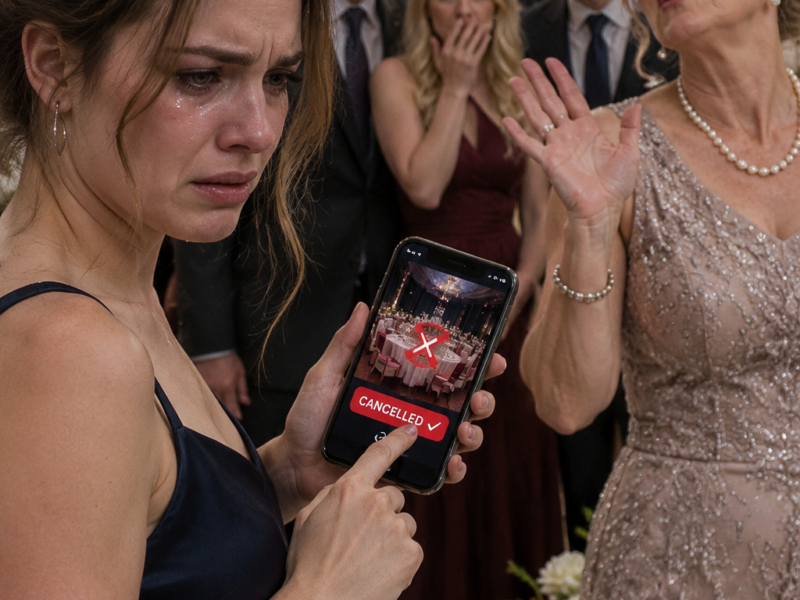
“It’s Not Personal,” Mom Said After Excluding Me From the $9,800 Party I Funded.So I Canceled It All
“It’s Not Personal,” Mom Said After Excluding Me From the $9,800 Party I Funded.So I Canceled It All
My name is Emily Johnson. I’m thirty years old, and I live in New Orleans, Louisiana. Until a few months ago, I believed that being a good daughter meant being dependable. It meant answering every phone call, solving every family problem, remembering every birthday, organizing every celebration, and stepping in whenever someone needed help. I thought that was what love looked like. I thought that if I continued giving my family everything I could, they would always understand how much they mattered to me.
I was wrong.
Five days before my parents’ anniversary party, I discovered that spending $9,800 on a celebration did not necessarily mean I was considered important enough to attend it.
And the most painful part wasn’t the money.
It was the fact that my own parents had known about the decision for weeks and had apparently planned to tell me only after there was nothing left I could do about it.
But I’m getting ahead of myself.
To understand why I eventually canceled an entire anniversary celebration, you need to understand the role I had played in my family for most of my adult life.
I was the organized one. The practical one. The person who always seemed to know what to do when everyone else was overwhelmed.
Whenever my mother wanted to host a birthday dinner, she called me. Whenever my father needed someone to arrange a retirement celebration for a colleague, he called me. When my aunt Rachel wanted to organize a family reunion, I was the person she contacted to negotiate with the venue, compare catering prices, and make sure everyone had somewhere to sit.
I worked in event planning, so I understood how these things operated. I knew which vendors were reliable, how to negotiate contracts, how to manage deposits, and how to prevent small logistical problems from turning into expensive disasters.
My family considered those skills a gift.
Unfortunately, they also seemed to consider them something they were automatically entitled to.
Nobody ever asked whether I had enough time. They simply assumed I would make room.
Nobody asked whether I wanted to take responsibility. They told me how much easier everything would be if I handled it.
And because I loved them, I usually agreed.
When my parents announced that they wanted to celebrate their thirty-fifth wedding anniversary with a large gathering, I was genuinely excited.
They had been married for decades. Their relationship hadn’t always been perfect, but they had built a life together, raised two daughters, and survived enough difficulties to deserve a beautiful evening surrounded by people who cared about them.
I wanted the celebration to be special.
My mother imagined an elegant outdoor dinner in the courtyard of a historic New Orleans property. She wanted warm lights hanging above the tables, flowers arranged along the entrance, beautiful linens, and a menu featuring some of her favorite dishes.
My father wanted something more relaxed but still sophisticated. He imagined friends and relatives laughing beneath a large white tent, listening to music, and enjoying an evening that felt personal rather than overly formal.
I told them I could make it happen.
And I did.
For several weeks, I coordinated nearly every detail.
I contacted the historic property, reviewed its rental agreement, negotiated with the tent company, arranged the catering, selected the flowers, and worked with the rental company to upgrade the tables and linens.
My parents approved the menu personally. My mother spent an entire afternoon looking through floral arrangements with me. My father came along to inspect the courtyard and spent twenty minutes discussing where the musicians should stand.
They were involved whenever something was exciting.
But whenever paperwork needed to be signed or money needed to be transferred, the responsibility somehow ended up with me.
By the time everything was arranged, I had contributed approximately $9,800.
It wasn’t one enormous payment. The expenses were spread across several contracts.
I had paid $2,600 toward the tent flooring, tables, and linens.
Another $3,100 had gone toward catering and the custom menu.
The flowers and table arrangements accounted for $1,450.
I had contributed $1,900 toward the historic property rental and another $750 toward miscellaneous equipment and service fees.
My parents had contributed some money themselves, and several relatives had promised smaller amounts.
I wasn’t paying for every single part of the celebration, but my contributions covered some of the most important arrangements.
More importantly, the contracts were under my name.
That was normal in my profession. I was experienced with vendor agreements, insurance requirements, deposits, and cancellation policies. My parents trusted me to handle the administrative side, and I trusted them enough to believe that everything was being done for a family celebration we would all enjoy together.
I never imagined that the person organizing the party would eventually become the only person in the family who wasn’t welcome at it.
The first warning arrived on a Tuesday afternoon.
I was at my apartment, sitting at the kitchen counter with my laptop open, reviewing the final seating arrangements when my phone vibrated.
It was a text from my aunt Rachel.
“By the way, we’re keeping the guest list tight. You’re not included.”
I read it once.
Then again.
Then a third time.
For several seconds, I genuinely couldn’t understand what I was looking at.
I assumed there had been a mistake. Perhaps she meant I wasn’t included in some smaller planning dinner. Perhaps she was talking about a separate gathering that I hadn’t heard about.
So I called her.
She didn’t answer.
I immediately called my mother.
She picked up after the second ring.
“Hi, Emily.”
“Mom, I just received a message from Rachel.”
There was a brief pause.
“What message?”
I looked at my phone.
“She said I’m not included in the anniversary celebration.”
Another silence followed.
This one was different.
It wasn’t confusion. It was the silence of someone trying to decide how much truth to reveal.
Finally, my mother sighed.
“Emily, it’s not personal.”
I remember those words more clearly than almost anything else that happened that week.
It’s not personal.
I was thirty years old. I had spent weeks organizing their anniversary celebration. I had paid thousands of dollars toward it. I had rearranged my work schedule, coordinated vendors, handled insurance documents, and made sure every detail my parents requested was included.
And now my mother was telling me that I wasn’t invited.
“Then what is it?” I asked.
“It’s just that we’re keeping things a little smaller.”
“Mom, there are more than forty people on the guest list.”
“Well, your aunt has been helping with the arrangements, and there have been some discussions.”
“What discussions?”
“Emily, please don’t turn this into an argument.”
I stared at the spreadsheet on my laptop.
My name appeared at the top of several vendor agreements.
“Are you telling me I’m not invited to the anniversary party I helped organize?”
“You’re making this sound much worse than it is.”
“How could it sound worse?”
“It’s not personal, sweetheart.”
I almost laughed.
Not because anything was funny, but because I suddenly realized how absurd the situation was.
I didn’t argue.
I didn’t beg for an invitation.
I didn’t remind her how much I had spent.
I simply said, “Okay, Mom.”
Then I ended the call.
For the next several minutes, I sat completely still.
I could hear a car passing outside my apartment. Somewhere in the building, a neighbor was playing music. My coffee had gone cold beside the laptop.
Everything around me looked perfectly ordinary.
But something inside me had changed.
For years, I had believed that my family valued my generosity because they valued me.
That afternoon, I began wondering whether they valued my generosity because it made their lives easier.
I didn’t cancel anything that evening.
I didn’t send an angry message. I didn’t post about what had happened. I didn’t call relatives to explain how badly I had been treated.
Instead, I closed my laptop, went to bed, and slept for approximately four hours.
At 6:30 the following morning, I woke up, made coffee, opened the folder containing every contract, and started reading.
I examined every cancellation clause carefully.
The tent company allowed cancellation before delivery, although part of the deposit would be forfeited.
The catering company had already begun purchasing ingredients, which meant some of the money was nonrefundable. However, the final balance hadn’t been charged, and the staff had not yet been deployed.
The florist had ordered several items, but the installation crew could still be canceled.
The historic property agreement was particularly important.
My parents had assumed the venue was secured because another relative had contributed toward the rental.
What they didn’t understand was that I had signed the master agreement.
I was the responsible contracting party.
Without my agreement, the family would need to negotiate directly with the venue, pay the remaining balance, and provide the necessary insurance documentation.
I knew exactly what that would involve.
I also knew that nobody else had completed the paperwork.
For the first time in years, I looked at the entire situation without asking myself how I could make it easier for everyone.
I asked myself a different question.
Why should I continue paying for an event where I wasn’t welcome?
At 8:04 a.m., I called the tent company.
The manager recognized my name immediately.
“Good morning, Emily. Everything okay with the setup for Friday?”
“No,” I replied. “I need to exercise the cancellation option in our agreement.”
There was a pause.
“Are you sure? We’re only five days out. You’ll lose part of the deposit.”
“I understand.”
“We already have delivery scheduled.”
“Please cancel it.”
He asked me to confirm the event details, then explained the financial consequences.
I confirmed everything.
When the call ended, I felt strangely calm.
I had lost some money.
That mattered.
I wasn’t pretending that every dollar would magically return to my account. Some expenses were already committed, and the cancellation penalties were real.
But I wasn’t willing to spend another dollar maintaining an arrangement that required me to accept humiliation.
Next, I called the catering company.
Their coordinator sounded surprised when I explained that I wanted to stop the service.
“Has something changed with the event?”
“Yes. We’re canceling the catering agreement under my authorization.”
“We’ve already ordered some ingredients.”
“I understand. Please retain whatever portion of the deposit your contract allows. I don’t want additional purchases or staff deployment.”
She hesitated.
“Would you like us to contact another family member before making the cancellation final?”
I looked at the contract.
“Isn’t the agreement under my name?”
“Yes.”
“Then I’m the only person authorized to make changes.”
“That’s correct.”
“Please add a note that no one else has permission to reinstate the booking.”
She agreed.
The florist was next.
Some of the flowers had already been ordered, so I couldn’t prevent every expense. However, the installation crew had not arrived, and the arrangements could still be stopped.
I instructed them to keep whatever payment was already nonrefundable and cancel the installation.
Then I called the historic property.
The manager was polite but concerned.
I explained that I was withdrawing as the responsible contracting party.
“Your family may be able to arrange a replacement agreement,” she told me. “But someone will need to contact us directly, settle the remaining balance, and provide updated insurance documentation.”
“That’s fine.”
“Are you certain?”
“Yes.”
I ended the call.
By then, the anniversary celebration my parents had spent months imagining had lost its tent, its catering, its floral installation, and its original venue agreement.
I hadn’t touched the decorations they had purchased themselves. I hadn’t contacted the musicians or told anyone what to do with their personal arrangements.
I had simply withdrawn the services and financial commitments that belonged to me.
Then I opened the family planning group chat.
My parents, my aunt Rachel, my sister Sophie, and several relatives were members.
I typed one message.
“Since I am not attending the anniversary celebration, I have withdrawn from all vendor agreements and financial commitments made under my name. Any arrangements you wish to continue will need to be contracted and paid for directly. I hope you have the celebration you planned.”
I sent it.
Then I muted the conversation.
For several minutes, nothing happened.
Eventually, the familiar three dots appeared.
They disappeared.
Then appeared again.
Finally, Rachel replied.
“What does this mean?”
I stared at the message.
She knew exactly what it meant.
For months, my contributions had been treated like invisible infrastructure. Nobody noticed the person holding everything together because nobody had ever imagined that I might remove my hands.
They had excluded the person organizing the party while assuming the party itself would continue without interruption.
They had forgotten that the person paying for the arrangements was the same person they had decided not to invite.
Eleven minutes after I sent the message, my father called.
I watched the phone ring.
The first call went unanswered.
The second went unanswered too.
On the third, I picked up.
“Emily!”
He didn’t even say hello.
“What did you do?”
I took a breath.
“I withdrew from the event.”
“What does that mean?”
“It means exactly what I wrote in the group chat.”
“I just got a call from your aunt. The tent company canceled!”
“Yes.”
“You can’t do that five days before the party!”
“I just did.”
His breathing changed.
“Emily, your mother has spent months looking forward to this!”
I closed my eyes.
“Then perhaps Mom should have included the person paying for the tent.”
“Don’t be childish.”
I leaned against the kitchen counter.
“Explain which part is childish.”
“You know what I mean. This is an anniversary party. It’s not about you.”
“I agree.”
“Then why are you trying to ruin it?”
“Because I was excluded from it.”
“Your feelings are hurt. That’s all this is.”
“My feelings aren’t listed anywhere in the cancellation policy, Dad.”
He went quiet.
I continued.
“I paid for those services. I signed those contracts. I was told I wasn’t welcome at the event. So I removed myself from the event completely.”
“You could have called us first.”
“I called Mom.”
Another silence.
This one lasted longer.
“So you knew I asked.”
“I knew there were discussions about the guest list.”
“And you didn’t think to tell me?”
“Your mother was handling that.”
I stared at the wall.
“Dad, I spent $9,800.”
“Nobody forced you to spend that money.”
That sentence hurt more than I expected.
Technically, he was right.
Nobody had physically forced me.
But I remembered every conversation.
Could I handle the tent because I knew the vendor?
Could I cover the catering deposit temporarily?
Could I secure the flowers before prices increased?
Could I put the venue paperwork under my name because I understood contracts?
Every request had been wrapped in trust.
Every time I agreed, they thanked me for being such a wonderful daughter.
Now that my generosity was inconvenient, my father was telling me nobody had asked me to give it.
“You’re right,” I said quietly.
He seemed surprised.
“What?”
“Nobody forced me. And nobody is forcing me to continue.”
“Emily, don’t twist my words.”
“I don’t have to.”
His voice hardened.
“Your mother is devastated. Your aunt is trying to replace vendors with five days’ notice. Relatives are flying in. People have booked hotels. Do you understand what you’re doing to everyone?”
I closed my eyes.
There it was again.
Everyone except me.
“Did you understand what you were doing when you decided I could finance the celebration but couldn’t attend it?”
“It wasn’t like that.”
“Then tell me what it was like.”
He hesitated.
“The guest list changed. There were tensions. Your aunt thought—”
“Stop.”
“Emily—”
“My aunt doesn’t get to decide what happens to my money.”
“Stop making this about money!”
I almost smiled.
“You made it about money the moment you expected the checks to stay after the daughter disappeared.”
He exhaled sharply.
“You’re hurting your mother to prove a point.”
“No. I’m refusing to pay for people who hurt me.”
“Same difference.”
“No, Dad. It isn’t.”
For the first time, I could hear the panic underneath his anger.
“Restore everything,” he said. “We’ll deal with the guest list issue afterward.”
I looked down at the countertop.
“Afterward?”
“Yes. Get the vendors back first. Then we can sit down and talk like adults.”
“So I’m invited now?”
There was a pause.
Not even a quick lie.
That pause told me everything.
“I didn’t say that.”
I stared at the wall.
“You want me to restore a party I’m still not invited to?”
“Emily, stop putting me in the middle.”
“You’re my father. You were already in the middle. You just chose the side that required less courage.”
His voice dropped.
“You’re going to regret this.”
“Maybe.”
“You’re going to embarrass this entire family.”
I answered quietly.
“No, Dad. I’m just not paying to protect the family from the consequences of its own decision.”
He called me selfish.
Then he said something that finally killed the last trace of guilt I had been carrying.
“After everything we’ve done for you, this is how you repay us?”
I almost asked him to list those things.
I almost reminded him of every birthday I had organized, every family emergency I had handled, every holiday reservation I had made, and every time I had rearranged my own schedule because someone else needed help.
But I didn’t.
Instead, I said, “If your love comes with an invoice, Dad, send it to me. I’ll compare it with mine.”
He went silent.
This time, I could hear anger replacing panic.
“You think because you wrote some checks, you get to hold this family hostage?”
“No. I think because I wrote the checks, I get to decide whether my money stays committed.”
“Same thing.”
“Only if you believed my money belonged to you before I gave it.”
He had no answer.
I ended the call.
My hands were shaking afterward, but my decision hadn’t changed.
That evening, my mother called.
I almost didn’t answer.
But I did.
“Emily, please fix this.”
Those were her first words.
Not I’m sorry.
Not I should have handled things differently.
Just fix this.
“I can’t.”
“You can. Your father told me the contracts are under your name.”
“They were.”
She sighed.
“This has gotten completely out of control.”
“No, Mom. It has become visible.”
“What is that supposed to mean?”
“It means you were comfortable with the situation when I was the only person being humiliated.”
Her voice softened.
“You weren’t being humiliated.”
“Mom, I paid thousands of dollars toward your anniversary celebration and was deliberately removed from the guest list.”
“It wasn’t deliberate like that.”
I looked at the ceiling.
“Was my name accidentally deleted?”
Silence.
Finally, she said, “Your aunt thought there would be less tension if we kept the inner group small.”
“I’m your daughter.”
“I know.”
“Then what group is more inner than that?”
She didn’t answer.
I asked the question I had been avoiding.
“When were you planning to tell me?”
Another silence.
“Mom?”
“We assumed you’d be busy with work that weekend.”
My stomach tightened.
“You knew I had cleared the weekend months ago.”
“Well…”
“When were you going to tell me?”
Finally, she admitted, “Your aunt thought it would be better not to make a big issue of it until everything was finalized.”
Everything had already been finalized.
That was when I understood what had probably been happening.
They had expected the tent to arrive, the tables to be installed, the flowers to be arranged, and the caterers to prepare dinner.
Then, once everything was physically in place and financially difficult to reverse, I would discover that I wasn’t welcome.
Maybe I would protest.
Maybe I would cry.
But the party would already exist.
It would be beautiful, paid for, and practically untouchable.
My aunt’s message five days before the celebration had been a mistake.
She wasn’t supposed to tell me yet.
“Emily, she sent that message too early,” my mother said.
I couldn’t believe what I was hearing.
“So you were waiting until the last minute?”
“It wasn’t some conspiracy. We were trying to avoid drama.”
“You just admitted you were waiting.”
“We didn’t want a confrontation.”
“And now you have one.”
I ended the call.
For the next four days, my phone became a battlefield.
My father called repeatedly. My aunt sent long messages accusing me of being dramatic. Several relatives contacted me asking what had happened.
I didn’t respond to most of them.
I went to work.
I met with clients.
I handled my own responsibilities.
And I tried not to imagine what Saturday would look like.
Then Saturday arrived.
At 8:15 that morning, I received the first call from my father.
I ignored it.
Then another.
Then another.
By the time I looked at my phone again, there were twenty-four missed calls.
Twenty-four.
I made coffee and stood near the kitchen window.
The anniversary celebration wasn’t scheduled to begin until five in the evening, but several relatives had planned to arrive early. Some were helping with preparations. Others had traveled into New Orleans that morning and intended to visit my parents before checking into their hotels.
At 10:17, I finally answered.
The background was chaotic.
I could hear voices, car doors, and someone asking where the tables were.
“Emily!”
“Hi, Dad.”
“The rental company isn’t here.”
“I know.”
“Your aunt says the florist isn’t coming either.”
“I know.”
“The venue manager says we don’t have a valid event agreement.”
“I know.”
“You need to call them right now.”
“No.”
“People are already arriving!”
I took a sip of coffee.
“Then you should probably explain what’s happening.”
“This is humiliating!”
For a moment, I said nothing.
Then I replied with the same words my mother had used.
“It’s not personal.”
He stopped speaking.
For perhaps three seconds, neither of us made a sound.
Then he said my name like a warning.
“Emily.”
“What?”
“You’re enjoying this?”
“No. But I’m not rescuing you from it.”
He started speaking again, but I ended the call.
The celebration didn’t disappear completely.
My parents and aunt scrambled to find alternatives.
Rachel contacted several restaurants. My father tried to rent tables from local companies. My mother called two caterers and discovered what emergency Saturday evening pricing looked like.
Eventually, they managed to move the remaining gathering to a restaurant with a private dining room.
There was only one problem.
The room seated twenty-six people.
More than forty relatives had been invited.
That meant my parents had to contact people who had already traveled and explain that there wasn’t enough space for everyone.
Some guests were redirected.
Others were told to make their own arrangements.
And the questions began.
Why had the original venue disappeared?
Why had the caterer canceled?
Where were the flowers?
Why wasn’t Emily there?
Wasn’t Emily the one who had organized everything?
My aunt apparently told one cousin that there had been a misunderstanding with the vendors.
Unfortunately for her, another relative had seen my message in the family planning group.
By lunchtime, screenshots were circulating through the extended family.
I received messages from people I hadn’t spoken to in months.
“Did you really pay for the party?”
“Why weren’t you invited?”
“Rachel says you canceled everything because you wanted more attention. Is that true?”
“What happened between you and your parents?”
I answered none of them.
Then my sister Sophie sent me a message.
“I didn’t know they excluded you.”
I stared at it.
She followed up.
“I found out this morning. This is worse than they’re telling people.”
Sophie and I had always been close, although we were different in many ways.
She was younger, more spontaneous, and less interested in the organizational responsibilities that seemed to follow me everywhere.
I didn’t blame her for what had happened. She hadn’t been involved in the decision, and I believed her when she said she hadn’t known.
Later that evening, she told me what had happened at the restaurant.
My aunt Rachel had attempted to give a toast about family unity.
Nobody laughed.
Nobody interrupted.
But the atmosphere at the table was uncomfortable.
Then an older cousin finally asked a question loudly enough for everyone to hear.
“Shouldn’t Emily be here if she paid for half of this mess?”
My mother left the table for several minutes.
My father refused to answer.
Rachel apparently said the situation was private.
The cousin looked at her and replied, “It stopped being private when forty people traveled here for a party that didn’t exist.”
That sentence traveled through the family faster than any photograph from the anniversary.
By Sunday, my parents had experienced exactly what they had been trying to avoid.
Drama.
Not because I had publicly attacked them.
Not because I had posted their private conversations online.
But because I had stopped hiding the consequences of their decisions.
For the first time, they had to explain themselves without using me as the person who cleaned up the explanation afterward.
The next two weeks were strangely quiet.
I didn’t announce that I was choosing myself.
I didn’t post inspirational quotes about toxic relatives.
I didn’t tell anyone that I was entering a new chapter of my life.
I simply went to work, paid the cancellation losses, answered clients, bought groceries, and tried to understand what had happened.
Then I began noticing something I hadn’t noticed before.
How much of my life had been structured around being available to my family.
One evening, I opened my calendar from the previous year and searched for family events.
There were dozens.
Dinner reservation for Mom.
Airport pickup for Dad.
Sophie birthday venue.
Aunt Rachel retirement flowers.
Catering for the family reunion.
Holiday reservations.
Deposits.
Vendor meetings.
Travel coordination.
Every colored block represented something I had once called helping.
Taken together, they looked more like unpaid employment.
That discovery bothered me more than the guest list.
I realized I had become so accustomed to being useful that I had forgotten what it felt like to be wanted without having to provide something.
One Saturday, my mother called while I was sitting alone in a café.
My thumb hovered over the answer button.
For a moment, I almost picked up.
The old instinct arrived immediately.
Fix it before everyone stays angry too long.
Make the conversation easier.
Ask what she needs.
Find a way to restore the relationship.
Then I noticed what I was doing.
I wasn’t considering answering because I wanted to talk to her.
I was considering answering because her discomfort still felt like my responsibility.
I let the call end.
Later that afternoon, I walked through a small gallery and noticed a framed print I had admired several times.
It was a simple piece, featuring a quiet street scene with warm afternoon light falling across old buildings.
I bought it.
It cost far less than what I had once spent casually solving a family problem.
Yet I stood at the register debating whether I deserved it.
That realization embarrassed me.
I had been generous with everyone except myself.
Meanwhile, the consequences of the anniversary continued.
My parents reimbursed two relatives for travel changes after the last-minute disaster.
My aunt stopped organizing family gatherings after several cousins refused to let her control another guest list.
The story of the canceled anniversary became something everyone knew but nobody mentioned directly.
Sophie occasionally sent updates, but I told her I didn’t want gossip.
What I wanted was distance.
Not punishment.
There is a difference.
Punishment means trying to make someone suffer because they hurt you.
Distance means accepting that you cannot keep placing yourself in situations where the same hurt is likely to happen again.
I didn’t want my parents to lose their family.
I didn’t want my aunt to be publicly humiliated.
I simply wanted to stop being the person everyone could inconvenience without considering the consequences.
Three weeks after the anniversary, Sophie asked whether I would meet our parents at a café.
I almost declined.
Then I realized that boundaries weren’t proven by hiding forever.
They were proven by walking into the same room and refusing to return to the same role.
So I agreed.
But I gave Sophie one condition.
“If this meeting becomes about getting me to apologize for canceling the party, I’m leaving.”
She replied almost immediately.
“Fair.”
That Wednesday, I arrived ten minutes early.
For once, I hadn’t chosen the café.
I hadn’t made the reservation.
I hadn’t coordinated anyone’s schedule.
I simply ordered coffee and waited.
It felt strange.
It also felt wonderful.
While I sat there, I thought about all the small moments I had ignored because none of them seemed serious enough on their own.
The way my mother would volunteer me for something before asking.
The way my father would say, “Emily will know what to do,” as though competence automatically meant consent.
The way my aunt treated my professional contacts like family property.
None of those moments had looked dramatic at the time.
Together, they explained everything.
The anniversary hadn’t created the problem.
It had simply made the pattern impossible to ignore.
My parents arrived together.
Sophie came five minutes later.
Nobody hugged.
My mother sat across from me, my father beside her, and Sophie took the chair at the end of the table.
My father started.
“We owe you an apology.”
I waited.
My mother looked at him, then at me.
“We handled the anniversary badly.”
“Badly?” I asked.
She swallowed.
“We excluded you.”
“Why?”
Neither of them answered immediately.
My father rubbed his forehead.
“Emily, sometimes families make stupid decisions.”
“That’s not an answer.”
My mother finally spoke.
“Rachel thought you would take over.”
I stared at her.
“Take over what?”
“The party.”
“I organized the party.”
“I know. That’s part of what I mean.”
The contradiction was so absurd that I almost smiled.
She continued.
“Whenever you’re involved in something, people ask you questions. They compliment the flowers, the menu, the venue. You become the person everyone goes to.”
I listened without interrupting.
“So it was our anniversary,” she continued. “Your aunt thought people would spend the evening talking about what you had done instead of celebrating us.”
There it was.
Not a scheduling problem.
Not limited seating.
Not some mysterious family tension.
Resentment.
“You thought I would get too much attention,” I said.
My mother looked ashamed.
“Your aunt said the party should feel like something your father and I created, not Emily’s production.”
“And you agreed?”
“I didn’t disagree strongly enough.”
My father stepped in.
“It sounded less cruel when it was discussed.”
I turned toward him.
“What exactly sounded less cruel? Taking my money or removing my name?”
He looked away.
My mother whispered, “We thought you would understand eventually.”
“No,” I replied. “You thought I’d tolerate it eventually.”
Sophie shifted in her chair.
“I need to say something.”
We all looked at her.
“I knew Mom was irritated about how much credit Emily was getting for the planning. I didn’t know they were removing her from the guest list.”
My mother frowned.
“Sophie, no.”
“She deserves to know.”
Sophie looked at me.
“Rachel kept saying the party should feel like something Mom and Dad created, not Emily’s production. I thought they meant they wanted fewer decorations. I didn’t realize they meant Emily herself shouldn’t be there.”
That hurt differently.
At least now the situation made sense.
My mother had wanted my competence, just not the recognition attached to it.
“You wanted the work without the worker,” I said.
She flinched.
“I wouldn’t put it that way.”
“I would.”
My father leaned forward.
“Can we stop trying to find the most painful wording possible?”
“No. That’s what you’ve done for years. You soften everything until nobody has to admit what actually happened.”
He sat back.
I continued.
“You called it keeping the peace. Mom called it not personal. Rachel called it keeping the guest list tight. Every phrase existed to make something ugly sound reasonable.”
My mother began crying quietly.
Months earlier, those tears would have ended the conversation.
I would have reached across the table, taken her hand, and told her it was okay.
I didn’t.
Not because I wanted her to suffer.
Because tears weren’t an answer.
“I’m sorry,” she said. “Truly.”
I believed that she felt sorry.
But an apology didn’t automatically restore trust.
“What do you want us to do?” my father asked.
That was the first useful question either of them had asked.
I took a breath.
“I want three things.”
They waited.
“First, I will not organize family events for the foreseeable future. Don’t ask me to book restaurants, negotiate with vendors, collect money, coordinate travel, or fix emergencies caused by poor planning.”
My father nodded reluctantly.
“Second, nobody uses my name, accounts, cards, professional contacts, or vendor relationships without asking me directly.”
Another nod.
“Third, you correct the story.”
My mother looked confused.
“What story?”
“The version Rachel has been telling people that I canceled the anniversary because I wasn’t getting enough attention.”
My father’s expression tightened.
“You want us to make some public announcement?”
“No. I want you to tell the truth to the people you’ve already allowed to hear the lie.”
“That could create more conflict,” he said.
I looked at him.
“There it is again.”
“What?”
“You still care more about avoiding embarrassment than correcting what happened.”
He didn’t respond.
“And there’s one more thing.”
My mother looked up.
“You don’t get to use Sophie as a messenger anymore. If you have something to say to me, say it yourself. If you’re upset with a boundary, tell me. Don’t send someone else to soften it, explain it, or make me feel guilty.”
Sophie gave the smallest nod.
My father glanced at her.
For the first time, I think he understood how many people had been pulled into managing emotions that were never theirs to manage.
I stood and picked up my bag.
My mother looked alarmed.
“Are you leaving?”
“I said what I needed to say.”
“Emily, please.”
She hesitated before asking the question I knew had been waiting in her mind.
“Does this mean you’re done with us?”
“No.”
That answer surprised all three of them.
“It means access to me isn’t automatic anymore.”
My father looked offended.
My mother looked devastated.
Sophie simply nodded.
I walked out without knowing whether my parents would meet my conditions.
For the first time, I didn’t need to know immediately.
The next move belonged to them.
Two days later, my mother called my cousin.
Then another cousin.
Then my uncle.
My father contacted several relatives himself.
They told them the truth.
Not perfectly.
Not dramatically.
But enough.
They admitted that I had contributed $9,800 toward the original anniversary plans. They admitted that the decision to exclude me had been made after I had already committed the money. They admitted that I had received almost no warning.
Most importantly, they stopped describing the cancellation as an unexplained act of revenge.
My aunt Rachel didn’t appreciate that.
She called me once.
I didn’t answer.
Then she sent a message accusing me of turning the extended family against her.
I replied with one sentence.
“I didn’t tell them what happened. Mom and Dad did.”
She never responded.
There was no cinematic collapse afterward.
Rachel didn’t lose everything.
My parents weren’t abandoned by the family.
Nobody suddenly appeared at my apartment to apologize with flowers and expensive gifts.
Life simply became less comfortable for the people who had expected comfort to be maintained at my expense.
Rachel stopped being automatically trusted to organize gatherings.
My parents became more careful about asking relatives for money.
And whenever the anniversary story surfaced, there was an awkward silence where their old certainty used to be.
That was enough for me.
A month later, my parents invited me to dinner.
I went.
I brought nothing.
No dessert.
No wine.
No centerpiece.
No backup reservation.
Just myself.
Dinner was pleasant, although not magical.
My mother asked about my work without turning the conversation into a request for help.
My father asked whether I had visited a new restaurant downtown, then caught himself before asking me to make reservations for everyone.
I noticed.
So did he.
We both smiled slightly.
That was probably the first genuine moment of progress.
A few weeks later, they invited Sophie and me for a movie night.
I almost laughed when I saw the message because the old version of me would have responded by asking what snacks everyone wanted and whether I should bring something.
Instead, I simply wrote, “Sounds good. What time?”
My mother replied, “Seven. We have everything.”
Four words.
We have everything.
It shouldn’t have meant much.
It did.
I went.
We ate popcorn. My father chose a terrible old comedy. Sophie complained about it for twenty minutes and then laughed harder than anyone.
For a few hours, we almost looked like the family we had been before the anniversary.
Almost.
But I didn’t confuse familiarity with repair.
When my mother mentioned Thanksgiving and began asking whether I knew anyone who could cater it, she stopped herself halfway through.
“Actually, never mind. Your father and I will figure it out.”
“Okay,” I said.
Nothing more.
She looked disappointed for half a second.
Then she nodded.
That tiny moment mattered more to me than any apology.
She was learning that loving me meant allowing me not to be useful.
Our relationship never returned to what it had been.
I’m glad.
The old relationship required me to earn belonging by making everyone else’s life easier.
Why would I want that back?
I still saw my parents.
I still spoke with Sophie.
There were birthdays, dinners, and holidays.
But sometimes I said no.
Sometimes I left early.
Sometimes my parents made decisions I disagreed with, and I let them deal with the consequences instead of rushing in with a spreadsheet and a solution.
Rachel and I remained distant.
At larger family gatherings, we were polite.
Nothing more.
Some relatives thought I should forgive her completely.
Others privately told me they would never have spoken to her again.
Neither group got to decide for me.
I eventually learned that forgiveness didn’t require restoring someone’s previous access to my life.
About six months after the anniversary, I attended another family celebration.
I hadn’t organized it.
I hadn’t paid for it.
I hadn’t even seen the guest list beforehand.
I walked through the door at the time printed on the invitation and found my name on a place card at the table.
For a second, I simply looked at it.
Emily.
No title.
No responsibility.
No job attached.
Just my name.
My mother noticed me standing there.
She approached cautiously.
“You okay?”
“Yeah.”
She glanced at the place card and seemed to understand.
“I should have known better,” she said.
This time, there was no explanation afterward.
No but.
No we were trying to.
No Rachel thought.
Just the sentence.
I nodded.
“I know.”
We didn’t hug.
We didn’t need a perfect moment.
She returned to her seat, and I took mine.
That was what our relationship became.
Smaller.
More careful.
Less automatic.
And strangely, more honest.
The $9,800 still came up in my mind sometimes.
I never recovered all of it.
Between cancellation penalties and nonrefundable expenses, I lost a meaningful amount of money.
But I eventually stopped thinking of that loss as the price of a ruined party.
It was the price of information.
For $9,800, I learned exactly how my family viewed my generosity when they believed there would never be consequences for taking it.
And when I stopped paying for planning, smoothing things over, and protecting everyone from uncomfortable outcomes, I learned something else.
Some people didn’t miss me at first.
They missed what I did for them.
Only after that disappeared did they have the opportunity to decide whether they actually wanted me.
My parents eventually did.
But they had to learn how.
And I had to learn that being wanted wasn’t enough if being respected wasn’t part of the deal.
People sometimes ask whether I canceled the anniversary party to punish my family.
I didn’t.
Punishment would have meant trying to control what happened to them afterward.
I didn’t control anything.
I simply stopped providing what belonged to me.
My money.
My contracts.
My professional relationships.
My time.
My labor.
My silence.
Everything that followed came from choices they had already made.
That’s the part my father eventually understood.
Almost a year after the anniversary, we were having coffee when he unexpectedly brought up what had happened.
“I really did think you’d fix it,” he admitted.
I looked at him.
“What do you mean?”
“Even after everything happened that morning, I kept calling because I thought eventually you’d feel guilty and make a few calls. I thought you’d get the vendors back somehow.”
I stirred my coffee.
“What changed?”
He looked down at his cup.
“You didn’t.”
That answer stayed with me because he was right.
For years, everyone had relied on the same pattern.
They could disappoint me, overlook me, inconvenience me, and occasionally disrespect me because eventually Emily would stabilize the situation.
The anniversary was the first time I didn’t.
My father stirred his coffee again.
“I think that’s when I realized how much we expected from you.”
I smiled faintly.
“Twenty-four calls.”
He laughed awkwardly.
“Twenty-four?”
“Twenty-four.”
“I was panicking.”
“I noticed.”
His expression became serious.
“I’m sorry, Emily.”
This time, I believed him.
Believing him didn’t erase what happened.
It didn’t restore the old relationship.
It didn’t make Rachel’s message disappear or turn my mother’s words into something less cruel.
It simply meant the apology finally belonged to the person giving it instead of becoming another problem for me to solve.
A few weeks after that conversation, there was another small test.
My mother called and asked whether I could help plan a retirement dinner for one of my uncles.
The old rhythm returned for half a second.
Venue.
Menu.
Guest count.
Deposits.
I could already see the checklist forming in my head.
Then I stopped myself.
“No,” I said. “I’m not taking that on.”
There was a pause.
Not an argument.
Not a guilt trip.
Just a pause.
“Okay,” she said. “I’ll ask someone else.”
That conversation lasted less than a minute.
But I thought about it longer than some of our biggest fights because that was what change looked like when nobody was performing it for an audience.
No speeches.
No tears.
No promises.
Just one boundary being respected the first time it was stated.
When my father and I finished our coffee, he asked whether I wanted to come over that weekend.
“Maybe,” I said. “I’ll check my schedule.”
A year earlier, he might have taken that personally.
Now, he simply nodded.
“Let me know.”
I walked outside alone.
There was no dramatic victory waiting for me.
No cheering relatives.
No final humiliation for the people who had hurt me.
Just a life in which my boundaries no longer required anyone else’s approval.
And that was better.
Because the most important thing I canceled that week wasn’t the tent, the flowers, the catering, or even the venue.
I canceled the assumption that my love could be used as a blank check.
My family could invite me.
They could disagree with me.
They could even disappoint me.
But they could no longer exclude me and expect my money to remain at the table.
My mother had said it wasn’t personal.
She was wrong.
It was deeply personal.
It was about being a daughter who had spent years believing that generosity would guarantee belonging.
It was about realizing that the people who called me dependable had sometimes confused my kindness with an obligation.
And it was about finally understanding that I didn’t have to keep proving my worth through everything I did for other people.
I still love my family.
I still want good things for my parents.
I still hope that my sister and I will share many more holidays, birthdays, and ordinary afternoons together.
But I no longer measure the quality of those relationships by how much I can contribute.
I don’t need to be the person who finds the venue, negotiates the price, arranges the flowers, or makes sure everyone has a seat.
Sometimes I just want to arrive, sit down, enjoy dinner, and be glad that someone remembered to save me a place.
And if there’s one thing I hope I never forget, it’s this:
Being generous is a choice, not a permanent obligation.
Being helpful doesn’t mean you must always be available.
Being family doesn’t mean you have to accept disrespect to keep the peace.
And love should never require you to disappear so that everyone else can feel comfortable.
I lost some money that week.
I lost some trust.
I lost the illusion that my family would always treat me fairly simply because I was their daughter.
But I also gained something I had been missing for a very long time.
I learned that I could say no without explaining myself twenty different ways.
I learned that someone else’s disappointment didn’t automatically become my responsibility.
And most importantly, I learned that I deserved a place at the table even when I wasn’t paying for it.
Five days before my parents’ anniversary, they believed I would continue funding a celebration that deliberately excluded me.
They thought I would eventually accept it, swallow my hurt, and make sure everything went perfectly.
They thought I would be the dependable daughter, as always.
They were wrong.
I didn’t cancel their anniversary because I wanted to ruin their happiness.
I canceled my participation because I finally understood that I was allowed to walk away from something that required me to betray myself.
And for the first time in my life, I let the people who made the decision deal with its consequences.
I didn’t call the vendors back.
I didn’t arrange another venue.
I didn’t offer to pay for the emergency restaurant.
I didn’t write another check.
I simply stopped.
And somehow, in the middle of all that silence, I finally found my way back to myself.
THE END









