I Called The County Office About My Son’s Tax Case — The Clerk Paused And Said To Be In Courtroom…
I Called The County Office About My Son’s Tax Case — The Clerk Paused And Said To Be In Courtroom…
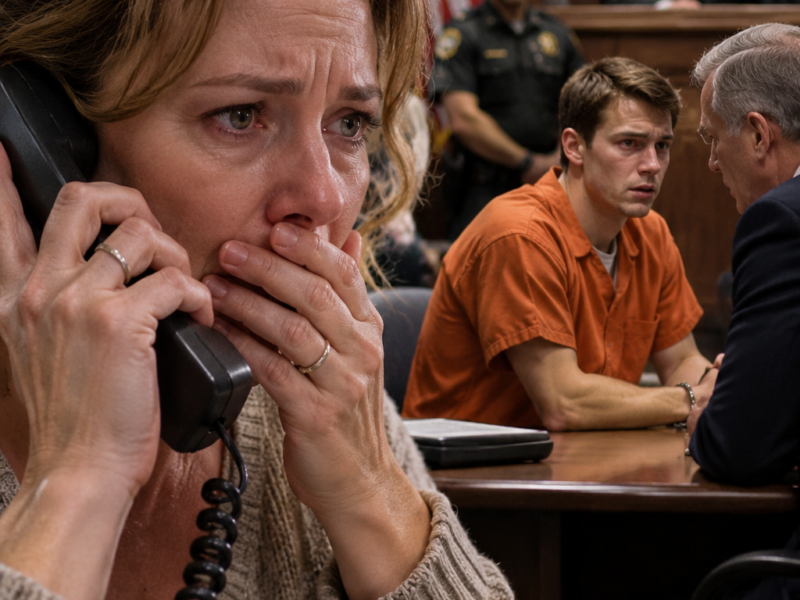
For four years, my son had failed to pay the property taxes on the house I had bought for his family. I never imagined that one day his wife would call me in tears, begging me to send $32,000 before the county took their home. What frightened me even more was what happened when I called the county office to verify her story.
The clerk went silent after I gave her the address.
Then she said something that made my blood run cold.
“Mr. Miller, the property taxes aren’t why your son is going to court. There’s something else you need to know.”
I tightened my grip on the telephone.
“What do you mean? What else?”
Her voice dropped almost to a whisper.
“Sir, I don’t think you know what your son has done.”
At that moment, I had no idea that the next few weeks would expose a chain of lies, forged signatures, stolen savings, a deliberately set fire, and a betrayal so calculated that it would nearly cost my grandson his future.
My name is Arthur Miller. I was seventy years old, retired after forty-two years working as a machinist at Mack Trucks in Pennsylvania. I had spent most of my life believing that a man’s greatest achievement wasn’t the money he earned or the things he owned, but the family he left behind.
My wife, Eleanor, believed the same thing.
She and I had been married for forty-four years. We had built our life slowly, one paycheck at a time. We never owned anything particularly luxurious, but we had a comfortable home, a reliable car, and enough savings to enjoy our retirement without worrying about every dollar.
Our son, David, was the center of our world.
When he was young, he was the kind of boy who followed me around the garage asking questions about every tool I used. He loved baseball, collected toy trucks, and once spent an entire afternoon helping me build a birdhouse that leaned so badly we eventually had to nail it to a tree.
I remembered those things because I had always believed that the little moments of childhood revealed the person someone would become.
David grew up, married Sarah, and eventually started a landscaping business.
When business was good, he seemed happy. But when the economy turned against him, his company collapsed, leaving him with debts he couldn’t manage.
He had a wife, a young son, and nowhere to turn.
Eleanor and I decided to help.
In 2012, I purchased a house on Linden Road in Allentown for David and his family. It was a modest three-bedroom property with a detached garage, a small backyard, and enough room for Leo to grow up comfortably.
I paid for the house with money I had saved over decades.
I didn’t ask David for rent. I didn’t expect him to repay the purchase price. I only asked him to take care of the property and pay the taxes.
For years, I thought he had.
Then, in 2020, after his landscaping business collapsed, I became worried that creditors might come after the house. I made what I believed was a generous decision.
I signed the deed over to David.
I wanted him to have something no financial disaster could take away from him.
I thought I was protecting my son.
I didn’t realize I was also handing him the means to betray me.
The first warning came on a cold Thursday morning.
I was making tea in the kitchen when my daughter-in-law, Sarah, called.
She sounded distraught.
“Dad, please. I don’t know what else to do.”
I immediately put down the newspaper.
“What’s happened?”
“It’s the house. The county is going to take it. David has been trying to handle everything, but we’ve run out of time.”
I frowned.
“What do you mean, take it?”
“The property taxes. We owe almost thirty-two thousand dollars. There’s a hearing coming up, and if we don’t pay immediately, we’ll lose everything.”
Her breathing became uneven.
“Please, Dad. We need $32,000. You’re the only person who can save us.”
I sat down slowly.
Thirty-two thousand dollars was not a small amount for a retired man. It represented a significant portion of my remaining savings.
But I was thinking about Leo.
My grandson was eighteen years old. He had grown up in that house. I couldn’t imagine him suddenly losing his home because his parents had failed to manage their finances.
“Let me look into it,” I told her.
“Dad, there’s no time. You have to trust me.”
“I said I’ll look into it, Sarah.”
She went quiet for a moment before whispering, “Please don’t let us lose our home.”
When the call ended, I looked at Eleanor’s photograph on the refrigerator.
She was smiling in it, wearing the blue sweater I had bought her for our last anniversary.
“Would you send the money?” I asked the photograph.
I knew what she would have said.
She would have told me to help the children.
But she also would have told me to make sure I understood what I was paying for.
So I picked up the telephone and called the county tax office.
A woman named Ms. Patterson answered.
I explained the situation and gave her the property’s address.
At first, she sounded completely ordinary, asking me to repeat the house number.
Then the typing stopped.
“Mr. Miller, are you sure that’s the correct address?”
“Yes. It’s my son’s house.”
There was another pause.
“Sir, the property does have delinquent taxes. Approximately $31,800, including penalties and interest, for the years 2021 through 2024.”
I felt my stomach tighten.
“Then Sarah was telling the truth?”
“About the outstanding taxes, yes. But there’s no tax auction scheduled. There’s no petition to seize the property. Nobody is coming to take that house in two weeks.”
I stared at the kitchen wall.
“Then why did she say that?”
“I can’t answer that. But there’s something else. A title company requested a payoff statement for that property back in August. We sent it the same day.”
“A title company?”
“Yes, sir. They requested the exact amount owed to determine what would be necessary to clear the tax balance.”
I couldn’t understand why a title company would be involved.
Before I could ask another question, Ms. Patterson lowered her voice.
“Mr. Miller, I can’t discuss matters outside my department. But I strongly recommend that you visit the county courthouse. Go to the prothonotary’s office on the fourth floor. Ask them whether anything has been filed under your name.”
“Under my name?”
“Yes, sir.”
She hesitated.
“And please, don’t wait.”
The line went dead.
I stood there holding the telephone while the kettle screamed on the stove.
For several seconds, I couldn’t move.
Then I switched off the burner and sat at Eleanor’s old kitchen table.
Something was terribly wrong.
I barely slept that night.
At five the following morning, I shaved, put on my best gray jacket, and drove to the Lehigh County Courthouse in downtown Allentown.
The building smelled of floor wax, old paper, and the kind of cold air that seemed to settle permanently inside government offices.
On the fourth floor, I found the civil records counter.
A woman with silver curls and a cardigan decorated with tiny red cardinals looked up.
Her brass nameplate read Ruth.
“Good morning. Can I help you?”
“My name is Arthur J. Miller. I was told there might be a civil case filed under my name.”
She typed something into her computer.
At first, her expression was neutral.
Then her fingers stopped.
She typed again, slowly.
Finally, she looked up.
“Mr. Miller, have you received any legal papers recently?”
“No.”
“Are you certain?”
“I’m seventy years old. I know whether I’ve received a lawsuit.”
She studied my face.
“Please wait here.”
A few minutes later, the printer behind her began producing a thick stack of documents.
She handed them to me.
“The first page is the complaint.”
I looked down.
The names were printed clearly.
David A. Miller and Sarah L. Miller, plaintiffs.
Arthur J. Miller, defendant.
For several seconds, I couldn’t understand what I was seeing.
My son and his wife were suing me.
The complaint alleged that I had borrowed $32,000 from them to cover Eleanor’s final medical expenses and had refused to repay the debt.
The amount was exactly what Sarah had begged me to send the previous day.
I read the page again.
Then I looked at Ruth.
“Yesterday, my daughter-in-law told me the county was going to take their house unless I sent her thirty-two thousand dollars.”
Ruth didn’t say anything.
I continued.
“But apparently, they are already suing me for that same amount.”
Her face softened.
“Mr. Miller, I think you should read the remaining pages.”
Attached to the complaint was a certified-mail receipt.
Someone had signed for the lawsuit on October 3.
The signature looked vaguely like mine, but it was shaky and distorted.
I stared at it.
“That isn’t my signature.”
Ruth leaned forward.
“Someone signed for you?”
“I wasn’t even home that day. I was at Lehigh Valley Hospital having my knee drained. I didn’t return until evening.”
She explained that under the applicable Pennsylvania service rules, the delivery had started the deadline for responding to the lawsuit.
Then she showed me the final document.
A promissory note dated April 9, 2022.
It stated that I had borrowed $32,000 from David and Sarah to pay for my wife’s medical expenses.
At the bottom was my signature.
It looked exactly like mine.
The long curved tail on the letter A was unmistakable.
My hands began trembling.
“I paid Eleanor’s medical bills myself.”
Ruth remained silent.
“I have every receipt. Every hospital statement. Every pharmacy bill. I paid everything out of my pension and savings.”
I looked at the paper again.
“They are using my wife’s death to steal from me.”
My voice broke.
I didn’t care who was watching anymore.
I cried right there in the courthouse.
Ruth came around the counter and placed a box of tissues beside me.
“I’m very sorry, Mr. Miller.”
Then she hesitated.
“There’s another case you should know about.”
My heart sank.
She turned back to her computer.
“Do you have a grandson named Leo?”
“Yes. He’s eighteen.”
She searched again.
“David and Sarah Miller versus Leo D. Miller. Filed January 28 of this year.”
I grabbed the counter.
“What?”
“They sued your grandson.”
The room seemed to tilt.
According to the complaint, Leo had deliberately set fire to the detached garage at his parents’ home on December 14 of the previous year.
The insurance company had refused to pay for the damage, and David and Sarah were demanding $38,500 from their son.
A default judgment had already been entered.
They had won without Leo ever appearing in court.
I could barely breathe.
“That can’t be right. Sarah told me there was an electrical fire. She said Leo burned his arm trying to help put it out.”
Ruth looked at me sadly.
“There is also a payment agreement.”
She printed another document.
It stated that Leo had agreed to repay the entire judgment through deductions from his wages.
Twenty-five percent of every paycheck would go directly to his parents.
The agreement carried his signature.
Beside it was Sarah’s signature as a witness.
I remembered Easter.
Leo had arrived wearing a long-sleeved shirt even though the weather had been warm. He had barely spoken, and whenever I tried to ask him about school or work, Sarah found a reason to interrupt.
At one point, he hugged me so tightly that I had almost lost my balance.
I remembered thinking he was becoming a shy teenager.
Now I wondered whether he had been trying to tell me something.
“Where does he work?” I asked.
“Keystone Millwork, on Tilghman Street.”
I thanked Ruth and requested certified copies of everything.
As I walked back toward the elevator, I looked down at the documents.
My son had sued me.
My son had sued his own child.
And neither of us knew what was happening.
When I reached the parking garage, I sat inside my Buick for nearly an hour.
I thought about David as a little boy, sleeping on my shoulder after Fourth of July fireworks.
I remembered him learning to ride a bicycle.
I remembered his small voice shouting, “Don’t let go, Dad!”
I had eventually let go.
But somewhere along the way, he had become someone I barely recognized.
That afternoon, I returned home and climbed onto a chair to retrieve an old shoebox from the closet.
Inside were years of hospital statements, pharmacy receipts, and payment confirmations from Eleanor’s final illness.
I spread them across the kitchen table.
Every bill had been paid.
Not one dollar had come from David.
Then I examined the forged promissory note again.
Something caught my attention.
A faint circular stain beside the signature.
It was a pale brown ring, about the size of a coffee cup.
I knew I had seen that mark before.
But where?
That Saturday morning, I finally opened Eleanor’s cedar keepsake box.
It had remained untouched since her funeral.
The smell of lavender and old paper immediately brought tears to my eyes.
Inside were birthday cards, anniversary letters, photographs, and little souvenirs from our forty-four years together.
I found the bundle labeled Arthur’s Valentines and Anniversaries.
The final card was from February 2022.
It showed two cartoon penguins sharing a scarf.
Eleanor had loved it.
I opened the card and immediately noticed something strange.
The section where I had written my message had been cut out.
Not torn.
Cut with a blade.
The rectangular hole was perfectly clean.
Along its edge was a faint brown curve.
My hands started shaking.
I took the photocopy of the forged promissory note and carefully positioned it behind the card.
The circular mark beside my signature aligned perfectly with the stain on the greeting card.
I suddenly remembered that morning.
Eleanor had been sitting at the kitchen table drinking tea.
When she opened the card, she laughed at the penguins and accidentally placed her cup on the paper.
“Look what I’ve done, Artie!”
She had laughed and shown me the ring.
“Now it’s ours. Nobody else has one.”
I stared at the documents.
Someone had taken that card.
Someone had cut out my signature.
Someone had used it to create a fake loan agreement.
And I knew exactly who had access to Eleanor’s belongings after her funeral.
David had stayed in the house for three days.
He had offered to sort through his mother’s personal effects while I handled the funeral arrangements.
I had thanked him.
I had even told him he was a good son.
Now those words made me feel sick.
I called my oldest friend, Marcus Bell.
We had worked together at Mack Trucks for more than thirty years.
When he answered, I could barely get the words out.
“Marcus, I need help.”
He immediately recognized something was wrong.
I told him everything.
When I finished, he was silent for several seconds.
Then he said, “Art, listen carefully. You’re not going to call David. You’re not going to confront Sarah. And you’re not going to do anything stupid.”
“He forged my name.”
“I heard you.”
“He stole my wife’s signature from a greeting card.”
“I heard that too.”
“He sued his own son!”
Marcus took a deep breath.
“Then we need to make sure he doesn’t destroy the evidence.”
He had spent years as a union representative and understood how quickly people could lose a legal case by acting emotionally.
He instructed me to photograph everything, preserve the original greeting card, and avoid handling the documents unnecessarily.
He also gave me the number of a legal-aid attorney named Naomi Castillo.
“She works with seniors,” he said. “Call her Monday morning.”
Before hanging up, he added one more thing.
“Art, don’t confuse being a good father with allowing your son to destroy you.”
I didn’t sleep much that weekend.
On Sunday afternoon, I drove past David’s house.
The lawn was uncut, and the gutters were sagging.
The detached garage had recently received bright new vinyl siding.
I was sitting in my Buick when a familiar voice called my name.
It was Rosa Alvarez, the elderly neighbor who had lived beside David for thirteen years.
She invited me onto her porch and poured me a glass of iced tea.
After a few minutes, she asked whether I knew that David and Sarah had sold the house.
I nearly dropped my glass.
“Sold it?”
She nodded.
“The sale is supposed to close November fourteenth. Sarah told me they’re moving to Arizona. David has some landscaping opportunity there.”
I stared at her.
The property wasn’t about to be seized by the county.
It was being sold.
The tax debt was simply something that needed to be paid before closing.
Suddenly, Sarah’s desperate telephone call made sense.
They wanted my money to clear the tax balance so they could complete the sale.
They were not trying to save their home.
They were trying to make their escape easier.
Rosa then told me something else.
She had been the first neighbor to notice the garage fire.
She had called 911 after smelling smoke.
When firefighters arrived, Leo was outside in his pajamas, barely able to stand.
The paramedics were supporting him.
Rosa had assumed he was suffering from smoke inhalation.
The following morning, Sarah told her that Leo had accidentally started the fire.
“She said he had been playing with a lighter,” Rosa explained.
“But something about the way that boy looked that night never sat right with me.”
I listened carefully.
“Have you seen him recently?”
“Sometimes I see him walking to work late at night. He looks exhausted. I offered him a slice of peach pie last week, and he thanked me like I’d given him a million dollars.”
My chest tightened.
“Someone ought to take care of that boy,” Rosa said.
“Someone will,” I replied.
And I meant it.
On Monday morning, I called Naomi Castillo.
She gave me an appointment for Tuesday and told me to bring every document I had.
I also returned to the courthouse and filed a formal response denying the alleged loan and requesting additional time to secure legal representation.
Ruth helped me understand the paperwork without giving me legal advice.
When the judge granted the continuance, I finally felt that I had gained a little breathing room.
But the next discovery was even worse.
A man named Frank Delaney had been leaving me voicemails for weeks.
I had ignored them, assuming they were advertisements or debt-collection scams.
When I finally returned his call, he explained that he represented a woman named Marlene Kessler.
David had been involved in a serious automobile accident.
He had agreed to repay Marlene $47,000 in compensation for her injuries.
But payments had stopped in June.
The agreement contained a guarantee bearing my signature.
I had supposedly promised to pay the debt if David failed to do so.
I stared at the document.
Again, the signature was wrong.
The shape of the J in my middle initial was completely different.
I had never signed anything for David.
Delaney explained that David had been driving under the influence when his SUV struck Marlene’s vehicle from behind.
She had been stopped at a red light.
The collision shattered her pelvis and fractured her femur.
She had undergone surgery and now walked with a cane.
David had entered an accelerated rehabilitation program, avoiding a jail sentence.
Meanwhile, Marlene had lost her ability to work and was struggling with medical expenses.
I felt ashamed.
Not because I had caused the accident, but because I had spent months believing my son was simply having financial difficulties.
Then Delaney showed me the police report.
The passenger in David’s vehicle was listed as Leo Miller, age seventeen.
Leo had been injured in the crash.
He had suffered a concussion and burns to his left forearm.
My grandson had been in that vehicle.
His parents had never told me.
I thought about the garage fire.
Sarah had told me Leo burned his arm trying to extinguish it.
But the police report was dated four months earlier.
The burn had nothing to do with the garage.
I left Delaney’s office feeling as though the ground beneath my life had disappeared.
That evening, I drove to Keystone Millwork.
It was nearly eleven at night when I spotted Leo walking toward the entrance.
He was taller than I remembered, thin, and wearing a dusty work jacket.
His lunch bag swung from one hand.
When I called his name, he turned around so quickly that he dropped it.
“Grandpa?”
He looked frightened.
“What are you doing here?”
“I came to see you.”
“Did Mom send you?”
“No.”
His eyes moved nervously toward the building.
“Can we talk?”
He nodded.
We sat inside my Buick with the heater running.
For several moments, neither of us spoke.
Then I told him about the lawsuit.
His face went pale.
“Grandpa, please don’t fight them.”
“Why not?”
“Mom says I committed a felony. She says if I don’t pay the money, I could go to prison.”
I felt anger rising inside me, but I forced myself to remain calm.
“Leo, did you set fire to that garage?”
He shook his head.
“I don’t remember doing anything. I remember going to bed. Then I remember waking up outside with Mrs. Alvarez holding my hand.”
He rubbed his forehead.
“Mom says I must have been sleepwalking.”
I handed him the police report.
He read it slowly.
When he reached the section identifying David as the driver, he stopped.
“Dad was drunk?”
“Yes.”
“He hit someone?”
“A woman named Marlene Kessler. She was seriously injured.”
Leo stared at the page.
“Mom told me the other driver ran a red light.”
I pointed to the injury section.
Then I showed him the date.
His eyes filled with tears.
“The burn on my arm…”
He slowly pulled up his sleeve.
A pale scar ran along his forearm.
“Mom said that happened during the garage fire.”
I shook my head.
“This report says you were burned four months before that.”
He stared at his arm.
For the first time, I saw something change in his expression.
He wasn’t simply frightened anymore.
He was beginning to understand that someone had been lying to him about his own life.
“Grandpa,” he whispered. “If that wasn’t from the fire, then maybe I didn’t do it.”
I put my hand on his shoulder.
“I believe you.”
He began crying.
I held him while he tried to explain how much money his parents were taking from his paycheck.
Twenty-five percent went toward the judgment.
Another ten percent was being deducted for something called a tool fund.
He worked night shifts from eleven in the evening until seven in the morning, yet barely had enough money left for food and transportation.
I promised him I would investigate.
Then he asked a question that nearly broke my heart.
“Grandpa, the money you saved for my college… it’s still there, isn’t it?”
I looked at him.
“Of course it is.”
He nodded, but his eyes remained uncertain.
The following Saturday, I took him to Liberty Trust Bank.
I had opened a savings account for him the week he was born.
I started with $500 from a work bonus and added $3,000 every birthday.
It was meant to pay for his education.
The account was managed by David as custodian until Leo reached the appropriate age under the Pennsylvania Uniform Transfers to Minors Act.
The bank manager, Calvin Brooks, welcomed us into his office.
He reviewed the account records.
Then his expression changed.
“Mr. Miller, I’m afraid the balance is only $41.37.”
Leo didn’t move.
I felt the blood drain from my face.
The account had contained $48,241 just two years earlier.
Calvin printed the transaction history.
There had been eight withdrawals.
Thousands of dollars had been transferred to Sarah.
One payment went to Hamilton Jewelers.
Another was marked anniversary.
The final withdrawal was $4,000 to Valley Senior Wellness Associates.
Leo read the statements with trembling fingers.
“That’s my college money.”
He looked at me.
“Mom told me it was invested. She said it was growing.”
I put my arm around him.
Calvin explained that David had a legal duty to use the custodial funds for Leo’s benefit.
He immediately reported the suspected misuse to the bank’s compliance department and arranged for the account records to be preserved.
Outside, Leo stood beside my car holding the statement.
“They took everything.”
I looked at him.
“They took the money, Leo. They didn’t take your future.”
He didn’t answer.
I brought him home with me that afternoon.
For the first time in months, he slept in a safe place.
The next day, David sent me a message inviting me to dinner.
He said he missed me and wanted us to make peace.
I accepted.
I needed to understand what my son was planning.
I arrived at the house wearing Eleanor’s old knitted cardigan.
Moving boxes were stacked in the hallway.
One was marked Scottsdale Kitchen.
Sarah greeted me with an enormous smile.
David hugged me.
I could smell whiskey on his breath.
During dinner, I asked where Leo was.
“Working,” Sarah replied.
“He’s learning responsibility after what he did.”
I nodded slowly.
I pretended to forget things.
I even called Sarah by Eleanor’s name.
David watched me closely.
Then Sarah brought me a cup of chamomile tea.
I took one sip.
Something bitter lingered beneath the sweetness.
I had spent enough years around machinery to know when something didn’t feel right.
I set the cup down and pretended it was too hot.
While Sarah went to the kitchen, I quietly poured the remaining tea into a small glass jar.
Then David began talking about the alleged $32,000 loan.
He reminded me that I had supposedly borrowed the money after Eleanor’s death.
I looked confused.
“What loan?”
He exchanged a glance with Sarah.
“The money we gave you for Mom’s medical bills.”
I shook my head.
“I paid those bills myself, didn’t I?”
David smiled.
“Dad, you’ve been forgetting things lately.”
Sarah placed a business card beside my plate.
She had arranged an appointment with a memory specialist named Dr. Raymond Pruitt.
The appointment was scheduled for November 4.
I looked at the card.
Valley Senior Wellness Associates.
The same institution that had received $4,000 from Leo’s college fund.
My stomach tightened.
I thanked them and left.
Two blocks away, I parked beside a quiet church.
My head felt strangely heavy.
My tongue was thick, and my fingers were beginning to go numb.
I had swallowed only one mouthful of tea.
I sat in the darkness, breathing slowly.
Then I understood.
They weren’t merely trying to convince a court that I was forgetful.
They might have been trying to make me that way.
On Tuesday, I met Naomi Castillo.
She examined every document carefully.
When she saw the greeting card and the forged note, she immediately understood the significance of the matching stains.
She explained that the evidence could establish that my signature had been cut from an original document and transferred onto a fraudulent agreement.
She also reviewed Leo’s case.
The default judgment could potentially be opened because he had never personally known about the lawsuit, and his mother had accepted the papers without telling him.
Then she found something even more troubling.
The insurance company had attached a letter to the garage-fire lawsuit.
Six weeks before the fire, Sarah had requested an increase in insurance coverage for the detached garage.
The policy had been raised from $60,000 to $140,000.
The request had been made by telephone.
The caller identified herself as Sarah Miller.
Naomi looked at us.
“Someone increased the insurance coverage shortly before the building burned.”
She then showed us Sarah’s sworn affidavit.
It claimed that she had seen Leo standing inside the garage holding a lighter beside a gasoline can on the night of the fire.
Leo began shaking.
“I was upstairs,” he whispered. “I don’t remember going into the garage.”
Naomi closed the folder.
“We need to be careful. We need evidence, not assumptions.”
She asked us to obtain Leo’s medical records from the night of the fire.
She also warned us never to secretly record conversations.
Pennsylvania required consent from all parties for the kind of recordings we were considering.
I understood.
But I had an idea.
If I openly told people that I was recording conversations because of my memory problems, anyone who agreed could be recorded legally.
Naomi didn’t tell me to do it.
She simply said that if I chose to proceed, I needed to make sure everyone clearly understood and agreed.
Later that afternoon, Sarah sent me a message.
Dad, I need to see you. Alone. Please don’t tell David.
I agreed to meet her at Cedar Crest Diner.
She arrived wearing an expensive scarf and a worried expression.
For several minutes, she cried and apologized.
Then she told me something astonishing.
According to Sarah, David had deliberately started the garage fire for insurance money.
She claimed he had forced her to lie about Leo.
She even showed me a bruise on her wrist, saying David had hurt her.
I listened without interrupting.
Then she leaned forward.
“I have proof, Dad. Emails, messages, financial records. Everything.”
She placed a small black USB drive on the table.
“But I need $10,000 to get away from him.”
I looked at her.
“Why would you come to me?”
“Because Leo is the only good thing I’ve ever done.”
Her eyes filled with tears.
For a moment, I almost believed her.
Then she glanced at her phone.
David was calling.
She hurried outside to answer.
While she was gone, I copied the contents of the USB drive onto my laptop.
When she returned, I acted as though nothing had happened.
I promised to consider her request.
That night, I opened the files.
The first spreadsheet was titled Closing Math.
The house was scheduled to sell for $286,000.
There was a $214,000 home-equity loan payoff, $32,000 in back taxes, and additional closing costs.
The spreadsheet also listed the $32,000 Sarah wanted from me.
At the bottom was a note.
Leave November 21st.
Another figure showed that David owed Marlene Kessler $34,400.
They were planning to take the money, sell the house, and disappear to Arizona.
But Sarah’s files contained something else.
Documents related to Dr. Pruitt.
Copies of the forged promissory note.
Drafts of the medical evaluation.
And financial records showing payments.
I didn’t open everything that night.
I needed Naomi to examine the evidence.
A few days later, I finally met Marlene Kessler.
She lived in a modest house in Emmaus.
A wooden ramp had been built over the front steps.
Inside, her walls were covered with running medals.
She had been a half-marathon runner before David’s accident.
Now she walked with a cane.
I brought her yellow chrysanthemums.
“I came to apologize,” I told her.
She looked at me carefully.
“You didn’t hit me, Mr. Miller.”
“Your son did.”
She invited me inside.
We talked for nearly two hours.
Marlene told me that Sarah had once worked at a medical billing company where she herself had been employed.
Years earlier, Marlene had discovered approximately $60,000 in suspicious duplicate claims.
When she reported them, Sarah accused her of stealing.
Marlene was dismissed and spent two years trying to clear her name.
An independent audit eventually proved her innocence.
Sarah resigned shortly afterward.
Marlene believed that the accident had not been entirely accidental.
She told me she had noticed a black SUV following her shortly before the collision.
Then she described the moments after the impact.
She remembered a young boy climbing out of the damaged vehicle.
His face was bleeding.
His arm was burned.
But he stayed beside her, holding her hand and repeatedly asking her name.
He told her to keep talking until help arrived.
“That boy saved me from passing out,” she said.
I already knew who it was.
“Leo?”
She nodded.
“I didn’t know his name until I saw the police report. I’ve wanted to thank him for fourteen months.”
Tears filled my eyes.
His parents had made him believe he was a criminal.
But in reality, he had been the person who helped save another human being.
Marlene then showed me an old voicemail.
The message had been left by Sarah the morning after the accident.
Her voice was cheerful.
“Marlene, it’s Sarah Miller. I heard about your accident. Funny how things happen to people who ruin other people’s lives. Get well soon.”
I sat there unable to speak.
Marlene handed the phone to me.
“Your lawyer can have it.”
I thanked her.
Before leaving, I promised her that Leo would eventually learn what he had done that night.
I also promised that I would do everything possible to make sure she received the compensation she deserved.
The following Sunday, David came to my house.
I had placed a small digital recorder on Eleanor’s kitchen table.
Before he sat down, I explained that I had started recording conversations because my memory wasn’t what it used to be.
I asked whether he agreed.
He smiled.
“Of course, Dad. Whatever helps.”
He clearly believed that my supposed memory problems would work in his favor.
We began talking.
David eventually returned to the $32,000 loan.
He told me that if I refused to pay, he and Sarah would ask the court to appoint them as my guardians.
He explained that guardians could control my finances, savings, pension, and property.
Then he mentioned a nursing facility in Bethlehem.
“You could spend Christmas at Maple Hill Manor, Dad. In a room overlooking the parking lot.”
I looked at him.
“You would put your own father in a nursing home?”
His expression remained calm.
“I don’t want to. But you’re leaving me no choice.”
I felt something inside me break.
Not because I was afraid of a nursing home.
I was afraid that my own son had become comfortable threatening me with one.
I continued pretending to be confused.
I told him I needed until November 12 to arrange the money.
He agreed.
After he left, I played back the recording.
His threats were clear.
Naomi listened to it that evening.
She said the recording was useful because David had explicitly agreed to it.
But she warned me that we needed to move carefully.
Meanwhile, Leo discovered something suspicious at work.
He had been losing ten percent of his paycheck to a deduction called the tool fund.
His manager, Dennis Holloway, had told him it was mandatory.
Naomi arranged for us to request his payroll records.
We met the owner of Keystone Millwork, Mr. Ostrowski.
He examined the records and quickly realized that the company had no tool fund.
The money was being transferred into a private business registered under Dennis’s name.
Approximately $1,800 had been taken from Leo’s wages.
Mr. Ostrowski was furious.
He suspended Dennis immediately and promised to reimburse Leo.
As Dennis stormed out, he turned toward me.
“You think you’re smart, old man? David is going to bury you.”
I looked directly at him.
“I think you just admitted that my son ordered you to steal from my grandson.”
Dennis had no answer.
But when Leo opened his locker to retrieve his jacket, a folded note fell to the floor.
It contained one sentence.
Don’t help your grandfather remember.
The note was signed with a single letter.
S.
Sarah knew we were investigating.
That evening, Leo remembered something important.
Before the garage fire, he had purchased a small security camera.
He had installed it above his workbench because tools had been disappearing.
The camera was connected to an account on his old phone.
He had completely forgotten about it after the accident.
We opened his old email account on Marcus’s laptop.
There were hundreds of unread messages.
Among them was a notification.
Garage cam motion detected.
December 14, 10:41 p.m.
The storage company warned that recordings older than twelve months would be permanently deleted on December 14.
We had less than six weeks.
But there was a problem.
The account was connected to Leo’s old phone number, which Sarah still controlled.
We submitted an identity-verification request.
The company estimated that the process could take ten to fifteen business days.
We could only wait.
The following morning, I received a letter from Valley Senior Wellness Associates.
It confirmed my appointment with Dr. Raymond Pruitt.
At the bottom was a line stating that the evaluation results would be forwarded directly to Gregory Stanhope, the lawyer representing my son and daughter-in-law.
I had never authorized that.
Something was very wrong.
On November 4, Marcus drove me to the appointment.
Before I entered the building, he pressed a small silver recorder into my hand.
“Remember, Art. Tell them you’re recording. Make sure they agree.”
I nodded.
At reception, a young woman named Jenna checked my appointment.
She told me Sarah had completed the intake forms on my behalf.
I placed my recorder on the counter and explained that I wanted to record the appointment because of my memory problems.
Jenna agreed.
Dr. Pruitt welcomed me into his office.
He appeared professional, polite, and confident.
I explained the same thing to him.
He agreed to be recorded.
The examination began.
He asked me to draw a clock, remember five words, identify pictures, and perform simple calculations.
I deliberately made a few mistakes.
But I answered most questions correctly.
While I was struggling with a subtraction exercise, he received a telephone call.
He stepped into the hallway.
A folder lay open on his desk.
I leaned forward.
The document was a cognitive evaluation bearing my name.
The conclusion stated that I had moderate dementia and lacked the capacity to manage my financial affairs.
The date was October 29.
Six days before the examination.
He had already signed the report before I entered his office.
When he returned, he reviewed my answers.
I watched him count the points.
My actual score was twenty-five.
He crossed it out and wrote eleven.
Then he folded his hands.
“I’m afraid the results are concerning, Arthur. You scored eleven out of thirty.”
I stared at him.
“Is that bad?”
“It suggests significant cognitive decline.”
He added that his report would be sent to my family’s attorney.
I asked for a copy of the examination.
He said it would be mailed.
As I walked past reception, Jenna slipped a folded piece of paper into my hand.
Call me tonight.
Outside, Marcus took one look at my expression.
“What happened?”
I showed him the note.
Then I played the recording.
Dr. Pruitt’s voice came through the speaker.
“Family’s already taken care of the fee. Four thousand in advance. Let’s not complicate this.”
Marcus stared at me.
“Art, they paid him to declare you incompetent.”
That evening, I called Jenna.
I asked whether she consented to having our conversation recorded.
She agreed.
Then she told me everything.
The certificate had been prepared on October 29.
Dr. Pruitt had instructed her to send it to Gregory Stanhope and not enter the transaction into the normal appointment records.
She also confirmed that a man had paid $4,000 by check.
Jenna explained that her grandmother had Alzheimer’s disease.
She knew what genuine cognitive decline looked like.
And she knew I did not have it.
She agreed to speak with Naomi.
By then, I had enough evidence to understand the plan.
David and Sarah wanted to sell the house, collect money from me, keep Leo’s stolen savings, and have me declared incapable of managing my own affairs.
If the court accepted Dr. Pruitt’s report, they could gain control over my finances.
They would be able to challenge anything I had signed.
They were trying to make sure I couldn’t defend myself.
On November 12, I carried out the most difficult part of our plan.
I met David and Sarah at Lehigh Valley Title and Escrow.
I brought a cashier’s check for $32,000.
David looked almost euphoric when he saw it.
But before handing it over, I explained that my accountant required a short written statement confirming that the money was a gift rather than repayment of a loan.
I placed the document on the table.
It stated that David and Sarah acknowledged receiving $32,000 as a voluntary gift.
It also stated that I had never borrowed money from them and that no loan agreement or debt existed between us.
David barely read it.
He signed immediately.
Sarah studied the document more carefully.
“Why does it say you never borrowed from us?”
I looked at her.
“Because it’s true, isn’t it?”
David became impatient.
“Sarah, just sign it. It’s a tax formality.”
After a moment, she signed.
The closing agent notarized both signatures.
I watched as David grabbed the cashier’s check.
He hugged me.
“You won’t regret this, Dad.”
I smiled.
“I already do.”
I left the conference room before either of them could notice my expression.
As I walked through the parking structure, I saw Sarah standing near the black Tahoe.
She was speaking on her telephone.
I stopped behind a concrete pillar.
“Gregory, it’s done. We have the check. It clears Friday.”
She laughed.
“No, we don’t drop the case yet. Not until Pruitt’s letter is in front of the judge. Once he’s declared incompetent, he can’t contest anything.”
Then she said something that made my blood freeze.
“And after that, we deal with the boy.”
I immediately called Naomi.
“They signed everything.”
She was silent for a moment.
Then she said, “Good. Now go home. Don’t let Leo out of your sight.”
I drove home with my hands trembling.
That evening, Leo asked whether the plan had worked.
“They signed,” I told him.
He reached across the table and squeezed my hand.
For the first time in months, I saw hope in his eyes.
The next few weeks were unbearable.
The camera company delayed the identity verification.
The court date was approaching.
We had evidence of forgery, financial theft, fraudulent medical records, and attempted coercion.
But the most important evidence was still locked inside a camera account.
Then, on December 1, Naomi and I met Gregory Stanhope in his office.
He was an experienced attorney with an expensive watch and a view of the courthouse.
Naomi placed four items on his desk.
The notarized statement signed by David and Sarah.
Jenna’s sworn testimony.
The toxicology report from my tea.
And the recording of Dr. Pruitt.
Stanhope listened carefully.
His expression changed with every piece of evidence.
Then Naomi explained that the promissory note was based on a signature cut from an original greeting card.
She showed him the matching coffee-ring stains.
She explained that the medical report had been signed before the examination took place.
Finally, she mentioned that Jenna was willing to testify about the payment.
Stanhope picked up his telephone.
He called Dr. Pruitt.
“Raymond, did you personally score Arthur Miller’s examination?”
There was a pause.
Then Stanhope’s face went pale.
“I need to speak with my attorney.”
He ended the call.
For several seconds, nobody spoke.
Then he looked at Naomi.
“I’m withdrawing from both cases.”
Naomi remained expressionless.
“Under oath, I trust?”
Stanhope nodded.
“I swear I had no idea the evidence was fraudulent.”
Naomi replied calmly.
“Then you’ll have no difficulty explaining that to the court.”
When I returned home, Leo was waiting at the kitchen table.
His phone had just received an email.
The camera company had finally verified his identity.
His account had been restored.
“Grandpa!”
His voice cracked.
“It’s open.”
I called Naomi immediately.
She told us not to open anything until she could join us.
An hour later, she arrived carrying a folder.
She had also obtained Leo’s emergency medical records from the night of the garage fire.
The report showed that Leo had tested positive for lorazepam.
The same sedative that had been found in my tea.
Naomi looked at the document.
Then she looked at me.
“We need to see what that camera recorded.”
Marcus arrived shortly afterward.
The four of us gathered around the laptop on Eleanor’s kitchen table.
Leo entered the camera account.
There was a notification dated December 14.
10:41 p.m.
He clicked the file.
The video was black and white.
The camera was positioned above his workbench, looking down toward the garage floor.
At first, nothing happened.
Then the side door opened.
A woman entered.
She was wearing gloves and carrying a red gasoline container.
I recognized her immediately.
Sarah.
She walked toward the center of the garage.
She poured gasoline across the concrete floor.
Then she removed a canvas work jacket from the wall and searched its pockets.
She took out a lighter.
Leo’s lighter.
She placed it beside the jacket, arranging everything carefully.
Then she struck a match.
A moment later, flames spread across the floor.
Sarah stepped backward and calmly left the garage.
Nobody moved.
The video continued playing for several seconds.
Leo sat frozen.
“I was upstairs,” he whispered.
He watched the screen again.
“She put my jacket there. She used my lighter.”
His breathing became uneven.
“She drugged me.”
Naomi placed a hand on his shoulder.
The medical records supported that possibility.
His parents had not only accused him of starting the fire.
They had apparently drugged him, planted evidence, and used the resulting judgment to take his wages.
Leo covered his face.
“Grandpa, she wanted everyone to think I did it.”
I pulled him into my arms.
He cried against my shoulder.
I had never heard a sound so painful.
Marcus stood beside us with tears running down his face.
For months, Leo had believed he was responsible for something terrible.
Now he knew the truth.
And the truth was worse than anything he had imagined.
When he finally lifted his head, his expression had changed.
“Grandpa, I want to show her the video myself.”
I looked at Naomi.
She nodded.
“We’ll do it in court.”
The morning of December 2 arrived cold and bright.
The courthouse clock was four minutes fast.
David and Sarah sat at the plaintiffs’ table without an attorney.
David wore a new blazer.
Sarah wore the camel-colored coat she had worn at the title company.
They looked confident.
They still believed that the medical report would protect them.
Judge Patricia Delgado entered.
She asked whether the plaintiffs wished to proceed.
Sarah stood.
“Yes, Your Honor.”
David handed the clerk the promissory note and Dr. Pruitt’s report.
He explained that he and Sarah had only wanted to protect his elderly father.
He described my supposed memory problems and claimed that I had borrowed money for Eleanor’s medical care.
Then the judge looked at me.
“Mr. Miller, would you like to respond?”
I stood slowly.
“Yes, Your Honor. I’m here because my son and his wife have filed a lawsuit based on a document I never signed.”
Naomi rose beside me.
She began with the greeting card.
She placed the original card beside the alleged promissory note.
The cut-out section and the coffee-ring stain aligned perfectly.
She explained how the signature had been copied.
Then she presented the notarized statement signed by David and Sarah on November 12.
Both defendants had acknowledged that I had never borrowed money from them.
David shifted in his chair.
Sarah stared at the document.
Next came the bank records.
Calvin Brooks testified about Leo’s college account.
He explained that it had contained more than $48,000 before David began withdrawing the money.
The records showed transfers to Sarah, payments to a jewelry store, and the $4,000 payment to Dr. Pruitt’s clinic.
Leo sat quietly while his stolen savings were read aloud.
Then Marlene Kessler entered the courtroom.
She walked slowly with her cane.
She testified about the accident and the injuries she had suffered.
She explained that David had struck her vehicle while driving under the influence.
Then she played Sarah’s voicemail.
The courtroom filled with Sarah’s cheerful voice.
“Funny how things happen to people who ruin other people’s lives. Get well soon.”
Sarah looked down.
Marlene then explained that a young boy had helped her after the collision.
He had stayed beside her, holding her hand and repeatedly asking her name until the ambulance arrived.
She identified Leo as that boy.
The judge looked toward my grandson.
For the first time, Leo understood that the night he could barely remember was not the night he had destroyed something.
It was the night he had helped save someone’s life.
Then came the final exhibit.
The garage-camera footage.
Naomi asked Leo to identify the camera.
He stood.
“That was my camera. I bought it because my tools were disappearing. I installed it above my workbench.”
The screen lit up.
The courtroom watched Sarah enter the garage carrying the red gasoline container.
They watched her pour the liquid across the floor.
They watched her take Leo’s jacket and lighter.
They watched her start the fire.
Nobody spoke.
When the video ended, Sarah suddenly turned toward David.
“You told me to do it!”
David’s face twisted.
“You’re the one who increased the insurance coverage!”
“You were the one who wanted the money!”
“You said the boy would take the blame!”
The judge struck her gavel.
“Order!”
But the damage had been done.
The two people who had spent months presenting themselves as victims were now accusing each other in front of everyone.
Naomi stood.
“Your Honor, we respectfully request dismissal of the complaint against Mr. Miller, immediate relief from the default judgment against Leo Miller, and restitution of the funds obtained through these fraudulent proceedings.”
Judge Delgado reviewed the documents.
She dismissed the lawsuit against me with prejudice.
She also granted Leo’s petition to open the default judgment.
The wage deductions were ordered to stop immediately.
The court further ordered the escrow proceeds from the house sale to be frozen and directed restitution of my $32,000.
The judge then looked toward the back of the courtroom.
A detective in a gray suit stood.
She was accompanied by two deputies.
“David Miller. Sarah Miller.”
Both turned.
“You are under arrest in connection with the suspected forgery, perjury, insurance fraud, and theft under investigation.”
David stood abruptly.
“What? This is ridiculous!”
Sarah began crying.
“You can’t do this! He made me do it!”
The deputies approached.
David looked toward me.
For the first time in his life, my son had no convincing explanation.
His eyes searched my face.
“Dad?”
I didn’t answer.
He looked at Leo.
“Son, tell them. You know I never wanted this.”
Leo stood beside me.
“You made me believe I was a criminal.”
David opened his mouth.
Nothing came out.
The deputies led them away.
I watched until they disappeared through the courtroom doors.
Then I turned toward Leo.
He was holding my hand.
His fingers were trembling.
“Is it really over, Grandpa?”
I squeezed his hand.
“The worst part is over.”
We walked outside together.
In the plaza, a tow truck was lifting David’s black Tahoe onto its flatbed.
A man wearing a jacket from Rapid Title Loans was signing paperwork.
I had noticed the loan advertisements in the parking structure weeks earlier.
Now I understood how deeply David had buried himself in debt.
The house was sold, the car was being repossessed, and the people he had tried to deceive were no longer willing to protect him.
But I felt no happiness watching it happen.
I had wanted my son to grow into a good man.
I had wanted Leo to have a future.
And I had spent years believing that giving people everything they asked for was the same as loving them.
It wasn’t.
That evening, Leo and I returned to Eleanor’s house.
He went into the sewing room and stood beside the old desk.
“Grandpa, can I ask you something?”
“Of course.”
“Do you think Grandma would be disappointed in Dad?”
I thought about Eleanor for a long time.
She had loved David more than anyone.
She would have been heartbroken.
But she would also have wanted him to face the consequences of what he had done.
“I think your grandmother would be disappointed in his choices,” I finally said. “But she would never want you to spend your life carrying the weight of them.”
Leo nodded.
Then he looked at the old photograph on the dresser.
“Do you think I can still go to college?”
I smiled.
“We’ll find a way.”
He shook his head.
“I don’t want you spending all your retirement money on me.”
I put my hand on his shoulder.
“Your grandmother and I started that savings account because we wanted you to have choices. Your parents took the money, but they don’t get to decide what kind of life you live.”
He hugged me.
And for the first time in a very long time, I felt that my family might still have a future.
Over the following months, the legal proceedings continued.
The bank preserved the original transaction records.
The stolen college funds became part of the financial investigation.
The fraudulent wage deductions were addressed, and Keystone Millwork reimbursed Leo for the money taken through the fake tool fund.
Marlene continued her rehabilitation.
She still used her cane, but she began attending physical therapy more regularly.
Leo visited her whenever his work schedule allowed.
One afternoon, she gave him a small medal from one of her old races.
It was engraved with the words Never Give Up.
He kept it on his desk.
As for me, I began making changes to my own life.
I reviewed my retirement accounts, changed my financial arrangements, and made sure that no one could access my property or savings without my knowledge.
I also stopped signing documents simply because someone I loved told me they were necessary.
Some people might call what happened a story of revenge.
They might say a grandfather finally defeated his greedy son and daughter-in-law.
But revenge was never what I wanted.
I wanted Leo to stop believing he was guilty.
I wanted Marlene to receive justice.
I wanted my wife’s memory to remain untouched by the people who had tried to use her death as an excuse to steal from me.
And perhaps, more than anything, I wanted to understand how a boy who once fell asleep on my shoulder could become a man willing to destroy his own family for money.
I still think about that question.
I think about David as a little boy with a baseball glove too big for his hands.
I remember him running toward me after his first successful catch.
I remember the pride in his eyes.
I remember the night he asked me not to let go of his bicycle.
I had never imagined that one day I would have to stand in a courtroom and refuse to rescue him from the consequences of his own decisions.
But I learned something important.
Love does not mean allowing someone to hurt you repeatedly.
Helping your children does not mean surrendering your judgment.
And protecting your family sometimes means protecting the people within it from the very people who claim to love them.
I also learned that silence can be dangerous.
For four years, I had trusted David to handle the property taxes.
I never opened the envelopes.
I never checked the accounts.
I never asked where the money was going.
I had mistaken my trust for wisdom.
It wasn’t.
Trust should never require you to close your eyes.
If I could speak to the man I was before that Thursday morning, I would tell him three things.
Read every document before signing it.
Never allow financial assistance to become a substitute for accountability.
And when someone asks you for money in an emergency, verify the emergency before you give them a single dollar.
But there is one more thing I would tell him.
Never underestimate the strength of someone who has spent his entire life quietly doing the right thing.
I was seventy years old.
My hands were no longer steady, my knees hurt when it rained, and I had never been particularly good with computers or legal documents.
But I had spent forty-two years working with machines.
I knew how to inspect a faulty part.
I knew how to recognize when something didn’t fit.
And when the pieces of my family’s story stopped fitting together, I refused to look away.
A few weeks after the hearing, Leo and I visited Eleanor’s grave.
We brought red tulips, just as I had done the day we buried her.
Leo placed his grandmother’s favorite flowers beside the headstone.
Then he stood quietly.
“Grandma would have been proud of you,” he said.
I looked at the photograph engraved on the stone.
Eleanor was smiling.
“I hope so, son.”
We stayed there until the afternoon light began fading.
On the drive home, Leo told me he had decided to apply to Penn State again.
He wanted to study engineering and eventually work in manufacturing.
I smiled.
“Your grandfather might know a thing or two about that.”
He laughed.
For a moment, I heard the little boy who used to build birdhouses in my garage.
And I realized that despite everything, he was still there.
That night, I placed Eleanor’s cedar box back on the shelf.
I kept the penguin greeting card.
I would never throw it away.
It reminded me of the woman who had loved me for forty-four years and who had once laughed because a teacup left a little brown circle on a Valentine’s card.
Someone had tried to turn that little mark into a weapon.
But in the end, it became the evidence that exposed the truth.
I placed the card inside a protective sleeve and closed the box.
Then I turned off the bedroom light.
For the first time since Sarah’s telephone call, I slept peacefully.
My son had taken a house, stolen a college fund, forged my signature, and tried to have me declared incapable of managing my own life.
He had even attempted to convince his own child that he was a criminal.
But he had forgotten one thing.
A family is not held together by money, property, or legal documents.
It is held together by honesty.
And when honesty disappears, even the strongest family can collapse.
I had spent most of my life believing that a good father should always be ready to save his children.
Now I understood that sometimes the greatest gift a father can give is the courage to stop saving someone from the consequences of their own actions.
Forgiveness may come one day.
But forgiveness is a choice, not an obligation.
Trust can be rebuilt, but it must be earned.
And love, real love, should never require another person to surrender their dignity, their future, or their right to know the truth.
My name is Arthur Miller.
I lost the son I thought I knew.
But I saved my grandson.
And if I had to make that choice again, I would make it without hesitation.
THE END









