Family Dragged Me To Court For ’28M Fraud’ – Their Own Evidence Revealed Their Prison Scheme
Family Dragged Me To Court For ’28M Fraud’ – Their Own Evidence Revealed Their Prison Scheme
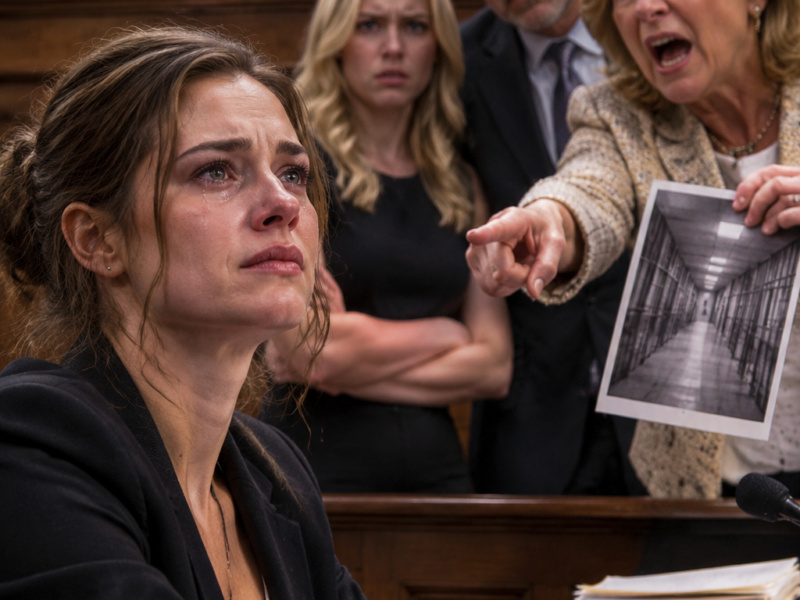
My name is Victoria Chin, and the day my family dragged me into court to accuse me of stealing $2.8 million from their business was the day they made the biggest mistake of their lives. They believed they had finally found a way to destroy me. They had gathered fabricated bank statements, forged emails, falsified tax documents, and carefully rehearsed testimonies, all designed to convince a judge that I was a dishonest daughter who had betrayed her own family. They even invited relatives, friends, and business associates to witness what they expected would be my public humiliation.
What they didn’t know was that every piece of evidence they brought into that courtroom would eventually become evidence against them. What they didn’t realize was that the quiet daughter they had spent years looking down on had been working with federal investigators for eighteen months. And what they could never have imagined was that before the day was over, five members of the Chin family would be led out of that courtroom in handcuffs, facing decades behind bars.
But to understand how everything unfolded, you need to understand the family I grew up in and the secret that changed my life forever.
I was the youngest of four children in the Chin family. My older brother, David, and my two older sisters, Michelle and Karen, were everything my parents had ever wanted in children. They were successful, ambitious, wealthy, and exceptionally good at making sure everyone knew it.
David graduated from Stanford with an MBA and eventually became a prominent investment banker. Michelle worked in private equity, while Karen built a career managing financial portfolios for wealthy clients. All three eventually married successful professionals and settled in an exclusive suburb outside Seattle, where the houses were enormous, the lawns were perfectly maintained, and the neighborhood social calendar revolved around expensive dinners, golf tournaments, and charity galas.
My parents, Robert and Linda Chin, couldn’t have been prouder.
Every family gathering seemed to become an opportunity for them to discuss their children’s accomplishments. David had closed another multimillion-dollar deal. Michelle had invested in a promising technology company. Karen had helped a wealthy client restructure an impressive portfolio.
And then there was me.
I had earned an MBA from Wharton, just like my siblings had attended prestigious universities, and after graduation, I received job offers from three major investment banks. My family assumed I would follow the same path as everyone else. They imagined me wearing designer suits, attending corporate events, and eventually becoming another wealthy member of the Chin family.
Instead, I accepted a position as a financial analyst for a nonprofit organization that provided microloans to underserved communities.
My salary was $73,000 a year. I lived in a modest condominium in Seattle, drove a seven-year-old Subaru, and spent many weekends volunteering at financial literacy workshops.
To me, it was a meaningful life.
To my family, it was an embarrassment.
Whenever relatives asked about my career, my mother would give a small, disappointed smile.
“Victoria works with poor people,” she would explain, as though she were describing some unfortunate personal failure. “She could have worked at Goldman Sachs, but she chose charity.”
My father rarely defended me. Sometimes he would simply shake his head and change the subject.
David was even less subtle.
He occasionally joked that I had wasted an expensive education. Michelle once told me that I was too intelligent to spend my life helping people who would never become financially successful. Karen suggested that I should stop pretending that money didn’t matter.
I never argued with them.
They believed wealth was the ultimate measure of intelligence, success, and personal worth. I had learned something different during the financial crisis of 2008. I had watched ordinary families lose their homes, retirement savings, and financial security because people with enormous power had made irresponsible decisions.
I didn’t want to spend my life helping wealthy people become wealthier.
I wanted to use what I knew to help people who had never been given a fair opportunity.
My family considered that weakness. I considered it purpose.
What they didn’t know was that my supposedly modest life was about to become connected to an inheritance worth millions of dollars, a massive financial investigation, and a criminal enterprise that would eventually destroy everything they had built.
The story began five years earlier, when my uncle Richard called me.
Richard was my father’s older brother. Unlike my father and my siblings, he had never been interested in displaying his wealth. He lived in a comfortable but relatively modest home, drove ordinary cars, and rarely attended the expensive social events my family considered essential.
He was also extraordinarily wealthy.
Through decades of careful investing, he had accumulated a portfolio of dividend-paying stocks, bonds, and other assets worth approximately $8.7 million.
Most people in the family knew he had money, but very few understood how much. He had always preferred privacy, and he rarely discussed his investments.
When he called me, he sounded exhausted.
He had been diagnosed with pancreatic cancer, and the doctors had informed him that his condition was serious. He wanted to discuss his estate, but he specifically requested that I meet him without telling my father or siblings.
“Victoria, I need your help,” he said. “But before I explain anything, I need you to promise me something.”
“What is it, Uncle Richard?”
“Whatever happens, don’t tell your father or your brother and sisters about this conversation. Not yet.”
I was confused, but I agreed.
A few days later, I met him at the office of his attorney, Harold Stevenson.
Richard looked considerably thinner than I remembered. His illness had taken a visible toll on him, but his eyes remained sharp. He greeted me warmly, then waited until Harold had closed the office door before beginning.
“Your father has been pressuring me to invest in his children’s business,” he explained.
I knew immediately that he was referring to Chin Family Capital Partners, the investment company David had supposedly established with Michelle and Karen.
I had heard my siblings mention the company at family gatherings, but I had never paid much attention. They described it as a successful private investment fund specializing in real estate. According to them, they identified undervalued properties, renovated them, and generated substantial rental income.
Their most impressive selling point was a guaranteed annual return of 23 percent.
Richard leaned forward.
“Something doesn’t make sense, Victoria. They claim their investments are generating returns that are almost impossible to sustain. They want me to put my entire portfolio into their fund. Your father says I would be foolish not to take the opportunity.”
He pushed a thick folder across the desk.
Inside were investment prospectuses, financial statements, tax documents, and promotional materials from Chin Family Capital Partners.
“Look at these,” he said. “I want you to tell me whether I’m being paranoid.”
I spent the next three weeks examining every document.
At first, I assumed I would find ordinary accounting mistakes or perhaps an overly aggressive investment strategy. What I discovered was considerably more disturbing.
The properties listed in their investment materials did not exist at several of the addresses provided. Some supposedly valuable commercial buildings were actually vacant lots. Others belonged to unrelated individuals or companies.
The rental income reported in the financial statements was approximately three times higher than the market rate for comparable properties.
Then I examined their management fees.
They were charging investors 42 percent of invested capital annually.
That alone was extraordinary, but the most troubling discovery came when I compared the money entering the fund with the payments being distributed to existing investors.
The numbers matched almost perfectly.
New investors deposited money into the fund. A substantial portion of those deposits was then used to pay supposed returns to earlier investors. The remaining money was extracted through enormous management fees and transactions involving companies that appeared to have no legitimate business operations.
It was a textbook Ponzi scheme.
Worse, the structure appeared to include money laundering through fabricated property transactions and shell companies.
When I finished my analysis, I returned to Harold’s office with a report.
Richard listened silently as I explained everything.
For several minutes, he stared at the papers in front of him.
Then he looked up.
“I knew it,” he whispered.
I told him that the documents suggested serious financial crimes and that he should not invest anything.
He nodded.
Then he said something I will never forget.
“I want you to have everything.”
I thought I had misunderstood him.
“Everything?”
“My stocks, my bonds, my investments, every asset in my estate. I want you to inherit it.”
“Uncle Richard, that’s almost nine million dollars.”
“I know exactly how much it is.”
“But why me?”
He looked directly into my eyes.
“Because you’re the only person in this family I trust to do the right thing with it.”
I tried to explain that he didn’t need to make such a decision. He could divide his estate among the family or establish a charitable foundation. He could leave money to universities, hospitals, or any number of organizations.
He shook his head.
“Your father and your siblings would put every dollar into their scheme. They would lose it, and then they would find someone else to blame. I won’t allow that to happen with my life’s work.”
He paused to catch his breath.
“Promise me you’ll use it responsibly. Promise me you’ll protect it. And most importantly, promise me you’ll do something to stop them before they hurt innocent people.”
I held his hand.
“I promise.”
Three weeks later, Uncle Richard died.
His will was remarkably clear. Everything went to me, with a specific provision explaining that other family members had been excluded because of concerns about financial impropriety.
The document had been prepared by Harold, and Richard had been evaluated by two independent physicians to establish that he was mentally competent when he made his decision.
There was very little room for anyone to challenge it.
The will was read privately, according to Richard’s instructions.
My family didn’t learn about the inheritance for nearly six months.
Those six months changed my life.
Working closely with Harold, I hired a forensic accountant named Dr. Patricia Wong. She specialized in investigating complicated financial fraud, and her experience quickly proved invaluable.
Together, we began examining every available record connected to Chin Family Capital Partners.
I also worked with a wealth management firm specializing in impact investing to manage Uncle Richard’s inheritance. We invested carefully, avoiding unnecessary risks and focusing on ethical opportunities.
While my siblings assumed I was still struggling along on my nonprofit salary, the inheritance grew from $8.7 million to approximately $11.3 million over five years.
It generated around $385,000 in annual income, much of which supported microfinance programs and financial literacy initiatives.
But the financial growth was only one part of what I was doing.
Dr. Wong was uncovering the full extent of my family’s operation.
By the time her investigation was completed, we had identified approximately $47.3 million in investments collected over seven years.
The victims were not wealthy billionaires who could easily absorb a financial loss.
Seventeen were elderly investors who had trusted my siblings with their retirement savings. Eight churches and nonprofit organizations had invested endowment funds. Twenty-three individuals, mostly family friends and business associates, had contributed their personal savings.
Two small pension funds had also invested money.
The actual assets under management were worth only $8.2 million.
So where had the remaining $39 million gone?
Approximately $23.1 million had been paid to earlier investors as supposed returns.
Another $12.7 million had been collected as management fees by David, Michelle, and Karen.
The rest had disappeared through luxury purchases, suspicious transfers, and personal expenses.
David had purchased a vacation home in Maui. Michelle had bought a boat. Karen had accumulated an expensive art collection. My parents had enjoyed elaborate European river cruises and other luxuries.
The money laundering operation was even more complicated.
David had created seventeen shell companies with professional-sounding names, including Pacific Northwest Property Holdings LLC and Cascade Real Estate Development Corporation.
The fund transferred money to these companies under the pretense of acquiring properties.
Those acquisitions never happened.
The shell companies then transferred money back to my siblings as consulting fees, property management income, and other supposedly legitimate payments.
The structure allowed them to make fraudulent financial statements look more credible while disguising where the money was actually going.
Dr. Wong estimated that the criminal exposure was enormous.
Wire fraud, securities fraud, money laundering, tax evasion, and elder abuse were all potentially involved.
If prosecutors established the full scope of the operation and obtained convictions on the applicable charges, my siblings could face decades in federal prison.
I remember sitting in Dr. Wong’s office after reviewing the final report.
Forty-seven million dollars.
Seventeen elderly victims.
Eight churches and nonprofits.
Two pension funds.
And three people who had spent their entire adult lives convincing everyone that they were successful, respectable financial professionals.
I felt sick.
These were my siblings. I had grown up with them. I remembered birthdays, family vacations, Christmas mornings, and countless ordinary moments that should have meant something.
I wasn’t planning to destroy them.
I was trying to understand how far their greed had taken them and how many innocent people would be hurt when their operation collapsed.
I decided to contact the FBI.
I reached the Seattle Field Office and eventually connected with Special Agent Michael Torres, who worked in financial crimes.
After reviewing the initial evidence, he agreed that the operation warranted a serious investigation.
Over the following eighteen months, I provided him with financial records, shell company documents, wire transfer histories, emails, and recordings of investor meetings.
We also preserved a statement Uncle Richard had recorded before his death, explaining why he had become suspicious of the fund.
The FBI began building a case under the Racketeer Influenced and Corrupt Organizations Act, commonly known as RICO.
By then, I understood that my family’s business was not simply an unsuccessful investment company.
It appeared to be an organized criminal enterprise.
I also understood that my family would eventually discover the inheritance.
And when they did, they would come after me.
I just didn’t know how aggressively.
The secret finally came out when my cousin Jennifer, who worked at a bank, noticed my name on certain trust documents. She contacted my mother, who immediately began making phone calls.
A family meeting was arranged for a Saturday in March.
When I arrived at my parents’ house, I immediately sensed that something was wrong.
Everyone was there.
My parents, Robert and Linda, sat in the formal living room with David, Michelle, Karen, their spouses, and Aunt Sarah.
Nobody offered me coffee.
Nobody asked how I was doing.
They had arranged themselves almost like a corporate board preparing to remove an underperforming employee.
My father spoke first.
“We know about Uncle Richard’s will.”
I sat down.
“All right.”
“Eight-point-seven million dollars,” he continued. “Everything left to you. We need to discuss how it should be distributed.”
“There is nothing to discuss,” I replied. “Uncle Richard left his estate to me. His decision was legally binding.”
My mother immediately shook her head.
“He was dying of cancer, Victoria. He wasn’t thinking clearly.”
“He was evaluated by two physicians. Harold Stevenson prepared the will and ensured that every legal requirement was satisfied.”
“You manipulated him,” she insisted.
I looked at her.
“No, Mom. I didn’t.”
David leaned forward, wearing the familiar confident smile he used whenever he wanted to persuade someone to make an investment.
“Let’s be reasonable. We’re family. Uncle Richard would have wanted his money to benefit everyone. The fair thing would be to divide it equally among the four of us.”
“If he wanted that, he would have written it into his will.”
Michelle folded her arms.
“What exactly did you tell him about us?”
“Nothing. He made his own decisions.”
Karen suddenly slammed her hand against the coffee table.
“This is ridiculous. You make seventy thousand dollars a year. You have no idea how to manage that kind of money. You’ll lose it all.”
Then she offered what she apparently considered a generous solution.
“Invest it with Chin Family Capital Partners. We can guarantee you a 23 percent annual return. Your inheritance could grow much faster than it would sitting in ordinary investments.”
For a moment, I almost laughed.
They were asking me to invest millions of dollars in the very scheme I had spent years investigating.
“No,” I said.
David’s smile disappeared.
“Excuse me?”
“I said no. I won’t invest a single dollar with Chin Family Capital Partners.”
My father’s face turned red.
“Your brother has built a remarkable business. You should show him some respect.”
I looked at David.
“Has he?”
The room became quiet.
“Or have you been paying old investors with money from new investors?”
Nobody moved.
David’s expression changed.
“What did you just say?”
I calmly explained that their reported returns were mathematically impossible, their property holdings did not match public records, and their management fees appeared designed to extract as much money as possible from investors.
I told them it looked like a Ponzi scheme.
Michelle stood up.
“You ungrateful bitch!”
I picked up my purse.
“I’m finished here. If you want to challenge Uncle Richard’s will, hire an attorney. But you’re not getting his money.”
I walked toward the door while they shouted behind me.
That was the moment they decided to destroy me.
Two months later, a process server arrived at my condominium with a thick envelope.
Inside were the legal papers.
David Chin, Michelle Chin Morrison, Karen Chin White, Robert Chin, and Linda Chin were suing me.
They accused me of fraudulently manipulating Uncle Richard into changing his will. They claimed I had stolen $2.8 million from family business accounts over five years, opened unauthorized financial accounts using David’s identity, and committed tax fraud by concealing income.
They demanded $2.8 million in supposedly stolen funds, $5 million in punitive damages, and the entire $8.7 million inheritance.
The total amount they sought was $16.5 million.
I read the documents twice.
Then I noticed the evidence they intended to present.
Bank statements showed transfers from Chin Family Capital Partners to accounts supposedly controlled by me. Emails allegedly showed me requesting access to family business accounts. Tax documents appeared to demonstrate that I had concealed income.
There were also statements from relatives describing my supposedly suspicious behavior.
They had created an entire story in which I was the criminal mastermind behind their missing money.
The irony was almost unbelievable.
They had fabricated evidence that I had stolen from their Ponzi scheme, hoping to discredit me and create a convenient explanation for the missing funds.
There was only one problem.
I had been preparing for this possibility for three years.
The moment I received the lawsuit, I called Harold Stevenson, Dr. Patricia Wong, and Special Agent Michael Torres.
Harold was unsurprised.
“Victoria, we knew something like this might happen,” he told me.
Dr. Wong already had a 327-page forensic accounting report documenting the financial operation.
Agent Torres had even more important news.
The FBI was ready to move forward.
The forged emails, fabricated bank statements, and falsified tax documents were not simply evidence of a civil dispute. If proven fraudulent, they could establish additional criminal conduct, including obstruction of justice and falsification of evidence.
Agent Torres explained that the timing of my family’s lawsuit created an opportunity.
“They want to put their evidence in front of a judge,” he said. “Let them explain where it came from. Let them testify under oath. We have been investigating the original fraud for eighteen months. Their actions may give us additional evidence.”
My civil attorney, Elizabeth Park, was a former federal prosecutor who specialized in white-collar crime. She agreed to represent me after reviewing Dr. Wong’s report.
She examined the lawsuit and then looked at me.
“This is one of the clearest financial fraud cases I’ve seen in fifteen years,” she said. “Your family isn’t simply going to lose this lawsuit. They may be facing prison.”
We spent the following months preparing.
Three independent forensic document examiners reviewed the evidence my family intended to present. We obtained complete transaction histories showing that I had never accessed the accounts they claimed I had stolen from.
We gathered testimony from the elderly investors.
We organized the financial records, shell company registrations, wire transfers, and recorded investor meetings.
Every detail was checked.
I wanted the truth to be impossible to dismiss.
The trial was scheduled for September 15.
My family believed they were about to win.
They had no idea what was waiting for them.
On the morning of the trial, I arrived at the courthouse early.
The courtroom was already filling up.
My family had invited practically everyone they knew. Extended relatives, family friends, business associates, and people from their social circle were there.
They wanted witnesses.
They wanted people to see me exposed as a thief.
My parents sat in the front row, looking solemn. Aunt Sarah held a tissue in her hand, apparently prepared to cry when the accusations were presented.
David sat at the plaintiffs’ table wearing a custom Tom Ford suit. Michelle and Karen sat beside him, speaking quietly with their attorney, Richard Manning.
I sat at the defense table with Elizabeth.
Three large boxes of documents were arranged beside us.
Judge Sandra Williams entered shortly afterward.
She was known for being direct, intelligent, and impatient with unnecessary courtroom theatrics.
After everyone sat down, she turned toward the plaintiffs’ attorney.
“Mr. Manning, you may call your first witness.”
“Your Honor, the plaintiffs call David Chin.”
My brother stood and walked toward the witness stand.
He looked completely comfortable.
After taking the oath, he adjusted his jacket and settled into the chair.
His attorney began with questions about his education, professional background, and experience in finance.
David explained that he had graduated from Stanford, worked in finance for fifteen years, and founded Chin Family Capital Partners.
He described himself as an experienced investor with an excellent professional reputation.
Then the attorney asked about me.
“Mr. Chin, what is your relationship with the defendant?”
“She’s my younger sister,” David replied. “I’ve always tried to help her, even though she made some unusual career choices. When she experienced financial difficulties, I allowed her access to certain family business accounts so she could learn about investing.”
I almost smiled.
I had never been given access to those accounts.
“And what happened afterward?”
David sighed as though remembering a painful personal betrayal.
“Over a period of five years, Victoria systematically stole $2.8 million from Chin Family Capital Partners. She created false invoices, manipulated transactions, and transferred money into accounts she had opened using my name.”
A murmur spread through the gallery.
My mother lowered her head.
Aunt Sarah touched her necklace.
“Do you have evidence?” Manning asked.
“Yes.”
David opened a folder and presented bank statements, emails, and transaction records.
He explained that the documents demonstrated a pattern of theft.
His attorney submitted them as exhibits.
Elizabeth did not object.
She simply took notes.
David continued describing how he had tried to protect me because we were family.
He claimed he had repeatedly given me opportunities to return the money, but I had refused.
He even suggested that I had manipulated Uncle Richard during his final illness to secure the inheritance.
When he finished, the courtroom seemed convinced.
Someone in the gallery whispered, “How terrible.”
Then Elizabeth stood.
She adjusted her glasses and approached the witness stand with a polite smile.
“Mr. Chin, you testified that Chin Family Capital Partners generates guaranteed annual returns of 23 percent?”
“That’s correct.”
“And you have maintained those returns for seven consecutive years?”
“Yes.”
“How much money does the fund currently manage?”
“Approximately forty-seven million dollars.”
“Your primary investment strategy is real estate?”
“Yes. We identify undervalued properties, acquire them, and maximize rental income.”
Elizabeth nodded.
“Could you provide the court with a list of properties currently owned by your company?”
David hesitated.
“That information is proprietary.”
“Property ownership records are generally public information, aren’t they?”
Judge Williams looked at him.
“Mr. Chin, answer the question.”
David’s attorney leaned over and whispered something.
“We own seventeen properties across Washington, Oregon, and California,” David eventually replied.
“Can you name one?”
David paused.
“The Pacific Northwest Property Holdings building in Tacoma.”
Elizabeth opened a folder.
“According to the Pierce County Assessor’s Office, there is no property owned by Pacific Northwest Property Holdings in Tacoma. Furthermore, Pacific Northwest Property Holdings LLC was dissolved in 2021 for failing to file required reports.”
She handed the document to the judge.
David’s face changed slightly.
Elizabeth continued.
“Let me ask you another question. Does Chin Family Capital Partners own its properties directly, or through subsidiary companies?”
“Through subsidiaries.”
“How many?”
“Seventeen.”
“And how many properties do those seventeen companies own?”
David shifted in his chair.
“I’d need to check the records.”
Elizabeth nodded.
“I’ve already checked them for you.”
She opened another folder.
“We contacted county assessor offices in Washington, Oregon, and California. We reviewed property databases and LLC registration records. We found exactly zero properties owned by your seventeen subsidiary companies.”
The courtroom became completely silent.
Manning looked down at his papers.
Elizabeth turned toward David.
“So, if your company owns no real estate, where do the returns you promise your investors come from?”
David opened his mouth but didn’t answer.
“Are you paying existing investors with money collected from new investors?”
“That’s a lie!”
“Then perhaps you can explain these financial records.”
She placed another set of documents before the judge.
“These are banking records obtained through a federal subpoena. They show that in 2022, your company received $8.3 million from new investors. During the same period, approximately $4.8 million was paid to existing investors as supposed returns.”
She paused.
“The remaining $3.5 million was transferred as management fees to you, Michelle Chin Morrison, and Karen Chin White.”
David’s face had turned red.
Elizabeth continued.
“There were no corresponding property acquisitions. No legitimate rental income. The payments to investors were funded by money coming from new investors, minus the management fees extracted by the three partners.”
The courtroom erupted.
My brother gripped the witness stand.
“Those are confidential records! You can’t use those!”
“They were obtained through a federal subpoena,” Elizabeth replied calmly.
Then she delivered the sentence that changed everything.
“The FBI has been investigating Chin Family Capital Partners for eighteen months.”
David looked toward his attorney.
For the first time that morning, he appeared genuinely frightened.
And then the courtroom doors opened.
Special Agent Michael Torres entered, accompanied by six FBI agents and two SEC investigators.
Aunt Sarah made a strange choking sound.
Agent Torres approached the front of the courtroom and displayed his badge.
“Your Honor, I apologize for the interruption. We have federal arrest warrants for David Chin, Michelle Chin Morrison, Karen Chin White, Robert Chin, and Linda Chin.”
For several seconds, nobody seemed to understand what was happening.
Then chaos erupted.
My mother screamed.
Michelle jumped to her feet and attempted to move toward the exit, but an agent stepped directly into her path.
Karen began crying.
My father stood up, shouting that the government had no right to interfere with his family.
Judge Williams repeatedly struck her gavel.
“Order! Order in this court!”
The agents moved quickly.
David was removed from the witness stand and handcuffed.
Michelle and Karen were restrained beside their attorney’s table.
My parents were arrested in the gallery.
Agent Torres read the charges.
David Chin was being arrested for wire fraud, securities fraud, money laundering, and racketeering.
Michelle, Karen, Robert, and Linda were being arrested for conspiracy involving the same criminal enterprise.
As the agents led them away, several relatives began shouting at me.
“Traitor!”
“How could you do this to your own family?”
“You’re a monster!”
I remained seated.
I didn’t respond.
Judge Williams finally managed to restore order.
Elizabeth stood and requested that the plaintiffs’ lawsuit be dismissed in light of the arrests and newly presented evidence.
The judge granted the motion.
Then she looked around the courtroom.
“This court is adjourned.”
Just like that, the lawsuit my family had filed to destroy me was over.
I sat quietly while Elizabeth began packing our documents.
My hands were trembling.
I had imagined this moment many times during the previous three years. I had imagined my family being exposed, their lies collapsing, and the victims finally receiving justice.
But I had never imagined how painful it would feel to watch my own parents being led away in handcuffs.
My phone vibrated.
It was a message from Dr. Wong.
Seventeen victims had been contacted. The restitution process was beginning.
You did the right thing.
I read it several times.
I wanted to believe her.
Within hours, the story became national news.
A wealthy Seattle family had been arrested in connection with a $47.3 million Ponzi scheme.
The headlines described a sophisticated investment fraud operation involving elderly investors, churches, nonprofit organizations, and pension funds.
The SEC froze accounts associated with Chin Family Capital Partners and the seventeen shell companies.
The $8.2 million in actual assets was placed under the control of authorities for eventual restitution.
It wasn’t enough to cover all the losses, but it was a beginning.
The consequences spread quickly.
David’s vacation home in Maui was seized. Michelle’s boat was taken. Karen’s art collection was confiscated and prepared for sale.
My parents’ enormous five-thousand-square-foot estate in Medina, valued at approximately $3.2 million, was also seized because investigators determined that part of its purchase had been financed with proceeds from the fraudulent operation.
Within forty-eight hours, Michelle’s husband filed for divorce.
Karen’s husband followed shortly afterward.
Both claimed they had been unaware of the financial scheme and wanted to protect their own assets.
David’s wife also began legal proceedings after discovering additional problems in his personal finances, including gambling debts exceeding $800,000 and an affair with a client.
The Washington State Bar Association opened an ethics investigation into Richard Manning, my family’s attorney, concerning the fabricated evidence presented in the civil lawsuit.
Within a week, the US Attorney’s Office announced a forty-seven-count indictment against the five family members.
The charges included wire fraud, securities fraud, money laundering, conspiracy, elder abuse, and racketeering.
My parents eventually accepted plea agreements.
They pleaded guilty and agreed to testify against their children.
They received sentences of eight years each in federal prison.
My siblings refused the initial plea offers.
They still believed they could somehow convince a jury that I had fabricated the entire investigation.
Their attorney eventually withdrew from the case after the forensic document examiners confirmed that the evidence presented against me had been manufactured.
The emails were forged.
The bank statements were fake.
The tax documents were falsified.
They had created an entire collection of false records in an attempt to frame me.
Manning cooperated with investigators, explaining that his clients had misrepresented the evidence and that he had not known the documents were fabricated.
Three months after the arrests, the federal criminal trial began.
It lasted six weeks.
I attended every day.
I sat in the gallery and listened as prosecutors presented the evidence that Dr. Wong, Harold, and I had spent years helping investigators collect.
Seventeen elderly investors had been defrauded. Eight churches and nonprofits had lost endowment funds. Two pension funds had been exposed to fraudulent investments.
The victims were finally given an opportunity to tell their stories.
One testimony affected me more than any other.
Margaret Flores was seventy-nine years old. She had invested $340,000 of her retirement savings with Chin Family Capital Partners.
She had trusted David because he had assured her that her money was protected by real estate assets and guaranteed returns.
She explained that she had spent decades saving for retirement.
She had worked, raised children, paid taxes, and carefully managed her money because she wanted to avoid becoming a burden on her family.
Then she described receiving the news that her investment had disappeared.
She began crying.
“I believed him,” she told the jury. “He said I would never have to worry about money again. I thought I was finally safe.”
I looked down at my hands.
For years, my siblings had treated me as though my career was insignificant because I earned less money than they did.
Yet this woman had lost nearly everything because of their greed.
A church pastor also testified, explaining how his congregation had invested $580,000 from its building fund. The money had been intended to expand facilities and provide community services.
Instead, it had disappeared into my family’s financial operation.
Dr. Wong testified for three days.
She walked the jury through the transactions, explaining how the fraudulent returns were calculated, how the shell companies operated, and how money was transferred between accounts.
She showed the relationship between new investments and payments to existing investors.
She explained why the claimed 23 percent returns could not have been generated by the assets the company actually owned.
My parents also testified against my siblings.
They described years of financial deception and explained how they had helped promote the business to friends and relatives.
It was difficult to watch.
The same people who had once criticized my career choices were now explaining to a jury how they had helped steal millions of dollars from innocent people.
After six weeks of testimony, the jury began deliberating.
They returned their verdict after seven hours.
Guilty on all counts.
Six months later, sentencing day arrived.
David was sentenced to twenty-five years in federal prison.
Michelle received twenty-two years.
Karen received twenty years.
My parents were already serving their separate eight-year sentences.
My siblings had been in their mid-forties when they were arrested. They would be approaching their late sixties or seventies before they could return to ordinary life.
The judge also ordered full restitution.
When the sentencing hearings ended, I walked out of the courthouse without looking back.
The extended family members who had filled the courtroom during my civil trial stopped speaking to me.
Some called me a traitor.
Others said I should have handled the situation privately.
A few suggested that I should have allowed my parents and siblings to repay the money rather than involving federal authorities.
I never understood that argument.
How could I privately resolve a crime involving forty-seven million dollars and dozens of victims?
How could I ask elderly people to forgive the loss of their retirement savings simply because the people responsible happened to share my last name?
I had spent years watching my family protect their reputation while innocent people suffered.
I was finished protecting them.
Instead, I focused on the victims.
The asset recovery process took eighteen months.
Authorities recovered money from frozen accounts, sold properties and personal possessions, and pursued clawback actions against individuals who had received fraudulent investment returns.
Approximately $31.4 million of the original $47.3 million was eventually recovered.
It wasn’t complete restitution, but it was a significant amount.
Many victims received between sixty and seventy percent of their original investments.
For some elderly investors, that recovery meant the difference between financial independence and complete dependence on their families.
I also made a decision about Uncle Richard’s inheritance.
I used $2.3 million to establish a victim assistance fund.
Legally, I wasn’t required to do this. My inheritance was separate from the assets seized by the government, and the restitution process was already underway.
But I couldn’t stop thinking about the people whose lives had been damaged.
I knew that even after the recovered funds were distributed, some victims would still face serious financial difficulties.
Margaret Flores received $85,000 from the fund, enough to close much of the remaining gap in her retirement savings.
The church that had lost its $580,000 building fund received $180,000.
Fifteen other victims received assistance payments ranging from $30,000 to $150,000.
When Margaret called to thank me, she cried.
I cried too.
For the first time since the investigation began, I felt that something genuinely good had come out of the terrible situation.
Meanwhile, Uncle Richard’s remaining portfolio continued growing.
With the help of my impact investment advisers, it eventually reached approximately $13.8 million.
The annual income increased to around $470,000.
We continued supporting microfinance initiatives, financial education programs, and organizations that helped underserved communities gain access to responsible financial services.
We also created a financial fraud prevention program.
Chin Family Capital Partners became one of our central case studies.
We explained how fraudulent investment schemes operate, why guaranteed high returns should raise suspicion, how shell companies can conceal financial transactions, and why investors should independently verify property ownership and financial statements.
I wanted people to understand that fraud did not always look like a stranger calling from an unknown phone number.
Sometimes it wore an expensive suit.
Sometimes it came from a respected businessperson.
Sometimes it came from someone who had attended your family dinners for decades.
If our program helped even one person recognize a fraudulent investment before losing their savings, then Uncle Richard’s legacy would have accomplished something meaningful.
My professional life changed, too.
The nonprofit organization where I had worked for years promoted me to director of financial education.
My salary increased to $124,000.
I began speaking at conferences, writing articles about ethical investing, and helping other organizations design programs to protect vulnerable investors.
For the first time, I no longer felt the need to explain my career to anyone.
I had built something I was proud of.
I also built a new family.
Dr. Wong became something like an aunt to me. Harold Stevenson treated me almost like a daughter. I developed friendships with people in nonprofit organizations, financial education, and victim advocacy.
They valued integrity more than status.
They understood that wealth was a tool, not a measure of human worth.
And then I met Marcus.
He was a legal aid attorney who had been helping several victims navigate the restitution process.
We first spoke during a meeting about assistance applications. He was patient, thoughtful, and genuinely interested in helping people who had nowhere else to turn.
We started seeing each other outside work.
I discovered that he had a dry sense of humor, loved old movies, and believed that the best measure of a successful life was whether you had made someone else’s life better.
We understood each other in ways that were difficult to explain.
Two years after the trial, we got married in a small ceremony with fifty guests.
There were no extravagant decorations, expensive entertainment, or elaborate displays of wealth.
Just people who loved us and wanted to celebrate our happiness.
Not one member of my biological family was invited.
I didn’t feel guilty about that.
For the first time, I understood that family was not necessarily defined by shared blood.
It was defined by trust, care, honesty, and the willingness to stand beside someone when life became difficult.
Three years after the arrests, I received a letter from David.
It arrived at my home in an envelope bearing the name of the federal correctional facility where he was being held.
I stared at it for several minutes before opening it.
The letter was eight pages long.
It was filled with anger, accusations, and bitterness.
David claimed that I had destroyed the Chin family because I had always been jealous of his success.
He accused me of choosing strangers over my own blood.
He insisted that I had exaggerated the financial problems and manipulated federal investigators to take revenge on my siblings.
Then he made a demand.
He wanted me to use Uncle Richard’s inheritance to hire attorneys for him, Michelle, and Karen so they could appeal their convictions.
He wrote that if I had any decency or loyalty, I would help them.
I read the first few pages.
Then I stopped.
I folded the letter, placed it in the fireplace, and watched it burn.
I had no interest in defending myself against someone who still refused to acknowledge what he had done.
Six months later, another letter arrived.
This one was from Michelle.
Her tone was different.
She wrote about prison, about the time she had spent thinking, and about the things she had finally begun to understand.
She acknowledged that their investment company had been fraudulent.
She admitted that they had hurt people who had trusted them.
She said she had spent years convincing herself that the money would eventually be replaced, that the business would somehow become legitimate, and that nobody would suffer permanently.
She wrote that she now understood how selfish and dishonest that thinking had been.
At the end, she asked for forgiveness.
Not money.
Not legal assistance.
Just forgiveness.
I didn’t respond immediately.
I kept the letter in a drawer for several weeks.
I discussed it with Marcus, Dr. Wong, and my therapist.
I wondered whether forgiveness meant that I had to allow her back into my life.
Eventually, I decided to write a response.
I told her that I accepted her apology and hoped she would use the remainder of her sentence to become a better person.
But I also explained that I did not want a relationship with her.
What she had done had not simply been a financial crime. It had been a betrayal of the values I had spent my life trying to uphold.
I wished her peace, but I would find mine without her.
My mother wrote several times as well.
Her letters were unpredictable.
Some days she described herself as a helpless woman who had been manipulated by her children. Other days she accused me of being an ungrateful daughter who had destroyed the family.
Sometimes she wrote that I was her only hope and begged me to use my money to help everyone.
I never responded.
I had spent enough of my life trying to earn approval from people who only valued me when I agreed with them.
I was no longer willing to sacrifice my peace to satisfy their expectations.
People sometimes ask whether I regret what happened.
They ask whether I wish I had handled things differently.
They ask whether I could have protected my family while still protecting the victims.
My answer is always the same.
I wish the victims had never been defrauded.
I wish my uncle had never needed to discover what his own family was doing.
I wish my parents had chosen honesty.
I wish my siblings had stopped before they ruined so many lives.
But I do not regret telling the truth.
I do not regret cooperating with the FBI.
And I do not regret refusing to allow my family to use me as a shield against the consequences of their own decisions.
Sometimes, doing the right thing does not feel heroic.
Sometimes it feels like sitting alone in a courtroom while people you grew up with are taken away in handcuffs.
Sometimes it means losing relatives, friendships, and the version of family you believed you had.
Sometimes it means accepting that the people you wanted to love you may never understand why you refused to participate in their wrongdoing.
But that doesn’t make the decision wrong.
Today, I wake up in a home I share with Marcus.
We have built a quiet life together, one that has nothing to do with impressing wealthy neighbors or proving our worth through expensive possessions.
I continue managing Uncle Richard’s portfolio, supporting ethical investments, and helping people protect themselves from financial fraud.
My work has expanded beyond what I ever imagined when I first accepted that modest nonprofit position.
The financial literacy programs now reach thousands of people.
The victim assistance fund continues supporting families affected by investment fraud.
And every year, we organize educational workshops where people can learn to recognize the warning signs that might otherwise cost them their life savings.
I sometimes think about Uncle Richard.
I remember his office, the folder he pushed across the table, and the way he looked at me when he asked me to promise that I would protect his estate.
I remember how seriously he took the responsibility of passing on his life’s work.
He could have left me nearly nine million dollars and allowed me to enjoy it however I wanted.
Instead, he gave me something much more important.
He trusted me to recognize the truth even when the truth was painful.
My siblings are still serving their sentences.
David continues to insist that the entire investigation was unfair. Karen has occasionally sent messages through relatives, although I have not responded. Michelle has continued writing occasionally, but I maintain the distance I established.
My parents are also serving their sentences.
The extended family members who once condemned me have largely disappeared from my life. Some of them have faced questions about money they received from Chin Family Capital Partners. Others have quietly distanced themselves from the people who promoted the fund.
I no longer spend time wondering what they think of me.
Their opinions do not determine who I am.
For years, my family believed I was the least successful member of the Chin family because I earned less, owned less, and refused to participate in their expensive lifestyle.
They thought my work was insignificant.
They thought my values made me naive.
They thought I was too weak to stand up to them.
Yet when the truth finally emerged, I was the only person willing to accept the responsibility of protecting the people they had harmed.
I didn’t send my family to prison.
They sent themselves there through years of deliberate choices.
They chose greed over honesty.
They chose deception over responsibility.
They chose to steal from elderly people, churches, and pension funds.
And when they realized that I knew what they had done, they chose to fabricate evidence and accuse me of crimes I had never committed.
I simply refused to carry their lies for them.
There is one final thing I learned from everything that happened.
Loyalty is not the same as obedience.
Being someone’s daughter, sister, or relative does not mean you must protect them from accountability. Loving someone does not require you to excuse everything they do. And sharing a last name does not give anyone the right to demand that you sacrifice your integrity.
I used to believe that losing my family would be the worst thing that could happen to me.
I was wrong.
The worst thing would have been becoming like them.
If I had accepted their offer to invest Uncle Richard’s inheritance, I might have helped keep their scheme alive. If I had stayed silent after discovering the fraud, more elderly people might have lost their savings. If I had agreed to their demands after they sued me, I might have allowed them to continue using my name to hide their crimes.
Instead, I chose a different path.
I chose to protect the victims.
I chose to tell the truth.
I chose to build a life based on purpose rather than appearances.
And I chose to surround myself with people who value me for who I am, not for how much money I can bring into a room.
When I look back at the inheritance Uncle Richard left me, I no longer think of it as an $8.7 million gift.
I think about the people who received assistance after losing their retirement savings. I think about Margaret Flores being able to rebuild her financial security. I think about the church that recovered enough money to continue serving its community. I think about the thousands of people who now have access to financial education that might protect them from becoming victims themselves.
That is what his wealth has become.
Not another mansion.
Not another luxury car.
Not another meaningless display of status.
A legacy.
My family once dragged me into court because they believed I had stolen $2.8 million from their business. They expected me to leave that courtroom financially ruined, publicly disgraced, and permanently isolated.
Instead, their own evidence exposed the operation they had spent seven years concealing.
They wanted to prove that I was a criminal.
They ended up revealing that they were the criminals.
They wanted to take Uncle Richard’s inheritance.
They lost access to the money they had already stolen from innocent people.
They wanted the world to believe I was a disgrace to the Chin family.
And the truth revealed that I had been the only one trying to protect what the Chin family name should have represented.
I still miss Uncle Richard.
I wish he had lived long enough to see the outcome of everything we worked toward. I wish he could have watched the victims receive their money back, seen the educational programs we established, and met Marcus.
I think he would have liked him.
Sometimes, when I visit his grave, I tell him about the work we are doing.
I tell him that his portfolio continues growing.
I tell him that his money is helping people who need opportunities.
And I tell him that I kept my promise.
Because in the end, his greatest gift was never the millions of dollars he left behind.
It was the trust he placed in me when everyone else in our family had decided that integrity was worthless.
He saw something in me that my parents and siblings never understood.
He knew that wealth without honesty was meaningless.
He knew that success without compassion was empty.
And he knew that sometimes the most difficult thing a person can do is stand alone and refuse to participate in something wrong.
My family believed that blood was the strongest bond in the world.
Uncle Richard taught me that character was stronger.
And I finally understand what he meant.
The people who share your blood may not always stand beside you. The people who call themselves family may not always protect you. But the people who choose honesty, kindness, and responsibility will show you what real family looks like.
I lost the family I was born into.
But I found the family I was meant to have.
And every morning, when I wake up beside someone who loves me without conditions, knowing that my work is helping people protect their futures, I realize something I wish I had understood much earlier.
I never needed to be the richest Chin.
I never needed my parents’ approval.
I never needed my siblings to admit that I had been right.
I only needed to remain the person Uncle Richard believed I could be.
And that is exactly what I intend to do for the rest of my life.









