Five years after the military declared me dead, I watched my own face appear on a breaking news broadcast—and realized the past had finally found me.
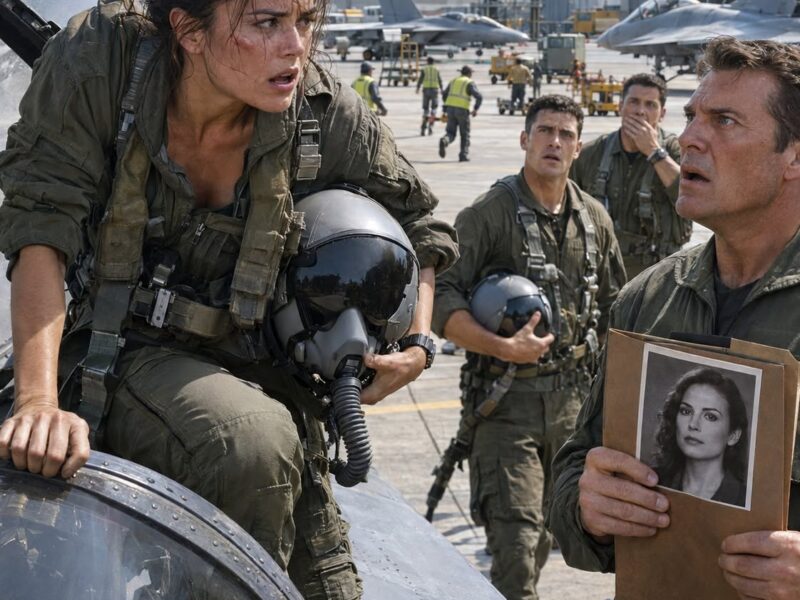
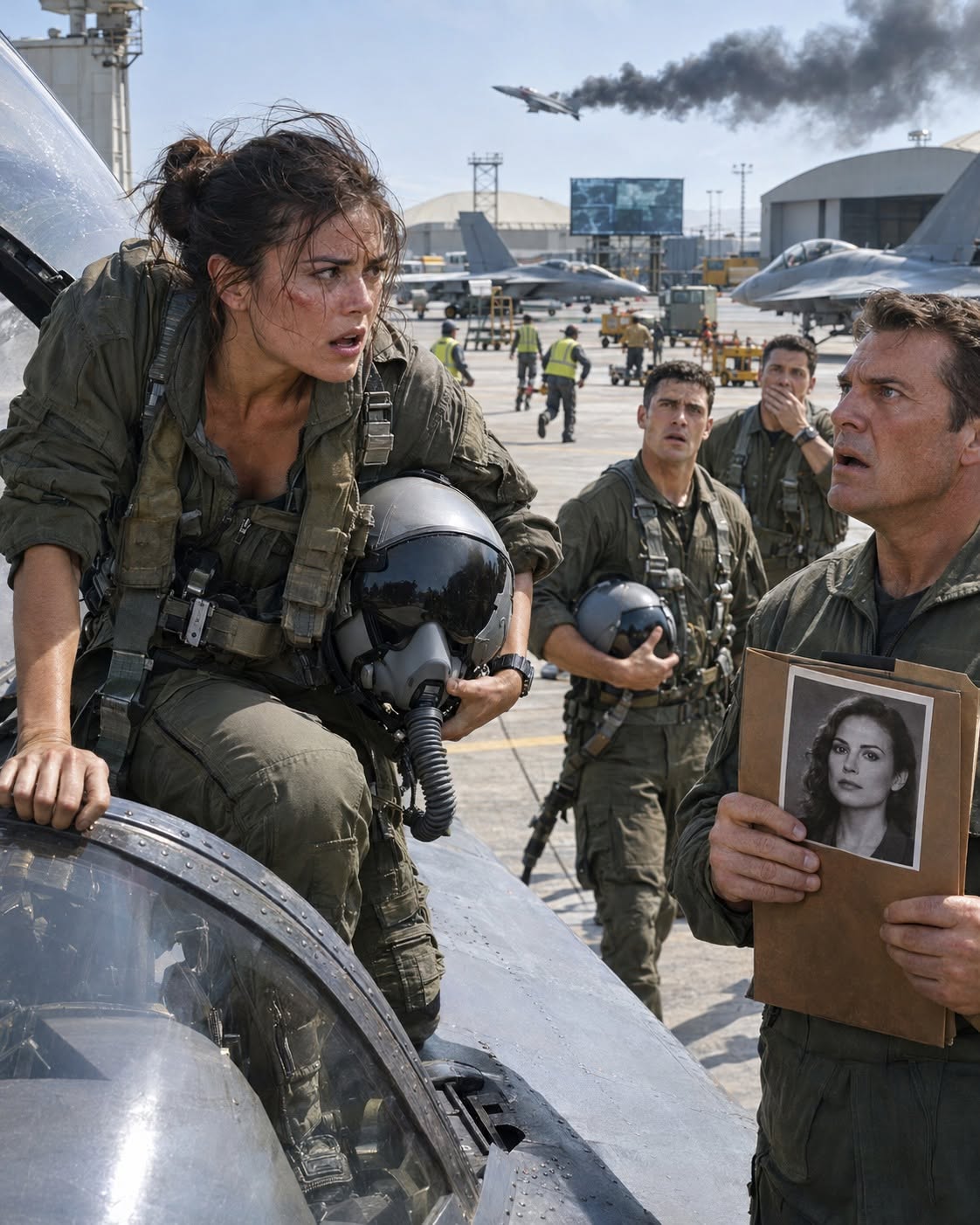
The photograph in Marcus’s file was the last thing I looked at before climbing aboard the transport.
I remembered the day it was taken. Marcus had been laughing at something stupid I’d said, one hand resting on the side of our aircraft, the other holding a coffee that had gone cold. We were young enough to believe that if we trusted the man beside us, we could survive anything.
I tucked the photograph away and climbed into the aircraft.
Colonel Euan was already inside, reviewing the mission briefing on a tablet. General Holt stood outside the loading ramp, speaking quietly with two officers.
“Once we’re airborne,” Euan said, “there’s something else you need to know.”
I fastened my seat belt.
“That’s becoming a habit.”
She hesitated, then lowered her voice.
“Marcus wasn’t just investigating your mission. He was investigating the man who signed the final report.”
I looked toward Holt.
“General Holt?”
“No,” she said. “Someone above him.”
The transport’s engines began to roar, drowning out the rest of her words.
But I didn’t need her to finish.
For five years, I’d believed my death was a convenient mistake made by people who were too busy protecting secrets to care whether I lived or died.
Now I was beginning to suspect it had been something much worse.
It had been deliberate.
And somewhere inside that underground facility, Marcus had found the reason.
We were going to get him out.
But first, I was going to find out who had buried me alive.
The transport lifted into the gray morning sky, leaving the Croatian coastline behind.
For the first time in five years, I watched the world disappear beneath me without feeling like I was running away.
I was going back to the place that had taken everything from me.
And this time, I wasn’t going to leave without answers.
The flight lasted several hours, most of which I spent studying the intelligence package Euan had given me. The facility was located in a remote mountain region, built decades earlier as part of a Cold War defense program. It had been designed to survive a nuclear strike, which meant most of its important systems were buried beneath layers of concrete, rock, and steel.
The network controlling it had originally been designed to coordinate defensive radar and intercept communications. Over the years, it had been upgraded, expanded, and connected to systems that no single government was supposed to control.
Someone had found a way to make those connections work together.
Someone had turned a defensive system into a weapon.
The maps were incomplete. The photographs were outdated. Several access points had been sealed, while others had been added without appearing in the official plans.
I recognized the original layout immediately.
The eastern maintenance tunnel.
The ventilation shafts.
The underground service corridor that connected the radar station to the central command structure.
I had memorized those details five years ago.
But one thing on the updated map made my stomach tighten.
The main control room was marked as abandoned.
It wasn’t abandoned.
I knew that because the last time I’d been there, it had been the heart of the entire facility.
“Why is this marked abandoned?” I asked.
Euan leaned over the table.
“According to the official records, the system was moved to a newer command center three years ago.”
“Official records,” I repeated.
She nodded.
“Exactly.”
I pointed to the location.
“If the network is operating from here, they’re using the original command room. Which means the newer facility is a decoy.”
Holt, who had been listening from the opposite side of the cabin, finally spoke.
“How certain are you?”
“Certain enough to know that whoever prepared this briefing doesn’t want us looking at the old center.”
He studied me for a moment.
Then he turned toward Euan.
“Change the approach.”
Nobody argued.
For the next hour, I worked with the mission team, identifying areas where the old facility’s construction might have created blind spots in modern surveillance. I wasn’t giving them a magic solution. I was giving them something better: a reason to question the intelligence they’d been handed.
And that was when the first message arrived.
It came through a secure terminal Euan had been monitoring.
No sender.
No authentication.
Just a short line of text.
THE DEAD ARE NOT SUPPOSED TO COME BACK.
The cabin fell silent.
Holt stared at the screen.
Euan looked at me.
I felt something cold settle behind my ribs.
Someone inside the facility knew I was coming.
And they were waiting.
We landed at a remote airfield just before dusk. The temperature was colder than I expected, and the mountains beyond the runway were hidden beneath a blanket of low clouds. The ground team had already assembled, but nobody greeted us with the usual confidence of people who believed they had a straightforward mission.
They knew the situation had changed.
Holt pulled me aside before the briefing.
“There’s still time to turn around.”
I laughed once, without humor.
“You spent five years telling the world I was dead. You don’t get to tell me when I should walk away.”
He didn’t respond.
For a moment, I saw the general I’d known before the mission. The man who had stood behind me during difficult briefings, who had trusted me with decisions that could cost dozens of lives.
But that man had changed.
Or maybe I’d finally learned to see him clearly.
“I’m not asking you to forgive me,” he said. “I’m asking you to understand that if this goes wrong, people who have nothing to do with your past could pay for it.”
“Then make sure it doesn’t go wrong.”
I walked away before he could answer.
The team moved out shortly after midnight.
The facility sat beneath a mountain, its exterior almost invisible against the rocky landscape. A few old structures remained above ground, but most of the installation was buried. The air smelled of snow, stone, and diesel. A thin mist crawled across the ground as we approached.
We reached the outer perimeter without encountering anyone.
That worried me more than a firefight would have.
The facility should have been crawling with security.
Instead, it felt like someone had cleared the way for us.
Euan crouched beside me near a sealed service entrance.
“It’s too quiet.”
I nodded.
“Because they’re not protecting the facility.”
“Then what are they protecting?”
I looked toward the mountain.
“Whatever’s inside.”
The service door opened with an old mechanical groan. The corridor beyond was dark, the emergency lights glowing red along the walls. The air was stale and cold. Our footsteps echoed through the passage, and somewhere deep below, a generator hummed steadily.
We found the first signs of occupation near the communications wing.
A discarded uniform.
A broken tablet.
A security camera turned toward the wall.
And a bloodstained handprint on a metal door.
I touched the edge of the stain.
It was old enough to have dried.
“Marcus,” I whispered.
Euan heard me.
“We don’t know that.”
“I do.”
I knew Marcus’s habits. He had always left small marks when he wanted to remember a route. A scratch near a doorframe. A folded corner of a paper map. A little detail most people would overlook.
On the metal door, beneath the blood, was a tiny line scratched into the surface.
Three short marks.
One long mark.
It was our old signal.
Still here.
My chest tightened so hard I almost forgot to breathe.
He was alive.
The door led to an old observation room overlooking the original command center. Through the reinforced glass, I could see rows of consoles, cables running beneath the floor, and a large display showing a map of Europe.
Three red circles pulsed over three capital cities.
The network was preparing to launch.
But the command room was empty.
“Where are the operators?” one of the team members asked.
Then the lights came on.
A voice filled the room.
“Welcome back, Captain.”
I froze.
I hadn’t heard that voice in five years.
Marcus.
“Marcus!” I shouted, stepping toward the glass. “Where are you?”
A screen flickered to life on the wall.
His face appeared.
He looked older, thinner, and tired in a way that made my throat tighten. A scar ran from his temple to the edge of his jaw. His hair was longer than I remembered, and his eyes looked like they’d spent too many nights staring at things nobody should have to see.
But he was alive.
“Don’t come any closer,” he said.
I stared at him.
“What?”
“Don’t come into the command center. I mean it.”
“I’m here to get you out.”
He shook his head.
“You’re here because you finally found the truth.”
Behind him, a second figure stepped into view.
A man wearing a civilian suit.
He looked directly into the camera.
I recognized him from the classified documents Euan had shown me.
Director Adrian Voss.
The former head of strategic defense intelligence.
The man who had overseen the investigation into my disappearance.
The man who had signed the final intelligence assessment declaring my survival impossible.
He smiled.
“Captain,” he said. “Or should I say, the man who never existed?”
Marcus’s eyes shifted toward Voss.
“Don’t listen to him.”
Voss placed a hand on Marcus’s shoulder.
“You see, Captain, your friend has been very useful. He discovered something unfortunate about the original operation. Something that could have destabilized several governments.”
I stepped closer to the glass.
“What did you do?”
Voss smiled wider.
“Your mission was never meant to be successful.”
The words hit harder than any physical blow.
He continued.
“Your aircraft was sent into hostile territory using intelligence we knew was compromised. The objective was to draw attention away from a covert transfer happening elsewhere. Your team was expendable.”
Holt’s voice came through the communication channel.
“Voss, stand down.”
The director laughed.
“General, you’ve spent five years pretending you were protecting your pilot. But you were protecting yourself.”
Holt didn’t answer.
Voss turned back to me.
“Your survival created a problem. The enemy had captured you. We couldn’t risk you being interrogated, so your death was declared. It was the simplest solution.”
My hands began to tremble.
Not from fear.
From rage.
“You left me there.”
“We had no confirmation you were alive.”
“Then why did you change the report?”
Voss’s expression hardened.
“Because the truth was inconvenient.”
Marcus stepped away from him.
“Tell him the rest.”
Voss’s eyes narrowed.
“Quiet.”
Marcus looked straight into the camera.
“Your mission wasn’t just a diversion. The network was being tested that night. Voss wanted to know whether the old defense system could be manipulated without triggering international detection. Your aircraft was the test.”
The room seemed to tilt.
I remembered the warning lights.
The sudden loss of targeting data.
The missiles that had appeared from nowhere.
The radio silence.
Five years of believing I had failed.
I hadn’t failed.
I’d been used.
Holt spoke again, his voice low and broken.
“Voss, I didn’t know the full scope of the operation.”
“You knew enough,” I said.
The general went silent.
And in that silence, I understood that the man who had signed my death had not been the only one responsible.
Voss had built a system designed to erase inconvenient people. Marcus had uncovered it. I had survived it.
And now three capital cities were being held hostage by the same machinery that had destroyed my life.
The countdown on the main display had begun.
Thirty-seven minutes.
Voss stepped away from Marcus and walked toward the control console.
“You should have stayed dead,” he said.
Then the screen went black.
The command room doors slammed shut.
And the facility began to lock down.
The team moved immediately, but the security shutters had sealed the corridor behind us. Euan tried the access panel, then looked at me.
“We’re trapped.”
I studied the observation room.
“No.”
I pointed to a narrow service hatch near the floor.
“There’s another way.”
It was the old maintenance passage. The one I had seen on the original plans but never used during the first mission. It was barely wide enough to crawl through, and the air inside smelled of rust and wet concrete.
We moved one at a time.
The passage led beneath the command center, into a maintenance chamber filled with old equipment. From there, I found a staircase leading to a secondary access corridor.
We weren’t going to reach Marcus through the main entrance.
We were going to reach him through the part of the facility everyone had forgotten existed.
As we moved, Euan caught up beside me.
“Why didn’t you tell Holt you recognized Voss?”
“I didn’t know until I saw him.”
“And now?”
I looked ahead.
“Now I know who I’m going to have to answer to.”
We reached the lower command corridor just as the countdown dropped below twenty minutes. The network’s automated systems were beginning to activate. Warning lights flashed across the walls. Somewhere overhead, the facility’s power surged.
A door opened at the end of the passage.
Marcus stood there.
For one second, neither of us moved.
Then he stepped forward.
I grabbed him by the shoulders, and he laughed—a rough, broken sound that quickly turned into something else. He held on to me like he was afraid I might disappear again.
“You’re real,” he whispered.
“So are you.”
He pulled back and looked at my face.
“I thought you were dead.”
“Apparently, that’s a popular opinion.”
He smiled, but it faded almost immediately.
“We don’t have time.”
He explained that Voss had been using the network to manipulate military communications and test automated targeting systems. The three capital cities were not the original targets. They were a demonstration.
Voss intended to force several governments into signing a secret defense agreement that would give his private organization control over the network. If the system activated, the destruction would be blamed on a foreign power. The resulting panic would justify the agreement.
But Marcus had found a way to interrupt the launch.
He hadn’t been trying to destroy the network.
He had been trying to stop it from firing.
“There’s a manual failsafe,” he said. “But it requires someone inside the original control chamber.”
I looked at him.
“You’ve been here for months. Why haven’t you used it?”
“Because the system has been modified. The failsafe is connected to the launch sequence. If I trigger it without shutting down the secondary power relay, it could activate the weapons instead.”
“How do we shut down the relay?”
Marcus looked toward the lower corridor.
“Someone has to go to the old generator room.”
I already knew what he was going to say.
The generator room was isolated from the main control system. It required a manual shutdown, and once the relay was disabled, the failsafe could be triggered.
But the room was flooding.
A coolant leak had spread through the lower chamber, and the electrical systems were unstable.
Euan looked at the map.
“We can send a technician.”
Marcus shook his head.
“They won’t know the original layout.”
I looked at him.
“You do.”
He stared back.
“I’ve been here too long.”
“Then you’re coming with me.”
For the first time since I had seen him, Marcus looked genuinely afraid.
“That’s not the plan.”
“Plans are what got us both killed.”
He laughed despite himself.
We headed toward the generator chamber.
The lower corridor was filled with smoke and the sound of water rushing through pipes. The temperature dropped as we descended. A warning light blinked above the entrance.
The generator room was a nightmare.
Water had reached the lower floor, reflecting the red emergency lights. Cables hung from the ceiling. A damaged ventilation fan rattled overhead. The manual relay stood on a raised platform at the far end of the room.
Marcus pointed.
“That’s it.”
We moved carefully across the flooded floor.
Halfway there, a loud crack echoed through the chamber.
A section of ceiling collapsed behind us.
The water surged, knocking Marcus off his feet.
I grabbed his arm and pulled him toward the platform.
“Move!”
He slipped again, hitting the metal railing hard.
I caught him.
For a moment, we were both hanging above the flooded section, holding on to a railing that was beginning to bend.
“Let go of me!” Marcus shouted.
“Not a chance.”
I hauled him up.
We reached the platform, and Marcus began working on the relay while I held the emergency lever in place. The machinery vibrated beneath our feet.
“Thirty seconds!” he shouted.
The countdown was audible through the walls.
Ten.
Nine.
Eight.
The relay clicked.
The lights went dark.
For one terrible second, I thought we’d failed.
Then the emergency power came on.
Marcus looked at me.
“Now!”
I pulled the lever.
The network’s countdown stopped.
The three red circles vanished from the display.
The facility fell silent.
No explosion.
No missile launch.
No sudden flash on the horizon.
Just silence.
We had stopped it.
But Voss was still inside the facility.
And he was not going to surrender.
We found him in the original command center, standing beside the main console. The doors were open. The system was offline, but the backup controls were still active.
Holt and the security team arrived moments later.
Voss held a small device in his hand.
“Don’t come closer.”
Euan raised her weapon.
“Drop it.”
Voss looked at me.
“You think you won? The network is only one piece. The people who funded this are still out there.”
“Then we’ll find them.”
He laughed.
“You don’t understand. They don’t care about the cities. They don’t care about the people. They care about control.”
Marcus stepped forward.
“That’s why you’re finished.”
Voss turned toward him.
“You’re just a soldier.”
“No,” Marcus said. “I’m a witness.”
Holt moved slowly, keeping his eyes on Voss.
“Adrian, this ends now.”
Voss looked around the room.
For the first time, he seemed to realize there was nowhere left to run.
He dropped the device.
The security team took him into custody.
But as they led him away, he turned toward me one final time.
“You’ll never have the life you want.”
I looked at him.
“That’s not your decision anymore.”
The next few hours were chaos.
The network was secured. The targeting systems were disabled. The three capitals were no longer under threat. International authorities arrived, and the facility was sealed for investigation.
Marcus was taken to a medical unit.
I sat outside the room while doctors treated him, staring at the photograph I had carried through the mission.
The two of us beside our aircraft.
Two men who had once believed they could trust the system.
Two men who had learned the hard way that loyalty was sometimes the only thing worth keeping.
Holt eventually came to sit beside me.
He looked exhausted.
“I owe you more than an apology.”
I didn’t look at him.
“You owe me the truth.”
He nodded.
“I’ll testify. All of it. The original mission, the altered reports, the decision to declare you dead. I won’t hide behind classified orders anymore.”
I finally turned toward him.
“Why now?”
He looked at the floor.
“Because I watched you walk into that facility knowing you might never come out. And I realized I had spent five years protecting my career instead of protecting the people who trusted me.”
I didn’t forgive him.
But I believed him.
And sometimes, that was the first step toward something better.
Marcus was released from the medical unit the following afternoon. He walked slowly, leaning on a cane, but his eyes were clear.
We sat outside the airfield, watching aircraft move across the runway.
“You going back?” he asked.
“To Croatia.”
He nodded.
“Me too, eventually.”
I smiled.
“Eventually?”
He shrugged.
“I need to remember what normal feels like.”
For the first time in years, neither of us had a mission.
No orders.
No target.
No countdown.
Just the possibility of choosing what came next.
The investigation lasted months.
Voss’s network was dismantled. The altered mission records were exposed. Several senior officials were removed, and the governments involved launched an independent inquiry into the defense system.
Holt testified publicly.
He admitted that my death had been declared without sufficient evidence, and that classified concerns had been used to justify withholding the truth from my family.
The news spread faster than I expected.
My family learned I was alive from a phone call, not a press conference.
My mother cried so hard she couldn’t speak.
My sister kept asking the same question.
“Why didn’t you come home?”
I didn’t have an answer that could make five years disappear.
I told them the truth.
That I had been afraid.
That I didn’t know how to return.
That every time I imagined standing in front of them, I felt the weight of the years I had lost.
My mother didn’t ask me to explain anymore.
She simply said,
“Come home when you’re ready.”
And that was the first time I understood that being loved didn’t mean being forgiven immediately.
It meant being given the chance to come back.
A few months later, I returned to Croatia.
The bar was still there.
The harbor still smelled of salt and diesel.
The old fishing boats still rocked gently against the docks.
I opened the doors on a quiet afternoon and found Marcus waiting at the counter.
He had brought the photograph.
The same one from the file.
He placed it between us.
“Thought you should have this.”
I looked at the two younger men standing beside the aircraft.
“Keep it,” I said.
He shook his head.
“You’ve carried enough.”
I took it.
For a long time, neither of us spoke.
Then I poured two drinks.
We sat by the window and watched the sun lower over the water.
Marcus raised his glass.
“To the men we were.”
I clinked mine against his.
“And the men we get to be.”
He smiled.
The next morning, I flew the crop duster over the sunflower fields.
The engine was old and loud. The wings shook slightly in the wind. But the sky was clear, and the controls felt familiar.
I didn’t fly toward a target.
I didn’t fly away from a memory.
I simply flew.
When I landed, I found a message waiting on my phone from my sister.
It was a photograph of my mother standing in the doorway of our childhood home.
Under it, she had written:
The porch light is still on.
I stared at those words for a long time.
Then I called her.
And for the first time in five years, I said the words I had been too afraid to say.
“I’m coming home.”
The past had taken years from me.
It had taken my name, my career, my family, and the life I thought I would have.
But it hadn’t taken everything.
Because somewhere between the lies, the silence, and the fear, I had learned that survival wasn’t the same as living.
And sometimes, the bravest thing a man could do after fighting every battle imaginable was to stop fighting long enough to let someone love him again.
I had spent five years being a ghost.
Now, I was ready to be a man who was alive.
THE END