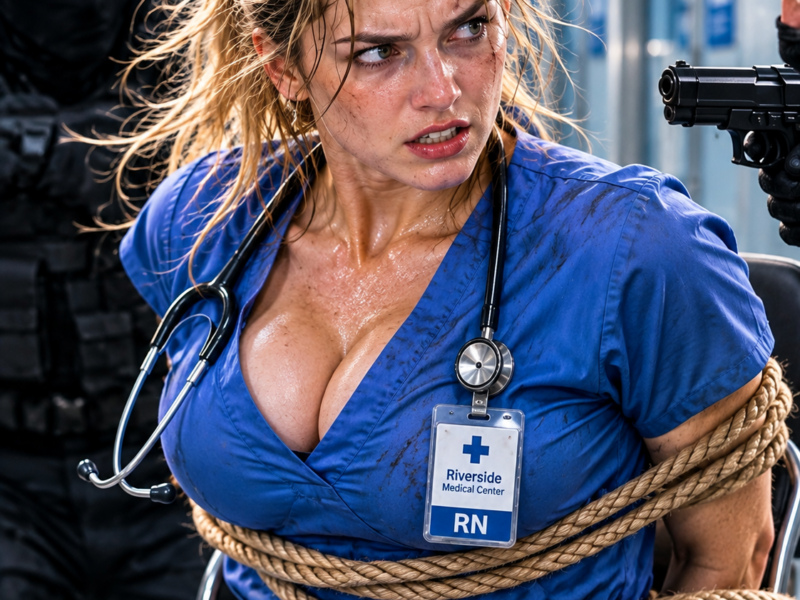
“I was kneeling beside a wounded student in the school nurse’s office when three armed men kicked through the door
I had spent eleven years believing Robert Keller was dead.
Now his voice was coming through the school intercom, warning me not to trust the people who were supposed to rescue us.
Marcus Voss stood three feet away, his rifle pointed at my chest.
“Don’t move,” he said.
I looked at the photograph still lying on my desk.
Six men beside a helicopter.
Six men who had supposedly completed a mission that ended with five bodies and one survivor.
Me.
Except the dates didn’t match.
And apparently, neither did the deaths.
“Tell me what happened in Afghanistan,” I said.
Marcus glanced toward the hallway.
“You really don’t remember?”
“I remember enough.”
“No, Daniel. You remember what they allowed you to remember.”
He reached into his vest and pulled out a folded piece of paper.
Before he could hand it to me, someone shouted from outside.
“Marcus! We have movement at the east entrance!”
Marcus turned toward the door.
That was the first mistake he made.
I moved.
I caught his rifle arm with both hands and drove it toward the wall.
The weapon discharged into the ceiling.
Plaster fell across my shoulders.
The second man rushed toward me, but I kicked a rolling medical stool into his knees.
He stumbled.
I didn’t try to fight him.
I grabbed Ethan from beneath the examination table and pushed him behind the locked medication cabinet.
“Stay there. Don’t come out until I tell you.”
The boy’s face was pale.
“Mr. Hayes, are you going to die?”
I looked at him.
“Not today.”
The third man grabbed me from behind.
His forearm tightened around my neck.
I reached for the metal tray beside the sink and struck his hand.
His grip loosened just enough for me to turn.
I drove him into the cabinet.
The glass doors shattered.
Marcus recovered his rifle and aimed it at me.
“Enough!”
I stopped.
He looked furious, but something else was there.
Fear.
Not fear of me.
Fear of whoever was outside.
“Put your hands on your head,” he ordered.
I slowly raised them.
Then a voice came from the hallway.
“Marcus, stand down.”
A single man appeared in the doorway.
He wore a dark civilian jacket, gray trousers, and an expression I remembered better than my own reflection.
Robert Keller.
Older.
Thinner.
A scar ran from his right temple toward his cheek.
But it was him.
I had watched his helicopter disappear into a mountain valley eleven years earlier.
I had read the report describing his death.
I had attended a memorial service where his wife received a folded American flag.
Yet he was standing in my school nurse’s office.
“Hello, Daniel,” he said.
I couldn’t find my voice.
Keller looked at Marcus.
“Lower the weapon.”
Marcus laughed bitterly.
“You first.”
Keller glanced at me.
“Daniel, I need you to listen carefully.”
“No.”
His expression tightened.
“You don’t even know what you’re involved in.”
“I know you were dead.”
For a moment, something passed across his face.
Then he said quietly, “I was supposed to be.”
Marcus lowered his rifle slightly.
“Tell him,” he said.
Keller didn’t respond.
“Tell him what happened to the other five men.”
“Not here.”
“Of course not here,” Marcus snapped. “You people never want the truth where anyone can hear it.”
I looked between them.
“You people?”
Marcus gave a bitter smile.
“That’s the problem, Daniel. You still think there are two sides.”
Before anyone could answer, the school intercom crackled again.
A woman’s voice came through.
“Attention. All students and staff should remain inside their current locations. Emergency personnel are responding.”
Keller looked toward the ceiling.
“Who controls the intercom?”
Marcus answered.
“One of my men.”
“Tell him to stop.”
“Why?”
“Because if the police hear another unauthorized announcement, they’ll breach the building.”
Marcus smiled.
“Maybe that’s exactly what I want.”
Keller’s jaw tightened.
I realized something then.
These men weren’t working together.
They were both trying to control what happened next.
And I was standing between them.
“Where are the students?” I asked.
“Safe for now,” Keller replied.
“That’s not an answer.”
“The cafeteria. The west wing.”
“How many people?”
“Forty-two students and six staff members.”
I looked at Marcus.
“You said you weren’t here for them.”
“We aren’t.”
“Then why are you holding them?”
His eyes dropped briefly.
“Because your former commander has something we need.”
Keller’s face became unreadable.
“What?”
Marcus looked at him.
“The original recording.”
Silence settled over the office.
I felt the folded paper in my pocket.
Marcus must have slipped it there during the struggle.
I didn’t look at it.
Not yet.
“What recording?” I asked.
Keller slowly removed his jacket.
Beneath it was a small medical dressing wrapped around his ribs.
He was bleeding.
“Eleven years ago, we were sent to recover an intelligence officer named Samuel Reed,” he said.
“I remember Reed.”
“Do you?”
“He was the reason for the mission.”
Keller nodded.
“That’s what your briefing said.”
“What was the real mission?”
He looked at Marcus.
“To retrieve a hard drive containing evidence of an illegal weapons operation.”
Marcus laughed.
“Not just weapons. Names, payments, shipment records, military authorizations. Everything.”
I remembered the mission.
The helicopter.
The mountains.
The radio going silent.
The explosion that had thrown me against a rock.
And a voice screaming my name.
I remembered waking up in a field hospital three days later.
I remembered being told that Keller and the others had died.
But there was one thing I had never been able to explain.
Why had my team been ordered to withdraw before the extraction helicopter arrived?
“Who gave the withdrawal order?” I asked.
Keller looked directly at me.
“Your second-in-command.”
I shook my head.
“Lieutenant Mason?”
“Yes.”
“That’s impossible. He was killed.”
Marcus stepped closer.
“No, Daniel. He wasn’t.”
My mouth went dry.
I remembered Mason.
He had been twenty-nine, funny, reckless, and the kind of man who always carried two photographs in his vest.
One of his daughter.
One of his wife.
After the mission, I had sent a letter to his family.
I had written that he died protecting his men.
Keller continued.
“Mason was working with the people behind the weapons operation. He gave them our route and the extraction schedule.”
“Why?”
“Money. Protection. A promise that nobody would ever connect him to the shipments.”
Marcus shook his head.
“You’re leaving out the part where Keller knew.”
Keller’s eyes narrowed.
“I didn’t know.”
“You knew someone had compromised the mission.”
“I suspected.”
“You sent six men into a trap anyway.”
Keller didn’t answer.
That silence hurt more than the accusation.
I stepped toward him.
“Did you know?”
He looked at me.
“I knew there was a possibility.”
I felt the old anger rising in my chest.
“Possibility?”
“Daniel, listen—”
“Five men died.”
“I know.”
“You let us walk into it.”
Keller lowered his eyes.
“I made a decision I thought would save the operation.”
“And what about the men?”
He didn’t answer.
For eleven years, I had carried the weight of being the only survivor.
I had blamed myself for leaving the others behind.
Now I was learning that someone had known the danger before we ever stepped out of the helicopter.
And that someone had still sent us.
A sudden burst of gunfire echoed from the far end of the building.
Everyone turned.
Marcus raised his rifle.
Keller pulled me behind the desk.
“That wasn’t supposed to happen,” he said.
“What wasn’t?”
“The second team.”
Marcus looked furious.
“You told me there would be no second team.”
“I didn’t bring them.”
A radio crackled on the desk.
A voice spoke.
“Package is located. Preparing extraction.”
Keller reached for it.
Marcus caught his wrist.
“Who is that?”
Keller stared at the radio.
Then he said something that changed the room.
“Someone who should never have known we were here.”
The voice came again.
“Confirm the nurse is alive.”
Marcus looked at me.
Then he looked at Keller.
“You’re not the only one who came for him.”
I finally understood.
The school wasn’t simply a hostage location.
It was a meeting point.
And someone had arranged for all of us to be here.
Including me.
The next ten minutes passed in a blur of shouting and distant gunfire.
Keller moved toward the office door.
Marcus blocked him.
“You’re staying here.”
“Move.”
“You’ve lied to me once already.”
“I brought you here because you wanted the evidence.”
“I brought myself here because you promised the original recording.”
Keller’s expression hardened.
“And you brought armed men into a school full of children.”
Marcus didn’t respond.
I looked at Ethan.
He was still behind the medication cabinet, his small hands pressed over his ears.
The boy was trying not to cry.
Whatever happened between these men, I couldn’t let it become his problem.
I moved slowly toward the cabinet.
“Daniel,” Keller warned.
I ignored him.
“Ethan, look at me.”
The boy lifted his head.
“Can you hear the hallway?”
He nodded.
“Good. I need you to stay low and follow the wall toward the supply closet. There’s another door inside. It leads to the maintenance corridor.”
“Are the bad men there?”
“I don’t know.”
His eyes filled with tears.
“Please don’t leave me.”
I crouched beside him.
“I’m not leaving you.”
Marcus watched us.
“You’re still playing nurse.”
I turned toward him.
“Someone has to.”
For a second, neither of us spoke.
Then a loud metallic crash sounded from the corridor.
The lights went out.
The emergency lamps flickered red.
A door slammed somewhere nearby.
Keller shouted, “Down!”
A burst of gunfire struck the office window.
I threw myself over Ethan.
Glass scattered across my back.
The room filled with dust and the smell of burnt wiring.
When I lifted my head, Marcus was gone.
Keller was lying near the doorway.
Blood covered his sleeve.
I crawled toward him.
“Robert.”
He opened his eyes.
“Don’t waste time.”
“You’re bleeding.”
“Had worse.”
I pulled a dressing from the medical cabinet and pressed it against his arm.
He winced.
“Where’s Marcus?”
“East corridor.”
“Who fired?”
Keller looked toward the ceiling.
“The people who don’t want that recording found.”
I tightened the dressing.
“Where is it?”
He looked at me.
For the first time, his expression softened.
“You’ve had it the whole time.”
I stared at him.
“What?”
“The original mission file. You were the one who recovered it.”
“I don’t remember recovering anything.”
“You were injured. You placed it in your medical evacuation bag.”
I shook my head.
“They searched my equipment.”
“Not everything.”
A memory surfaced.
A field hospital.
A medic cutting away my uniform.
A nurse asking me whether I wanted my personal belongings returned.
I remembered a small metal case.
I remembered telling someone to keep it safe.
Then nothing.
Keller reached inside his jacket and pulled out a photograph.
It showed the same six men beside the helicopter.
But this time, something was written on the back.
A series of coordinates.
And underneath them, five names.
The names of the men who died.
Except one.
Lieutenant Mason.
“Why is his name here?” I whispered.
Keller looked away.
“Because he wasn’t dead when the photograph was taken.”
I stared at the image.
Mason had been standing at the far right, half hidden behind the helicopter.
His face was unmistakable.
“Then who did we bury?”
Keller closed his eyes.
“An unidentified casualty.”
My hands began to shake.
The man whose family I had comforted.
The man whose daughter I had promised to remember.
Had never been identified.
And the man who had betrayed us had walked away.
“Where is he now?”
Keller swallowed.
“Washington.”
“Doing what?”
“Working in a position where nobody would ever question his authority.”
I looked toward the corridor.
The gunfire had stopped.
Then a voice came from the intercom.
“Daniel Hayes, please report to the main office.”
It was a man’s voice.
Calm.
Professional.
Almost familiar.
“Your friends have made a terrible mistake. But I can explain everything.”
Keller grabbed my wrist.
“Don’t answer him.”
“Who is it?”
He stared at me.
“Lieutenant Mason.”
I had imagined seeing Mason again more times than I could count.
In some versions, I punched him.
In others, I asked him why.
Sometimes I imagined he would apologize.
I never imagined hearing his voice through a school speaker while a wounded commander held my wrist.
“Daniel,” Mason said again. “I know you’re listening.”
I looked at Keller.
“How do we get to the main office?”
“You don’t.”
“He’s using the students.”
“I know.”
“Then we stop him.”
Keller shook his head.
“You’re not understanding. Mason has people inside the building and outside it. If he thinks we’re about to expose him, he’ll destroy the evidence and anyone who can connect him to it.”
“How many?”
“I don’t know.”
I looked at the medical cabinet.
Ethan was still there.
The boy had heard every word.
He was staring at me as if he had just discovered that the world was much larger and crueler than he had believed.
I couldn’t ask him to be brave.
He was fifteen.
He should have been worrying about basketball tryouts and homework.
Instead, he was hiding from armed men.
I opened the supply closet.
A narrow maintenance passage ran behind the walls.
It connected the nurse’s office to the cafeteria service corridor.
I had used it dozens of times to transport supplies.
“Can you walk?” I asked Keller.
He nodded.
“Good. We’re getting the students out.”
Keller looked at me.
“Daniel, the evidence—”
“Can wait.”
For the first time that day, he didn’t argue.
We moved through the passage.
Ethan stayed close to me, holding the back of my scrub shirt.
The corridor smelled of dust, bleach, and old paint.
Every few feet, I stopped to listen.
Somewhere above us, a door opened.
Then closed.
When we reached the cafeteria service entrance, I heard crying.
A teacher whispered instructions to the students.
I pushed the door open.
Twenty or so teenagers were gathered behind overturned tables.
Mrs. Collins, the history teacher, looked up.
“Daniel!”
She rushed toward me.
“Where have you been?”
“Are the students okay?”
“Mostly. One girl hurt her ankle.”
I glanced around.
“Where’s Principal Harris?”
Mrs. Collins looked toward the far end of the room.
“He was taken.”
“By whom?”
“One of the men. He said they needed him to open something.”
I looked at Keller.
His expression changed.
“The records room,” he whispered.
“What records?”
“The original access logs.”
I felt the pieces begin to fit.
The school wasn’t just a convenient building.
It was connected to someone Mason had been using.
Perhaps through a student, a parent, or a local contact.
But why the principal?
I turned to Mrs. Collins.
“Get everyone away from the windows. Keep the doors closed. Don’t open them for anyone unless you recognize them.”
She nodded.
I gave her my emergency radio.
“Call the police if you get a signal.”
Then I looked at Keller.
“Show me where the records room is.”
He hesitated.
“Daniel—”
“Now.”
We left through the side corridor.
Keller leaned heavily against the wall.
His breathing was shallow.
I knew he was losing blood.
At the end of the hall, a set of double doors led to the administrative offices.
A light was visible beneath the principal’s office door.
We approached quietly.
A voice came from inside.
“You’re wasting time.”
Mason.
I had heard that voice in my nightmares.
Keller raised his hand, signaling me to stop.
Then he leaned close.
“Listen to me. Whatever happens, don’t let him get the recording.”
I looked at him.
“You keep saying that. Why?”
Keller hesitated.
“Because it doesn’t just expose Mason.”
He took a breath.
“It exposes me, too.”
I stared at him.
“What did you do?”
He looked down.
“I approved the mission after receiving a warning that the route was compromised.”
The words landed harder than any physical blow.
“You knew?”
“I believed the warning was unreliable.”
“Five men died because you ignored it.”
“I know.”
“And you let me spend eleven years thinking I had failed them.”
Keller’s eyes filled.
“I was afraid.”
I stepped back.
For eleven years, I had imagined the truth would set me free.
I hadn’t considered that the truth might be uglier than the lie.
“Why come here now?”
“Because I found out Mason had located you. I thought I could get to you before he did.”
“To protect me?”
“To ask you to forgive me.”
I looked at him.
“That’s not something you get to ask for while people are still dying.”
He nodded slowly.
“You’re right.”
A door opened at the end of the corridor.
A man stepped out.
He wore a gray suit and carried a small black case.
His hair was shorter than I remembered.
His face was older.
But I knew him.
Lieutenant Mason.
He looked at me.
For a moment, neither of us moved.
Then he smiled.
“Daniel.”
I could hear the school alarm in the distance.
I could hear the frightened voices of students behind the cafeteria doors.
And I could hear the man who had destroyed my life speaking as though we were meeting for coffee.
“You’re alive,” I said.
He shrugged.
“People say that like it’s a surprise.”
“Your family thinks you’re dead.”
His smile faded slightly.
“That was necessary.”
“Your daughter grew up believing her father died in Afghanistan.”
He looked away.
For the first time, he appeared uncomfortable.
“Don’t bring my family into this.”
I stepped closer.
“You brought them into it when you disappeared.”
Mason glanced at Keller.
“You should have stayed dead, Robert.”
Keller said nothing.
Mason lifted the black case.
“Where’s the recording?”
I looked at it.
“I don’t have it.”
He laughed.
“Daniel, you’ve never been a good liar.”
He opened the case.
Inside was a small device.
A digital recorder.
I recognized the model.
It was the same type of equipment our unit had carried during the mission.
Mason pressed a button.
A familiar voice came through the speaker.
“Team, hold position. Extraction is delayed.”
My own voice.
Then another.
Mason’s.
“Command has ordered an immediate withdrawal.”
A third voice interrupted.
Keller’s.
“Negative. We are not leaving anyone behind.”
Then came gunfire.
Static.
And a final sentence.
A sentence I had not heard in eleven years.
Mason’s voice.
“Proceed with the second phase.”
The recording stopped.
I stared at him.
“What was the second phase?”
Mason closed the case.
“The part you weren’t supposed to survive.”
I understood then that the mission had never been about rescuing Samuel Reed.
It had been about making sure nobody could testify about the weapons operation.
The men who died had discovered the shipment records.
Keller had been ordered to bring the evidence back.
Mason had been ordered to destroy it.
And I had survived because the explosion had thrown me beyond the area where the second team was searching.
“Who ordered you?” I asked.
Mason smiled faintly.
“Does it matter?”
“Yes.”
“You’re looking for one man to blame. That’s always been your weakness.”
He stepped toward Keller.
“Give me the original recording.”
Keller shook his head.
“I don’t have it.”
Mason looked at me.
“Then where is it?”
I remembered the metal case.
The hospital.
The evacuation bag.
A small object I had once believed was nothing more than personal equipment.
But the details were still incomplete.
I looked at Mason.
“Why did you come to this school?”
“Because you were here.”
“That’s not enough.”
He sighed.
“Your old commander contacted you three weeks ago.”
I stared at Keller.
He looked down.
“What?”
“I sent you a letter,” Keller said.
“I never received it.”
Mason smiled.
“Of course you didn’t. My people intercepted it.”
I felt something cold settle in my stomach.
“Then why the school?”
“Because you never responded. And because we learned you had kept something from the mission.”
“What?”
“Your old medical evacuation bag.”
I remembered the small metal case.
Mason had been searching for it all along.
He took another step closer.
“Where is it, Daniel?”
I didn’t answer.
Then a noise came from behind him.
A phone vibrating.
Mason reached into his jacket.
He glanced at the screen.
His expression changed.
He answered.
“Yes?”
A pause.
“How?”
Another pause.
“Then find it.”
He ended the call.
For the first time, his confidence seemed to fracture.
Keller noticed.
“What happened?”
Mason looked at him.
“Your little friend in the cafeteria has been talking.”
My stomach tightened.
“Ethan?”
Mason didn’t answer.
He raised his radio.
“Get the boy.”
I moved before I could think.
I grabbed the black case from his hand and threw it down the corridor.
Mason turned instinctively.
Keller tackled him.
The case struck the wall and opened.
The recorder slid across the floor.
Mason hit Keller in the ribs.
I rushed forward and grabbed his arm.
We crashed against the office door.
The struggle lasted only seconds, but it felt much longer.
Mason was stronger than I expected.
He drove an elbow into my chest.
I stumbled backward.
Then Keller struck him with the metal edge of the fallen case.
Mason dropped to one knee.
I seized his wrist and forced the weapon from his hand.
A loud voice came from the hallway.
“Federal agents! Drop everything!”
Two officers entered.
Their weapons were raised.
Mason looked at them.
Then at me.
He smiled.
“You think this ends with me?”
I stepped away.
“No. I think it starts with you.”
They handcuffed him.
One officer checked Keller’s wound while another recovered the recorder.
I looked toward the cafeteria.
“Where’s Ethan?”
A teacher appeared at the end of the hall.
“He’s safe.”
I closed my eyes briefly.
Mrs. Collins had managed to move the students through the maintenance exit after the first police team reached the building.
Ethan had helped her carry an injured girl.
He had been terrified, but he hadn’t abandoned anyone.
That mattered more to me than anything Mason had said.
Then a federal agent approached.
“Mr. Hayes?”
“Yes.”
“We need to speak with you about the evidence.”
I looked at Keller.
He was sitting against the wall, his face pale.
“Not until the students are safe.”
The agent nodded.
“Understood.”
I went back to the nurse’s office.
The windows were broken.
The medical cabinet was shattered.
My coffee mug lay on its side, a dark stain spreading across the paperwork.
The photograph was still on my desk.
I picked it up.
Six men.
Five of whom had never come home.
I ran my thumb over the faces.
Then I noticed something on the back that I hadn’t seen before.
A small handwritten note beneath the coordinates.
“Medical kit. Lower compartment.”
I stared at the words.
The metal case.
My evacuation bag.
It had been stored in a military warehouse after my discharge.
I had never asked for it back.
The next morning, federal investigators recovered it.
The lower compartment had been sealed with a strip of old adhesive.
Inside was a tiny encrypted storage device.
It contained the original weapons shipment records, audio from the mission, and a series of messages between Mason and several senior officials.
It also contained a recording of Keller’s authorization.
He had known the route might be compromised.
He had approved the mission anyway.
The evidence was enough to begin a criminal investigation.
But it wasn’t enough to erase the five men who had died.
Or the eleven years I had spent believing I was responsible.
The school remained closed for two weeks.
The news called it a hostage incident.
Reporters gathered outside the gates.
Parents demanded answers.
Students returned to classrooms that had been cleaned and repainted, but some still flinched whenever a door slammed.
I spent most of those two weeks in interviews.
I told investigators everything I remembered.
Sometimes I remembered details I hadn’t thought about in years.
Sometimes I had to stop because my hands began shaking.
Keller cooperated with the investigation.
He admitted approving the compromised mission and concealing the warning.
He also identified the officials who had authorized the weapons shipments.
Mason was charged with conspiracy, obstruction, and multiple counts connected to the deaths of the men in our unit.
The investigation eventually reached people who had spent years believing they were untouchable.
Some resigned.
Others were arrested.
The case took months.
It was messy and public.
And it didn’t bring my friends back.
Three months after the school incident, I received a letter.
The envelope had no return address.
Inside was a photograph of a little girl standing beside a birthday cake.
On the back, someone had written:
“Her name is Emily. She is fourteen now. She still thinks her father died saving his men.”
I recognized the handwriting.
Mason’s wife.
I sat at my kitchen table for a long time.
I knew what she was asking without writing it.
She wanted the truth.
Not the version that had appeared in the official report.
Not the version Mason had used to protect himself.
The truth.
I called the number written beneath the note.
A woman answered.
“Hello?”
“My name is Daniel Hayes.”
There was silence.
Then she whispered, “I know who you are.”
I swallowed.
“I think you deserve to know what happened to your husband.”
She began crying.
I didn’t rush her.
When she was ready, I told her everything I could.
I told her Mason had betrayed the team.
I told her he had survived.
I told her he had spent eleven years hiding behind a false death.
And I told her that he had not died protecting his men.
When I finished, she didn’t speak for several seconds.
Then she asked the question I had been dreading.
“Did he ever talk about Emily?”
I looked out the kitchen window.
“Yes.”
“Did he love her?”
I closed my eyes.
“I think he did.”
She let out a shaky breath.
“Then how could he do this?”
I had no answer that would make the truth easier.
“Some people love their families and still make choices that destroy them,” I said.
She thanked me quietly.
Before hanging up, she asked if I would ever be willing to meet Emily.
I told her I would.
Not to tell the girl what to think about her father.
Just to tell her what I remembered.
A week later, I met them at a small diner outside Richmond.
Emily sat across from me, wearing a blue hoodie and holding a glass of lemonade.
She looked nervous.
Her mother had explained that I was one of her father’s former teammates.
She hadn’t told her everything.
Not yet.
“Did my dad save you?” she asked.
I looked at her.
The honest answer was complicated.
“He was a good soldier once,” I said.
“Was he a good person?”
I took a breath.
“I think he had moments when he was. But being a good person isn’t something you get to claim forever. It’s something you have to keep choosing.”
She stared at the table.
Then she asked whether her father had been afraid when he died.
“He didn’t die that day,” I said gently.
Her eyes lifted.
I told her what I could.
I didn’t describe the violence.
I didn’t make her carry every ugly detail.
I simply told her that her father had made decisions, and those decisions had consequences.
She cried quietly.
Her mother held her hand.
When we left the diner, Emily stopped beside my truck.
“Do you think I have to hate him?”
I looked at the girl.
“No. You don’t have to hate him. And you don’t have to defend him either.”
She nodded.
Then she walked back to her mother.
I watched them drive away.
For the first time in eleven years, I felt I had done something right for the men whose names I still remembered.
Keller was sentenced later that year.
He received a prison term for his role in approving the mission and concealing the intelligence warning.
Before sentencing, he asked to see me.
I almost refused.
But I went.
He looked smaller in the courtroom holding room.
His hair had turned almost completely gray.
“I owe you an apology,” he said.
I sat opposite him.
“You owe five families an apology.”
He nodded.
“I know.”
“Why didn’t you tell us?”
He looked at his hands.
“Because I thought the mission would succeed. I thought I could bring everyone home and bury the warning before anyone knew.”
“And when it failed?”
“I told myself the truth would only create more damage.”
I studied him.
“Did you ever consider that we deserved to know?”
“Every day.”
I waited.
He looked up.
“I don’t expect you to forgive me.”
“Good.”
He almost smiled.
“That’s fair.”
I stood.
At the door, he called my name.
“Daniel.”
I turned.
“Those men trusted me.”
I looked at him for a long moment.
“Then you should spend the rest of your life remembering what that meant.”
I left without shaking his hand.
Mason’s trial began several months later.
He pleaded not guilty.
His lawyers argued that the recording had been altered and that he had acted under orders.
The evidence proved otherwise.
The original audio matched the mission logs.
The encrypted messages showed his involvement.
The recovered shipment records connected him to the illegal operation.
He was convicted.
When the verdict was read, he looked toward me.
I didn’t smile.
I didn’t feel victorious.
I simply looked away.
Justice was necessary.
But it wasn’t the same as getting my friends back.
A year after the hostage incident, I returned to Ridgewood High School.
The nurse’s office had been repaired.
The broken window had been replaced.
The old filing cabinet was gone.
A new examination table stood where Ethan had once hidden.
I had considered leaving after everything happened.
The district offered me a position at another school.
The salary was better.
The building was newer.
The commute was shorter.
But I stayed.
One afternoon, Ethan walked into my office.
His lip had healed long ago.
He was taller now, and the nervousness in his face had been replaced by something steadier.
He held a basketball under one arm.
“Hey, Mr. Hayes.”
“Hey, Ethan. What’s going on?”
He shrugged.
“Nothing. Just wanted to say hi.”
I smiled.
“That’s usually how people start conversations when something is going on.”
He laughed.
Then he became serious.
“My mom says I should talk to someone about what happened.”
“She’s probably right.”
“Did you ever talk to anyone after Afghanistan?”
I looked at him.
For a moment, I thought about giving him the easy answer.
Instead, I said, “Not enough.”
He nodded.
“I still have nightmares sometimes.”
I pulled out the chair beside my desk.
“Then let’s make sure you don’t have to handle them alone.”
He sat down.
We talked for almost twenty minutes.
Not about guns or soldiers.
We talked about school, his mother, basketball, and the girl he liked but was too embarrassed to approach.
Ordinary things.
Important things.
When he left, he paused at the doorway.
“Mr. Hayes?”
“Yeah?”
“Thanks for coming back.”
I looked at the boy who had once hidden beneath my examination table.
“Thanks for staying brave.”
He shook his head.
“I wasn’t brave.”
I smiled.
“Neither was I. I was just trying to get everybody home.”
He left, and I returned to my paperwork.
On my desk was a small wooden box.
Inside were five military dog tags.
I had received them from the families after the investigation.
They had asked me to keep them because I was the last man who had served beside their loved ones.
I took the tags out one by one.
Read each name.
Then placed them carefully back inside.
For years, I had believed surviving meant I had failed the men who didn’t.
I had mistaken guilt for loyalty.
But those men had never asked me to spend the rest of my life punishing myself.
They had asked me to bring everyone home.
I couldn’t do that in Afghanistan.
I couldn’t undo what happened in that school.
But I could still make sure the frightened child in front of me had somewhere safe to sit.
I could still listen.
I could still help.
And sometimes, that was enough.
The next morning, I unlocked the nurse’s office before the first bell.
Sunlight fell across the new examination table.
A basketball rolled past the open doorway.
Somewhere down the hall, students were laughing.
I poured myself a cup of coffee, opened the door, and waited for the first knock.
For the first time in eleven years, I no longer felt like the only man who had made it home.
THe end.









