The whole town laughed when Jeremiah Flint threw my wedding dress into the mud, but the scarred stranger beside me knew the secret behind my father’s death.
The stranger’s revolver was aimed at my husband’s heart, and the word “daughter” hung in the darkness like a terrible accusation.
Gideon stood frozen beside me, his hand hovering near his rifle while the cold Montana wind swept through the cottonwood trees.
“Don’t move, Gideon,” the rider warned, stepping into the trembling circle of lantern light.
He wore a federal marshal’s coat, but something about the way he held his gun told me he was no ordinary lawman.
His face was weathered and pale, with silver hair beneath his hat and a deep scar crossing his chin.
“Who are you?” I demanded, positioning myself between him and Gideon.
The man’s eyes moved over my face, and his expression changed as though he had suddenly seen a ghost.
“Dear God,” he whispered. “You have Elizabeth’s eyes.”
Behind him, the elderly woman emerged from the darkness, clutching her shawl around her thin shoulders.
Her face was lined with age and exhaustion, but when she looked at me, tears began running down her cheeks.
“My little girl,” she breathed. “My beautiful little girl.”
Something inside my chest tightened so painfully that I could barely stand.
I had spent twenty-eight years believing my mother was buried beneath a wooden cross outside town.
Now a stranger was looking at me with the kind of love I had dreamed about since childhood.
“Don’t come closer,” I whispered.
The woman stopped immediately.
“My name is Elizabeth Whitcomb,” she said. “And I have prayed every night for the chance to see you again.”
I looked at the armed man.
“And you?”
He lowered his revolver slightly.
“Daniel Whitcomb. Samuel was my younger brother.”
I turned toward Gideon, expecting him to look equally astonished.
Instead, his face was filled with a terrible recognition.
“You told me Daniel Whitcomb was dead,” Gideon said.
Daniel’s expression hardened.
“And you told me Martha would be safe with you.”
I felt the ground slipping beneath me.
“You know each other?”
Neither man answered.
The silence frightened me more than the gun.
“Someone had better start talking,” I said, my voice rising.
Elizabeth stepped forward carefully.
“Please, Martha. We came because your life is in danger.”
“Flint is already under arrest.”
Daniel gave a bitter laugh.
“Jeremiah Flint was never the man giving orders.”
The words struck me like icy water.
For months, Flint had threatened me, humiliated me, and tried to burn my home to the ground.
If he had only been following another man’s instructions, then someone far more dangerous was still walking free.
Daniel finally holstered his revolver.
“Your father’s murder began with a silver discovery, but the silver wasn’t the real secret.”
I looked down at the bloodstained letter trembling in my fingers.
“What else could there be?”
“Something your father found beneath the spring.”
Before Daniel could explain, Gideon seized my arm.
“We need to get inside.”
His urgency frightened me.
“Why?”
“Because whoever followed them may already know they’re here.”
A sharp crack echoed through the trees.
Daniel’s hat flew from his head as a bullet struck the trunk behind him.
“DOWN!” Gideon roared.
He dragged me behind the stone wall surrounding the spring as another shot shattered the silence.
Elizabeth screamed.
Daniel pulled his revolver and fired toward the ridge.
For a moment, the world became nothing but gun smoke, splintering wood, and the terrifying sound of bullets passing overhead.
Gideon pressed his body against mine.
“Stay behind me.”
I gripped his coat.
“I’m not losing you.”
He looked into my eyes, and I saw something I had never seen there before.
Not fear of dying.
Fear of leaving me alone.
“Then we fight together,” he whispered.
I grabbed the shotgun resting beside the spring’s wooden railing.
When a shadow moved between the trees, I fired toward the ground in front of it.
The figure stumbled backward.
Daniel fired again, and the remaining riders retreated toward the northern trail.
Within moments, the night was silent.
But Elizabeth had fallen.
I crawled toward her, terrified that the mother I had only just found was already slipping away.
Blood stained the sleeve of her gray dress.
“Mother?” I whispered before I could stop myself.
Her eyes opened.
And despite the pain twisting her face, she smiled.
“You called me Mother.”
I pressed my hand against her wounded shoulder.
“Don’t you dare die before you tell me why you left.”
She touched my cheek with trembling fingers.
“I didn’t leave you because I didn’t love you, Martha.”
Her tears fell onto my hands.
“I left because loving you was the only thing that could save your life.”
We carried her into the house while Daniel watched the trail.
Gideon built a fire, boiled water, and brought clean cloth from the kitchen.
I had never removed a bullet from a person’s body, but I had spent years dressing wounds and caring for injured ranch hands.
Fortunately, the bullet had passed through Elizabeth’s upper arm without striking bone.
As I washed away the blood, she watched me with an expression that nearly broke my heart.
“You’re strong,” she whispered.
I gave a humorless laugh.
“People around here have always said I was too much of everything.”
“Too large. Too stubborn. Too difficult to love.”
Her eyes filled again.
“Then they were fools.”
I lowered my head.
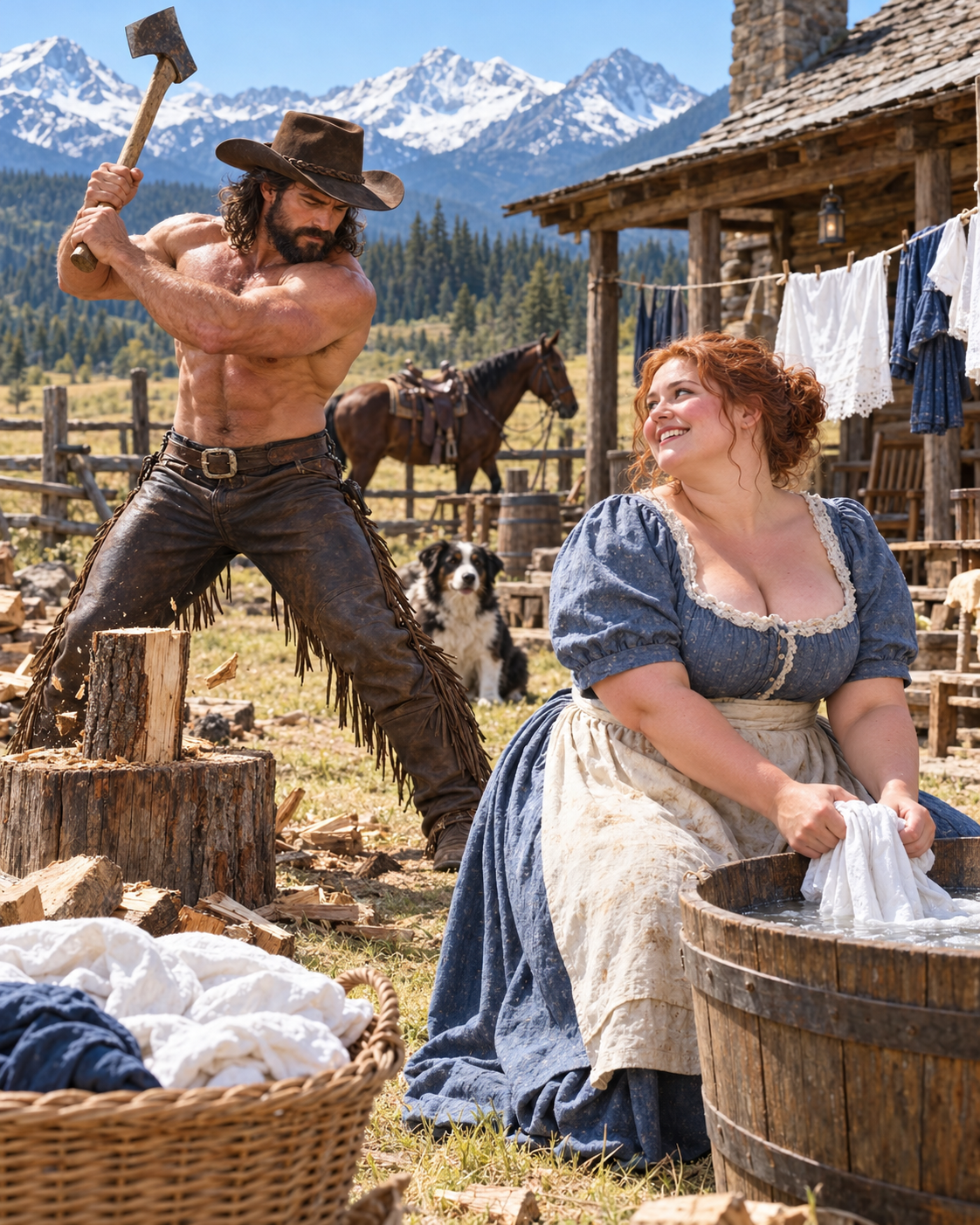
For twenty-eight years, I had waited for someone to say those words without pity.
And somehow, hearing them from the woman who had given me life made them hurt even more.
By dawn, the four of us sat around my kitchen table.
Gideon placed the silver watch beside Papa’s letter.
Daniel stared at it for a long moment.
“Thomas Caldwell was the bravest man I ever knew,” he said.
I looked up sharply.
“You knew my father?”
“I knew both of them.”
He explained that Samuel Whitcomb had owned a profitable ranch north of Helena and had once employed Thomas Caldwell as a trusted ranch hand.
During a terrible drought, Samuel discovered an underground water system feeding the spring.
While exploring its source, he uncovered a rich vein of silver and something even more valuable.
A narrow underground passage containing evidence that Flint and several powerful territorial officials had been stealing government land through forged surveys.
Samuel intended to expose the fraud.
Before he could, his ranch burned.
“The fire killed my husband,” Elizabeth whispered.
Her hands shook around her coffee cup.
“Thomas carried you out through the smoke.”
I remembered the photograph inside the iron box.
A child wrapped in a white blanket, held by a smiling young woman.
Now I understood why the woman looked so familiar.
She was the face I might have worn if grief had never touched her.
“Why didn’t you come after me?”
Elizabeth closed her eyes.
“Because they captured me before I could escape.”
Daniel leaned forward.
“Flint’s employer kept her hidden for years, convincing everyone she had died.”
“Who?”
Daniel looked toward the window.
“Judge Horace Bellamy.”
The name made my stomach tighten.
Judge Bellamy had presided over land disputes throughout the territory for nearly twenty years.
He attended church every Sunday, donated money to orphanages, and shook hands with every respectable businessman in town.
He had also been the man who certified Flint’s forged land claims.
“Bellamy?” I whispered.
Daniel nodded.
“He controlled the courts, the land records, and half the men wearing badges between here and Helena.”
I stared at Gideon.
“And you knew?”
He swallowed.
“I knew Bellamy was connected to Flint, but I didn’t know Elizabeth was alive.”
Daniel’s jaw tightened.
“You knew enough to disappear for eight years.”
Gideon looked down at his scarred hands.
The silence stretched until I could no longer bear it.
“Tell me.”
He finally raised his eyes.
“When your father was murdered, I was riding with Flint’s men.”
I felt something inside me break.
“You worked for him?”
“I was nineteen, broke, and foolish enough to believe his promises.”
He paused.
“I thought we were riding out to frighten a man who had stolen cattle.”
My hands began trembling.
“When I discovered what they intended, I tried to stop them.”
He touched the scar crossing his face.
“Flint cut me down with a hunting knife.”
I stared at him, remembering all the nights I had traced that scar with gentle fingers.
“Did you kill my father?”
“No.”
His answer came immediately.
“But I failed to save him.”
Daniel looked away.
“Thomas was dying when Gideon reached him.”
Gideon’s voice cracked.
“He gave me the watch and made me promise that I would protect you if Bellamy ever found your identity.”
“Then why did you stay away?”
“Because Bellamy’s men were hunting me, and I thought coming near you would lead them straight to your door.”
I wanted to believe him.
God help me, I wanted to believe him more than anything.
But love had suddenly become tangled with lies, and I no longer knew where one ended and the other began.
I stood and walked to the window.
Outside, the spring continued flowing through the frozen earth.
It had always seemed like the one honest thing in my life.
Now even its water carried secrets.
“Did you marry me because of your promise?” I asked without turning around.
Gideon didn’t answer immediately.
That silence hurt more than anything he could have said.
Finally, he spoke.
“I came because of the promise.”
My eyes burned.
“But I stayed because I fell in love with you.”
I turned toward him.
“How am I supposed to know the difference?”
He rose slowly.
“Because if you ask me to leave, I will.”
His voice trembled.
“But every morning after that, I will still love you.”
For several seconds, no one moved.
Then Elizabeth reached across the table and took my hand.
“Sometimes the people who love us make terrible mistakes while trying to protect us.”
She looked toward Gideon.
“But love without truth becomes another kind of prison.”
Those words remained with me long after the sun rose.
That afternoon, Daniel rode to Helena to bring the federal marshal who had arrested Flint.
He promised to return with enough men to arrest Bellamy.
Before leaving, he gave me a folded document.
It was Samuel Whitcomb’s original will.
Everything he owned, including the mineral rights beneath the spring, had been left to his daughter.
To me.
I stared at the paper until the words blurred.
All those years, people had mocked me for being a poor, overweight baker struggling to keep my property.
And I had unknowingly been the legal heir to land worth more money than I could imagine.
But the money meant almost nothing.
I would have traded every silver dollar buried beneath those hills for one more evening with Papa.
One more chance to hear him call me his little girl.
That night, Elizabeth slept beside the fire while Gideon stood watch outside.
I carried two cups of coffee onto the porch.
He looked surprised when I offered him one.
“Thank you,” he said.
We stood together beneath the cold stars.
After a while, I spoke.
“When I was sixteen, boys used to wait outside the bakery and throw rotten apples at me.”
Gideon turned.
“I learned to laugh before they did, because it hurt less if I pretended their cruelty was funny.”
My voice became unsteady.
“By the time I met you, I had convinced myself that no man could ever love me without wanting something.”
He stared into the darkness.
“Martha…”
“When I learned about the promise, I thought perhaps I’d been right.”
He set down his cup.
“I never loved you out of duty.”
“Then promise me something different.”
“Anything.”
“Never hide the truth from me again, even when you think it will hurt.”
He reached for my hand.
“I promise.”
I studied his face, searching for hesitation.
There was none.
So I stepped into his arms.
We held each other without speaking, two wounded people who had finally stopped pretending they were unbreakable.
But peace did not last.
The following morning, a rider arrived carrying a message stamped with the territorial court’s seal.
Judge Bellamy had issued a warrant for Gideon’s arrest.
The charges included murder, theft, and conspiracy against a federal officer.
Worse, the warrant claimed that Gideon had murdered Thomas Caldwell eight years earlier.
“He’s turning your father’s death against me,” Gideon whispered.
The rider explained that Bellamy’s men were already approaching from the east.
We had less than an hour.
Elizabeth begged Gideon to hide in the mountains.
But I knew what would happen if he ran.
The town would call him a murderer, and Bellamy would use his disappearance as proof of guilt.
I looked at my husband’s exhausted face.
Then I made the most frightening decision of my life.
“We’re not running.”
Gideon stared at me.
“Martha, Bellamy controls the courthouse.”
“Then we won’t fight him in his courthouse.”
I opened the kitchen drawer and removed Samuel Whitcomb’s will.
“We’ll fight him where everyone can see.”
By noon, the town square was crowded.
I rode into town beside Gideon with Elizabeth seated behind us in a wagon.
The sheriff stood outside the courthouse with six armed deputies.
Judge Bellamy waited on the steps, wearing a dark coat and a smile that made my skin crawl.
“Mrs. Hayes,” he announced loudly, “your husband stands accused of murdering the man who raised you.”
A murmur spread through the crowd.
I climbed down from the wagon.
“Then I suppose you’ll welcome the truth, Your Honor.”
His smile thinned.
“Truth is determined by evidence.”
“Then let’s discuss evidence.”
I held up Samuel Whitcomb’s will.
Bellamy’s face changed so quickly that I almost missed it.
“Where did you get that?”
“From the family you tried to destroy.”
Elizabeth stepped down from the wagon.
A gasp swept through the square.
Someone dropped a bucket.
An elderly shopkeeper crossed himself.
Bellamy stared at her as though a dead woman had climbed out of her grave.
“Elizabeth?”
She lifted her chin.
“Hello, Horace.”
His mouth opened, but no words came.
“For twenty-eight years,” she said, “you told the world I was dead.”
She removed her shawl, revealing the old scars around her wrists.
“You kept me locked inside a remote cabin because I refused to sign away my daughter’s inheritance.”
The crowd grew silent.
Bellamy recovered enough to laugh.
“This woman is clearly disturbed.”
Then he turned toward the sheriff.
“Arrest her.”
Two deputies moved forward.
I stepped between them and my mother.
“You’ll have to arrest me too.”
The sheriff hesitated.
And in that moment, I saw something important.
Not everyone standing beside Bellamy was loyal to him.
Some were simply afraid.
So I raised my voice.
“My father gave thirty years of his life to this town.”
I looked at the faces surrounding us.
“He repaired your fences, carried your sick children through snowstorms, and delivered bread when families couldn’t afford it.”
Several people lowered their eyes.
“When he died, you told me it was an accident.”
My throat tightened.
“And when Flint threatened me, most of you looked away.”
A woman near the general store began crying.
“I know what you call me behind my back,” I continued.
“Big Martha. Fat Martha. The woman nobody wanted.”
My voice shook, but I refused to stop.
“Perhaps I am bigger than the women you admire.”
I looked directly at Bellamy.
“But today, I intend to be bigger than my fear.”
Someone began clapping.
Then another person joined.
Bellamy’s face darkened.
“Enough!”
He drew a small pistol from his coat.
The square erupted in screams.
Before I could move, Gideon stepped in front of me.
A shot rang out.
He staggered backward.
For one terrible second, I saw the same expression on his face that I had imagined on Papa’s before he died.
Surprise.
Pain.
And unfinished love.
“GIDEON!”
I caught him as he fell.
Blood spread across his shirt.
Bellamy raised the pistol again.
But before he could fire, a rifle cracked from the far end of the street.
The pistol flew from his hand.
Daniel Whitcomb rode into the square beside Federal Marshal Nathaniel Reed and four armed men.
“Horace Bellamy,” the marshal shouted, “you’re under arrest!”
Bellamy tried to run.
He made it three steps before the sheriff grabbed him.
For the first time in twenty years, the most powerful man in the territory was forced to his knees before the people he had terrified.
But I barely noticed.
My world had narrowed to the man bleeding in my arms.
“Gideon, look at me.”
His eyes opened weakly.
“You’re all right?”
I began sobbing.
“Don’t you dare ask about me.”
He tried to smile.
“You’re still the bravest woman I’ve ever known.”
“Then listen to this brave woman.”
I pressed my forehead against his.
“You are not allowed to leave me.”
His fingers tightened around mine.
“I wasn’t planning to.”
Then his eyes closed.
The next three days passed like a nightmare.
The town doctor removed the bullet from Gideon’s shoulder, but infection soon followed.
I sat beside his bed, changing bandages, cooling his fever, and whispering prayers I had not spoken since childhood.
Elizabeth remained with me.
Sometimes she held my hand.
Sometimes she quietly baked bread in my kitchen, filling the house with the familiar smell that had always meant safety.
On the fourth night, Gideon’s fever climbed dangerously high.
He began calling my name without recognizing my face.
I held him until dawn.
“Please,” I whispered. “I’ve spent my whole life being left behind.”
My tears soaked his pillow.
“I don’t want the silver. I don’t want the ranch or the money.”
I kissed his burning forehead.
“I just want the ordinary things we haven’t had yet.”
Outside, the first snow began falling.
“I want mornings when you complain that my coffee is too strong.”
I smiled through my tears.
“I want you to grow old and stubborn beside me.”
His breathing became shallow.
“I want children who never have to wonder whether they’re loved.”
My voice broke.
“And I want to tell you I love you until the words become boring.”
Then his hand moved.
Slowly, painfully, his fingers closed around mine.
“Martha,” he whispered.
I lifted my head.
His eyes were open.
“Your coffee is terrible.”
For a moment, I couldn’t breathe.
Then I laughed and cried so hard that Elizabeth rushed into the room, believing something dreadful had happened.
But Gideon was smiling.
And for the first time in days, his skin was cool beneath my hand.
He survived.
The trial of Horace Bellamy began six weeks later.
Under federal questioning, Jeremiah Flint confessed that Bellamy had ordered the destruction of Samuel Whitcomb’s ranch.
Flint also admitted that Thomas Caldwell had been murdered after refusing to reveal where he had hidden the Whitcomb child.
Daniel provided letters connecting Bellamy to the fraudulent land claims, and the silver mine records proved why Bellamy had tried so desperately to seize the spring.
Elizabeth testified for two days.
Her voice never faltered.
When she described the years she had spent imprisoned, even the hardened marshal removed his hat.
Bellamy was convicted of conspiracy, kidnapping, fraud, and murder.
Flint received a lengthy prison sentence for his part in the crimes.
The corrupt officials who had helped them were removed from office.
And Gideon’s name was cleared.
But justice did not return the people we had lost.
One morning in early spring, I visited Papa’s grave with Gideon and Elizabeth.
The grass was beginning to grow around the simple wooden cross.
I knelt and placed a loaf of fresh bread beside it.
“You saved me twice, Papa,” I whispered.
“Once from the fire, and once from growing up believing I was unwanted.”
Elizabeth knelt beside me.
She placed her hand over mine.
“I used to hate Thomas Caldwell because he got to raise you when I couldn’t.”
I looked at her.
She was crying quietly.
“But now I understand that every birthday, every Christmas, every scraped knee he cared for was an act of love.”
She touched the wooden cross.
“Thank you for being her father when I couldn’t be her mother.”
I leaned against her shoulder.
For the first time, I understood that loving the woman who gave me life did not mean loving the people who raised me any less.
My heart had room for all of them.
That summer, the silver beneath our land began producing a modest income under an honest mining agreement.
Gideon and I refused several offers from wealthy investors who wanted to buy the entire property.
Instead, we kept the spring open to struggling families and small ranchers during the dry months.
When drought struck the valley, no child went without drinking water because their parents couldn’t pay.
I rebuilt my bakery.
This time, I added a long wooden table where hungry travelers could sit even if they had no money.
Elizabeth taught me recipes from her childhood, and Gideon built shelves that were crooked enough to make me laugh every morning.
The same townspeople who had once mocked my body began visiting our little shop.
Some came for bread.
Some came to apologize.
Others came because they wanted something from the wealthy Mrs. Hayes.
I learned to recognize the difference.
One afternoon, Mrs. Abigail Porter, the woman who had laughed loudest when Flint threw my wedding dress into the mud, entered the bakery.
She stood near the counter, twisting her gloves.
“Martha, I’ve wanted to tell you how sorry I am.”
I continued kneading dough.
She swallowed.
“I was cruel.”
“Yes,” I said.
Her eyes filled.
“I don’t expect you to forgive me.”
I wiped flour from my hands.
“For a long time, I thought forgiveness meant pretending something didn’t hurt.”
I looked at her.
“But I don’t want to spend the rest of my life carrying what you did.”
She began crying.
“So you forgive me?”
“I do.”
Relief crossed her face.
“But that doesn’t mean we have to be friends.”
She nodded slowly.
And strangely, I felt lighter as she left.
I had finally learned that kindness did not require surrendering my dignity.
Autumn returned to Montana.
The cottonwoods turned gold, and the mountains wore their first dusting of snow.
One evening, Gideon found me standing beside the spring in the same place where I’d discovered the truth about my birth.
He wrapped his arms around my waist.
“What are you thinking about?”
I leaned against him.
“How strange life is.”
He kissed my hair.
“Strange good or strange bad?”
“Both.”
I watched the water rise from deep beneath the earth.
“For years, people told me I was too big to be beautiful, too poor to matter, and too foolish to keep this land.”
I turned toward him.
“And I believed them.”
He brushed his thumb across my cheek.
“Not anymore.”
I smiled.
“No. Not anymore.”
Then I reached into my apron pocket and placed something small in his hand.
A pair of tiny knitted baby shoes.
Gideon stared at them.
His eyes widened.
“Martha?”
I nodded, already crying.
“We’re going to have a baby.”
For a moment, he said nothing.
Then he dropped to his knees and pressed his forehead against my stomach.
I felt his shoulders shaking.
The man who had faced guns, fire, and death without flinching was crying like a child.
“Are you happy?” I whispered.
He looked up at me.
“I never thought a man like me deserved a family.”
I knelt beside him.
“Neither did I.”
He kissed me gently.
“Then I suppose we were both wrong.”
The following spring, our daughter was born during a thunderstorm.
We named her Grace Elizabeth Hayes.
She had Gideon’s dark eyes, my round cheeks, and a furious little cry that could be heard across the entire house.
When the doctor placed her in my arms, I stared at her tiny face and made a promise.
She would never hear me apologize for the body that had carried her.
She would never have to earn love by becoming smaller, quieter, or more acceptable to others.
And if the world ever made her feel unworthy, I would remind her that she had been born from a family of survivors.
Years later, people would tell stories about the silver mine, the corrupt judge, and the woman who stood against the most powerful men in Montana.
But that was never the part I wanted Grace to remember.
I wanted her to remember the smell of warm bread drifting through our kitchen.
The sound of her father’s laughter.
The grandmother who read stories beside the fire.
And the spring that never stopped flowing, even when winter froze everything around it.
One evening, when Grace was old enough to ask questions, she pointed toward the scar on Gideon’s face.
“Papa, does that hurt?”
He smiled.
“Not anymore, sweetheart.”
She touched it gently.
“Did somebody hurt you because you were bad?”
Gideon looked at me.
Then he lifted her onto his knee.
“No, little bird. Sometimes people hurt us because they’re afraid of what we might do when we stop being afraid of them.”
Grace thought about that.
Then she asked, “Were you afraid?”
“Very.”
“Then how did you become brave?”
He looked across the table at me.
“Your mother taught me.”
I laughed softly.
But my eyes filled with tears.
Because I knew the truth.
We had taught each other.
I was not rescued because I was helpless.
Gideon was not forgiven because his mistakes were small.
And our family was not built because life had finally become fair.
We survived because, when cruelty demanded that we bow our heads, we chose to stand together.
That night, after Grace had fallen asleep, I stepped onto the porch and watched the moonlight spread across our land.
Gideon joined me, carrying two cups of coffee.
He took one sip and grimaced.
“Still terrible.”
I laughed and rested my head against his shoulder.
Far beyond the fields, the artesian spring continued flowing beneath the stars.
For most of my life, I had thought happiness meant finally becoming the kind of woman the world would accept.
But standing there, wrapped in my husband’s arms, with our daughter sleeping safely inside, I understood something far more important.
I had never needed to become smaller to deserve love.
I had never needed wealth to possess dignity.
And I had never needed the approval of cruel people to know my own worth.
The world had tried to convince me that I was too much.
Too large, too stubborn, too different, too difficult to love.
But the truth was beautifully simple.
I had never been too much for love; I had only been surrounded by people who were willing to give too little.
And at last, I had a home where no one would ever ask me to make myself smaller again.
THE END.