The man who had spent ten years calling Victoria Ashford his greatest fortune had been quietly selling that fortune behind her back.
THE DUCHESS OF ASHFORD — THE FINAL CHAPTER
Victoria lifted her eyes from the document, waiting for James Whitfield to finish the sentence that seemed to have lodged painfully in his throat.
“Your father,” he said at last.
For several seconds, the only sound in the office was the steady ticking of the brass clock above the fireplace.
Victoria looked down at the signature again.
Lord Edmund Vale.
Her father had been dead for eleven years.
“That is impossible,” she said quietly.
James remained seated, his fingers resting against the edge of the desk.
“I wish it were.”
Victoria studied the document, searching for some obvious mistake.
Her father had been a careful man, almost excessively so. He had taught her to inspect every agreement before signing it, to question generous offers, and never to confuse a respectable name with an honest character.
He had also left her an inheritance substantial enough to restore Ashford House when she married Edward.
“Why would my father pledge money that he intended to leave to me?”
James removed his spectacles.
“Because he believed he was protecting you.”
Victoria gave a small, incredulous laugh.
“From what?”
James looked toward the closed door.
“From the man you eventually married.”
The words settled between them with uncomfortable precision.
Victoria remembered Edward as he had been eleven years earlier, standing beneath the flowering chestnut trees at her family’s country residence.
He had been handsome, charming, and wonderfully attentive.
He had listened when she spoke about books, remembered the smallest details of her conversations, and written letters that made ordinary afternoons seem extraordinary.
Her father had never approved of him.
At the time, Victoria had mistaken that disapproval for pride.
Now, sitting across from James, she wondered whether it had been fear.
“Tell me everything,” she said.
James opened the leather-bound file.
“Before your engagement, your father discovered that Edward had accumulated considerable gambling debts. His creditors were becoming impatient, and one of them was George Harkcastle.”
Victoria watched James turn a page.
“Your father offered to settle those debts on one condition. Edward was to withdraw his intentions toward you.”
“He refused?”
“Initially, he agreed.”
Victoria’s fingers tightened around her gloves.
James continued.
“But Harkcastle refused to release him without additional security. Your father pledged a portion of the Vale holdings under a private agreement, believing it would prevent a public scandal while the arrangement was resolved.”
Victoria looked toward the window.
“And Edward married me anyway.”
“Yes.”
“Did my father know?”
James hesitated.
“He discovered Edward had resumed courting you shortly before his death.”
Victoria slowly turned back.
“How did my father die, James?”
The solicitor’s expression changed.
“Your Grace—”
“Do not remind me that he fell ill. I was there.”
James lowered his eyes.
“Then you also know that I have never been entirely satisfied with the circumstances surrounding his final weeks.”
A cold silence followed.
Victoria remembered the smell of medicine in her father’s bedroom, the curtains kept closed against the afternoon light, and Edward waiting patiently downstairs.
She remembered her father trying to say something to her on his final evening.
His voice had been too weak.
She had leaned closer.
He had gripped her wrist.
And then the physician had entered.
For eleven years, Victoria had believed he was simply afraid of dying.
Now she was no longer certain.
“Are you suggesting Edward harmed my father?”
“I have no proof of that.”
“Then what do you have?”
James withdrew a folded letter from the file.
“Something your father wrote three days before his death.”
Victoria reached for it.
The handwriting was unmistakable.
My dearest Victoria,
There are things I have failed to tell you, not because I doubted your judgment, but because I feared how much your happiness depended upon a man I no longer trust.
Her vision blurred briefly, but she continued reading.
If anything should happen to me before our conversation, remember this: the wealth I leave you is not a gift to any husband. It is the means by which you may choose your own life.
Never surrender that choice.
There was no accusation.
No dramatic revelation.
Only a father trying, in the time he had left, to give his daughter the freedom he feared she might lose.
Victoria folded the letter.
“Why was I never given this?”
James looked at the floor.
“Edward intercepted the original correspondence after your father’s death. I recovered this copy much later.”
“And you said nothing?”
“I believed exposing it would destroy your marriage.”
Victoria regarded him without speaking.
James seemed to grow older beneath her gaze.
“I was wrong,” he admitted.
“Yes,” she answered. “You were.”
She rose and gathered the documents.
“From this moment forward, Mr. Whitfield, you will conceal nothing from me. Not an embarrassing truth, not an uncomfortable possibility, and certainly not another decision concerning my own future.”
James stood.
“You have my word.”
Victoria paused beside the door.
“Your word is no longer sufficient. I will require proof.”
By late afternoon, the rain had returned to London.
Victoria sat in a hired carriage outside a modest townhouse on a narrow street, watching the windows of Eleanor Whitmore’s residence.
She had sent a message requesting another meeting.
Eleanor had replied with only two words.
Come alone.
When the door opened, Eleanor appeared without a servant.
Her face was pale, and one sleeve of her dress had been hastily mended near the wrist.
“You shouldn’t have come here,” she whispered.
“Then you shouldn’t have invited me.”
Eleanor stepped aside.
Inside, the house was colder than Victoria expected.
A suitcase stood near the staircase, half-filled with clothing.
Victoria noticed a railway timetable lying open on a small table.
“You are leaving London.”
“I had intended to.”
“Until?”
Eleanor closed the front door.
“Until someone followed me home yesterday.”
Victoria removed her hat slowly.
“Did you recognize him?”
“No. But he knew my name.”
Eleanor led her into a sitting room where the curtains were drawn despite the daylight.
On the mantel stood a framed photograph of a young woman with the same dark eyes.
“My sister,” Eleanor said, noticing Victoria’s glance.
“She died four years ago.”
Victoria waited.
“Edward told me he could help my family,” Eleanor continued. “My sister had left debts from her illness, and my mother was struggling. He promised introductions, employment, a different life.”
“And you believed him.”
“I wanted to.”
Eleanor’s mouth tightened.
“At first, he was kind. Then he began asking questions about Harkcastle’s office.”
Victoria looked up.
“Did you work for Harkcastle?”
“For six months. I copied correspondence and organized his private accounts.”
Suddenly, several pieces of the puzzle moved into place.
“Edward did not meet you by chance.”
Eleanor shook her head.
“He knew where I worked before he ever introduced himself.”
Victoria sat opposite her.
“What did you take from that office?”
Eleanor stared at her.
“How did you know?”
“Because Edward is frightened of you, and George Harkcastle is following you. Neither man would bother unless you possessed something they needed.”
For the first time, Eleanor smiled faintly.
She crossed the room, lifted the photograph of her sister, and opened its wooden backing.
Inside was a thin packet of folded papers.
“Copies,” she said. “Of every payment Harkcastle made to Edward over the last year.”
Victoria examined the first sheet.
There were dates, account references, and unfamiliar initials.
Then she found something unexpected.
Payments had been made not only to Edward but to a private account connected to an officer in the county records office.
“Why pay someone who keeps property records?” she asked.
“Because Harkcastle needed certain documents to appear older than they were.”
Victoria looked sharply at Eleanor.
“The agreement bearing my father’s signature?”
“Some parts of it are genuine,” Eleanor said. “Others were added later.”
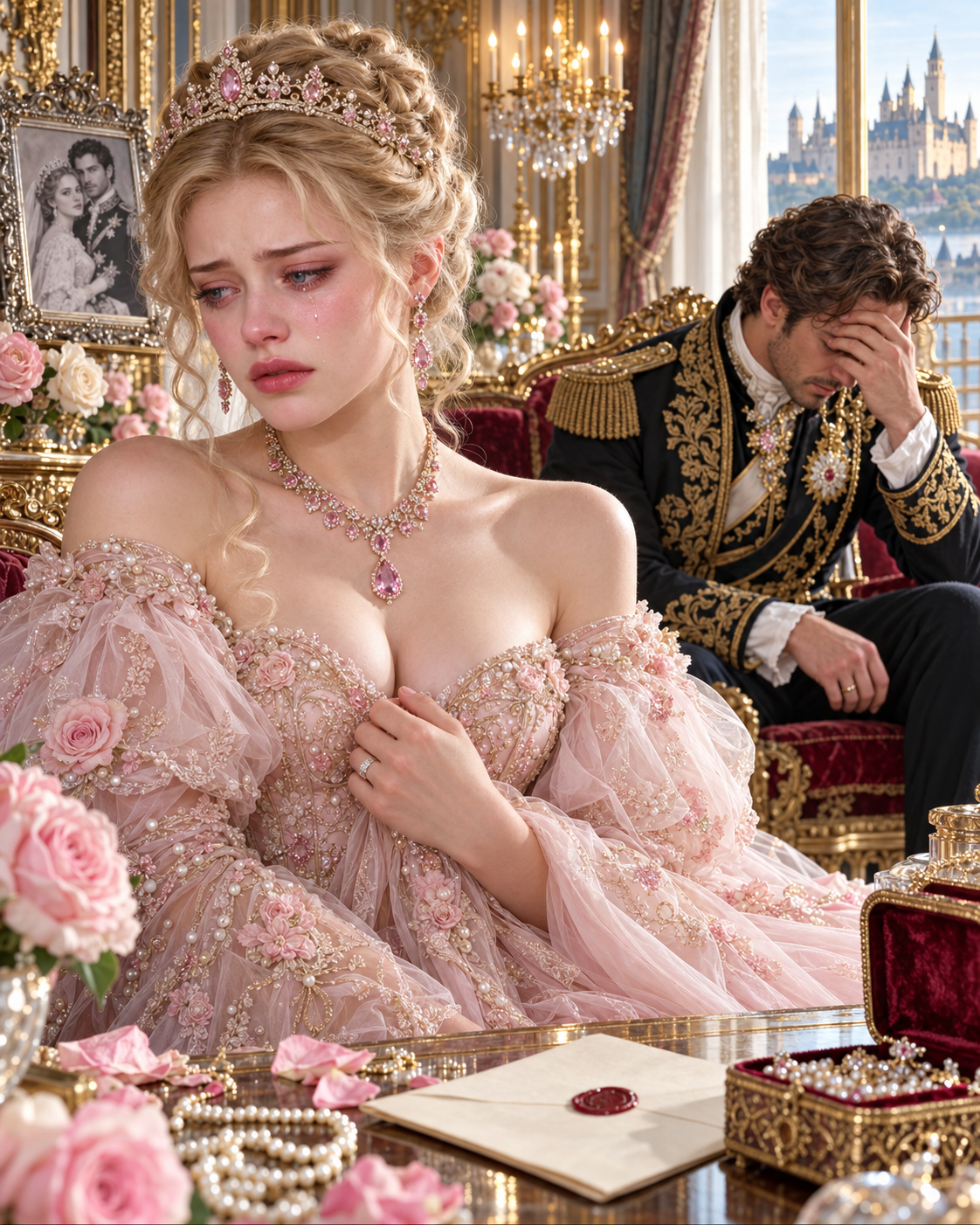
The room fell silent.
Victoria thought of the loan document, the forged signature, and the mysterious date of her meeting with James.
Someone had been altering evidence for years.
And someone had known exactly when she began asking questions.
“Why give this to me?” Victoria asked.
Eleanor looked toward her sister’s photograph.
“Because I spent months believing Edward loved me. Then I discovered he had promised Harkcastle that I would disappear once I had served my purpose.”
Victoria watched her carefully.
“What purpose?”
Eleanor swallowed.
“To persuade you to leave him.”
The answer was so unexpected that Victoria remained motionless.
“He wanted you to discover the letters,” Eleanor continued. “He told me to write them. He chose the words, even the paper.”
Victoria remembered the cream-colored envelope, the perfume, the carefully folded pages.
A betrayal designed to be discovered.
“Why?”
“Because if you left before learning about the loans, Edward believed he could convince you to accept a private settlement. You would surrender your claim to the estate in exchange for your personal funds.”
“But he had already sold those funds.”
“Yes.”
Victoria closed her eyes briefly.
Edward had intended to leave her with neither marriage nor money.
Eleanor continued, her voice barely steady.
“When I learned what he was doing, I threatened to tell you everything.”
“And he threatened you.”
“He told me accidents happen to women who interfere in financial affairs.”
Victoria opened her eyes.
“Then we will make certain he regrets saying it.”
That evening, Victoria returned to Ashford House carrying the copied accounts beneath her cloak.
Edward was waiting in the entrance hall.
He had dismissed the footman.
“You’ve been seeing Eleanor,” he said.
Victoria handed her gloves to the housekeeper, who had appeared at the far end of the corridor.
“Good evening, Edward.”
“Answer me.”
She turned.
“You have forgotten how to ask a question without giving an order.”
Edward stepped closer.
“Whatever that girl told you, she is unstable.”
“She seems remarkably clear-minded to me.”
“You do not understand what Harkcastle can do.”
“Then perhaps you should have considered that before borrowing against property you did not control.”
Edward’s face tightened.
“I did it for us.”
Victoria looked at him.
“For us?”
“The estate was failing.”
“The estate was recovering.”
“Not quickly enough.”
Victoria stepped past him.
Edward caught her wrist.
It was not a violent movement, but it was the first time in ten years he had physically prevented her from walking away.
She looked down at his hand.
“Release me.”
He hesitated.
“Edward.”
His fingers loosened.
She withdrew her wrist and continued toward the staircase.
Behind her, he spoke in a voice she scarcely recognized.
“Harkcastle is coming tomorrow.”
Victoria stopped.
“He says there will be no more extensions.”
She turned slightly.
“Then I suggest you prepare yourself for an unpleasant conversation.”
At dawn, Victoria sent three letters.
The first went to James Whitfield.
The second to Eleanor.
The third was addressed to Sir Henry Pembroke, a magistrate who had once been a close friend of her father.
By noon, the three recipients had received their instructions.
At two o’clock, George Harkcastle arrived at Ashford House.
He was a tall, carefully dressed man with silver hair and a walking cane topped by a polished black stone.
His expression suggested that every room he entered already belonged to him.
Edward greeted him nervously.
Victoria received him in the drawing room.
“Mr. Harkcastle,” she said, indicating a chair.
“How gracious of you, Your Grace.”
He sat without removing his gloves.
“I trust your husband has explained the nature of our difficulty.”
“He has explained very little.”
Harkcastle smiled.
“That does sound like Edward.”
Edward shifted beside the fireplace.
Harkcastle opened a document case and removed several agreements.
“The outstanding obligation is substantial. Unless payment is arranged immediately, I shall be obliged to enforce the security.”
“And you believe the security includes Ashford House.”
“It does.”
“On the strength of my authorization?”
“Precisely.”
Victoria accepted the document.
She studied the signature for a moment.
“An excellent imitation.”
Harkcastle’s smile faded slightly.
“I beg your pardon?”
“My signature. Whoever copied it has considerable talent.”
Edward stared at the carpet.
Harkcastle leaned forward.
“I would caution you against making accusations you cannot substantiate.”
Victoria returned the agreement.
“Of course.”
She glanced toward the clock.
“May I ask one question?”
“Certainly.”
“Why did you pay a county records officer to alter the dates of my father’s financial agreements?”
The silence that followed was immediate.
Edward lifted his head.
Harkcastle remained perfectly still.
“I have no knowledge of such an arrangement.”
Victoria nodded.
“Then perhaps you will be relieved to know the officer has agreed to explain the payments himself.”
A door opened behind them.
James Whitfield entered with Sir Henry Pembroke.
Two constables waited in the corridor.
Harkcastle stood.
“What is the meaning of this?”
Sir Henry approached the table.
“We have obtained sworn statements concerning the alteration of property records, false authorizations, and the transfer of funds obtained through deception.”
Harkcastle looked toward Edward.
For the first time, his composure cracked.
“You fool,” he whispered.
Edward took a step backward.
Victoria watched the exchange.
There it was.
Not loyalty.
Not friendship.
Only two men realizing that each had trusted the other to keep the same crimes hidden.
Harkcastle recovered quickly.
“You have documents, perhaps, but documents are easily misunderstood.”
James placed Eleanor’s copied accounts on the table.
“Fortunately, Mr. Harkcastle, we also have your own correspondence.”
Harkcastle’s eyes narrowed.
“Where did you obtain those?”
“From someone you underestimated,” Victoria replied.
The solicitor opened another folder.
“And the original loan agreement executed by Lord Edmund Vale has been examined. The later amendments contain different ink, inconsistent witnesses, and dates that contradict the surviving registry entries.”
Sir Henry regarded Harkcastle coldly.
“You will be asked to account for those discrepancies.”
For several seconds, Harkcastle appeared to calculate his options.
Then he turned toward Edward.
“Tell them, Ashford.”
Edward’s expression emptied.
“Tell them what?”
“That the arrangement was yours.”
Victoria felt James move slightly beside her.
Harkcastle continued.
“You approached me last winter with a proposal to revive the old security. You knew precisely what could be recovered from your wife’s inheritance.”
Edward’s voice rose.
“You agreed to it!”
“I agreed to lend money against guarantees you claimed were legitimate.”
“You knew they weren’t!”
Harkcastle’s face hardened.
“And you were perfectly willing to forge your wife’s name to obtain them.”
Victoria listened without interrupting.
Their carefully maintained alliance was destroying itself.
Then Edward turned toward her.
“Victoria, please.”
She studied the man before her.
The carefully chosen suits.
The charming smile.
The familiar face she had loved for a decade.
For years, she had mistaken his helplessness for innocence and his dependence for affection.
Now he stood among the ruins of his own decisions, searching for someone to protect him from their consequences.
“Tell them what happened,” she said.
He shook his head.
“Victoria—”
“Not for me. Not for the estate. Tell the truth because you have avoided it long enough.”
Edward sank into a chair.
His hands trembled as he began speaking.
He described the gambling debts, the secret accounts, the forged signatures, and the arrangement designed to persuade Victoria to abandon her property rights.
He admitted that he had deliberately placed Eleanor’s letter where Victoria would find it.
He admitted selling assets he had no authority to sell.
And he admitted that the forged agreement had been prepared by a clerk connected to Harkcastle’s office while Victoria attended her appointment with James.
James lowered his eyes.
Victoria understood why he had seemed so disturbed by the date.
The appointment had not merely provided an opportunity.
It had been used to establish an alibi for a signature she never gave.
When Edward finished, the room was quiet.
Sir Henry instructed the constables to take statements and secure the documents.
Harkcastle attempted one last objection.
Edward said nothing.
As the men were escorted from the room, Harkcastle paused beside Victoria.
“You imagine this ends because you have exposed a few signatures?”
Victoria met his gaze.
“No. I imagine it begins with people finally being required to answer for them.”
His expression hardened, but he continued toward the door.
Edward remained behind for a moment.
He looked at the paintings, the polished furniture, the tall windows overlooking the gardens.
Then his gaze settled on Victoria.
“You will lose everything if this becomes public.”
She considered him quietly.
“No, Edward. I may lose the appearance of the life I thought I had.”
He waited.
“But I have already discovered how little that appearance was worth.”
He lowered his head.
For the first time, Victoria did not feel compelled to comfort him.
The following months were neither simple nor kind.
There were hearings, examinations of accounts, and endless correspondence.
Several of Edward’s transfers were challenged and reversed, though part of the money could not be recovered.
Harkcastle’s records were placed under investigation, and the fraudulent securities were contested before the court.
Edward faced proceedings arising from the forged documents and unauthorized transactions.
The marriage ended through formal legal arrangements after a painful negotiation.
Victoria refused every proposal that required her silence in exchange for convenience.
Rumors traveled through London drawing rooms.
Some acquaintances stopped calling.
Others arrived offering sympathy disguised as curiosity.
Victoria received neither group for very long.
Instead, she spent her mornings working with independent financial advisers and her afternoons inspecting Ashford House.
For the first time, the estate accounts were organized under her direct supervision.
Every payment required authorization.
Every contract was reviewed.
And no one was permitted to sign her name but Victoria herself.
One autumn afternoon, Eleanor visited.
The leaves had turned copper along the drive, and sunlight spilled across the drawing room floor.
Victoria found her standing beside the same fireplace where the first letter had been discovered.
“I nearly didn’t come,” Eleanor admitted.
“Why?”
“I wasn’t certain you would want to see me again.”
Victoria set down the tea tray.
“You helped expose what was happening.”
“I also helped him deceive you.”
“Yes,” Victoria said.
Eleanor looked away.
Victoria poured the tea.
“Both things can be true.”
Eleanor accepted her cup.
For a while, they sat in companionable silence.
Then Eleanor explained that she had been offered a position managing records for a charitable foundation.
It was modest work, but the salary was dependable.
“I wanted to tell you before accepting,” she said.
Victoria smiled faintly.
“Then I hope you’ve already negotiated proper terms.”
Eleanor laughed.
It was the first unguarded sound Victoria had heard from her.
Before leaving, Eleanor paused at the door.
“Do you ever regret meeting me?”
Victoria considered the question.
“I regret what happened before we met.”
Eleanor waited.
“But not the truth you brought with you.”
The younger woman nodded and stepped into the autumn sunshine.
Winter came early that year.
A thin frost covered the gardens of Ashford House, silvering the hedges and softening the gravel paths.
One evening, James Whitfield arrived carrying a final set of papers.
Most of the disputed property claims had been resolved in Victoria’s favor.
The estate would survive.
Not without losses, and not without years of careful work.
But it would remain intact.
James placed the documents on her desk.
“There is one further matter,” he said.
Victoria looked up.
“Must there always be?”
He smiled.
“I suppose there must.”
From his case, he withdrew a small wooden box.
Inside lay her father’s signet ring and another letter.
“These were retained among the estate papers,” James explained. “I thought you should have them.”
Victoria touched the ring.
She remembered her father’s hands, stained with ink from his correspondence, and the way he used to tap the edge of his desk when considering an important decision.
She unfolded the letter.
It was shorter than the first.
My dear girl,
One day, people will tell you that keeping the peace is the same as doing what is right.
It is not.
Peace purchased by surrendering your judgment is only another kind of captivity.
Be generous where you can, firm where you must, and never mistake another person’s disappointment for evidence that you have done wrong.
Victoria read the final sentence twice.
Then she folded the paper and placed it beside the window.
James stood quietly.
“Your father understood you rather well.”
Victoria looked toward the gardens.
“I think he understood what I might forget.”
That spring, Victoria made a decision that surprised nearly everyone.
She established a small charitable trust using a portion of the income recovered from her personal holdings.
Its purpose was simple.
To provide legal advice and practical financial education to women who had inherited property, entered marriage settlements, or found themselves facing debts incurred without their knowledge.
James helped prepare the documents.
Eleanor agreed to oversee the records.
The first women arrived quietly, often carrying envelopes they were afraid to open.
Victoria met them in a bright room overlooking the east garden.
She never asked why they had waited so long to seek help.
She asked what they knew, what they had signed, and what they wanted to protect.
Sometimes the answers came immediately.
Sometimes they took hours.
She listened.
And when necessary, she placed a blank sheet of paper before them and began again.
Years later, visitors to Ashford House would admire its restored stonework, its carefully maintained gardens, and the magnificent library overlooking the fields.
They would speak of Victoria Ashford as the woman who saved an estate from ruin.
But Victoria rarely thought of her achievement in those terms.
She remembered a rainy Thursday evening, a cream-colored envelope, and a woman standing beside a dying fire.
She remembered how narrowly she had escaped surrendering everything because she had been taught that loyalty meant enduring what should never have been accepted.
And she remembered the moment she realized that courage did not always arrive as anger.
Sometimes it arrived as a quiet question.
A signature examined twice.
A door opened despite the fear of what waited beyond it.
On a clear morning in early summer, Victoria stood on the terrace overlooking the gardens she had spent so many years restoring.
The roses were beginning to bloom.
Inside, the household was preparing for another ordinary day.
Eleanor’s laughter drifted faintly from an open window, followed by the sound of James discussing some troublesome account with the steward.
Victoria held her father’s signet ring in her palm.
For years, she had believed her greatest responsibility was preserving the Ashford name.
Now she understood that a name was worth nothing if maintaining it required her to abandon herself.
She slipped the ring onto her finger.
Then she walked inside, leaving the terrace doors open to the morning air.
Because the most valuable inheritance her father had left her was never the estate, the money, or the title.
It was the right to decide what her life would become.
And this time, Victoria intended to exercise it.
THE END.