The Duke of Rothbury had agreed to marry a woman he barely knew. What he hadn’t agreed to was the blood she left on his drawing-room floor.
Gideon’s question hung in the drawing room like the final note of a bell.
Diana’s uncle stood motionless beside the table, his eyes fixed on the document he had brought with such confidence.
Outside, rain began tapping against the tall windows, soft at first, then harder.
“Well?” Gideon asked.
Lord Edmund Vale adjusted his collar.
“You cannot expect me to explain every irregularity in a document written several years ago.”
“A dead man’s signature is rather more than an irregularity.”
Gideon lifted the paper toward the light.
“Sir Lionel Harcourt died five years ago. My father attended his funeral.”
Diana looked between the two men.
She remembered Sir Lionel only vaguely, an elderly gentleman who had once visited her uncle’s house and brought her a little wooden horse when she was a child.
He had been kind to her.
The thought that his name could be used to frighten her now made her stomach turn.
“This is a forgery,” Gideon said.
Edmund’s mouth tightened.
“That is a serious accusation.”
“Then you should be pleased to have it examined.”
Gideon crossed to the fireplace and rang the servants’ bell.
Diana’s uncle moved toward the document, but Gideon placed one hand over it.
“Leave it.”
“I brought that paper.”
“And you will leave without it.”
The drawing-room door opened.
The butler appeared, his expression carefully composed.
“Your Grace?”
“Ask Mr. Bellamy to come immediately. Send someone to the magistrate as well.”
Edmund took a sharp breath.
“Are you threatening to have me arrested?”
“Not yet.”
Gideon turned toward him.
“But I am beginning to find the idea agreeable.”
For the first time since Diana had known him, her uncle stepped backward when another man approached.
Yet his eyes continued searching the room, measuring the distance to the door, the windows, and the small writing desk beside the fireplace.
Diana recognized that look.
He was searching for a way to hurt someone before he lost control.
“You think your title makes you untouchable, Rothbury?”
“No.”
Gideon’s answer came without hesitation.
“I think it makes me responsible for what happens beneath this roof.”
Edmund laughed bitterly.
“Then perhaps you should ask your wife where her mother’s jewels went.”
Diana stiffened.
Gideon’s attention shifted toward her.
“What jewels?”
“There were none left,” Diana said. “My uncle told me they had been sold to settle the estate’s debts.”
“An unfortunate necessity,” Edmund added.
But Gideon noticed that Diana had gone pale.
He crossed the room and stood beside her.
“You needn’t answer him.”
She looked at the document.
Then at her uncle.
For years, she had believed every accusation he made against her.
Careless.
Ungrateful.
A burden he had been forced to support.
Now, looking at the forged signature, she felt something unfamiliar beneath her fear.
Doubt.
Not in herself.
In him.
“Where is my mother’s will?” she asked.
Edmund blinked.
“What?”
“You said she left nothing. Where is the will?”
“You have no understanding of these matters.”
“Then explain them.”
Her voice shook, but she did not lower it.
Edmund’s eyes narrowed.
“You would question the man who raised you?”
Diana’s fingers curled against her skirt.
“You raised your hand against me. That isn’t the same thing.”
The room became utterly still.
Even Gideon seemed to stop breathing.
Edmund’s expression changed.
The pleasant mask disappeared, revealing the familiar coldness beneath it.
“You ungrateful little—”
“Finish that sentence,” Gideon interrupted quietly.
Edmund looked at him.
Gideon’s face held no anger now, only a frightening stillness.
“Please.”
The older man said nothing.
When the servants arrived, Gideon instructed them to escort Lord Vale into the morning room and remain outside until the magistrate came.
Edmund resisted only long enough to glance at Diana.
“This isn’t finished.”
Diana watched him leave.
“No,” she whispered. “It isn’t.”
***
The moment the door closed, her knees weakened.
Gideon caught her before she reached the floor.
His arms surrounded her, steady and warm, and for one terrible second she remembered how desperately she had missed them.
“Sit down,” he murmured.
He guided her toward the sofa and knelt before her.
“Are you in pain?”
She shook her head.
“The child?”
“He’s moving.”
Gideon’s eyes dropped toward her stomach.
Neither of them spoke.
Then Diana noticed his hand resting on the sofa beside her, clenched so tightly that the knuckles had turned white.
She slowly placed her fingers over his.
“He isn’t going to take me away, is he?”
Gideon looked up sharply.
“No.”
“Even if that paper somehow—”
“No.”
The force of his answer startled her.
He softened his voice.
“Whatever that document says, you will not return to that house.”
Diana studied his face.
“Is that because I’m carrying your heir?”
The question struck him harder than her uncle’s threats.
He looked away.
There it was again.
That distance she had come to recognize.
She withdrew her hand.
“Forgive me. I shouldn’t have asked.”
“Diana—”
“You’ve made your obligations very clear.”
She rose carefully.
“I think I would like to rest.”
He stood as well, but she had already turned toward the door.
For a moment, Gideon considered stopping her.
He could command an entire household with a sentence, negotiate with men twice his age, and face an armed opponent without hesitation.
Yet he could not find the words to ask his wife to stay.
***
That evening, Mr. Bellamy arrived from London.
The Duke’s solicitor was a narrow-faced gentleman with silver spectacles and a habit of examining documents as though they had personally offended him.
He studied the supposed marriage agreement for nearly an hour.
Then he removed his spectacles.
“This is remarkably careless work.”
Gideon stood beside the desk.
“Can you prove it?”
“Almost certainly. The ink is newer than the paper, the witness was dead before the date written here, and the seal belongs to a legal office that closed several years earlier.”
“Then why bring it?”
Bellamy hesitated.
“Perhaps Lord Vale never expected you to investigate it.”
“Or perhaps he needed to frighten Diana into leaving before I did.”
The solicitor nodded slowly.
“There is another possibility, Your Grace.”
He took a separate sheet from his leather case.
“When you instructed me to examine Lady Diana’s family affairs before your marriage, I discovered several unusual transfers from her mother’s estate.”
Gideon frowned.
“You told me there was insufficient evidence to pursue them.”
“There was, until this afternoon.”
Bellamy placed the forged agreement beside the account records.
“The same witness’s name appears on three transactions authorizing the sale of properties that should have belonged to Lady Diana.”
Gideon stared at the signatures.
“All dated after Harcourt’s death?”
“Every one.”
The fireplace cracked.
Outside, footsteps passed along the corridor.
“How much was taken?”
Bellamy gave him the figure.
Gideon’s expression darkened.
It was not a modest inheritance.
It was enough to purchase a considerable estate.
Enough to make Diana financially independent for the rest of her life.
Enough to explain why her uncle had been determined to keep her unmarried and under his control.
“Does she know?”
“I doubt it.”
Gideon moved toward the window.
Across the courtyard, a lamp burned in Diana’s bedroom.
He thought of her arriving at Rothbury Hall with bruises beneath her sleeves, willing to surrender her future in exchange for safety.
She had offered him an heir because she believed she possessed nothing else of value.
And he had accepted.
The realization left a bitter taste in his mouth.
“Prepare whatever is necessary to restore her inheritance,” he said.
“At once, Your Grace.”
“And Bellamy?”
“Yes?”
“Whatever happens to our marriage, that money belongs to her.”
***
The magistrate arrived the following morning.
Edmund Vale had spent the night in the morning room, refusing food and demanding to speak privately with his niece.
No one granted his request.
By breakfast, two constables waited in the entrance hall.
Gideon had intended to handle the matter without Diana present.
But when he entered the drawing room, he found her seated beside the window, dressed in a simple blue gown.
Her hair was pinned neatly.
Her hands rested motionless in her lap.
“I wish to stay,” she said.
“You don’t need to face him again.”
“I know.”
Something in her expression made Gideon stop.
She was frightened.
He could see it in the way her thumb moved repeatedly against her wedding ring.
But she had chosen to come.
He pulled out the chair beside her.
“Then I’ll stay here.”
Her eyes lifted to his.
“Thank you.”
When Edmund entered, he appeared older than he had the previous afternoon.
His coat was wrinkled, and the arrogance in his face had been replaced by a watchful calculation.
The magistrate began with the forged agreement.
Then Bellamy presented the estate records.
Within minutes, Edmund’s composure cracked.
“Those transactions were authorized!”
“By a gentleman already deceased,” Bellamy replied.
“A clerical error.”
“Repeated three times?”
Edmund glanced toward Diana.
She did not look away.
The magistrate opened another document.
“We have also obtained a statement from the former steward of your household.”
Edmund’s face drained.
Diana felt Gideon shift beside her.
“What statement?” Edmund demanded.
“One concerning the treatment of your niece and the instructions given to your servants.”
For the first time, Diana’s uncle seemed genuinely afraid.
The magistrate continued.
“Apparently, several members of your household were ordered to conceal injuries and prevent Lady Diana from corresponding with friends.”
“Servants gossip.”
“Servants also remember.”
Diana slowly closed her eyes.
She remembered a maid named Ellen bringing cold water to her room after a particularly terrible evening.
The girl had cried while washing the blood from Diana’s hair.
Her uncle had dismissed Ellen the following morning.
Diana had assumed she would never see her again.
“Where is Ellen?” she asked.
The magistrate glanced at Bellamy.
“She has provided a sworn statement, Your Grace. She is safe.”
Diana’s breath caught.
For years, she had believed nobody would speak for her.
Somebody had.
Edmund abruptly pushed back his chair.
“This is absurd. I refuse to participate.”
The constables moved toward the door.
Gideon did not rise.
“You may refuse to answer questions,” he said. “But you will not leave with my wife’s inheritance.”
Edmund turned toward him.
“Everything I did was for that girl’s benefit.”
Diana stood.
Her knees trembled beneath her gown, but she remained upright.
“Then why was I afraid every time I heard your footsteps?”
Edmund opened his mouth.
Nothing came out.
“Why did you lock the pantry when I disobeyed you?”
“Diana, you were difficult—”
“Why did you tell me no one would ever want me unless they needed something from me?”
Gideon looked at her.
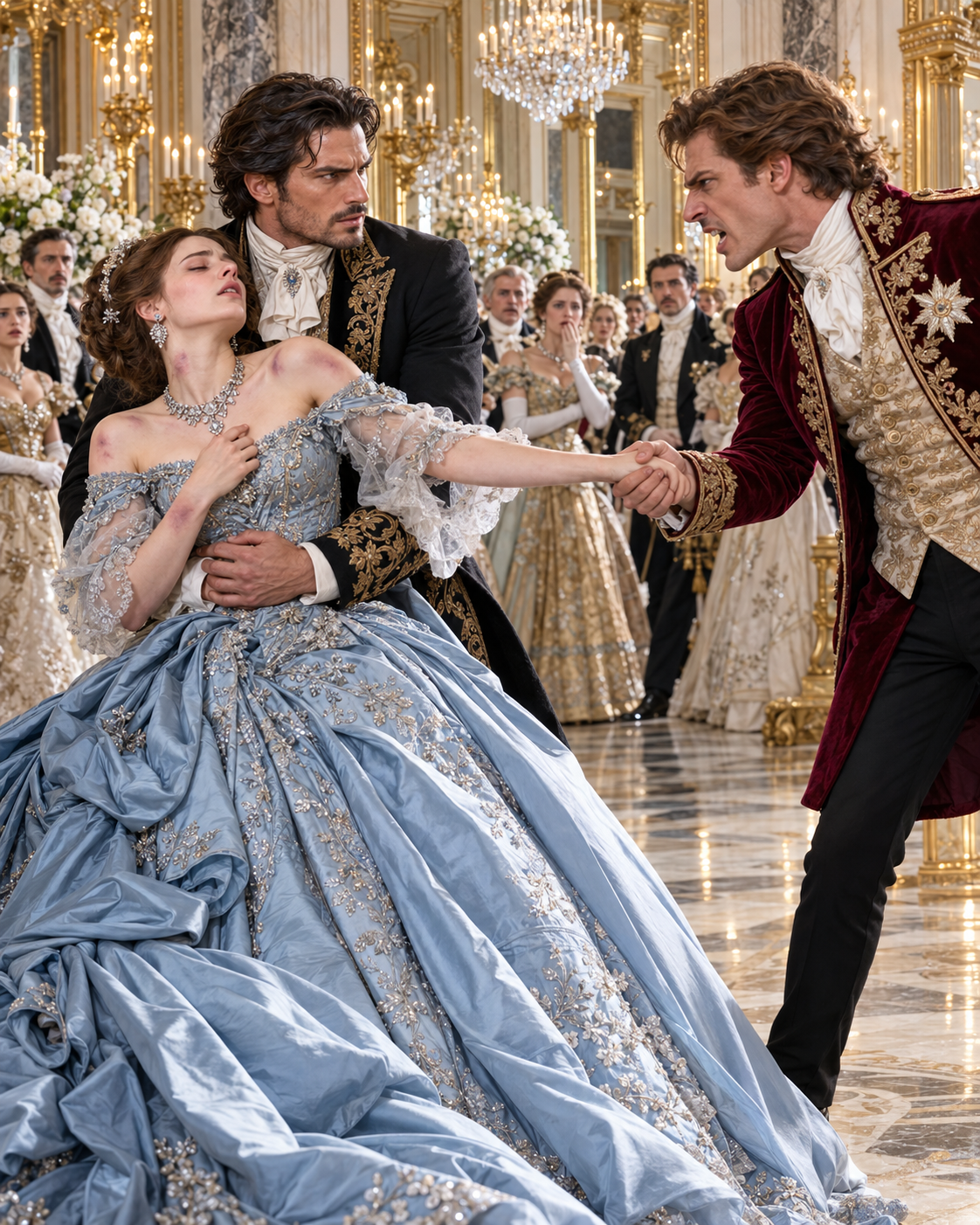
She stared at her uncle, her voice no longer rising.
“You made me believe I had to earn the right to be safe.”
Edmund’s jaw worked.
“You owe me respect.”
Diana shook her head.
“Respect isn’t a debt you can collect from someone you’ve hurt.”
The magistrate quietly instructed the constables to take Edmund into custody pending further proceedings.
As they approached, Edmund lunged toward the table.
His hand closed around the forged agreement.
Before anyone could stop him, he thrust it into the fire.
Flames caught the paper instantly.
Bellamy rose in alarm.
But Gideon remained still.
“Fortunately,” he said, “Mr. Bellamy made copies yesterday.”
Edmund stared at him.
Then the constables seized his arms.
His furious protests echoed down the corridor until the front doors closed behind him.
Diana stood watching the empty doorway.
She had imagined this moment so many times.
She had thought freedom would arrive with tears or triumph.
Instead, there was only a strange, enormous quiet.
***
That afternoon, Diana walked into the garden alone.
The rain had passed, leaving the paths damp and the air sharp with the smell of wet earth.
New leaves trembled on the branches.
She stopped beside a small stone fountain.
For the first time in years, nobody was waiting to tell her where she could go.
She could leave Rothbury Hall if she wished.
Travel.
Purchase a home.
Choose a life that belonged entirely to her.
The thought should have brought uncomplicated happiness.
Instead, she found herself looking toward the study window.
Gideon stood behind the glass.
He had been watching her.
When their eyes met, he stepped away.
Diana looked down.
The man who had protected her from everyone else had become the one person she could not reach.
***
Three evenings later, Gideon entered Diana’s sitting room carrying a leather folder.
She was sewing a small white ribbon onto the edge of a baby’s blanket.
He paused in the doorway.
“May I come in?”
She set the needle aside.
“Of course.”
He took the chair opposite her.
For several moments, he examined the folder without opening it.
Then he placed it on the table.
“Bellamy has recovered the first portion of your inheritance. The remaining properties will take longer.”
Diana stared at him.
“My inheritance?”
“Your mother’s estate was never insolvent. Your uncle concealed its value and appropriated much of the income.”
She opened the folder.
Inside were documents bearing her mother’s name.
There was a small portrait too, recovered from an old inventory.
Diana picked it up carefully.
Her mother stood beneath a flowering tree, smiling at someone beyond the edge of the painting.
For a moment, Diana was twelve again.
She could almost remember the scent of lavender on her mother’s gloves.
Gideon watched her without speaking.
Finally, she whispered, “He told me she left me nothing.”
“He lied.”
A tear landed on the portrait.
Diana wiped it away with her thumb.
Gideon moved as though to comfort her, then stopped.
She noticed.
“Do you regret marrying me?”
The question came so quietly that he almost missed it.
“No.”
“Then why do you keep leaving?”
His eyes closed briefly.
“Diana…”
“Please don’t tell me I have everything I was promised.”
He looked at the blanket in her lap.
The white ribbon had slipped between her fingers.
“I thought distance would make things simpler.”
“For whom?”
He said nothing.
Diana waited.
Eventually, Gideon leaned forward, resting his elbows on his knees.
“My mother died bringing my younger brother into the world.”
Diana’s expression softened.
“You never told me.”
“My father loved her with a devotion I never understood until she was gone.”
He stared toward the darkening window.
“After her death, he became a different man. He could barely look at the child who survived her.”
“What happened to your brother?”
“He lived three weeks.”
Diana’s hand slowly moved to her stomach.
Gideon continued, his voice carefully controlled.
“My father never recovered. I spent my childhood watching a man destroyed by loving someone he couldn’t save.”
The room was silent.
“When you told me about the baby, I saw how happy you were.”
He swallowed.
“And I realized I had begun imagining things I had never permitted myself to want.”
Diana’s eyes searched his face.
“What things?”
“A child running through the gardens. Your laughter at breakfast. Growing old in this house with you.”
He looked at her at last.
“Then I remembered how easily all of it could be taken away.”
Diana lowered the blanket.
“So you decided to take yourself away first?”
He flinched.
“Yes.”
The admission left him exposed in a way no anger ever had.
She studied the man before her.
The feared Duke of Rothbury, who could silence a room with a glance, could not bear the thought of losing what he loved.
Yet his fear had nearly destroyed the very happiness he wanted to protect.
“Gideon,” she said softly, “I have spent most of my life being punished for things I could not control.”
He met her eyes.
“I cannot spend the rest of it being kept at a distance because you are afraid of what might happen.”
“I know.”
“I needed you when I told you about our child.”
His face tightened.
“I failed you.”
“Yes.”
She let the word remain between them.
Then she continued.
“But you are here now.”
Gideon looked down at his hands.
“I don’t know how to do this.”
“Neither do I.”
A faint, fragile smile appeared on her lips.
“Perhaps we could stop pretending we must know everything before we begin.”
He reached toward her, slowly enough that she could refuse.
Diana placed her hand in his.
For the first time in weeks, he did not pull away.
***
Their reconciliation did not happen in a single evening.
There were awkward breakfasts.
Conversations that ended too soon.
Moments when Gideon retreated into silence and had to return, apologize, and try again.
But he began appearing at Diana’s medical appointments.
He learned which foods made her ill.
He sat beside her when the child moved, his large hand resting against her stomach with an expression of astonishment he made no effort to conceal.
One night, Diana woke to find him sitting by the bed.
“What’s wrong?” she murmured.
He looked embarrassed.
“I was listening.”
“To what?”
“Your breathing.”
She studied him in the dim candlelight.
“Are you afraid?”
“Frequently.”
She lifted the covers.
“Then stop sitting over there.”
He climbed into bed beside her.
She placed his hand over the child.
A small movement answered his touch.
Gideon drew in a breath.
Diana smiled against his shoulder.
For once, neither of them needed words.
***
Summer arrived with long golden evenings and roses climbing the southern walls.
The legal proceedings against Edmund Vale continued in the county court.
Witnesses testified.
Records were examined.
The stolen properties were gradually returned to Diana’s name.
When Bellamy presented the final account, Gideon offered to have everything transferred into a trust for their child.
Diana considered the papers.
Then she shook her head.
“I would rather keep the estate in my own name.”
Gideon looked up.
“Of course.”
She studied him, almost expecting an objection.
None came.
“It can still pass to our child one day,” she explained.
“Or you may do something entirely different with it.”
Diana smiled.
“You mean that?”
“Every word.”
She looked again at the figures.
There was enough money to help women who had nowhere safe to go.
Women who, like her, might believe they had no choice but to endure cruelty.
An idea began taking shape.
***
Two months later, Diana stood before a small house at the edge of the Rothbury estate.
Its windows had been repaired, and fresh paint brightened the doors.
Inside were clean beds, a warm kitchen, and rooms that could be locked from within.
The keys belonged to the women who stayed there.
Gideon waited beside her while the housekeeper inspected the final preparations.
“What will you call it?” he asked.
Diana looked at the sunlight spilling across the threshold.
“Willow House.”
“Why willow?”
“My mother used to say willow trees bend in storms without surrendering their roots.”
Gideon glanced at her.
“She sounds wise.”
“She was.”
Diana rested a hand on her stomach.
“I want this to be somewhere women can rest while deciding what comes next.”
“Not somewhere they are told what to do?”
“No.”
Her eyes moved toward the open door.
“Some of them have heard enough orders for a lifetime.”
Gideon gently kissed her temple.
“Then Willow House shall have no shortage of support.”
She turned toward him.
“Not because I’m your wife.”
He smiled.
“Because it is worth doing.”
***
The child arrived during the first storm of autumn.
Lightning flashed beyond the bedroom windows, illuminating the curtains in pale bursts.
Gideon stood beside the bed, holding Diana’s hand while the physician worked.
Hours passed.
Candles burned low.
The storm refused to quiet.
At one point, Diana cried out, and Gideon felt her fingers tighten around his.
The sound brought every buried memory of his childhood rushing back.
His mother’s closed bedroom door.
His father’s helpless pacing.
The silence that had followed.
He stared at the physician.
“Is she safe?”
“We are doing everything necessary, Your Grace.”
It was not the answer he wanted.
Diana turned her head toward him.
“Gideon.”
He looked down.
Her face was pale with exhaustion, but her gaze remained steady.
“Stay with me.”
He leaned closer.
“I’m here.”
“Then look at me.”
He did.
And when another wave of pain came, he held her hand instead of turning away.
Near dawn, a baby’s cry rose above the rain.
The physician smiled.
“A daughter, Your Graces.”
For a moment, Gideon could not move.
Then a tiny bundle was placed into Diana’s arms.
The child had dark hair, a flushed face, and one small fist pressed stubbornly against her cheek.
Diana looked up at her husband.
“Would you like to hold her?”
Gideon swallowed.
“I’m afraid I’ll hurt her.”
“You won’t.”
She guided their daughter into his arms.
The baby opened her eyes briefly.
Gideon stared down at her as though the entire world had become something impossibly small and precious.
“Hello,” he whispered.
The child yawned.
Diana laughed softly.
And Gideon, who had once believed love was a weakness, lowered his forehead against his daughter’s tiny hand and wept without shame.
***
They named her Eleanor, after Diana’s mother.
In the months that followed, Rothbury Hall changed.
There were toys scattered across expensive carpets.
Tiny stockings drying near the nursery fire.
Laughter interrupting meetings that had once seemed terribly important.
Gideon discovered that his daughter preferred falling asleep against his chest.
He also discovered that a crying infant had very little respect for ducal authority.
Diana took considerable pleasure in watching him negotiate unsuccessfully with a six-month-old.
“You cannot simply demand that she sleep,” she told him one evening.
“I have tried asking politely.”
“And?”
“She appears unmoved.”
Diana laughed.
Gideon looked at her, then at the child tugging his neckcloth.
He had spent years guarding himself against attachments.
Now he could scarcely imagine a morning without either of them.
***
One spring afternoon, a letter arrived bearing the magistrate’s seal.
The case against Edmund Vale had concluded.
The court had convicted him of fraud involving Diana’s inheritance, and a sentence of imprisonment had been imposed.
The final property transfers were complete.
Diana read the letter beside the nursery window.
Her uncle’s name looked strangely small on the page.
For so long, he had filled every corner of her world.
Now he occupied a handful of lines.
Gideon entered carrying Eleanor, who was attempting to chew the corner of his sleeve.
“Is everything all right?”
Diana folded the letter.
“Yes.”
“Would you like to speak about it?”
She considered the question.
Then she shook her head.
“Not today.”
Gideon nodded.
He did not insist.
Instead, he sat beside her and placed their daughter in her lap.
Eleanor immediately reached for the folded paper.
Diana moved it beyond her reach.
Then she looked through the window.
Beyond the gardens, Willow House stood among the trees.
Its windows were open to the spring air.
A woman was hanging freshly washed sheets along the garden wall while another carried a child into the sunshine.
Life was continuing.
Not because the past had disappeared.
But because it no longer possessed the power to decide every day that followed.
***
Several weeks later, Diana invited Gideon to walk with her beyond the rose garden.
The afternoon was warm, and the grass smelled of rain.
They stopped beneath an old willow tree overlooking the lake.
Eleanor slept peacefully in her father’s arms.
Diana watched the branches moving in the breeze.
“Do you remember our wedding day?”
Gideon smiled faintly.
“I remember you looked prepared to argue with me about every clause of the agreement.”
“I was.”
“You frightened my solicitor.”
“He looked at me as though I were a troublesome business transaction.”
“You were the most determined person in the room.”
She turned toward him.
“And you were unbearably cold.”
“I have been told.”
“Frequently?”
“By one particular woman.”
Diana smiled, then grew thoughtful.
“I used to believe freedom meant never needing anyone again.”
Gideon looked at her.
“I thought if I could build a life where nobody mattered enough to hurt me, I would finally feel safe.”
“And now?”
She reached for Eleanor’s little hand.
“Now I think freedom means being able to choose whom to trust, without being forced to surrender yourself.”
Gideon was quiet for a moment.
Then he said, “I once believed loving someone meant giving the world a weapon against you.”
Diana touched his sleeve.
“And now?”
He looked down at their sleeping daughter.
“Now I think refusing to love would have cost me far more.”
The breeze stirred the willow branches above them.
Diana leaned against his shoulder.
For a long time, they watched the sunlight move across the lake.
***
A year after their wedding, Gideon asked Diana to meet him in the drawing room.
It was the same room where she had once stood bleeding onto the marble floor, offering him the only bargain she believed might save her life.
This time, roses filled the vases.
The windows were open.
And their daughter slept upstairs beneath the watchful care of her nurse.
Gideon stood beside the fireplace holding a folded document.
Diana raised an eyebrow.
“Another agreement?”
“In a manner of speaking.”
She laughed softly.
“I had hoped we were finished with those.”
“So had I.”
He handed her the paper.
She opened it.
It was their original marriage contract.
The arrangement that had promised her protection in exchange for an heir.
Each clause remained exactly as it had been written.
Diana read the familiar words in silence.
Then she noticed a second sheet attached beneath them.
It was an acknowledgment, prepared by Bellamy, confirming that the private conditions of their arrangement had been relinquished by mutual agreement.
Nothing in it restricted her movements, her property, or her decisions.
Gideon watched her carefully.
“I never want you to wonder whether you owe me your presence here.”
Diana lowered the paper.
“Gideon…”
“If you stay, I want it to be because you wish to.”
Her eyes glistened.
“And if I leave?”
His breath caught almost imperceptibly.
“Then I will help you carry your luggage.”
She looked at him for a long moment.
Then she placed the papers on the table and stepped closer.
“You really would, wouldn’t you?”
“Yes.”
Diana took his hands.
“Then I suppose I should tell you something.”
His expression changed.
“What?”
She rose on her toes and kissed him.
“I have no intention of going anywhere.”
Gideon’s arms settled around her waist.
“You’re certain?”
“Entirely.”
She glanced toward the abandoned contract.
“But if you ever become insufferable again, I reserve the right to reconsider.”
He laughed.
It was a warm, unguarded sound.
The kind that once would have startled an entire room into silence.
Diana smiled against his shoulder.
At last, there was nothing left to bargain for.
***
Years later, visitors to Rothbury Hall often remarked that the Duke was not nearly as frightening as his reputation suggested.
They saw him walking through the gardens with his children, listening patiently while his wife explained the latest plans for Willow House.
They saw the restored estate flourish under Diana’s care and the refuge expand to welcome more women seeking safety and independence.
They never entirely understood the quiet understanding between husband and wife.
The way Gideon always asked before entering Diana’s private sitting room.
The way Diana still reached for his hand during thunderstorms.
The way he never treated her courage as something he had given her.
One evening, their daughter Eleanor, now old enough to ask difficult questions, discovered a faded portrait of Diana’s mother.
“Was Grandmama brave?” she asked.
Diana sat beside her.
“Very.”
“Like you?”
Diana looked toward the doorway, where Gideon stood holding their younger son.
She thought of the frightened woman who had arrived at Rothbury Hall convinced that safety was something she had to purchase with obedience.
She thought of the years spent learning to speak without apology.
Then she drew Eleanor onto her lap.
“Being brave doesn’t always mean you’re unafraid,” she said.
“Sometimes it means you’re frightened, but you know you deserve better than what someone is offering you.”
Eleanor considered this seriously.
“Even if that person is very important?”
“Especially then.”
Gideon approached and placed a gentle hand on Diana’s shoulder.
Their daughter looked between them.
“Did Papa save you?”
Diana smiled.
“He helped me when I needed help.”
Then she brushed a loose curl from Eleanor’s forehead.
“But I also had to learn that I was allowed to save myself.”
Gideon kissed the top of his wife’s head.
“And she taught me something I had forgotten.”
“What?” Eleanor asked.
“That a person can be strong and still need other people.”
Eleanor appeared satisfied with these answers.
She slid from Diana’s lap and ran toward the nursery, where her little brother had begun protesting loudly in his father’s arms.
Gideon followed, leaving Diana alone beside the portrait.
Outside, evening light settled over the grounds.
Beyond the gardens, the lamps of Willow House began appearing one by one.
Each light marked a room where someone could sleep without fear of a locked door, an approaching footstep, or a voice demanding gratitude for cruelty.
Diana watched them glow against the darkening trees.
Once, she had believed her life would begin only when someone powerful granted her permission to be free.
Now she understood something far simpler.
Freedom had never been a gift her uncle could withhold, nor a favor her husband could bestow.
It was her right, even when she had not yet known how to claim it.
Gideon returned a few moments later and found her standing by the window.
“Come upstairs,” he said gently. “Eleanor insists that only you can tell the story properly.”
Diana glanced at him.
“What story?”
“The one about the princess who refuses to marry the prince until he learns to ask politely.”
She laughed.
“An excellent story.”
“I suspect it is based on someone rather difficult.”
“Someone remarkably sensible, you mean.”
He offered his hand.
She took it.
Together, they climbed the staircase toward the sound of their children’s laughter.
The past had not vanished, and neither had the scars it left behind.
But those scars no longer defined the shape of their future.
Their marriage had begun as an agreement between two people who believed love was either a danger or a luxury they could not afford.
It endured because they learned that protection without respect could become another kind of prison, and love without honesty could leave even the strongest walls feeling empty.
In the end, Gideon had not rescued Diana from every sorrow, and Diana had not cured him of every fear.
They had simply chosen, again and again, to face those things without abandoning each other.
And in a house once built around silence, they created something neither of them had dared to ask for.
A home where nobody had to earn the right to be loved.
THE END.