The most dangerous man in Newark locked me inside his penthouse the morning I tried to quit my job
Domenico didn’t ask what I was planning. He simply gave me a small nod, keeping his eyes on Preston Caro.
For a man who had built an empire by trusting almost nobody, placing his life in the hands of his cleaning lady was probably the greatest risk he had ever taken.
Caro slipped his hands into his pockets and smiled.
“Look at you, Ferrari. The king of Newark hiding behind a woman who scrubs toilets for a living.”
His men laughed.
I had heard worse insults from people who considered themselves better than me. But Domenico’s expression changed so quickly that even Caro noticed.
“Speak about her like that again,” Domenico said quietly, “and it’ll be the last mistake you ever make.”
Caro raised his eyebrows.
“Six years she’s been working under your roof. Six years, and nobody knew you had a soft spot for her. You should have seen my face when I found out.”
I looked at Domenico. Six years? He had told me his men had been watching over me for months. How long had his interest in me really lasted?
“Your problem,” Caro continued, “is that you forgot men like us aren’t supposed to love anything we can’t afford to lose.”
He motioned toward his men.
One of them approached us and demanded that Domenico surrender his weapon.
Domenico didn’t move.
“Let her walk out of here,” he said. “This is between you and me.”
Caro shook his head.
“That’s exactly why she’s staying.”
My heart was pounding so hard that I could barely hear myself think. But something about Caro’s confidence bothered me. He seemed too comfortable inside a building that belonged to his enemy.
“Someone let you in,” I said.
Caro turned toward me.
“Excuse me?”
“You didn’t fight your way through every security checkpoint. Someone helped you.”
His smile disappeared for half a second.
That was all the confirmation I needed.
Domenico looked at me, then back at Caro.
“Who?”
Caro chuckled.
“You’re about to die, and you’re still worried about employee loyalty?”
I noticed a familiar face among the armed men. It belonged to Vincent Russo, one of Domenico’s senior security officers.
Vincent had worked at the headquarters for nearly ten years. He used to complain whenever I cleaned his office while he was working. He had once made me return to the basement because I had forgotten to empty his trash.
Now he couldn’t even look me in the eye.
“Vincent,” I said.
Domenico followed my gaze.
The silence that followed was more frightening than any threat Caro had made.
“How much?” Domenico asked.
Vincent swallowed.
“It wasn’t personal, boss.”
“How much did he pay you?”
Vincent said nothing.
Caro answered for him.
“Enough to make him realize that loyalty doesn’t pay his mortgage.”
I remembered Vincent talking on the phone weeks earlier. He had sounded nervous, mentioning money and a deadline. At the time, I had assumed it was a family problem.
Now I understood.
Domenico had been betrayed by someone he trusted to protect the entire building.
And somehow, the woman everyone ignored had noticed the warning signs.
Caro stepped closer.
“Give me your weapon, Domenico. Maybe I’ll make her death quick.”
I felt Domenico’s arm tense beside mine.
There was no deal to be made. Caro had no intention of letting either of us leave.
I looked toward the old electrical equipment and remembered the maintenance complaints that had gone unanswered. The garage had suffered repeated power failures, and its aging fire-suppression system was notoriously unreliable.
I had spent entire afternoons cleaning up after those failures.
Now those forgotten problems might be the only things standing between us and death.
I noticed a discarded metal magazine within reach.
Domenico glanced at me.
I whispered a single word.
“Now.”
Everything happened almost at once.
I threw the metal object toward the old equipment. There was a violent flash, followed by a deafening crack.
The garage went dark.
Someone shouted.
A moment later, water began pouring from the ceiling.
The sudden darkness and malfunctioning fire-suppression system threw the entire garage into chaos.
Domenico pulled me down as gunfire erupted around us.
I covered my ears and pressed myself against the cold concrete. Water soaked through my uniform. I couldn’t see anything beyond the occasional flash in the darkness.
Men screamed orders that nobody seemed able to follow.
Then came more gunshots.
I had spent years hearing stories about Domenico Ferrari. People said he was fearless, ruthless, and impossible to surprise.
But hearing those stories while folding towels was nothing like being trapped inside one of them.
I closed my eyes and prayed.
Not for money. Not for a better life. Not even for revenge.
I prayed that I would get another chance to live.
Eventually, the gunfire stopped.
The sound of falling water filled the garage.
“Domenico?” I called.
There was no answer.
I called his name again, louder this time.
A hand touched my shoulder.
“It’s me.”
I nearly collapsed with relief.
His clothes were soaked, and there was blood on his sleeve. I couldn’t tell whether it belonged to him.
“Are you hurt?” I asked.
“Nothing serious.”
“That’s not an answer.”
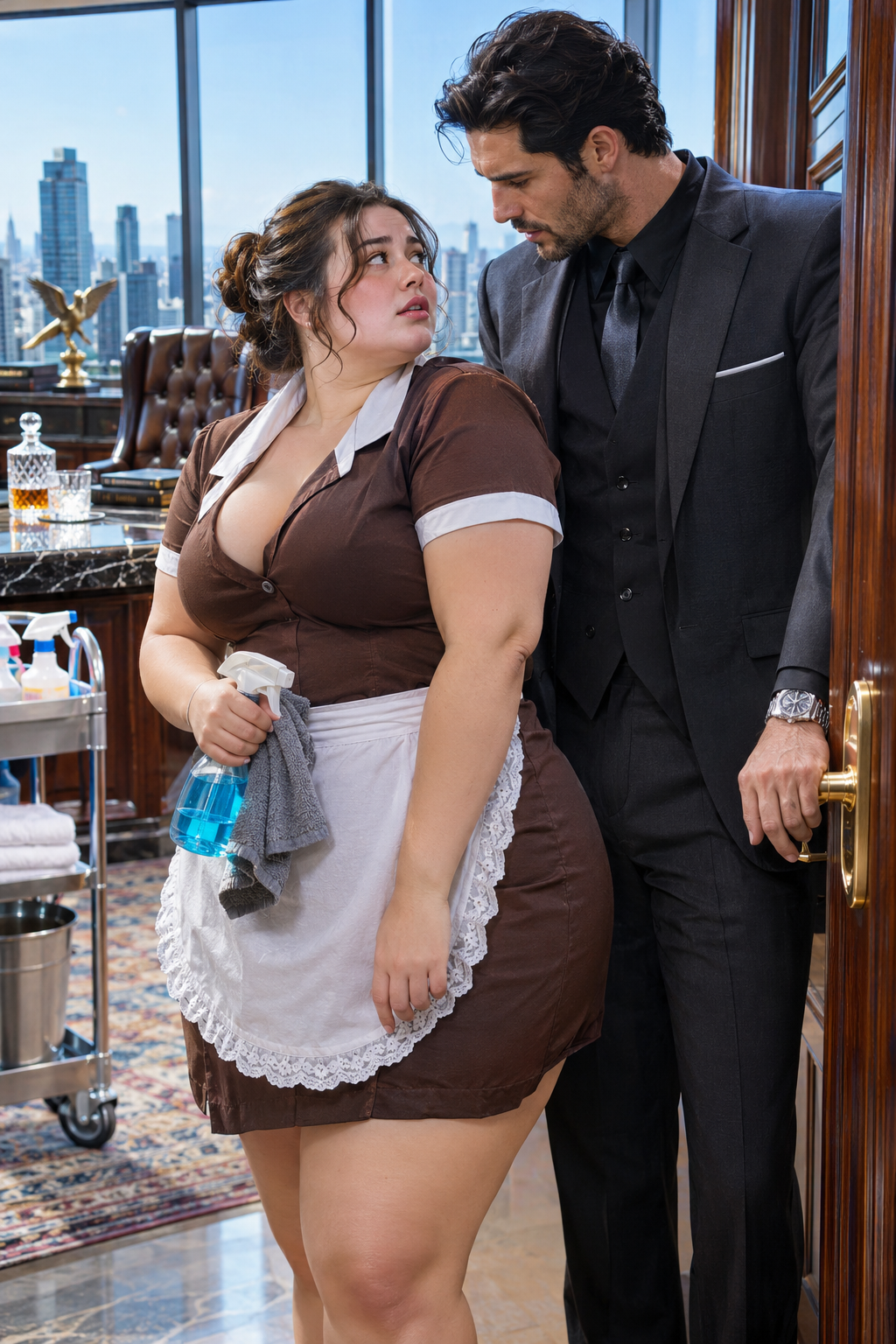
Even in the darkness, I could hear the amusement in his voice.
“You’re really something, Bianca.”
Before I could respond, a familiar voice came from nearby.
“Ferrari!”
It was Caro.
He was still alive.
When the emergency lights finally flickered on, the garage looked like the aftermath of a terrible storm. Water covered the floor. Several of Caro’s men lay motionless, while others had dropped their weapons.
Caro stood near a concrete pillar, breathing heavily.
His expensive suit was ruined, and the confidence he had displayed minutes earlier was gone.
“You think you’ve won?” he shouted.
Domenico stepped forward.
“It’s over, Preston.”
Caro looked at me with pure hatred.
“All because of a stupid maid.”
For the first time that morning, I wasn’t afraid of him.
“No,” I answered. “Because you were too arrogant to believe a maid could be smarter than you.”
His face twisted with anger.
He raised his weapon.
A gunshot echoed through the garage.
Caro fell.
Domenico remained standing.
For several seconds, I stared at the man who had nearly ended my life. I expected to feel satisfaction, but all I felt was exhaustion.
Nobody tells you how quiet victory can be.
There was no cheering. No music. No sudden feeling that the world had become a better place.
There was only water, blood, broken equipment, and the terrible knowledge that several people would never return home.
Domenico approached me and gently took my face between his hands.
“Look at me, Bianca.”
I did.
“You’re safe.”
My lips trembled.
“Can we please get out of here?”
He nodded.
His surviving security officers arrived shortly afterward. They looked stunned when they discovered what had happened.
One of them approached Domenico.
“Boss, we thought we’d lost you.”
Domenico glanced at me.
“You almost did.”
The officer followed his gaze.
“What happened?”
“She saved my life.”
The man looked at my soaked cleaning uniform, then back at Domenico, clearly wondering whether he had heard correctly.
Domenico didn’t repeat himself.
He took off his jacket, placed it around my shoulders, and escorted me outside.
For the first time that day, I felt sunlight on my face.
I had never appreciated something so ordinary.
An hour later, I was sitting inside a private medical clinic while a doctor examined my bruises. Domenico was being treated for an injury to his arm.
When the doctor finally left us alone, Domenico pulled a chair beside mine.
“You could have died because of me,” he said.
“Yes.”
“I should have handled things differently.”
“Yes.”
He studied my face.
“You’re not going to make this easy, are you?”
I folded my arms.
“You locked me inside your penthouse. You had people following me. Then your business partner from hell tried to kill me. I think I’ve earned the right to be difficult.”
For the first time in six years, I heard Domenico Ferrari laugh without restraint.
It was such an unexpected sound that I almost laughed with him.
Almost.
“I want the truth,” I said. “All of it.”
His smile faded.
He leaned forward, resting his elbows on his knees.
“Do you remember a winter evening about four years ago? There was a young security guard named Anthony.”
I remembered immediately.
Anthony had been barely twenty. His mother was seriously ill, and he had been working extra shifts to pay her medical bills.
One evening, I found him crying in the staff kitchen.
I had given him the money I had saved for a new winter coat.
It wasn’t much, but it helped.
“What about him?” I asked.
“I saw you give him that money.”
I frowned.
“You were there?”
“I was standing outside the kitchen.”
Domenico explained that he had offered Anthony financial assistance earlier that week, but the young man had been too proud to accept it.
“You had almost nothing,” Domenico said. “Yet you gave him what you had. You didn’t ask for anything in return. You didn’t even tell anyone.”
I looked down at my hands.
“His mother needed help.”
“Exactly. You saw someone who needed help. Everyone else saw a security guard who couldn’t keep his personal problems out of the workplace.”
He paused.
“After that, I started noticing you.”
He remembered how I brought homemade soup for an elderly receptionist. How I defended a kitchen assistant when a manager unfairly accused her of stealing. How I returned an envelope filled with cash that someone had left behind.
Things I had forgotten.
Things I had never imagined anyone important would notice.
“You were surrounded by people who wanted something from me,” he continued. “Money, power, favors, protection. You were the only person who never asked me for anything.”
“Because you terrified me.”
He smiled faintly.
“Fair enough.”
Then his expression became serious again.
“When Caro began investigating my personal life, he discovered that I cared about you. That’s when I arranged for protection.”
“Without asking me.”
“Without asking you.”
“That’s not romantic, Domenico. That’s controlling.”
He looked uncomfortable.
Men like him weren’t accustomed to being corrected, especially by women wearing borrowed hospital clothes.
“I thought I was doing the right thing.”
“You thought you knew what was best for me. There’s a difference.”
He didn’t argue.
Instead, he reached into his pocket and placed my resignation letter on the table.
The paper was wrinkled and slightly damp.
“I believe this belongs to you.”
I stared at it.
“You’re accepting my resignation?”
“If that’s what you want.”
“And nobody will follow me?”
“Not without your permission.”
“And I can leave?”
“Whenever you choose.”
I picked up the letter.
For some strange reason, finally receiving the freedom I had demanded made my chest ache.
“Why didn’t you just tell me how you felt?” I asked.
Domenico looked toward the window.
“Because everything I love becomes a target. I convinced myself that keeping my distance would protect you.”
“That worked wonderfully.”
He gave me a tired smile.
“Apparently not.”
Three days later, I returned to my small apartment.
Domenico offered to arrange a safer place for me to stay, but I refused. I needed familiar surroundings. I needed my own bed, my own coffee mug, and the freedom to close a door without someone deciding whether I could open it again.
For the first time in years, I didn’t have to wake up before sunrise to clean someone else’s office.
Yet freedom felt surprisingly unfamiliar.
I spent the first morning sitting beside my kitchen window, watching people hurry to work.
I thought about my mother, who had died years earlier after spending most of her life cleaning houses.
She used to tell me that honest work was never something to be ashamed of.
“People might look down on your uniform,” she would say, “but never give them permission to look down on your soul.”
I wished she could have seen me that day.
A week passed before Domenico contacted me.
There were no expensive gifts, no men waiting outside my apartment, and no dramatic declarations.
Just a simple text message.
Would you have dinner with me? You can say no.
I stared at the message for nearly ten minutes.
Then I replied.
Only if I’m choosing the restaurant.
His answer came immediately.
Deal.
I chose a small Italian restaurant where the tables were crowded together and the menus were stained with tomato sauce.
Domenico arrived wearing an ordinary dark sweater.
Without his expensive suit and intimidating security team surrounding him, he almost looked like a normal man.
Almost.
The waitress recognized me and greeted me warmly.
“Your usual, Bianca?”
“Absolutely.”
Domenico watched as she walked away.
“You come here often?”
“Whenever I can afford it.”
He looked around the restaurant.
“I like it.”
“You haven’t tasted the food yet.”
“I’m talking about being here with you.”
I nearly dropped my fork.
Throughout dinner, we talked about everything except his empire. He told me about his childhood, his father’s expectations, and how responsibility had slowly turned into a life he barely recognized.
I told him about my mother, my dreams of owning a business, and how tired I was of people assuming that being overweight meant I should be grateful for any attention a man gave me.
Domenico put down his glass.
“Anyone who made you feel that way was a fool.”
“I don’t need you to tell me I’m beautiful.”
“I know.”
He reached across the table but stopped before touching my hand.
“May I?”
I smiled.
“Yes.”
It was a small gesture, but it meant more to me than any expensive gift could have.
He was learning to ask.
Over the following weeks, Domenico and I grew closer. But I made it clear that loving him did not mean accepting everything about his world.
I had seen what his business could cost innocent people.
If he wanted me beside him, things needed to change.
One afternoon, he invited me back to the Ferrari headquarters.
The damaged penthouse had been repaired, and the garage was undergoing major renovations.
Walking through those familiar doors without my cleaning cart felt strange.
Several employees greeted me with unusual politeness.
One manager, who had previously refused to learn my name, practically ran across the lobby to welcome me.
“Miss Colombo! Wonderful to see you.”
I looked at him.
“It’s Bianca. Same name I’ve had for the past six years.”
His face turned red.
Domenico was waiting upstairs with a group of senior executives.
There was an empty chair beside his.
“What is this?” I asked.
“A meeting.”
“I can see that.”
“I’d like you to join us.”
One of the older men frowned.
“With respect, Domenico, this is a leadership discussion.”
Domenico turned toward him.
“And?”
“She’s not qualified.”
I recognized the man. His name was Salvatore. He had once ordered me to clean coffee off his shoes after he spilled it himself.
I pulled out the chair and sat down.
“You’re right,” I said. “I don’t have your expensive degree. But I know which employees are being underpaid, which managers falsify their reports, and which maintenance problems you’ve ignored for years.”
Nobody spoke.
I continued.
“I also know that the security failures that nearly killed us weren’t discovered because nobody listened to the people working downstairs.”
Salvatore shifted uncomfortably.
Domenico slid a folder toward me.
Inside was a proposal to place me in charge of employee welfare and building operations across his legitimate businesses.
The position came with a salary I could barely comprehend.
But there was something even more important.
Actual authority.
“You don’t have to accept,” he said. “And if you do, you can change the terms.”
I looked through the document.
“I have conditions.”
“Name them.”
“Fair wages. Paid sick leave. Proper safety inspections. A confidential way for employees to report abuse. And nobody gets punished for speaking the truth.”
Salvatore opened his mouth to object.
Domenico raised his hand.
“Approved.”
“I’m not finished,” I added.
A few people exchanged nervous looks.
“I want independent oversight. And I won’t be involved in anything illegal.”
Domenico studied me for a moment.
Then he nodded.
“Agreed.”
That was the day I stopped being the woman who quietly listened from the corner of the room.
Over the next year, I worked harder than I ever had before. I studied business management, hired qualified advisers, and helped improve working conditions across Domenico’s legitimate companies.
Some people resisted me.
Others assumed I had earned my position by sharing his bed.
Their opinions changed when they realized I knew exactly what I was doing.
Domenico also began making difficult changes of his own. He started withdrawing from the criminal operations that had defined his family’s power for generations.
It wasn’t simple, and it didn’t erase his past. There were consequences he still had to face.
But for once, he was building something that didn’t depend entirely on fear.
Eighteen months after the attack, he took me back to that little Italian restaurant.
The waitress brought dessert, and Domenico suddenly became unusually quiet.
“Bianca,” he said, reaching into his pocket, “you’ve spent most of your life being treated like you were invisible.”
He placed a small velvet box on the table.
“I don’t want to own you. I don’t want to decide your future. I want to spend whatever years I have left earning a place in it.”
Inside was a beautiful ring.
My eyes filled with tears.
“Are you asking me to marry you?”
“Only if you’re choosing the wedding.”
I laughed through my tears.
“Deal.”
People eventually started calling me the queen of the Ferrari empire.
But I never cared much for that title.
My greatest achievement wasn’t marrying a powerful man. It wasn’t sitting at the head of a conference table or exchanging my cleaning uniform for expensive clothes.
It was creating a workplace where the next Bianca Colombo wouldn’t have to risk her life before someone recognized her intelligence.
I still greeted every cleaner by name. I still thanked the kitchen staff. And whenever someone new joined our leadership team, I reminded them that the people doing the smallest jobs often understood the biggest problems.
For years, the world had mistaken my kindness for weakness, my silence for ignorance, and my appearance for a measure of my worth.
They had been wrong about all three.
And Domenico?
He learned that protecting someone doesn’t mean controlling them. Love isn’t a locked door, a secret guard, or a promise made at gunpoint.
Love is giving someone the freedom to leave and becoming the kind of person they freely choose to stay with.
I had walked into that penthouse carrying a resignation letter, believing I needed to escape a world where nobody saw me.
In the end, I discovered something far more valuable than power.
I had never needed anyone’s permission to matter.
And neither does anyone else.
Three months before our wedding, Domenico came home carrying a thick envelope and wearing an expression that immediately worried me.
He placed it on the kitchen table and sat down.
“Bianca, there’s something we need to discuss.”
I turned off the stove.
“What happened?”
“The authorities are investigating several of my family’s former businesses. They’re offering me an opportunity to cooperate.”
I sat across from him.
“What does that mean for you?”
“It means I could lose a substantial amount of money. Some properties. Possibly my freedom for a while.”
He looked down at the engagement ring on my finger.
“I wouldn’t blame you if you reconsidered the wedding.”
I reached across the table and took his hand.
“Are you going to cooperate?”
“Yes.”
“Even if it costs you everything?”
He nodded.
“I can’t promise you a future built on honesty while refusing to answer for my past.”
Those words meant more to me than his marriage proposal.
For the first time, Domenico was choosing to do the right thing without knowing whether he would benefit from it.
“Then we’ll face whatever comes,” I said. “But you have to understand something. Standing beside you doesn’t mean protecting you from the consequences of your choices.”
“I understand.”
“And we’re not postponing our wedding because you’re afraid I’ll stop loving you.”
His eyes softened.
“How did I get so lucky?”
“You hired a very observant cleaning lady.”
He laughed and pulled me into his arms.
The following months tested everything we had built. Domenico cooperated with investigators, surrendered assets connected to criminal activity, and accepted responsibility for his actions.
Several former associates abandoned him. Men who had once sworn lifelong loyalty suddenly refused to answer his calls.
Some even blamed me for the changes.
One afternoon, Salvatore appeared in my office without an appointment.
“You’ve destroyed everything his father built,” he told me.
I closed the folder I was reading.
“No. We’re trying to build something his children won’t have to be ashamed of.”
He shook his head and walked away.
I never saw him again.
Our wedding was nothing like the extravagant celebrations people expected from the Ferrari family.
We married in a small garden surrounded by close friends, employees who had become family, and people who genuinely wanted us to be happy.
Anthony, the young security guard I had helped years earlier, attended with his mother.
She hugged me tightly.
“My son never forgot what you did for us.”
I smiled.
“I’m just glad you’re here.”
When Domenico saw me walking toward him in my wedding dress, tears filled his eyes.
The man who had once frightened an entire city couldn’t hide his emotions in front of forty wedding guests.
During his vows, he held both my hands.
“Before I met you, I believed power meant never having to answer to anyone. You taught me that real strength begins when a person accepts responsibility.”
I squeezed his fingers.
“And you taught me that people can change,” I replied. “But only when they’re willing to do the work.”
Our marriage wasn’t perfect. We disagreed, argued, and sometimes struggled with the shadows of his former life.
There were legal consequences, financial losses, and difficult conversations.
But we faced them without pretending that love could erase the past.
Five years later, I opened my own facilities management company.
I named it Colombo Services in honor of my mother.
We offered fair wages, health benefits, paid training, and opportunities for employees who wanted to move into management.
On opening day, Domenico stood beside me as I cut the ribbon.
“You finally got your own business,” he whispered.
I smiled.
“And I didn’t have to marry a billionaire to get it.”
“Technically, I’m considerably less wealthy these days.”
“Good thing I like you anyway.”
He kissed my forehead.
That afternoon, a nervous young woman approached me during the celebration. She was wearing a cleaning uniform and holding an application.
“I’m sorry to bother you, Mrs. Ferrari,” she said. “I wanted to apply for the supervisor training program, but I don’t have much experience outside cleaning.”
I looked at her application.
She had worked as a cleaner for nine years.
“Nine years sounds like plenty of experience to me.”
Her eyes widened.
“Really?”
“Absolutely. Tell me what you’ve learned.”
We sat together for nearly an hour.
She described problems she had noticed at previous workplaces, ways to improve employee schedules, and ideas for reducing waste.
She was intelligent, thoughtful, and capable.
Nobody had ever given her the opportunity to prove it.
I offered her a place in the training program.
When she began crying, I remembered the woman I had once been.
A woman pushing a cleaning cart through expensive hallways, listening to conversations nobody thought she could understand.
A woman who had believed that being invisible was simply part of her job.
That evening, Domenico and I sat on our porch watching the sunset.
Our little daughter was asleep against his chest, her tiny fingers wrapped around his thumb.
“Do you ever miss your old life?” I asked.
He looked at our daughter.
“Not for a second.”
Then he turned toward me.
“Do you ever regret handing me that resignation letter?”
I laughed.
“Only the part where you locked the door.”
He smiled sheepishly.
“I’m never living that down, am I?”
“Absolutely not.”
He reached for my hand.
We sat together until the last light disappeared behind the trees.
Somewhere in Newark, the old Ferrari headquarters still stood. But the frightened maid and the ruthless crime boss who had once occupied that building were no longer the same people.
We had both learned that a person’s past could explain their choices without excusing them.
That dignity wasn’t something money could purchase.
That kindness didn’t require weakness, and strength didn’t require cruelty.
Most importantly, I learned that the greatest mistake anyone could make was believing another human being had no value simply because of their appearance, their income, or the uniform they wore.
My mother had spent her life cleaning other people’s homes.
I had spent six years cleaning other people’s offices.
And now, whenever someone asked me how I became a successful businesswoman, I never hid where I started.
I told them proudly.
“I was a maid.”
Because there was never anything shameful about the woman I used to be.
She was the reason I became the woman I am today.
THE END.