Harriet Peton had spent three years training horses for one of the most feared mafia bosses in New York.
When he opened them, he looked directly at Harriet.
“Sit down, Miss Peton.”
She smiled.
“Where?”
He gestured toward the empty chair beside him.
“Here.”
And as Harriet took her seat, Aurelio finally understood something that all his wealth and power had never taught him.
Loyalty wasn’t always found in the people who stood closest to your throne.
Sometimes it came from someone who had nothing to gain by speaking the truth.
Harriet had entered his world as a stable worker struggling to survive.
She left that dining room as the owner of the stables, free of debt, and respected by the most powerful man she’d ever known.
And Aurelio Branato, who had spent eight years standing above everyone else, discovered that the greatest luxury in his life was something ordinary people took for granted.
The simple ability to sit down, share a meal, and feel no pain.
Sometimes the person who changes your life isn’t the one with the highest title.
It’s the one brave enough to notice what everyone else has chosen to ignore.
The first time Aurelio Branato sat at the head of his dining table in eight years, nobody dared touch their food.
Twenty people watched him in complete silence, their expressions caught somewhere between disbelief and fear. The enormous mahogany chair had remained empty through countless dinners, business meetings, and family gatherings. Everyone knew why. Aurelio’s pain had been so severe that even attempting to sit could leave him gasping for breath.
Now he sat with both feet resting on the floor, one hand wrapped around a glass of water, looking at the woman seated beside him.
Harriet Peton had never felt more uncomfortable in her life.
Three days earlier, she had been a horse trainer worrying about overdue bills and whether the estate manager would approve another shipment of expensive feed. Now she owned the entire Branato equestrian property, her debts had disappeared, and the most dangerous man in upstate New York was treating her like an honored guest.
She adjusted the fabric of her navy-blue dress over her rounded stomach and leaned toward him.
“Everyone’s staring.”
Aurelio glanced around the table.
“They’re waiting to see whether I fall over.”
“That’s not funny.”
“I haven’t had much practice being funny.”
Harriet almost smiled.
Then Aurelio lifted his glass.
“To the woman who saw what everyone else refused to see.”
The guests raised their glasses.
Harriet looked down, embarrassed by the attention.
She had helped identify the injury that had tormented Aurelio for eight years, but she knew the medical team deserved credit for treating it. His recovery was still uncertain. The specialist had warned that years of abnormal joint positioning had damaged surrounding tissues, and rehabilitation would require patience.
Aurelio, however, seemed determined to treat the absence of his old agony as a personal declaration of independence.
That worried Harriet more than she wanted to admit.
After dinner, she found him standing near the windows overlooking the stables.
“You’re supposed to be resting.”
“I’m standing.”
“You’re supposed to be doing less of that, too.”
He turned, amused.
“Are you giving me orders?”
“Someone has to.”
For a moment, the old dangerous expression crossed his face.
Then he laughed.
It was a quiet, rusty sound, as though he had forgotten how.
Harriet was beginning to understand that Aurelio’s power had made him wealthy, but it had also made him terribly isolated. People obeyed him, feared him, and competed for his approval. Very few spoke to him as though he were simply another human being.
She had no intention of joining that particular tradition.
“Your physical therapist arrives at nine tomorrow,” she reminded him.
“I know.”
“And you promised not to walk around the property without assistance.”
“I remember.”
“Good.”
She started toward the door.
“Harriet.”
She stopped.
“Thank you.”
She looked back.
“For what?”
“For not being afraid enough to stay quiet.”
Harriet considered that.
“I was terrified.”
“Then why did you speak?”
She glanced through the window toward the illuminated barns.
“Because I know what happens when people ignore an animal that’s suffering. Eventually, the animal stops trusting anyone who approaches.”
Aurelio’s expression changed.
“And you thought I was an injured horse?”
“No,” Harriet replied. “Horses are generally easier to reason with.”
He was still smiling when she left.
But by the following morning, the peace surrounding the estate had begun to fracture.
At seven fifteen, Harriet found a black envelope nailed to the main stable door.
There was no name on it.
Inside was a photograph of Aurelio leaving the dining room the previous evening.
Across the back, someone had written a single sentence.
The wrong people survived.
Harriet felt her stomach tighten.
She immediately called the estate’s new security chief, Gabriel Moretti.
Gabriel was forty-three, broad-shouldered, and possessed the permanently exhausted expression of a man who had spent too many years cleaning up other people’s disasters.
He examined the photograph without touching its edges.
“Where did you find this?”
“On my door.”
“Did anyone see who left it?”
“Not that I know of.”
Gabriel studied the picture.
It had been taken from inside the estate.
That meant someone with access had either taken it or supplied it.
Within an hour, the entire property was under investigation.
Aurelio listened as Gabriel explained the situation.
His expression remained calm.
Too calm.
“Find whoever delivered it.”
“We’re checking the cameras.”
“Check everyone.”
Harriet stood beside the fireplace.
“That includes me, I assume.”
Aurelio looked at her.
“Of course not.”
“Then you’re already making a mistake.”
Gabriel raised an eyebrow.
Harriet folded her arms.
“If you’re investigating an insider, you investigate everyone. Otherwise, whoever did this will know exactly where your blind spots are.”
Aurelio considered her words.
Then he nodded toward Gabriel.
“You heard her.”
Gabriel left without argument.
When they were alone, Aurelio turned to Harriet.
“You shouldn’t be involved.”
“Someone nailed a threat to my stable.”
“It’s directed at me.”
“Then they should have used your door.”
That answer troubled him.
He had survived assassination attempts, betrayals, and years of carefully concealed manipulation. He understood enemies who wanted territory or money.
But threatening Harriet served a different purpose.
Someone wanted him frightened for another person.
And Aurelio Branato had spent most of his adult life ensuring nobody possessed that kind of leverage over him.
By noon, Gabriel discovered something disturbing.
The camera overlooking the stable entrance had been disabled for exactly eleven minutes.
The interruption had been authorized through an administrative account belonging to Dr. Halverson.
Harriet stared at the report.
“He’s dead.”
“His account isn’t,” Gabriel replied.
Aurelio’s expression darkened.
“Who still has access?”
“We’re tracing it.”
But the answer arrived before Gabriel finished.
A woman appeared at the estate gates shortly after two o’clock, driving an old silver sedan.
She introduced herself as Evelyn Halverson.
The doctor’s younger sister.
And she claimed to possess evidence that could destroy Aurelio’s entire organization.
Gabriel wanted her turned away.
Aurelio ordered her brought inside.
Harriet remained near the doorway when Evelyn entered the library.
The woman was in her late forties, with tired eyes and a brown leather handbag clutched against her chest.
She looked nothing like someone who had come to threaten a mafia boss.
She looked like someone who hadn’t slept.
“My brother kept records,” Evelyn said.
Aurelio remained seated.
“What kind?”
“Payments. Medical reports. Names.”
“Why bring them here?”
“Because someone broke into my house last night looking for them.”
Gabriel stepped forward.
“Who?”
“I don’t know.”
Evelyn opened her handbag and removed a small flash drive.
“My brother told me that if anything happened to him, I should give this to a man named Victor Sorrento.”
Aurelio’s face went still.
Harriet noticed immediately.
“Who is Victor Sorrento?”
Aurelio didn’t answer.
Gabriel did.
“Someone who should have died twelve years ago.”
Victor Sorrento had once controlled a rival criminal network operating between New York and New Jersey.
He had disappeared after a violent conflict with Aurelio’s organization, leaving behind rumors of murder, exile, and betrayal.
Most people believed he was dead.
But Evelyn’s brother had apparently been receiving payments connected to him for years.
Aurelio ordered the drive examined on an isolated computer.
The files contained bank records, private correspondence, and medical reports dating back to the original attack.
There were photographs of Aurelio’s injuries.
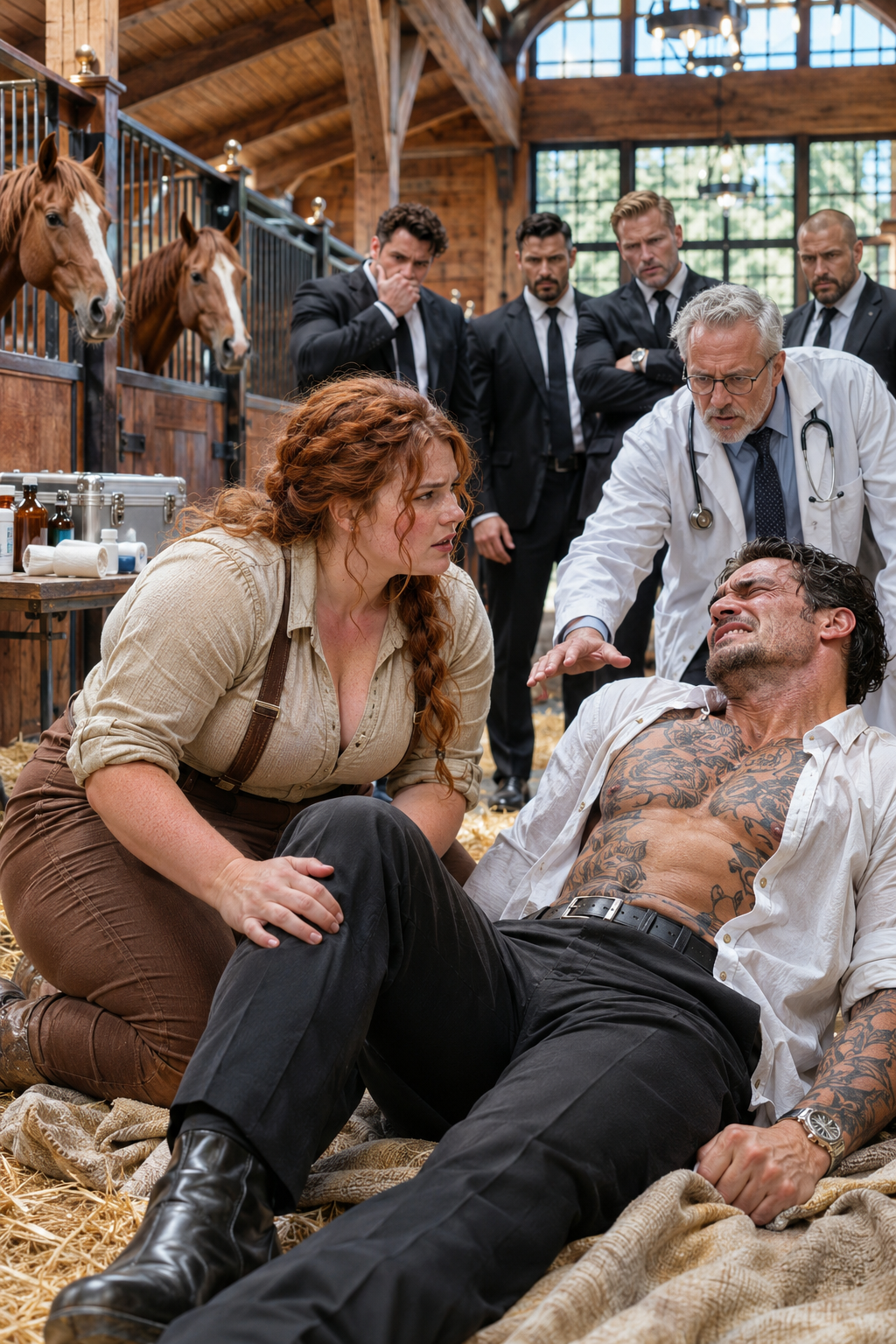
There were messages between Halverson and Bastion.
And there was a document that made Harriet’s blood run cold.
It contained her full name.
Her former address.
Her father’s medical history.
And the exact amount of debt she had owed before Aurelio paid it.
Gabriel read the document twice.
“Someone was watching her before the diagnosis.”
Harriet felt suddenly exposed.
“How long?”
“At least four months.”
Aurelio pushed himself upright.
His physical therapist had warned him against sudden movements, but he barely noticed.
“Why?”
Gabriel continued reading.
Then his face changed.
“Because they knew she might recognize the injury.”
Harriet stared at him.
“That’s impossible.”
But as Gabriel opened another file, the explanation became clear.
Four months earlier, someone had requested information about Harriet’s professional background.
The report mentioned the rehabilitation specialist she had worked with, her experience observing abnormal movement, and her reputation for challenging veterinary diagnoses when something didn’t make sense.
Someone had identified her as a threat long before she ever approached Aurelio.
And someone had chosen not to remove her.
Instead, they had watched.
Waiting to see what she would discover.
Harriet sank into a chair.
“Why would they let me stay?”
Evelyn answered quietly.
“Because my brother thought you wouldn’t dare say anything.”
Aurelio looked toward the window.
For eight years, he had believed his greatest weakness was physical.
Now he understood that his enemies had been studying the people around him, measuring their courage, and betting that fear would keep everyone obedient.
They had almost been right.
That evening, Harriet returned to the stables despite Gabriel’s insistence that she remain inside the main house.
She needed to check on the horses.
She needed something familiar.
The smell of hay, leather, and warm animals helped settle her nerves.
Her favorite mare, Willow, lifted her head when Harriet entered.
“At least you don’t have secret bank accounts,” Harriet murmured.
Willow snorted.
Harriet brushed the mare’s neck.
Then she heard footsteps.
A young stable assistant named Daniel appeared near the entrance.
He was nineteen, quiet, and had worked on the property for barely six weeks.
“Miss Peton?”
“What’s wrong?”
Daniel looked behind him.
“I need to tell you something.”
Harriet put down the brush.
“All right.”
“I saw the man who left that envelope.”
Her pulse quickened.
“Who?”
Daniel swallowed.
“Mr. Gabriel.”
For several seconds, Harriet couldn’t speak.
“Are you certain?”
Daniel nodded.
“I was cleaning the tack room. He came through the side entrance before sunrise. He had something in his hand.”
“Why didn’t you tell anyone?”
“Because he’s the security chief.”
Harriet understood.
Aurelio’s world had taught everyone that powerful men were dangerous to question.
She had challenged that rule once.
Now she was being asked to do it again.
“Did he see you?”
“I don’t think so.”
Harriet reached for her phone.
Before she could unlock it, the stable lights went out.
Willow jerked backward.
Daniel froze.
Outside, an engine started.
Harriet grabbed his wrist.
“Into the feed room. Now.”
They moved through the darkness as headlights swept across the stable windows.
Harriet knew every passage in the building.
She guided Daniel behind stacked feed bags and shut the heavy door.
Footsteps approached.
Two men entered the stable.
One carried a flashlight.
The other spoke into a radio.
“She’s here somewhere.”
Harriet pressed a hand over her mouth.
Daniel trembled beside her.
The men moved down the aisle.
A horse kicked its stall.
One of the intruders cursed.
Harriet recognized the voice.
It belonged to a security guard who had worked under Gabriel for years.
She realized then that Daniel’s accusation might be true.
The footsteps stopped outside the feed room.
A flashlight beam appeared beneath the door.
Harriet looked toward the small service hatch leading into the outdoor hay storage area.
She whispered to Daniel.
“Go through there. Run to the road and call emergency services.”
“What about you?”
“I’ll be right behind you.”
He hesitated.
“Daniel. Go.”
The young man crawled through the opening.
Seconds later, the feed room door swung inward.
Harriet stood facing the intruder, holding a heavy wooden rake.
“Where’s the boy?”
She tightened her grip.
“Somewhere you aren’t going.”
The man stepped toward her.
Harriet swung.
The rake struck his shoulder, knocking him against the shelving.
She rushed past him, but the second intruder grabbed her near the entrance.
She struggled desperately.
Then a familiar voice echoed through the darkness.
“Take your hands off her.”
Aurelio stood at the far end of the stable aisle.
He leaned on his cane.
Two armed guards accompanied him.
His face was pale from the effort of reaching the building, but his voice was steady.
The intruder released Harriet immediately.
Gabriel emerged from the shadows behind Aurelio.
For one terrible second, Harriet thought Aurelio had brought the traitor directly to her.
“Gabriel,” she shouted. “He’s involved!”
The security chief stopped.
Aurelio turned slowly.
Gabriel’s expression changed.
Then he reached inside his jacket.
One of Aurelio’s guards moved first.
Gabriel was disarmed and forced against a stall door before he could draw his weapon.
The other intruders surrendered.
Harriet stood shaking beside Willow’s stall.
Aurelio approached her carefully.
“Are you hurt?”
She shook her head.
Then anger replaced fear.
“You weren’t supposed to come down here!”
“Neither were you.”
“Your hip—”
“My hip is fine.”
“That’s not the point!”
He stared at her.
And unexpectedly, he smiled.
“You really are impossible.”
Harriet’s eyes filled.
“Someone has to keep you alive.”
Aurelio’s smile disappeared.
He understood what she meant.
For years, people had protected his power while allowing him to suffer.
Harriet cared whether he lived comfortably enough to enjoy an ordinary morning.
That difference mattered more than he could explain.
Gabriel was taken to the main house under guard.
The police were called to investigate the attempted abduction and the attack on the stables.
By midnight, investigators had uncovered the remaining pieces of the conspiracy.
Gabriel had inherited Bastion’s secret connections after Bastion’s death.
Victor Sorrento was alive, operating through intermediaries, and had spent years funding the effort to keep Aurelio physically weakened.
When Harriet exposed the medical deception, Victor’s carefully constructed arrangement collapsed.
He needed the remaining evidence destroyed.
He also wanted Harriet removed before she could help identify anyone else involved.
Gabriel had accepted money to arrange both.
But he had underestimated Daniel.
And he had underestimated Harriet.
The next morning, Aurelio received another surprise.
Evelyn Halverson returned with a sealed envelope.
Inside was a handwritten letter from her brother.
It had been written several weeks before his death.
Aurelio read it alone.
Harriet found him afterward, sitting in the library with the letter folded in his lap.
He looked older than she remembered.
“What happened?”
Aurelio stared at the fireplace.
“Halverson knew the truth.”
Harriet sat opposite him.
“We already knew that.”
“No. I mean he knew what he was doing to me.”
He handed her the letter.
Halverson had described Aurelio’s suffering in clinical detail.
The sleepless nights.
The difficulty walking.
The inability to sit.
He had acknowledged that a proper orthopedic assessment might have relieved much of the pain years earlier.
But he had continued the deception because he feared the people paying him.
Harriet lowered the paper.
“He could have stopped.”
“Yes.”
“He could have told you.”
“Yes.”
Aurelio looked at his hands.
“I spent eight years thinking I was being punished for surviving.”
Harriet felt her throat tighten.
“And now?”
“Now I wonder how many people have suffered because they were afraid of me.”
It was the first time she had heard him question himself without anger.
She chose her words carefully.
“You can’t undo what happened.”
“I know.”
“But you can decide what happens next.”
Aurelio looked toward her.
“Do you believe men like me can change?”
Harriet considered the question.
She thought about Halverson and Bastion.
She thought about Gabriel.
She thought about the people Aurelio had ordered killed, and the fear that followed his name everywhere.
“I believe people can make different choices,” she answered. “But only if they stop pretending their old choices don’t matter.”
Aurelio remained silent for a long time.
Then he nodded.
Over the following weeks, the estate changed in ways nobody expected.
Aurelio cooperated with the investigation into Victor Sorrento’s network.
He provided financial records and testimony that implicated several former associates.
His attorneys warned him that cooperating would expose his own activities to scrutiny.
Aurelio accepted that risk.
He had spent most of his life believing accountability was something powerful men imposed on weaker ones.
Now he was beginning to understand that refusing accountability had allowed betrayal to flourish around him.
Victor was eventually arrested after investigators traced payments through several businesses.
Gabriel and the surviving intruders faced criminal charges.
Evelyn entered witness protection after providing additional records.
And Daniel, whose courage had saved Harriet, received something he had never expected.
Harriet offered him a permanent position as assistant stable manager, along with paid training toward a professional equine-care qualification.
“You don’t have to stay,” she told him.
Daniel looked around the stable.
“Why wouldn’t I?”
“Because this place has been dangerous.”
He smiled faintly.
“So have some of the horses.”
Harriet laughed.
“Fair point.”
But her greatest challenge was still waiting.
Owning the stables was nothing like working in them.
There were payroll records, insurance policies, veterinary expenses, repairs, and business contracts.
She discovered that several employees had been underpaid for years.
Others had been afraid to report unsafe conditions.
Aurelio had given her ownership, but ownership meant responsibility.
And Harriet intended to take that responsibility seriously.
She reviewed every employment agreement.
She established transparent wages.
She hired an independent accountant.
And she introduced a rule that surprised everyone.
No employee would lose their job for reporting a safety concern in good faith.
When Aurelio heard about it, he raised an eyebrow.
“You’re turning my stables into a democracy.”
“They’re my stables now.”
He smiled.
“An excellent point.”
Harriet also began planning a therapeutic riding program for adults recovering from injuries.
The idea came from watching Aurelio struggle through rehabilitation.
Some days, his progress was encouraging.
Other days, stiffness and weakness returned, reminding him that recovery wasn’t a miracle that happened once.
It was work that had to be repeated.
He hated the exercises.
He complained about the restrictions.
He argued with the physical therapist.
And Harriet reminded him, almost daily, that horses learned patience faster than he did.
One afternoon, she found him standing beside Willow’s stall.
He was holding a carrot.
The mare regarded him suspiciously.
“She doesn’t like me,” Aurelio announced.
“She doesn’t trust you.”
“What’s the difference?”
“Time.”
Harriet stepped beside him.
“You can’t buy trust. You earn it by being consistent.”
Aurelio looked at the mare.
Then at Harriet.
“Are we still talking about horses?”
“Mostly.”
He laughed.
For several months, their friendship grew through small, ordinary moments.
They drank coffee in the stable office.
They argued about feed suppliers.
He listened while she explained the personalities of the horses.
She listened when he spoke about the years he had lost.
He never pretended to be a harmless man.
And Harriet never allowed gratitude to erase the truth about his past.
That honesty became the foundation of something neither had expected.
Then, one rainy Thursday afternoon, Harriet received a letter from the county.
The property was being reviewed for possible seizure in connection with Aurelio’s criminal investigation.
Her stomach dropped.
She immediately contacted her attorney.
The deed was genuine, but investigators wanted to determine whether the transfer had been intended to conceal assets.
Harriet understood the concern.
She had received an extraordinarily valuable property from a man whose financial affairs were under scrutiny.
For the first time since becoming the owner, she faced the possibility of losing everything.
When Aurelio learned what had happened, he offered to have his attorneys handle it.
Harriet refused.
“I need my own lawyer.”
“Harriet—”
“I appreciate what you’ve done. But if this place is really mine, I have to protect it independently.”
Aurelio studied her.
Then he nodded.
“You’re right.”
The investigation lasted nearly three months.
Harriet supplied employment records, financial statements, and evidence showing that she operated the stables as a legitimate business.
Aurelio’s legal team documented the circumstances of the gift.
The authorities examined the transaction carefully.
Eventually, the property was released from the review without seizure.
Harriet cried when her attorney delivered the news.
Not because the stables were worth millions.
But because she had finally built something that belonged to her without depending on someone else’s protection.
That evening, she found Aurelio waiting outside the riding arena.
He had progressed from using a cane to walking short distances without one, although he still needed to pace himself.
“I heard,” he said.
Harriet smiled.
“They’re mine.”
“They always were.”
“No,” she replied gently. “Before, they were something you gave me. Now they’re something I’ve fought to keep.”
Aurelio looked at her for a long moment.
Then he offered his hand.
“Congratulations, Miss Peton.”
She shook it.
“Thank you, Mr. Branato.”
He tilted his head.
“After everything we’ve been through, you’re still calling me that?”
“Only when you’re being particularly dramatic.”
They laughed together.
A year after the night Harriet first challenged Dr. Halverson, the Branato stables hosted their first community open house.
Families arrived from nearby towns.
Children watched riding demonstrations.
Adults recovering from injuries met the therapy horses.
Former employees returned to see the changes.
The buildings had been repainted.
The training arenas had been repaired.
And a modest sign stood beside the entrance.
PETON EQUESTRIAN CENTER.
Harriet stood beneath it, wearing jeans, polished riding boots, and a green sweater that fit comfortably over her full figure.
For once, she wasn’t worrying about whether she looked impressive enough.
She was exactly where she belonged.
Daniel approached carrying a clipboard.
“Everything’s ready.”
“How many visitors?”
“More than two hundred.”
Harriet stared at him.
“You’re joking.”
“I wish I were.”
She laughed nervously.
Then a familiar voice spoke behind her.
“You’ve handled more frightening audiences.”
Aurelio stood near the entrance.
He wore a charcoal suit and carried no cane.
His movements remained measured, but the difference from the man she had first known was extraordinary.
“You came,” Harriet said.
“You invited me.”
“I wasn’t sure you would.”
“Why?”
She glanced toward the families gathering near the arena.
“Because this isn’t exactly your usual crowd.”
Aurelio watched a little girl offering an apple to a pony.
“No,” he said quietly. “It isn’t.”
For several minutes, they stood together watching the visitors.
Then Harriet noticed something unusual.
Aurelio was holding a small wooden box.
“What’s that?”
He handed it to her.
Inside was a silver horseshoe pendant.
On the back were engraved five words.
For the courage to speak.
Harriet blinked rapidly.
“Aurelio…”
“It’s not another property,” he assured her.
She laughed through her tears.
“Good. I don’t think I can survive another tax investigation.”
He smiled.
Then his expression became serious.
“I’ve spent the last year learning something you understood long before I did.”
“What’s that?”
“Power can make people obey you. It can’t make them care whether you’re suffering.”
Harriet closed the box.
“And?”
“And sometimes the bravest person in the room is the one with the least power.”
She looked toward the stables.
A year earlier, she had been a frightened employee trying to keep her creditors away.
Now she employed twenty-three people, operated a successful training facility, and helped injured riders rediscover confidence.
But she also knew the price of courage.
Speaking up had placed her in danger.
It had cost her sleep.
It had forced her to confront men who believed fear was the same thing as respect.
She wouldn’t pretend those experiences had been easy.
Nor would she pretend that Aurelio’s generosity erased everything he had done.
He still faced legal proceedings connected to his past.
There were consequences he could not purchase his way out of.
And for the first time, he was choosing not to run from them.
That mattered.
As the afternoon sunlight broke through the clouds, Harriet invited him into the riding arena.
Willow waited near the fence.
Aurelio approached the mare slowly.
He offered his hand.
Willow sniffed it.
Then, to Harriet’s surprise, the horse lowered her head and allowed him to stroke her neck.
Aurelio smiled.
“She trusts me.”
“A little.”
“After all this time?”
Harriet shrugged.
“Some things are worth waiting for.”
Later that evening, after the last visitors had gone, Harriet and Aurelio sat together on a wooden bench overlooking the paddocks.
The horses grazed beneath a pale orange sky.
For a long time, neither spoke.
Then Aurelio leaned back carefully.
“Do you know what I remember most about those eight years?”
Harriet looked at him.
“The pain?”
He shook his head.
“The empty chair.”
She waited.
“Every night, everyone else sat down. Everyone else ate, laughed, argued, and complained about ordinary things. I stood there pretending it didn’t matter.”
His voice softened.
“I thought being powerful meant never letting anyone see what I needed.”
Harriet watched the horses.
“And now?”
Aurelio rested his hands on his knees.
“Now I think it means knowing when to ask for help.”
Harriet smiled.
“That’s a much better definition.”
He looked toward her.
“You saved my life.”
She shook her head.
“The doctors treated your injury. I just noticed something was wrong.”
“You noticed when everyone else looked away.”
Harriet considered his words.
Then she reached across the bench and squeezed his hand.
“Maybe that’s what we should all try to do.”
The following spring, the equestrian center expanded its rehabilitation program.
Harriet established a scholarship fund for young people who wanted to work with horses but couldn’t afford professional training.
Daniel became its first instructor.
And Aurelio, through a legally supervised charitable contribution, helped fund accessibility improvements for riders with physical disabilities.
He never asked for his name to appear on the building.
Harriet made sure it didn’t.
The center belonged to the people who worked there and the community it served.
One evening, after a particularly successful therapy session, Harriet found a young woman crying quietly beside the arena.
The woman had been recovering from a serious accident and had spent months believing she would never ride again.
That afternoon, she had completed her first assisted ride.
“I was so scared,” the woman admitted.
Harriet sat beside her.
“I know.”
“I almost didn’t come.”
“But you did.”
The woman wiped her eyes.
“How do you stop being afraid?”
Harriet thought about the dining room filled with armed men.
She remembered Bastion’s warning, Halverson’s furious expression, and Aurelio’s face when she told him his diagnosis might be wrong.
Then she thought about the night she had hidden in the feed room, terrified that she might never see another sunrise.
She looked at the young woman.
“You don’t always stop being afraid,” Harriet said. “Sometimes you just decide that something matters more.”
The woman nodded slowly.
Outside, Willow lifted her head as the evening breeze moved through the paddock.
Harriet smiled.
She had once believed courage belonged to people who never trembled, never doubted themselves, and never worried about what might happen next.
Now she knew better.
Courage could belong to a frightened horse trainer with unpaid bills.
It could belong to a nineteen-year-old stable assistant who refused to stay silent.
It could even begin in a powerful man who finally admitted that the life he had built needed to change.
And although none of them could undo the past, they could choose what kind of future they wanted to create.
Years later, visitors to Peton Equestrian Center would sometimes ask Harriet how she had come to own such a beautiful place.
She never began with the money.
She never began with the mafia boss.
Instead, she would point toward the horses and say, “I learned a long time ago that pain changes the way someone moves. But fear changes the way everyone around them behaves.”
Then she would smile.
“And sometimes, all it takes to change a life is one person willing to look closely enough to notice the difference.”
Because the greatest gift Harriet Peton ever gave Aurelio Branato wasn’t the ability to sit down again.
It was the realization that a person could spend a lifetime surrounded by loyal followers and still be desperately alone.
And the greatest gift Aurelio gave Harriet wasn’t the stables, the money, or the freedom from debt.
It was the opportunity to build a life where her courage could help people instead of merely protecting her from them.
In the end, neither of them became perfect.
But both became better.
And sometimes, that is the most meaningful ending a story can have.
Three years after Harriet Peton first challenged Aurelio Branato’s doctors, a letter arrived at the equestrian center that threatened to reopen everything they had fought to put behind them.
It came on a cold November morning, just as Harriet was finishing her first riding lesson of the day.
The envelope bore the seal of the New York State Attorney General’s Office.
Inside was a formal notice requesting her testimony in a criminal proceeding involving the surviving members of Victor Sorrento’s organization.
Harriet read the letter twice.
She had believed that chapter of her life was finally over.
Victor had been arrested. Gabriel Moretti was awaiting sentencing. The corrupt physician and the bodyguard who had betrayed Aurelio were dead. The stables had become a respected rehabilitation center, and the people who worked there no longer lived under the shadow of the Branato organization.
But the investigation had uncovered something new.
A financial account connected to Harriet’s late father.
And according to the letter, investigators needed her help understanding why it existed.
Harriet sat down at her desk.
Her father, Thomas Peton, had been a hardworking mechanic who spent most of his life repairing farm equipment. His final years had been consumed by illness, medical bills, and the quiet embarrassment of needing financial assistance from his daughter.
He had died believing he was leaving her nothing but debt.
Now his name appeared in records connected to a criminal conspiracy.
Harriet immediately called her attorney, Rebecca Collins.
Rebecca listened carefully before answering.
“Don’t contact anyone involved in the case until we’ve reviewed the documents.”
“Do you think my father was involved?”
“I think we need evidence before drawing conclusions.”
Harriet stared through her office window.
Outside, Daniel was leading a young therapy horse across the training arena.
Everything looked peaceful.
But she knew how quickly appearances could deceive.
That afternoon, Rebecca arrived with copies of the records.
The account had been opened nine years earlier.
Several deposits had been made through a company connected to Victor Sorrento.
The amounts were substantial.
Harriet’s stomach tightened.
“My father never had this kind of money.”
Rebecca turned another page.
“There’s something else.”
The account had been closed shortly after the assassination attempt against Aurelio.
And its final withdrawal had been authorized by a man named Martin Kessler.
Harriet recognized the name immediately.
Kessler had been her father’s employer.
He had also been the man who dismissed Thomas after his health began deteriorating.
For years, Harriet had believed her father lost his job because he could no longer perform physically demanding work.
Now she wondered whether there had been another reason.
Rebecca watched her carefully.
“Harriet, whatever happened, you weren’t responsible.”
“I know.”
But Harriet’s voice sounded uncertain.
That evening, she drove to Aurelio’s house.
He no longer lived in the enormous mansion where she had first discovered the truth about his injury.
After his cooperation with investigators, he had sold several properties and moved into a smaller home overlooking the Hudson River.
He still had money, influence, and enemies.
But the household was quieter.
There were no armed men lining the hallways.
No endless procession of frightened employees.
And when Harriet arrived, Aurelio answered the door himself.
He was sixty now, with silver beginning to dominate his dark hair.
His hip occasionally troubled him during cold weather, but he could walk, sit, and sleep without the relentless agony that had once ruled his existence.
He noticed her expression immediately.
“What happened?”
Harriet handed him the documents.
Aurelio read them in silence.
When he reached Martin Kessler’s name, his face changed.
“You know him,” Harriet said.
Aurelio lowered the papers.
“Yes.”
“How?”
“Kessler repaired vehicles for several businesses connected to my organization.”
Harriet felt a cold sensation spread through her chest.
“My father worked for him.”
“I know.”
She stared at him.
“What do you mean, you know?”
Aurelio looked toward the window.
For the first time in years, he seemed unable to meet her eyes.
“Harriet, there’s something I should have told you a long time ago.”
Her heart began pounding.
“Then tell me now.”
Aurelio remained silent for several seconds.
“Your father helped save my life.”
Harriet gripped the back of a chair.
“What?”
“Not directly. Not the way you did. But during the attack, someone discovered that a vehicle had been tampered with before it was delivered to my estate.”
He placed the documents on the table.
“That person was Thomas Peton.”
Harriet struggled to understand.
“My father knew about the attack?”
“He discovered evidence of sabotage. He reported it to Kessler, believing he was protecting a customer.”
“And Kessler?”
“He was already working with Sorrento.”
The room seemed to tilt.
Aurelio continued quietly.
“Your father became a problem. Kessler paid him what he called a settlement and warned him never to discuss what he’d found.”
Harriet shook her head.
“My father would never accept money to cover up an attempted murder.”
“I don’t believe he understood what the money represented.”
“Then why was it in an account under his name?”
“Because Kessler wanted a paper trail that made your father look involved.”
Harriet stared at the documents.
Her father had spent years struggling financially.
He had borrowed money to pay medical bills.
He had apologized repeatedly for becoming a burden.
And somewhere in the background, someone had apparently used his identity to conceal criminal payments.
“Did you know all this when you gave me the stables?”
Aurelio hesitated.
“I knew he had reported the sabotage. I didn’t know about the account.”
“Why didn’t you tell me?”
“Because I thought it would hurt you.”
Harriet laughed once, without humor.
“You don’t get to decide which truths I’m strong enough to hear.”
Aurelio lowered his head.
“You’re right.”
She gathered the papers.
For the first time since they had become friends, Harriet left without saying goodbye.
Over the following week, she barely slept.
She continued teaching.
She checked the horses.
She signed payroll documents and met with the rehabilitation staff.
But every quiet moment brought her back to the same question.
How much of her life had been shaped by decisions other people made in secret?
Her father’s dismissal.
The debts.
Her desperate need for employment.
Her arrival at Aurelio’s estate.
The strange coincidence that she had eventually recognized his injury.
Had any of it truly been coincidence?
Rebecca helped her request additional records.
Investigators located Martin Kessler in a nursing facility outside Syracuse.
He was seventy-eight and suffering from advanced heart disease.
After consulting his attorney, Kessler agreed to provide a statement.
Harriet attended the interview with Rebecca.
The old man looked smaller than she remembered.
His hands trembled as he unfolded a handkerchief.
When Harriet entered, his eyes filled with recognition.
“You look like your father.”
She sat opposite him.
“Then tell me what happened to him.”
Kessler looked down.
For several minutes, he said nothing.
Then he began.
Thomas Peton had been one of the best mechanics Kessler ever employed.
Nine years earlier, Thomas noticed unusual alterations to a vehicle assigned to Aurelio’s security team.
He believed someone had deliberately compromised its safety.
He reported the discovery.
Kessler, already accepting payments from Sorrento’s associates, passed the information to the conspirators.
They ordered him to silence Thomas.
But Thomas refused to sign a false maintenance report.
“He said somebody could die,” Kessler whispered.
Harriet’s throat tightened.
“What did you do?”
“I fired him.”
“And the money?”
“I opened the account using information from his employment records. I made it look like he’d been paid.”
“Did he ever receive any of it?”
Kessler shook his head.
“No.”
Harriet closed her eyes.
Her father had lost his livelihood because he refused to participate in something dishonest.
And he had never told her.
“Why didn’t he fight you?”
“He tried. But I threatened to accuse him of taking the money. He couldn’t afford a lawyer.”
Kessler began crying.
“I was a coward.”
Harriet looked at him for a long time.
She had imagined confronting him with anger.
She had imagined demanding explanations until he understood the suffering he’d caused.
But now she saw an old man who had spent years avoiding the consequences of his decisions.
“Yes,” she said quietly. “You were.”
She stood.
Kessler reached toward her.
“Can you forgive me?”
Harriet paused.
“Forgiveness isn’t something you get to demand because you’re finally ready to confess.”
Then she walked out.
The testimony helped investigators establish that Thomas had been framed.
The false financial records were corrected.
Kessler’s statement became part of the criminal proceedings.
And Harriet received official confirmation that her father had not knowingly participated in the conspiracy.
She took the letter to his grave.
It was a clear afternoon in early spring.
Harriet placed fresh flowers beside the headstone and sat on the grass.
For years, she had carried the belief that her father had somehow failed her by leaving behind so much debt.
Now she understood how much he had sacrificed trying to protect his family without compromising his principles.
“I’m sorry, Dad,” she whispered.
A breeze moved through the trees.
She wiped her cheeks.
“You were braver than I knew.”
When Harriet returned to the equestrian center, Aurelio was waiting outside her office.
He stood as she approached.
“I heard about Kessler.”
She nodded.
“Then you know my father was innocent.”
“I do.”
Aurelio looked exhausted.
“Harriet, I owe you an apology.”
She crossed her arms.
“Yes, you do.”
“I thought keeping the past buried would protect you.”
“It protected you from an uncomfortable conversation.”
He accepted that without argument.
“I was afraid you’d see me differently.”
Harriet studied him.
“I do see you differently.”
His expression tightened.
“But that doesn’t mean I can’t see the good you’ve tried to do.”
Aurelio looked up.
She continued.
“You’ve changed parts of your life. You’ve helped people. You’ve taken responsibility for things you once would have hidden. But trust doesn’t mean deciding what someone else is allowed to know.”
“I understand.”
“Then don’t ever make that decision for me again.”
“I won’t.”
Harriet believed him.
Not because he was powerful.
Not because he had once given her a fortune.
But because he had finally learned to accept correction without punishing the person offering it.
Their friendship survived.
It was different afterward.
More honest.
And stronger because of it.
Six months later, the criminal proceedings against the remaining Sorrento associates concluded.
Several defendants received prison sentences.
The financial investigation also established that some of the money used to maintain the conspiracy had been diverted from legitimate businesses.
Aurelio faced penalties connected to his own former operations.
He paid substantial restitution and continued complying with court supervision.
The consequences were real.
He accepted them.
For Harriet, the greatest change came from an unexpected place.
One morning, a woman named Rachel Morgan arrived at the equestrian center with her twelve-year-old son, Caleb.
Caleb had survived a serious riding accident two years earlier.
Although his physical injuries had healed, he remained terrified of horses.
Rachel explained that her son wanted to ride again but couldn’t bring himself to approach a saddle.
Harriet knelt beside Caleb.
“Do you miss riding?”
He nodded.
“Then we won’t start with riding.”
He looked surprised.
“What will we do?”
“We’ll start with meeting someone.”
She introduced him to Willow.
The old mare was patient, gentle, and particularly fond of children who carried carrots.
For the first session, Caleb simply stood outside her stall.
During the second, he brushed her shoulder.
By the fourth, he could lead her around the arena.
Three months later, he climbed into the saddle with Harriet walking beside him.
His mother cried.
Caleb laughed.
And Harriet felt something settle inside her.
For years, she had measured success by whether she could pay her bills and keep the horses healthy.
Now she understood that her work could help people recover pieces of themselves they thought were lost forever.
She decided to expand the center.
With support from local donors, licensed therapists, and equine specialists, she established the Thomas Peton Rehabilitation Scholarship.
The program offered subsidized equine-assisted activities and riding instruction to families who couldn’t afford them.
At the opening ceremony, Harriet stood before a small crowd of employees, parents, and community members.
She held a photograph of her father.
“My dad was a mechanic,” she began.
“He didn’t have much money. He wasn’t famous. Most people who knew him probably thought he was an ordinary man.”
She looked toward the photograph.
“But he believed that doing the right thing mattered, even when nobody was watching.”
Her voice trembled.
“For a long time, I thought courage meant being fearless. My father taught me something different.”
She looked toward the children gathered near the arena.
“Courage is choosing not to look away when someone needs help.”
The audience applauded.
At the back of the crowd, Aurelio stood quietly.
He did not interrupt.
He did not ask to be recognized.
When the ceremony ended, Harriet approached him.
“You stayed.”
“Of course.”
“You’re usually terrible at standing through speeches.”
He smiled.
“I’ve had practice.”
She laughed.
Then Aurelio handed her a small envelope.
Inside was a check supporting the scholarship fund, accompanied by a note stating that the donation carried no conditions.
Harriet read it carefully.
“You’re learning.”
“Slowly.”
She embraced him.
For a moment, the man who had once commanded an empire of frightened followers simply held his friend.
Years passed.
Daniel eventually became director of the equestrian center’s training program.
Caleb returned as a teenage volunteer, helping younger children overcome their fears.
Willow grew old and retired to a sunny pasture, where she spent her days eating grass and demanding treats.
Harriet continued running the center.
Her hair began showing silver at the temples.
Her confidence grew quieter and steadier.
She no longer needed to prove she belonged.
She knew.
Aurelio’s health remained stable, though age and the damage from his old injury sometimes limited his mobility.
He continued his rehabilitation exercises.
He attended community events.
And he gradually withdrew from the remaining business interests that connected him to his former life.
One autumn evening, Harriet invited him to dinner at the equestrian center.
The staff had prepared a long table in the renovated barn.
There were roasted vegetables, homemade bread, chicken, and a large apple pie baked by Daniel’s wife.
Employees brought their families.
Children ran between the tables.
Someone played music softly near the entrance.
Aurelio arrived wearing a simple dark sweater.
He stopped in the doorway.
Harriet approached him.
“What’s wrong?”
He looked around.
“Nothing.”
“Then why are you standing there?”
Aurelio smiled faintly.
“I was remembering.”
“Remembering what?”
“The first dinner after you helped me.”
Harriet remembered too.
The enormous mansion.
The silent guards.
The empty chair.
The fear that filled every room.
Aurelio looked toward the crowded tables.
“Back then, everyone waited for me to sit before they dared move.”
“And now?”
“Now nobody even notices when I arrive.”
Harriet laughed.
“That’s because they’re hungry.”
He smiled.
“No. It’s because they aren’t afraid.”
She watched him for a moment.
“Does that bother you?”
Aurelio shook his head.
“Not anymore.”
They walked toward the table together.
Daniel pulled out a chair for him.
Aurelio sat.
A little girl immediately leaned across the table.
“Mr. Branato, can you pass the bread?”
He handed her the basket.
“Of course.”
She thanked him and returned to her conversation.
Nobody stared.
Nobody whispered.
Nobody treated his presence as a command.
He was simply another guest sharing dinner.
Aurelio looked toward Harriet.
His eyes shone.
She understood without asking.
For a man who had spent decades demanding respect through fear, being welcomed without fear was something extraordinary.
After dinner, Harriet accompanied him outside.
The sky was filled with stars.
The horses moved quietly in their paddocks.
Aurelio rested one hand against the fence.
“Do you ever regret getting involved that day?”
Harriet considered the question.
She remembered the armed guards.
The betrayal.
The threats.
The months of uncertainty.
She remembered how close she had come to losing everything.
Then she looked toward the illuminated barn, where laughter spilled through the open doors.
“No,” she answered.
“Not even after everything that happened?”
“Especially after everything that happened.”
Aurelio nodded.
“I used to think my life changed when the pain stopped.”
“Didn’t it?”
“That was only the beginning.”
He turned toward her.
“My life changed when I realized someone could tell me the truth without wanting anything in return.”
Harriet smiled.
“And mine changed when I realized I didn’t have to be powerful to make a difference.”
They stood together in comfortable silence.
Then Aurelio reached into his pocket and removed an old photograph.
It showed him eight years earlier, standing beside the enormous dining table in his mansion.
His expression was rigid.
His shoulders were tense.
His eyes looked exhausted.
“I found this while clearing out some old belongings.”
Harriet studied it.
“You look miserable.”
“I was.”
He turned the photograph over.
On the back, he had written a short sentence.
A man can own everything and still be imprisoned by what he refuses to see.
Harriet handed it back.
“That’s a good reminder.”
Aurelio shook his head.
“I want you to keep it.”
“Why?”
“Because you were the first person who opened the door.”
Harriet accepted the photograph.
Several months later, Aurelio died peacefully in his sleep following a brief illness unrelated to his old injury.
Harriet received the news early in the morning.
For a long time, she sat beside her office window, unable to move.
She had known his health was declining.
She had visited him only two days earlier.
They had talked about the horses, the scholarship program, and Daniel’s plans to expand the training facilities.
Their final conversation had been ordinary.
She would later be grateful for that.
At his memorial service, Harriet stood before a small gathering of family members, former employees, and people whose lives Aurelio had helped during his later years.
She did not pretend he had been a perfect man.
She did not excuse the violence of his past.
Instead, she spoke about the difficult, unfinished work of becoming better.
“Aurelio Branato spent much of his life believing that strength meant control,” she said.
“He made choices that hurt people. Some consequences could never be undone.”
She paused.
“But I also watched him learn that strength could mean admitting he was wrong, accepting help, and taking responsibility.”
Her eyes filled.
“He taught me that people are more complicated than the worst thing they’ve done. And he reminded me that change only matters when it’s followed by action.”
After the service, Harriet returned to the equestrian center.
She walked alone to Willow’s pasture.
The elderly mare approached slowly and rested her head against Harriet’s shoulder.
Harriet wrapped her arms around the horse’s neck.
For the first time that day, she cried freely.
Not for the powerful mafia boss whose name had once terrified entire rooms.
But for the lonely man who had eventually learned how to sit among friends.
The following spring, Harriet placed a wooden bench beneath the oak tree overlooking the riding arena.
A small brass plaque carried a simple inscription.
IN MEMORY OF AURELIO BRANATO.
MAY WE ALWAYS HAVE THE COURAGE TO CHANGE.
She often sat there after the last lesson of the day.
Sometimes children joined her.
Sometimes Daniel stopped to discuss the next week’s schedule.
Sometimes she simply watched the horses moving across the fields.
One afternoon, a young instructor asked Harriet why she had dedicated so much of her life to helping frightened people and injured animals.
Harriet smiled.
“Because pain isn’t always obvious.”
The instructor looked puzzled.
Harriet continued.
“Sometimes people hide it behind anger. Sometimes they hide it behind pride. Sometimes they spend years believing nothing can change because everyone around them keeps telling them so.”
She looked toward the riding arena.
“But that doesn’t mean we should stop looking for a way to help.”
The instructor nodded.
“And what if helping them is frightening?”
Harriet thought about her father.
She thought about Daniel.
She thought about Aurelio.
Then she smiled.
“Being afraid doesn’t mean you lack courage. It means you understand that something matters.”
As the sun began setting, Harriet rose from the bench and walked toward the stables.
Inside, a young girl was waiting beside her first therapy horse.
Her hands trembled.
Her mother stood nearby, worried but hopeful.
Harriet approached gently.
“Ready?”
The girl shook her head.
“I’m scared.”
Harriet knelt beside her.
“That’s all right.”
“What if I can’t do it?”
“Then we’ll try again another day.”
The girl looked toward the horse.
“What if I fall?”
“Then we’ll help you get back up.”
After a moment, the girl reached for Harriet’s hand.
Together, they approached the patient animal.
And as Harriet watched the child’s frightened expression slowly soften into wonder, she understood that the most important part of her story had never been the fortune she received, the dangerous men she confronted, or the powerful man whose suffering she helped end.
It was what she chose to do afterward.
She had taken a place once built to serve one man’s wealth and transformed it into a home for healing.
She had turned fear into opportunity.
She had honored her father’s integrity.
And she had learned that kindness did not require weakness, just as courage did not require cruelty.
The little girl finally touched the horse’s neck.
A smile spread across her face.
Harriet smiled back.
Outside, the evening sunlight illuminated the wooden bench beneath the oak tree.
The past could not be rewritten.
The people they had lost could not return.
And no act of generosity could erase every wrong.
But the future was still being shaped by the choices of those who remained.
Harriet Peton had once been an ordinary horse trainer who refused to ignore another person’s suffering.
Years later, that single decision had grown into something far greater than she could ever have imagined.
A place where frightened children learned confidence.
Where injured adults rediscovered hope.
Where hardworking people were treated with dignity.
And where nobody had to earn the right to be heard.
For Harriet, that was the true meaning of everything she had survived.
Not that one brave moment could magically fix an entire life.
But that one brave moment could become the beginning of a lifetime spent making things better.
And every evening, when the final stable doors closed and the horses settled peacefully into their stalls, Harriet carried that lesson home.
The greatest power a person could possess was not the ability to make others fear them.
It was the ability to make someone feel safe enough to begin again.
THE END.