For three years, Odessa Callaway refused to take her husband’s hand at every grand gala in America’s most exclusive harbor society.
The darkness inside the waterfront restaurant lasted only a few seconds, but for Odessa Callaway, those seconds were enough to understand that the danger she had spent three years hiding from had finally returned.
Across the table, Hugo Ferrant remained perfectly still, his expensive silver watch catching the faint light from the emergency exit sign.
“You always were remarkably difficult to frighten, Odessa,” he said, his voice carrying the pleasant confidence of a man accustomed to controlling every conversation.
Odessa glanced toward the locked entrance, then at the two men standing near the kitchen hallway.
“I learned a long time ago that frightened people make mistakes,” she replied. “And I’ve already made enough of those.”
Hugo laughed softly.
“Such a shame Rhett never appreciated how extraordinary his wife truly is.”
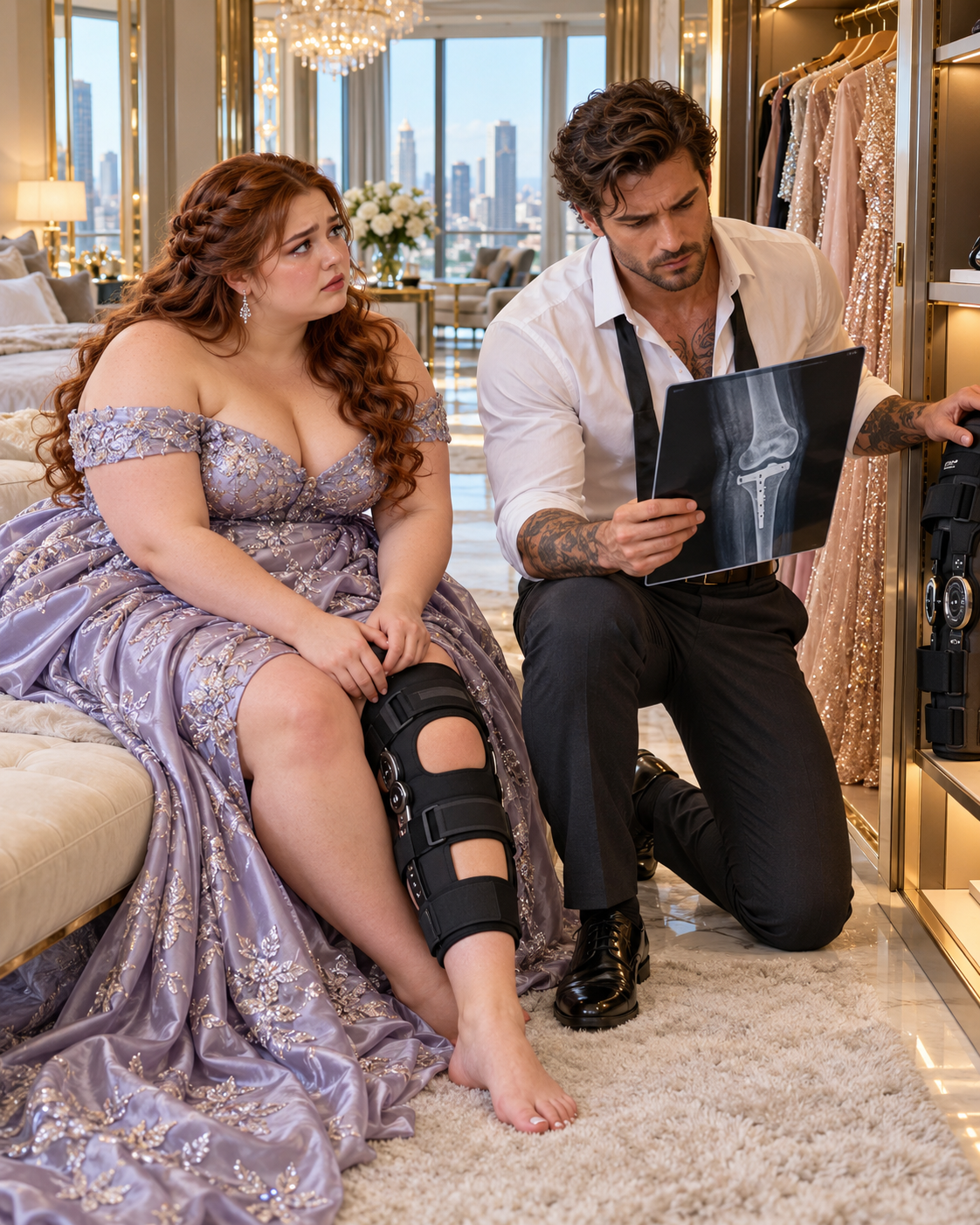
The mention of her husband made Odessa’s fingers tighten around the leather handbag resting against her injured knee.
She had known Hugo for nearly four years, having met him shortly after Rhett first introduced her to the complicated world of investment firms, private clubs, and exclusive charity foundations along America’s Atlantic coastline.
He had always been charming, attentive, and unfailingly polite.
But there was something different about his smile tonight.
It was the smile of a man who no longer needed to pretend.
“You arranged the meeting,” Odessa said quietly. “There was never any family document, was there?”
“No,” Hugo admitted. “But I knew you’d come if you believed someone had discovered what happened on Harbor Point Road.”
He slid the faded photograph closer to her.
The image showed her old sedan crushed against a concrete barrier, its windshield shattered and its front end twisted almost beyond recognition.
For a moment, Odessa was no longer sitting in a closed restaurant.
She was twenty-seven again, driving through the freezing rain, hearing distant shouting and seeing a black SUV trapped between two approaching vehicles.
She remembered recognizing Rhett’s face through the windshield.
They had barely begun dating then, and he had been on his way to meet her family for the first time.
She remembered understanding that the men blocking the road weren’t ordinary thieves.
She remembered making a choice that lasted less than a heartbeat.
And she remembered waking up in a hospital with metal pins in her knee and a surgeon explaining that she might never walk normally again.
“I wondered when you’d come looking for me,” Odessa said.
Hugo’s smile faded slightly.
“Then you knew?”
“I suspected someone had arranged that night. I just never knew who.”
“Your husband made powerful enemies.”
“Apparently, he trusted one of them.”
The insult landed exactly where she intended.
Hugo’s jaw tightened.
Outside, the wind pushed against the restaurant’s boarded windows, making the old building groan.
“You could have lived comfortably,” he said. “You married Rhett. You had everything. Why keep investigating an incident that was supposed to stay buried?”
“Because someone tried to hurt a man I loved.”
Hugo leaned forward.
“And look what that love cost you.”
Odessa glanced down at her knee.
For years, she had endured surgeries, rehabilitation, sleepless nights, and the exhausting effort of pretending she wasn’t in pain.
But Hugo misunderstood the expression that crossed her face.
It wasn’t regret.
It was anger.
“Not as much as your greed is about to cost you,” she answered.
Hugo’s pleasant expression disappeared.
He stood and nodded toward the man near the kitchen.
“Take her phone.”
Odessa didn’t resist when the man approached.
Instead, she unzipped her handbag slowly, pretending to search for the device.
What Hugo couldn’t see was the tiny emergency transmitter already activated beneath the inner lining.
Years earlier, after the ambush, Odessa had insisted that both she and Rhett carry discreet personal security devices.
Rhett had eventually stopped using his.
She never had.
And the moment she recognized Hugo inside the restaurant, she had pressed its silent alert button.
Now all she needed was time.
Across the marina, Rhett Callaway was driving faster than he ever had in his life.
His security director, Marcus Hale, spoke through the vehicle’s audio system.
“Mr. Callaway, our team is approaching from the east entrance. Local police have been notified, but we need you to remain behind the perimeter.”
“Is she inside?”
“We’ve detected a distress signal from Mrs. Callaway’s emergency transmitter.”
Rhett felt the blood drain from his face.
“Then she’s alive.”
“The signal is active. That’s all we can confirm.”
Rain swept across the windshield as Rhett turned onto the deserted service road.
Beyond the abandoned warehouses, the old restaurant stood against the harbor lights like a forgotten piece of another century.
He recognized the building.
Years ago, he and Odessa had eaten dinner there before he became wealthy enough to buy entire waterfront developments.
They had shared a small table beside the window, laughing about a pianist who played every song too slowly.
That night, Rhett had asked her to dance between the tables.
She had accepted.
He remembered her smiling against his shoulder and whispering that she wished the music would never end.
The memory almost broke him.
Because now he understood that those few minutes might have been the last time dancing had ever been painless for her.
“Marcus,” he said, his voice suddenly steady. “I want every available camera feed from that building.”
“We’re working on it.”
“And find out whether Hugo has people inside the company helping him.”
A pause followed.
“Sir, we’ve already uncovered something disturbing.”
Rhett listened as Marcus explained that several suspicious transfers had been routed through an offshore account connected to the original ambush.
The financial records suggested Hugo had been diverting company funds for years.
Worse, a recently created insurance arrangement and falsified correspondence appeared designed to make Rhett look responsible for an attack against his own wife.
If Odessa disappeared or was seriously harmed, Hugo intended to use the fabricated evidence to destroy Rhett’s reputation and take control of critical company assets during the resulting investigation.
Rhett could barely speak.
The man he had trusted to protect his business had arranged to destroy his family.
Inside the restaurant, Hugo placed a folder on the table.
“Sign these documents, Odessa, and I can make this considerably easier.”
Odessa examined the first page.
It was a statement claiming Rhett had known about illegal financial transactions and had threatened her when she discovered them.
The second page contained a prepared account of their supposed marital difficulties.
The language was carefully constructed.
A lonely wife.
An increasingly controlling husband.
A marriage collapsing behind closed doors.
Every rumor Rhett had allowed himself to believe had been turned into a weapon.
“You’ve been planning this for a long time,” Odessa said.
Hugo shrugged.
“Your husband’s greatest weakness was never his money. It was his pride.”
Odessa lifted her eyes.
“And yours is believing everyone else is as selfish as you.”
For the first time, Hugo struck the table with his palm.
“Sign.”
Odessa picked up the pen.
But instead of writing, she studied the papers.
“There’s a problem.”
“What problem?”
“The date is wrong.”
Hugo frowned.
“What?”
“This statement says I discovered the transfers last Tuesday. But the accompanying email is dated Wednesday. Any competent attorney would notice.”
Hugo snatched the document from her.
While he examined it, Odessa shifted her chair several inches closer to the service doorway.
The movement sent a sharp pain through her right knee.
She concealed it behind a slow breath.
She needed another distraction.
“The larger problem,” she continued, “is that you’ve misunderstood Rhett.”
Hugo looked up.
“He’ll destroy himself when he discovers what happened to you.”
“No,” Odessa said. “He’ll blame himself first. Then he’ll start looking for the truth.”
“Your husband hasn’t noticed your injury in three years.”
The words cut deeper than Odessa expected.
For a moment, she couldn’t answer.
Hugo recognized the wound immediately.
“That’s right. Three years, Odessa. Three years of charity balls, private parties, and expensive vacations. He never once asked why you wouldn’t dance.”
Odessa stared at the old photograph.
She remembered the coldness in Rhett’s voice after the Manhattan gala.
She remembered how much she had wanted to tell him everything.
But after the accident, anonymous warnings had reached her through unfamiliar numbers, suggesting that anyone who investigated the ambush would put Rhett in danger again.
She had believed silence was protection.
And eventually, silence became a habit neither of them knew how to break.
“You’re right about one thing,” she said finally. “We both made mistakes.”
Hugo smiled.
“But?”
“But Rhett’s mistakes came from misunderstanding love. Yours came from never understanding it at all.”
A faint electronic tone sounded from the kitchen.
One of Hugo’s men reached for his radio.
Odessa noticed the movement.
So did Hugo.
“Check outside,” he ordered.
The man disappeared into the hallway.
Odessa knew her opportunity was narrowing.
She reached for a glass of water, deliberately allowing it to slip from her fingers.
It shattered beside the table.
As the nearest guard looked down, Odessa pushed the heavy dining chair against his legs and lunged toward the service door.
The movement was awkward and agonizing.
Her injured knee almost buckled.
But she caught the doorframe and pulled herself forward.
“Stop her!” Hugo shouted.
Odessa grabbed a metal serving tray from a nearby counter and shoved it into the path of the approaching guard.
The tray struck the floor with a deafening crash, sending him stumbling backward.
She reached the kitchen.
For one precious second, she could see the rear exit.
Then pain exploded through her leg.
Her knee gave way.
She caught herself against the stainless-steel preparation counter, fighting to remain upright.
Behind her, Hugo entered the kitchen.
“Enough, Odessa.”
She turned toward him, breathing hard.
“You should have left us alone.”
“And you should have stayed out of my affairs.”
He stepped closer.
Then every exterior light along the marina suddenly illuminated.
Bright beams swept across the boarded windows.
A voice thundered from outside.
“Police! Everyone inside, remain where you are!”
Hugo froze.
Odessa looked toward the rear doorway.
For the first time that evening, she allowed herself to hope.
But Hugo recovered quickly.
He seized her arm and pulled her toward a narrow corridor leading to the old storage rooms.
“Move.”
Odessa resisted, planting her good foot against the floor.
“You’re not getting away.”
Hugo’s face twisted.
“You have no idea how much I’ve sacrificed to build what belongs to me.”
“That’s the difference between us,” Odessa whispered. “You sacrificed other people.”
Before Hugo could respond, the building’s security alarm began ringing.
Outside, Marcus had located the emergency control panel and alerted the officers surrounding the property.
Hugo glanced toward the windows.
That distraction was enough.
Odessa pulled her arm free and shoved the storage door closed between them.
Hugo stumbled backward as the heavy panel struck his shoulder.
Odessa braced herself against the wall, exhausted.
Her knee throbbed so fiercely that the corridor seemed to tilt beneath her.
Then she heard footsteps from the opposite end.
She turned.
A familiar voice called through the darkness.
“Odessa!”
Rhett.
For one impossible moment, she thought she had imagined him.
Then he appeared beneath the emergency lighting, accompanied by Marcus and two police officers.
Rhett stopped the instant he saw her.
Her dress was torn near the hem, her hair had fallen loose, and she was leaning heavily against the wall.
But she was standing.
She was alive.
“Odessa,” he whispered.
The relief in his voice was unlike anything she had ever heard.
She tried to smile.
“You’re late.”
Rhett crossed the distance between them and carefully wrapped his arms around her.
She felt him trembling.
Not from the cold.
From fear.
“I saw the video,” he whispered against her hair.
Odessa closed her eyes.
For three years, she had imagined this moment and dreaded it.
Now that it had arrived, she couldn’t find a single word.
“I saw everything,” Rhett continued. “The road. The car. What you did.”
Behind them, officers moved toward the storage room.
Hugo shouted something about attorneys and corporate rights, but nobody paid him any attention.
Rhett gently stepped back and looked at Odessa’s injured leg.
His expression changed.
“Oh, God.”
“Rhett—”
“How long have you been hurting?”
She tried to answer lightly.
“Longer than I’d like.”
He shook his head.
“Don’t protect me from this.”
The words surprised her.
Rhett swallowed hard.
“Not anymore.”
An officer approached, explaining that Hugo and his associates had been detained and the building was secure.
Rhett barely heard him.
He was looking at the woman he had married.
The woman he had misunderstood.
The woman who had carried a permanent injury while he carried wounded pride.
“I thought you were ashamed of me,” he said.
Odessa’s eyes filled.
“I know.”
“I thought you didn’t want people to see us together.”
“I know.”
“And all this time—”
His voice broke.
“All this time, you were just trying to stand.”
Odessa finally began to cry.
Not loudly.
Not dramatically.
Just the quiet tears of someone who had been strong for too long.
Rhett carefully lowered himself to one knee beside her.
She tried to protest.
“Your suit—”
“I don’t care about the suit.”
He reached for her hand.
“Can I help you?”
Such a simple question.
Three years earlier, she might have answered automatically that she was fine.
But tonight, she was tired of pretending.
“Yes,” she whispered.
Rhett supported her as the emergency medical team entered the corridor.
He stayed beside her throughout the examination, answering questions only when Odessa wanted his help.
When the paramedic suggested transporting her to the hospital, Rhett immediately agreed.
But Odessa lifted a finger.
“One condition.”
He looked alarmed.
“Anything.”
“You’re not allowed to argue with every doctor we meet.”
Despite everything, Rhett laughed.
It was the first genuine laugh either of them had shared in months.
By sunrise, Hugo Ferrant was in police custody.
Investigators recovered financial records, falsified documents, communications with his associates, and evidence connecting him to the original ambush.
His plan had depended on secrecy, manipulation, and the belief that Rhett and Odessa would remain too divided to recognize the truth.
Instead, the night ended with Hugo’s carefully constructed deception collapsing around him.
News of the arrest traveled quickly through America’s financial circles.
By Monday morning, business reporters were gathered outside Callaway Holdings’ headquarters in lower Manhattan.
Questions flooded the company.
How much money had Hugo stolen?
How many employees had known?
Had Rhett ignored warning signs?
And who was the mysterious woman who had saved his life years earlier?
Rhett could have hired a public relations firm to control the story.
He could have issued a polished statement and disappeared behind his attorneys.
But he made a different decision.
He arranged a press conference at the company’s waterfront headquarters, with investigators’ approval, while protecting details that could affect the prosecution.
Odessa initially refused to attend.
“I don’t need the entire country discussing my knee,” she told him as they sat together in their living room.
Rhett nodded.
“Then they won’t hear about it from me.”
She studied him.
“You’re not going to tell them what happened?”
“Only what you want them to know.”
Odessa seemed surprised.
For years, Rhett had assumed that money and influence gave him the ability to solve almost any problem.
Now he was learning that love sometimes required something far more difficult.
Listening.
Two days later, Rhett stood before a room filled with reporters.
He spoke about the company’s responsibility to cooperate with investigators and promised an independent examination of its financial controls.
Then he paused.
“There is one more thing I want to say.”
The cameras shifted.
“My wife, Odessa, has endured years of speculation about our marriage. Some of that speculation began because of my own assumptions.”
He looked directly into the nearest camera.
“I allowed people to mistake her quiet strength for indifference, and I made that mistake myself.”
He took a breath.
“Whatever happens to our company, I want it understood that my wife owes nobody an explanation for how she chooses to move through the world.”
No dramatic revelation followed.
No medical documents appeared on the screen.
No photographs of the accident were displayed.
Rhett simply ended the conference by asking the public to respect Odessa’s privacy.
When he returned home, he found her waiting in the library.
“You didn’t tell them,” she said.
“No.”
“Why?”
“Because your story belongs to you.”
Odessa walked toward him slowly, her knee brace visible beneath the hem of her comfortable trousers.
For the first time since their marriage, she hadn’t bothered hiding it.
“You’re changing,” she observed.
Rhett gave a faint smile.
“I’m trying.”
She reached for his hand.
And this time, she didn’t let go.
Over the following weeks, their marriage began rebuilding itself in small, ordinary moments.
Rhett accompanied Odessa to physical therapy when she invited him, but learned not to hover over every step.
He discovered that she disliked being treated as fragile almost as much as she disliked being ignored.
Some mornings, her knee allowed her to walk comfortably through the garden.
Other mornings, even crossing the bedroom required patience.
Rhett learned to stop measuring a good day by how much she could accomplish.
Instead, he asked how she wanted to spend it.
They began having breakfast together without phones.
They talked about the years before their wedding, the things they had feared, and the questions they had been too proud to ask.
One evening, Odessa finally told him about the anonymous warnings that had followed the accident.
She admitted she had believed keeping the ambush secret would protect him.
Rhett listened without interrupting.
When she finished, he said quietly, “You saved my life that night. But you shouldn’t have had to carry what happened afterward alone.”
Odessa looked down.
“I thought loving you meant protecting you from everything.”
“And I thought being your husband meant I should always have the answers.”
He squeezed her hand.
“We were both wrong.”
Healing did not erase the past.
There were still difficult nights, uncomfortable conversations, and moments when old habits resurfaced.
But something essential had changed.
They were finally facing those moments together.
Three months after Hugo’s arrest, the annual Harbor Lights Charity Ball approached.
For decades, the event had been one of the most prestigious gatherings along the Atlantic coast, drawing business leaders, philanthropists, and prominent families from across the United States.
Its opening dance was a cherished tradition.
Married couples were expected to join the dance floor beneath the grand ballroom’s crystal chandeliers.
Rhett had always considered the tradition important.
For years, Odessa had dreaded it.
When the invitation arrived, she placed it on the breakfast table and waited.
Rhett glanced at the embossed lettering.
“We don’t have to go.”
Odessa raised an eyebrow.
“You’re the event’s largest donor.”
“That doesn’t mean we have to attend.”
She considered him for a moment.
“Actually, I’d like to go.”
Rhett looked surprised.
“Are you sure?”
“Yes. But I have an idea.”
On the evening of the ball, the grand hotel overlooking the harbor glittered with hundreds of lights.
Luxury cars lined the entrance, photographers gathered beneath white awnings, and guests arrived in evening gowns and tailored tuxedos.
When Rhett and Odessa entered, conversations softened.
People noticed Odessa’s elegant midnight-blue dress.
They noticed the discreet brace beneath the fabric when she moved.
And they noticed that Rhett wasn’t guiding her through the room as though she were something breakable.
He walked beside her.
At her pace.
When the orchestra began preparing for the opening waltz, the master of ceremonies approached Rhett.
“Mr. Callaway, shall we begin the traditional couples’ dance?”
Rhett looked toward Odessa.
She smiled.
“Go ahead.”
He nodded to the orchestra conductor.
But instead of the familiar waltz, a gentle piano melody filled the ballroom.
Guests exchanged puzzled glances.
Then Rhett stepped toward the microphone.
“For many years, this event has celebrated grace, elegance, and tradition,” he began.
“Tonight, my wife reminded me that grace doesn’t have to look the same for everyone.”
He glanced toward Odessa, who stood beside a chair at the edge of the dance floor.
“Some people move quickly. Some move slowly. Some dance standing, and others prefer to dance seated.”
A warm murmur moved through the crowd.
“But the value of a dance has never depended on perfect steps.”
Rhett extended his hand toward Odessa.
Not with the impatient expectation she had known for years.
Not with the fear that she might embarrass him.
Only an invitation.
“Would you like to dance with me?”
Odessa looked at his hand.
The entire ballroom seemed to hold its breath.
Then she smiled.
“I thought you’d never ask properly.”
Laughter rippled through the room.
She placed her hand in his.
Rhett helped her stand, waiting as she adjusted her balance.
They moved onto the dance floor together.
There were no sweeping turns.
No impressive choreography.
Only a few careful steps beneath the chandeliers.
Rhett kept his movements gentle, allowing Odessa to choose the rhythm.
After a moment, she rested her head against his shoulder.
“It’s terribly slow,” she whispered.
He smiled.
“I remember a restaurant pianist you used to like.”
She laughed softly.
“He was awful.”
“You said you never wanted the music to end.”
Odessa closed her eyes.
“I remember.”
Around them, several couples began slowing their steps.
An elderly man brought a chair onto the dance floor for his wife.
A young woman using a walking aid joined her partner near the orchestra.
Others simply swayed together without worrying about keeping time.
For the first time in the ball’s history, there was no expectation that everyone should dance the same way.
The following year, the organizers made that change permanent.
The opening dance became an invitation rather than an obligation, welcoming every couple to participate in whatever way felt comfortable.
The tradition soon became known among regular guests as the Callaway Dance.
But Odessa always insisted that the name was unnecessary.
“It isn’t about us,” she would say. “It’s about leaving room for people to be themselves.”
Months later, Hugo Ferrant’s criminal case continued through the federal courts, while investigators pursued the full extent of his financial schemes and the people who had assisted him.
The arrest had not erased every danger surrounding Rhett’s business.
There were difficult decisions ahead, damaged relationships to repair, and consequences that neither money nor influence could make disappear.
But Rhett no longer believed strength meant facing everything alone.
He gave investigators full access to the records they required and placed the company’s finances under independent oversight.
More importantly, he stopped allowing his professional fears to control his marriage.
One autumn afternoon, Odessa found him standing on the terrace of their waterfront estate.
The harbor shimmered beneath the pale sunlight, and sailboats moved slowly toward the open Atlantic.
He was holding an envelope.
“What’s that?” she asked.
Rhett turned.
“Something I’ve been meaning to give you.”
Inside was a legal document establishing a charitable foundation dedicated to helping people recovering from serious orthopedic injuries.
Its funding would support rehabilitation, mobility equipment, transportation to medical appointments, and long-term assistance for families who could not afford specialized treatment.
Odessa read the first page, then looked up.
“Rhett, this is extraordinary.”
“I thought we could build something useful,” he said. “But only if it’s something you want.”
She continued reading.
Then she noticed the final section.
The foundation would be directed by an independent board with substantial representation from patients and rehabilitation professionals.
Odessa would be welcome to participate, but she would not be expected to become its public face.
Her eyes filled.
“You thought of that?”
“I remembered how much you hated people making decisions for you.”
She laughed through her tears.
“You’re finally learning.”
Rhett smiled.
“I have an excellent teacher.”
She placed the documents on the table and stepped closer.
For a while, they stood together watching the boats.
Then Rhett reached into his jacket and withdrew a second envelope.
Odessa narrowed her eyes.
“Another surprise?”
“This one’s different.”
Inside was a letter.
Not from an attorney.
Not from the company.
From Rhett himself.
He had written it on ordinary stationery, without an assistant, a secretary, or anyone helping him choose the words.
Odessa unfolded the paper.
My dearest Odessa,
For years, I believed love was something I could prove through the life I provided.
I gave you a beautiful home, wonderful celebrations, and every comfort money could buy.
But I failed to give you something far more important.
The freedom to be seen as you truly are.
You never needed to be stronger for me.
You never needed to hide your pain to protect my pride.
And you never needed to earn the place you already had in my life.
I cannot change the night you were injured, or the years I misunderstood your silence.
But I can promise that the woman you are today will never have to compete with the woman I imagined you should be.
I love you when you dance.
I love you when you cannot.
And I will love you in every quiet moment between.
Yours, Rhett.
When Odessa finished reading, tears rolled down her cheeks.
Rhett reached for her hand.
“I don’t expect you to forgive everything immediately.”
She shook her head.
“Forgiveness isn’t the same as forgetting.”
“I know.”
“And I don’t want us to spend the rest of our lives feeling sorry for what happened.”
“Neither do I.”
Odessa folded the letter carefully.
“Then I have something to tell you.”
Rhett waited.
“The night I drove into those men, I wasn’t thinking about being brave.”
He looked at her.
“I was terrified,” she continued. “I thought I might lose you before we’d even had the chance to build a life together.”
Her voice softened.
“When I woke up in the hospital, I was angry. Angry about my knee, about the pain, about everything I’d lost.”
Rhett’s eyes darkened.
“But I never regretted saving you.”
He lowered his forehead against hers.
“Odessa—”
“Listen,” she whispered. “What I regret is believing that I had to hide what happened to keep our love safe.”
The breeze moved gently through her hair.
“We almost lost each other because we were both afraid to tell the truth.”
Rhett nodded.
“And we won’t make that mistake again.”
She smiled.
“Good.”
Then Odessa did something he hadn’t expected.
She stepped backward, adjusted the support beneath her right knee, and extended her hand toward him.
“Mr. Callaway,” she said with exaggerated formality, “would you care to dance?”
Rhett glanced around the empty terrace.
“There’s no music.”
Odessa raised an eyebrow.
“Since when has that stopped you?”
He laughed and took her hand.
They moved slowly beneath the autumn sky, with the harbor breeze carrying the distant sounds of passing boats.
There was no orchestra.
No audience.
No photographer waiting to capture a perfect moment.
Only two people who had survived fear, betrayal, pride, and silence, finally learning that love was not measured by how gracefully they moved together.
It was measured by how willingly they adjusted when one of them needed to slow down.
After a while, Odessa’s knee began to ache.
She stopped.
Rhett stopped with her.
No disappointment crossed his face.
No embarrassment.
He simply pulled a chair closer and sat beside her, keeping her hand in his.
“Enough dancing?” he asked.
“For today,” she replied.
He kissed her forehead.
“Then we can watch the sunset.”
Odessa rested her head against his shoulder.
Beyond the terrace, the sky turned gold, and the harbor lights began appearing one by one.
For the first time in years, she felt no need to apologize for sitting down.
And for the first time in years, Rhett understood that being loved was not the same as being protected from every uncomfortable truth.
Sometimes love meant looking closely enough to notice what someone wasn’t saying.
Sometimes courage meant admitting how badly you had misunderstood another person.
And sometimes the greatest act of devotion wasn’t saving someone from danger.
It was allowing them to be vulnerable after the danger had passed.
Years later, guests at the Harbor Lights Charity Ball would still tell the story of the evening when one of America’s most powerful businessmen changed a cherished tradition for the woman he loved.
Some remembered the elegant blue dress.
Others remembered the orchestra playing unusually slowly.
But those who had stood close enough to hear the couple understood that the most important moment had happened before the first note of music.
It was the moment Rhett held out his hand without demanding that Odessa take it.
And the moment Odessa realized she could accept without pretending to be someone she wasn’t.
Their marriage was never perfect.
Their past was never erased.
But they had learned something that wealth, status, and years of public admiration had never taught them.
A lasting relationship does not require two people to move at the same speed.
It requires them to care enough to remain together when their steps no longer match.
And sometimes, the most beautiful dance in the world begins when two people finally stop trying to hide the things that hurt.
THE END.