When Captain Naomi Vance saw what had fallen out of my rusted cabinet in my garage, she stopped warming her hands over the heater
Then I reached for the first latch, knowing that whatever Arthur had hidden eleven years ago was about to drag all of us into the past.
The latch resisted at first.
Rust had welded it almost shut.
I wrapped my fingers around the metal and pulled harder.
It snapped open with a sharp click that sounded impossibly loud in the garage.
Nobody spoke.
I opened the second latch.
When the lid finally lifted, the smell that rose from inside was old paper, machine oil, and the faint metallic scent of something that had spent too many years sealed away from air.
There were no weapons.
No explosives.
No secret device.
Just documents.
Photographs.
A black digital recorder wrapped in wax paper.
And a thin brown envelope with Arthur Hayes’s handwriting across the front.
I knew the handwriting instantly.
I had seen it on thousands of test sheets, maintenance logs, coffee-stained notebooks, and the little notes he used to leave on my desk when he wanted me to stop overthinking something.
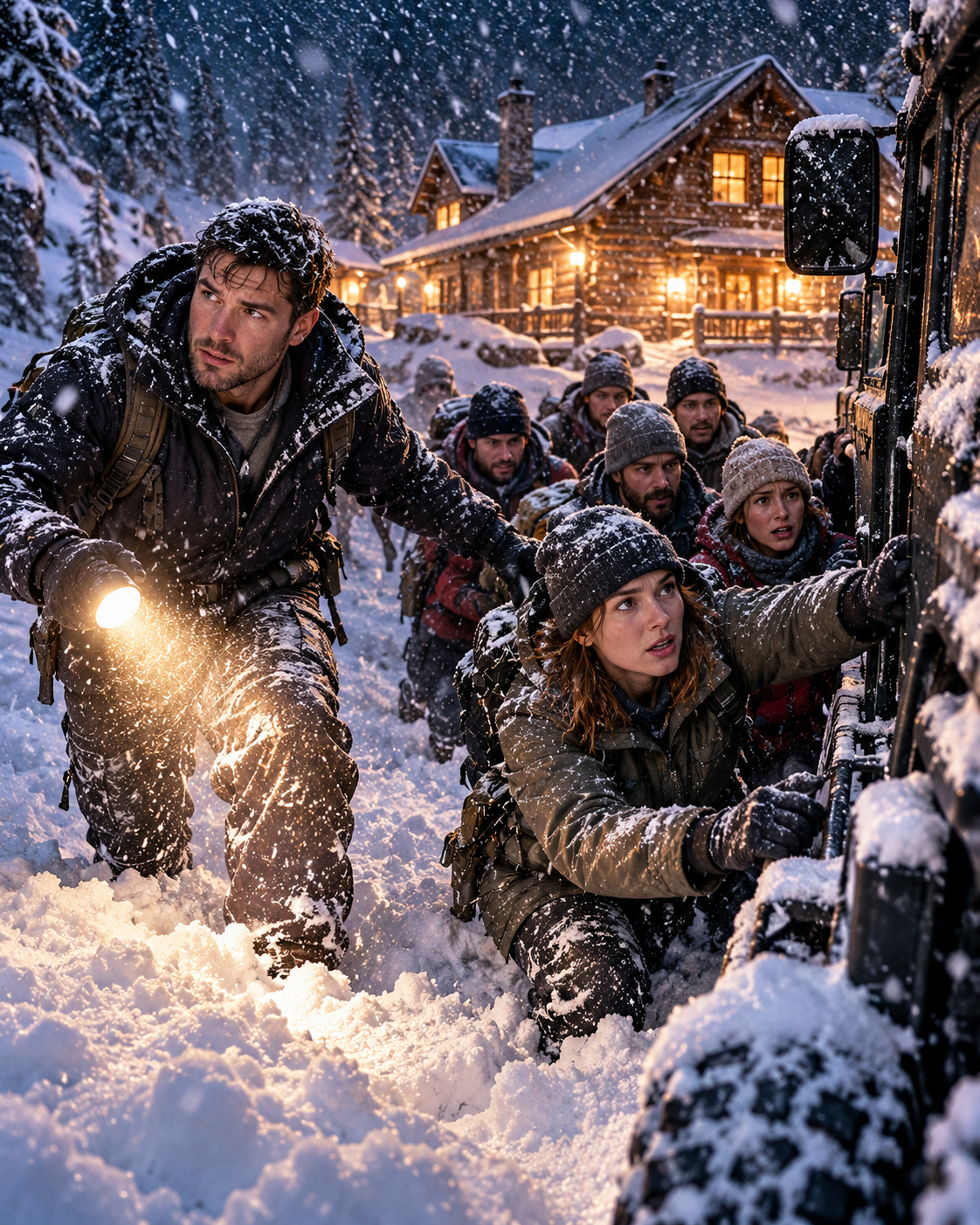
My hand shook as I picked up the envelope.
Across the front he had written:
FOR SAM REED.
ONLY AFTER THEY LIE AGAIN.
My heart stopped for one beat.
The man from the sedan took a step closer.
Naomi immediately moved between us.
“Stay where you are.”
He stopped.
“Captain,” he said quietly, “you don’t understand what you’re standing in front of.”
“Then explain it from there.”
His eyes shifted toward the box.
“My name is Daniel Mercer. I was general counsel for Northstar Defense when the prototype failed.”
I felt the muscles in my jaw tighten.
Northstar.
The name alone pulled me back eleven years.
A private defense contractor.
A company with government contracts worth more money than most small towns would see in a lifetime.
The vehicle in Arthur’s photographs had been their prototype.
Officially, it had never been deployed.
Officially, the crash that killed two test personnel had been caused by a procedural error.
Officially, Arthur Hayes had accepted the findings before his death.
Almost every word of that statement was a lie.
I opened the brown envelope.
Inside was a single sheet of paper.
Sam,
If you are reading this, then they have found the box.
Do not trust anyone who asks you to destroy it.
Do not trust anyone who tells you keeping quiet will protect your family.
The truth is already more dangerous to them than the box itself.
I read the first three lines twice.
My vision blurred at the edges.
Naomi leaned closer.
“What does it say?”
I handed her the page.
She read silently.
Mercer noticed her expression change.
“He left instructions,” he said.
“You knew?”
Mercer nodded.
“I knew Arthur was keeping evidence. I didn’t know where.”
“Why would your company lawyer want it hidden?” Naomi asked.
“Because I wasn’t the one who wanted it hidden.”
His answer came too quickly.
Naomi looked at him with the same expression she had worn when she first saw the control stamp.
“Who did?”
Mercer hesitated.
Before he could answer, headlights appeared at the edge of the property.
Not one vehicle.
Three.
They came through the storm in a tight line, tires throwing snow behind them.
Mercer’s face changed.
“That’s them.”
Naomi’s hand moved to her radio.
“Who?”
He looked at her.
“The people I was hoping would never find this place.”
I turned toward the window.
The first SUV stopped near the gate.
The second blocked the road.
The third remained farther back with its headlights off.
Then the garage lights flickered.
Once.
Twice.
And went dark.
Clara’s name flashed across my mind.
My daughter was two counties away.
Safe.
At least that was what I had believed.
My phone vibrated.
A message.
Unknown number.
There was a photograph attached.
Clara standing outside her apartment building.
Taken less than five minutes earlier.
Under it were four words:
OPEN THE BOX.
My knees almost gave out.
Naomi saw my phone.
She didn’t ask who it was.
She understood.
“How far away is your daughter?”
“Two hours.”
“Then we need to make sure she has two hours.”
I stared at her.
“You think they’re actually going after her?”
“I’m not interested in finding out.”
She turned to the other Marines.
“Lock down the house.”
The women moved immediately.
No panic.
No shouting.
Just training.
One secured the back door.
Another checked the windows.
A third pulled the curtains.
Mercer remained near the workbench, staring at the green box.
“They won’t hurt her,” he said.
I turned on him.
“You don’t know that.”
“No.”
He swallowed.
“But I know what they want.”
“What?”
“The contents of the recorder.”
I looked down.
The recorder was smaller than I expected.
Black plastic.
One red button.
No brand name.
No visible port.
Just a tiny switch on the side.
I lifted it.
Mercer went pale.
“Don’t play it here.”
“Why?”
“Because if it contains what I think it does, there may be a reason Arthur made sure it was never connected to a network.”
Naomi took the recorder from my hand.
She turned it over.
“Analog storage.”
Mercer nodded.
“Tamper-resistant.”
“Meaning?”
“If someone wanted to erase it remotely, they couldn’t.”
That was the first thing I’d heard all morning that sounded like good news.
Naomi looked at me.
“Your garage. You have a radio bench?”
“Old one.”
“Can it be isolated from the house?”
“Yes.”
“Then we’re going to hear this somewhere they can’t reach.”
Mercer shook his head.
“You don’t have time.”
I looked through the garage windows.
One of the vehicles outside had begun moving toward the house.
Slowly.
Confidently.
As if whoever was inside already believed they owned the road.
“They gave up being patient,” I said.
Naomi nodded.
“So should we.”
We moved into the back workshop.
I shut down every modern device I had.
No Wi-Fi.
No smart controls.
No connected phones.
Nothing that could listen.
The old generator remained off.
The room was lit only by a battery lamp.
I found the cable I had kept for an obsolete field recorder and connected it to the equipment Arthur and I used during evaluations.
The recorder clicked when I pressed PLAY.
For several seconds there was only static.
Then Arthur’s voice filled the room.
“Test log. Vehicle prototype N-17. November fourteenth. Zero two seventeen hours.”
I closed my eyes.
His voice was older than my memory of him.
Tired.
Controlled.
The voice of a man who already knew he was documenting something that powerful people wanted erased.
“We have confirmed repeated hydraulic pressure loss during cold-weather braking.”
A page rustled.
“Failure occurs below minus fourteen degrees.”
Another voice spoke in the background.
“Could be operator technique.”
Arthur replied immediately.
“No.”
Then my own younger voice entered the recording.
“Brake response drops by roughly thirty percent before warning indicators appear.”
A silence.
Then Arthur said, “Say that again.”
I heard myself repeat the figure.
Mercer looked at me.
I remembered that moment.
I had been thirty-eight.
Arthur was sixty.
We were both exhausted.
Neither of us knew the next twelve hours would destroy everything.
The recording continued.
“We’re grounding N-17.”
A different voice interrupted.
This one I didn’t recognize at first.
Then I did.
Victor Hale.
Northstar’s vice president of engineering.
“If you ground it, the contract slips.”
Arthur answered, “People are not schedule buffers.”
Hale laughed.
“Arthur, we’ve tested this system twelve times.”
“Eleven,” I corrected on the recording.
“What?”
“Eleven clean tests.”
Arthur was silent for a second.
“He’s right. The twelfth was the failure.”
Hale’s voice hardened.
“Then call it an anomaly.”
Arthur answered, “It isn’t.”
There was a long pause.
Then Hale said something that made the hair rise on my arms.
“You’re forgetting who signs your checks.”
The recording ended.
Nobody moved.
Naomi looked at Mercer.
“You said Northstar never ignored a failed test.”
Mercer didn’t answer.
“You lied.”
“I was ordered to.”
“By whom?”
He looked down.
“Hale.”
A noise came from the front of the house.
A door opening.
Then footsteps.
They had entered.
Naomi raised two fingers.
The Marines around us split silently into position.
I stared at the box.
Arthur’s letter.
The photographs.
The recording.
There was still something beneath the documents.
A second envelope.
Thicker.
Sealed with red tape.
I opened it.
Inside was a printed report and a small key.
The report was the one Arthur and I had signed.
Except there was one additional page.
A page I had never seen.
It contained a series of payment records.
Names.
Dates.
Account numbers.
Amounts transferred from Northstar to several officials involved in the evaluation board.
Some were government employees.
Some were consultants.
Two had later become executives at other defense companies.
At the bottom was a handwritten note from Arthur.
They didn’t just bury the failure.
They bought the burial.
My hands became cold.
Mercer stared at the page.
“I never saw that.”
“Would you have believed it?”
He didn’t answer.
Outside, a man’s voice called through the house.
“Sam Reed.”
My alias.
They were announcing themselves.
“Come out with the box.”
Naomi whispered, “Do not answer.”
Another voice followed.
“Captain Vance, this concerns classified property. Leave the civilian and no one gets hurt.”
Naomi looked at me.
“Classified property?”
“They don’t care about classification,” Mercer said. “They care about liability.”
I looked at the little key in my hand.
It didn’t fit the box.
I turned it over.
Stamped into the metal was a number:
B-17.
I remembered something.
The old hydraulic test chamber at Northstar had a secure archive room labeled B-17.
Arthur had once told me the archive room was more important than the laboratory itself.
“There’s another location,” I said.
Mercer frowned.
“What?”
“The key isn’t for the box.”
Naomi understood.
“B-17.”
Mercer stared at me.
“You still know where it is?”
“Yes.”
“Then they will kill you before they let you get there.”
Naomi stepped closer.
“They’re not going to get the chance.”
The front door slammed open.
A burst of cold air swept through the house.
Then the shooting started.
The first round struck the old wood frame above us.
The Marines returned fire only long enough to force the attackers back.
I had spent eleven years repairing machines.
I had forgotten what it felt like to move through danger without thinking.
Naomi grabbed my arm.
“Stay behind me.”
“I know the old service tunnel.”
She looked at Mercer.
“Can you get us out?”
“Maybe.”
“That’s not an answer.”
“No,” he said. “It isn’t.”
We moved through the rear workshop into the storage room.
Behind an old shelving unit was a concrete access door I had never told anyone about.
It connected to a drainage tunnel beneath the property.
The tunnel was narrow, dark, and half-frozen.
But it led toward the service road on the other side of the ridge.
We crawled through snow and mud while the sound of boots echoed somewhere above us.
After fifteen minutes, we emerged behind an abandoned sawmill.
Mercer’s SUV was still parked along the service road.
We climbed in.
Naomi drove.
I held the green box against my chest.
For the first time in eleven years, I was no longer hiding from the past.
I was driving toward it.
Northstar’s old test facility had been officially closed years earlier.
The government had taken the land, but the buildings were scheduled for demolition.
We arrived just before sunrise.
Snow covered the access road.
The main gate was chained.
Mercer opened the glove compartment and produced an old identification card.
“You’re still carrying that?”
“I never knew when it might be useful.”
Naomi looked at him.
“That answer applies to everything about your life, doesn’t it?”
He didn’t smile.
The gate opened.
Inside, the facility looked exactly as I remembered it.
Except smaller.
Abandoned places always looked smaller when you returned to them.
I led them to Building B.
The secure archive entrance was behind a collapsed maintenance shed.
The key fit.
The door opened with a mechanical groan.
Inside were shelves of old storage drives, test logs, personnel records, and sealed evidence containers.
Dust covered everything.
Arthur had hidden one final piece here.
I knew it.
I just didn’t know where.
Naomi opened her flashlight.
“Start searching.”
We worked quickly.
Mercer found an index terminal.
The machine took three attempts to start.
I searched for B-17.
One file appeared.
ARCHIVE TRANSFER: AUTHORIZED BY A. HAYES.
Timestamped eleven years earlier.
My breath caught.
I opened it.
There were no documents.
Only a video file.
Arthur appeared on screen.
He was sitting at the same steel table where we had written the original report.
He looked directly into the camera.
“Sam, I knew they would come for you eventually.”
My eyes burned.
Arthur continued.
“I don’t know whether you’ll hear this before or after they find the box.”
He paused.
“What happened to N-17 wasn’t an accident. The failure was a known design defect. Hale ordered us to continue testing because the government milestone was worth more to Northstar than the lives attached to it.”
Another pause.
“I refused to sign the altered report.”
He looked down.
“I also learned that several people inside the evaluation chain were receiving payments to approve the vehicle.”
My hands tightened around the edge of the desk.
“Sam, you need to understand something.”
Arthur leaned toward the camera.
“The box is not the evidence.”
I froze.
“The box is the key to proving that the evidence exists.”
Mercer whispered, “What?”
Arthur continued.
“Copies were sent to independent auditors, one federal inspector, and a journalist. If they ever come for the green case, that means they have already started cleaning up the remaining trail.”
He looked straight into the camera.
“And if you’re wondering why I didn’t simply release everything myself, it’s because they threatened your daughter.”
The room went silent.
I stopped breathing.
Arthur knew about Clara.
Eleven years ago.
Before she finished high school.
Before I moved to the mountain.
Before I disappeared.
Arthur had known.
“They know exactly what matters to you, Sam. Don’t let them turn love into fear.”
The video ended.
I stared at the blank screen.
For eleven years, I had believed I left my old life to protect Clara.
Now I understood the truth.
I had left because I was afraid.
Arthur had wanted me to protect her without surrendering myself.
I had confused those things.
A metallic clatter came from outside.
Naomi stood.
“They found us.”
Mercer checked the corridor.
“How?”
“They followed the SUV.”
Naomi looked at me.
“Do the copies still exist?”
Mercer nodded slowly.
“Some might.”
“Where?”
“There was an external legal archive in Denver.”
I remembered Arthur’s letter.
The truth is already more dangerous to them than the box itself.
I suddenly understood.
“The documents aren’t the objective.”
Naomi waited.
“They want the list.”
“What list?”
“The people who received the payments.”
Mercer nodded.
“Exactly.”
“And if we release it?”
“They lose control of the story.”
Naomi looked at the evidence on the desk.
“We don’t need to defeat them with force.”
I looked toward the door.
“We need to make it impossible to bury.”
She nodded.
We copied everything.
The video.
The payment records.
The original report.
The photographs.
The test logs.
Mercer used an old secure system that had no connection to Northstar’s current network.
Then he contacted three separate legal offices, two journalists, and the federal inspector named in Arthur’s recording.
Naomi had her own chain of command.
Within twenty minutes, the evidence no longer existed in one place.
It existed everywhere.
That was the moment the men outside lost.
Not because we had more weapons.
Because we had removed the possibility of silence.
The door burst open.
Victor Hale stepped inside.
He was older than I remembered.
His hair had turned white.
But I recognized his eyes.
He looked at the box in my hands.
“You should have left it buried.”
I stepped forward.
“You should have told the truth.”
His expression hardened.
“You have no idea what that truth would have cost.”
“Two people died.”
“More would have died if the contract collapsed.”
I stared at him.
“You still believe that makes it acceptable?”
“I believe you don’t understand how the world works.”
“No,” I said. “I understand exactly how it works.”
Naomi stood beside me.
“So does every person who will read these files.”
Hale’s face changed.
For the first time, he looked uncertain.
“You think releasing this will make you a hero?”
I shook my head.
“I don’t want to be a hero.”
I looked at Arthur’s face frozen on the computer screen.
“I just don’t want his final act to be forgotten.”
Hale was arrested before noon.
The investigation that followed lasted fourteen months.
There were hearings.
Audits.
Criminal charges.
Lawsuits.
Northstar lost its major contracts.
Several officials resigned.
Two pleaded guilty.
Others spent years claiming they had known nothing.
The truth was messier than justice.
It usually was.
Arthur Hayes never received the apology he deserved.
Dead men rarely do.
But his name was restored to the evaluation report.
And the two men who died testing N-17 were finally acknowledged as casualties of a preventable engineering failure rather than victims of “operator error.”
That mattered.
Clara came to the mountain three days after the arrests.
She walked into the garage, looked at the green box on the workbench, and then looked at me.
“You were never just a mechanic, were you?”
I almost laughed.
“I was a mechanic.”
She smiled.
“That’s not what I asked.”
I sat down.
For eleven years, I had built walls around the truth because I believed secrets were another form of protection.
That day, for the first time, I told my daughter everything.
About Arthur.
About the test.
About the report.
About why I disappeared.
I told her about the phone call.
About the photograph of her.
And finally, I told her the part that hurt the most.
“I was so afraid of losing you that I spent eleven years pretending I’d already lost everything else.”
Clara sat beside me.
She was quiet for a long time.
Then she took my hand.
“You could have trusted me with the truth.”
“I know.”
“No,” she said gently. “I don’t think you do.”
She looked around the garage.
“You taught me my whole life that broken things can be repaired.”
I nodded.
She squeezed my fingers.
“But you forgot that includes people.”
A month later, I dismantled the old cabinet.
I kept the green box.
Not because I needed to remember the threat.
Because I needed to remember the choice.
Arthur had once told me that a signature was more than ink on paper.
It was a declaration that you were willing to stand behind what you knew to be true.
For eleven years, I had allowed someone else to define my silence as safety.
I finally understood the difference.
Silence can protect a person for a night.
Truth can protect people for generations.
The mountain road eventually reopened.
The snow melted.
The little red house looked ordinary again.
Military trucks stopped coming.
Black SUVs disappeared.
Reporters found other stories.
And life, in its stubborn way, became quiet.
One spring morning, Clara helped me repaint the garage door.
She held the ladder while I worked.
“Dad?”
“Yeah?”
“What are you going to do with the box?”
I looked at the old green case sitting on the shelf.
“Keep it.”
“Why?”
“Because some things should never be destroyed just because they’re painful.”
She smiled.
“That’s a very mechanic answer.”
I smiled back.
“Maybe.”
Then I closed the garage door behind us.
For years, I had thought the goal of surviving was becoming impossible to find.
I was wrong.
Sometimes survival means being willing to be found.
Sometimes courage is not standing in front of danger with a weapon.
Sometimes it is standing in front of the truth with your own name.
And sometimes the most important thing we leave our children is not a house, a bank account, or even an explanation.
It is the proof that when the moment came, we chose not to look away.