The moment the Boeing 737 lost every navigation display, I knew we were flying toward a mountain we couldn’t see.
The Final Mission
I used to believe that saving lives was the hardest thing a person could do. I was wrong. Sometimes, the hardest thing is deciding what to do after you have saved them.
For weeks after the opening of the Aviation Safety and Emergency Communications Center, I found myself returning to the same question. Should I keep fighting the people who had stolen five years of my life, or should I let the past remain where it belonged and concentrate on protecting the future?
The two choices seemed impossible to reconcile.
Every morning, I arrived at the center before sunrise. I reviewed emergency communication systems, met with engineers, and worked with rescue teams preparing for operations in some of the most unforgiving environments on Earth.
It was meaningful work. For the first time in years, I was building something rather than trying to survive what someone else had destroyed.
But the past had a way of finding me.
One Thursday evening, as I was preparing to leave, my assistant, Daniel Brooks, knocked on the office door.
“Major Vance, there’s someone here to see you.”
I looked up from a stack of technical reports.
“Who?”
“He says his name is Ethan Cole. He was a communications officer during Operation Northern Lantern.”
My fingers stopped moving.
I remembered Ethan. He had been young, barely twenty-six, and responsible for monitoring the emergency frequencies during the operation. I remembered hearing his voice on the radio, warning us that the magnetic storm was getting worse.
I also remembered that he had disappeared from the military shortly after the incident.
“Send him in.”
A moment later, a thin man with tired eyes entered the room. He carried a brown envelope and looked as though he had spent several nights deciding whether to come.
“Major,” he said quietly.
“Claire is fine.”
He nodded but did not sit down.
“I’ve been trying to find you for months.”
“Why now?”
He placed the envelope on my desk.
“Because I know what really happened during Northern Lantern. And there’s something in those files that the congressional investigation never found.”
I stared at the envelope.
The investigation had uncovered altered mission reports, false statements, and evidence of deliberate obstruction. General Thomas Vance had been removed from his position while investigators examined his role. Several senior officials had resigned.
But the final report had never answered one question: why had the operation been concealed so aggressively?
I opened the envelope.
Inside were printed communications logs, handwritten notes, and a photograph of a classified document.
The document carried a heading I had never seen before.
PROJECT SILENT HORIZON.
“What is this?” I asked.
Ethan finally sat down.
“Northern Lantern wasn’t just a rescue mission. It was part of a larger program testing an experimental emergency navigation network in the Arctic.”
I studied the photograph.
The program had involved several military contractors and government agencies. Its purpose was to maintain communication and navigation capabilities during extreme electromagnetic disturbances.
“That explains the equipment failures,” I said.
“Not all of them.”
Ethan leaned forward.
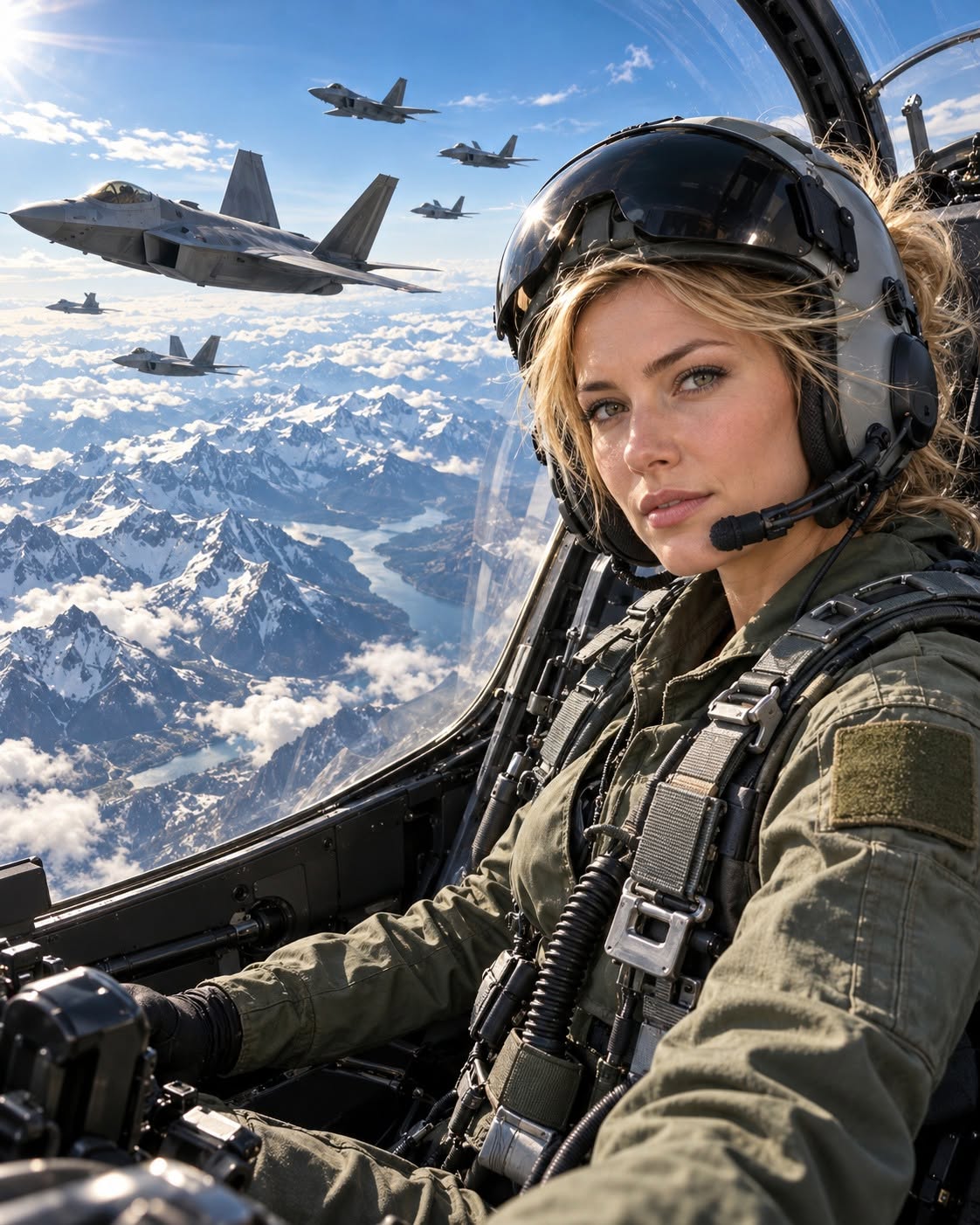
“The system was reporting false position and altitude information before the geomagnetic storm reached its peak. The officials responsible knew there was a problem. They had received warnings from the engineers weeks earlier.”
A cold feeling settled in my stomach.
“You’re saying the pilots were sent into the operation knowing the system was unreliable?”
“Yes. And when everything went wrong, the people overseeing the program realized that admitting the truth would expose years of negligence.”
I looked down at the documents again.
“Where did you get these?”
“I kept copies of the original communications. I was ordered to delete them after the operation. I refused.”
“Why didn’t you come forward during the investigation?”
Ethan’s expression changed.
“Because the man who gave the order wasn’t General Vance.”
For several seconds, neither of us spoke.
“Who was it?”
“Deputy Secretary Richard Hale.”
The name was familiar. Hale had appeared briefly during the congressional hearings, presenting himself as an official who had inherited an unfortunate situation and helped correct it.
He had never been accused of personally ordering the cover-up.
“General Vance was protecting him,” Ethan continued. “And when you rescued those six pilots, you became the one person who could prove the program had failed.”
I leaned back in my chair.
Suddenly, the events of five years earlier looked different.
General Vance had not simply been protecting his reputation. He had been protecting a network of people whose careers, contracts, and political influence depended on keeping the program alive.
“Why tell me this now?”
Ethan looked toward the window.
“Because Project Silent Horizon is still operating.”
I felt my heartbeat quicken.
“What?”
“They changed the name. They’re preparing to deploy an updated system across several northern aviation corridors. The official demonstrations begin next month.”
“And the original problems?”
“Some were fixed. Others were never properly investigated. I’ve seen the latest engineering reports. There are still vulnerabilities.”
I stood.
“Have you given these documents to the investigators?”
“I sent them to the congressional committee three weeks ago. They never responded.”
That was when I understood why he had come to me.
He wasn’t asking me to reopen an old investigation.
He was warning me that the same mistake might happen again.
I picked up my phone and called Elena Cross.
She answered on the second ring.
“Claire?”
“I need you to listen carefully. Northern Lantern wasn’t the whole story.”
I told her everything.
When I finished, she was silent for a moment.
Then she said something that made my stomach tighten.
“Claire, I think you need to come to Washington. Tonight.”
“Why?”
“Because Richard Hale has just announced that the Silent Horizon system will enter operational testing in forty-eight hours. And he’s scheduled to demonstrate it in front of an international aviation safety delegation.”
I looked at Ethan.
He was already shaking his head.
“They’re going to make the same mistake again,” he whispered.
“No,” I replied.
“Not if we can stop them.”
The next morning, I arrived in Washington with Elena and Ethan.
The city looked exactly as I remembered it: imposing government buildings, security checkpoints, and people walking quickly as if every minute belonged to someone more important than themselves.
At the congressional complex, Senator Patricia Sterling agreed to meet us.
She listened without interruption as Ethan explained what he had discovered. When he finished, she examined the documents and removed her glasses.
“These are serious allegations.”
“They’re more than allegations,” Ethan replied. “They’re original communications logs.”
Sterling turned toward me.
“Major, can you verify the technical information?”
“I can verify the failure patterns. I can also explain why they matter. But we need access to the current system before anyone can claim it is safe.”
The senator nodded slowly.
“I’ll request an immediate independent review.”
“That won’t be enough,” Elena said. “The demonstration is in forty-eight hours. If they proceed and something fails, we may be looking at another disaster.”
Sterling looked toward her chief of staff.
“Contact the aviation safety authorities. Request an emergency technical briefing. And prepare a formal notice to suspend the demonstration pending verification.”
For the first time since Ethan had entered my office, I felt that we might actually be making progress.
Then the senator’s phone rang.
She answered, listened, and her expression hardened.
When she ended the call, she placed the phone on the table.
“Deputy Secretary Hale has rejected the request. He says the system has passed every required test.”
“Of course he has,” Elena muttered.
Sterling looked directly at me.
“There’s another problem. The testing site is already under military security. We cannot simply walk in and inspect their equipment.”
“Then bring in an independent technical team,” I said.
“They won’t authorize access.”
“Then make the public understand why access matters.”
The senator considered that.
“I can call another hearing. But I need evidence that the current system presents a genuine safety concern, not simply proof that the old system failed.”
Ethan opened his briefcase.
“I have something else.”
He produced a small storage device.
“An engineer working on the updated program sent me these diagnostic records yesterday. They show intermittent position errors during simulated magnetic disturbances.”
I examined the data.
The numbers were troubling.
Not because every test had failed, but because the failures were inconsistent. In certain conditions, the system produced readings that appeared normal while drifting away from the aircraft’s actual position.
That was more dangerous than a complete blackout.
A pilot could recognize dead instruments.
But a false instrument could convince an experienced pilot to make the wrong decision.
“These results need independent verification,” I said.
Sterling stood.
“Then that’s what we’ll do.”
By the following afternoon, our small group had become the center of an unexpected confrontation.
The story broke after an aviation safety journalist received a copy of the Northern Lantern documents. Within hours, several major news organizations were asking questions about Project Silent Horizon.
Deputy Secretary Hale appeared before cameras outside the government complex.
He described the allegations as politically motivated and insisted that the program had undergone extensive testing.
He also made a point of mentioning me.
“Major Claire Vance has a history of disregarding established procedures,” he said. “While her actions during the Northern Lantern incident were praised by some, they should not be confused with the independent technical standards required for a national aviation program.”
I watched the broadcast from Elena’s hotel room.
He was doing exactly what I expected.
He couldn’t disprove the documents, so he was trying to discredit the person presenting them.
For a moment, I felt the familiar weight of those five missing years.
Then my phone rang.
It was Julian Mercer.
“Claire, are you watching this?”
“Unfortunately.”
“Don’t let him get inside your head.”
I smiled faintly.
“That sounds like something I once told you.”
“You told me to count backward from twenty when I thought I couldn’t stay awake. I’m pretty sure I owe you more than one piece of advice.”
I looked at the television.
“How are the others?”
“All five are here. We saw the report. We’re coming to Washington.”
“You don’t have to do that.”
“Yes, we do.”
He paused.
“There’s something you need to remember. You didn’t save us because you wanted to become a hero. You saved us because we were people who needed help. That’s still true today.”
When the call ended, I realized I had been waiting for someone to remind me of that.
Not everyone involved in the old mission had forgotten.
And neither had the people whose lives depended on the truth.
The demonstration began at 0800 on Saturday.
The testing facility was located at a remote airfield in northern Alaska. It included a control center, several ground communication stations, and a specially equipped aircraft designed to evaluate the new navigation network.
Deputy Secretary Hale intended to demonstrate that Silent Horizon could maintain reliable guidance during severe electromagnetic disturbances.
The weather was clear, and the first tests proceeded without incident.
But Elena had managed to obtain a copy of the updated system’s testing schedule. She noticed something important.
The demonstration would not include the full range of electromagnetic conditions that had caused the Northern Lantern failures.
It was a controlled performance designed to succeed.
“He’s showing everyone the system under conditions it was built to handle,” she said. “Not the conditions that expose its weaknesses.”
I studied the schedule.
“Then we need an independent test.”
“How?”
“We don’t interfere with their aircraft. We don’t create a dangerous situation. We simply request a controlled comparison using independent navigation equipment and a simulated disturbance.”
Elena nodded.
“I can get the request to the technical oversight team.”
We spent the next several hours preparing our proposal.
Ethan verified the old logs. Independent engineers reviewed the new diagnostic records. I prepared a technical briefing explaining how a navigation system could produce convincing but inaccurate readings.
At noon, the oversight team agreed to conduct an additional simulation.
For the first time, Hale appeared genuinely uncomfortable.
He approached us in the control building, accompanied by two security officers.
“Major Vance,” he said, forcing a smile. “I thought you had retired from military operations.”
“I did.”
“Then perhaps you should allow the professionals to handle this.”
“I am allowing them to handle it. That’s why we’re asking for an independent test.”
His smile disappeared.
“You have no authority here.”
“Neither do you have the authority to call an unsafe system safe without sufficient evidence.”
One of the officers shifted uneasily.
Hale stepped closer.
“You have already received more attention than your circumstances justify. I suggest you remember that.”
I held his gaze.
“I spent five years being told that my name no longer existed. I’m not afraid of losing it again.”
He turned away without answering.
But I noticed something.
He wasn’t angry because we were wrong.
He was afraid because we might be right.
At 1430, the independent simulation began.
The test aircraft remained on the ground while engineers introduced controlled interference into the system’s input signals. Independent reference equipment recorded the actual simulated position while the new network calculated its own readings.
For the first ten minutes, everything appeared normal.
Then the numbers began to separate.
At first, the difference was small.
A few hundred feet.
Then nearly a thousand.
One engineer leaned toward his monitor.
“That’s not right.”
The system corrected itself, but the correction introduced another error.
The displayed position moved in the wrong direction.
I stepped closer.
“Stop the simulation and preserve the raw data.”
A senior technician looked at Hale.
He hesitated.
“Continue,” Hale ordered.
The technician glanced back at his screen.
“Sir, the deviation is increasing.”
“Continue the test.”
The engineer’s voice became firmer.
“We have an integrity warning.”
I turned toward the control supervisor.
“Terminate the simulation. Now.”
The supervisor reached for the shutdown control.
Hale stepped forward.
“You will not interrupt an authorized demonstration.”
Before he could say anything else, the system generated another warning.
<PRIVATE_PERSON>—the lead engineer, Dr. Samuel Ortiz—stood up so quickly that his chair fell backward.
“Deputy Secretary, the navigation solution is no longer trustworthy.”
The room went silent.
On the main display, the calculated aircraft position had drifted more than two miles from the independent reference.
Nobody needed a military background to understand what that meant.
The demonstration was over.
And the evidence was undeniable.
But the most disturbing discovery came afterward.
The engineers found that the warning threshold had been deliberately adjusted to tolerate larger deviations before alerting the crew.
Someone had decided that a system displaying incorrect information should remain operational longer than its safety limits allowed.
Hale immediately demanded that the test records be classified.
Senator Sterling, who had been watching the demonstration remotely, interrupted him.
“Deputy Secretary, those records are now part of an active congressional safety inquiry. No one is authorized to destroy, alter, or conceal them.”
Hale looked toward the cameras.
For the first time, he had nothing prepared to say.
That evening, I stood alone outside the control building.
The Alaskan sky stretched above me, pale and enormous. Snow-covered mountains surrounded the airfield, their peaks disappearing into low clouds.
I had spent five years trying not to remember Northern Lantern.
Now I was standing in the place where the truth had finally become impossible to hide.
Footsteps approached.
It was General Thomas Vance.
He looked older than I remembered. His uniform was immaculate, but the authority that once seemed to fill every room had faded.
“I wondered if I’d find you here,” he said.
I didn’t turn.
“You shouldn’t be here.”
“I know.”
For a while, we listened to the wind.
Then he spoke.
“I was wrong, Claire.”
I closed my eyes.
Five years ago, I had imagined hearing those words a thousand different times. Sometimes I had wanted him to apologize. Sometimes I had wanted him to suffer. Sometimes I had simply wanted him to admit that what happened to me was real.
Now that he was standing beside me, none of those imagined moments seemed important.
“You knew the navigation system was failing,” I said.
“I knew there were irregularities. Hale assured us they were manageable.”
“And when I disobeyed the withdrawal order?”
He lowered his head.
“I knew you were saving those pilots. I also knew that if the operation became public, the entire program would be investigated.”
“So you chose the program.”
“I chose my career. I told myself I was protecting national security. I told myself that the truth could wait.”
“Five years?”
He had no answer.
I finally turned toward him.
“You declared me dead.”
“I signed the paperwork.”
“You let my family bury an empty grave.”
His face tightened.
“I have no excuse.”
“No,” I said. “You don’t.”
He looked toward the mountains.
“I cannot ask you to forgive me.”
“Good. Because forgiveness isn’t something you get to request as payment for admitting what you did.”
He nodded slowly.
“What happens now?”
“Now the investigators do their work. And you tell them everything.”
“I will.”
I studied his face.
“Not because you want to repair your reputation. Not because you hope to avoid punishment. Because the next person who trusts a broken instrument deserves better than we were given.”
He swallowed.
“I understand.”
I wasn’t sure he did.
But for the first time, he seemed willing to listen.
The investigation lasted eight months.
The findings were worse than anyone had expected.
Project Silent Horizon had received warnings about its navigation integrity problems long before Northern Lantern. Several internal reports had recommended suspending certain tests until the system could be independently validated.
Those recommendations had been ignored.
Richard Hale had directed senior officials to suppress the reports and modify the testing criteria. General Vance had helped conceal the original failures and authorized the false records that led to my disappearance.
Other officials had participated in the cover-up, while several contractors had continued receiving payments despite unresolved safety concerns.
The consequences were significant.
Hale resigned and was later charged with multiple offenses connected to the falsification and obstruction investigation. General Vance cooperated with investigators, surrendered his command, and faced disciplinary proceedings. Several program executives lost their security clearances and government contracts.
The updated Silent Horizon system was suspended until an independent review could establish whether it could operate safely.
Congress also approved a new oversight framework requiring independent verification of emergency navigation systems used in high-risk aviation environments.
It was not perfect justice.
Some people avoided serious consequences. Some decisions remained buried behind national security restrictions. And nothing could return the five years I had lost.
But the truth was finally part of the public record.
One afternoon, Senator Sterling invited me to attend a final congressional session.
The room was crowded with journalists, officials, and members of the aviation safety community.
When my turn came, I approached the microphone.
“Major Vance,” the senator began, “after everything that happened, what do you believe is the most important lesson from Northern Lantern and the Silent Horizon investigation?”
I considered the question.
“That technology is only as trustworthy as the people responsible for it. A navigation system can fail. A radio can go silent. An instrument can display information that looks perfectly convincing and still be wrong.”
I paused.
“But the greatest danger begins when people know something is wrong and decide that admitting it would be more costly than allowing others to take the risk.”
The room remained quiet.
I continued.
“Pilots are trained to make difficult decisions. Rescue specialists are trained to act when time is running out. But no one should have to compensate for deliberate dishonesty by people who are supposed to protect them.”
Senator Sterling nodded.
“And what would you say to the people who believe you should have followed your original orders during Northern Lantern?”
I looked toward Julian, who was sitting in the front row with the other five pilots.
“I would tell them that orders are important. Discipline is important. But responsibility does not disappear when an order becomes dangerous. The purpose of leadership is to protect lives, not to protect the appearance of being right.”
The senator thanked me.
As I stepped away from the microphone, Julian gave me a small nod.
For the first time, I felt that the story of Northern Lantern belonged to the truth rather than to the people who had tried to control it.
A year later, the Aviation Safety and Emergency Communications Center opened a new division dedicated to Arctic rescue operations.
We worked with civilian airlines, military rescue teams, engineers, and emergency agencies to develop redundant communication systems that could continue operating when conventional navigation infrastructure became unreliable.
We also established a program for pilots and rescue specialists who had experienced difficult missions.
I had learned something during those years.
Saving people did not always mean pulling them out of a freezing aircraft or guiding them toward a safe runway. Sometimes it meant giving them a system they could trust before disaster struck. Sometimes it meant listening when a junior engineer raised a concern. Sometimes it meant allowing someone to question an order without being treated as an enemy.
The center began receiving requests for training from organizations across the country.
One of our first major projects was a new emergency communications network for remote Alaskan aviation routes.
We designed it around a simple principle:
No single failure should be capable of silencing every way home.
Julian and the other Northern Lantern pilots volunteered to help with the training program. Ethan joined our technical team and became one of its most dedicated members.
Even Elena Cross left active command eventually, accepting a position on the center’s independent oversight board.
One evening, after a long day of testing, she stopped beside my office.
“You know,” she said, “when I first heard your transmission, I thought I was listening to a ghost.”
I laughed softly.
“Sometimes I felt like one.”
“And now?”
I looked through the glass wall toward the engineers working in the laboratory.
“Now I think I’m finally becoming a person again.”
She smiled.
“That’s a good place to start.”
The following September, exactly one year after the Northstar Flight 217 incident, we received an invitation to attend a small ceremony at Kilo 7.
The abandoned airstrip had been restored as an emergency landing facility. A permanent communications station now stood near the runway, equipped with independent power, backup navigation references, and multiple emergency transmission systems.
The ceremony was attended by local rescue crews, aviation officials, and several families who had been aboard Northstar Flight 217.
I almost didn’t recognize some of them.
A little girl approached me holding a folded piece of paper.
Her name was Sophie. She had been six years old during the flight and had sat beside her mother near the rear of the aircraft.
“Are you the lady who talked to the pilots?” she asked.
I crouched to meet her eyes.
“Yes. I was.”
“My mom said you helped us land.”
“I had some help.”
She looked at the bracelet on my wrist.
“What’s that?”
I glanced down at the worn aluminum.
It still carried the letters VT12.
“It’s a reminder.”
“Of what?”
I thought for a moment.
“Of people who didn’t give up on each other.”
She smiled and handed me the folded paper.
Inside was a drawing of an airplane flying above a mountain range. Beneath it, in uneven handwriting, were the words:
THANK YOU FOR BRINGING US HOME.
I felt my throat tighten.
“You’re welcome, Sophie.”
She ran back to her mother.
I stood there for a long time, holding the drawing.
The previous year, I had believed that my life would be defined by the people who had tried to erase it.
Now I understood that the more important part of my story was what I chose to build after they failed.
That evening, Julian found me standing near the runway.
The sun was sinking behind the mountains, turning the clouds gold.
“Still thinking?” he asked.
“Always.”
“About Hale?”
“Not tonight.”
He stood beside me.
“Then what?”
I watched a rescue helicopter lift into the evening sky.
“I spent so long believing that I had to choose between seeking justice and saving lives. I thought that if I stopped fighting the people who hurt me, I would be letting them win.”
“And now?”
“Now I understand that justice and service aren’t enemies. We needed the investigation because the same failures could have killed someone else. And we needed the center because exposing those failures wasn’t enough.”
Julian nodded.
“You finally found the answer.”
“Maybe.”
I looked toward him.
“But I also learned something else. You can spend your entire life trying to prove that you deserved to survive what happened to you. Eventually, you have to stop asking for permission to live.”
He smiled.
“That’s something worth remembering.”
We stood quietly as the helicopter disappeared into the distance.
Then my phone vibrated.
A message had arrived from Daniel at the center.
NEW EMERGENCY SIGNAL RECEIVED. POSSIBLE AIRCRAFT DISTRESS. NORTHERN CORRIDOR.
My smile faded.
I opened the message.
A small private aircraft had lost communication near a remote mountain region. Weather conditions were deteriorating, and its last known position was uncertain.
For a moment, I was back in that passenger cabin, listening to warning alarms and watching the instruments fail.
But this time, I wasn’t alone.
I called the center.
“Get the rescue coordination team online. Contact the nearest air stations and activate the independent tracking network.”
Daniel answered immediately.
“Already working on it.”
“Do we have a reliable position?”
“Not yet. But we’ve got two separate emergency signals.”
“Good. Keep both active. Don’t rely on a single source.”
I turned toward Julian.
He was already reaching for his phone.
Within minutes, our team had established contact with a regional rescue unit. The aircraft had experienced an electrical failure and was attempting to reach an emergency landing area.
This time, the backup network held.
The rescue crew received an accurate position, established a safe route, and guided the aircraft toward a suitable landing site.
All four people aboard survived.
The operation lasted less than two hours.
When the confirmation arrived, I sat down on the nearest bench and released a breath I hadn’t realized I was holding.
Julian glanced at me.
“Another one home.”
I nodded.
“Another one home.”
Later that night, I returned to the center alone.
The building was quiet, except for the low hum of the equipment in the monitoring room.
I entered my office and placed Sophie’s drawing beside the old photograph of the six Northern Lantern pilots.
Then I took off my aluminum bracelet.
For years, I had worn it because it was the only physical connection to the person I had been before everything was taken away.
I turned it over in my hands.
VT12.
The call sign that had once brought six stranded pilots home. The call sign that had returned to the radio five years after the government declared its owner dead. The call sign that had become a symbol of everything I had lost and everything I had refused to surrender.
I placed it in a small glass case on the shelf.
Not because I wanted to forget it.
But because I no longer needed to carry it everywhere to remember who I was.
My name was Claire Vance.
I was a daughter, a friend, a rescue specialist, and a woman who had once made a decision that changed the course of her life.
I was not a ghost.
I was not a classified file.
I was not the mistake someone had tried to erase.
And I was no longer defined by the people who had betrayed me.
Before leaving, I turned off the office lights and looked once more at the communication monitors.
Their green indicators continued blinking.
Somewhere beyond the mountains, aircraft were crossing dark skies, carrying people toward homes, families, and futures they could not yet imagine.
They would never know how many engineers, pilots, rescue workers, and ordinary people had worked to make their journeys safer.
That was all right.
Not every act of courage needed an audience.
Not every person who saved a life needed to be remembered as a hero.
Sometimes the greatest victory was simply making sure that the next person never had to face the same impossible choice.
I had once believed that my mission was to bring people home.
Now I understood that my mission was bigger.
It was to build a world where fewer people would ever be lost in the first place.
And if the radio called again tomorrow, I would answer.
Not as a dead woman returning from the past.
Not as a soldier trying to reclaim a stolen identity.
But as Claire Vance, a woman who had finally learned that courage was not only about risking everything to save someone.
It was also about refusing to let the world become a place where saving them was necessary in the first place.
Because a life is not measured by the orders we obey, the titles we carry, or the battles we win. It is measured by the people we protect, the truth we refuse to abandon, and the hope we leave behind for those who come after us.
And somewhere above the Alaskan wilderness, a pilot was flying home beneath a sky full of stars.
For the first time in a very long time, I knew that the people waiting for that pilot would not have to wonder whether anyone was listening.
Someone was.
And this time, the signal would never go unanswered.