The CEO ordered her security chief to handcuff me in front of her entire executive board. Twenty minutes later
Evelyn stared at Nathan as though he had just betrayed her.
“I gave the order,” she said. “He’s been accessing confidential records without proper clearance. I was protecting the company.”
Alistair looked at Nathan.
“Remove those handcuffs. Immediately.”
Nathan didn’t hesitate this time.
The restraints clicked open, and I brought my hands forward, rubbing my wrists.
“Are you injured?” Alistair asked.
“I’m fine.”
“Good. I’m sorry about this.”
Behind him, Evelyn stood perfectly still.
“Excuse me,” she interrupted. “You know this man?”
Alistair turned around.
“Know him? Mrs. Vance, he’s one of the most experienced forensic financial investigators working with our federal task force.”
Nobody spoke.
Gregory slowly lowered himself into his chair. Clara looked from Alistair to me, then down at the documents scattered across the conference table.
Evelyn shook her head.
“That’s impossible. He came here dressed like a temporary employee.”
Alistair studied her for a moment.
“I’m not aware of any federal regulation requiring investigators to wear expensive suits.”
One of the agents placed a folder on the conference table.
Alistair opened it and removed a document bearing Evelyn’s signature.
“Do you recognize this?”
She leaned forward.
“That’s our federal cooperation agreement.”
“Correct. You signed it six months ago following concerns about irregularities involving your company’s defense contracts.”
He turned several pages.
“This section authorizes designated federal investigators to conduct confidential financial examinations and review relevant security records without advance notice to individual executives.”
Evelyn reached for the document.
Alistair allowed her to take it.
“And this,” he continued, pointing toward my authorization letter, “identifies him as the investigator assigned to your company.”
She turned the letter over.
For the first time that day, she read the back.
I watched her expression change.
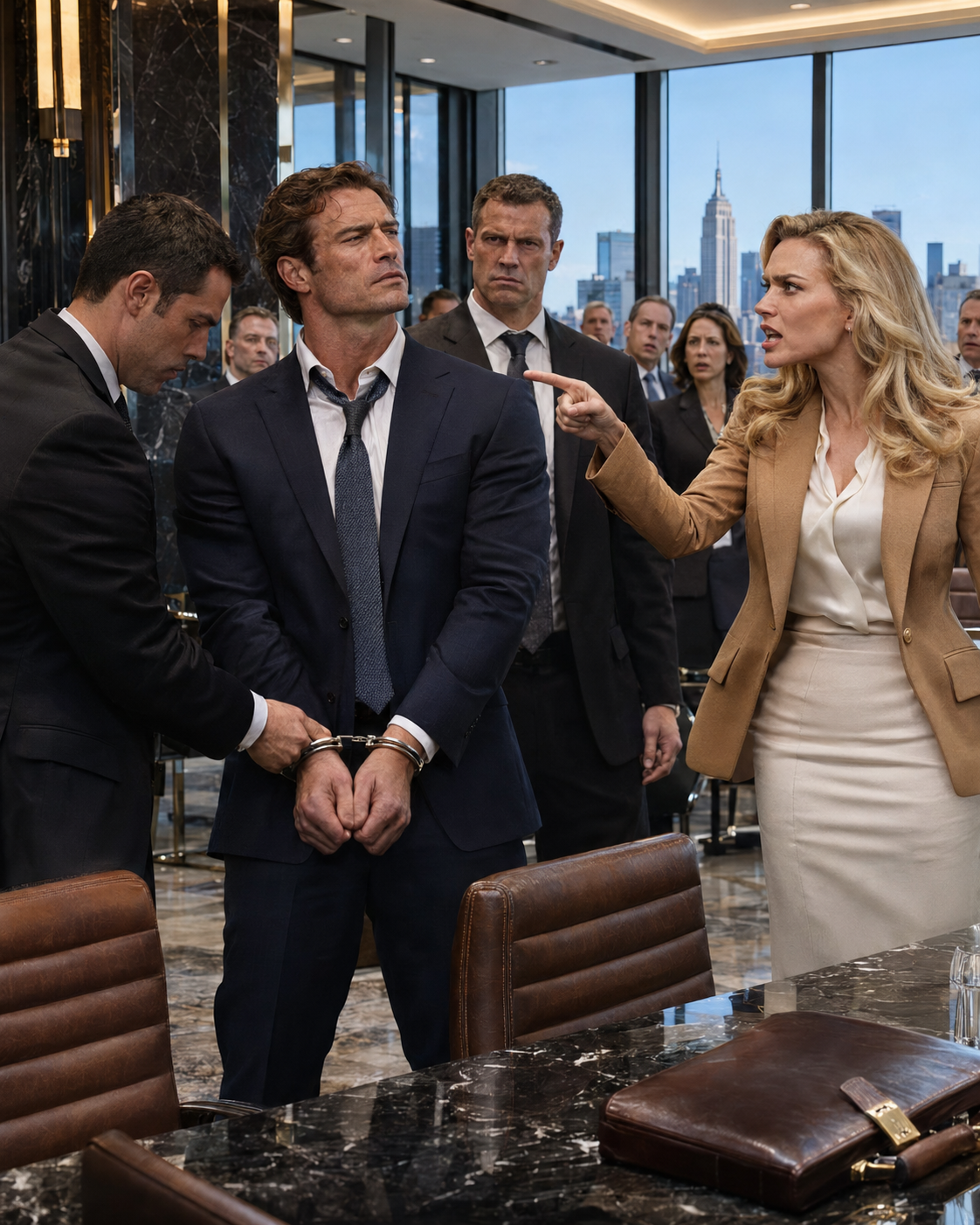
The confidence disappeared first. Then came confusion, followed by something that looked remarkably like fear.
“But nobody told me he was coming.”
“That was intentional,” Alistair replied. “An undercover examination is considerably less effective when everyone knows about it.”
Clara closed her eyes briefly.
“Evelyn, I advised you to read that agreement before signing it.”
“I read it.”
“Apparently not all of it.”
Evelyn placed the papers on the table.
She looked at me.
“Why didn’t you tell me who you were?”
“I provided the necessary documentation when I arrived. You chose not to read it.”
“You could have explained.”
“I attempted to explain my authorization several times. You were more interested in where I bought my suit.”
Gregory looked down, hiding an uncomfortable expression.
Alistair pulled out a chair.
“Now that we’ve established why he’s here, perhaps we can discuss what he’s found.”
I opened my briefcase.
The atmosphere in the room had changed completely.
That morning, Evelyn had treated my briefcase like something that belonged in a thrift store. Now every person at the table watched as I removed its contents.
I distributed copies of the financial records.
“Over the past several months, substantial payments have been routed through multiple intermediary companies. The money eventually reaches North Star Vector.”
Gregory adjusted his glasses.
“What exactly is North Star Vector?”
“On paper, a technology consulting business. In practice, we’ve found very little evidence that it provides the services your company has been paying for.”
I placed another document beside his copy.
“Several payments correspond with unauthorized access to restricted data rooms.”
Clara leaned forward.
“How closely do the dates match?”
“Closely enough that coincidence is becoming difficult to defend.”
Evelyn crossed her arms.
“We have hundreds of employees with access to sensitive information.”
“Not to these particular files.”
I slid the access records toward her.
“These sessions required executive authorization.”
She looked at the first page.
Then the second.
Her finger stopped beside her own name.
“No.”
I waited.
“This is wrong,” she said. “I never approved these sessions.”
“Are you certain?”
“Absolutely.”
“Then someone may have compromised your credentials.”
She looked around the room.
“That’s impossible. Our security systems are excellent.”
Nathan shifted uncomfortably near the door.
I turned toward him.
“Mr. Cole, when was the last independent review of executive account security?”
He glanced at Evelyn before answering.
“Several months ago. We recommended additional controls.”
“And were those recommendations implemented?”
“Not all of them.”
“Why not?”
Nathan took a moment.
“Executive management considered some of the changes disruptive.”
Gregory removed his glasses.
“Disruptive?”
“Additional verification requirements. Restrictions on delegated access. More frequent security reviews.”
Evelyn interrupted.
“We’re running a business, Nathan. We can’t stop every five minutes to enter another password.”
Clara stared at her.
“We’re also handling national defense information.”
The silence that followed was uncomfortable.
Alistair finally spoke.
“Nobody in this room should assume that the use of Mrs. Vance’s credentials establishes her personal involvement. That’s something the investigation will determine.”
Evelyn appeared relieved.
But he wasn’t finished.
“However, the unauthorized access is real. The suspicious payments are real. And the potential consequences are extremely serious.”
She swallowed.
“What happens now?”
“Now we preserve the evidence and establish the facts.”
The agents began coordinating with Clara and the company’s security personnel.
I explained which financial records needed to be retained and which systems required further examination.
Nathan listened carefully, asking sensible questions.
He was a different man from the security chief who had reluctantly approached me with handcuffs.
Without Evelyn directing his every movement, he seemed capable and professional.
At one point, he stepped beside me.
“Sir, about earlier.”
I looked up.
“I’m sorry.”
“You were placed in a difficult position.”
“I still should have questioned the order.”
“Yes,” I said. “You should have.”
He nodded.
I didn’t see any reason to humiliate him. He already understood what had happened.
“Help us protect the evidence,” I told him. “That’s what matters right now.”
He returned to his team.
Across the room, Evelyn was speaking quietly with Gregory.
I couldn’t hear every word, but I caught enough to understand that she was worried about the company’s reputation.
“What happens when the shareholders hear about this?”
Gregory answered without raising his voice.
“I think we have more immediate concerns.”
“We need to control the story.”
“No, Evelyn. We need to understand the truth.”
She looked toward Clara for support.
Clara was reviewing the cooperation agreement.
She didn’t look up.
My phone vibrated again.
This time, I checked it.
There were two messages from Hannah.
The first asked whether I was still coming home for dinner.
The second said she had already started cooking.
I smiled despite everything.
Alistair noticed.
“Your daughter?”
“She’s making dinner.”
“Then we’d better get you out of here at a reasonable hour.”
Evelyn overheard him.
For some reason, that ordinary exchange seemed to bother her more than the formal introduction had.
Perhaps she had spent the entire day imagining me as a man desperate for work, someone with nothing important waiting for him outside her building.
The idea that I had a life she knew nothing about seemed to surprise her.
Gregory requested a private discussion with Clara.
While they spoke, I continued organizing the evidence with the agents.
Nearly half an hour passed before Gregory called everyone back to the table.
His expression was serious.
“Evelyn, given the circumstances, I’m recommending that the board place you on administrative leave while an independent investigation proceeds.”
She stared at him.
“You can’t be serious.”
“I am.”
“This is my company.”
“And we have responsibilities to our employees, shareholders, clients, and the government.”
She turned toward the other board members.
Nobody immediately came to her defense.
“I built this business,” she said.
Gregory nodded.
“And that is precisely why you should want the investigation conducted properly.”
Evelyn looked at me.
“You’re going to destroy everything I’ve worked for.”
I closed the folder in front of me.
“Mrs. Vance, I didn’t create these transactions. I didn’t authorize those data sessions. And I didn’t order an investigator to be handcuffed.”
Her mouth tightened.
“My responsibility is to document what happened. What happens to this company depends largely on how its leadership responds now.”
For several seconds, she said nothing.
Then she sat down.
She looked exhausted.
Without the commanding voice and the carefully controlled expression, she seemed like an ordinary person facing a situation she couldn’t manage.
“I didn’t steal anything,” she said quietly.
“Then cooperate fully,” I replied. “Help establish that.”
Clara moved her chair closer to Evelyn.
“We’ll arrange appropriate legal representation for you. But you cannot interfere with this investigation.”
Evelyn nodded reluctantly.
The board agreed to begin the formal process of appointing temporary leadership.
Alistair made it clear that no final conclusions about individual criminal responsibility had been reached.
There would be interviews, examinations of electronic records, and a careful review of the money trail.
Nobody would be declared guilty simply because their name appeared on a document.
That was the difference between investigating someone and deciding what you believed about them before examining the evidence.
It was also a difference Evelyn had failed to understand when she first met me.
By the time I finished briefing the federal team, the afternoon sun had begun disappearing behind the neighboring buildings.
I checked my watch.
I could still make dinner.
I gathered my papers and returned them to my briefcase.
As I reached the conference room door, Evelyn called after me.
“Wait.”
I turned.
She stood beside the table, holding my authorization letter.
“I owe you an apology.”
I waited for her to continue.
She glanced at the remaining people in the room.
“I shouldn’t have ordered security to restrain you.”
“No, you shouldn’t have.”
“And I shouldn’t have made assumptions about you.”
I nodded.
She looked down at the letter.
“I thought you were someone who needed this job.”
“I do need my job,” I told her. “Most people do.”
She seemed confused.
“Having an important assignment doesn’t make me more deserving of basic respect than the people who clean your offices or deliver your mail.”
Her eyes dropped.
“You would have treated me differently if I’d arrived in a more expensive suit. That’s the part you should think about.”
She didn’t argue.
For the first time since I’d entered the building, she appeared to be listening.
I accepted her apology and left.
Nathan accompanied me downstairs.
When we reached the lobby, he held out his hand.
“Thank you for not making things worse for me.”
I shook it.
“Next time someone gives you an order that doesn’t seem right, ask another question.”
“I will.”
Outside, Manhattan was moving at its usual impatient pace.
People hurried toward subway stations. Cars crowded the intersections. Office workers stood on sidewalks checking their phones.
Nobody knew what had happened several floors above them.
Nobody cared about my suit or briefcase.
And that was perfectly fine with me.
I called Hannah.
“Hey, sweetheart.”
“Are you coming home?”
“On my way.”
“Good. I made spaghetti.”
“Should I be worried?”
“Dad!”
I laughed.
“Just kidding.”
She told me to hurry before the garlic bread got cold.
I promised I would.
When I finally opened our front door, the smell of tomato sauce filled the apartment.
Hannah appeared from the kitchen wearing an apron that was much too large for her.
“You’re seven minutes late.”
“That’s a serious violation.”
“Extremely serious.”
She handed me a plate.
I put my briefcase beside the door, took off my jacket, and washed my hands.
As I rolled up my sleeves, she noticed the faint red marks around my wrists.
“What happened there?”
I looked down.
“Something unusual at work.”
“Are you okay?”
“Completely.”
She studied my face for a moment.
Then she seemed satisfied.
We sat down together.
She told me about a history assignment, a disagreement between two of her friends, and a teacher who apparently assigned homework as though weekends didn’t exist.
I listened to every word.
After spending the day surrounded by executives discussing millions of dollars and national security, I was grateful to be sitting at a small kitchen table talking about teenage problems.
Halfway through dinner, Hannah pointed toward my jacket.
“You really need a new suit.”
I laughed so hard that she looked offended.
“What?”
“Nothing. Someone else seemed to think so today.”
“Well, they’re right. That one is ancient.”
“It still works.”
“Barely.”
I smiled and reached for another piece of garlic bread.
Over the following weeks, the investigation expanded.
The financial records confirmed that the suspicious payments were part of a larger scheme involving the improper transfer of sensitive company information.
Further examination uncovered weaknesses in the way executive credentials had been managed.
Several individuals came under investigation, and the authorities continued working to establish their specific roles.
Evelyn’s personal involvement remained a separate question requiring evidence.
Her failure to maintain adequate oversight, however, was much easier for the board to establish.
She remained away from her executive duties while independent investigators reviewed the company’s operations.
Gregory brought in temporary leadership and authorized extensive changes to financial approval procedures and information security.
Clara worked closely with federal authorities.
Nathan helped implement the security recommendations that had previously been delayed.
The company had a difficult road ahead, but its employees were finally being given the resources and authority to address problems that should have been taken seriously long before my arrival.
Several months later, I received a handwritten letter.
It was from Evelyn.
There was no expensive stationery, no assistant’s signature, and no formal corporate language.
She wrote that she had spent years believing that success gave her the ability to judge people quickly.
She admitted that she often confused expensive clothing with competence, confidence with intelligence, and obedience with loyalty.
She also acknowledged that employees had raised concerns she hadn’t wanted to hear.
She had been so accustomed to making decisions without being challenged that she had stopped recognizing the value of people who disagreed with her.
Near the bottom of the letter, she wrote something that stayed with me.
She said she was ashamed that it had taken the arrival of the FBI director to make her treat me with the respect I should have received when I first walked through her door.
I appreciated that acknowledgment.
I wrote back briefly.
I told her that recognizing a mistake was important, but changing the behavior that caused it was more important.
I hoped she would remember that when dealing with people who had no impressive credentials, no powerful connections, and no federal director coming to defend them.
I never expected another response.
And I didn’t need one.
My work at Vance Meridian Group had never been about revenge.
I hadn’t walked into that building hoping to embarrass its CEO or prove that I was more important than she was.
I had gone there because sensitive information was being compromised, public money was at risk, and somebody needed to establish the truth.
The handcuffs had simply become an unexpected part of the assignment.
One Saturday morning, Hannah and I finally went shopping for a new suit.
She insisted on helping me choose it.
Apparently, my judgment in clothing was considerably worse than my judgment in financial investigations.
We found a reasonably priced navy suit that fit well.
When I stepped out of the fitting room, she gave me an approving nod.
“See? You actually look professional now.”
“Was I not professional before?”
She grinned.
“You know what I mean.”
I did.
We bought the suit, stopped for lunch, and spent the afternoon walking around the city.
I kept the old one.
It still hangs in my closet, beside the newer suit Hannah helped me choose.
Sometimes, when I see it, I remember Evelyn standing in that conference room, holding an authorization letter she should have read hours earlier.
I remember Nathan removing the handcuffs.
I remember the board members discovering that the man they had barely noticed beside the copiers had uncovered something their leadership had overlooked.
But most of all, I remember coming home that evening.
Hannah was waiting with spaghetti, slightly burned garlic bread, and a hundred things she wanted to tell me.
She didn’t care whether I had spent the day beside a copier or sitting with the director of the FBI.
She didn’t care how much my briefcase cost.
She cared that I had promised to come home and that I had kept my promise.
That was the part of the day I was proudest of.
And no expensive suit, executive title, or corner office could ever make it more valuable.