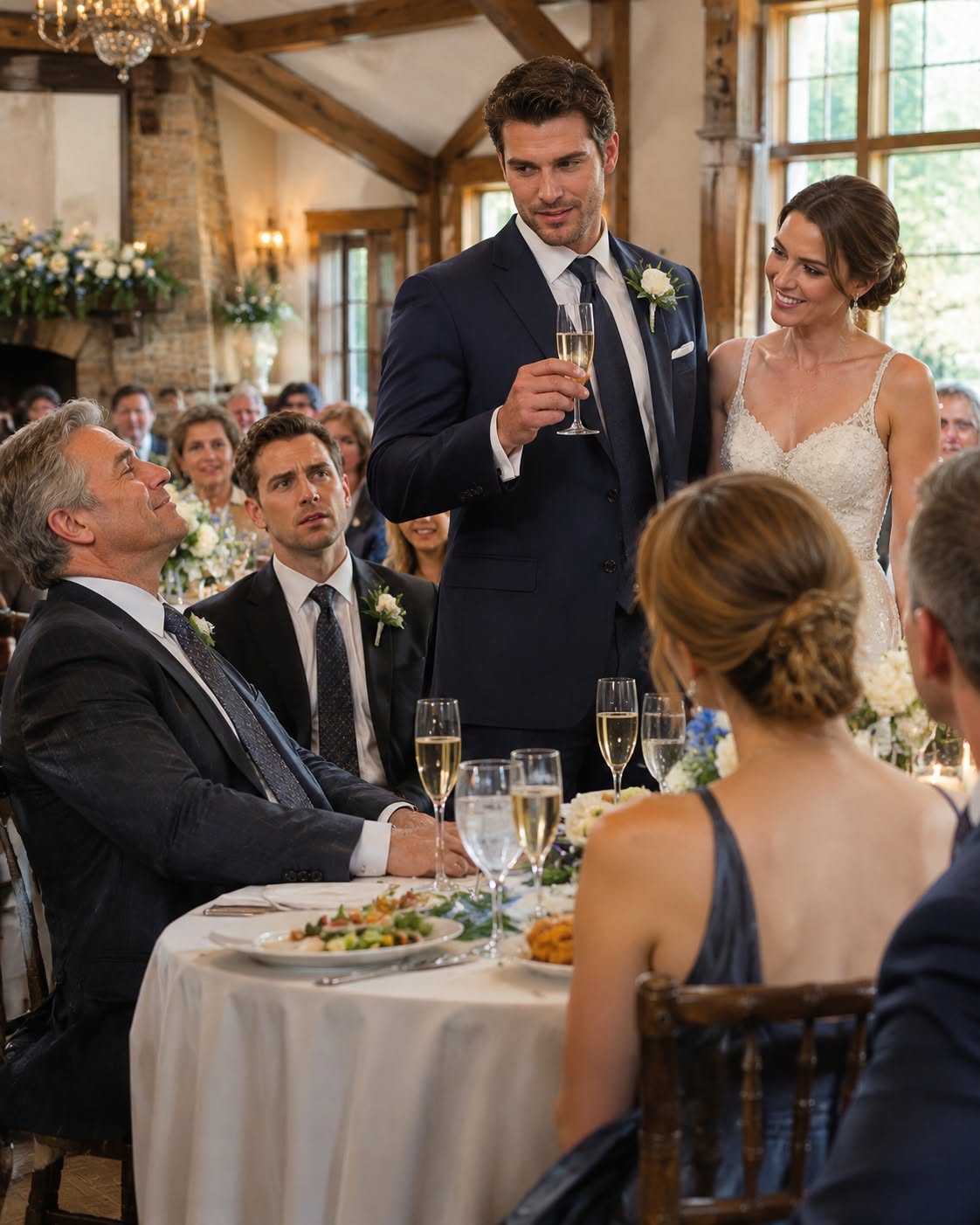
My father stood up at my wedding, raised his glass, and told my wife she had married the wrong brother.
“Of course you can use Oakridge House,” I told Trevor.
His face immediately brightened.
“I knew you’d understand. I’ll probably need the entire property for a weekend.”
“Then we’ll send you our commercial rates and availability.”
His smile disappeared.
“Commercial rates?”
“Yes. You’re hosting a business event, aren’t you?”
He glanced at our father, expecting him to intervene.
Dad put down his coffee.
“Come on, Daniel. He’s your brother. Surely you can make an exception.”
Chloe continued spreading butter on her toast.
“We made an exception for the wedding,” I explained. “Everyone stayed here for free because they were our guests. Trevor’s clients aren’t our wedding guests.”
Trevor leaned back in his chair.
“I could introduce you to some very influential people.”
“That’s nice.”
“People who could actually help you make something of this place.”
I looked around the breakfast room.
The restored oak beams, the handmade tables, the windows Chloe and I had spent weeks repairing, and the garden visible beyond the terrace.
Apparently, even owning Oakridge House wasn’t enough to convince Trevor that I knew what I was doing.
“Send us your requirements,” I said. “We’ll prepare a quote.”
He shook his head.
“Forget it. I’ll find somewhere else.”
“That works, too.”
Chloe nearly choked on her coffee.
Dad looked offended, but for once, I didn’t feel obligated to make him comfortable.
By lunchtime, most of our relatives had departed.
Aunt Brenda hugged Chloe and whispered that she had always suspected I was doing better than everyone thought.
Considering how loudly she’d laughed during Dad’s speech, I found that rather amusing.
My mother, Margaret, was among the last to leave.
She wandered through the entrance hall, studying photographs of Oakridge House before the renovation.
One showed Chloe standing beneath a partially collapsed ceiling. Another showed me covered in plaster dust, holding a broken doorframe.
“You really did all this yourselves?”
“Most of it. We hired professionals for the specialized work.”
“Why didn’t you tell us?”
“I tried.”
She frowned.
I reminded her of the Christmas dinner three years earlier when I’d mentioned that Chloe and I were considering buying an old property.
Dad had interrupted me to ask Trevor about his latest development project.
Nobody returned to my announcement.
Mom looked uncomfortable.
“I don’t remember that.”
“I do.”
She kissed my cheek and left without saying anything else.
That evening, Chloe and I finally had Oakridge House to ourselves.
We carried leftover wedding cake into the laundry room and placed a small paper crown on Barnaby, our ridiculous wooden goose.
“To surviving your family,” Chloe said, raising her fork.
“To never hosting another wedding.”
She laughed.
We had no idea that Trevor was already planning to bring several dozen strangers into our home.
Two weeks later, while Chloe and I were returning from our honeymoon, she received an email from a woman named Helen Patterson.
Helen wanted to confirm whether Oakridge House could accommodate her husband’s dietary restrictions during an upcoming investment retreat.
Chloe read the message aloud.
“Investment retreat?”
I shook my head.
“We don’t have anything scheduled.”
Helen responded with a booking confirmation and a promotional brochure.
There, on the front page, was a photograph of Oakridge House.
Underneath it were the words TREVOR BENNETT’S EXCLUSIVE PROPERTY INVESTMENT WEEKEND.
The brochure described the estate as Trevor’s private countryside retreat.
Guests were promised luxury accommodations, networking dinners, investment presentations, and personal access to Trevor’s development team.
Tickets cost $2,400 per person.
Chloe stared at the screen.
“Please tell me your brother hasn’t sold tickets to an event at our house.”
I immediately called him.
He answered cheerfully.
“Hey, newlywed!”
“What’s the Oakridge investment retreat?”
There was a brief silence.
“Oh, that. I was going to talk to you.”
“When?”
“Once I had the numbers finalized.”
“You’ve already sold tickets.”
“Only twenty-six so far.”
I closed my eyes.
“Trevor, you don’t have permission to use our property.”
“Don’t be dramatic. It’s one weekend.”
“Cancel it.”
His tone changed.
“I’ve already spent money promoting this thing.”
“That was your decision.”
“Daniel, listen. This could be huge for both of us.”
“You advertised our home as your private retreat.”
“It’s marketing language.”
“It’s a lie.”
He sighed impatiently.
“Fine. I’ll give you a percentage of the ticket sales.”
“No.”
“Ten percent.”
“Cancel the event.”
He hung up.
Within twenty minutes, Dad called.
He accused me of deliberately undermining Trevor’s business.
Apparently, my brother had described the situation as a misunderstanding over a previously agreed family arrangement.
I forwarded Dad the messages in which Trevor had declined our offer to prepare a commercial quote.
He barely acknowledged them.
“You’re making this unnecessarily difficult.”
“Would you let someone sell tickets to a weekend inside your house without asking?”
“That’s different.”
“Why?”
“Because this is business.”
“Exactly.”
I ended the call before he could start another lecture.
Chloe and I contacted our attorney, Rachel Dawson, who sent Trevor a formal notice demanding that he stop using photographs of our property and remove Oakridge House from his promotional materials.
We also responded to Helen, explaining that no event had been authorized.
Helen thanked us.
Then she mentioned something that made me considerably more concerned.
“My husband was thinking about investing in Trevor’s new development. I’m glad we checked with you first.”
I asked what development she meant.
She sent me another brochure.
It featured a proposed collection of luxury vacation properties, including renovated country estates.
Oakridge House appeared on the second page.
Trevor had labeled it a completed project within his company’s portfolio.
I felt my stomach drop.
He wasn’t merely borrowing our home for an event.
He was using our achievement as evidence of his own professional success.
Chloe looked over my shoulder.
“How long has he been doing this?”
We spent the next hour searching his company’s promotional materials.
We discovered photographs taken during our wedding weekend, including pictures of the gardens, guest suites, and renovated dining room.
In one online video, Trevor walked across our terrace and spoke about the importance of identifying undervalued properties.
He never explicitly said he owned Oakridge House.
He simply allowed viewers to reach that conclusion.
And judging by the comments, many had.
Rachel advised us to document everything.
Trevor received another formal notice.
This time, he called me within minutes.
“Are you seriously threatening legal action against your own brother?”
“I’m asking you to stop misrepresenting our property.”
“You’re going to ruin my credibility.”
“You did that yourself.”
He called me jealous.
I laughed.
For years, he had treated my career as a joke. Now he was presenting my work as his own because apparently it was impressive enough to sell.
The following morning, my mother arrived unexpectedly.
She carried a folder and looked as though she hadn’t slept.
“Daniel, I need you to hear me out.”
We sat in the kitchen.
She explained that Trevor’s business was experiencing temporary financial difficulties.
Several development projects had encountered delays. Construction costs had increased, and investors were becoming impatient.
“Your father and I helped him a little,” she said.
“How much is a little?”
She looked down.
“One hundred and eighty thousand dollars.”
I stared at her.
“Where did you get that kind of money?”
“Some retirement savings. And a loan.”
“What kind of loan?”
She began crying.
They had borrowed against their house.
My father, the man who had spent my entire adult life lecturing me about financial responsibility, had risked his retirement to support Trevor’s business.
“Does Dad know how bad things are?”
“He believes Trevor will recover everything once the next project gets funded.”
I thought about the investment retreat.
Suddenly, Trevor’s desperation made sense.
He needed new money.
And Oakridge House provided the appearance of success he could no longer demonstrate through his own projects.
Mom reached across the table.
“If you could just let him have the event, it might give him enough breathing room.”
I withdrew my hand.
“Mom, you’re asking me to help him convince people to invest using misleading information.”
“He wouldn’t hurt anyone.”
“He’s already misleading them.”
She shook her head.
“He’s under a lot of pressure.”
“So are the people who trusted him with their savings.”
She left shortly afterward, disappointed that I hadn’t offered a solution.
That weekend, Trevor finally removed Oakridge House from his website.
He told ticket holders that the event had been postponed because of circumstances beyond his control.
I assumed the matter was finished.
Then, on a Friday afternoon, a black SUV pulled into our driveway.
Another followed.
Then another.
Chloe was pruning roses near the entrance when a well-dressed couple approached her.
“Hello! We’re here for Trevor’s private investment weekend.”
She stared at them.
“There is no investment weekend.”
The woman looked confused.
“But he confirmed everything yesterday.”
Within fifteen minutes, eight vehicles had arrived.
Some guests had driven several hours. Others had booked flights and rented cars.
One man had brought his elderly father, who was considering investing part of his retirement savings.
I came outside and explained that Trevor had never received permission to host an event at Oakridge House.
Several people became angry.
Not at Trevor.
At us.
They believed we were refusing to honor a legitimate reservation.
One guest showed me an email Trevor had sent the previous evening.
It claimed that the estate’s management team had resolved a scheduling issue and that all accommodations were confirmed.
Chloe called Rachel while I tried to reach Trevor.
He didn’t answer.
Then another car arrived.
My father stepped out.
He looked around at the gathering guests and marched toward me.
“What are you doing? Get these people inside!”
I stared at him.
“You knew they were coming?”
“Trevor told me everything was arranged.”
“Did you ask us?”
He lowered his voice.
“Daniel, there are important people here. Don’t embarrass the family.”
I almost couldn’t believe it.
Even now, with strangers standing in our driveway holding fraudulent booking confirmations, his greatest concern was embarrassment.
“Where’s Trevor?”
“He’s on his way.”
Ten minutes later, my brother arrived wearing a tailored suit and carrying a leather briefcase.
He stepped out of his car with the confidence of a man arriving at a property he owned.
“Welcome, everyone!” he announced.
Nobody applauded.
Helen Patterson emerged from the group.
“Trevor, these people say you don’t have permission to hold the event here.”
He glanced at me.
“There’s been a minor communication problem.”
“No,” Chloe said firmly. “There hasn’t.”
Trevor forced a smile.
“My brother and his wife are helping manage the property.”
I stepped forward.
“We own the property. Trevor has no ownership interest in it, no management authority, and no reservation.”
The guests began exchanging looks.
Trevor moved closer.
“Daniel, can we speak privately?”
“Not until everyone understands what’s happening.”
Dad grabbed my arm.
“Stop this immediately.”
I pulled away.
“You don’t get to tell me what to do in my own home.”
Helen’s husband, a retired engineer named Richard, opened the investment brochure.
“Trevor, you described Oakridge House as one of your completed developments.”
Trevor adjusted his jacket.
“It’s a family project.”
Chloe shook her head.
“He didn’t contribute a single dollar or a single hour of work.”
Richard looked at Trevor.
“Then what exactly have we been investing in?”
That question changed the atmosphere completely.
Several guests began demanding refunds.
Others asked about construction schedules, property ownership, and promised returns.
Trevor tried to reassure them, but his explanations became increasingly vague.
Finally, a woman named Patricia stepped forward.
“I transferred seventy-five thousand dollars to your company last month. You told me the money was secured against completed properties.”
Trevor’s face went pale.
My father stopped arguing.
Patricia continued.
“Which properties?”
Nobody answered.
I looked at Dad.
For the first time, he seemed to understand that Trevor’s problems were bigger than a disappointing business quarter.
Rachel arrived shortly afterward, and we made it clear that the unauthorized event would not proceed.
The guests eventually left, many exchanging contact information and discussing their next steps.
We provided written confirmation that Oakridge House had no connection to Trevor’s investment business.
Before leaving, Patricia thanked Chloe.
“If you’d let this event happen, I probably would’ve invested another fifty thousand.”
That sentence stayed with me.
Sometimes refusing to help someone wasn’t an act of cruelty.
Sometimes it prevented them from hurting somebody else.
Trevor remained in the driveway after everyone departed.
He looked furious.
“You’ve destroyed everything.”
“No. I’ve stopped you from using our home to deceive people.”
“I could’ve fixed it!”
“With whose money?”
He opened his mouth, then closed it.
Dad stood beside his car, staring at the ground.
Trevor turned toward him.
“Say something!”
For once, our father didn’t defend him.
He simply got into his car and drove away.
Over the following weeks, Trevor’s company began unraveling.
Several investors demanded financial records. Others pursued legal remedies.
An independent review revealed that some developments were heavily indebted, while others had never progressed beyond preliminary agreements.
Money raised for newer projects had been used to cover expenses associated with older ones.
Authorities eventually began investigating possible financial misconduct.
Trevor insisted that he had intended to repay everyone.
Perhaps he had.
But good intentions couldn’t transform misleading promises into legitimate investments.
My parents were devastated.
Most of the money they had provided was unlikely to be recovered.
Dad delayed his retirement, and they began discussing whether to sell their house.
One evening, he called me.
His voice sounded unusually small.
“Can I come over?”
He arrived carrying a bottle of wine and a cardboard folder.
We sat beside the fireplace while Chloe made tea.
Dad opened the folder.
Inside were photographs of Trevor’s various development projects.
He explained how proud he had been when Trevor first entered real estate.
He loved telling people that his eldest son was an entrepreneur.
He enjoyed the expensive dinners, the impressive business cards, and the feeling that our family was becoming successful.
Then he looked around Oakridge House.
“I suppose I never understood what you were doing.”
“You never asked.”
He nodded.
“I thought working for a grocery company meant you’d settled.”
I explained that my job involved managing product categories, negotiating supplier agreements, forecasting demand, and overseeing substantial commercial budgets.
It wasn’t glamorous, but it had provided a stable income and valuable experience.
Chloe’s architectural design work had helped us recognize Oakridge House’s potential.
We had purchased the property using years of savings and a manageable mortgage.
We renovated gradually, completing projects as we could afford them.
There were no secret investors.
No extravagant promises.
Just patience, planning, and hard work.
Dad listened without interrupting.
Then he said something I never expected.
“I think I wanted Trevor’s success to make me feel successful.”
I looked at him.
“And what did you want from me?”
He stared into the fireplace.
“I don’t think I ever stopped to consider that.”
For years, I had imagined confronting him and receiving the perfect apology.
But hearing him admit that he hadn’t really considered my life hurt more than any insult.
He apologized for his wedding speech.
He acknowledged that telling Chloe she had married the wrong brother was cruel and disrespectful.
Then he asked whether I could help him and Mom financially.
I wasn’t surprised.
“What exactly are you asking?”
He explained that they needed money to reduce their loan balance and make retirement possible again.
I told him I wouldn’t pay Trevor’s debts or risk our financial stability.
However, Chloe and I were willing to help them review their options and find independent financial advice.
Dad looked disappointed.
But he didn’t call me selfish.
He didn’t compare me to Trevor.
He simply nodded.
“That’s fair.”
It was a small change, but an important one.
My parents eventually sold their house and purchased a smaller home.
They paid off their secured debt and adjusted their retirement plans.
Dad continued working part-time.
Mom started volunteering at a local charity shop.
They weren’t living the retirement they had imagined, but they were no longer gambling their future on Trevor’s promises.
As for Trevor, the investigation resulted in legal proceedings and a court-supervised effort to recover assets for affected investors.
He lost his company, his expensive car, and most of the possessions he had once used to demonstrate his success.
For nearly a year, he refused to speak to me.
Then one Saturday morning, I found him standing outside our workshop.
He was wearing jeans and carrying a small envelope.
“I brought something for you.”
Inside was a handwritten apology.
He acknowledged using photographs of Oakridge House without permission, misleading investors, and attempting to pressure us into hosting his event.
He also apologized for laughing during Dad’s wedding speech.
“I liked being the impressive brother,” he admitted. “I didn’t care what it cost you.”
I folded the letter.
“What happens now?”
He shrugged.
“I’ve got a job working for a property maintenance company. Nothing fancy.”
“That’s a start.”
He looked toward the garden.
“Would you ever trust me again?”
“I don’t know.”
He nodded.
Then he noticed Barnaby through the laundry room window.
“Is that ridiculous goose still here?”
“He’s a permanent resident.”
Trevor laughed.
For a moment, we sounded like brothers again.
Not competitors.
Not a winner and a loser.
Just two people remembering something silly from a happier time.
I didn’t offer him money or a business partnership.
But I offered him coffee.
He accepted.
Two years after our wedding, Chloe and I decided to open a small section of Oakridge House for occasional community events.
We obtained the necessary approvals, arranged insurance, and carefully separated the public areas from our private living space.
Our favorite event became an annual workshop for young couples interested in buying and renovating older homes.
We taught budgeting, project planning, and the importance of understanding what you could realistically afford.
We invited tradespeople to demonstrate practical skills.
Nobody was promised instant wealth.
Nobody was encouraged to borrow money they couldn’t repay.
At our second workshop, Dad volunteered to help prepare lunch.
During a break, one participant asked whether he was the owner.
Dad smiled.
“No. My son and his wife own this place. They built something remarkable together.”
He said it without hesitation.
I was standing close enough to hear him.
For years, I had wanted him to speak about me with that kind of pride.
Yet when the moment finally arrived, I realized I no longer needed it the way I once had.
That evening, Chloe and I sat on the terrace watching the sunset.
She rested her head against my shoulder.
“Do you ever wish you’d told your family about Oakridge sooner?”
I thought about the wedding, the envelopes, Trevor’s investment retreat, and everything that followed.
“No,” I said. “I just wish they’d been interested in my life before they knew what I owned.”
She squeezed my hand.
We sat quietly as the lights came on inside the house.
My father had once believed that Trevor’s ability to appear wealthy made him the better son.
But a beautiful house couldn’t make me a better person any more than losing an expensive car could make Trevor a worthless one.
Character wasn’t measured by property deeds, business titles, or the size of someone’s bank account.
It was measured by what people did when telling the truth became inconvenient, when keeping a promise required sacrifice, and when nobody was watching.
Chloe had understood that long before we bought Oakridge House.
She had loved me when our weekends consisted of repairing rotten floorboards and eating sandwiches on overturned paint buckets.
She had never needed an impressive address to believe in our future.
And that was why my father’s wedding speech had failed to hurt our marriage.
He had been comparing two brothers using a measurement that neither of us should ever have accepted.
Oakridge House remains our home.
The cream-colored wedding envelopes are stored in a drawer beside our photographs.
And Barnaby still occupies his favorite corner of the laundry room, wearing his slightly crooked paper crown on special occasions.
Sometimes guests ask about the goose.
Chloe tells them he’s the only member of the household who contributes absolutely nothing toward the mortgage.
I usually add that he’s also the only one who has never tried to host an unauthorized investment seminar.
We still laugh about that.
But beneath the laughter is something I will always remember.
The greatest satisfaction wasn’t watching my father’s expression change when he opened that envelope.
It wasn’t watching Trevor discover that he couldn’t take credit for something he hadn’t built.
It was realizing that Chloe and I had created a life we genuinely loved without waiting for anyone else’s approval.
My father told my wife she had married the wrong brother.
Years later, Chloe occasionally reminds me of those words whenever we’re working together in the garden.
She looks at our muddy shoes, our unfinished projects, and the home we’ve built one careful decision at a time.
Then she smiles.
“I didn’t marry a brother, Daniel. I married you.”
And every time she says it, I remember that being loved for who you are will always mean more than being admired for what you own.