The flight instructor laughed when the night custodian accepted his challenge. But when the simulation began, nobody in that room was prepared for what they were about to witness.
The senior officer looked at the assembled pilots and spoke with a firmness that immediately silenced the room.
“Everyone, stand at attention.”
Chairs scraped against the floor.
Boots shifted.
Even Arthur Vance straightened his back.
I remained seated inside the simulator, unsure whether the order included me.
The officer took three steps toward the cockpit.
“You’re looking at someone you should have recognized years ago. This man is the reason eleven American soldiers came home from a mission that military analysts once classified as impossible.”
A murmur swept through the room.
Vance frowned.
“Sir, with all due respect, this man is a civilian maintenance worker.”
The officer turned slowly.
“His name is Major Nathaniel Reed. Former commander of the 47th Special Operations Aviation Squadron. Callsign: Ghost.”
The color disappeared from Vance’s face.
Julian Cross looked at me as though he had just discovered that the quiet man standing beside him had been living an entirely different life.
“Ghost?” he whispered.
I closed my eyes.
There were names I had spent years trying to forget.
That was one of them.
Colonel Daniel Hayes, the senior officer, continued.
“Six years ago, Major Reed led a rescue operation in the Kandar Mountains. His helicopter was struck by enemy fire. Despite suffering catastrophic damage to his right arm, he refused to abandon eleven trapped soldiers.”
He paused.
“His aircraft went down during the extraction. He survived, but his career as an active-duty pilot ended that night.”
Nobody moved.
Hayes looked at my arm.
“The mission you just completed is based on that operation. The original flight recordings were used to develop the Hollow Pass simulation.”
Julian slowly turned toward the screen.
“Wait. You’re saying he actually flew that mission?”
“Not only did he fly it,” Hayes replied. “He was the only pilot who managed to extract all eleven men.”
Arthur Vance swallowed.
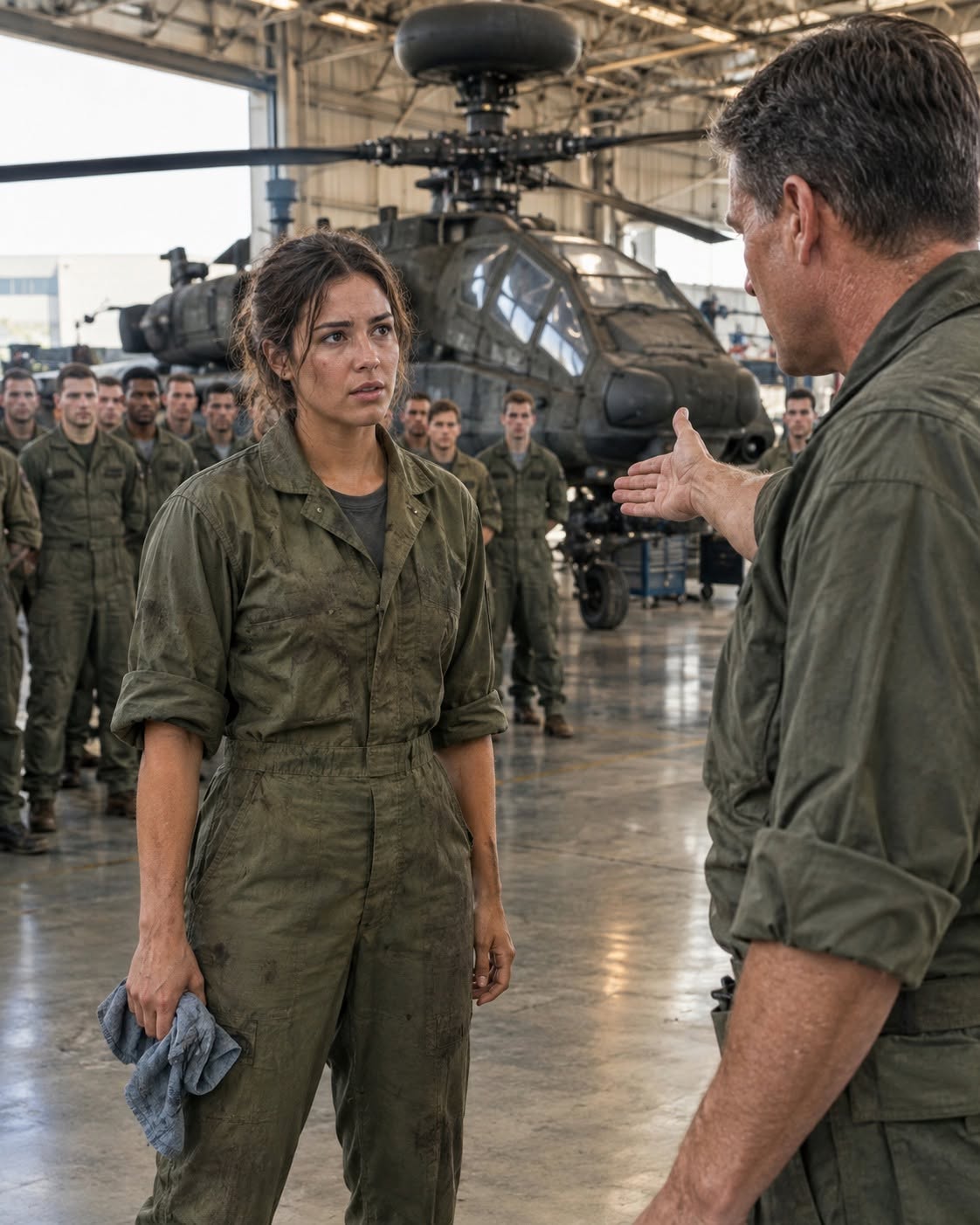
I climbed out of the simulator and carefully adjusted my sleeve over my injured arm.
“Sir, I don’t think we need to discuss this.”
Hayes gave me a look I remembered from years earlier.
It was the same expression he had worn when he pulled me from the wreckage of my helicopter.
“Unfortunately, Nathaniel, I think we do.”
He turned toward the pilots.
“Because tomorrow morning, this facility will be conducting its most important training evaluation in five years. And I want Major Reed involved.”
I shook my head immediately.
“That’s not possible.”
“Why?”
I glanced down at my right hand.
“Because you know why.”
Hayes didn’t answer.
He simply nodded, as if he had expected that response.
Then he said something that made the room even quieter.
“There’s another reason I came here. We received intelligence three days ago that a training exercise in the northern sector has been compromised. The Hollow Pass scenario may have been copied by someone outside this facility.”
Vance looked confused.
“Sir, that simulation is classified.”
“Exactly.”
Hayes turned toward the completed mission displayed on the screen.
“And someone has been trying very hard to discover how Nathaniel Reed completed it.”
For the first time that afternoon, I felt something colder than embarrassment.
Fear.
Because I knew there was only one person who had ever asked me that question before.
And he wasn’t supposed to be alive.
THE MAN BEHIND THE CALLSIGN
Six years earlier, I had been a different man.
I was thirty-four, healthy, and convinced that there was nothing in the world I couldn’t overcome with enough training.
Flying was not simply my profession.
It was the one place where everything made sense.
Every movement had a purpose. Every decision carried consequences. And when eleven men were stranded behind enemy lines, I had never considered leaving without them.
That night in the Kandar Mountains, the weather had been terrible.
Visibility was almost nonexistent. Enemy forces controlled the ridgelines, and the extraction zone was surrounded by steep rock formations.
Our original rescue helicopter had been hit before reaching the landing area.
The pilot was killed.
The ground commander radioed headquarters and requested permission to withdraw.
I remember his voice clearly.
“Ghost, we’ve got eleven men. Two are critically wounded. We can’t hold this position much longer.”
Command ordered us to wait for better conditions.
But the men on the ground didn’t have better conditions.
They had ammunition running low, freezing temperatures, and enemies closing in.
I made a decision.
I took the helicopter down through a narrow ravine, using the mountainside to conceal our approach.
We reached the first extraction point.
Then came the explosion.
A missile struck the rear section of the aircraft.
The cockpit shook violently, and the helicopter began rotating.
I remember the smell of burning insulation.
I remember the warning alarms.
Most of all, I remember looking at my right arm and realizing that it was no longer responding properly.
But I could still fly.
So I did.
We rescued the first seven soldiers before the aircraft became almost impossible to control.
The remaining four were trapped on the opposite side of the gorge.
My copilot begged me to turn back.
I told him we weren’t leaving.
We made it.
All eleven soldiers survived.
Our helicopter didn’t.
I woke up in a military hospital nine days later.
My right arm had suffered extensive nerve and muscle damage. Doctors told me I might regain limited movement, but I would never again have the strength or coordination required for combat aviation.
I spent eighteen months in rehabilitation.
Then I retired.
The military offered me administrative positions, consulting opportunities, and invitations to speak at training events.
I refused them all.
I didn’t want applause.
I didn’t want people telling me I was a hero.
I just wanted to live somewhere nobody knew my name.
So I moved to a quiet town, took a job as a night custodian, and learned how to be invisible.
For a while, it worked.
Until Arthur Vance decided to challenge a janitor.
THE SECRET THAT WAS NEVER MEANT TO BE REVEALED
The following morning, Colonel Hayes found me in the maintenance room.
I was replacing a broken handle on a cleaning cart when he entered.
“Still fixing things that aren’t broken?” he asked.
“Only the things that need fixing, sir.”
He smiled faintly.
Then his expression became serious.
“I need you to look at something.”
He placed a tablet on the workbench.
On the screen was a photograph of a man standing beside a military helicopter.
I recognized him immediately.
Captain Marcus Hale.
My former copilot.
The man who had flown beside me in Kandar.
I hadn’t heard from him in almost four years.
“What’s happened to Marcus?”
Hayes took a breath.
“He disappeared three weeks ago during a private aviation security assignment.”
I stared at the photograph.
“Why are you showing me this?”
“Because his last known communication contained one sentence.”
Hayes tapped the screen.
The message appeared.
If they ever bring Hollow Pass back, don’t let them use Reed’s original flight data.
My stomach tightened.
“What does that mean?”
“We believe someone has been collecting information about the original mission. Flight paths, radio transmissions, rescue procedures. Everything.”
“Who?”
“We’re investigating.”
I looked again at Marcus’s photograph.
“Why didn’t you tell me this yesterday?”
“Because I needed to know whether you were still capable of recognizing the patterns.”
I almost laughed.
“Colonel, I can barely button my shirt with this hand.”
“That’s not what I asked.”
I looked away.
He stepped closer.
“Nathaniel, you flew that simulation yesterday as if you were back in the mountains. You recognized every blind corner, every wind shift, every place an aircraft could hide.”
“I remembered an old mission.”
“No. You recognized a trap.”
I looked up sharply.
Hayes continued.
“The simulation was modified last month. Someone inserted a flight path that doesn’t belong in the original program. It was designed to look like an alternative extraction route.”
“Let me see it.”
He handed me the tablet.
I studied the digital map.
At first, everything appeared normal.
Then I noticed a small change in the terrain data.
A ridge that should have been impassable had been marked as a safe approach corridor.
My injured hand tightened around the edge of the workbench.
“Who approved this?”
“Arthur Vance.”
I stared at him.
“Vance?”
“He claimed it was an improvement to the training scenario.”
I looked back at the map.
“He’s not improving anything. He’s building a flight profile.”
Hayes nodded.
“That’s what I thought.”
Before I could ask another question, someone knocked on the door.
It was Julian Cross.
He looked uncomfortable.
“Colonel, sir. We have a problem.”
Hayes turned.
“What is it?”
“The Hollow Pass system just activated by itself.”
We hurried toward the simulation room.
When we arrived, the screen was already running.
The familiar mountain gorge appeared.
But this time, the scenario was different.
There were no eleven soldiers.
There was only one helicopter, flying toward an extraction zone.
And beneath the digital aircraft, a message flashed across the screen.
WELCOME BACK, GHOST.
I felt the blood drain from my face.
Then another message appeared.
LET’S FINISH WHAT YOU STARTED.
A SECOND CHALLENGE
Within minutes, the room was sealed.
Hayes ordered everyone away from the computer systems while the technical team investigated.
Arthur Vance stood near the rear wall, looking pale.
“Sir, I had nothing to do with this.”
Hayes turned toward him.
“Then explain why your access credentials were used to modify the program.”
Vance opened his mouth.
Nothing came out.
Julian stepped forward.
“Colonel, there’s something else.”
He held up a small storage device.
“I found this connected to the secondary console.”
Hayes took it.
“Where?”
“Behind the instructor’s workstation.”
Vance immediately became defensive.
“That’s ridiculous. Anyone could have put it there.”
Hayes handed the device to a technician.
“Make a secure copy. Don’t connect it to the facility network.”
I remained focused on the simulation.
The digital helicopter was now approaching the gorge.
Something about its movement bothered me.
It was flying too low.
Too confidently.
I stepped closer.
“Pause it.”
The technician hesitated.
“Sir?”
“Pause the simulation.”
The screen froze.
I pointed toward the left side of the gorge.
“Look at the shadow.”
Julian leaned closer.
“What about it?”
“The aircraft is casting a shadow in the wrong direction.”
The technician examined the rendering.
I continued.
“That means the terrain lighting has been altered. Whoever modified this program wasn’t just changing the flight route. They were trying to make the pilot misread the mountain.”
Hayes frowned.
“Why?”
“Because the original route is still there. But the new route directs the aircraft toward a dead-end passage.”
I looked at Vance.
“Someone wants to see whether a pilot can be tricked into repeating my old mistake.”
Vance’s face tightened.
“I don’t appreciate being accused.”
“Then stop giving me reasons to suspect you.”
The room fell silent.
For the first time since I had met him, Arthur Vance had nothing to say.
But the most disturbing discovery was still waiting.
The technician returned with the results of the storage device examination.
“Colonel, we’ve recovered a video file.”
He played it.
A man appeared on the screen.
His face was thinner than I remembered, but there was no mistaking him.
Marcus Hale.
My former copilot.
He was sitting in a dimly lit room, speaking directly into the camera.
“If you’re watching this, then the Hollow Pass project has already been compromised.”
He paused and looked down.
“Ghost, if you’re there, I’m sorry.”
I stepped forward.
“Marcus?”
The recording continued.
“The operation in Kandar wasn’t an accident. Someone knew our flight path. Someone supplied the enemy with our extraction coordinates.”
Hayes went completely still.
Marcus leaned closer to the camera.
“I found the original communication logs. The information came from inside our own command structure.”
He swallowed.
“And the person responsible is still working with military aviation contractors.”
The video suddenly glitched.
A few seconds later, Marcus spoke again.
“Don’t trust the new extraction route. And whatever happens, don’t let them send another crew through Hollow Pass.”
The recording ended.
I felt as though someone had punched me in the chest.
For six years, I had believed that our mission had failed because of bad intelligence and an unexpected attack.
Now I was learning that someone might have deliberately sent us into a trap.
“Where is Marcus?” I asked.
Hayes looked at the technician.
“Find the source of this recording.”
The technician began working.
Then the facility’s emergency lights flashed.
A warning sounded over the intercom.
“Unauthorized access detected in the flight operations network.”
Hayes immediately reached for his radio.
“Secure all terminals. Nobody leaves this room.”
A second alarm followed.
Then a third.
The technician looked up.
“Sir, someone is attempting to erase the original Hollow Pass mission archive.”
I knew exactly what that meant.
If the archive disappeared, the only surviving evidence of the original operation would be gone.
And whoever had betrayed us would have another chance to bury the truth.
THE REAL TEST
Hayes ordered the technicians to isolate the simulation network.
But the system had already begun shutting down.
“We’re losing the archive!” one of them shouted.
I moved toward the main console.
Hayes blocked my path.
“Nathaniel, don’t.”
“I know this system.”
“You’re not cleared to operate it.”
“Then clear me.”
He studied my face.
For a moment, I thought he would refuse.
Then he stepped aside.
“Do what you can.”
I sat in the operator’s chair.
The familiar interface appeared before me.
My right hand trembled as I reached for the controls.
Julian moved beside me.
“Tell me what you need.”
I looked at him.
“Your left hand is steady?”
“Yes.”
“Good. You’re going to handle the secondary controls.”
He nodded.
I began giving instructions.
“Disconnect the external data bridge. Keep the local archive running. Don’t touch the emergency shutdown.”
Julian followed every instruction.
The technicians watched as the system slowly stabilized.
Then another warning appeared.
ARCHIVE INTEGRITY: 18%
I recognized the attack pattern.
It was the same kind of interference that had disrupted our communications in Kandar.
Someone wasn’t simply deleting files.
They were replacing them.
“Stop the transfer,” I said.
“We can’t!” the technician replied. “The system is locked.”
I studied the display.
There was a secondary authorization channel.
A small indicator flashed in the corner.
I remembered something from the original mission archive.
A backup protocol had been created after Kandar, designed to protect flight recordings from external interference.
But it required two independent authorizations.
One from the commanding officer.
The other from the mission pilot.
I looked at Hayes.
“Sir, I need your authorization.”
He understood immediately.
He placed his hand on the command scanner.
I pressed the remaining authorization control.
The screen went dark.
For three seconds, nobody spoke.
Then the system restarted.
A new message appeared.
LOCAL ARCHIVE RESTORED.
The room erupted in relieved voices.
But I wasn’t celebrating.
Because one final file had appeared on the screen.
It was a live location feed.
A small building outside the facility.
And inside it was a person.
Marcus Hale.
Alive.
Julian stared at the image.
“He’s been there this whole time?”
Hayes immediately contacted the security team.
“We need a recovery unit at those coordinates. Now.”
I stood up.
“Sir, I’m going with them.”
Hayes shook his head.
“Absolutely not.”
“Marcus is my copilot.”
“Your arm—”
“My arm doesn’t change who he is.”
Hayes held my gaze for a long moment.
Then he nodded.
“You’re not going into the field. But you’re going to help us coordinate the operation.”
I accepted.
It wasn’t what I wanted.
But it was what I could do.
Within twenty minutes, a recovery team was moving toward the building.
We watched through the live feed as they approached.
Then the signal disappeared.
The screen turned black.
One second passed.
Five seconds.
Ten.
Hayes grabbed his radio.
“Team One, report.”
Static.
Then a voice answered.
“Target located. One injured individual. Requesting medical evacuation.”
I closed my eyes.
Marcus was alive.
But the operation wasn’t over.
THE MAN WHO HAD BEEN HIDING IN PLAIN SIGHT
Two hours later, Marcus arrived at the facility.
He was thinner, exhausted, and walking with the help of two medical personnel.
But when he saw me, he smiled.
“Look at you, Ghost.”
I shook my head.
“Don’t call me that.”
“Sorry. Nathaniel, then.”
We embraced carefully.
For a moment, neither of us spoke.
Then he looked at my arm.
“I heard what happened.”
I glanced at his injured shoulder.
“Looks like neither of us came out of this business in perfect condition.”
He laughed weakly.
Hayes joined us.
“Marcus, we need to know who gave the enemy our coordinates.”
Marcus’s expression changed.
He reached into his jacket and produced a small envelope.
“I’ve been carrying this for three weeks.”
Hayes opened it.
Inside were printed communication records, contractor payments, and copies of encrypted messages.
The name appearing repeatedly was Ethan Caldwell.
Hayes recognized it.
“Caldwell was the civilian intelligence coordinator during the Kandar operation.”
Marcus nodded.
“He sold our flight information to an illegal arms network. They used it to predict our route and position their weapons.”
I felt anger rising inside me.
“Why?”
“Money. Access. Influence. He was selling military intelligence to whoever would pay.”
“And Vance?”
Marcus looked toward the instructor.
Arthur had been standing quietly near the doorway.
“Vance wasn’t working with Caldwell,” Marcus said. “But he did receive money from a contractor connected to him.”
Hayes turned sharply.
“Explain.”
Marcus continued.
“Vance was promised a promotion if he could reproduce the original Hollow Pass flight profile. He thought he was developing a new training system. He didn’t know the original mission data was being used to identify weaknesses in the facility’s security.”
Vance looked horrified.
“I was told it was a classified performance study.”
Marcus shook his head.
“You were told whatever you needed to hear.”
For the first time, I saw something other than arrogance in Vance’s eyes.
He looked genuinely ashamed.
But shame couldn’t erase what had happened.
Hayes ordered a formal investigation.
Within hours, the facility’s systems were secured, and military investigators began reviewing every communication connected to Caldwell.
The truth was finally coming out.
Yet there was one more thing Marcus needed to tell me.
He waited until the room emptied.
Then he spoke quietly.
“Nathaniel, there’s something I never told you about Kandar.”
I turned toward him.
“What?”
“The original extraction wasn’t supposed to have eleven soldiers.”
I frowned.
“What are you talking about?”
“There were twelve.”
I felt my heart stop.
Marcus looked down.
“The twelfth man was an intelligence officer. He was the one who discovered Caldwell’s operation. He was taken before we reached the gorge.”
I remembered the mission.
The desperate radio calls.
The smoke.
The men waiting in the darkness.
“Why didn’t we know?”
“Because command classified his presence. They didn’t want anyone to know he had been there.”
I stared at Marcus.
“Did he survive?”
Marcus nodded.
“Yes. He was rescued later by another team.”
I sat down.
For six years, I had carried the belief that eleven men had depended on me.
Now I understood that the mission had been far more complicated than anyone had admitted.
Marcus placed a hand on my shoulder.
“You did everything you could.”
I looked at him.
“That’s what people say when they don’t know what else to say.”
He didn’t argue.
Instead, he handed me a photograph.
It showed the eleven soldiers from Kandar standing together outside a hospital.
Every one of them was alive.
On the back was a handwritten message.
To the man who refused to leave us behind. We are still here because you came back.
I read it twice.
Then I put the photograph in my pocket.
For the first time in six years, I didn’t feel the need to hide it.
THE FINAL DECISION
Three weeks later, the investigation was complete enough for the military to announce the first arrests.
Ethan Caldwell was detained while attempting to leave the country.
Several contractors were placed under investigation.
Arthur Vance was suspended pending a full review of his involvement and conduct.
The Hollow Pass system was temporarily shut down.
And Colonel Hayes came to see me one final time.
He found me cleaning the same corridor where everything had started.
“You know,” he said, “most people would consider this an opportunity.”
I kept mopping.
“An opportunity for what?”
“Returning to the military. Training pilots. Consulting. We could make a position for you.”
I stopped.
For years, I had imagined that someone might eventually ask me to return.
But now that the opportunity was standing in front of me, I felt strangely uncertain.
“Can I ask you something, sir?”
“Of course.”
“If I can’t fly again, what exactly do you want me to do?”
Hayes smiled.
“Teach people what you know.”
I looked at my right arm.
“Most of what I know came from mistakes.”
“That’s precisely why you should teach it.”
He explained that the facility was establishing a new combat rescue training program.
The program would focus on decision-making under pressure, unconventional extraction methods, crew coordination, and protecting the lives of soldiers on the ground.
They wanted someone who understood that flying wasn’t about impressing people.
It was about bringing people home.
I looked down the corridor.
My cleaning cart stood against the wall.
The job had given me something I desperately needed after leaving the military.
A place where nobody asked questions.
A routine that didn’t remind me of the mountains.
But perhaps I had spent enough time running away from my past.
“I’ll consider it,” I said.
Hayes nodded.
“That’s all I’m asking.”
He started walking away.
Then he stopped.
“One more thing. Vance requested to speak with you.”
I sighed.
“Why?”
“He wants to apologize.”
I considered refusing.
But eventually, I agreed.
Arthur Vance entered the maintenance room that afternoon.
He looked different.
His uniform was still immaculate, but the confidence that once filled every movement had disappeared.
He stood awkwardly beside my cleaning cart.
“Major Reed.”
I continued organizing my supplies.
“You’re looking for the instructor’s office.”
“No. I’m looking for you.”
I waited.
He took a breath.
“I was wrong.”
It wasn’t a dramatic apology.
There was no excuse attached to it.
Just three words.
“I treated you like you were beneath me because you wore a maintenance uniform. I made assumptions about your abilities, your intelligence, and your worth.”
He looked down.
“And when you demonstrated that I was wrong, I was more concerned about protecting my reputation than understanding what you had done.”
I leaned against the cart.
“Why are you telling me this?”
“Because I don’t want to be that person anymore.”
I studied him.
“Then don’t be.”
He nodded slowly.
“I also wanted to ask if you’d consider helping me rebuild the training program.”
I almost smiled.
“Why would you want my help?”
“Because I finally understand something.”
He looked directly at me.
“The best instructor isn’t necessarily the person who knows the most. It’s the person willing to learn.”
I extended my left hand.
He shook it.
It wasn’t forgiveness for everything.
It was a beginning.
THE LAST FLIGHT
Two months later, the facility’s new rescue training program officially opened.
I accepted the position as senior tactical training adviser.
My first day was strange.
Instead of wearing a maintenance uniform, I wore a plain military training jacket.
There were no decorations on it.
No medals.
No rank insignia.
Just my name.
Nathaniel Reed.
Julian Cross became my first trainee.
Arthur Vance remained an instructor, but he was no longer the man who believed that authority made him infallible.
He started attending my training sessions.
Sometimes he asked questions.
Sometimes he disagreed.
And sometimes, when a young pilot made a mistake, he was the first person to remind them that mistakes were opportunities to learn.
The biggest surprise came on the morning of the program’s first official evaluation.
Colonel Hayes entered the simulator room carrying a small box.
“Major Reed, this belongs to you.”
Inside was my old flight insignia.
The one I had worn during the Kandar operation.
I hadn’t seen it since the day I left the hospital.
I held it carefully.
“Where did you find this?”
“Your former squadron kept it.”
Hayes smiled.
“They thought you might want it back.”
I ran my thumb over the worn metal.
For a moment, I was back in the mountains.
The warning lights.
The radio calls.
The eleven men waiting for someone to come.
Then Julian approached.
“Sir, the new Hollow Pass evaluation is ready.”
I placed the insignia inside my jacket pocket.
“Let’s see it.”
The screen illuminated.
The familiar gorge appeared, but this time the simulation was different.
The trainees had to coordinate with a ground team, assess changing weather conditions, and choose between several extraction routes.
There was no perfect answer.
Every decision had consequences.
I watched Julian take the controls.
He made his first approach too quickly.
The simulated aircraft drifted toward the ridge.
“Slow down,” I told him.
He corrected.
“Now what?”
I looked at the screen.
“What do you see?”
“Two possible extraction points.”
“Which one is safer?”
“The western route.”
“Why?”
“Because the eastern route exposes us to enemy fire.”
I nodded.
“And what if the western route becomes inaccessible?”
Julian studied the display.
For a moment, he said nothing.
Then he smiled.
“We establish a backup before committing.”
“Exactly.”
The simulation continued.
This time, the eleven soldiers were rescued.
No warnings.
No unnecessary risks.
No heroic improvisation.
Just a crew working together and making careful decisions.
When the screen displayed MISSION SUCCESSFUL, the room applauded.
Julian removed his headset.
“Sir, do you think I did well?”
I looked at him.
“You brought everyone home.”
He smiled.
“That’s enough?”
I nodded.
“That’s everything.”
THE LETTER
Several months later, a letter arrived at the facility.
It was from one of the eleven soldiers rescued in Kandar.
His name was Sergeant Thomas Bennett.
He had recently retired and was living with his family in Colorado.
The letter was short.
Major Reed,
I heard you are teaching again.
I wanted you to know that I still remember that night in the mountains. I remember the sound of your helicopter coming through the clouds. I remember thinking we had been forgotten.
Then someone on the radio said your callsign.
Ghost.
I don’t know how you managed to get through that gorge. I don’t know how you kept that aircraft in the air after it was hit.
But I remember what you said when we finally reached the extraction point.
You told us that nobody gets left behind.
My daughter is twelve now. My son is nine. They both know the story of the pilot who came back for us.
I never told them about the medals or the military reports. I told them about a man who kept his promise when it would have been easier to give up.
Thank you for giving me the chance to grow old.
Respectfully,
Thomas Bennett.
I read the letter twice.
Then I placed it inside the same box as my old insignia.
That evening, I stayed late.
The training facility was quiet.
The lights in the simulator room had been turned off, and the digital mountains were no longer visible.
I walked past the cockpit where everything had started.
A young trainee was sitting nearby, studying the controls.
He looked up.
“Sir?”
“Yes?”
“Can I ask you something?”
“Go ahead.”
“Is it true you once completed Hollow Pass with a damaged arm?”
I smiled faintly.
“Something like that.”
He hesitated.
“Does that mean you’re better than the rest of us?”
I looked at him for a moment.
Then I shook my head.
“No.”
He seemed surprised.
I pulled up a chair beside him.
“It means I made a decision when other options disappeared. It means I was fortunate enough to survive. And it means I learned that being a good pilot has very little to do with proving you’re better than someone else.”
I pointed toward the simulator.
“Every person in that cockpit has a responsibility. The ground crew. The copilot. The people waiting for rescue. They’re all trusting you to make the right decisions.”
He nodded.
“So what’s the most important thing to remember?”
I looked toward the empty cockpit.
Then I gave him the answer I had spent six years learning.
“Never become so proud of your abilities that you forget the people depending on them.”
The young trainee smiled.
“Yes, sir.”
I stood up and prepared to leave.
As I reached the doorway, I heard him ask one more question.
“Sir, why did you become a janitor after leaving the military?”
I stopped.
For a moment, I considered giving him the easy answer.
Because I needed a job.
Because I wanted a quiet life.
Because I was tired.
All of those things were true.
But they weren’t the whole truth.
“Because I thought that if nobody knew who I used to be, I wouldn’t have to remember what I had lost.”
The trainee looked at me.
“And did it work?”
I smiled.
“For a while.”
I switched off the lights and walked into the corridor.
My right arm still hurt.
Some mornings, the pain was so bad that I struggled to hold a coffee cup. I would never fly a combat helicopter again. There were still nights when I dreamed about the mountains and woke up hearing the sound of warning alarms.
Nothing about my life had become magically perfect.
But I had stopped measuring my worth by what I could no longer do.
I had found another way to serve.
And perhaps that was the lesson I had needed all along.
The world had once looked at my uniform and decided I was nothing more than a janitor.
Then it had looked at my injured arm and decided my best years were behind me.
But neither judgment had been true.
I had been a pilot.
I had been a survivor.
I had been a man who made mistakes, carried regrets, and still had something valuable to give.
And now, I was a teacher.
The next morning, I arrived early.
A new group of trainees was waiting outside the simulator room.
Arthur Vance stood among them.
He saw me approaching and opened the door.
“Good morning, Major.”
I nodded.
“Morning, Arthur.”
He turned toward the trainees.
“Everyone, this is Major Nathaniel Reed. He’ll be leading today’s exercise.”
A young pilot raised his hand.
“Sir, is it true that you once rescued eleven soldiers through Hollow Pass?”
I looked at the group.
“Yes.”
“How did you do it?”
I glanced at the simulator.
Then I looked back at the young faces waiting for an answer.
“I didn’t do it alone.”
I stepped inside.
“Now, let’s get to work.”
And as the simulator came alive, I realized something I had never understood during all those years of flying.
My greatest mission had never been the flight that made me famous.
It was making sure the next generation knew how to bring everyone home.
Because a person’s worth is never determined by the clothes they wear, the job they perform, or the injuries they carry. True greatness is measured by what they do for others when nobody is watching.