The first enemy armored vehicle exploded just as Sergeant Davis screamed over the radio, “We need air support NOW! We’re not going to hold this position!”
PILOT’S LAST CALL – THE FINAL FLIGHT
The smoke trailing behind my damaged A-10 grew thicker as I turned toward friendly airspace. Every few seconds, another warning light flashed across the instrument panel. The right engine was losing power, hydraulic pressure was dropping, and the aircraft was shaking so violently that I could barely keep my hands steady on the controls.
I had survived two enemy fighters, but the Warthog was running out of ways to survive me.
“Control, this is Warthog One. Do you copy?”
Static.
I adjusted the radio frequency and tried again.
“Control, this is Warthog One. I have severe damage to the right engine and wing. Requesting emergency landing clearance.”
A burst of static crackled through my headset.
Then a familiar voice answered.
“Warthog One, this is Tower. We have you on radar. Your position is approximately forty miles southwest of the airfield. Emergency crews are standing by.”
I exhaled slowly.
Forty miles.
It might as well have been four hundred.
“Understood, Tower. I’ll do my best to bring her home.”
“Warthog One, be advised, we’ve lost visual confirmation of your right engine. Are you experiencing a fire?”
I glanced at the warning panel.
The fire indicator was flickering.
“Negative. No confirmed fire. Just smoke and reduced thrust.”
I wasn’t entirely sure that was true, but there was no point frightening the people waiting for me.
“Copy that, Warthog One. Maintain your current heading. We’ll clear the runway.”
I looked through the cracked canopy toward the horizon.
The airfield was still somewhere beyond the mountains.
For the first time since the engagement began, I allowed myself to think about what would happen if I didn’t make it.
I thought about Davis and his squad.
I thought about the two enemy pilots who had underestimated the aircraft they were chasing.
And I thought about the maintenance crew who had worked on my Warthog the previous evening, joking that the old machine was too stubborn to die.
I almost smiled.
They might have been right.
But the next warning light changed everything.
The hydraulic pressure indicator dropped into the red.
I moved the control stick gently to the left.
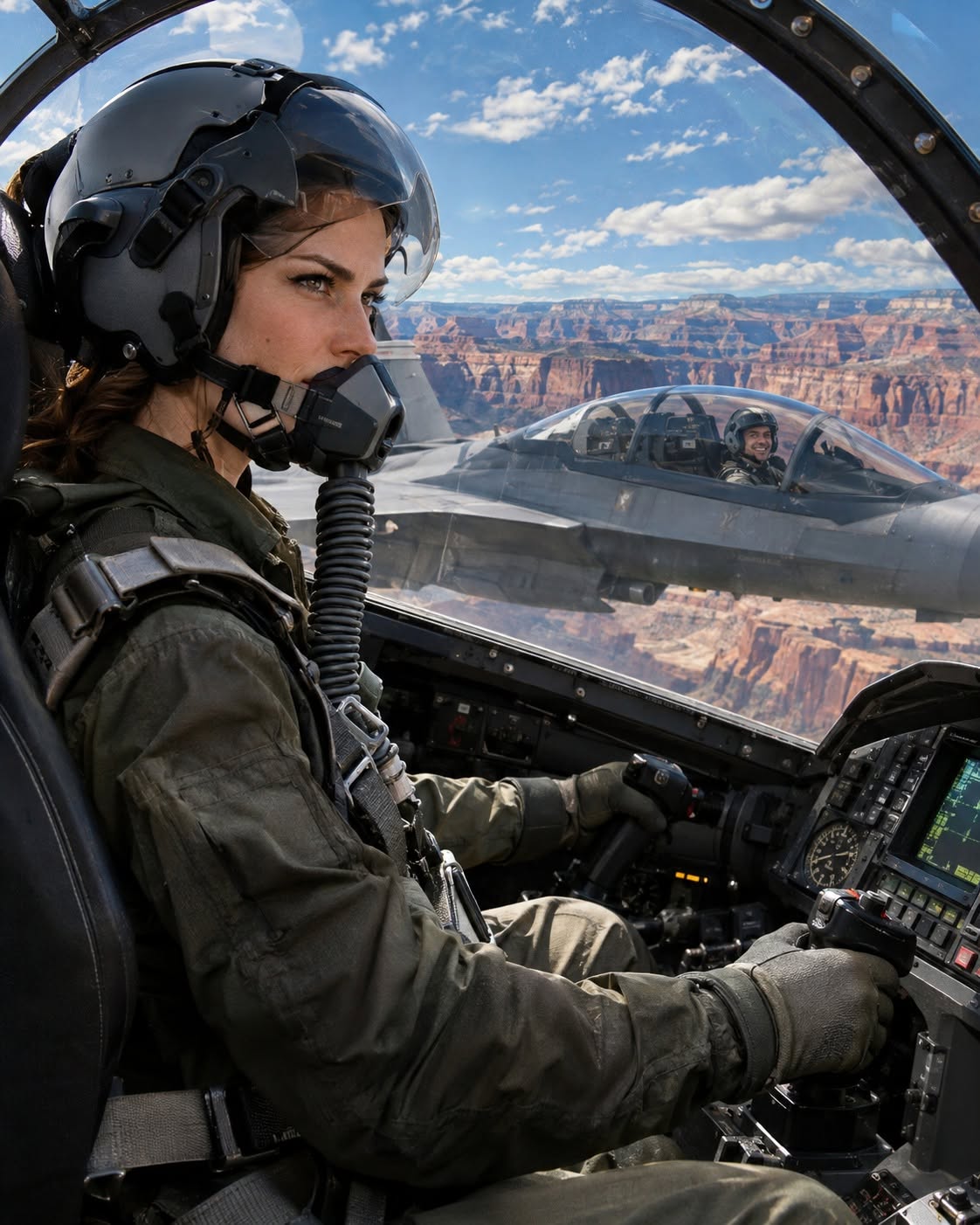
Nothing happened.
I tried again, adding a little more pressure.
The aircraft responded with a sluggish roll before returning to its previous position.
“Come on, old girl,” I whispered. “We’re almost there.”
Then the radio came alive again.
“Warthog One, this is Tower. We have an additional transmission for you. Ground unit reporting an unidentified aircraft approaching your position from the east.”
My stomach tightened.
“Identify that aircraft.”
“We’re attempting to confirm. Radar contact is intermittent.”
I checked my remaining instruments.
The enemy fighters were gone. Both had been destroyed.
There shouldn’t have been anything left in the area capable of threatening me.
“Tower, do you have a friendly identification?”
“Negative at this time.”
I scanned the sky.
Nothing.
Only clouds, distant mountains, and the fading sunlight.
Then I saw it.
A dark shape appeared above the eastern ridgeline.
It was moving quickly.
I couldn’t identify the aircraft at first, but I recognized the silhouette as it descended through the clouds.
Another fighter.
“Tower, I have visual contact. Unknown fighter approaching from the east.”
“Copy, Warthog One. We are attempting identification.”
I tightened my grip on the controls.
There was no way my damaged A-10 could survive another engagement.
I had almost no maneuverability, limited engine power, and barely enough control to keep the aircraft level.
If the unknown fighter was hostile, my mission was over.
Then the radio crackled.
“Warthog One, this is Eagle Three. Identify yourself.”
The voice sounded young, but calm.
I answered immediately.
“Eagle Three, this is Warthog One. Friendly aircraft, returning to base with severe battle damage.”
A pause followed.
“Warthog One, this is Captain Reynolds. We’ve been looking for you.”
I released a breath I hadn’t realized I was holding.
“Good to see you, Captain. You’re a little late to the party.”
He laughed briefly.
“Command told us two enemy fighters entered the area. We were expecting to find you in trouble.”
“Your timing is excellent. I’ve already taken care of the two guests.”
There was silence.
Then Reynolds replied.
“Wait. You destroyed both of them?”
“That’s what the debris suggests.”
“Sir, command is going to want to hear that story.”
“Tell them after I land.”
I looked at my right engine.
The smoke had become darker.
I didn’t have much time.
“Captain, I need you to stay with me until I reach the airfield. My aircraft is barely responding.”
“Understood. I’ll escort you home.”
His fighter moved alongside me, maintaining a respectful distance.
For a moment, everything felt manageable again.
But that feeling didn’t last.
A sudden vibration shook the aircraft.
The right engine temperature surged.
A sharp metallic bang echoed through the cockpit.
Then the engine stopped.
The aircraft yawed violently to the right.
“Warthog One, what’s happening?” Reynolds shouted.
“Lost the right engine!”
I fought the controls, trying to keep the nose from dropping.
The remaining engine was still producing power, but the damaged wing was making the aircraft increasingly difficult to control.
“Tower, Warthog One. Right engine failure. Request immediate emergency landing.”
“Warthog One, you are cleared for emergency landing on Runway Two-Seven. Fire crews are positioned along the runway.”
I checked my altitude.
Too low to waste time.
The airfield was finally visible beyond the hills.
I could see the runway, the hangars, and several emergency vehicles waiting near the approach.
It was the most beautiful sight I’d ever seen.
“Captain Reynolds,” I said, “I think you can head back.”
“Negative, sir. I’m staying with you.”
“That’s an order, Captain.”
“With respect, sir, I was told to bring you home. I’m not leaving before you touch the ground.”
I couldn’t help smiling.
“Fair enough.”
I lowered the landing gear.
A warning sounded immediately.
The right landing gear wasn’t responding.
I tried the emergency extension system.
Nothing.
“Tower, I may have a landing gear problem.”
“Warthog One, confirm which gear is affected.”
“Right main gear appears stuck.”
A long silence followed.
Then the controller spoke.
“Understood. Emergency crews are adjusting their positions. Prepare for a possible gear-up landing.”
I looked at the runway.
There was no second chance.
I reduced power on the remaining engine and carefully adjusted my approach.
The aircraft began descending.
Every movement felt dangerous.
My damaged wing wanted to drop, and the remaining engine struggled to keep the aircraft stable.
Captain Reynolds remained beside me.
“Looking good, Warthog One. You’ve got the runway.”
I could see the white centerline approaching.
“Keep talking, Captain.”
“Copy. You’re doing fine. Just keep her straight.”
The aircraft crossed the runway threshold.
I pulled back gently.
For one brief moment, the Warthog floated above the concrete.
Then the left landing gear touched down.
The aircraft bounced.
My right wing dipped dangerously close to the runway.
I corrected as much as the damaged controls allowed.
The second contact was harder.
Metal screamed against concrete.
Sparks erupted beneath the right side of the aircraft.
The Warthog slid sideways, throwing a cloud of smoke and dust behind it.
I released the remaining engine power.
The aircraft continued sliding.
I could hear the landing gear collapsing, pieces of metal striking the runway, and the emergency crews shouting over the radio.
Then, finally, the aircraft stopped.
Silence.
I sat motionless for several seconds, staring at the instrument panel.
The engine was dead.
The cockpit was filled with smoke.
My hands were shaking.
But I was alive.
“Warthog One, this is Tower. Do you copy? Are you okay?”
I reached for the radio.
“Tower… this is Warthog One.”
I swallowed.
“I’m on the ground.”
A cheer erupted over the frequency.
I looked through the canopy and saw fire crews rushing toward the aircraft.
Captain Reynolds circled overhead before turning away.
Then I noticed something unexpected.
A small group of soldiers was standing near the edge of the runway.
They were wearing dusty combat uniforms.
One of them was holding a radio.
Even from a distance, I recognized the way he stood.
Sergeant Davis.
He had made it back.
And somehow, he had come to meet me.
The rescue crew opened the cockpit canopy.
“Sir, can you move?”
I nodded.
“I’m fine.”
“Let’s get you out of there.”
They helped me climb down from the damaged aircraft.
My legs almost gave out when my boots touched the ground.
I hadn’t realized how exhausted I was.
Davis approached slowly.
For several seconds, neither of us said anything.
Then he extended his hand.
I shook it.
“Thought you might want to see the aircraft that saved your life,” I said.
Davis looked at the twisted landing gear, the burned engine, and the enormous holes scattered across the right side of the fuselage.
He shook his head.
“Sir, I think that aircraft saved itself about a hundred times today.”
I laughed.
“She’s stubborn.”
Davis smiled, but his expression quickly became serious.
“I brought everyone back.”
I looked behind him.
His entire squad was there.
Every single soldier.
Some had bandages around their arms. One was walking with a noticeable limp. Another had his arm around a fellow soldier’s shoulder.
But they were alive.
I felt something tighten in my chest.
“Good work, Sergeant.”
He nodded.
“Couldn’t have done it without you.”
I looked back at the aircraft.
“No,” I replied. “You did your part down there. I just helped you finish the job.”
Before Davis could answer, a military vehicle pulled up beside us.
An officer stepped out.
It was Colonel Harris, the operations commander.
He walked toward me with a serious expression.
“Major, I need you in the briefing room.”
I glanced at the damaged Warthog.
“Can it wait until tomorrow?”
“No.”
Something in his voice made me reconsider.
“What’s going on?”
He looked toward Davis and the other soldiers.
“It’s about the mission.”
I followed him toward the operations building.
Inside, a large digital map covered the main wall.
Several officers were gathered around a table.
On the screen was an image of the battlefield where the engagement had taken place.
Colonel Harris pointed toward a location several miles beyond the area where Davis’s squad had been pinned down.
“Your original mission was to provide close air support and destroy enemy vehicles approaching the defensive line. Correct?”
“Correct.”
“Your report indicates you destroyed several armored vehicles and engaged two enemy fighters.”
“That’s correct.”
He changed the image.
Aerial photographs appeared.
The enemy armored vehicles were visible, scattered across the battlefield.
But something else caught my attention.
A long convoy was moving along a road behind the enemy position.
I leaned forward.
“What am I looking at?”
“An enemy logistics convoy. It was transporting ammunition, fuel, and equipment toward the frontline.”
I studied the image.
The convoy was considerably larger than I expected.
“Why wasn’t this identified earlier?”
“Because we didn’t have confirmation of its location until after your engagement.”
He zoomed in.
The image revealed several large trucks and a command vehicle.
Then he pointed toward a structure near the road.
“That’s what concerns us.”
I examined it.
A communications facility.
“What about it?”
“Before your engagement, our intelligence team detected unusual radio traffic originating from this location. We believe it was being used to coordinate the enemy’s armored advance.”
I looked at the colonel.
“Are you saying those fighters were protecting the convoy?”
“Possibly. But there’s another problem.”
He changed the display again.
A photograph of Commander Marcus Cole appeared.
I recognized him immediately.
Colonel Harris continued.
“Cole wasn’t simply a fighter pilot. He was one of the enemy’s senior tactical coordinators. His aircraft was equipped with specialized communications equipment.”
I stared at the screen.
“You’re telling me he was directing the attack?”
“We believe so.”
The colonel paused.
“Your engagement disrupted their operation. Without Cole, their command network has lost one of its most important coordinators.”
I leaned back.
It was a bigger victory than I had realized.
But I wasn’t interested in medals or recognition.
I was thinking about the soldiers who had been trapped beneath those armored vehicles.
“Does that mean Davis’s unit is safe?”
“For now.”
The colonel turned off the screen.
“However, there’s something else you need to know. Your aircraft’s flight recorder captured the entire engagement. Intelligence has already begun reviewing it.”
I frowned.
“Why?”
“Because there’s a discrepancy.”
He opened a recording.
The footage showed the first enemy fighter entering the canyon.
Then the missile launch.
Then the explosion against the canyon wall.
Everything appeared normal until the second fighter entered the passage.
Colonel Harris froze the footage.
“Look here.”
I leaned closer.
The image showed Brooks’s fighter approaching the canyon.
But something was visible behind him.
A third aircraft.
My stomach tightened.
“That wasn’t there when I checked the sky.”
“Exactly.”
The colonel enlarged the image.
The third aircraft was flying at a distance, almost hidden by the surrounding terrain.
Its markings were different from the other two.
“Who is that?” I asked.
“We don’t know yet.”
He switched to another recording.
The unknown aircraft appeared again, this time shortly before Cole launched his final missile.
Then it disappeared.
I stared at the screen.
“Could it have been another enemy fighter?”
“That’s our concern.”
He folded his arms.
“If there was a third aircraft, it may have observed the entire engagement. It could have transmitted our location, aircraft strength, and response times to enemy command.”
I thought about the unidentified radar contact after leaving the battlefield.
The timing suddenly seemed less coincidental.
“Are we sure it wasn’t Captain Reynolds?”
“Reynolds arrived after the engagement. His flight recorder confirms that.”
I looked at the image again.
The mysterious aircraft had been watching us.
And it might still be out there.
“What’s the plan?”
Colonel Harris gave me a long look.
“First, you are going to the medical facility. Then you’re taking at least forty-eight hours off.”
I almost laughed.
“That’s the entire plan?”
“For you, yes.”
He pointed toward the door.
“You’ve done enough for one day, Major.”
I left the briefing room.
Outside, the sun was setting.
The damaged Warthog sat beneath the floodlights, surrounded by maintenance personnel.
One of the mechanics was inspecting the right wing.
Another was taking photographs of the cannon housing.
I approached the aircraft one last time.
The nose was scraped, the canopy was cracked, and the right engine looked as though it had been through a furnace.
Yet the famous shark-mouth paint beneath the cockpit was still visible.
I placed my hand against the cold metal.
“Good job, old girl.”
A voice behind me interrupted my thoughts.
“Major?”
I turned.
It was Davis.
He was holding two paper cups.
“Coffee,” he said.
I looked at the cups, then at him.
“You remembered.”
He handed me one.
“Couldn’t let you go home without it.”
I took a sip.
It was terrible.
Probably the worst coffee I’d ever tasted.
But I didn’t complain.
We stood together beside the aircraft, watching the maintenance crew work.
After a while, Davis spoke.
“Sir, can I ask you something?”
“Go ahead.”
“When those fighters came after you, weren’t you afraid?”
I considered the question.
I could have given him the usual answer.
Something about training, discipline, and trusting the aircraft.
But that wouldn’t have been honest.
“Yes,” I said.
“Terrified.”
Davis looked surprised.
“Really?”
“Of course. Anybody who tells you they aren’t afraid in a situation like that is either lying or hasn’t understood the situation.”
He looked down at his coffee.
“Then how did you keep fighting?”
I watched a mechanic carefully remove a damaged panel from the wing.
“Because fear doesn’t have to make your decisions for you. You acknowledge it, understand what’s happening, and focus on the next thing that needs to be done.”
Davis nodded slowly.
I continued.
“When your squad was trapped, you didn’t stop trying to protect your men. When I lost the engine, I didn’t stop trying to get the aircraft home. Nobody gets through something like that by pretending they’re invincible.”
He looked at the soldiers gathered near the hangar.
“I guess that’s what being responsible means.”
“Exactly.”
For a while, neither of us spoke.
Then Davis smiled.
“Still think you owe us another flight, sir.”
I laughed.
“After what happened to this one, I think I’ll let the mechanics decide whether I deserve another aircraft.”
We finished our coffee.
And for the first time that day, I felt like the mission was truly over.
Or at least, I thought it was.
Three days later, I was sitting in my quarters when someone knocked on the door.
I opened it.
Captain Reynolds stood outside.
He looked unusually serious.
“Sir, Colonel Harris wants to see you.”
I glanced at the clock.
“What’s happened?”
“It’s the unidentified aircraft.”
My expression changed.
“Did you find it?”
Reynolds nodded.
“Partially. Intelligence tracked a transmission originating from an abandoned airstrip north of the battlefield.”
He handed me a folder.
Inside were several photographs.
The first showed a damaged aircraft parked inside a hangar.
The second showed several technicians working around it.
The third showed a man standing beside the wing.
I recognized the markings.
It was the same aircraft from my flight recorder.
“Who is the pilot?”
Reynolds turned the final page.
A name appeared beneath the photograph.
Major Victor Kane.
I had heard of him.
An experienced enemy pilot who specialized in reconnaissance and electronic warfare.
Unlike Cole, he wasn’t interested in proving himself through aerial victories.
He preferred watching from a distance, gathering information, and striking when the opportunity was right.
I looked at Reynolds.
“Why are you showing me this?”
“Because Kane transmitted a message yesterday.”
“What did he say?”
Reynolds hesitated.
“He specifically mentioned you.”
I waited.
Then he read from the translated transmission.
“Tell the pilot of the damaged Warthog that the canyon was not the end of our encounter.”
I closed the folder.
“So he’s planning another attack.”
“That’s what intelligence believes.”
I looked toward the window.
Outside, aircraft were taking off and landing as usual.
The base appeared peaceful.
But somewhere beyond the mountains, someone was preparing for another confrontation.
And this time, they knew exactly who they were looking for.
“Colonel Harris has ordered additional patrols,” Reynolds continued. “Your name has also been included in the threat assessment.”
I nodded.
“Understood.”
He studied me.
“Sir, are you going to ask for another aircraft?”
I looked at him.
“Do I have a choice?”
He smiled.
“Actually, yes. Command has approved a temporary reassignment to the training division.”
I frowned.
“You’re joking.”
“I’m not.”
I considered the offer.
The A-10 that had carried me through the engagement was beyond repair. Even if it could be rebuilt, the investigation would take weeks.
But I wasn’t ready to leave the cockpit.
“Tell Colonel Harris I’ll accept a different aircraft.”
Reynolds nodded.
“Any preference?”
I thought for a moment.
“Something that can get me home without trying to fall apart.”
He laughed.
“I’ll see what I can arrange.”
Over the next two weeks, the base returned to its normal rhythm.
Davis and his squad were reassigned to a safer defensive position.
Captain Reynolds continued flying patrol missions.
And I spent my days reviewing flight recordings, working with intelligence officers, and learning the capabilities of the aircraft that would eventually replace my Warthog.
But I never forgot the image of the third fighter.
It bothered me.
There was something about its position during the engagement that didn’t make sense.
It hadn’t attacked.
It hadn’t attempted to assist Cole.
It had simply watched.
One evening, I returned to the intelligence room and asked to review the original footage again.
An analyst named Peterson pulled up the recording.
“Anything specific you’re looking for, sir?”
“Show me the third aircraft just before Brooks entered the canyon.”
He rewound the footage.
I studied the image.
The aircraft was flying unusually close to the mountains.
Then I noticed something.
“Stop.”
Peterson froze the recording.
I pointed toward the underside of the aircraft.
“Enlarge that section.”
He adjusted the image.
A small marking appeared beneath the wing.
It wasn’t an enemy military insignia.
It was a civilian registration code.
I leaned closer.
“That’s not a combat aircraft.”
Peterson checked the image against the database.
His expression changed.
“Sir, you’re right.”
“What is it?”
He looked at me.
“It’s a civilian surveillance aircraft. One that was reported missing several weeks ago.”
I stared at the screen.
“Missing?”
“Yes. It was registered to an international communications contractor. The company claimed it had lost contact with the aircraft during a routine survey mission.”
I looked again at the photograph.
“Then why was it following enemy fighters?”
Peterson began searching through the records.
A few minutes later, he found something.
The aircraft had been transmitting encrypted data before disappearing.
The transmissions had originated near the abandoned airstrip.
But the information wasn’t being sent to the enemy’s military command.
It was being sent to a private communications network.
A network operated by the same contractor.
The mystery was suddenly much bigger than a missing fighter.
Someone had been collecting information about military operations from both sides.
And the enemy pilots might not have been the only people watching us.
I immediately contacted Colonel Harris.
Within an hour, the intelligence team had confirmed the discovery.
The aircraft had been modified to carry advanced surveillance equipment.
Its operators had been selling information about troop movements, patrol routes, and air operations to anyone willing to pay.
The money had funded a network of informants and equipment suppliers.
Major Victor Kane had been using their information.
Cole and Brooks had not been acting alone.
Their entire operation had been supported by a private intelligence network.
Colonel Harris looked at the evidence.
“Can we identify the people responsible?”
“Not everyone,” Peterson answered. “But we’ve found the main communications relay.”
He displayed a map.
The relay was located near the abandoned airstrip.
A small facility surrounded by rocky terrain.
The colonel looked toward me.
“Major, you’re familiar with that region.”
I nodded.
“I flew over it during the original mission.”
“Then I want your assessment.”
I studied the map.
There were several possible approaches, but the surrounding terrain made ground access difficult.
The old airstrip was the only practical location for an aircraft to land.
I pointed toward the northern side.
“If they still have the civilian aircraft, they’ll probably attempt to move it before we can reach the facility.”
Colonel Harris nodded.
“That’s what we’re concerned about.”
He looked at the operations team.
“We need to secure the site before the information disappears.”
The following morning, a joint operation was launched.
I wasn’t assigned to fly combat support.
Instead, I was placed in the operations room to coordinate with the aircrew and ground team.
It wasn’t the assignment I wanted.
But I understood why it mattered.
Sometimes the most important contribution a pilot could make wasn’t pulling the trigger.
It was making sure everyone else had the information they needed.
At 0615, the first aircraft departed.
At 0630, the ground team began moving toward the airstrip.
At 0642, the surveillance feed showed movement near the hangar.
The civilian aircraft was preparing to take off.
“Ground team, be advised. Aircraft preparing for departure.”
The team leader acknowledged.
“Copy. We’re moving.”
I watched the screen.
The aircraft began rolling.
Then something unexpected happened.
A second vehicle appeared near the runway.
It was a military transport truck.
Several armed men climbed into the back.
Peterson leaned toward the monitor.
“They’re evacuating the equipment.”
Colonel Harris ordered the ground team to accelerate its approach.
But the aircraft was already gaining speed.
I studied its path.
It was heading directly toward the eastern ridge.
“Wait,” I said.
The colonel turned.
“What is it?”
“The runway isn’t long enough for that aircraft to take off safely with the equipment it’s carrying.”
Peterson checked the technical specifications.
“Correct. It would need more distance.”
I pointed toward the far end of the runway.
“Unless they’ve cleared the road beyond the airstrip.”
The camera shifted.
A section of road had been blocked with debris.
The aircraft was heading toward the opening.
“They’ve prepared an emergency departure route,” I said.
Colonel Harris immediately contacted the aircrew.
“Intercept the aircraft. Do not allow it to leave the area.”
The pilots acknowledged.
But before they could reach the airstrip, the civilian aircraft lifted into the air.
It climbed unevenly, carrying more equipment than it was designed to handle.
The ground team reached the hangar moments later.
Several armed men surrendered.
Others fled into the surrounding hills.
But the aircraft was already disappearing behind the mountains.
Peterson checked the radar.
“We’ve lost contact.”
I stared at the screen.
There was no way of knowing whether it had escaped or crashed.
Then another signal appeared.
A weak emergency transmission.
It was coming from the same aircraft.
The message repeated twice before disappearing.
Peterson translated the signal.
“Mayday. Engine failure. Request emergency assistance.”
Colonel Harris looked at me.
“Can we locate it?”
Peterson entered the coordinates.
A red marker appeared on the map.
The aircraft had gone down in a valley several miles north of the airstrip.
The ground team was still too far away.
The nearest rescue aircraft needed at least twenty minutes.
I studied the terrain.
The valley was surrounded by steep hills.
There was only one practical access route.
And I knew it.
It was the same limestone canyon where I had fought Cole and Brooks.
I looked at the map again.
“Sir, I can help guide the rescue team.”
Colonel Harris shook his head.
“You’re not flying anywhere.”
“I didn’t say I was.”
I pointed toward the valley.
“The eastern approach is blocked by a narrow ridge. If the rescue aircraft follows the usual route, it’ll lose visual contact with the ground team.”
I traced another route.
“But if they come in from the south, they can reach the valley through the wider passage.”
The colonel considered it.
Then he nodded.
“Get them the route.”
I contacted the rescue crew and guided them through the approach.
Twenty minutes later, the first helicopter appeared on the surveillance feed.
The civilian aircraft was lying on its side near a rocky slope.
Smoke was rising from the fuselage.
Several people were moving around the wreckage.
One of them was waving a piece of fabric.
The rescue helicopter landed nearby.
The ground team reached the site shortly afterward.
Within minutes, the survivors were secured.
The operation was over.
The communications equipment was recovered.
The remaining members of the network were taken into custody.
And the missing aircraft was finally accounted for.
But there was one detail I couldn’t stop thinking about.
The people inside that aircraft had sent a distress signal.
They had been involved in something that endangered hundreds of soldiers.
Yet when their aircraft went down, they were still people in need of rescue.
I asked the colonel whether the rescue team had recovered everyone.
He nodded.
“All six occupants survived. Two have injuries, but nothing life-threatening.”
I leaned back.
“Good.”
He looked at me curiously.
“Even after everything they’ve done?”
I nodded.
“Especially after everything they’ve done.”
He studied me for a moment.
Then he smiled faintly.
“That’s why we wear the uniform, Major.”
Later that evening, I visited the medical facility.
Davis was there, recovering from a minor injury he had sustained during the original battle.
He was sitting beside a window, reading a report.
When he saw me, he put it down.
“Heard you were involved in another operation.”
“Just helped with the navigation.”
“Still finding ways to save the day, huh?”
I shook my head.
“Not every mission ends with explosions.”
He smiled.
“Probably better that way.”
I sat beside him.
For a while, we talked about the battle, the damaged aircraft, and the strange way events had unfolded.
Eventually, Davis asked about the two enemy pilots.
I told him what had happened.
He listened quietly.
Then he asked something I hadn’t expected.
“Do you think Cole knew what he was protecting?”
I considered the question.
“Maybe. Maybe not.”
“But he still chose to attack you.”
“Yes.”
Davis looked toward the window.
“I keep thinking about how close we came to losing everyone.”
I nodded.
“So do I.”
He turned back toward me.
“Can I tell you something?”
“Of course.”
“When those armored vehicles were coming toward us, I thought we were finished. I was certain nobody was getting out.”
He paused.
“Then I heard your voice on the radio. You sounded so calm.”
I smiled.
“I wasn’t calm.”
“You fooled us.”
I laughed.
“That’s part of the job.”
He looked down at the report in his hands.
“I used to think courage meant never being afraid.”
I waited.
“Now I think it means doing what needs to be done even when you’re terrified.”
I nodded.
“That’s a much better definition.”
We sat quietly for a few minutes.
Then Davis looked at me with a mischievous expression.
“So, when do you get your new aircraft?”
I shrugged.
“Soon, apparently.”
“Good. Because I don’t think the maintenance crew can rebuild that old Warthog.”
I smiled.
“Don’t underestimate them.”
A week later, I returned to the hangar.
My replacement aircraft was waiting.
It was clean, fully operational, and equipped with everything a modern pilot could want.
The mechanics had even placed a small handwritten note on the cockpit ladder.
It read:
WELCOME BACK, MAJOR. TRY NOT TO BREAK THIS ONE.
I laughed.
Then I noticed something hanging beside the note.
A photograph.
It showed my damaged A-10 sitting on the runway after the emergency landing.
Beneath it, someone had written:
SHE BROUGHT YOU HOME.
I stood there for a long moment.
I knew the aircraft would never fly again.
Its structure had been damaged beyond economical repair.
But it had done exactly what it had been built to do.
It had taken punishment, protected its pilot, and carried him through a mission that should have ended very differently.
I touched the photograph.
Then I climbed into my new aircraft.
Before starting the engines, I checked the communications system.
“Tower, this is Eagle One. Requesting clearance for departure.”
“Eagle One, cleared for takeoff.”
I looked through the canopy.
The runway stretched ahead.
The sky was clear.
For the first time in weeks, there was no smoke, no enemy aircraft, and no desperate voice asking for help.
Just the familiar sound of an engine coming to life.
I pushed the throttle forward.
The aircraft accelerated.
The wheels lifted from the runway.
And as the airfield slowly disappeared beneath me, I thought about everything that had happened.
I had gone into battle believing my job was to destroy enemy vehicles and protect a group of soldiers.
I had come home with a damaged aircraft, two enemy fighters destroyed, and an entirely different understanding of what that job meant.
The real victory hadn’t been the explosions.
It hadn’t been the aircraft I had brought down.
It hadn’t even been the fact that I had survived a landing that should have been impossible.
The real victory was seeing Davis and his squad standing beside the runway.
Every one of them alive.
It was knowing that the people who had been counting on me had made it home.
And it was realizing that even in the middle of a war, the choices we make after the shooting stops can matter just as much as the ones we make during the fight.
A few minutes into the flight, my radio crackled.
“Eagle One, this is Tower. We have a message from Sergeant Davis.”
I smiled.
“Put him through.”
A familiar voice filled my headset.
“Hey, Major. Just wanted to say thanks again.”
I shook my head.
“Already said that, Sergeant.”
“I know. But I forgot something.”
“What’s that?”
A short pause followed.
Then he said, “Next time you come back, we’re buying the coffee.”
I laughed.
“Make sure it’s better than the last batch.”
“Can’t promise anything, sir.”
The transmission ended.
I continued flying toward the distant mountains.
The sun was beginning to set, turning the clouds gold.
Somewhere below, soldiers were returning to their families, mechanics were repairing aircraft, and another group of pilots was preparing for tomorrow’s missions.
There would always be another challenge.
Another emergency.
Another voice calling for help.
I couldn’t promise that I would save everyone.
No pilot could.
But I could promise that when someone called for help, I would do everything within my power to answer.
Because the greatest measure of a pilot isn’t how many enemy aircraft he can destroy, how many medals he can collect, or how many stories people tell about his courage.
It’s whether the people who depend on him can trust that he will never abandon them.
And sometimes, the most important thing an aircraft can do isn’t win a battle.
It’s bring someone home.
THE END