The emergency alarm went off at 2:17 a.m. Fourteen American special forces soldiers were trapped behind enemy lines
VIPER SIX: THE NIGHT THE SILENT PILOT CAME HOME
The first thing I noticed was that nobody was looking at me.
They were looking at the aircraft.
More specifically, they were looking at the nose of my F-16, where the ground crew had painted something I hadn’t seen in years.
A small silver snake wrapped around the number six.
My old squadron insignia.
For several seconds, I simply stood beside the aircraft, unable to speak. The cold night air moved across the flight line, carrying the smell of jet fuel and burning exhaust. Behind me, fourteen soldiers who had nearly died that night were being loaded into medical transport vehicles.
Then Captain Jake Brennan stepped forward.
He removed his helmet, approached me, and extended his hand.
“Welcome home, Viper Six.”
I looked at him.
“Jake, what is all this?”
He smiled, but there was something unusually serious in his expression.
“There’s someone here who wants to see you.”
Before I could ask who, the crowd began moving apart.
An older man walked slowly toward us, wearing a dark military jacket. His hair was almost completely white, and he leaned slightly on a black walking cane.
I recognized him immediately.
Colonel Thomas Whitaker.
My former commanding officer.
The man who had signed the report that officially ended my flying career six years earlier.
And the man I had not spoken to since the night everything went wrong.
“Still flying like you have something to prove?” he asked.
I couldn’t answer.
Whitaker stopped in front of me and looked at the small silver snake painted on my aircraft.
“I wondered whether I’d ever see that symbol again.”
I lowered my eyes.
“That pilot doesn’t exist anymore, sir.”
He shook his head.
“No. That pilot has been waiting for you to stop punishing yourself.”
His words hit harder than any missile warning I had heard that night.
But before I could respond, a military ambulance suddenly stopped near the flight line.
A medic jumped out.
“Colonel! We have a problem!”
Whitaker turned.
“What’s happened?”
“One of the rescued soldiers is refusing treatment. He’s asking for the pilot who brought them out.”
I recognized the name on the medical report.
Sergeant Daniel Mercer.
The team leader.
“Take me to him,” I said.
Whitaker studied my face.
“Of course.”
I followed the medic toward the ambulance.
Inside, Mercer was lying on a stretcher with a bandage wrapped around his shoulder. His uniform was covered in dirt and blood. His face was pale, but his eyes were alert.
When he saw me, he immediately tried to sit up.
“Ma’am.”
“Don’t move, Sergeant.”
He ignored me.
“You’re Viper Six?”
I nodded.
He stared at me for a moment.
Then he reached beneath his vest and pulled out a small, bloodstained photograph.
“I need you to look at this.”
I took it.
The photograph showed fourteen young soldiers standing together in front of a helicopter. On the back, someone had written a date and a short sentence.
For the people who bring us home.
“What is this?” I asked.
Mercer swallowed.
“Six years ago, my older brother was killed during an extraction mission in Syria. His pilot was a woman. Her call sign was Viper Six.”
My fingers tightened around the photograph.
I knew that mission.
I remembered every second of it.
The aircraft had been damaged during the extraction. My wingman had been forced to divert. I had been left with a failing engine, limited fuel, and a ground team waiting for help.
I had brought most of them home.
But one soldier hadn’t made it.
His name was Lieutenant David Mercer.
Daniel watched my expression carefully.
“That was my brother.”
For a moment, the ambulance seemed to become smaller.
“I remember him,” I whispered.
Daniel nodded.
“He talked about you before he died. He told us that you stayed in the danger zone longer than anyone thought possible.”
I looked away.
“I couldn’t get him out.”
“That’s not what he told us.”
Daniel pushed the photograph toward me.
“He told us you saved the rest of his team. He said if he ever had to choose someone to fly him home, he’d choose you again.”
I couldn’t hold the photograph steady.
For six years, I had carried the belief that my failure to save one man had erased every life I had managed to protect.
Now his younger brother was lying in front of me, alive, telling me that my worst memory had never been the whole story.
“Thank you,” I managed to say.
Daniel shook his head.
“No, ma’am. Thank you for coming back.”
I stepped outside the ambulance before he could see me cry.
I had spent years learning how to hide pain behind professional silence.
That night, I finally understood how exhausting it had become.
But the night wasn’t finished with me.
At 4:06 a.m., an urgent message arrived at the operations center.
The enemy force that had attacked Mercer’s team had not withdrawn.
They had captured one of the soldiers who had become separated during the extraction.
His name was Corporal Ethan Cole.
And the intelligence officers had intercepted a transmission suggesting the enemy intended to move him before sunrise.
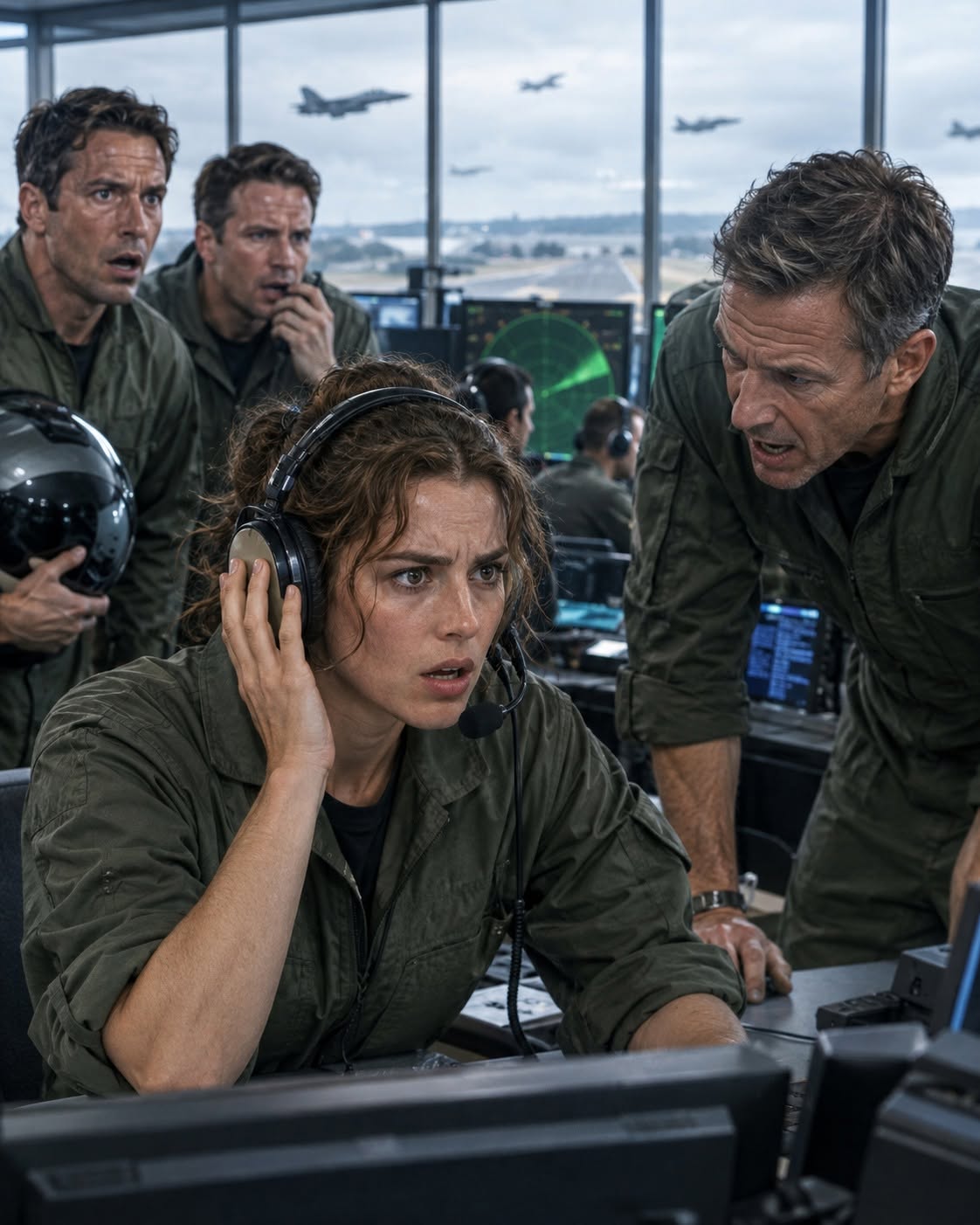
The operations room filled again.
Maps appeared on the screens. Intelligence officers reviewed intercepted communications. Two helicopters were prepared for possible deployment.
But the weather was deteriorating.
A heavy dust storm was approaching from the southwest.
“Can we send another rescue team?” I asked.
Whitaker shook his head.
“Not without knowing where they’re holding him. Our reconnaissance satellite coverage is limited, and the weather will make aerial observation almost impossible.”
Jake leaned over the tactical display.
“We have one possible location. An abandoned communications station north of the ridge.”
“Possible?” I asked.
“That’s the best we’ve got.”
I examined the map.
The station sat in a valley surrounded by steep mountains. A narrow road connected it to an old military supply route.
Something about the location bothered me.
I opened my green notebook.
For months, I had recorded wind direction, temperature changes, pressure fluctuations, and visibility patterns across the surrounding mountains. Nobody had asked me to do it. I had simply continued because old habits were difficult to abandon.
I turned to a page from three weeks earlier.
Then another.
And another.
The same unusual atmospheric pattern appeared repeatedly.
“Jake, look at this.”
He approached.
“What am I looking at?”
“These temperature changes create a predictable wind reversal near the abandoned station. The storm will push the dust into the southern valley, but the northern approach may remain clear for another twenty minutes.”
He frowned.
“How can you be certain?”
“I’m not. But I’m certain enough to investigate.”
Whitaker studied the map.
“You’re suggesting another flight?”
“I’m suggesting we don’t send soldiers into a valley without understanding what’s waiting for them.”
He looked toward the operations commander.
The commander shook his head.
“Absolutely not. We just brought one aircraft back with a pilot who hasn’t flown operationally in years. We’re not risking another.”
I understood his position.
But I also understood something else.
A soldier was sitting somewhere in that valley, waiting for people who might never come.
“Then let me help plan the ground operation,” I said.
Whitaker nodded.
“That’s what we’ll do.”
For the next forty minutes, we worked through every possible approach.
Jake would lead the aerial support mission if weather conditions permitted. A ground extraction team would move toward the station from the eastern access road.
I identified a second route through an abandoned drainage channel that did not appear on the latest tactical map.
At 5:12 a.m., we received a new transmission.
It lasted only four seconds.
A weak voice.
A single sentence.
“This is Cole. I’m still here.”
Then silence.
The operations room became painfully quiet.
The commander checked his watch.
“We have to move.”
I looked at the transmission coordinates.
They were wrong.
Not slightly wrong.
Completely wrong.
The signal appeared to originate from the southern side of the valley, where enemy forces had established their strongest defensive position.
“Wait,” I said.
The commander turned.
“What?”
“That transmission didn’t come from Cole’s actual position.”
“How do you know?”
I examined the signal pattern again.
“The enemy is using a repeater. They’re trying to make us approach from the south.”
Jake stepped closer.
“Can you identify the real location?”
I closed my eyes briefly and remembered something from the earlier rescue.
During the extraction, I had heard a faint radio interference pattern that repeated at irregular intervals.
At the time, I had assumed it was equipment malfunction.
Now I understood.
The abandoned station had an underground communications system.
If Cole was being held inside the facility, the signal might be bouncing through its old antenna network.
I pulled the notebook toward me and began calculating.
The room was silent except for the tapping of my pencil.
Finally, I circled a location on the map.
“Here.”
Jake stared.
“That’s not the station.”
“No. It’s the old maintenance tunnel beneath it.”
Whitaker looked at me.
“You’re telling me the enemy may be holding him underground?”
“I’m telling you there’s a very good chance.”
The commander immediately contacted the ground team.
Within minutes, the operation changed.
Instead of approaching the southern entrance, the soldiers would use the drainage channel and reach the maintenance tunnel from the eastern side.
Jake would remain airborne as overwatch.
I was instructed to stay in the operations room.
For the first time that night, I didn’t argue.
The ground team moved at 5:31 a.m.
The storm arrived six minutes later.
Dust swallowed the valley.
Visibility dropped almost immediately.
On the tactical screen, the friendly team appeared as small blue symbols moving toward the abandoned station.
Then one symbol stopped.
Another moved backward.
“What’s happening?” Whitaker demanded.
The radio operator listened carefully.
“Possible contact. They’re taking fire.”
I leaned closer to the screen.
“Tell them to stay below the drainage wall. The wind is pushing the dust east. They’ll have almost no visibility from the station’s western observation point.”
The instruction was relayed.
A moment later, Jake’s voice came through the radio.
“Viper Six, this is Raven One. I’ve got movement near the northern entrance. Three vehicles.”
I picked up the headset.
“Raven One, do not engage. Confirm direction of travel.”
“Moving toward the maintenance road.”
My stomach tightened.
The enemy had discovered the approach.
“They’re going for the tunnel,” I said.
Whitaker looked at the display.
“Can our team reach Cole before they do?”
I watched the blue symbols.
“Only if they use the old service entrance.”
The commander immediately transmitted the revised route.
For several minutes, nobody spoke.
Then a new voice came through.
“Ground team to command. We’ve reached the tunnel.”
A pause.
“We have visual confirmation of one prisoner.”
The room erupted in quiet relief.
But the radio operator continued.
“Negative. Correction. We have two prisoners.”
I froze.
“Two?”
The voice crackled.
“There’s another American in here. He’s badly injured.”
Whitaker leaned forward.
“Who is it?”
A few seconds passed.
Then the answer came.
“Captain Michael Hayes.”
I knew that name.
Hayes had been missing for eleven months.
He was an intelligence officer whose disappearance had been classified so deeply that even most senior personnel at the base knew nothing about it.
I looked at Whitaker.
He was staring at the screen as if he had just seen a ghost.
“Get them out,” he ordered.
The ground team began moving.
Then the radio went dead.
Not static.
Not interference.
Dead.
The operations commander slammed his hand against the table.
“What’s happening?”
I studied the signal display.
The old station’s communications system had activated.
A powerful transmitter was blocking every frequency the rescue team was using.
Jake’s aircraft was still circling above the valley, but he couldn’t communicate with the soldiers below.
The commander turned to me.
“Can you get through?”
I looked at the old equipment along the communications desk.
There was a secondary emergency frequency used by maintenance crews. It was rarely used, but it had been designed to survive failures in the primary communications network.
I switched the receiver.
Nothing.
Then I adjusted the frequency slightly.
A faint pulse appeared.
Three short bursts.
Two long.
One short.
My heart began beating faster.
It was a signal pattern I recognized from an old training exercise.
Someone inside the tunnel was trying to communicate through the station’s backup wiring.
I picked up the microphone.
“Unknown station, this is Viper Six. If you can hear me, transmit twice.”
Two pulses.
I looked at Whitaker.
“We have contact.”
I spoke slowly, using the old coded procedure.
“Identify your position.”
Three pulses.
Then two.
The signal was weak, but I managed to reconstruct the message.
The ground team was trapped inside the tunnel.
An explosive charge had blocked their original exit.
The enemy vehicles were approaching.
And Captain Hayes was too injured to walk.
We had less than seven minutes before the enemy reached the tunnel entrance.
I looked toward the operations commander.
“Get me the station’s original maintenance schematics.”
He hesitated.
“Why?”
“Because I need to find another way out.”
The documents arrived.
I spread them across the table.
There were several underground passages, but most had collapsed years earlier.
One route remained.
A narrow ventilation shaft connected the maintenance tunnel to a dry riverbed north of the facility.
It was barely wide enough for a person to crawl through.
But it was outside the enemy’s immediate defensive perimeter.
I transmitted the route.
The response came almost immediately.
“Viper Six, that’s not an exit. That’s a coffin.”
I pressed the microphone.
“Listen to me. The shaft is narrow, but the riverbed is clear. You have a chance if you move now.”
There was a long pause.
Then Daniel Mercer’s voice came through.
He had insisted on joining the recovery team despite his injuries.
“Viper Six, this is Mercer. We can do it.”
I recognized his voice immediately.
“Daniel, you should be in medical care.”
He laughed weakly.
“Apparently, I’m terrible at following orders.”
I almost smiled.
“Then make sure you follow this one. Get those men out.”
The ground team began crawling through the ventilation shaft.
Above them, Jake spotted the enemy vehicles.
“Viper Six, they’re approaching the riverbed.”
I looked at the display.
The timing was terrible.
If the enemy reached the riverbed before the rescue team emerged, they would be trapped in open terrain.
Jake had a clear opportunity to attack, but the dust storm made identification difficult.
He needed positive confirmation before engaging.
I switched to the emergency frequency.
“Ground team, report.”
A weak voice answered.
“Still moving.”
“How many?”
“Five through. Two remaining.”
I watched the clock.
One minute.
Then another.
Jake’s voice returned.
“Viper Six, I have two vehicles entering the riverbed. I need confirmation.”
I checked the ground team’s coordinates.
The symbols were almost on top of each other.
“Hold your position, Jake. Do not fire.”
“Understood.”
Then something unexpected happened.
The enemy vehicles stopped.
One of them turned toward the northern ridge.
A figure emerged from the dust.
At first, I thought it was one of our soldiers.
Then I realized it was a man wearing a captured American uniform.
Captain Hayes.
He was standing in the open, waving both arms.
The enemy vehicles began moving toward him.
“Jake!” I shouted into the microphone. “That’s Hayes. He’s drawing them away from the riverbed.”
“I see him.”
“Do not lose him.”
Jake maneuvered through the storm, maintaining visual contact.
The ground team emerged from the ventilation shaft moments later.
Mercer was carrying Hayes’s equipment while another soldier supported the injured captain.
They had made it.
But Hayes was still exposed.
The enemy vehicles were closing in.
Jake finally received confirmation from the ground commander that the personnel in the riverbed were clear of the target area.
Then he moved.
A controlled strike disabled the lead vehicle and forced the second to turn away from the valley.
The enemy withdrew into the dust.
Captain Hayes collapsed.
But he was alive.
At 6:04 a.m., the rescue team reached the extraction point.
All personnel were accounted for.
Fourteen from the original reconnaissance team.
One previously missing intelligence officer.
And the soldiers who had gone back into the valley to bring them home.
For the second time that morning, the mission was over.
This time, I didn’t feel like celebrating.
I was staring at a photograph on the operations desk.
It was the one Daniel had shown me.
His brother David stood in the middle of the group, smiling at the camera.
I traced the edge of the picture with my finger.
Six years.
Six years of believing I had lost the right to call myself a pilot.
Six years of convincing myself that staying invisible was the same thing as finding peace.
And yet, somehow, the people I had spent years trying to forget had become the reason I was still standing.
At 7:20 a.m., Colonel Whitaker asked me to join him in his office.
He closed the door and placed a folder on the desk.
“I want to talk about your future.”
I sat down.
“Sir, with respect, I have no intention of returning to active combat flying.”
He nodded.
“I expected that answer.”
He opened the folder.
Inside was a recommendation for a new position within the Joint Operations Command.
Senior Aviation Operations Advisor.
The position would allow me to train pilots, develop rescue procedures, and coordinate difficult extraction missions.
It would not require me to return to regular combat operations.
I looked at the document.
“Why me?”
Whitaker leaned back.
“Because last night, you did something most experienced pilots never learn to do.”
“What?”
“You understood that the mission wasn’t about the aircraft, the weapons, or the person flying it. It was about the people waiting on the ground.”
He paused.
“And because I owe you an apology.”
I looked up.
“For what, sir?”
“For the way your career ended.”
His expression became distant.
“Six years ago, I approved the report that removed you from flight status. I knew the investigation had left important questions unanswered. I also knew you were carrying more responsibility than one pilot should ever have carried.”
I said nothing.
“I should have fought harder to protect you. Instead, I let the paperwork become the final word.”
I looked at the folder again.
“I didn’t need anyone to protect me.”
“Perhaps not. But you deserved someone who believed you.”
The room became quiet.
Finally, I closed the folder.
“I’ll consider the position.”
Whitaker smiled.
“That’s all I ask.”
Three weeks later, I returned to the flight line.
Not to fly.
To watch.
The rescued soldiers had organized a small ceremony for the people who had taken part in the operation. Daniel Mercer was there, his arm still in a sling. Captain Hayes had also arrived, walking slowly with a cane.
When he saw me, he approached.
“You’re the one who found us.”
“I helped coordinate the rescue.”
He shook his head.
“You found a way when everyone else had run out of options.”
He handed me a folded letter.
It was written on military stationery, with the name of his missing unit at the top.
“I wanted you to have this.”
I opened it.
Inside was a short message.
To the pilot who never stopped listening:
We don’t remember every aircraft that passes overhead. We don’t remember every radio call or every coordinate on a map.
But we remember the voice that tells us someone is coming.
We remember the people who refuse to give up.
And we remember the ones who bring us home.
I read the words twice.
Then I folded the letter carefully and placed it inside my green notebook.
Daniel approached a moment later.
“Ma’am, can I ask you something?”
“Of course.”
“Why did you disappear after the accident? You could have stayed in aviation.”
I looked across the runway.
The sun was rising over the mountains, turning the horizon gold.
“Because I thought being a good pilot meant never making a mistake.”
Daniel considered that.
“And now?”
“Now I know being a good pilot means understanding what a mistake costs, learning from it, and having the courage to keep helping people afterward.”
He nodded.
“My brother would have liked that answer.”
I smiled.
“I think I would have liked your brother.”
Daniel laughed.
“You would have. He was stubborn, though.”
“Most good soldiers are.”
We stood together for a moment, watching the aircraft taxi toward the runway.
Then Daniel noticed the small silver snake on the nose of the F-16.
“Are you going to fly again?”
I looked at the aircraft.
For years, I had believed that returning to a cockpit was the only way to prove I was still the person I used to be.
But I had learned something more important.
I didn’t need to become the old Viper Six again.
I needed to decide who I wanted to be now.
“Maybe someday,” I answered.
“But not because I have something to prove.”
Daniel smiled.
“Then why?”
I looked at the men and women gathered along the flight line.
“Because there are still people out there who need someone to bring them home.”
That afternoon, I returned to the communications room.
My green notebook was on the desk.
The same notebook I had carried through months of quiet nights, recording wind patterns and radio traffic while everyone assumed I was simply another operator.
I opened it to a fresh page.
At the top, I wrote three words.
The mission continues.
Then I heard a familiar voice over the radio.
“Operations, this is Raven One. Requesting clearance for departure.”
I smiled and reached for the microphone.
“Raven One, clearance approved. Safe travels.”
The aircraft engines came alive outside.
And for the first time in six years, the sound didn’t remind me of what I had lost.
It reminded me of what I could still give.
I had spent so long believing that the world had forgotten Viper Six.
I was wrong.
The world hadn’t forgotten.
It had simply been waiting for me to remember that my worth had never depended on the call sign painted on an aircraft.
It had always depended on what I chose to do when someone needed help.
Years later, when new pilots asked me about the night fourteen soldiers were rescued from the Ghazni valley, I rarely talked about the flight.
I talked about the green notebook.
I talked about the weather patterns nobody thought were important.
I talked about the soldier who carried a photograph of his brother.
And I talked about the captain who refused to leave another American behind.
Because the most important part of that mission wasn’t the aircraft that crossed the mountains.
It wasn’t the enemy positions we avoided or the impossible route we found.
It was the decision, made again and again by ordinary people, to keep going when giving up would have been easier.
I kept one final page in that notebook.
It contained the names of every soldier who had come home that morning.
Fourteen names from the reconnaissance team.
One name from a mission six years earlier.
And the names of the people who had gone back into the valley to bring everyone out.
At the bottom, I wrote a sentence I wished I had understood much sooner:
You are not defined by the worst moment of your life. You are defined by what you choose to do after it.
My call sign was Viper Six.
But I was never just a pilot.
And I was never just a radio operator.
I was someone who had once lost her way, found a reason to stand again, and discovered that courage doesn’t always roar through the sky.
Sometimes, it sits quietly in a dark room with a green notebook, listening carefully, waiting for the moment someone needs to hear:
“We’re coming. Hold on.”
And sometimes, that is enough to bring an entire world back home.