The CEO pointed at me in front of the entire executive team and said I was responsible for destroying the company.
The executive stood so abruptly that his chair scraped across the polished floor.
“That’s enough,” he said. “This is a security matter, and we shouldn’t be discussing unverified accusations in front of the entire board.”
I looked at the screen.
His name was Richard Vale, Chief Financial Officer.
The security chief, Martin Cole, didn’t move.
“Sit down, Richard,” he said quietly.
Richard laughed, but there was something forced about it. “You can’t seriously believe an engineer who was just fired has somehow uncovered a conspiracy in our financial department.”
The CEO, Grant Mercer, stared at the tablet. “What exactly are we looking at?”
I took a breath.
“Someone modified transaction records three weeks before the server crash. The changes were made using a privileged account. The account belongs to the finance department, but the activity was routed through a maintenance system that makes the modifications look like routine updates.”
Richard shook his head.
“That’s impossible. Those records are generated automatically.”
“Some are,” I replied. “But these weren’t.”
I enlarged the screen and highlighted a timestamp.
“Every modified entry was followed by a validation request. The requests were approved, but the approvals came from an account that should have been inactive.”
Grant leaned forward.
“Whose account?”
I clicked the next record.
The name appeared on the screen.
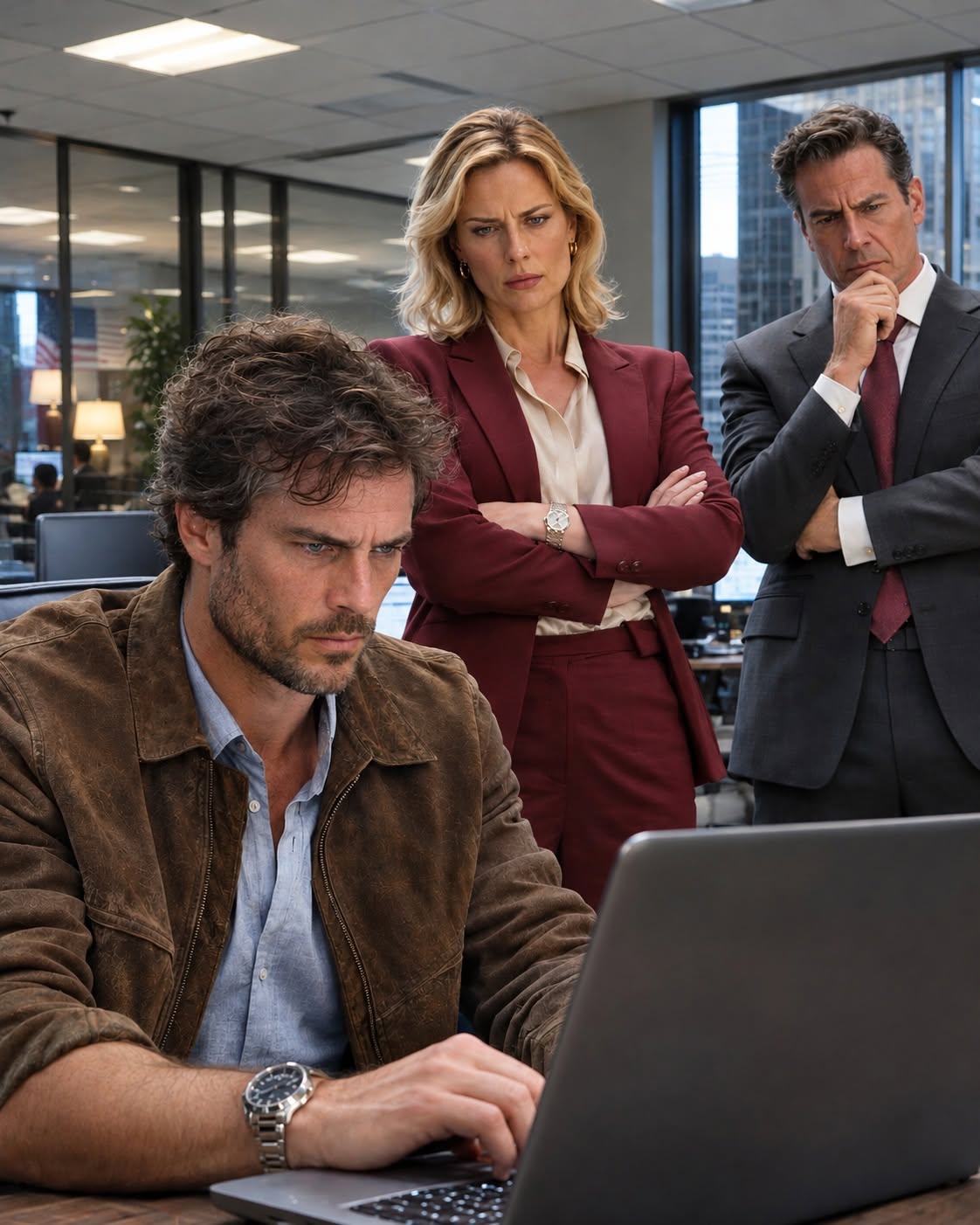
Richard Vale.
For several seconds, the room was completely silent.
Then Richard began to smile.
“That’s my account, yes. And I’m the CFO. I authorize financial adjustments every day. You have absolutely no idea what you’re looking at.”
He was right about one thing. I didn’t have the full picture yet.
And I wasn’t going to make the same mistake Grant had made when he fired me.
“I’m not accusing anyone,” I said. “I’m showing you a pattern. The records were altered, and the system crashed immediately after someone attempted to overwrite the backup index.”
Martin placed his hands on the table.
“Richard, did you authorize the changes shown here?”
Richard looked directly at him.
“I authorize thousands of transactions. I’m not going to answer a question based on a screenshot.”
“It’s not a screenshot,” I said. “It’s an offline archive. The original data is preserved.”
Richard’s expression hardened.
“Then why didn’t you report this backup to management?”
The question caught me off guard.
Grant turned toward me.
“That’s a good question. Why was this archive never included in our official infrastructure documentation?”
I felt the room shift. The evidence was pointing at Richard, but suddenly I was back on trial.
I could have told them I had tried to recommend a separate offline backup system for years. I could have explained that every time I requested funding, the answer was that the company needed to cut costs. I could have mentioned the three emails I’d sent about vulnerabilities in the finance servers.
Instead, I opened my toolbox and pulled out a small, battered notebook.
“I documented the backup process here,” I said. “The system was built during a previous recovery project. I submitted the design proposal twice. Both times it was rejected. I maintained a private offline archive because the original servers were vulnerable to a single point of failure.”
Grant’s face turned red.
“You maintained an unauthorized system inside my company?”
“I maintained a recovery copy of critical records. I never altered the originals. I never used it to access information that wasn’t part of my job.”
Richard seized the opportunity.
“That’s a serious breach of company policy. You want us to believe you’re the hero here, but you were running an unauthorized system while our merger was under review?”
Martin stepped between us.
“That’s something we can investigate separately. Right now, we have a possible manipulation of financial records and a server crash.”
Grant looked as though he wanted to end the meeting, but he knew he couldn’t.
“Richard,” he said, “I want an explanation for these entries.”
Richard straightened his tie.
“Fine. I made some adjustments. They were temporary. We were correcting discrepancies in the quarterly projections. The merger team knew we were doing this.”
“Did they know the original values were being overwritten?” I asked.
He turned toward me.
“Don’t speak to me like you’re in charge.”
I looked back at the screen.
“I’m not. I’m trying to understand why the changes were made at 2:13 in the morning, why the approvals came from a deactivated account, and why the same account attempted to delete the backup index twenty minutes later.”
Richard stopped talking.
It was the first time I’d seen him lose control of his expression.
Martin noticed.
“Who owns that inactive approval account?”
I opened the archived access records.
The account had been created years ago for emergency financial review. It belonged to the former controller, a woman named Denise Harper, who had left Halcyon Dynamics eight months earlier.
Richard shook his head quickly.
“Denise’s account was never properly closed. That’s an IT oversight.”
“Then why was it accessed from your office terminal?” I asked.
He didn’t answer.
Grant stood.
“Martin, lock down every finance access point. Nobody touches those servers until we have a forensic team.”
Richard slammed his palm against the table.
“You can’t do this based on the word of a disgruntled employee!”
Grant’s voice finally rose.
“Then give me a reason not to.”
Richard looked around the room, searching for someone who would support him.
Nobody did.
He walked out, muttering that he would call the company’s attorneys.
For a moment, I thought that was the end of it.
But then Martin’s tablet buzzed.
He read the alert, and his face changed.
“What?” I asked.
“The finance server just attempted another outbound connection.”
Grant stared at him.
“Didn’t you just lock it down?”
“We did.”
Martin turned the tablet toward me.
“The connection is coming from a device that’s supposed to be physically disconnected.”
I recognized the device ID immediately.
It was the merger team’s secure workstation.
And it was located in Grant’s private office.
The room erupted.
Grant stepped backward.
“That’s impossible. I haven’t touched that workstation all morning.”
Martin was already speaking into his radio, ordering two officers to secure the office.
I stared at the device ID, trying to understand what it meant.
Richard was suspicious, but the system was telling us that someone had just accessed the financial records from Grant’s office.
“Don’t let anyone turn that workstation off,” I said.
Martin glanced at me.
“Why?”
“Because if someone is controlling it remotely, shutting it down could destroy the evidence. We need to isolate it from the network without powering it off.”
Martin relayed the instruction to the security team.
Grant looked furious.
“Someone is using my office to frame me?”
“Possibly,” I said. “Or someone has access to your credentials.”
He looked at me as if he wanted to argue, but then his expression changed.
“There’s another person who has access to that office.”
“Who?”
“Olivia Shaw. My executive assistant. She handles my calendar, prepares board documents, and manages my travel arrangements. She has access to the office when I’m away.”
Martin immediately called her.
She answered on the second ring.
“Olivia, where are you?”
“I’m in the executive corridor. What’s going on?”
“Stay where you are. Security is coming to speak with you.”
There was a pause.
Then she said, “Is this about Richard?”
Martin’s eyes narrowed.
“What do you know about Richard?”
Another pause.
“I think I should explain.”
Olivia arrived ten minutes later.
She was pale, and her hands were shaking. She carried a thin folder that looked as though she’d been holding it for hours.
“I didn’t change any financial records,” she said before anyone could ask. “But I knew something was happening.”
Grant stared at her.
“Why didn’t you tell me?”
“Because I was afraid.”
She placed the folder on the table.
“Richard asked me to prepare a revised merger presentation three weeks ago. He told me the original numbers were outdated and that the board needed to see the corrected projections.”
“Did you know the numbers were altered?” Martin asked.
“Not at first. I thought he was asking for routine updates. But I noticed some of the figures didn’t match the financial reports I’d already sent to the merger team.”
She opened the folder.
Inside were printed emails, handwritten notes, and a copy of a meeting agenda.
“I kept these because Richard told me to delete the original emails after the presentation was finalized.”
Grant stared at the documents.
“Why?”
Olivia swallowed.
“He said the board didn’t need to see the messy version. He told me it was normal to clean up financial reports before a merger.”
I studied the documents.
One email contained a message from Richard instructing Olivia to replace the revenue figures in the merger presentation. Another referenced a “temporary adjustment” that would increase the company’s valuation by nearly four hundred million dollars.
The numbers weren’t merely being corrected.
They were being inflated.
“Did you know the merger partner would use these figures to determine the purchase price?” Grant asked.
Olivia nodded.
“I figured it out the day before the presentation. I wanted to tell you, but Richard said if I questioned his instructions, he’d make sure I was fired. He said he’d tell everyone I was responsible for confidential documents leaking outside the company.”
She looked down.
“I have a mortgage. My mother lives with me. I couldn’t afford to lose my job.”
I understood that fear.
I’d spent fifteen years at Halcyon Dynamics. I’d stayed late through holidays, missed birthdays, and worked through storms that shut down half the city. I knew what it meant to depend on a paycheck.
But fear could turn a person into a silent witness.
And silence could allow something terrible to happen.
Grant took the folder from Olivia and slowly closed it.
“Richard is finished,” he said.
Martin shook his head.
“Not yet. We have documents, access logs, and suspicious activity. We still need to preserve the evidence and establish who did what. If we rush this, he’ll have an opportunity to challenge everything.”
I nodded.
“Then we need the original financial records, the archive, the system logs, and the merger documents preserved independently. No one should be able to change anything from this point forward.”
Grant looked at me.
“Can you help the forensic team?”
I hesitated.
“You fired me ten minutes ago.”
Nobody in the room spoke.
Grant lowered his eyes.
“I know.”
For the first time since I’d entered that boardroom, the CEO looked less like a man who controlled everything and more like someone who had realized he might have made the biggest mistake of his career.
“I was wrong,” he said. “I should have listened to you.”
It wasn’t enough to erase what happened.
But it was the first honest thing he’d said all morning.
The next forty-eight hours were the longest of my life.
A forensic team arrived from outside the company. They worked in a sealed room, making verified copies of the damaged servers, the backup archive, and the access logs. Martin coordinated security while Olivia gave a formal statement.
I stayed because the investigators needed someone who understood the architecture.
Not because I was still employed.
Not because Grant had apologized.
I stayed because the records mattered.
The first major discovery came shortly after midnight.
Richard had used a series of small financial adjustments to inflate the company’s reported revenue. Individually, each change looked harmless. Together, they created the illusion of a business performing far better than it actually was.
The manipulated figures had been included in the merger valuation.
If the deal had gone through, Halcyon would have been sold for hundreds of millions more than its actual value.
But the crash had interrupted the final data transfer.
Someone had attempted to erase the audit trail after realizing the merger partner’s independent review was about to expose the discrepancies.
The crash wasn’t an accident.
It was an attempt to destroy the evidence.
The forensic investigators traced the destructive command to a privileged account used by Richard’s department. However, the account had been accessed remotely, and the team needed to determine who had physically initiated the command.
At 6:20 the following morning, they found the missing piece.
The command had been triggered through a security token assigned to Richard Vale.
The token had been used inside the building.
The camera footage from the finance corridor showed Richard entering the server access area shortly before the crash. He left carrying a folder, but no one could see what was inside.
The investigators also recovered a deleted message from Richard to an outside consultant.
It read:
“Once the transfer is complete, the original figures won’t be accessible. The review team won’t have enough time to reconstruct everything before closing.”
The consultant responded:
“I told you this was risky. If the original records surface, the entire deal could collapse.”
That was enough to trigger a formal investigation.
Richard was escorted from the building that afternoon.
This time, he wasn’t shouting.
He was asking whether he could call his attorney.
The merger was suspended.
Halcyon Dynamics faced a financial investigation, a damaged reputation, and a very real possibility of losing its largest investors. Some executives wanted to proceed with the deal using corrected numbers. Others argued the company needed to withdraw completely.
Grant called an emergency board meeting.
I wasn’t invited.
I was sitting in a small conference room with the forensic team when Martin came to find me.
“Grant wants you in the boardroom.”
I almost laughed.
“Why?”
“He says you should hear what happens next.”
When I entered, every board member was seated. Grant stood beside the screen, looking exhausted.
He began without a speech.
“We were prepared to blame an employee for a failure we didn’t understand. That employee had been maintaining a recovery system we had refused to fund. He was dismissed before we investigated the facts.”
He looked directly at me.
“I made that decision. It was wrong.”
Then he displayed the revised financial reports.
“The merger will not proceed based on the manipulated valuation. We’ve informed the partner company and the regulators. We will cooperate fully with the investigation.”
A board member asked, “What about the employee?”
Grant turned toward me.
“We’ve offered him reinstatement, full back pay, and a position leading a new independent infrastructure security team.”
I remained quiet.
The offer was generous. It was also complicated.
I’d spent years being the person who fixed problems nobody wanted to acknowledge. I was tired of being called only when something broke.
“I appreciate the offer,” I said. “But if I return, I want three things.”
Grant nodded.
“Name them.”
“First, the backup system becomes an officially funded program. No more relying on one person’s spare time or personal equipment. Second, infrastructure security reports directly to an independent risk committee, not to the executives whose systems we’re auditing. Third, every employee who raises a legitimate technical concern gets protection from retaliation.”
One of the board members frowned.
“That is a significant restructuring.”
“Yes,” I said. “So is losing a billion-dollar merger because nobody bothered to verify the numbers.”
The room went quiet.
Grant looked down at his notes.
Then he nodded.
“Approved.”
The board voted unanimously.
But I still hadn’t decided whether I would accept.
Two weeks later, I met Grant in his office.
He stood near the window, watching the construction crews across the street.
“I’ve been thinking about what you said,” he began. “About how people only call you when something breaks.”
I sat down.
“That’s the problem with being invisible. Eventually, people forget you’re there until something goes wrong.”
He nodded.
“I didn’t see you. I saw a job title. A cost on a spreadsheet. Someone I could replace.”
I looked at him.
“You didn’t even ask what happened.”
“I know.”
He took a breath.
“I can’t undo that. But I can make sure this company doesn’t operate that way again.”
I studied him for a moment.
“I’m not coming back to be the guy who saves everyone while nobody listens.”
“Then don’t,” he said. “Come back to build a team that doesn’t need to rely on a hero.”
That answer surprised me.
I had expected another promise about loyalty, another speech about how we were all family.
Instead, he offered something different.
A structure.
A chance to change the way the company worked.
I accepted the position, but I negotiated one additional condition.
The company would fund an annual training program for employees in cybersecurity, system recovery, and ethical reporting. It would also establish a confidential reporting channel, monitored by an independent committee.
Grant agreed.
And for the first time in fifteen years, I returned to Halcyon Dynamics not as the person everyone blamed when the system failed, but as the person responsible for making sure the system—and the people running it—could tell the truth.
Six months later, the merger was completed at a fair valuation.
Richard Vale was charged with fraud, falsifying financial records, and attempting to destroy evidence. The outside consultant cooperated with investigators. Olivia was cleared of wrongdoing and promoted to compliance operations after completing additional training.
The company never returned to the way it had been.
That was a good thing.
We built a new infrastructure team, hired young engineers, and created a policy that required every major system to have independent recovery testing. No one could quietly dismiss a warning simply because it came from someone with a lower title.
On my first day as director, I brought my old canvas jacket and toolbox into the new office.
One of the young engineers noticed the frayed sleeves.
“Why do you still keep that thing?” he asked.
I smiled.
“Because it reminds me that the most important things in this building don’t always look expensive.”
He laughed.
I placed the toolbox beside my desk.
Inside it was the old notebook containing the backup design I’d written years earlier. The pages were worn, the ink faded in places, but the original plan was still there.
I’d once thought the notebook was proof that I’d been right all along.
Now I saw it differently.
It was proof that doing the right thing doesn’t always get you recognized. Sometimes it gets you dismissed. Sometimes it means standing alone while people with more power decide you’re inconvenient.
But integrity isn’t measured by how quickly others believe you.
It’s measured by what you choose to protect when nobody is listening.
The company had almost lost everything because people trusted appearances over evidence, titles over truth, and silence over courage.
I had lost my job that morning.
But I had found something more valuable than a position or a paycheck.
I had found a place where my voice could finally matter.
And I made sure the next person who raised an alarm wouldn’t have to wait until the entire company was falling apart before someone asked them to speak.
Because sometimes the person who looks like the least important person in the room is the only one who knows where the truth is buried.