The captain was fighting for his life, and the young co-pilot was seconds away from losing control of a passenger jet carrying more than 150 people.
The co-pilot made his decision.
“Tell them we’re going around,” he said into the radio. “We can’t land in these conditions.”
I stared at him for a moment, then nodded.
“That’s the right call.”
He looked surprised. Perhaps he had expected me to argue, to tell him that we were running out of fuel or that the passengers couldn’t endure another minute of uncertainty.
But there was something he needed to understand.
A pilot’s greatest responsibility wasn’t to land an aircraft as quickly as possible. It was to make sure the people inside it had the best possible chance of walking away.
He pressed the transmit button.
“Tower, Flight 728. We are unable to continue the approach. Requesting permission for a missed approach and updated instructions.”
The controller responded immediately.
“Flight 728, roger. Execute the published missed approach procedure. Maintain assigned heading. Stand by for further instructions.”
The aircraft’s engines grew louder as the young co-pilot applied power.
The plane began climbing away from the runway.
For a few seconds, everything seemed manageable.
Then an alarm sounded.
A sharp electronic warning cut through the cockpit.
The co-pilot’s eyes widened.
“What was that?”
I leaned toward the instrument panel.
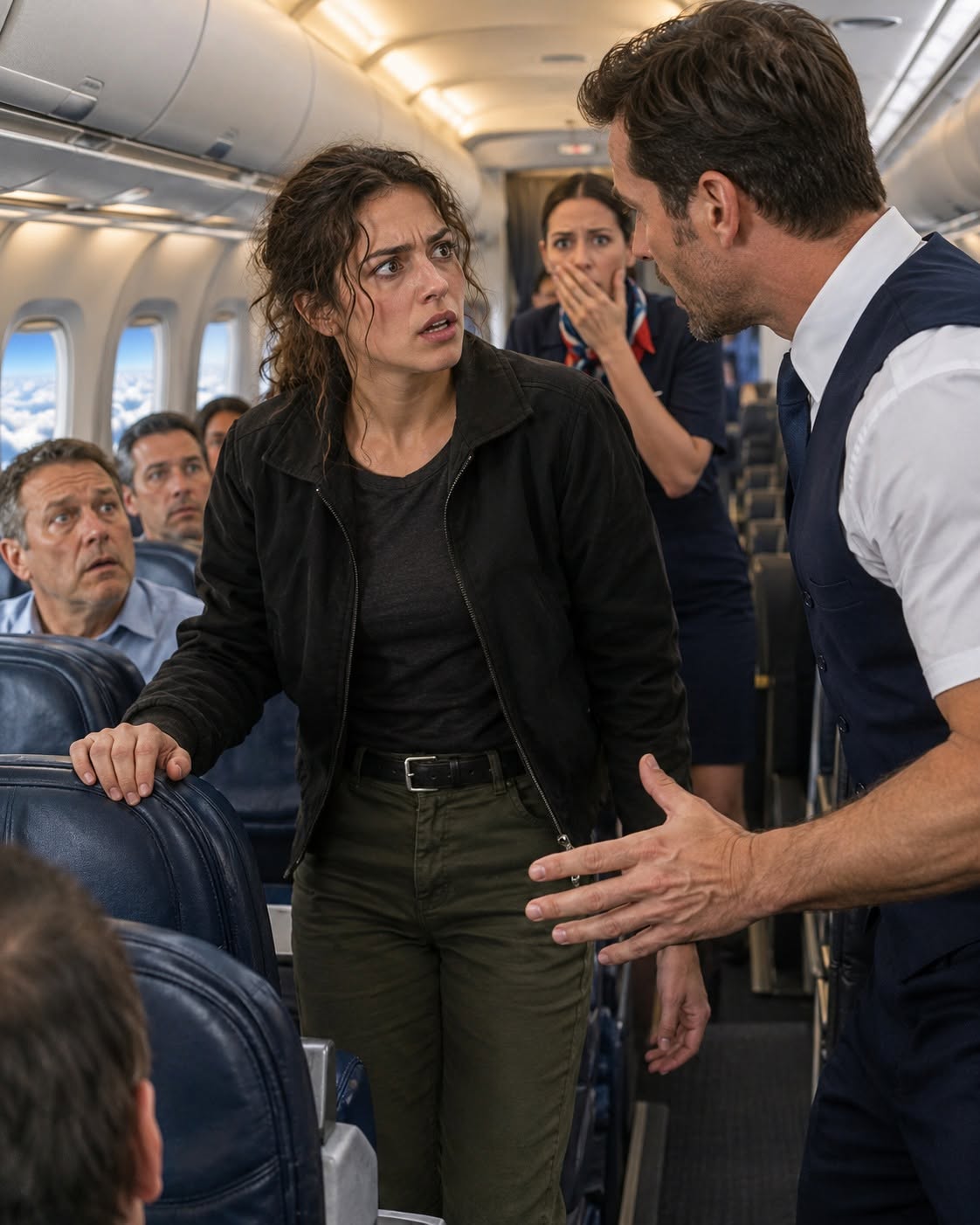
“Don’t chase the noise. Read the display.”
He glanced down.
“Hydraulic system pressure.”
My stomach tightened.
I knew enough about aircraft systems to recognize that this was serious. But I also knew something else: panic could turn a manageable technical problem into a catastrophe.
“Tell me exactly what the warning says.”
He read the message aloud.
I listened carefully, then looked at the aircraft’s status indicators.
“All right. We don’t assume the worst. Let’s get the checklist.”
He reached for the emergency procedures while maintaining control of the aircraft.
Outside, the storm had swallowed the runway completely.
Inside, the cockpit felt smaller than it had a few minutes earlier.
Behind us were more than 150 passengers, each with a family, a story, and someone waiting for them at the other end of the journey.
And I suddenly understood that I was no longer simply a passenger who had volunteered to help.
I was part of the crew responsible for getting them home.
THE WARNING
“Flight 728, this is approach control. We need your current status.”
The co-pilot answered, his voice noticeably calmer.
“We have a hydraulic pressure warning following our missed approach. Aircraft remains controllable. Requesting priority handling and assistance with the checklist.”
“Understood. Emergency services are being notified. We are coordinating an alternate runway.”
I looked at the weather display.
The original diversion airport had two runways. One was exposed to the strongest crosswinds, while the other offered a more favorable approach but was temporarily unavailable because of standing water and a maintenance inspection.
The controller continued.
“Flight 728, we may be able to offer you runway 09 in approximately twelve minutes. Weather conditions are changing. We will provide an update.”
The co-pilot turned toward me.
“Twelve minutes?”
“That’s time we can use.”
He nodded, but I could see the fear returning to his face.
I leaned closer.
“What’s your name?”
He blinked.
“Daniel. Daniel Reeves.”
“All right, Daniel. I’m Mark. And for the next few minutes, we’re going to work together. You fly the aircraft. You follow your approved procedures. I’ll help you think through what we’re seeing.”
He gave a small nod.
“Okay.”
“Good. Now, what does the checklist say?”
He began reading.
We worked through the procedure carefully. I never touched a control without his agreement, and I never pretended to know a system I hadn’t trained on. My experience flying military aircraft gave me a foundation, but a commercial passenger jet was a different machine with different limitations.
The correct procedures mattered more than my pride.
Then the flight attendant’s voice came through the intercom.
“Flight deck, this is Sarah. The captain is still unconscious. We have administered the available emergency care, and a passenger who is a doctor is assisting us.”
Daniel closed his eyes for half a second.
“Is he alive?”
There was a pause.
“Yes. His pulse is present, but he’s still in critical condition.”
Daniel swallowed.
“Please tell him we’re going to get him to a hospital.”
“I will.”
The intercom went silent.
For a moment, neither of us spoke.
I thought about the last time I’d heard a voice over a radio asking me to bring someone home.
It had been my younger brother, Thomas.
He had been a military pilot too. Younger than me by four years, reckless in the way talented young pilots sometimes were, and convinced that nothing bad could happen as long as he kept his hands steady.
During a training mission, his aircraft had gone down.
We had found the wreckage.
We had not found a second chance.
I had returned from that mission months ago, but part of me had never really come home.
That was why I had been sitting in the back of this aircraft, staring out the window, hoping nobody would ask anything of me.
Yet here I was again, surrounded by the same sounds, the same uncertainty, and the same terrible possibility of losing someone before I could say goodbye.
I pushed the memory aside.
This wasn’t about Thomas.
This was about the people still alive in front of me.
THE MESSAGE FROM THE TOWER
A few minutes later, approach control returned.
“Flight 728, we have an update. Runway 09 is available. Wind conditions are currently within reported limits, but there is moderate turbulence on final approach.”
Daniel looked at me.
“Can we make it?”
I didn’t answer immediately.
Instead, I asked him to review the aircraft’s current configuration, fuel situation, and the information coming from the tower.
He did so carefully.
Then something unexpected happened.
A second voice came over the radio.
“Flight 728, this is Captain Miller at the airport operations center. We have been monitoring your situation. I need you to know that the runway is clear, emergency vehicles are positioned, and medical personnel are standing by.”
Daniel took a deep breath.
“Thank you, Captain.”
The controller added something else.
“One more thing. We have received a report that a second aircraft is approaching the airport. Weather has forced it to divert as well. We need to coordinate traffic.”
Daniel’s expression changed.
“Are they going to make us wait?”
The controller responded.
“Negative. You remain our priority. We are coordinating the other traffic to ensure separation.”
I studied the radar display.
The weather system was moving faster than expected.
The airport was trying to create a safe window, but the next few minutes would matter.
Then Daniel noticed something on the flight management display.
“Mark, look at this.”
I leaned forward.
A navigation discrepancy had appeared between two indications.
It wasn’t necessarily a failure, but in poor visibility, any disagreement required careful attention.
“Let’s verify our position with air traffic control,” I said.
Daniel keyed the radio.
“Approach, Flight 728. We have a navigation indication discrepancy. Requesting confirmation of our assigned approach and current position.”
The controller confirmed the aircraft’s position and instructed the crew to cross-check the published approach information.
Daniel read the information back.
His voice was steady.
That was the first moment I realized he was no longer simply trying not to fail.
He was beginning to trust his training.
THE VOICE FROM THE CABIN
As we prepared for the next phase, Sarah contacted the cockpit again.
“Mark? Daniel? There’s something you should know.”
Daniel looked at me.
“Go ahead, Sarah.”
“A little girl in seat 31A has been asking whether we’re going to die.”
I felt my throat tighten.
Sarah continued.
“Her mother is trying to comfort her, but she’s terrified. She keeps asking if the pilot knows what he’s doing.”
Daniel looked down at his hands.
I could almost hear the question forming in his mind.
What if he didn’t?
I pressed the intercom button.
“Sarah, tell the little girl something for me.”
“Yes?”
“Tell her there are two pilots up here who are working very hard to bring everyone home. Tell her we haven’t given up, and neither should she.”
Sarah was quiet for a second.
“What’s her name?”
“Do you know?”
“Emily.”
I repeated the name quietly.
“Tell Emily that I said she’s going to have a story to tell when she gets home.”
Sarah’s voice softened.
“I will.”
When the connection ended, Daniel stared at the instruments.
“How do you do that?”
“Do what?”
“Stay calm when you know how many people are depending on you.”
I looked at him.
“I don’t always stay calm. I just don’t let fear make my decisions.”
He considered that.
Then he nodded.
“I think I understand.”
THE SECOND APPROACH
The airport was now less than twenty minutes away.
The storm continued to move across the region, and the clouds had grown darker.
Approach control gave us updated instructions and confirmed that the runway remained available.
Daniel reviewed the approach briefing with the procedures and limitations specific to his aircraft.
I listened, checking that we were both following the same picture.
Then the radio crackled.
“Flight 728, be advised, wind direction has shifted. Expect additional turbulence on approach.”
Daniel exhaled.
“Of course it has.”
I almost smiled.
“Weather doesn’t care about our schedule.”
He gave a nervous laugh.
It was the first genuine laugh I’d heard from him.
The aircraft began descending under the crew’s planned procedure.
The cockpit lights reflected against the windshield.
For several moments, the runway remained invisible.
Then, through a break in the clouds, we saw the lights.
Daniel’s eyes locked onto them.
“Runway in sight.”
“Confirm your instruments,” I said.
He did.
The aircraft continued toward the airport.
I watched his face rather than the runway.
He was concentrating now. The panic had disappeared, replaced by the quiet intensity of someone who understood the responsibility in front of him.
Then a gust struck.
The aircraft shuddered.
Daniel instinctively tightened his grip.
“Easy,” I said.
“I’m trying.”
“You’re doing fine. Stay with your training.”
Another gust hit.
The runway lights seemed to shift against the windshield.
Daniel looked at me.
“Mark, I don’t like this.”
I didn’t either.
The aircraft was still airborne, the wind was still changing, and the conditions were deteriorating.
Then the tower transmitted:
“Flight 728, wind conditions have exceeded the published crosswind limitation reported for your aircraft. We recommend discontinuing the approach.”
Daniel didn’t hesitate.
“Going around.”
He followed the aircraft’s approved missed approach procedure and informed the tower.
This time, he didn’t need reassurance.
He already knew the decision was right.
But as the aircraft climbed, a new warning appeared.
The hydraulic pressure had dropped further.
Daniel looked at the display.
“Mark…”
“I see it.”
He reached for the checklist.
The aircraft was still flying, but our options were narrowing.
THE CALL NO ONE WANTED TO MAKE
The next few minutes were a blur of radio communications, checklist verification, and careful coordination.
The tower offered another airport, farther away but with more favorable weather.
Daniel reviewed the available information.
“Fuel is sufficient to reach the alternate, but not with much room for additional delays.”
I studied the weather updates.
The second airport was clear enough for an approach, and emergency crews could be ready before we arrived.
“What’s your assessment?” I asked.
Daniel took a breath.
“I believe the alternate is our safest option, provided the aircraft remains within its operating limitations.”
“Then tell the tower.”
He did.
The controller acknowledged the diversion and began coordinating with the other airport.
But there was another problem.
The captain’s condition had worsened.
Sarah’s voice came through the intercom.
“Flight deck, this is Sarah. The doctor says the captain’s condition is deteriorating. He needs a hospital as soon as possible.”
Daniel closed his eyes.
For a moment, I saw the frightened young man again.
Then he opened them.
“Sarah, tell the doctor we’re diverting to an airport with medical teams waiting. We’ll do everything we can.”
“Understood.”
I looked at Daniel.
“You’re doing something important right now.”
He didn’t turn.
“What?”
“You’re making decisions based on the information in front of you, not on the fear of what might happen.”
He swallowed.
“I just wish the captain were awake.”
“So do I.”
I glanced toward the cockpit door.
“More than you know.”
A DIFFERENT KIND OF EMERGENCY
The alternate airport was about twenty-five minutes away.
For the first time since the crisis began, the situation seemed to be moving in a direction we could control.
Then the cabin crew reported another emergency.
A passenger had collapsed.
Sarah explained that the man was elderly and had complained of chest pain before losing consciousness.
The doctor who had been helping the captain was now needed in the cabin.
Daniel looked at me.
“What do we do?”
“We tell the tower. We ask for medical support at the gate and make sure the cabin crew knows the priority is to keep everyone safe.”
He transmitted the update.
The airport confirmed that additional medical personnel would be waiting.
I looked at the flight information.
Two medical emergencies. A hydraulic warning. Severe weather. More than 150 people.
It was the kind of situation that could overwhelm even an experienced crew.
But there was one thing I had learned in the military.
You don’t solve an entire crisis at once.
You solve the next problem.
Then the next.
Then the next.
Daniel seemed to have reached the same understanding.
He was no longer asking me whether we would make it.
He was asking what information we needed to make the next decision.
And that was a much better question.
THE LAST FEW MILES
The alternate airport came into view beneath a break in the clouds.
The runway was longer, the weather more favorable, and emergency vehicles were already positioned.
The tower cleared the aircraft for an approach in accordance with the crew’s operating procedures.
Daniel reviewed the landing configuration and limitations.
I checked the available information with him.
Neither of us spoke unnecessarily.
Then, just as the aircraft began its final descent, the radio crackled.
“Flight 728, this is tower. We have an update from airport medical services.”
Daniel responded.
“Go ahead.”
“The captain’s medical team has requested that you advise us of your estimated arrival. They are prepared to receive him immediately.”
Daniel looked at me.
“Three minutes.”
He transmitted the information.
Then Sarah came over the intercom again.
“Daniel?”
“Yes, Sarah?”
“The captain just moved his hand.”
Daniel’s face changed.
“What?”
“He moved his hand. The doctor says there may be a response.”
I felt something loosen inside my chest.
“Tell him we’re almost there,” Daniel said.
Sarah replied softly.
“I will.”
The runway was now visible.
Daniel followed his trained procedures and made the necessary corrections.
The aircraft descended.
The wheels touched the runway.
A tremendous vibration traveled through the cabin.
Then came the sound of the engines slowing.
For one long second, nobody spoke.
Then the tower transmitted:
“Flight 728, welcome to the airport. Emergency services are approaching your aircraft.”
Daniel exhaled so deeply that it sounded as if he had been holding his breath for the entire flight.
He looked at me.
“We did it.”
I shook my head.
“You did it, Daniel.”
He looked almost offended.
“No. We did.”
I didn’t argue.
Because for the first time in a long time, I understood that I didn’t have to carry everything alone.
WHEN THE DOOR OPENED
The aircraft came to a stop at the designated emergency position.
Medical personnel boarded almost immediately.
The captain was transferred to a stretcher and taken to an ambulance.
The elderly passenger was also taken for treatment.
The remaining passengers were instructed to stay seated while the crew completed the necessary safety procedures.
I stood near the cockpit door.
My hands were shaking.
Not from the landing.
From everything that had happened before it.
Daniel noticed.
“Are you okay?”
I looked at him.
“I think so.”
He smiled weakly.
Then he reached into his pocket and pulled out a small card.
“Can I ask you something?”
“Sure.”
“Would you sign this?”
It was his training identification card.
I stared at it.
“Why?”
“Because I want to remember the person who helped me through the worst day of my life.”
I took the card.
For a moment, I didn’t know what to write.
Then I wrote:
Trust your training. Protect your people. And remember that asking for help is not weakness.
I handed it back.
Daniel read the words.
His eyes became wet.
“Thank you, Mark.”
Before I could respond, Sarah approached us.
Her eyes were red.
“The captain is alive,” she said.
I felt my knees weaken.
“He’s alive?”
She nodded.
“The doctors are treating him. They believe he may recover, but it’s too early to know.”
Daniel lowered his head.
A quiet sob escaped him.
Sarah placed a hand on his shoulder.
“You brought us here.”
Daniel shook his head.
“We all did.”
THE LITTLE GIRL
The passengers were eventually allowed to disembark.
Some were crying. Some were calling family members. Others simply stood on the tarmac, looking at the aircraft as though they couldn’t quite believe they had stepped out of it.
I was preparing to leave when someone tugged gently at my sweatshirt.
I turned.
A little girl stood beside her mother.
She had brown hair tied in two uneven ponytails and was holding a stuffed rabbit.
“Are you the pilot?” she asked.
I crouched down.
“One of them.”
Her mother smiled.
“She wanted to meet you.”
The little girl looked at me seriously.
“Did you save us?”
I thought about the question.
I could have said yes.
It would have been easy.
It might even have made me feel better.
But I looked at her and remembered something Thomas had once told me.
The best pilots were never the ones who believed they could do everything alone.
“No, sweetheart,” I said. “A lot of people helped today. Your captain, your co-pilot, the flight attendants, the doctors, and the people on the ground. We all worked together.”
She considered this.
Then she held out her stuffed rabbit.
“Can he have your autograph?”
I laughed.
“Absolutely.”
I signed a small piece of paper and handed it back.
She hugged the rabbit against her chest.
“Thank you for helping Daniel.”
I smiled.
“You’re welcome.”
Then she ran back to her mother.
I watched them disappear into the crowd.
And for the first time in months, I didn’t feel the same emptiness I had carried onto that plane.
THE CALL FROM THE HOSPITAL
I was waiting near the airport entrance when my phone rang.
The number was unfamiliar.
I answered.
“Hello?”
“Is this Mark?”
“Yes.”
“This is Dr. Collins. I’m calling from the regional medical center. The captain asked us to contact you if possible.”
My heart began beating faster.
“How is he?”
“He is stable. The medical team believes he suffered a serious cardiac event, but he received treatment quickly. He’s conscious now.”
I closed my eyes.
“That’s wonderful.”
“There’s something else. He wants to speak with you and the young co-pilot.”
I looked through the glass doors.
Daniel was standing near a group of passengers, talking with an airport employee.
“I’ll let him know.”
An hour later, we arrived at the hospital.
The captain was in a recovery room, pale and exhausted, with monitoring equipment beside his bed.
He was older than I had imagined, perhaps in his late fifties.
His name was Richard Hayes.
When he saw Daniel, he tried to sit up.
“Don’t,” the doctor warned.
Richard smiled faintly.
“Daniel.”
The young co-pilot approached the bed.
“Captain.”
Richard reached for his hand.
“I heard what happened.”
Daniel looked down.
“I wasn’t sure I could do it.”
Richard squeezed his hand.
“But you did.”
His eyes shifted toward me.
“And you must be Mark.”
I nodded.
“Yes, sir.”
Richard studied me for a long moment.
“Thank you for staying with my crew.”
I shook my head.
“They did the hard work.”
The captain smiled.
“That’s what good leaders say.”
Then his expression became serious.
“Daniel, there’s something I want you to remember. A captain isn’t measured by how many emergencies he avoids. He’s measured by how he responds when something goes wrong.”
Daniel’s eyes filled again.
“I thought I was going to lose everyone.”
Richard shook his head.
“You didn’t. You brought them home.”
THE TRUTH ABOUT THOMAS
As we left the hospital, Daniel walked beside me.
For a while, neither of us spoke.
Then he asked:
“Mark, can I ask why you were so calm?”
I stopped.
The airport lights were visible in the distance.
I had avoided talking about Thomas for months.
But something about that day had changed.
“My younger brother was a fighter pilot,” I said.
Daniel waited.
“His aircraft went down during a training mission. I was part of the team sent to find him.”
Daniel’s expression softened.
“I’m sorry.”
I nodded.
“I spent a long time believing I should have done something differently. That if I had been better, faster, smarter, maybe things would have ended another way.”
I looked at him.
“When I got on this flight, I wasn’t looking for another emergency. I was trying to forget the last one.”
Daniel listened carefully.
“But when I saw you in that cockpit, I recognized the look in your eyes. It was the same look I had after my brother died. The belief that if you made one mistake, everyone would pay for it.”
I took a breath.
“I couldn’t change what happened to Thomas. But I could make sure you didn’t have to face this moment alone.”
Daniel looked down at the pavement.
“Do you think your brother would be proud?”
I smiled sadly.
“I hope so.”
Then I added:
“I think he would be proud of you too.”
THE LETTER
Three weeks later, I received an envelope at my home.
There was no return address.
Inside was a photograph of Flight 728’s crew standing together on the airport runway.
Daniel was in the middle, smiling.
Sarah stood beside him.
Captain Hayes was in a wheelchair, looking tired but happy.
On the back of the photograph, someone had written:
To the man who reminded us that courage isn’t about never being afraid. It’s about knowing what matters when fear arrives.
There was also a letter.
It was from Daniel.
He wrote that he had spent the weeks after the emergency reviewing what happened, not just the technical details but the decisions, the communication, and the moments when he had nearly allowed fear to take over.
He had spoken with Captain Hayes about returning to the cockpit.
He had also requested additional emergency training.
But the final paragraph was what stayed with me.
“Mark, I used to think becoming a good pilot meant being able to handle everything alone. That day taught me the opposite. The best pilots know their limitations, listen to others, and never let pride stand between them and the safety of their passengers. I hope someday I can help someone the way you helped me.”
I folded the letter carefully.
Then I placed it beside a photograph of Thomas.
For the first time, the two memories no longer felt like separate pieces of my life.
One reminded me of the brother I had lost.
The other reminded me of the lives that could still be protected.
ONE YEAR LATER
Exactly one year after the emergency, I received another phone call.
It was Daniel.
“Mark, are you busy?”
“Not particularly. What’s going on?”
“I wanted to invite you somewhere.”
“Where?”
“The airport.”
I laughed.
“That sounds suspicious.”
“Just come. You’ll understand.”
When I arrived, Daniel was waiting near the entrance with Captain Hayes and Sarah.
The captain looked healthier, though he still walked with a cane.
Daniel shook my hand.
“We’ve been working on something.”
He led me into a conference room.
Inside were several airline employees, flight attendants, pilots, and medical professionals.
A sign stood at the front of the room.
THE OPEN COCKPIT INITIATIVE: TRAINING FOR THE MOMENTS THAT MATTER
I looked at Daniel.
He smiled.
“After what happened, we realized how important it is for crews to communicate clearly, recognize emergencies, and know how to request help without hesitation.”
Captain Hayes stepped forward.
“We’re developing additional training focused on teamwork, decision-making under pressure, and coordination with emergency responders.”
Daniel handed me a folder.
“We’d like you to speak at our first session. Not as someone who saved a plane, but as someone who understands what happens when people are afraid to ask for help.”
I looked at the sign again.
For a moment, I couldn’t speak.
Then I thought about Thomas.
About the things we had never said.
About the guilt I had carried for so long.
And about the 150 people who had walked away from an aircraft that day.
“Yes,” I finally said.
“I’d be honored.”
THE LAST CALL
During the training session, Daniel stood before a group of young pilots.
He described the emergency without exaggeration.
He talked about the moment the captain collapsed, the storm, the warnings, and the decision to divert.
Then he told them about the man in the back of the plane.
“The most important thing Mark taught me wasn’t how to stay calm,” Daniel said.
“It was that no one should ever confuse courage with doing everything alone.”
He looked around the room.
“Sometimes the bravest thing you can say is, ‘I need help.'”
When he finished, the room was silent.
Then someone in the back raised a hand.
“What’s the most important lesson you learned from that flight?”
Daniel thought for a moment.
“That every person on an aircraft matters. The captain, the co-pilot, the flight attendants, the mechanics, the air traffic controllers, and the passengers. Safety is never one person’s achievement.”
He glanced toward me.
“And sometimes, a stranger can remind you that your life still has a purpose.”
I lowered my eyes.
I could feel the old grief rising, but it no longer felt like a weight pulling me under.
It felt like a memory I could finally carry without being crushed by it.
After the session, Daniel walked over.
“Do you think Thomas would have liked what we’re doing?”
I looked at the photograph of my brother in my wallet.
His smile was as familiar as ever.
“I think he would have loved it.”
Daniel nodded.
Then he handed me a small envelope.
Inside was a photograph of the little girl, Emily.
She was standing beside her mother, holding the same stuffed rabbit.
Underneath the photograph was a handwritten note.
Dear Mark, I am not scared of airplanes anymore. When I grow up, I want to help people too.
I read it twice.
Then I looked out through the airport windows.
A passenger jet was moving slowly toward the runway.
Somewhere inside it, people were talking, laughing, sleeping, or looking forward to seeing someone they loved.
They had no idea how many people worked behind the scenes to keep them safe.
And perhaps that was how it should be.
Because the greatest success in aviation is often invisible.
It’s the flight that lands safely.
The family that reunites.
The child who grows up believing the world is still full of possibilities.
I had boarded Flight 728 hoping nobody would notice me.
I had wanted to disappear into the crowd and leave my grief behind.
Instead, I had found something I thought I had lost forever.
A reason to keep going.
As I walked toward the exit, my phone vibrated.
A message from Daniel appeared on the screen.
Captain Hayes says the next generation of pilots is waiting for us. Ready for another mission?
I smiled.
For the first time since Thomas died, the word mission no longer sounded like a reminder of what I had lost.
It sounded like a promise of what I could still give.
I typed back:
Always.
And somewhere beyond the airport windows, another aircraft lifted into the sky.
This time, I watched it climb without fear.
Because I finally understood something that had taken me years, and one impossible flight, to learn:
You cannot always save everyone. You cannot control every storm. But you can choose to stand beside someone when the world begins to fall apart. And sometimes, that is enough to change everything.