“If you think you know so much about flying, why don’t you get in the cockpit and prove it?”
“There’s something I need to apologize for. And something I’d like to offer you…”
The hangar fell silent.
I looked at her, waiting.
The billionaire, whose name was Victoria Sterling, had spent the last few minutes studying my military identification card. Her expression had changed from embarrassment to something I couldn’t quite understand.
“My father used to tell me stories about a pilot who flew through enemy territory during Operation Nightfall,” she said quietly. “He said that pilot saved an entire medical evacuation team after their aircraft was damaged. He also said that pilot disappeared from military aviation shortly afterward.”
I felt something tighten in my chest.
“Your father was General Richard Sterling?”
Victoria nodded.
“He was.”
For a moment, the hangar seemed to disappear. I could almost hear the distant roar of military engines and feel the vibration of an aircraft beneath my hands.
General Sterling had been the commanding officer during my final deployment.
He had also been the man who personally handed me a medal after the mission that changed my life forever.
I hadn’t heard his name in nearly seven years.
“He told me about you,” Victoria continued. “He said you were one of the finest pilots he had ever known. He also said that you lost someone that night.”
I lowered my eyes.
“My best friend,” I replied. “Captain Daniel Hayes.”
Victoria’s expression softened.
“My father never forgot him.”
Neither had I.
Daniel had been more than a fellow pilot. He had been the closest thing I had to a brother. We had trained together, flown together, and survived situations that most people couldn’t imagine.
But during our final mission, his aircraft was hit.
I had tried to reach him.
I had done everything I could.
And I had failed.
At least, that was what I had believed for all those years.
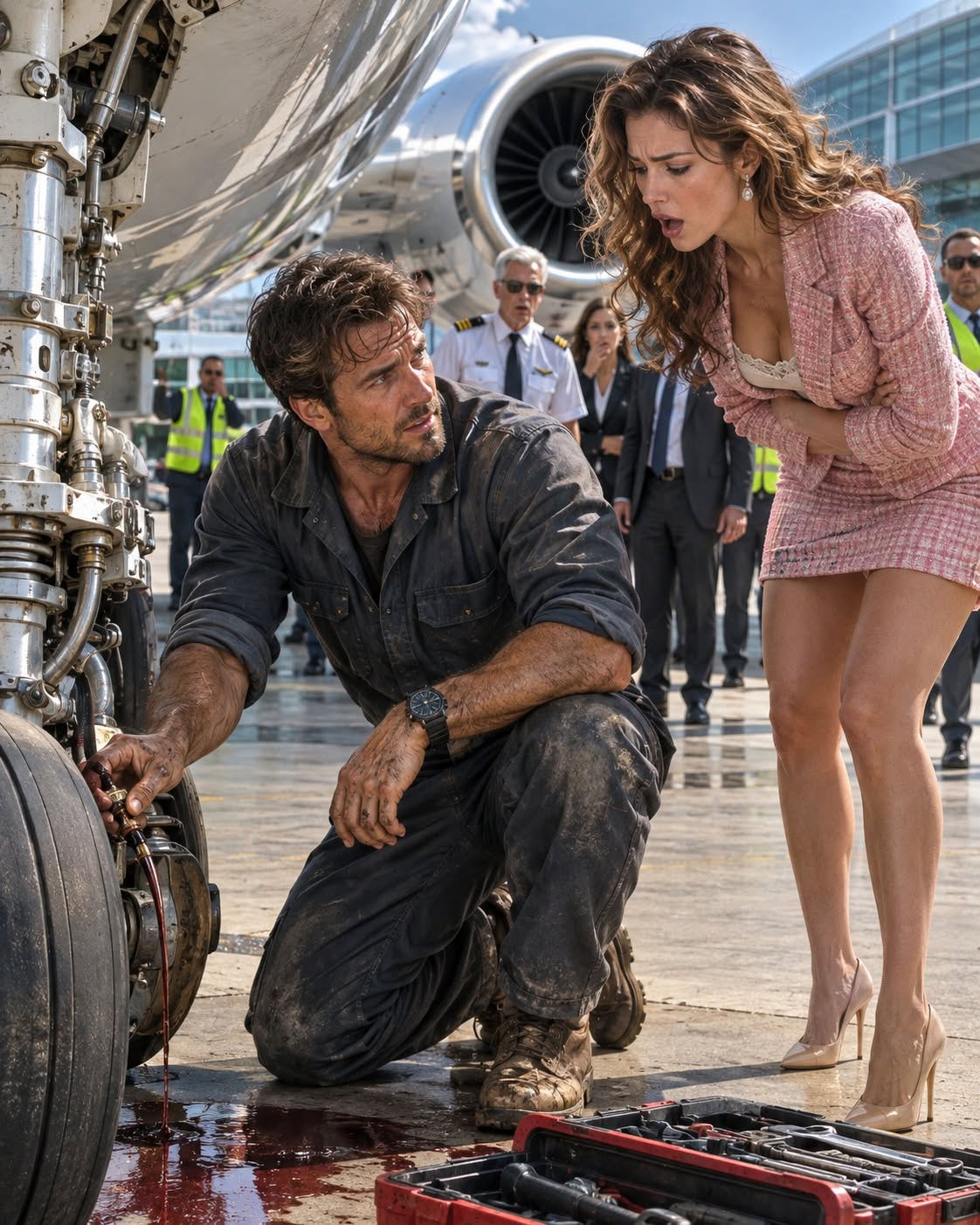
Victoria took a breath.
“My father passed away eight months ago. Before he died, he left me a letter. He specifically asked me to find you if I ever had the opportunity.”
She reached into her handbag and pulled out a folded envelope.
My name was written across the front.
Not my full name.
Just the nickname Daniel used to call me.
“Ghost.”
My hands went cold.
I hadn’t seen that name written anywhere since the military investigation.
I carefully opened the envelope.
Inside was a letter written in General Sterling’s familiar handwriting.
The first sentence made my heart pound.
If you’re reading this, there’s something you need to know about the night Daniel Hayes disappeared.
I stopped breathing for a moment.
I read the next few lines.
Then I read them again.
According to General Sterling, the official investigation had never revealed the complete truth about the accident.
Daniel’s aircraft hadn’t simply been destroyed by enemy fire.
A mechanical warning had been reported before takeoff, but the maintenance report had been altered. Someone had approved the aircraft for flight despite knowing about a serious hydraulic defect.
Daniel had been sent into the mission with an aircraft that should never have left the ground.
And there was more.
The investigation had uncovered evidence that Daniel had successfully ejected before his aircraft crashed.
His body had never been recovered.
I stared at the letter.
“Are you saying he might have survived?”
Victoria nodded slowly.
“My father spent years trying to find out what happened. He never stopped believing that Daniel could have survived. But the military records were incomplete, and the investigation was eventually closed.”
My knees felt weak.
For seven years, I had carried the belief that my friend had died because I couldn’t save him.
I had blamed myself for something I might never have been responsible for.
“Why didn’t anyone tell me?”
Victoria looked away.
“My father said the evidence disappeared into a classified investigation. He was advised to stop asking questions. By the time he had enough information to challenge the official report, several important witnesses had retired or vanished.”
I folded the letter carefully.
For the first time in years, the past wasn’t just a painful memory.
It was an unanswered question.
And I needed an answer.
Before I could say anything, Victoria spoke again.
“My father also left instructions concerning his aviation company. He wanted someone with your experience to oversee its safety division. I would like to offer you the position of Chief Flight Safety Officer.”
I almost laughed.
A few hours earlier, she had mocked me for being a mechanic.
Now she was offering me an executive position.
“I appreciate the offer,” I said. “But I need to ask you something first.”
“Anything.”
“Did your father ever find Daniel?”
Victoria shook her head.
“No. But he found something else.”
She reached into her bag again and handed me a small photograph.
It showed a man standing beside an old aircraft in front of a hangar.
The photograph was faded, but the man’s face was unmistakable.
Daniel.
My hands began shaking.
On the back of the photograph was a date.
Three years after the crash.
And beneath it were five handwritten words.
He is alive. Keep looking.
I couldn’t speak.
For seven years, I had believed my best friend was gone.
Now, suddenly, I had a reason to hope.
But hope can be dangerous when it comes after years of grief.
That evening, I went home earlier than usual.
My daughter, Lily, was sitting at the kitchen table, coloring a picture of an airplane.
She was eight years old, with her mother’s brown eyes and a smile that always reminded me why I kept going.
“Daddy!”
She ran toward me.
“Did you really fly today?”
I picked her up.
“Yes, sweetheart.”
Her face lit up.
“Like in your old pictures?”
“Exactly like that.”
She looked at me carefully.
“Then why are you sad?”
I sat down beside her.
“Sometimes, when something good happens, it reminds us of something painful that happened a long time ago.”
She thought about that for a moment.
“Is it because of your friend?”
I nodded.
She put down her crayons.
“Maybe he would be happy that you flew again.”
I looked at her.
Children sometimes say things that adults spend years trying to understand.
I kissed her forehead.
“Maybe you’re right.”
The next morning, I met Victoria at her company’s headquarters.
She had arranged for a small research team to review her father’s documents. There were photographs, flight logs, maintenance records, and several handwritten notes.
We spent hours going through everything.
Most of it was incomplete.
But one document caught my attention.
It was a cargo manifest from a humanitarian organization operating near the border of a neighboring country.
The manifest listed a civilian aircraft that had transported an unidentified injured man from a remote military hospital.
The date matched the photograph of Daniel.
There was no name.
Only a medical reference number.
I looked at Victoria.
“Where did you get this?”
“My father’s private archive. He received it from someone who was investigating the accident.”
“Can we contact the organization?”
“We already tried. It no longer exists.”
I leaned back.
For a moment, disappointment washed over me.
Then I noticed something written in the corner of the document.
A registration number.
I copied it into my notebook.
“What’s that?” Victoria asked.
“An aircraft registration. If this number is accurate, we can trace the company that operated the plane.”
She studied me.
“You really think you can find him?”
I looked at the photograph again.
“I don’t know. But I owe it to him to try.”
Over the following days, we followed every lead.
The aircraft had once belonged to a private medical transportation company. The company had been sold twice, and its records had been transferred to a regional aviation archive.
After several phone calls and a great deal of paperwork, we found an old passenger report.
One name appeared repeatedly.
David Miller.
It was an ordinary name.
But the medical notes mentioned an old shoulder injury and a surgical scar on the left side of the neck.
Daniel had both.
I remembered the scar.
He had gotten it during training after slipping while climbing out of a helicopter.
My heart began racing.
We had a possible identity.
The report also listed a small coastal town as the man’s destination.
Victoria arranged for us to travel there.
Before leaving, I sat with Lily in her bedroom.
I didn’t want to disappear without explaining anything.
“Daddy has to go somewhere for a few days,” I told her.
“Where?”
“I’m going to look for an old friend.”
“Is he lost?”
I smiled faintly.
“Something like that.”
She ran to her bookshelf and took down one of my old military photographs.
It showed Daniel and me standing beside a fighter aircraft, both of us laughing.
She handed it to me.
“Take this. Maybe he’ll remember you.”
I held the photograph against my chest.
“Thank you, sweetheart.”
She hugged me tightly.
“And Daddy?”
“Yes?”
“Don’t forget to come home.”
“I promise.”
The coastal town was smaller than I expected.
Fishing boats lined the harbor, and the narrow streets were filled with little shops and weathered houses.
The local clinic had been our first destination.
An elderly nurse listened patiently as I explained what we were looking for.
When I showed her Daniel’s photograph, she froze.
“I know this man,” she whispered.
My heart nearly stopped.
“You do?”
She nodded.
“He worked at a small repair workshop near the harbor. He was quiet. Never talked much about his past.”
“Where is he now?”
The nurse pointed toward the end of the street.
“An old airfield outside town. He helps maintain aircraft there.”
I thanked her and hurried outside.
Victoria followed me.
The old airfield was surrounded by tall grass and a rusted fence.
A small hangar stood near the runway.
An engine was running inside.
I approached the entrance slowly.
A man was leaning over the open engine compartment of a small aircraft.
His hair was shorter than I remembered.
His shoulders seemed narrower.
There was a slight limp in his walk.
But I recognized him immediately.
“Daniel?”
The wrench in his hand dropped to the floor.
He turned around.
For several seconds, neither of us moved.
Then his eyes widened.
“Ghost?”
My throat closed.
I took one step forward.
Then another.
He stared at me as if he were looking at someone who had returned from the dead.
“You’re alive,” I whispered.
Daniel let out a shaky laugh.
“So are you.”
I don’t remember who moved first.
One moment we were standing several feet apart, and the next we were holding each other like two men who had spent seven years trying to find their way home.
I could feel his shoulders shaking.
I was crying too.
“I thought you were dead,” I managed to say.
“I thought you were.”
We sat on an old wooden bench outside the hangar.
Daniel told us what had happened.
He had ejected after his aircraft became uncontrollable, but his parachute had been damaged. He survived the landing, although he suffered serious injuries.
A group of local civilians found him and took him to a remote clinic.
He had been unconscious for weeks.
When he finally recovered, he discovered that the military had officially declared him dead.
He tried contacting the base, but his messages never reached the people he was trying to contact.
Then he learned that the crash had triggered an investigation involving several senior officers.
Someone had warned him that returning could put the people who had saved his life in danger.
He had been moved between medical facilities before eventually settling in the coastal town.
“Why didn’t you keep trying?” I asked.
Daniel looked down at his hands.
“I did. For years. But I had no proof of what happened. And every time I contacted someone, I was told the investigation was closed.”
He paused.
“Then I heard about your wife’s accident.”
I looked up.
“What?”
“I saw your name in an old military newsletter. It said you had left aviation and returned to civilian life. I didn’t want to bring more pain into your life.”
I stared at him.
“You thought I wouldn’t want to see you?”
“I thought you needed peace.”
I shook my head.
“You idiot. I spent seven years thinking I had failed you.”
Daniel’s eyes filled with tears.
“And I spent seven years thinking you had forgotten me.”
For a long moment, neither of us spoke.
Then Daniel turned toward Victoria.
“Your father was a good man,” he said. “He tried to help me.”
Victoria nodded.
“He never stopped looking.”
Daniel’s expression became serious.
“Then there’s something you both need to know.”
He disappeared into the hangar and returned carrying a small metal case.
Inside were several documents, photographs, and a recording device.
He placed them on the bench.
“I kept these because I knew one day someone might finally listen.”
The documents included original maintenance reports from before the mission.
They showed that the aircraft’s hydraulic system had failed an inspection.
The repair had never been completed.
Yet the aircraft had been cleared for departure.
There was also a signed authorization from a senior maintenance officer.
The same officer had later been promoted to oversee safety operations at a major aviation contractor.
Victoria read the name.
Her face went pale.
“That’s Thomas Reed.”
I looked at her.
“Who is he?”
“He’s currently the chairman of our company’s aircraft maintenance division.”
For a moment, nobody moved.
Victoria looked at the papers again.
“My father suspected someone inside the company was involved. But he never found the original documents.”
Daniel nodded.
“Reed wasn’t working alone. There were people who wanted the mission completed regardless of the aircraft’s condition. They altered the records to protect themselves.”
I felt anger rising inside me.
Not because I wanted revenge.
But because people had risked lives for a deadline and then hidden the truth.
And Daniel had spent seven years living as a ghost because of it.
Victoria carefully gathered the documents.
“We’re taking these to the authorities.”
Daniel looked uncertain.
“Are you sure?”
She met his eyes.
“My father spent the last years of his life searching for the truth. I’m not going to bury it now.”
The following week was unlike anything I had experienced in civilian life.
Lawyers were contacted.
Investigators were brought in.
The documents were examined by independent aviation experts.
Daniel gave a formal statement.
I provided my own testimony about the mission and the maintenance concerns I had raised before departure.
At first, Thomas Reed denied everything.
He claimed the documents were fabricated and accused us of trying to damage his reputation.
Then investigators recovered an archived recording from an old military communications system.
It contained a conversation between Reed and another officer.
They discussed the hydraulic failure.
They discussed the risks.
And they discussed how to make the paperwork appear legitimate.
The recording changed everything.
Reed was suspended.
The investigation expanded.
Several former officers were questioned, and the military reopened its review of the accident.
For the first time in seven years, Daniel’s name was officially restored to the records.
He was no longer listed as deceased.
But the biggest surprise came a few weeks later.
Victoria invited me to her father’s old office.
She placed a wooden box on the desk.
“There’s one more thing my father wanted you to have.”
I opened it.
Inside was a medal.
Not the military medal I had received years earlier.
This one belonged to Daniel.
It had been recovered from the crash site during a later investigation.
Beneath it was another letter.
I unfolded it carefully.
To the two pilots who taught me what courage really means,
I have spent much of my life surrounded by people who measure success in money, titles, and power. But the men I remember most are the ones who risked everything for someone else.
Daniel Hayes and his wingman never asked whether the mission would make them famous. They simply did what they believed was right.
If this letter reaches you, I hope you have both found your way home.
Richard Sterling.
I couldn’t finish reading.
I closed the letter and held it for a moment.
Victoria stood quietly beside me.
“My father wanted you to know that he never blamed you.”
I swallowed hard.
“For years, I thought I had abandoned everything.”
She shook her head.
“You didn’t abandon aviation. You were hurt. There’s a difference.”
Those words stayed with me.
I had spent years confusing survival with surrender.
And perhaps that was the first thing I needed to forgive myself for.
A month later, Victoria asked me to visit her company headquarters again.
This time, the conference room was filled with pilots, engineers, and safety specialists.
She stood at the front.
“Today, we’re announcing a new aviation safety initiative. It will operate independently of our commercial divisions. Its purpose will be to investigate maintenance failures, protect flight crews, and ensure that no employee is punished for reporting a safety concern.”
She turned toward me.
“We want someone leading it who understands what happens when people stop listening.”
Then she announced my appointment as director of the new program.
I accepted.
But I made one condition.
“I want the authority to ground any aircraft that fails an independent safety inspection. No exceptions. No matter how important the passenger is. No matter how much money is involved.”
Victoria smiled.
“Agreed.”
The executives in the room applauded.
I didn’t feel like a hero.
I felt like a man who had finally found a reason to use his experience again.
Still, I wasn’t sure I wanted to return to flying.
My hands had remembered the controls, but my heart was still carrying the weight of the past.
Daniel noticed.
One afternoon, he came to visit me at the hangar.
He was walking more comfortably now, although his injuries would always remind him of the accident.
“You know,” he said, looking at an aircraft parked outside, “I used to think the hardest part of surviving was getting out of the wreckage.”
I glanced at him.
“What changed?”
“Realizing that I had to live with everything that happened afterward.”
I nodded.
He leaned against the aircraft.
“You flew that medical mission. You found me. You helped expose what happened. What else are you waiting for?”
I smiled slightly.
“Maybe I’m afraid.”
Daniel laughed.
“Good. Fear means you understand what’s at stake. Just don’t let it make every decision for you.”
A few days later, I received an invitation to participate in a special aviation demonstration for young pilots.
The event would take place at the airport where I had worked as a mechanic.
I almost declined.
Then Lily found the invitation on the kitchen counter.
“Daddy, are you going to fly?”
I looked at her.
“I haven’t decided.”
She placed her hands on her hips.
“You always tell me that when something is difficult, I should try before I say I can’t.”
I raised an eyebrow.
“Do I?”
“Yes. You said it when I was afraid to ride my bicycle.”
I couldn’t help laughing.
She folded her arms.
“So?”
I looked at the invitation again.
“Okay. I’ll think about it.”
She smiled.
“That means yes.”
On the morning of the demonstration, the airport was crowded.
Several aircraft stood along the runway.
Young students from aviation schools had gathered to meet experienced pilots and learn about flight safety.
Victoria was there.
Daniel was there too.
And, sitting in the front row with a small pink backpack, was Lily.
I walked toward the aircraft wearing a clean flight suit.
For the first time in years, I wasn’t holding a wrench.
I was carrying my old pilot’s helmet.
Lily ran toward me.
“Daddy! You look like your pictures!”
I knelt and adjusted her backpack.
“Do you remember what you told me?”
She nodded.
“Don’t be afraid.”
I smiled.
“That’s right.”
Then I climbed into the cockpit.
The familiar smell of aviation fuel filled the air.
I ran my fingers over the controls.
For a brief moment, I remembered the crash, the hospital, the long nights, and the empty chair at my kitchen table after my wife died.
I remembered Daniel disappearing.
I remembered believing that the best part of my life was already behind me.
Then I heard Lily’s voice over the radio.
“Daddy, are you ready?”
I looked toward the ground.
She was standing beside Victoria, waving both hands.
I pressed the microphone.
“Ready, sweetheart.”
The engine started.
The aircraft rolled down the runway.
And then, gently, it rose into the sky.
I wasn’t flying to escape anything.
I wasn’t trying to prove the executives wrong.
I wasn’t trying to erase the past.
I was flying because I had finally learned that losing someone doesn’t mean you have to lose yourself.
The demonstration lasted only twenty minutes.
But when I returned to the runway, something inside me felt different.
Lily ran toward me as soon as I climbed out.
“Daddy! You did it!”
I lifted her into my arms.
“Yes, sweetheart. We did it.”
Daniel approached and shook my hand.
“Not bad for an old mechanic.”
I laughed.
“Not bad for a dead man.”
We both laughed, although there were tears in our eyes.
Victoria joined us.
“I’ve been thinking about something,” she said.
“What?”
“My father used to say that the greatest leaders aren’t the people who know everything. They’re the people who are willing to listen when someone else knows more.”
She glanced toward the hangar.
“I wish I had understood that before I met you.”
I looked at her.
“You understood it when you decided to listen.”
She smiled.
That evening, after everyone had gone home, I returned to the old maintenance workshop.
My toolbox was still there.
The same one I had carried through years of repairing aircraft.
I opened it and looked at the worn wrenches inside.
For a long time, I had believed that being a mechanic meant I had lost my identity as a pilot.
Now I understood something different.
The hands that repaired an aircraft were just as important as the hands that flew it.
One kept people in the air.
The other made sure they could return safely.
Neither job was beneath the other.
A few months later, the investigation into the old military accident reached its conclusion.
Thomas Reed and two former officers were charged with falsifying safety records and concealing critical maintenance failures. The findings also led to new independent reporting procedures across several aviation operations.
Daniel received formal recognition for surviving the mission and for the courage he had shown in preserving the evidence.
But when reporters asked him what mattered most, he gave an answer nobody expected.
“Getting my name back is nice,” he said. “But seeing my friend fly again means more to me.”
The company also established a scholarship in the names of Daniel Hayes and the pilots who had lost their lives during the operation.
It would help young people from ordinary families train for careers in aviation, regardless of their financial circumstances.
I volunteered to mentor the first group of students.
On the first day, a nervous young man approached me.
He wore an oversized uniform and carried a notebook covered in aviation sketches.
“Sir, can I ask you something?”
“Of course.”
“Do you think someone who has failed before can still become a good pilot?”
I studied his face.
There was fear in his eyes.
The same fear I had carried for years.
I rested a hand on his shoulder.
“Let me tell you something. A good pilot isn’t someone who never makes mistakes. A good pilot is someone who respects the responsibility of every decision, learns from what went wrong, and never lets pride become more important than safety.”
He nodded slowly.
“And if something terrible happens?”
“Then you take the time you need to heal. You ask for help. And when you’re ready, you decide what comes next. Your worst day doesn’t get to decide the rest of your life.”
He smiled.
“Thank you, sir.”
I watched him walk toward the aircraft.
For a moment, I thought about my wife.
She had always believed I was stronger than I realized.
I wished she could have seen Lily that day, proudly telling everyone that her father was a pilot again.
I wished she could have seen Daniel standing beside me, alive and laughing.
But life doesn’t give us every person back.
Sometimes it gives us a second chance to appreciate the people who are still here.
That night, Lily and I sat on the porch watching the stars.
She rested her head against my arm.
“Daddy?”
“Yes?”
“Are you happy now?”
I looked at the sky.
I thought about the years I had spent believing happiness meant returning to the man I used to be.
But I wasn’t that man anymore.
I was a father.
A mechanic.
A pilot.
A friend who had found his brother again.
And a man who had finally made peace with the things he couldn’t change.
“Yes,” I said softly. “I think I am.”
She smiled.
“Good. Because I like this version of Daddy.”
I laughed and kissed the top of her head.
“Me too, sweetheart.”
A few seconds passed before she spoke again.
“Can I be a pilot when I grow up?”
I looked at her with surprise.
“Of course you can.”
“Even if people say girls can’t?”
I turned toward her.
“Especially then. But remember, you don’t have to become a pilot to prove anything to anyone. You should choose the life that makes you feel useful, honest, and happy.”
She thought about that.
“Can I fly you somewhere when I’m older?”
I smiled.
“That’s a promise I’ll hold you to.”
Years later, I would remember that conversation more clearly than the sound of any engine.
Because the most important flight I ever made wasn’t the military mission, the medical emergency, or the demonstration that brought me back to aviation.
It was the journey from a man who believed his life had ended to a father who finally understood that life could begin again.
I still worked around aircraft.
I still carried a wrench in my toolbox.
And sometimes, when a young employee made a mistake or asked a question that seemed obvious, I remembered the day a billionaire laughed at a mechanic.
I never forgot how it felt to be judged by a uniform instead of listened to for what I knew.
So I made one rule in every department I led:
Nobody is too important to listen, and nobody is too ordinary to have something worth saying.
Victoria later told me that the day she first saw me standing in that hangar, she had assumed my dirty uniform meant I was unimportant.
She said she had never been more wrong about another person.
I told her that I hadn’t needed an apology nearly as much as I had needed someone to listen before a disaster happened.
She never forgot that.
And neither did I.
Because money can buy an aircraft, a runway, and even an entire aviation company.
It can buy impressive titles and surround a person with people who agree with everything they say.
But it cannot buy wisdom.
It cannot buy courage.
And it certainly cannot buy the trust of someone whose life depends on your decisions.
I learned that lesson in the sky.
I learned it again in the hangar.
And I hope I teach it to my daughter every single day.
Sometimes, the person standing quietly in the corner is the one who knows exactly what everyone else has overlooked.
Sometimes, the person everyone underestimates is carrying a story nobody has bothered to hear.
And sometimes, the greatest comeback isn’t about becoming famous, getting rich, or proving your enemies wrong.
Sometimes, it’s simply about finding the courage to begin again.
Because your past may explain why you stopped flying, but it should never be allowed to decide whether you can fly again.