I was standing beside my battered yellow crop duster on a Kansas runway when Colonel Vance publicly called me a coward
Part 2
The canyon appeared beneath me like a wound carved through the earth.
Dark stone walls rose on both sides, swallowing the morning light.
I descended slowly.
Every instinct I had was awake.
The aircraft moved cleanly.
For the first few minutes, nothing happened.
Then my compass twitched.
I watched it rotate.
Once.
Twice.
Then it spun uselessly.
My radio crackled.
Static filled my helmet.
I checked the backup navigation.
Nothing.
The screens went black.
My breathing stopped for half a second.
Six years disappeared.
I was back inside the clouds.
Back with Aaron.
Back inside those eleven minutes that had followed me into every quiet night in Kansas.
Then another warning light vanished.
Then another.
Until the cockpit was completely dark.
The phantom blackout had returned.
I heard myself whisper one word.
“Aaron.”
For years, I had believed that name belonged to the past.
Now it felt like a hand reaching through time.
I had two choices.
Fight the silence.
Or accept it.
I closed my eyes for one second.
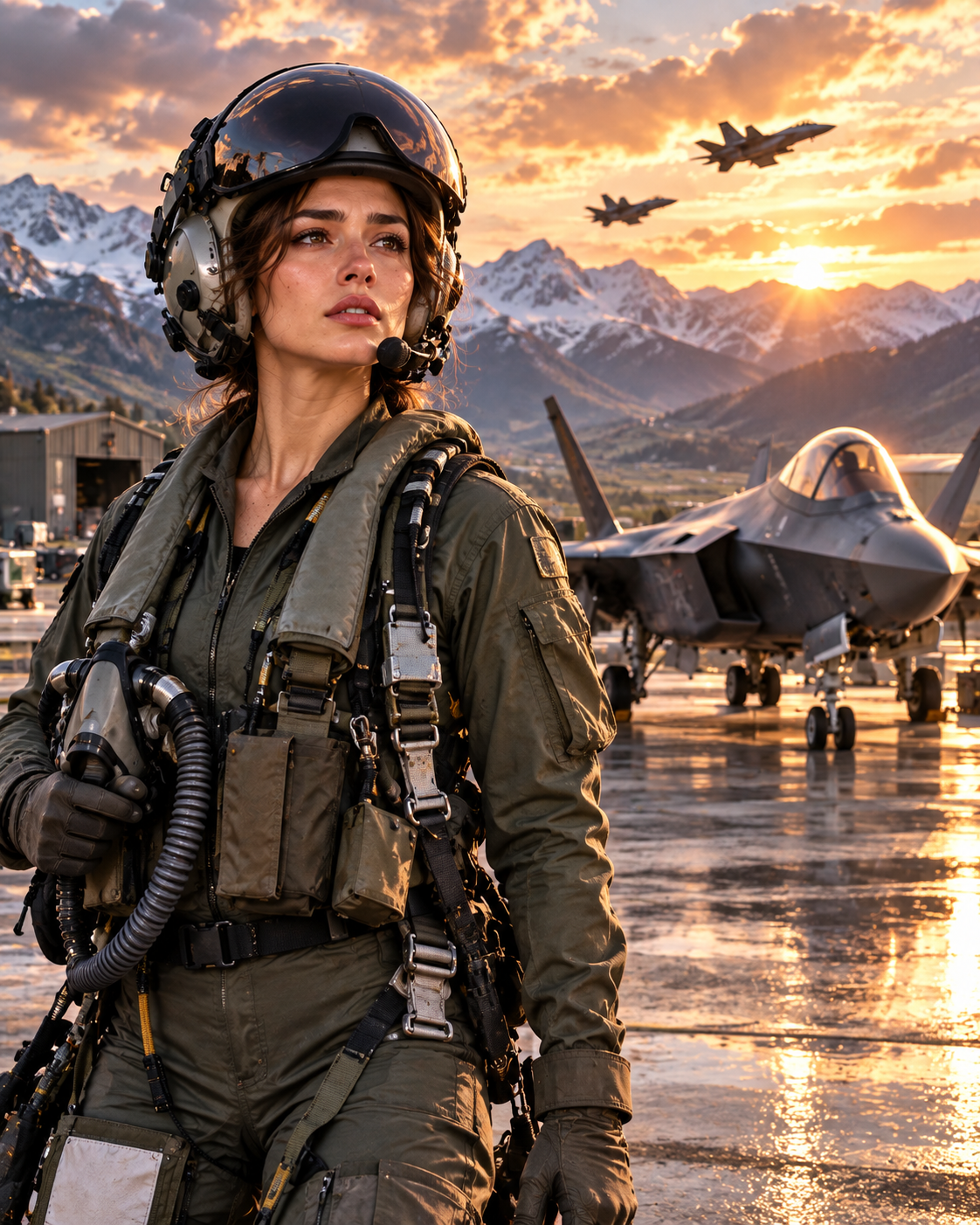
Then opened them.
I stopped looking for information that no longer existed.
I started looking at what remained.
The canyon wall.
The angle of sunlight.
The shadow beneath the aircraft.
The shape of the clouds.
The pressure against the controls.
The aircraft was still speaking to me.
I only had to listen.
I pulled slightly left.
Dropped altitude.
Counted seconds.
One.
Two.
Three.
The canyon narrowed.
Stone passed beneath my wingtip.
I felt sweat collect beneath my helmet.
Nine minutes.
That was how long the silence lasted.
Nine minutes of flying with nothing but memory and instinct.
I thought about the official report.
Pilot error.
I thought about Aaron’s voice.
I thought about the years I had spent believing I had failed him.
Then I realized something.
I had never failed Aaron.
Someone had failed to tell the truth about what happened to us.
The aircraft shuddered.
I corrected.
A flash of sunlight appeared ahead.
Then the navigation screen flickered.
One instrument returned.
Then another.
The radio exploded with voices.
“Escort aircraft, do you copy?”
I grabbed the microphone.
“Loud and clear.”
There was a pause.
Then Vance’s voice.
“Mercer, status?”
I looked ahead.
“I have visual.”
“Visual on what?”
I banked left.
The canyon opened into a hidden stone shelf.
Two F-22 Raptors rested there.
Their landing gear was down.
Their canopies were open.
Two tiny figures stood beside them.
Alive.
I almost forgot to breathe.
“Both aircraft located.”
The command center erupted over the radio.
I heard someone swear.
Someone else laughed.
Vance said nothing for several seconds.
Then his voice came through quietly.
“Can you confirm the pilots?”
I looked again.
One pilot raised an arm.
The other leaned against the aircraft.
“Both alive.”
I stayed overhead while rescue helicopters entered the canyon.
The first helicopter struggled against the electromagnetic interference.
Then it stabilized.
A cable dropped.
One pilot was lifted.
Then the second.
I circled until both were safely aboard.
Only then did I turn toward home.
As I climbed away, the canyon disappeared beneath the clouds.
For the first time since Aaron died, I felt something inside me loosen.
Not joy.
Not yet.
Something closer to forgiveness.
When I landed, Vance was waiting at the edge of the runway.
He did not salute.
He did not speak.
He simply walked toward me.
Then he grabbed my hand with both of his.
His grip was firm.
His eyes were wet.
“I’m sorry,” he said.
I looked at him.
“For what?”
“For letting them make you carry that.”
I didn’t answer.
He continued.
“The original readings were real.”
I already knew.
“The electromagnetic event wasn’t caused by you.”
I looked toward the aircraft.
“What about Aaron?”
Vance lowered his head.
“We found evidence in the recovered data.”
My chest tightened.
“He lost power at the same time you did.”
I waited.
“His aircraft became uncontrollable before the systems could recover.”
There was a long silence.
Then Vance said the words I had needed for six years.
“You didn’t kill him.”
I looked at the runway.
The sunlight was bright.
Too bright.
I had imagined this moment a thousand times.
I thought I would feel rage.
Instead, I felt tired.
Deeply tired.
The kind of tired that comes when you finally put down something you have been carrying for too long.
The investigation reopened.
The classified data was unsealed.
The official report was corrected.
My service jacket was amended.
Pilot error was removed.
My record was restored.
My name was cleared.
Then they offered me everything I had once wanted.
Rank.
Command.
A new aircraft.
A new assignment.
A place back in the cockpit.
I sat across from the generals and listened.
They spoke about honor.
Duty.
Legacy.
Service.
All the words that had once meant everything to me.
Then one general asked the question I had expected.
“Captain Mercer, will you return to active duty?”
I looked at my hands.
Six years earlier, I would have answered before he finished asking.
This time, I thought about the yellow plane waiting in Kansas.
I thought about my little tin hangar.
I thought about mornings when the only thing I heard was the wind moving through wheat.
“No.”
The room became silent.
The general frowned.
“Are you certain?”
“Yes.”
“Why?”
I looked him directly in the eyes.
“Because I don’t need the uniform to know who I am anymore.”
He leaned back.
I continued.
“But there is one thing I want.”
“What?”
“The truth.”
He waited.
“Put everything in the record.”
“The event?”
“All of it.”
“The classified readings?”
“Especially those.”
“The original investigation?”
“Every page.”
I paused.
“And write down what happened when the technology failed.”
He stared at me.
“Why?”
“Because someday another pilot may lose everything at thirty thousand feet.”
I looked toward the window.
“When that happens, I want them to know that instruments can fail without taking their instincts with them.”
No one argued.
Maybe because they finally understood that I wasn’t asking for revenge.
I was asking for a lesson.
Weeks later, I returned to Kansas.
The yellow crop duster was still sitting beneath the same tin roof.
The engine still coughed.
The paint was still peeling.
The farmers still called me the field flyer.
One morning, Earl Jenkins leaned against his pickup and watched me climb from the cockpit.
“Back from your big vacation, Captain?”
He grinned.
I smiled.
“Something like that.”
He laughed.
“You ever going to tell us what you really did before this?”
I looked at the sky.
“No.”
He shook his head.
“Figured.”
I walked toward the hangar.
Behind me, the yellow aircraft ticked as its engine cooled.
For the first time, the sound didn’t remind me of what I had lost.
It reminded me that I was still here.
Part 3
Months passed.
Then years.
Life became quiet again.
I flew over fields.
I repaired old equipment.
I drank coffee from the same chipped mug every morning.
Sometimes, when the wind was right, military aircraft crossed the Kansas sky.
Fighter formations appeared high above the fields, silver shapes moving through endless blue.
The first time it happened after my return, I stopped beside the hangar and watched.
Four fighters passed overhead.
Then one rolled slightly.
Its wings dipped toward the ground.
I stood there alone.
The next aircraft did the same.
I never told anyone.
I never waved.
I simply watched them disappear beyond the horizon.
After that, it happened every few months.
Different formations.
Different aircraft.
Always the same small gesture.
A wing dip.
A quiet acknowledgment.
Nobody in town noticed.
To them, I was still the strange man with the yellow crop duster.
And I preferred it that way.
One afternoon, a teenage boy from a nearby farm came to my hangar.
He had been watching me fly for weeks.
“Mr. Mercer?”
“Yeah?”
“How do you fly when your instruments stop working?”
I looked at him.
“Who told you they stop working?”
He shrugged.
“My dad said you used to be a military pilot.”
I smiled.
“Your dad talks too much.”
The boy laughed.
Then he asked again.
“So what do you do?”
I looked toward the open hangar doors.
Outside, the wheat moved like a golden ocean.
“You listen.”
“To what?”
“The airplane.”
He looked confused.
I pointed toward the sky.
“And yourself.”
He stood quietly for a moment.
Then he nodded as though he understood something far bigger than my words.
Years earlier, I had thought surviving meant making it home.
Now I knew better.
Sometimes survival meant refusing to let someone else’s lie become the story of your life.
Sometimes courage meant climbing back into the place where you had been broken.
And sometimes healing meant realizing you no longer needed to punish yourself for surviving.
I never learned what caused the electromagnetic anomaly.
The government still classified parts of it.
Scientists argued about it.
Pilots whispered about it.
Maybe someday someone would discover the answer.
Maybe they wouldn’t.
But I stopped needing one.
Because the mystery had taken something from me once.
It didn’t get to take the rest of my life.
One evening, as the sun sank behind the Kansas fields, I stood outside the hangar and listened to the wind.
The yellow crop duster rested behind me.
Its wings were streaked with dust.
Its paint was faded.
It looked tired.
So did I.
But neither of us was finished.
Far above, another formation appeared.
Four fighters.
Small at first.
Then larger.
Then loud enough to shake the windows.
I watched them cross the orange sky.
As they passed over my field, the lead aircraft rolled gently.
Its wings dipped toward me.
I raised one hand.
Not because I needed their approval.
Not because I wanted them to remember my name.
But because I finally understood what that gesture meant.
It wasn’t a salute to the man I used to be.
It was a promise to the man I had survived becoming.
The fighters disappeared into the distance.
The sky became quiet again.
I turned toward my yellow airplane.
Tomorrow morning, I would fly.
There would be crops to spray.
Engines to repair.
Farmers to annoy me.
And another ordinary Kansas sunrise waiting beyond the horizon.
That was enough.
More than enough.
Because six years ago, I had believed my life ended in eleven minutes of darkness.
I was wrong.
Sometimes the darkness doesn’t end your story.
Sometimes it strips away everything false until you finally discover what remains.
And when the last fighter vanished beyond the Kansas horizon, I realized the greatest thing I had ever learned in the sky was not how to survive without instruments.
It was how to come home without needing anyone to tell me that I belonged there.