I found out my cousin had gotten married through Facebook. My entire family was there, including my father.
The attorney asked me to come to his office that afternoon. He wouldn’t explain anything over the phone, only repeating that the document he had found changed the entire situation.
I barely slept the night before.
My fiancée, Emily, tried to reassure me, but I could see the questions in her eyes. Neither of us knew what we were about to uncover.
At two o’clock, we walked into the attorney’s office. A thick folder was already waiting on his desk.
He motioned for us to sit down.
“Before I show you this,” he said, “I want you to understand something. Your mother was considerably more prepared than anyone in your family led you to believe.”
He opened the folder and removed a document bearing my mother’s signature.
It was a trust agreement dated nearly three years before her death.
According to the agreement, my mother had placed the beach cottage, a small parcel of land beside it, and a substantial investment account into an irrevocable family trust.
I stared at the numbers.
The cottage alone was worth considerably more than I had imagined. The investment account had been funded through the sale of some shares my mother had inherited from her parents.
But that wasn’t the most shocking part.
I was the sole beneficiary.
My aunt, Margaret, had been appointed as the temporary administrative trustee after my mother became seriously ill. Her responsibility was to preserve the property, manage necessary expenses, and ensure that I received the inheritance when I reached the age specified in the agreement.
I was already past that age.
“Then why did my aunt tell me the cottage was sold?” I asked.
The attorney, Mr. Bennett, folded his hands.
“That’s precisely what we’re investigating. The public property records show that the cottage was never legally transferred out of the trust.”
I felt the room tilt slightly.
“Are you saying it’s still mine?”
“I’m saying you’re the sole beneficiary of an active trust, and the property remains one of its assets. We still need to examine the financial records, but your aunt had no authority to tell you that the cottage had been sold.”
Emily squeezed my hand.
I looked down at the documents again.
There were signatures, dates, account numbers, and official stamps. Everything was real.
Then Mr. Bennett pulled out another envelope.
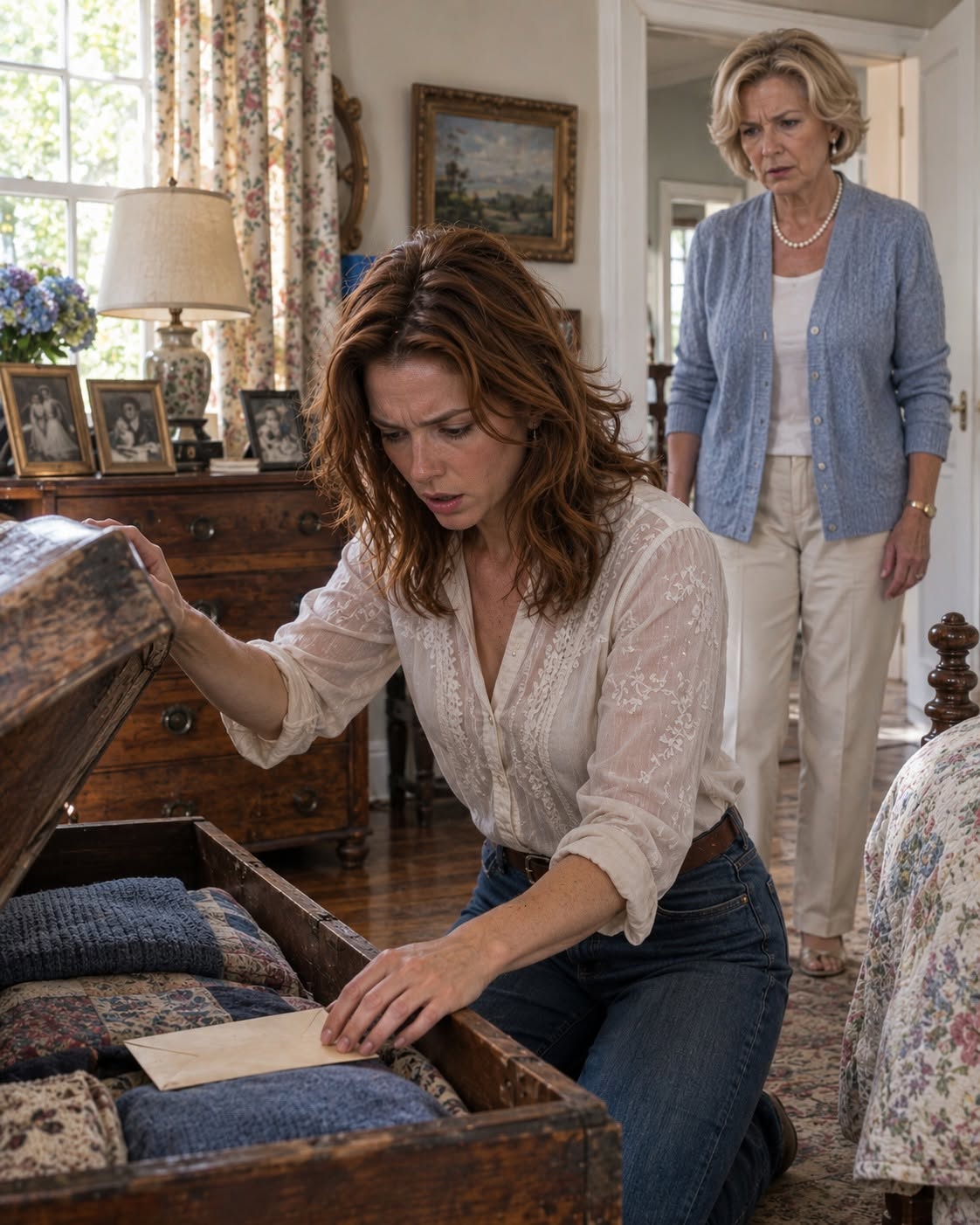
“This is the document I wanted you to see.”
It was a letter written by my mother.
Unlike the other papers, this one wasn’t addressed to me.
It was addressed to Margaret.
I recognized my mother’s handwriting immediately.
Mr. Bennett asked if I wanted to read it aloud.
I nodded.
The letter began simply.
“Margaret, I am trusting you with something more important than money. I am trusting you with my son’s future.”
My throat tightened.
My mother explained that she knew her illness might eventually prevent her from protecting me. She had chosen Margaret because she believed her older sister would put family before personal interests.
But there was another concern.
My mother wrote that Margaret had recently become obsessed with the idea that the family beach cottage should be sold. She had repeatedly argued that the property was too expensive to maintain and that the money would be better used elsewhere.
My mother had refused.
The letter continued.
“I know you believe you deserve something for everything you’ve done for this family. But the cottage does not belong to you. It is not a family prize to be divided among whoever makes the loudest demands. It belongs to my child.”
I stopped reading.
For a moment, I couldn’t speak.
My mother had known.
She had recognized something in her sister that I had spent years trying to understand.
“There’s more,” Mr. Bennett said gently.
The final paragraph contained a warning.
“If my son ever comes to you asking about the trust, please tell him the truth. And if he does not come, I hope you will find the courage to tell him yourself. Do not let him grow up believing that grief means he has to accept whatever other people decide for him.”
I put the letter down.
Emily was crying quietly.
I wasn’t.
I was too angry to cry.
For years, I had believed my mother’s death had left me with nothing but memories. Meanwhile, my aunt had been sitting on a secret that could have changed my life.
“Can we contact her?” I asked.
Mr. Bennett shook his head.
“Not yet. We need to obtain the complete trust records first. There may be transactions we need to challenge. I don’t want to give her an opportunity to destroy or alter anything.”
He explained that the next step would be a formal accounting request and a title investigation.
I agreed.
For the first time in years, I felt as though someone was finally willing to listen.
But the biggest surprise was still waiting for me.
Three days later, Mr. Bennett called again.
He had located an additional document in the county archive.
It was a notarized statement signed by Margaret five years earlier.
In it, she had acknowledged that she was holding the cottage and trust assets on my behalf.
At the bottom was a handwritten sentence.
“I understand that these assets must remain protected until the beneficiary receives them.”
There was no room for misunderstanding.
My aunt knew exactly what she had promised.
And she had spent years pretending the promise never existed.
The following morning, Mr. Bennett filed a request for a complete financial accounting and notified Margaret that her administration of the trust was under review.
I expected a phone call.
Instead, I received a message from my father.
“Your aunt says you’re threatening to sue the family. Please tell me this isn’t true.”
I read it twice.
Then I replied.
“I’m asking for documents about an inheritance Mom left specifically for me. If that sounds like a threat, you should ask yourself why.”
He didn’t respond.
That evening, Margaret called.
I almost let it go to voicemail, but something told me I needed to hear what she would say.
“What have you done?” she demanded.
There was no greeting.
“Hello to you too, Aunt Margaret.”
“Don’t play games with me. I received a letter from your attorney.”
“Then you know what it’s about.”
“You have no idea how much I’ve sacrificed for this family.”
I closed my eyes.
There it was again.
The same sentence she had used whenever anyone questioned her decisions.
“I didn’t ask you to sacrifice anything. I asked you to be honest.”
She laughed bitterly.
“Your mother was sick. She wasn’t thinking clearly. I handled everything while you were busy being a child.”
“I was twenty-two when she died.”
“You were barely an adult. You couldn’t have handled any of it.”
“That’s why Mom appointed you to protect it. Not take it.”
Silence.
Then her voice changed.
“Listen carefully. There are things about your mother you don’t know. She made promises to me. The cottage was supposed to stay in the family.”
“She put it in a trust with my name on it.”
“That was paperwork. You don’t understand what family means.”
I looked at the framed photograph of my mother on the bookshelf.
“I think I’m beginning to understand exactly what family means.”
I ended the call.
For the next week, the situation became increasingly uncomfortable.
My aunt began contacting relatives.
My phone filled with messages from cousins I hadn’t spoken to in years.
One cousin wrote that I was being selfish.
Another said I was hurting an elderly woman who had spent her life helping others.
My father called twice but never mentioned the wedding.
He only asked me to reconsider the legal action.
I began to realize that Margaret wasn’t simply defending herself.
She was building a story.
In her version, I was a bitter nephew who had suddenly become obsessed with money. She was a devoted sister who had sacrificed everything to care for my mother. And my father was a helpless man caught between two sides.
It was a familiar story.
The only difference was that this time I had documents.
Then something unexpected happened.
My younger cousin, Daniel, sent me a private message.
“Can we talk? There’s something I think you should know.”
We met at a coffee shop the following afternoon.
Daniel looked nervous. He kept glancing toward the windows as though someone might be watching.
He was the cousin who had stood beside the groom in the wedding photographs.
“I’m sorry about the wedding,” he said.
“Did you know I wasn’t invited?”
He lowered his eyes.
“Yes.”
The answer stung.
“Why?”
“Your aunt told everyone you were having problems. She said you had asked not to be included because being around family was difficult for you.”
I stared at him.
“She said that?”
“She also told us you were dealing with some personal issues and didn’t want people discussing your mother’s estate.”
I felt my stomach tighten.
“Did you believe her?”
Daniel hesitated.
“I didn’t know what to believe. But there’s something else.”
He took out his phone and showed me a photograph of an old document.
It was a bank transfer confirmation.
The recipient was a company called Harbor Point Holdings.
The amount was $86,000.
The date was six years earlier.
“What is this?”
“My father found it among some old paperwork. He was asking my aunt about it because he remembered hearing something about the cottage being renovated.”
I looked closer.
The transfer had been authorized by Margaret.
Daniel explained that his father, my uncle Robert, had once been involved in a family property business with Margaret. They had apparently discussed purchasing the beach cottage together.
But my mother had refused.
After she died, Margaret had told everyone the property was sold to pay medical expenses.
Now Daniel had discovered a payment connected to the trust.
“Why didn’t you show me this sooner?”
He looked ashamed.
“Because I was afraid of her. She has always been the person who decides what everyone talks about. I didn’t want to become her next problem.”
For the first time, I understood that Margaret’s influence wasn’t limited to me.
She had trained the entire family to avoid challenging her.
I photographed the transfer confirmation and sent it to Mr. Bennett.
His response came less than an hour later.
“Do not contact your aunt again. We may have evidence of an unauthorized transaction.”
The investigation accelerated.
Mr. Bennett requested bank records, company registrations, property tax documents, and all correspondence related to the trust.
Within two weeks, we learned that Harbor Point Holdings was a company registered to Margaret and her husband.
The $86,000 transfer had been recorded as a property maintenance expense.
But the cottage had not undergone any major renovation that year.
In fact, the property had been rented out privately for several summers.
The rental income had never appeared in the trust accounting.
When Mr. Bennett presented these findings to the court, a temporary order was issued preventing Margaret from selling, transferring, or borrowing against any trust assets.
Then the family began to panic.
My father finally came to see me.
He arrived on a rainy Sunday afternoon, carrying an old photograph of my mother.
For several minutes, he stood in my living room without saying anything.
Then he sat down.
“Your aunt called me last night.”
I didn’t answer.
“She said the lawyers were making accusations. She said everything she did was to protect your mother’s wishes.”
I looked at him.
“Do you believe her?”
He rubbed his forehead.
“I don’t know anymore.”
“Did you know about the trust?”
His silence lasted too long.
My chest tightened.
“Dad?”
He finally nodded.
“I knew your mother had arranged something for you. I didn’t know all the details.”
“When did you find out?”
“A few months after she died.”
I felt as though the floor had disappeared beneath me.
“You knew?”
He looked away.
“Margaret told me she was handling the paperwork. She said your mother had changed her mind about the cottage because of the medical bills.”
“Did you ever ask to see the documents?”
“No.”
“Did you ever tell me?”
He shook his head.
I stood up and walked to the window.
My father had watched me spend years believing I had been left with nothing.
He had watched me struggle to pay for my education, work extra shifts, and move between small apartments.
He had known there was something more.
“Why?” I asked.
His voice broke.
“Because I was afraid.”
“Of what?”
“Of Margaret. She had helped us financially after your mother died. She paid for some of the funeral expenses. She helped arrange things when I couldn’t think straight. I thought I owed her.”
I turned around.
“So you paid her back by letting her keep what belonged to me?”
He began to cry.
“I thought she was doing the right thing.”
I wanted to forgive him immediately. He was my father, after all.
But I couldn’t.
Not yet.
“Did you ever wonder why I was never invited to family gatherings?”
He nodded.
“Did you ever ask why?”
“No.”
“Then you didn’t just fail to protect me, Dad. You made it easier for her to isolate me.”
He lowered his head.
“I know.”
For the first time, I saw something different in his expression.
Not defensiveness.
Not excuses.
Shame.
He placed the photograph on the table and stood up.
“I don’t expect you to forgive me. I just wanted you to know that I am sorry.”
After he left, I picked up the photograph.
My mother was standing beside the beach cottage, laughing as the wind blew her hair across her face.
I remembered that day.
I had been twelve.
She had promised that one day I would bring my own children there.
I had assumed it was just something mothers said.
Now I wondered how much of her future she had tried to protect for me.
The following month, the court appointed an independent financial examiner to review the trust.
The findings were devastating.
Margaret had collected rental income for six years without properly reporting it. Several expenses had been falsely categorized as maintenance costs. A portion of the trust’s investment account had also been transferred to her company.
But the cottage itself had never been sold.
There was another discovery.
A private buyer had made an offer on the property two years earlier.
Margaret had rejected it because the title was still held by the trust and she could not legally complete the transaction without the required authorization.
She had not been protecting the cottage.
She had been trying to find a way to gain control of it.
When Mr. Bennett showed me the report, I felt strangely empty.
I had imagined that discovering the truth would make me feel victorious.
Instead, I felt grief.
My mother had spent her final years trying to protect me from exactly this situation.
And the person she trusted most had betrayed her.
Then came the hearing.
Margaret arrived wearing a dark blue suit, her hair perfectly styled. She looked composed, almost offended that she had been asked to explain herself.
Her attorney argued that she had acted in good faith and that the transfers were legitimate reimbursements for years of unpaid family assistance.
Mr. Bennett presented the records.
The missing rental income.
The transfers to Harbor Point Holdings.
The false maintenance expenses.
And finally, my mother’s letter.
When the judge asked Margaret whether she had informed me about the trust after my mother’s death, she said she had been waiting for the appropriate time.
“How many years did you believe were appropriate?” the judge asked.
Margaret didn’t answer.
Then Mr. Bennett introduced the wedding issue.
He explained that Margaret had repeatedly told relatives I was emotionally unstable and had voluntarily withdrawn from family gatherings.
He wasn’t arguing that I had a legal right to attend the wedding.
He was demonstrating a pattern of deliberate misrepresentation designed to keep me from asking questions.
Margaret’s expression changed.
For the first time, she looked uncertain.
But the moment that affected me most came when my father was called to provide a statement.
He stood, raised his hand, and answered the questions.
He admitted that he had known about the trust.
He admitted that he had never asked to inspect the documents.
And he admitted that Margaret had told him I should not be informed because I might become emotionally overwhelmed.
Then he said something nobody expected.
“I knew my son had lost his mother. I knew he was alone. And I allowed another person to decide that he didn’t deserve the truth. I told myself I was keeping the peace, but I was really protecting myself from an argument.”
He paused.
“I am sorry that I did that.”
The courtroom was silent.
The judge eventually ruled that Margaret had breached her fiduciary responsibilities.
She was removed as trustee and ordered to return the misappropriated funds, along with additional amounts determined through the accounting process.
The court also ordered a full transfer of trust administration to an independent professional trustee until the remaining assets could be properly distributed.
Margaret left the courtroom without looking at me.
Outside, she finally stopped near the parking lot.
“You’ve destroyed this family,” she said.
I looked at her.
“No. I stopped pretending it was healthy.”
She shook her head.
“Your mother would be ashamed of you.”
For a moment, the old fear returned.
Then I remembered the letter.
I remembered her words about protecting my future.
And I realized Margaret no longer had the power to make me doubt myself.
“My mother wanted me to know the truth,” I replied. “You were the one who kept it from me.”
I walked away.
The legal process took another several months.
The trust was reconstructed, the property records corrected, and the remaining assets transferred under independent supervision.
I eventually received the inheritance my mother had intended for me.
It was more than enough to change my financial circumstances, but I made a decision that surprised even Emily.
I didn’t sell the cottage.
Instead, I arranged for it to be restored.
The work took almost a year.
The roof needed repairs, the old wooden floors had to be replaced in several rooms, and the garden had become overgrown.
But I insisted on keeping the original blue shutters.
They were my mother’s favorite.
One afternoon, while clearing out the small upstairs bedroom, I discovered another box hidden behind an old wardrobe.
Inside were photographs, postcards, and a notebook.
The notebook contained handwritten entries from my mother during the final months of her illness.
I sat on the floor and read them slowly.
Most of the entries were ordinary.
She wrote about the weather, the flowers she wanted to plant, and how much she missed swimming in the ocean.
But one entry stopped me.
“If you’re reading this someday, I hope you’ve found your way back to the cottage. I hope the people around you have treated you with kindness. But if they haven’t, please remember that you don’t need to spend your whole life earning a place in someone’s heart.”
I read that sentence several times.
Then I turned the page.
“I know families can be complicated. Sometimes people confuse being needed with being loved. Sometimes they use guilt to keep others close. Don’t make that mistake. Love should never require you to disappear.”
I put the notebook against my chest.
For the first time since the wedding photographs, I cried.
Not because I had lost something.
Because I had finally found something.
A few weeks later, my father visited the cottage.
He stood on the porch for a long time before coming inside.
“I haven’t been here since your mother died,” he said.
I handed him a cup of coffee.
We sat outside, listening to the waves.
After a while, he spoke.
“She would have loved what you’ve done with the place.”
I looked at the blue shutters.
“I think so too.”
He hesitated.
“Do you think there’s a chance we can start over?”
I considered the question.
The old version of me would have rushed to reassure him. I would have said everything was fine because I didn’t want to make him uncomfortable.
But I wasn’t that person anymore.
“I want a relationship with you,” I said. “But it can’t be built on pretending nothing happened.”
He nodded.
“I understand.”
“That means being honest, even when it’s uncomfortable. And it means you don’t get to let other people decide how I fit into your life.”
He looked toward the ocean.
“I can try.”
“That’s all I can ask for right now.”
It wasn’t a perfect reconciliation.
There were difficult conversations afterward. Some days he became defensive. Other days he admitted things he had never told me before.
We took our time.
Trust, I learned, wasn’t restored simply because someone apologized.
It was rebuilt through repeated choices.
As for Margaret, she never apologized.
She sent one final letter through her attorney, insisting that I had misunderstood her intentions and that everything she had done was for the family’s benefit.
I didn’t respond.
I didn’t need to.
Some relationships don’t end with a dramatic confrontation. Sometimes they end when you finally stop trying to convince someone to treat you with basic respect.
A few months later, Emily and I got married.
We didn’t have a huge ceremony.
We invited the people who had genuinely supported us, including Daniel and his parents.
My father walked me to the ceremony.
Before we entered, he stopped and looked at me.
“I wish your mother could see this.”
I smiled sadly.
“She already knew I’d find my way.”
After the ceremony, we took photographs on the beach beside the cottage.
The same beach where my mother had once promised me a future.
That evening, I opened the cedar chest again.
I placed her notebook, her letters, and the trust documents inside.
But I added something of my own.
A photograph from our wedding.
On the back, I wrote:
“You were right, Mom. Love should never require someone to disappear. I finally understand.”
The cottage eventually became more than a family property.
Emily and I began hosting small gatherings there for people who needed a quiet place to reconnect with themselves. Daniel sometimes helped with repairs. My father visited occasionally, always calling beforehand and never assuming he was entitled to anything.
We also created a modest scholarship in my mother’s name for young adults who had lost a parent and were struggling to continue their education.
It wasn’t a grand gesture.
It was simply a way to turn something painful into something useful.
One afternoon, nearly two years after the wedding that had changed everything, I received a message from an unknown number.
It was Margaret.
“I hope you’re happy with what you’ve done. The family will never be the same.”
I looked at the message for a long time.
Then I typed a response.
“You’re right. It will never be the same. But perhaps that’s not entirely a bad thing.”
I didn’t send anything else.
I put my phone away and walked down to the water.
Emily was waiting near the shoreline, her shoes in her hands.
The sun was beginning to set, turning the waves gold.
For years, I had believed that being excluded meant I wasn’t wanted. I had spent so much time wondering what was wrong with me that I never stopped to question the people who kept moving the boundaries.
The wedding had hurt.
My aunt’s lies had hurt.
My father’s silence had hurt most of all.
But the truth had given me something I hadn’t realized I needed.
The freedom to decide what kind of family I wanted.
I couldn’t change what happened after my mother died. I couldn’t recover the years spent believing I had been forgotten. And I couldn’t force the people who had betrayed me to become the people I wished they were.
But I could choose what happened next.
I could protect the memories my mother left behind without allowing them to become weapons.
I could forgive my father slowly, if his actions continued to deserve it.
I could refuse to let guilt become the price of belonging.
And I could build a home where nobody had to beg for a seat at the table.
That night, Emily and I sat on the porch while the ocean moved quietly in the darkness.
I thought about the envelope in the cedar chest, the legal seal, and the words written in my mother’s handwriting.
For a long time, I had believed that the most valuable thing she left me was the cottage.
I was wrong.
The cottage was a piece of land.
The money was a means to begin again.
But her final gift was something much greater.
She had left me the reminder that my worth was never determined by who invited me, who believed me, or who chose to stand beside me.
I had spent years waiting for my family to make room for me.
Now I understood that I had the right to build a life where I never had to ask for permission to belong.
And perhaps that was the most important inheritance of all.