At the Millfield town hall, Diana Voss smirked as she told everyone I was a broke mechanic who would soon lose his home
Part 2
My former colleague’s name was Adrian Cole, and he had spent almost twenty years building a network of collectors, appraisers, and restoration specialists across the country.
He was also one of the few people who knew why I had left Detroit.
When I sent him the photographs, he called immediately.
“Tell me you haven’t started taking it apart.”
“I haven’t even opened the hood.”
“Good. Keep it that way until we establish the chassis identity.”
“How promising is it?”
“Promising enough that I’m getting in my car.”
Adrian arrived the following morning with a portable inspection kit, a digital camera, and the expression of a man who had just found a forgotten treasure buried beneath a parking lot.
He circled the BMW several times without speaking.
Then he crouched beside the front wheel arch.
“This isn’t a normal body kit,” he murmured. “Look at the panel geometry.”
He checked the identification numbers against the available documentation, examined the car’s construction, and photographed the areas where the original finish remained beneath the later paint.
I watched him work.
The excitement I felt was tempered by caution.
A rare model could still be a damaged shell, and a damaged shell could become a money pit if the restoration costs outweighed its value.
Adrian eventually stood up.
“We need an independent specialist to confirm the identity, but the evidence is strong. This appears to be a genuine 1988 E30 M3.”
“How strong?”
“Strong enough that I’m willing to bring in someone who handles serious collector acquisitions.”
He looked at the rest of the driveway.
“And Diana left this here?”
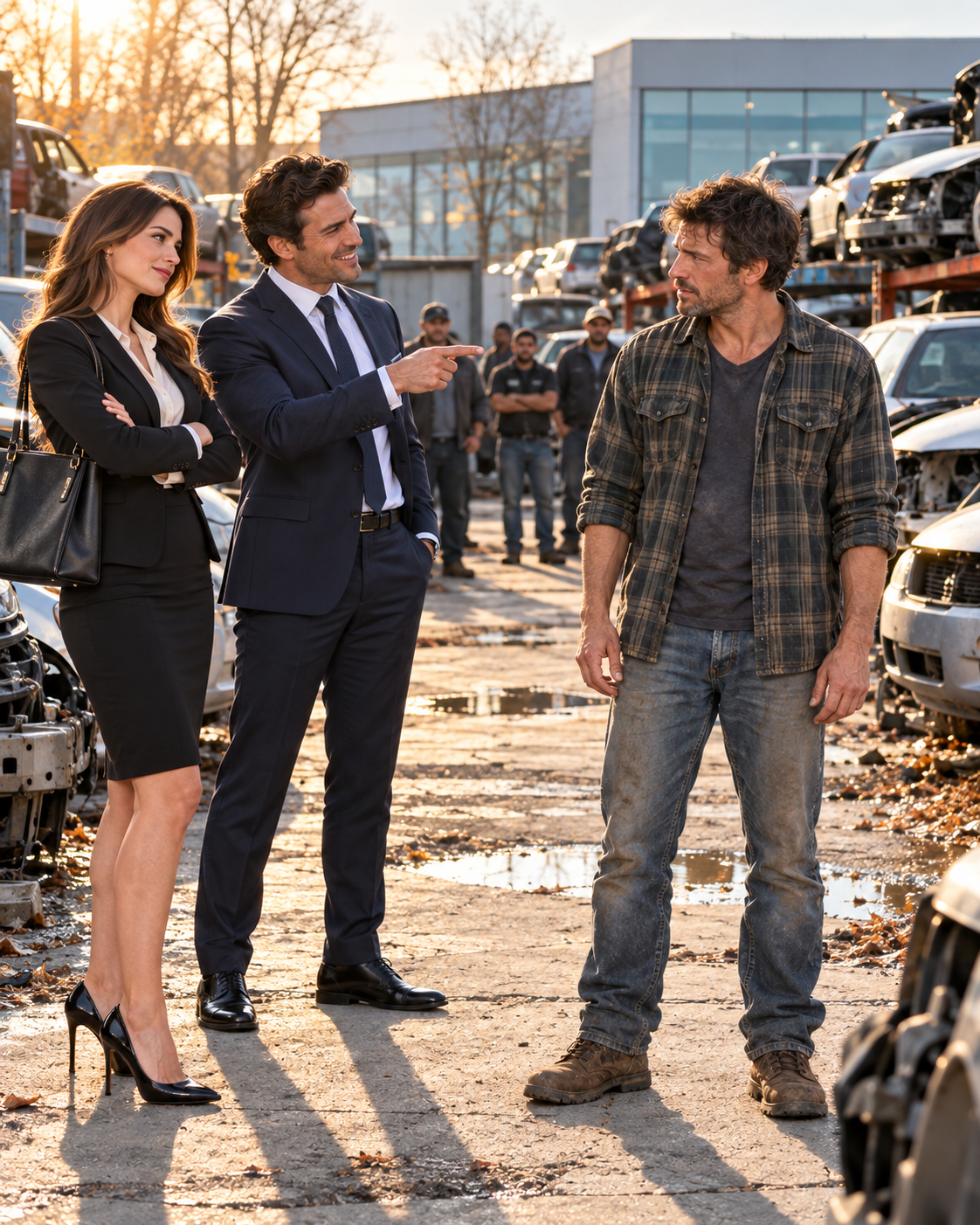
“She called it inventory overflow.”
Adrian let out a short laugh.
“Then she may have made the most expensive joke of her career.”
Over the next several days, we worked carefully.
The BMW’s provenance was checked.
Its identifying details were examined against available records.
A specialist inspected the structure and mechanical components, and we documented every significant defect.
The car was not pristine.
Far from it.
The body needed substantial attention, and the engine would require a complete assessment before anyone could estimate the final restoration cost.
But the car was authentic, and the collector market for a properly documented E30 M3 was strong.
Adrian connected me with a buyer who understood exactly what he was purchasing.
The offer came after the independent inspection and a review of the documentation.
Thirty-eight thousand dollars.
I read the number twice.
It was more than I had expected to earn from the entire mess Diana had left in my driveway.
The buyer arranged transport and payment through a formal agreement, and I made sure every document was signed before the car left my property.
When the transport truck carried the BMW away, Bonnie stood beside me, waving as though we were saying goodbye to a friend.
“Was that the special car, Daddy?”
“It was.”
“Are we rich now?”
I laughed.
“Not quite, sweetheart.”
“Then what are we?”
I looked at the cleared space where the BMW had sat.
“Still us.”
The money mattered, of course.
It meant I could protect our home without draining every dollar I had saved.
It meant I could invest in the workshop and stop worrying that one unexpected bill would unravel the life I had built for Bonnie.
But the BMW was only the beginning.
Eleven vehicles remained.
I examined each one, separating the cars that could be repaired economically from those that needed parts, careful negotiation, or specialist buyers.
Some had simple electrical problems.
One had a cooling system failure caused by years of neglect.
Another needed suspension work and a set of tires before it could safely return to the road.
I sourced parts, negotiated prices, and used the workshop equipment I had accumulated over the years.
I didn’t cut corners.
I documented the repairs and disclosed known issues when the cars were sold.
Several were purchased by local drivers who needed affordable transportation.
Others went to hobbyists who enjoyed older vehicles.
One pickup was bought by a farmer who had been looking for a reliable work truck.
A retired teacher bought a small sedan for her grandson.
Every sale brought another deposit into my account.
By the time the final vehicle left the driveway, the combined proceeds from the eleven repaired vehicles and the BMW had turned Diana’s prank into a substantial financial gain.
After parts, transport, inspections, and other expenses, the profit was far greater than I had expected.
I didn’t brag about it.
I paid my bills, set aside money for taxes, strengthened my emergency fund, and put a portion into Bonnie’s education savings.
Then I repaired the workshop roof.
The next time it rained, I sat with Bonnie on the porch and listened to the water falling without a single drip landing in the kitchen.
She leaned against my arm.
“Is the lady coming back?”
“Maybe.”
“Will she bring more broken cars?”
I smiled.
“I hope she doesn’t.”
But Diana was not finished with me.
Carter called a few days after the last car was sold.
“I’ve been reviewing the property records,” he said. “And I found something interesting.”
“Interesting good or interesting bad?”
“Potentially both.”
He explained that Diana’s company had filed a series of complaints concerning the access strip beside my workshop.
The complaints suggested that my use of the strip interfered with commercial access to a neighboring parcel.
The problem was that the parcel in question did not belong to Diana.
It belonged to a separate holding company, and the recorded easement did not grant her the rights she claimed.
“She’s trying to create a dispute that doesn’t exist,” Carter said. “The timing is suspicious, especially after the vehicles appeared.”
“Can we stop it?”
“We can challenge the filings and demand that she remove any unauthorized property. But I want to understand why she’s so determined to pressure you.”
That question stayed with me.
Diana owned three dealerships.
She had money, influence, and attorneys.
My workshop was a small business on a quiet road.
Why spend so much effort harassing me?
Adrian began looking into the business side of the story.
He had experience evaluating distressed assets and understanding how apparently successful companies could become vulnerable when their debt obligations grew faster than their revenue.
At first, his findings seemed unrelated to my driveway.
Then he called me late one evening.
“Jack, have you ever looked closely at Voss Automotive Group?”
“Not beyond the billboards.”
“You should.”
He explained that the group had been missing performance thresholds in consecutive quarters.
Its commercial borrowing had increased, inventory financing had become more expensive, and the flagship dealership on Renfield Avenue was carrying a heavy debt burden.
The company still looked impressive from the outside.
Diana drove expensive cars.
Her showrooms were polished.
Her advertisements promised exceptional service and unbeatable selection.
But beneath the surface, the business was under pressure.
“How bad is it?” I asked.
“Bad enough that one more difficult quarter could trigger a serious review by its lender. The flagship property is particularly exposed.”
“Can she lose it?”
“If the debt isn’t managed and the loan terms aren’t met, the lender has options. But we need real documents, not guesses.”
I leaned back in my chair.
“Why would she be worried about my property if her own business is in trouble?”
“That,” Adrian said, “is what I’m trying to figure out.”
Carter kept working on the property dispute.
Adrian reviewed public filings and available commercial records.
Neither of them promised an easy solution.
They did, however, identify something I had not considered.
The bank holding the distressed commercial note on Diana’s flagship dealership was reassessing its exposure to the company.
The note was secured by the dealership property and related collateral, subject to the terms of the loan and applicable law.
The bank was not interested in running a car dealership.
It wanted to reduce its exposure and recover value from a troubled loan.
Adrian knew the kind of investors who sometimes purchased distressed commercial debt.
I had enough capital to participate, but I wasn’t going to gamble Bonnie’s future on a grudge.
We reviewed the financials, the collateral, the legal conditions, and the possible outcomes.
Carter brought in additional counsel to examine the transaction structure.
The risks were real.
A distressed note could be worth less than its face value for reasons that were not immediately obvious, and controlling a loan did not automatically mean owning the underlying property.
I understood that.
I also understood that Diana’s public confidence might conceal a company in a much weaker position than she wanted anyone to believe.
After weeks of careful due diligence, we negotiated a purchase of the bank’s distressed commercial note through a properly structured acquisition.
The transaction closed only after the necessary reviews and documentation were complete.
I did not buy Diana’s entire business empire.
I did not magically become the owner of three dealerships overnight.
I acquired a secured financial position tied to her flagship Renfield Avenue property, giving me rights under the loan documents and the applicable enforcement process.
That distinction mattered.
It was the difference between a fantasy and a real business decision.
When the closing documents arrived, I read every page before signing.
Then I placed them in a folder and put the folder in the locked cabinet beside my workbench.
For several days, nothing changed.
Diana continued advertising her dealerships.
Her staff continued selling cars.
Her public appearances continued as though nothing had happened.
But I knew the next confrontation would come.
It arrived in the form of a notice for a Millfield town hall meeting about property access, commercial development, and disputes affecting local businesses.
Diana had requested time to address what she described as a troubling pattern of uncooperative property owners.
My name appeared in the meeting materials.
Carter advised me not to react publicly until we had reviewed the agenda and confirmed what she intended to claim.
“I won’t give her a spectacle,” I told him.
“Good,” he replied. “Because if she’s trying to provoke you, the worst thing you can do is help her.”
I looked at the folder in my cabinet.
“I don’t intend to.”
The town hall meeting was scheduled for Thursday evening.
By then, Diana had already told several local business owners that my workshop was an obstacle to Millfield’s development.
She had apparently decided that if she couldn’t intimidate me into selling, she would make the town believe I was the problem.
I ironed my only good shirt, helped Bonnie choose a bedtime story, and promised I would be home before she fell asleep.
Then I drove to town.
I had no intention of embarrassing Diana.
I only intended to let her finish speaking.
Because the moment she did, I would finally have a chance to show everyone what she had failed to understand about a quiet man with a toolbox.
Part 3
The town hall was nearly full when I arrived.
Farmers sat beside small-business owners.
A few local reporters stood near the back wall.
Several employees from Diana’s dealerships occupied the first two rows, looking as though they had been instructed to attend.
Diana sat at the front in a tailored navy suit, reviewing papers with her attorney.
When she saw me enter, she gave me a small, satisfied smile.
She thought I had come to defend myself.
She thought I was still the man standing on his porch while twelve rusted cars blocked his driveway.
The meeting began with routine announcements about road maintenance and local development.
Then Diana took the microphone.
She spoke about business investment, community standards, and the challenges faced by companies trying to operate in an increasingly difficult commercial environment.
Her voice was smooth.
Her words were polished.
She made every complaint sound like a sacrifice she was making for the town.
Then she turned toward me.
“Unfortunately, some property owners refuse to cooperate with reasonable development,” she said. “They create obstacles for legitimate businesses and then complain when those businesses take steps to protect their interests.”
Several people looked in my direction.
Diana continued.
“One local mechanic has made repeated objections to commercial access and has demonstrated a troubling unwillingness to resolve the matter constructively.”
I sat still.
She had not mentioned the cars.
She had not mentioned the threats.
She had not mentioned that the access easement was being interpreted in a way her own lawyers had struggled to support.
Instead, she presented herself as a businesswoman trying to work with an unreasonable neighbor.
Then she looked directly at me.
“Jack, perhaps you’d like to explain to everyone why you believe your little workshop should stand in the way of progress.”
A few people shifted in their seats.
I stood.
“I don’t believe my workshop should stand in the way of progress,” I said. “I believe my property rights should be respected, and I believe businesses should follow the same rules as everyone else.”
Diana gave a theatrical sigh.
“That sounds very noble. But legal disputes cost money, Jack. I would hate to see you lose your home over a misunderstanding.”
There it was again.
The threat disguised as concern.
She had used the same tone on my porch while Bonnie stood behind me.
This time, I didn’t look at the floor or try to explain myself.
I looked at Carter, who sat near the aisle with a document folder on his lap.
He gave me a slight nod.
I turned back to Diana.
“You seem very concerned about my financial position.”
“I’m concerned about the community.”
“Then perhaps we should discuss yours.”
Her smile faltered.
“What is that supposed to mean?”
I opened the folder I had brought with me.
“I understand your company has been struggling to meet its commercial loan requirements.”
The room grew quiet.
Diana’s attorney immediately stood.
“This is a public meeting, not a forum for disclosing private financial information.”
“I’m not disclosing anything that isn’t part of the properly reviewed commercial transaction I’m about to describe,” I replied. “And I have no intention of discussing confidential customer information or unrelated business records.”
Diana’s face hardened.
“You have no idea what you’re talking about.”
“Perhaps.”
I placed one document on the table in front of me.
“But I do know that your flagship dealership on Renfield Avenue is secured by a commercial note that your lender recently agreed to sell.”
Her attorney leaned toward her and whispered something.
Diana did not look at him.
She was staring at me.
I continued.
“After a review of the available financial records, the collateral, and the risks involved, my investment group purchased that distressed note through a properly documented transaction.”
For a moment, the room was completely silent.
Then someone in the second row whispered, “He bought her loan?”
Diana rose so quickly that her chair struck the wall behind her.
“That’s impossible.”
I kept my voice level.
“No. It’s a completed transaction.”
“You are a mechanic!”
“Yes.”
“You run a tiny workshop!”
“Also true.”
“You don’t have the resources to acquire a commercial note on my flagship property.”
I glanced at the folder.
“Apparently, I did.”
Her face flushed.
“This is some kind of stunt.”
Carter stood and addressed the meeting chair.
“The acquisition was completed through the appropriate legal process. The documents have been reviewed by counsel, and the transaction is not a claim of immediate ownership of Ms. Voss’s entire company. It is a secured financial position governed by the loan documents and applicable law.”
I was grateful he had said it.
I didn’t want the town to believe I had somehow seized a business by making an announcement.
The truth was more complicated.
The note gave my investment group certain rights and remedies, but any enforcement would have to follow the contract and the law.
Diana knew that.
Which was why her expression changed from disbelief to something colder.
She had spent months treating me as a man who could be bullied because he lacked money.
Now she was looking at someone who understood that money was not only something you earned.
It was also something you could use to change the balance of a negotiation.
“You planned this,” she whispered.
“No,” I said. “You brought twelve cars to my driveway. I repaired them, sold them, and used the money to strengthen my position. The rest was a separate investment decision based on your company’s financial condition.”
“You expect us to believe this is a coincidence?”
“I expect you to read the documents.”
She stared at me.
For the first time since I had met her, Diana Voss seemed unable to find the next line in her own script.
The meeting chair called for order.
Several people were talking at once.
A reporter near the back began writing furiously.
Diana’s attorney requested a recess, and the chair granted it.
But the story had already changed.
The woman who had arrived expecting to shame a struggling mechanic was now being asked by her own attorney to step into the hallway and discuss the implications of a transaction she had apparently failed to anticipate.
I stayed in my seat.
I did not follow her.
I did not smile for the cameras.
I thought about Bonnie, who would be asleep by now with her stuffed rabbit tucked beneath her chin.
I thought about the workshop roof, the repaired cars, and the years I had spent rebuilding a life after losing Emily.
I had not entered the transaction to punish Diana.
Her arrogance had brought us into conflict, but it was not a good reason to risk my daughter’s future.
I had bought the note because the numbers made sense, the collateral had been independently evaluated, and the investment offered a legitimate opportunity.
Diana’s behavior had simply made me pay closer attention to a business she had assumed nobody around her could understand.
When the meeting resumed, her attorney spoke first.
He confirmed that the acquisition would be handled through the applicable legal process and that neither side would make further claims about the other without supporting evidence.
Diana did not speak again.
She left before the final agenda item, accompanied by her attorney and two dealership executives.
As she passed me, she stopped.
“You think you’ve won,” she said quietly.
I stood to face her.
“No. I think you underestimated me.”
Her jaw tightened.
“You have no idea how complicated this is going to become.”
“I expect it to be complicated.”
“Then you should be careful.”
I held her gaze.
“I’ve been careful from the beginning.”
She walked away without another word.
The weeks that followed were less dramatic than the town hall meeting, but they were far more important.
My attorneys and financial advisers continued working through the commercial note’s terms, the available remedies, and the condition of the collateral.
The acquisition did not instantly make me the owner of Renfield Avenue.
It gave my investment group a secured position and the ability to negotiate from a place Diana had never expected me to occupy.
We explored a restructuring that would preserve the dealership’s viable operations while addressing the outstanding debt.
The process required careful financial analysis, legal documentation, and conversations with people who had more experience managing commercial property than I did.
I listened.
I asked questions.
I refused to rush into a decision just because I had the leverage to do so.
Diana, meanwhile, had to face the financial problems her company had been carrying for months.
Her business was not worthless.
It had employees, customers, equipment, and a reputation that still meant something to many people in the community.
But it could no longer rely on appearances to conceal its weaknesses.
The dealership’s managers began negotiating seriously.
Some contracts were reviewed.
Certain expenses were reduced.
The company had to address the conditions that had brought the loan under pressure.
Eventually, a restructuring agreement was reached that gave the business a path forward while protecting the investment group’s rights.
Under the final arrangement, the Renfield Avenue property and dealership operations came under my group’s control through the agreed legal and financial process.
I did not take pleasure in the moment the final documents were signed.
I thought of the people who worked there, many of whom had never met me and had nothing to do with Diana’s behavior.
I wanted the dealership to survive if it could operate responsibly.
I wanted the employees to keep their jobs.
And I wanted the company to stop treating smaller businesses as targets simply because they were easier to intimidate.
Diana remained involved during the transition, but she no longer had the unquestioned control she had once enjoyed.
She had spent years believing that power belonged to whoever could make the most intimidating entrance.
Now she had to negotiate with people who read the fine print.
A month later, she came to my workshop.
There were no transport trucks this time.
No expensive SUV parked across the road.
No audience.
She stood near the open garage door wearing a plain gray coat.
I was repairing an old pickup, and Bonnie was sitting at the workbench drawing pictures on a scrap of cardboard.
Diana watched for a moment before speaking.
“I’d like to talk.”
I wiped my hands on a rag.
“About what?”
“The dealership.”
“Then you should speak to my advisers.”
“I have.”
She glanced at Bonnie, then back at me.
“I also owe you an apology.”
I said nothing.
Diana seemed uncomfortable with the silence.
“I shouldn’t have sent those cars here. I shouldn’t have tried to pressure you into selling your property.”
“No, you shouldn’t have.”
“I thought you would panic.”
“I know.”
She looked around the workshop.
The walls were lined with tools.
The roof no longer leaked.
A half-restored pickup sat near the back, its paint stripped away to reveal clean metal.
“I assumed you were struggling,” she said.
“I was living within my means.”
“That’s not what I meant.”
“I know what you meant.”
She lowered her eyes.
For a moment, I saw something that might have been shame.
Or perhaps she was simply exhausted from having to face a person she could no longer dismiss.
“I’ve spent a long time thinking that if I didn’t push first, someone would push me,” she said. “I built my business that way.”
“And how did that work out?”
She flinched.
I regretted the sharpness of my words, but I did not take them back.
An apology could be sincere and still arrive too late to erase what had happened.
Diana looked at Bonnie’s drawing.
“What are you working on?” she asked.
Bonnie held it up.
“A garage for my dad. With a garden.”
Diana stared at the picture.
“That’s nice.”
“My dad fixes things,” Bonnie explained. “Even when they’re really, really broken.”
I felt something tighten in my chest.
Diana looked at me again.
“I hope the dealership does well under your management.”
“So do I.”
She nodded once and walked back toward the road.
I watched until she disappeared around the bend.
I did not feel victorious.
I felt relieved that the confrontation was finally over.
The months that followed brought changes to the dealership, but I refused to abandon my workshop.
I hired an experienced manager to oversee the daily operations at Renfield Avenue and established clear expectations for financial reporting, employee treatment, and customer service.
I visited regularly, but I did not pretend to know more about every part of the business than the people who had worked there for years.
My job was to make sure the business was run honestly, not to prove that I could personally do everything.
The workshop remained my home base.
I still repaired farm trucks.
I still helped neighbors diagnose mysterious engine noises.
I still made pancakes for Bonnie on Saturday mornings.
And sometimes, when a rare vehicle arrived that required more knowledge than the average repair shop possessed, I opened my old Detroit notebooks and remembered the engineer I had been before life took me in another direction.
One evening, nearly a year after the twelve cars appeared, Bonnie and I sat on the porch watching the sun fall behind the trees.
She had grown taller, and her front teeth had finally stopped looking like they belonged to a tiny vampire.
“Daddy?”
“Yes, sweetheart?”
“Are we rich now?”
I laughed softly.
“Why do you keep asking me that?”
“Because we have the workshop, and you fixed all those cars, and now you own the big dealership.”
I thought about how to answer.
“We have enough to take care of each other, and we have work we believe in. That’s a pretty good kind of rich.”
She considered that.
“Do we have enough for ice cream?”
“Absolutely.”
She jumped up and ran toward the kitchen.
I stayed on the porch for another minute.
The driveway was clear.
The workshop doors opened without obstruction.
The little house stood exactly where Emily and I had chosen it, surrounded by the trees she had loved.
Diana had tried to use rusted cars, legal threats, and public humiliation to force me out of the life I had built.
Instead, her actions had reminded me of something I had nearly forgotten.
Quiet did not mean powerless.
Simple did not mean unsuccessful.
And a person who chose family over status was not necessarily someone who had failed to dream big enough.
Sometimes, the life that looks small from the outside is the one worth protecting most fiercely.
I stood and followed Bonnie inside.
On the kitchen table, she had already laid out two bowls and a spoon for each of us.
The ice cream was beginning to soften.
She looked up at me with Emily’s eyes and a grin that made the whole room feel warmer.
“Come on, Daddy. It’s melting.”
I sat beside her.
For years, I had believed that rebuilding meant taking something broken and making it look new again.
But the cars had taught me otherwise.
Some things were worth restoring because their value had been hidden beneath rust.
Some things needed to be rebuilt differently because the old structure had failed.
And some things, like the life I had made with Bonnie, were never broken at all.
They simply needed someone willing to see their worth before the rest of the world did.