At the Four Seasons in Manhattan, my billionaire boss sneered as I crawled beneath a table to shield her from gunfire
Part 2
The President arrived less than an hour later.
By then, the lobby had been sealed.
Police cars crowded the street.
Federal agents had taken over the hotel.
Guests were being questioned in private rooms.
And I was still standing near the pillar where I had pulled Eleanor out of the line of fire.
I couldn’t stop thinking about Mia.
Her fever.
Her small voice asking for me.
The thought hurt more than the gunfire ever had.
A federal agent approached me.
“Sir, medical transport is waiting.”
“I don’t need medical transport.”
“You have a fractured knuckle.”
“I’ve had worse.”
He looked toward Eleanor.
She said nothing.
That silence was different from all the others.
Then the elevator doors opened.
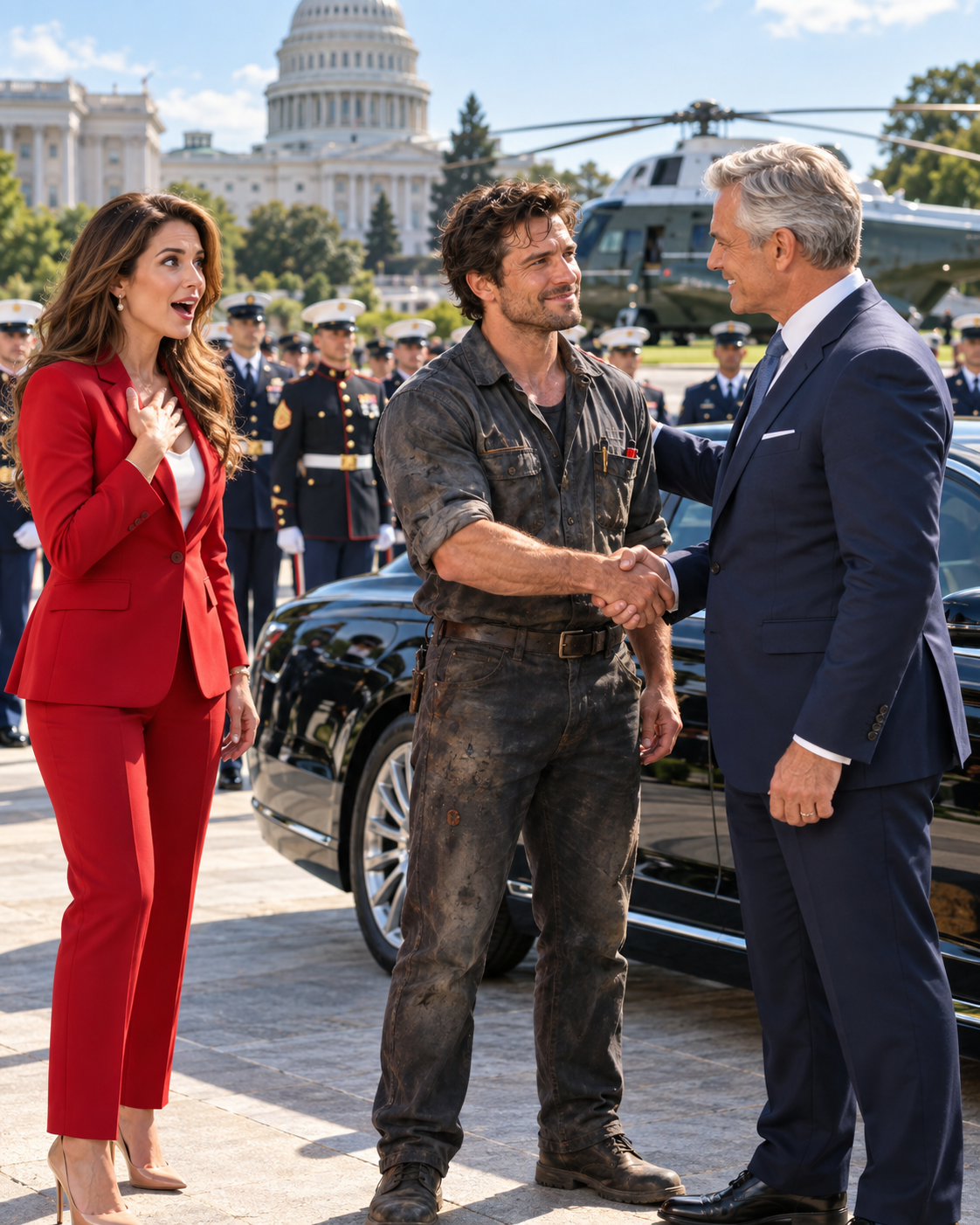
The President stepped into the lobby.
No cameras.
No press.
No ceremony.
Just a small security detail and a man who looked older than he did on television.
He saw me.
He stopped.
For a moment, neither of us spoke.
Then he walked straight toward me and extended his hand.
“Daniel.”
I shook it.
“Mr. President.”
He pulled me into a brief embrace instead of letting go.
“You saved thousands of people before anyone knew your name.”
I looked away.
“That life is over.”
“I know.”
His expression softened.
“But the country never forgot.”
Eleanor stood several feet away.
Her face had gone pale.
The President turned toward her.
“Ms. Vance, I believe you owe him more than an apology.”
She swallowed.
“I know.”
Then he looked back at me.
“Your daughter is being cared for.”
My chest tightened.
“What?”
“A personal detail was already assigned to her.”
I stared at him.
“You did that?”
“You asked for nothing.”
He paused.
“So let me do one thing for you.”
For the first time that day, I breathed.
“Thank you.”
Eleanor lowered her eyes.
The woman who had once mocked a paper crane couldn’t seem to look at it anymore.
“I didn’t know,” she whispered.
I looked at her.
“You didn’t ask.”
Her eyes filled.
“I thought you were weak.”
“No.”
I shook my head.
“You thought I was beneath you.”
She closed her eyes.
“Yes.”
The word came out broken.
“I was cruel to you.”
I said nothing.
“I mocked your daughter.”
My jaw tightened.
“I know.”
“I mocked the picture.”
“I know.”
“I made you feel ashamed of things you should have been proud of.”
I looked at the paper crane still hanging from the rearview mirror outside.
Then I looked back at her.
“You don’t need to make this about me.”
Her voice cracked.
“It is about you.”
She wiped her face.
“And about the man I chose to believe you were.”
For several seconds, the only sound was distant sirens.
Then she whispered, “I’m sorry.”
I believed her.
That didn’t erase anything.
But I believed her.
“Thank you,” I said.
The President stepped closer.
“You should go home.”
I nodded.
Then I looked at Eleanor.
“Take care of your people.”
She looked confused.
“Why?”
“Because they don’t work for you.”
I paused.
“They trust you.”
Then I walked away.
I drove home through a city that looked strangely unfamiliar.
The apartment above the old bakery was quiet when I entered.
I found Mia asleep beneath a blanket, her face flushed but peaceful.
A nurse sat nearby.
I knelt beside the bed.
“Hey, bug.”
Her eyes opened halfway.
“Dad?”
“I’m here.”
“You came.”
I smiled.
“I told you I would.”
She reached for my hand.
I held it.
And in that moment, every mission I had ever completed seemed smaller than the simple promise I had kept.
The next morning, someone knocked on our door.
I expected the nurse.
Instead, Eleanor Vance stood in the hallway holding two paper bags.
She wore no designer suit.
No entourage.
No expression of superiority.
Just a plain coat and tired eyes.
Mia looked at her suspiciously.
“Who are you?”
Eleanor glanced at me.
Then back at Mia.
“My name is Eleanor.”
Mia frowned.
“Are you Dad’s boss?”
“Yes.”
“Did you make him sad?”
Eleanor froze.
I almost smiled.
Children have a way of finding the center of a wound without knowing its name.
“Yes,” Eleanor said quietly.
“I did.”
Mia studied her.
“Why?”
“Because I was wrong.”
She held out the paper bag.
“I brought breakfast.”
Mia didn’t take it.
“Did you bring pancakes?”
“Yes.”
“Chocolate chips?”
Eleanor looked startled.
“Yes.”
Mia finally accepted the bag.
“Okay.”
Eleanor almost laughed.
Then she looked at me.
“I want to offer you something.”
I already knew what she meant.
“No.”
“You don’t even know what it is.”
“I don’t need to.”
“Director of Corporate Security.”
I stared at her.
“I need someone who sees threats before my security team does.”
I shook my head.
“I don’t want that life.”
“You can build the security division yourself.”
“I said I don’t want that life.”
She nodded.
“I understand.”
Then she added quietly, “What if you could do it without losing this one?”
Her eyes moved toward Mia.
“That is the condition.”
I looked at her.
“My family comes first.”
“Agreed.”
“No exceptions.”
“Agreed.”
“If Mia calls, I leave.”
“Yes.”
“If there’s a school play, I go.”
“Yes.”
“If she gets sick, I’m gone.”
Eleanor didn’t hesitate.
“Then you’re hired.”
Mia raised her hand.
“Does that mean Dad gets a bigger office?”
I laughed for the first time in days.
Eleanor smiled.
“I think he deserves one.”
Mia thought about it.
“Can I see it?”
“Of course.”
She looked at me.
“Dad?”
“Yeah?”
“Can we keep the pancakes?”
I laughed again.
And for the first time, Eleanor laughed with us.
It was a small moment.
But it was the beginning of something I never expected.
Not redemption.
Not revenge.
Something harder.
Change.
Part 3
My first day as Director of Corporate Security began with twelve executives waiting for me in a glass conference room.
They expected a retired operative.
What they got was a father.
I rewrote the entire security structure within three weeks.
I removed unnecessary layers of bureaucracy.
I changed emergency protocols.
I personally interviewed guards.
I walked through loading docks at midnight.
I taught employees how to recognize danger without turning their workplace into a fortress.
And every afternoon, at three-thirty, I stopped.
No matter what was happening.
That was Mia’s pickup time.
At first, some executives complained.
Eleanor shut them down.
“He leaves at three-thirty.”
Someone protested.
“But there’s a board meeting.”
Eleanor looked at them.
“Then move the meeting.”
That was the moment I knew she had changed.
Not because she had become softer.
She was still ruthless.
She was still demanding.
But she had finally learned that leadership wasn’t about standing above people.
It was about understanding what they carried when they walked through the door.
One evening, months after the attack, I found Eleanor standing beside my desk.
She was holding the old paper crane.
“The security team found this in your first car,” she said.
I took it from her.
“It survived.”
She smiled.
“Mia made another one.”
She handed me a new crane.
This one was blue.
On one wing, Mia had written three words.
COME HOME SAFE, DAD.
I stared at it longer than I should have.
Eleanor watched me quietly.
“She asked me to give it to you.”
I nodded.
“Thank you.”
She hesitated.
“Daniel?”
“Yeah?”
“I used to think strength meant never needing anyone.”
I looked at her.
“What changed?”
She glanced toward the window.
“Watching you.”
I said nothing.
“You could have told me who you were,” she continued.
“I could have.”
“Why didn’t you?”
I looked down at the paper crane.
“Because I didn’t want Mia to grow up thinking her father was a weapon.”
Eleanor’s eyes softened.
“What do you want her to think?”
I smiled.
“That I’m the man who always comes home.”
She nodded.
“And you are.”
Years later, people at Aegis Horizon would still talk about the hotel attack.
They would tell stories about how Shadow One appeared out of nowhere.
They would describe the speed.
The precision.
The impossible calm.
Some called me a legend.
Some called me a hero.
I never corrected them.
But I never believed them either.
Because the truth was much simpler.
I wasn’t proud of the man who could disarm a gunman.
I was proud of the man who knew exactly when to put the weapon down.
I had spent years believing my greatest achievement was surviving dangerous places.
I was wrong.
My greatest achievement was surviving the ordinary ones.
The mornings when Mia needed breakfast.
The nights when she was sick.
The school concerts where she sang too loudly.
The homework arguments.
The burnt pancakes.
The small apartment above the bakery.
The paper cranes.
The photograph on my dashboard.
The promise I repeated every morning before leaving her behind.
Dad will be home.
One winter evening, Mia and I stood outside that same bakery beneath a sky full of snow.
She was older now, taller, and no longer needed me to hold her hand crossing the street.
She looked up at me.
“Dad?”
“Yeah?”
“Were you really a secret agent?”
I smiled.
“Something like that.”
“Did you save the country?”
I thought about the people I had protected.
The lives I had carried.
The names I had forgotten.
Then I looked at my daughter.
“No.”
She frowned.
“I thought you did.”
I wrapped an arm around her shoulders.
“I saved some people.”
“What’s the difference?”
I looked toward our apartment window glowing warmly above the bakery.
“The country was never the mission.”
She waited.
“You were.”
Mia smiled.
Then she slipped her hand into mine anyway.
And we walked home together.
I had once lived in a world where every door could hide an enemy and every silence could mean death.
Now I lived in a world where the greatest sound was my daughter’s laughter coming from the kitchen.
I had once been Shadow One.
The man governments called when everything was falling apart.
But none of those missions mattered as much as the one I chose for myself.
To be there.
To stay.
To come home.
Because sometimes the strongest man in the room isn’t the one who can stop a bullet.
Sometimes he’s the quiet father who carries a child’s paper crane in his pocket, swallows his pride to keep the rent paid, and walks away from the world every night because someone small is waiting for him upstairs.
And if I learned anything from losing almost everything, it was this.
The world may remember the people who save it.
But a child remembers the person who came home.
And after everything I had survived, that was the only legacy I ever wanted.