At my sister’s engagement party at the Ashworth estate, my father looked me in the eyes and whispered
My father held the envelope as if it might burn him.
For several seconds, neither of us spoke, and the only sound in the study was the old clock above his desk ticking through the silence.
“Where did this come from?” I finally asked.
He lowered himself into his chair, his shoulders suddenly looking smaller than I remembered.
“Your mother gave it to me before she died,” he said. “I was supposed to give it to you when you were old enough to understand.”
I stared at the handwriting.
My mother had been gone for twenty-three years, taken by cancer when I was twenty-three and still young enough to believe that hard work could repair almost anything.
I remembered the hospital room, the smell of antiseptic, and her fingers curling around mine during the last afternoon she was conscious.
She had told me to keep my compass pointed toward what mattered, even when the people I loved could not understand the direction I was going.
I had thought those were the ordinary words of a dying mother.
Now my father was telling me she had left something behind.
“Why didn’t you give it to me?” I asked.
He looked down at the envelope.
“Because I was ashamed.”
The answer was so quiet that it frightened me more than anger would have.
He explained that after my mother’s diagnosis, she had discovered he had been struggling financially for years, hiding debts and making decisions he believed were protecting the family.
She had also learned that I had been offered an opportunity to pursue a military career that would take me far from home.
My father had wanted me to stay close, to find a predictable job, and to help keep the family together.
My mother had wanted the opposite.
“She told me you were born to do something bigger than the little world I had built around myself,” he said. “I told her she was encouraging you to abandon us.”
I felt my jaw tighten.
“So you blamed me for wanting a life of my own?”
“I blamed your ambition because I was afraid of losing you.”
He rubbed his palms together, an old habit I remembered from childhood whenever he was about to deliver bad news.
“When she died, I convinced myself that if you stayed in the Marines, you would eventually regret it, and then you would come home. Every time you succeeded, you moved farther away from the future I had imagined for you.”
“That isn’t an excuse for treating me like I didn’t matter.”
“No,” he whispered. “It isn’t.”
For the first time in my life, he did not defend himself.
He did not mention how difficult his own life had been or remind me of everything he had provided when I was a child.
He simply sat there, looking at the consequences of his choices.
I picked up the envelope, but I did not open it.
“What exactly did Mom write?”
He swallowed.
“She wrote that she knew I would struggle to let you go. She asked me to be proud of you, even if I never understood your work. She told me not to confuse your absence with abandonment.”
The words struck somewhere deep inside me.
For years, every missed holiday and unanswered question had carried the same accusation: I had chosen the Corps over my family.
I had learned to carry that guilt silently, believing that perhaps loving my country meant accepting that I would never be enough at home.
My father reached across the desk.
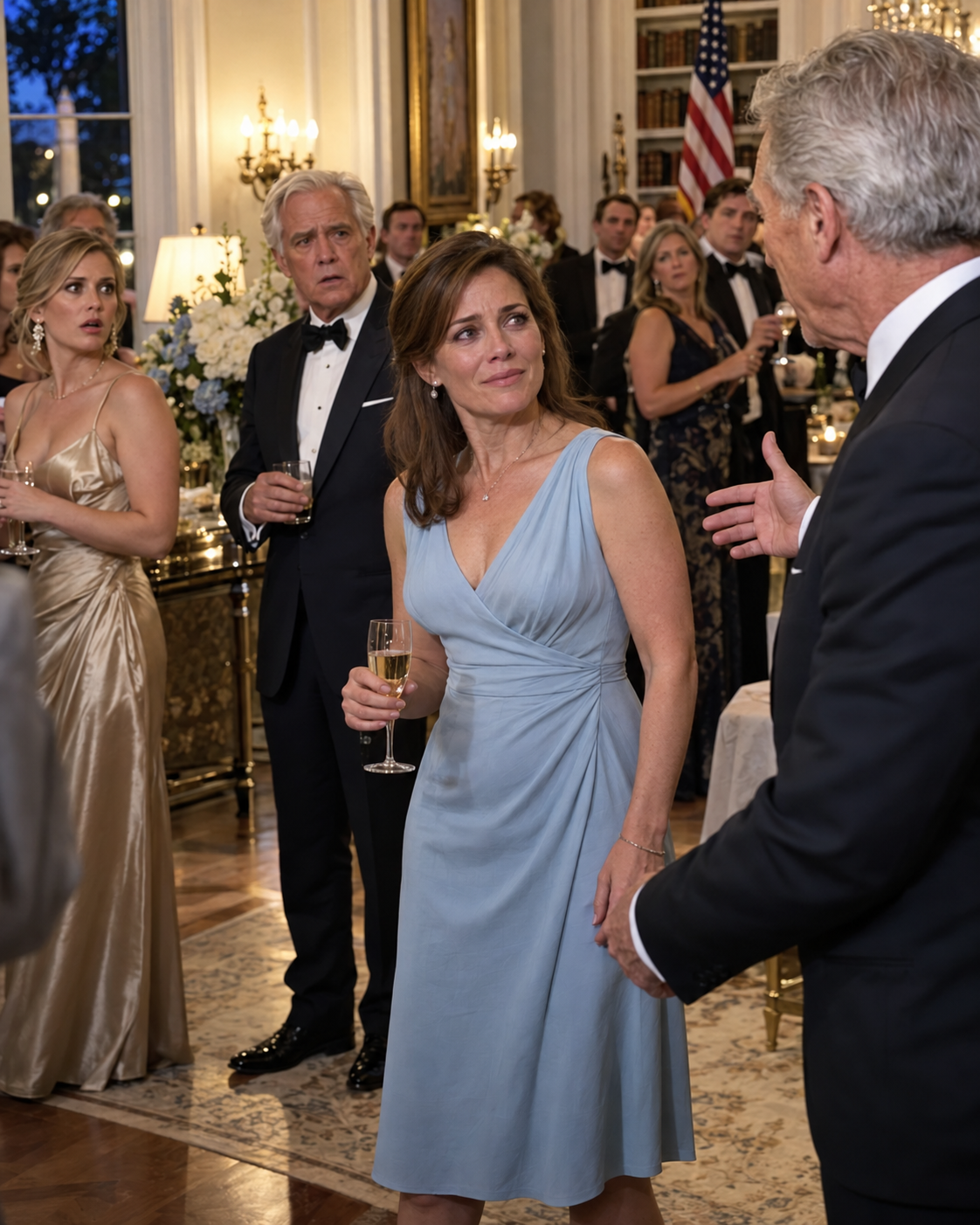
“I was wrong about you.”
I pulled my hand back, not to punish him, but because forgiveness was not a switch I could turn simply because he had finally found the courage to speak.
“I need you to understand something,” I said. “I didn’t stay away because I stopped loving you. I stayed away because every time I came home, I felt like I had to apologize for the person I had become.”
His eyes filled with tears.
“I know.”
“No, Dad. You know now. That’s different.”
He nodded slowly.
We sat together for nearly an hour, surrounded by the unopened letters he had kept in that box.
They were not reports of secret missions or descriptions of operations I could never discuss.
They were small pieces of a daughter trying to stay connected to her father.
One letter described a freezing night at training when I had thought about my mother’s cooking.
Another mentioned a promotion I had celebrated with a cup of vending-machine coffee because there had been no one nearby who knew what the moment meant.
A third contained a photograph of me standing outside my first duty station, smiling with the uncertain confidence of a young officer who believed the world might eventually make room for her.
My father touched the photograph with one finger.
“You were so young.”
“I was.”
“I should have been there.”
I looked at the picture and remembered the long drive to that first assignment, the cheap motel, and the phone call home that had lasted less than three minutes because he had been busy helping Lauren prepare for a school dance.
“You could have been,” I said.
He bowed his head.
That afternoon, I left his house with the envelope in my bag and no promise that everything would be different.
I had spent too many years earning approval that should never have required an achievement.
If my father wanted a place in my life, he would have to learn that reconciliation was not a ceremony with a single emotional speech.
It was a decision he would have to make again and again.
Three days later, Lauren called.
I almost let it go to voicemail.
When I answered, she was unusually quiet.
“Can we talk?”
“About what?”
“About the party. About you.”
I leaned against my kitchen counter and waited.
“I didn’t know what you actually did,” she admitted. “I thought you worked in some government office and couldn’t tell us anything because you didn’t want to talk about it.”
“You never asked me.”
“I know.”
Her voice cracked on those two words.
She confessed that she had always assumed our parents preferred her because she was easier to understand, while my career had become a source of awkwardness she avoided rather than a subject she tried to learn about.
She had mistaken their attention for proof that she mattered more.
At the engagement party, she had watched the guests gather around me and felt something she was ashamed to admit.
Jealousy.
Then General Hail had spoken, and she had realized that the sister she treated like a distant relative had lived an entire life beyond her imagination.
“I was embarrassed,” she said. “Not because you were a colonel. Because I had spent years making jokes about you being the boring one.”
I closed my eyes.
Some wounds came from cruelty, but others came from the casual assumptions people made when they believed someone would always be there.
“I don’t need you to understand every part of my job,” I told her. “I need you to stop deciding who I am without asking.”
“I want to try.”
It was not a perfect apology.
It was, however, the first honest conversation we had shared in years.
A week later, Lauren invited me to dinner with her fiancé, Ethan.
This time, she sent the invitation directly to me, without our father acting as a gatekeeper or anyone treating my presence as an inconvenience.
I accepted.
At dinner, Ethan asked thoughtful questions about military leadership and the difficulty of making decisions when lives depended on incomplete information.
I answered what I could, careful not to discuss classified details.
Lauren listened instead of changing the subject.
For the first time, I did not feel like a visitor in my sister’s life.
But the most unexpected call came the following morning.
General Hail’s name appeared on my phone.
“Colonel,” he said, “I hope you won’t mind a personal request.”
I straightened instinctively.
“Of course, sir.”
“My son Daniel would like to thank you himself. He’s been asking for years, and I told him I would find a way to make it happen.”
My chest tightened.
I remembered the operation in Afghanistan not as a story of heroism, but as a night filled with impossible choices.
Daniel’s team had been isolated beyond a damaged route, their communications unreliable and their extraction window closing.
The available maps showed a passage through the terrain that appeared unusable.
Some commanders had recommended pulling back and waiting for a better opportunity.
Waiting might have cost the team their lives.
I had spent hours comparing intelligence reports, weather patterns, and old terrain records until a possibility emerged where the official map showed none.
I did not rescue Daniel alone.
Pilots flew through dangerous conditions, intelligence specialists worked through the night, and Marines on the ground carried out the plan under circumstances none of us could fully control.
My job had been to refuse to mistake uncertainty for impossibility.
“Tell him I would be glad to speak with him,” I said.
Daniel called that evening.
His voice was deeper than I expected, but the gratitude in it was painfully familiar.
“I’ve heard your name for years,” he said. “My father told me you were the reason we got another chance.”
“You and your team did the hard part. I helped find an option.”
“No, ma’am. You helped people believe there was an option.”
I did not know how to answer.
Then he said something that stayed with me long after the call ended.
“My daughter is nine. I almost didn’t get to see her grow up. Every birthday, I think about the people who gave me the chance to be there.”
I sat in silence after we said goodbye.
I had always understood the consequences of my work in terms of mission objectives, operational risks, and lives accounted for.
Daniel had reminded me that each life carried an entire future beyond the moment of rescue.
A child growing older.
A partner waiting by the window.
A family gathering around a birthday cake.
The truth was that I had never needed my father to understand classified briefings or military strategy.
I had wanted him to understand that the life he dismissed was made of moments like those.
Two weeks later, my father asked if I would visit him again.
When I arrived, he had arranged the old letters across the dining table.
Beside them sat a framed photograph of my mother.
“I want to do something,” he said. “But I don’t want you to think I’m trying to buy my way out of what I did.”
He handed me a small notebook.
Inside, he had written down dates from the letters he had finally read, along with the details he wished he had asked me about years earlier.
He wanted to know where I had been stationed, which promotions had mattered to me, which holidays had been the hardest, and what I had needed from him when I was too proud or too hurt to ask.
Some of the dates were wrong.
Some memories were incomplete.
But for the first time, he was making an effort to learn my story rather than forcing me to fit his version of it.
“I can’t give you those years back,” he said. “I know that.”
“No, you can’t.”
“But if you’ll let me, I want to know the years that are still ahead.”
I looked at my mother’s photograph.
Her smile seemed to hold the patience I had spent so long searching for in everyone else.
“I can try,” I said.
He nodded, and we began with the simplest question.
“What was your first day in uniform really like?”
I told him about the heat, the stiff collar, the nervousness I had tried to hide, and the feeling that I had stepped into a life that would demand more from me than I knew how to give.
He listened without interrupting.
When I finished, he asked another question.
Then another.
We spoke until the afternoon light faded from the windows.
Before I left, he walked me to the door and hesitated.
“I used to think being proud of you meant having something impressive to tell other people,” he said. “Now I think it means being willing to listen when you tell me who you are.”
I felt the old ache rise again, but it no longer felt like a locked door.
It felt like a door someone had finally begun to open.
Months passed, and our relationship changed in small, ordinary ways.
My father called without needing a reason.
Lauren remembered important dates and stopped introducing my work as a mysterious government job.
At family dinners, they sometimes asked questions I could not answer, and for once, they accepted the boundary without treating it as rejection.
When a newspaper mentioned my latest assignment, my father did not send the article to relatives as proof of my importance.
Instead, he called and asked whether I was doing all right.
That question meant more to me than the headlines ever could.
I also learned something uncomfortable about myself.
I had become so accustomed to being overlooked that part of me had started using silence as armor.
I could not demand that my family learn to see me while refusing to let them approach the parts of my life I was allowed to share.
Trust required boundaries, but it also required a willingness to be known.
So I began telling them more about the person beneath the rank.
I told them about the friends I had lost touch with, the loneliness of moving from one assignment to another, and the strange feeling of returning home after making decisions that no one at the dinner table could understand.
I did not tell them everything.
I did not need to.
One evening, nearly six months after the engagement party, my father invited me to dinner at his house.
Lauren was there, along with Ethan, and a few family friends.
The room was warm, the food was simple, and nobody had arranged the seating to make me feel like an afterthought.
Halfway through the meal, my father raised his glass.
“I spent too many years believing that the people who spoke the loudest deserved the most attention,” he said. “I was wrong, and I owe my daughter an apology that words alone will never finish.”
He looked directly at me.
“I am proud of you, not because a magazine wrote about you, and not because a general recognized your name. I’m proud of you because you kept doing what you believed was right even when the people who should have supported you failed to understand.”
The table went quiet.
I felt tears gather, but I let them stay.
“Thank you,” I said.
It was not the forgiveness of a lifetime compressed into a single evening.
It was a beginning.
Later, while everyone else was clearing the dishes, my father asked me to step into the study.
He opened the cabinet where he had kept the letters and took out a final envelope.
This one was not old.
It had been written only days earlier.
“I wanted to give you something,” he said. “Something I should have written a long time ago.”
I opened it.
Inside was a short letter acknowledging the years he had lost, the questions he should have asked, and the daughter he had failed to see.
At the bottom, he had written, “If you ever need a place to come home to, I want you to know that you never have to earn your place here.”
I read the sentence twice.
For years, I had believed that home was a place where I had to make myself smaller to be welcomed.
Now I was beginning to understand that real belonging did not require me to hide the parts of myself that other people could not explain.
I folded the letter carefully and slipped it into my bag beside my mother’s envelope.
Outside, the evening air was cool, and the porch light illuminated the steps I had climbed so many times as a child.
My father stood beside me.
“Do you think your mother would be proud of you?” he asked.
I considered the question.
“I hope so,” I said. “But I think she would care more about whether I was living honestly than whether anyone was proud.”
He smiled sadly.
“She always did understand that better than I did.”
For the first time, I believed he might continue learning.
I drove home with both letters beside me, thinking about the distance between a family that shares your name and a family that truly knows you.
The following morning, I returned to work.
There were briefings to attend, decisions to make, and people depending on me to remain steady when the facts were uncertain.
My father could not enter my world completely, and I could not bring every part of it home.
But we no longer needed to pretend that the parts we could not share were the only parts that mattered.
A week later, a package arrived at my office.
Inside was an old photograph of my mother holding me as a baby, along with a note from my father.
He had found it tucked between the pages of a book she used to read to me.
On the back of the photograph, my mother had written a sentence in her delicate handwriting: “When she grows up, I hope she never mistakes being misunderstood for being unloved.”
I sat at my desk for a long time, holding the photograph between my fingers.
Then my phone rang.
It was my father.
“I found something else,” he said, his voice trembling. “Something your mother wrote, but this time, I think it was meant for both of us.”
I looked at the photograph again.
“What does it say?”
He was silent for a moment.
Then he answered, “She wrote that one day, you would have to make a choice that could change more than your own life.”
My heart began to beat faster.
“What choice?”
“I don’t know yet,” he said. “But there’s a date on the page, and it’s next month.”
I looked out at the White House grounds, where people hurried through another ordinary morning, unaware of the questions waiting in my father’s hands.
For the first time in years, I did not feel afraid of what my family might discover about me.
I was afraid of what my mother had known before any of us were ready to listen.
And as I asked my father to read me the rest of the letter, I realized that sometimes the most important truths do not arrive when we are ready for them.
They arrive when we finally learn how to face them together.