I Ignored My Neighbor for 4 Months… Then She Showed Up at My Door One Night and…
I Ignored My Neighbor for 4 Months… Then She Showed Up at My Door One Night and…
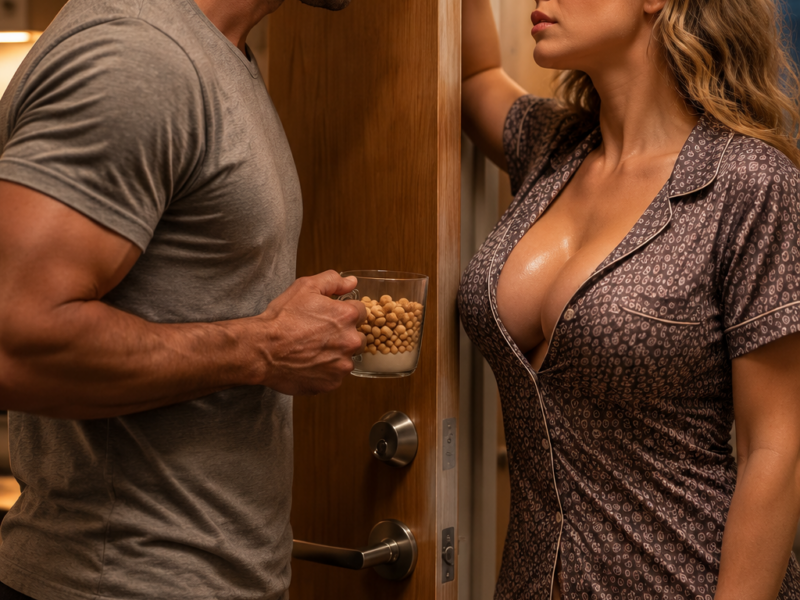
At 11:42 on a rainy Thursday night, I was standing in my kitchen eating cereal out of a coffee mug because every bowl I owned was either sitting in the dishwasher or buried somewhere beneath a mountain of laundry. At thirty-three, I had imagined my life would look considerably different. I thought there would be a house, perhaps a wife, maybe a dog that greeted me at the door when I came home from work. Instead, I had a small apartment on the fourth floor of an aging building, a demanding career as an architect, a dying houseplant, and a laptop displaying architectural drawings that were supposed to be finished by nine the following morning.
It wasn’t an especially tragic existence. In fact, I had become rather comfortable with it. My apartment was quiet, my schedule was predictable, and nobody expected me to explain where I had been or why I preferred spending Saturday nights watching old movies instead of attending crowded parties. I could eat cereal for dinner, work until midnight, and leave my phone unanswered for hours without worrying that I was disappointing anyone.
I had spent nearly a year convincing myself that this was what peace looked like.
Then someone knocked on my door.
Three quick taps, a pause, and two softer ones.
I stopped chewing.
There was something familiar about that particular rhythm, something I recognized before I had even put down my coffee mug. I looked toward the door and sighed, although the truth was that my heart had already begun beating a little faster.
I knew exactly who was standing on the other side.
Leah Bennett.
She lived in apartment 4B, directly next to mine. We shared the same narrow hallway, the same unreliable elevator, the same view of a brick building across the alley, and apparently, an increasingly complicated relationship that consisted mostly of me pretending she didn’t exist.
For four months, I had perfected the art of avoiding my neighbor.
It wasn’t because she was unpleasant. Quite the opposite. Leah was probably one of the most effortlessly likable people I had ever encountered. She was thirty-one, worked as an art teacher at the middle school six blocks away, and possessed a personality that seemed almost physically incapable of making a room feel cold.
She had dark, naturally curly hair that she usually pinned up with pencils, expressive brown eyes, and a habit of getting paint on her wrists. Sometimes she wore colorful earrings shaped like tiny flowers. Other times, she walked around the building carrying grocery bags, talking to herself, or humming songs that I didn’t recognize.
She laughed often, and her laughter traveled through the walls.
I noticed all of it.
Unfortunately, noticing Leah Bennett was precisely the problem.
When she first moved in at the beginning of September, she had six plants, three mismatched lamps, several cardboard boxes, and an enormous amount of enthusiasm. I remembered seeing her struggling with a large box near the elevator. I had offered to help, mostly because watching someone nearly drop a box onto their foot made it difficult to pretend I hadn’t noticed.
She had smiled at me.
“Thank you! I’m Leah, by the way. Your new neighbor.”
“Miles.”
“Nice to meet you, Miles.”
That should have been the end of the interaction.
Instead, she asked whether I knew where she could buy inexpensive curtains, complimented the building’s old wooden staircase, and somehow managed to turn a thirty-second conversation into five minutes.
The following week, she borrowed my step ladder to hang a framed painting above her sofa. She returned it the next morning with a freshly baked loaf of banana bread.
I thanked her, placed the bread on my kitchen counter, and spent the next two days convincing myself that eating homemade food from a woman I barely knew was an unnecessary emotional commitment.
On the third night, I ate the entire loaf standing over my kitchen sink.
It was excellent.
That was when things became dangerous.
I started noticing when she came home. I recognized the sound of her keys, the rhythm of her footsteps, and the occasional muffled conversation she had on the phone. If I heard her apartment door opening while I was preparing to leave, I suddenly remembered something important inside my own apartment.
If we reached the mailboxes simultaneously, I would pretend I had forgotten to check something upstairs.
If she smiled at me in the hallway, I responded with a brief nod that would have been more appropriate between two strangers waiting for gasoline at a station.
I wasn’t proud of it.
But after my engagement ended the previous year, I had developed a deep suspicion of anything that resembled emotional possibility.
My former fiancée had called off our wedding three months before the ceremony. She told me she couldn’t imagine spending the rest of her life in the kind of quiet existence I seemed perfectly happy building. She wanted more excitement, more spontaneity, more ambition, and someone who could make her feel that life was constantly moving forward.
I couldn’t argue with her decision.
What hurt was the realization that everything I had thought we were building together had apparently become something she needed to escape.
After she left, I stopped making plans that involved other people. I buried myself in architectural projects, ordered takeout, and became very good at keeping conversations superficial.
Leah arrived just when I had convinced myself that emotional distance was a reasonable lifestyle choice.
And she made it incredibly difficult to maintain.
One morning in November, she caught me attempting to escape into the stairwell with a garbage bag.
“You know,” she said, standing near the elevator with a cup of coffee, “for two neighbors, you and I have an impressive long-distance relationship.”
I stopped.
I wanted to laugh. I genuinely did.
Instead, I looked at her and said, “I’m just bad with people before caffeine.”
She glanced at the coffee in my hand.
“It’s full.”
I looked down.
Unfortunately, she was right.
She smiled, clearly enjoying my discomfort, and I escaped into the stairwell before I could make the situation worse.
Her smile followed me down four floors.
That was the sort of woman Leah was. She could make an ordinary hallway feel like somewhere you wanted to stay.
So when she knocked on my door that rainy Thursday night, I knew something was wrong.
I put down my mug, crossed the kitchen, and opened the door.
Leah stood in the hallway wearing a dark green dress. The hem was soaked from the rain, one heel was in her hand, and the other remained on her foot. Her dark curls had escaped whatever arrangement she had originally put them in, and her eyeliner was slightly smudged.
She looked beautiful, but not in the carefree way I usually associated with her.
Her chin was raised, her shoulders were tense, and there was something in her expression that suggested she had spent the evening fighting a battle she hadn’t wanted to have.
For one ridiculous second, I forgot how to speak.
Then she looked directly at me.
“Before you pretend you don’t know me, I need a favor.”
My hand tightened around the door.
“Are you okay?”
“That depends on how convincing you are as a fake boyfriend.”
I blinked.
Behind her, somewhere near the elevator, a man’s voice echoed through the hallway.
“Leah, come on. Just talk to me.”
Her eyes remained fixed on mine.
There was anger in them, embarrassment too, but beneath everything else I saw something that made my chest tighten.
She was tired.
Not physically tired, although the rain and the hour certainly weren’t helping. She looked like someone who had reached the end of her patience and was desperately trying not to let another person see how much the situation had affected her.
“Do you want me to call building security?” I asked.
“I already did. They’ll be here in a couple of minutes.”
I glanced at the man near the elevator.
“Then what do you need me to do?”
She lifted the heel in her hand.
“I just need him to stop thinking I’m alone.”
I didn’t ask another question.
I opened the door wider.
“I’m not letting you stand in the hallway with one shoe while that guy delivers an entire dramatic monologue behind you.”
Her mouth twitched.
“That was almost charming.”
“Don’t spread it around.”
She stepped inside.
I closed the door but didn’t immediately turn the lock. Through the wood, I could hear the man’s footsteps approaching.
“Leah,” he called. “I know you’re in there.”
She closed her eyes briefly.
I lowered my voice.
“What’s his name?”
“Aaron. Ex-fiancé, recently upgraded to public nuisance.”
The sharpness in her voice was unmistakable.
I didn’t know much about Aaron, except that he had apparently been part of her life before she moved into the building. I had occasionally seen his name appear on the screen of her phone when she was standing near the mailboxes.
I had never met him.
Until that moment, I hadn’t particularly wanted to.
I raised my voice just enough to carry through the door.
“Babe, do you want me to handle this, or should I let security take care of it?”
Leah looked at me.
Something shifted in her expression. Surprise, perhaps, or relief.
Maybe she had expected me to hesitate. After four months of avoiding her, I couldn’t blame her.
The hallway went silent.
A few seconds later, I heard Aaron mutter something under his breath. His footsteps moved away, followed by the familiar ding of the elevator.
I waited until the doors closed before locking mine.
Then I turned toward Leah.
“Tea?”
She stared at me.
“What?”
“You just fake-boyfriended a man through a door. I figured tea was an appropriate next step.”
A small laugh escaped her.
It was unexpected, genuine, and so completely Leah that I felt something inside me loosen.
“You’re offering tea?”
“I’m versatile.”
She shook her head, smiling.
“Do you have anything stronger?”
“Old whiskey and emotional baggage.”
“Tempting. But tea is fine.”
I filled the kettle while she stood near the kitchen counter, looking around my apartment.
I suddenly became aware of everything.
The rolled architectural drawings beside my laptop. The stack of books near the sofa. The plant on the windowsill that had been slowly losing its will to live. The coffee mug sitting in the sink.
Her gaze stopped there.
“Were you eating cereal out of that?”
I looked at the mug.
“No.”
“Miles.”
I sighed.
“Yes.”
She smiled.
I hated how much I liked hearing my name in her voice.
I took a clean towel from a drawer and handed it to her. Our fingers brushed when she accepted it.
It was an insignificant moment, barely a second of contact.
Still, I felt the warmth of her skin long after she had wrapped the towel around her shoulders.
She leaned against the counter.
“Can I ask you something?”
“Sure.”
“Why do you avoid me?”
I stopped moving.
There was no warning, no attempt to disguise the question as a joke.
I opened a cabinet and took out two mugs.
“I don’t avoid you.”
She raised an eyebrow.
“You once waited inside your apartment for twelve minutes because you heard me talking to Mrs. Alvarez near the elevator.”
I turned around.
“How would you know that?”
“I could see your shadow under the door.”
I stared at her.
She laughed softly.
“Relax. I’m not angry.”
“You’re not?”
“No.”
Her smile faded slightly.
“I just wondered if I’d done something wrong.”
That sentence struck me harder than it should have.
She was standing in my kitchen, still damp from the rain, asking me something most people would have quietly wondered about for months.
I could have lied.
I had plenty of practice. I could have blamed work, exhaustion, or the general difficulties of apartment living.
Instead, I looked at her and decided I was tired of being a coward.
“You make quiet feel less safe.”
She went still.
I immediately regretted the wording.
“That sounded better in my head.”
“No,” she said carefully. “It didn’t sound bad.”
The rain tapped against the windows. The kettle clicked off, filling the kitchen with a sudden silence.
Neither of us moved.
Then her phone buzzed on the counter.
Once.
Twice.
She glanced at the screen, and the color slowly disappeared from her face.
I looked down.
The message was from Aaron.
Tell your boyfriend I’ll see him tomorrow at your sister’s engagement party.
Leah closed her eyes.
I stared at the phone, then at her.
She gave me a thin, apologetic smile.
“So, there’s one more thing I probably should have mentioned.”
I leaned against the counter.
“Your sister’s engagement party?”
“Yes.”
“Tomorrow?”
“Yes.”
“And Aaron thinks I’m attending as your boyfriend?”
She pressed her lips together.
“Technically, you invited yourself when you called me babe.”
“I was improvising.”
“You were very convincing.”
“That doesn’t make it a legal contract.”
“No, but it did have emotional range.”
I dragged a hand down my face.
She reached toward her phone but stopped before touching it.
“I’m sorry, Miles. I really am. I only needed you to help me get him away from the door. I didn’t mean to involve you in anything else.”
I looked at her for a moment.
“Why does he care whether you bring someone?”
She let out a humorless laugh.
“My family loved Aaron. Or at least, they loved the version of Aaron he performed at Sunday brunch.”
“And he’s invited tomorrow?”
“My sister’s fiancé is his cousin.”
I winced.
“That’s an aggressively inconvenient family tree.”
“Tell me about it.”
She explained that she had planned to attend the party alone, smile through the evening, and leave early. Aaron had apparently discovered that she was no longer seeing anyone and interpreted her single status as an invitation to resume their relationship.
He wanted another chance.
She didn’t.
“He showed up tonight to talk sense into me,” she said. “Apparently, he thinks breaking up means you can keep trying until the other person gets tired enough to agree.”
I looked toward the front door.
“And now your imaginary boyfriend has slammed that door.”
She smiled faintly.
“Exactly.”
There was something hopeful about the way she said it.
I poured hot water into the mugs.
“What time is the party?”
She blinked.
“What?”
“The party. What time?”
“Miles, no. You don’t have to do that.”
“I know.”
“You have work.”
“I always have work.”
“You don’t even like parties.”
“I don’t even like most people.”
Her mouth tilted.
“That’s true.”
I handed her a mug.
She studied me over the rim.
“Why would you do this?”
There were several honest answers.
Because I liked her.
Because I had spent four months avoiding a woman whose laughter I could recognize through two walls.
Because I wanted to know what she looked like when she wasn’t trying to hide how tired she was.
Because when she had looked at me in the hallway, she had trusted me to open the door.
But I wasn’t ready to say all that.
So I said, “Because you brought me banana bread.”
Her eyes narrowed.
“Four months ago?”
“It was excellent bread.”
She laughed, and this time her smile reached her eyes.
“Fine. But if you’re going to be my fake boyfriend, we need a story.”
“We met as neighbors. That’s accurate.”
“Too boring.”
“That’s literally what happened.”
“Romance requires editing, Miles.”
I leaned against the opposite counter.
“All right. You tell it.”
She considered me.
“We hated each other at first.”
“I don’t hate you.”
“I know. That’s what makes it fun.”
I tried not to smile.
I failed.
She noticed, naturally.
Her eyes briefly dropped to my mouth before returning to mine. The room seemed to grow warmer.
“We met when I needed a ladder,” she continued. “You were grumpy, but secretly kind.”
“Secretly?”
“You hide it under all that emotional frost.”
“I’m not even wearing flannel.”
“Not tonight. But spiritually.”
I laughed.
The sound surprised both of us.
Leah’s expression softened.
“There,” she said quietly. “I knew you could.”
For a moment, neither of us spoke.
Then she asked about my favorite food, my favorite movie, and several other details she apparently considered essential to constructing a believable relationship.
When I told her I liked Thai food and old mystery movies, she nodded thoughtfully.
“Rear Window?”
“One of my favorites.”
“That explains so much.”
“What does that mean?”
“You’re a watcher.”
I looked at her.
She wasn’t teasing anymore.
“I used to be less boring,” I said.
“Before?”
I didn’t ask how she knew there was a before.
“Before my engagement ended.”
Her fingers tightened around the mug.
I told her a little about it. About the wedding that never happened, the woman who had decided my life wasn’t exciting enough, and the way I had gradually stopped believing anyone would want the quiet version of me.
Leah listened without interrupting.
When I finished, she said, “That was cruel.”
“It was honest.”
“Those things can overlap.”
She stepped a little closer.
“For what it’s worth, quiet doesn’t scare me.”
I looked at her.
“No?”
“No.”
Her voice became softer.
“Lonely does.”
I couldn’t think of anything to say.
She set her mug down.
“We should practice.”
My mind immediately offered several interpretations, none of which were particularly useful.
“Practice?”
“Being convincing.”
She held out her hand.
“Relax. I mean holding hands.”
I looked at it for a ridiculous amount of time.
Then I took it.
Her fingers slipped between mine with careful confidence. Her palm was warm, and the simple contact seemed to change the entire atmosphere of the kitchen.
She inhaled softly.
“Okay?”
“Yes.”
“You?”
“No.”
Her eyes widened.
I laughed.
“I mean yes. I’m fine.”
“This is not going to be difficult to fake,” I admitted.
Her fingers tightened around mine.
“No,” she whispered. “It isn’t.”
For a moment, neither of us pretended.
Then my phone rang.
The building’s front desk number appeared on the screen.
I answered.
“Miles Carter?”
“Mr. Carter, sorry to bother you,” the night doorman said. “There’s a man downstairs asking for Ms. Bennett. He says he forgot his coat in your apartment.”
Leah’s expression hardened.
I looked at our joined hands.
“Tell him he’s mistaken. If he refuses to leave, call the police.”
I ended the call.
Leah swallowed.
“Miles.”
“I’ll go tomorrow.”
“To the party?”
I nodded.
“As your boyfriend.”
“Fake boyfriend,” she corrected.
Neither of us sounded convinced.
She left my apartment at 1:13 in the morning wearing my old gray hoodie over her green dress.
At her door, she tried to hand it back.
“Keep it for tomorrow,” I said.
“For authenticity?”
“For the rain.”
She looked at me for a moment.
“You know, for a fake boyfriend, you’re dangerously considerate.”
“I’ll work on being worse.”
“Please don’t.”
I watched her disappear into her apartment.
Then I returned to mine, looked at the cereal mug in the sink, and realized I wasn’t going to get much sleep.
I was right.
By five in the morning, I had imagined nearly every possible disaster the following evening could produce.
Aaron might cause a scene. Leah’s relatives might interrogate me. I might forget an important detail and accidentally tell everyone her favorite food was cereal. Someone might ask how we met, and I might answer with the truth in a way that made it sound like I had been conducting surveillance from behind my front door.
By nine, I was standing in front of my closet wondering why every shirt I owned made me look like a recently divorced accountant attending a funeral.
I had never been married.
I wasn’t an accountant.
And I had absolutely no idea how to dress like a convincing boyfriend.
At two that afternoon, Leah knocked again.
This time, I opened the door so quickly that she raised an eyebrow.
“Were you waiting behind it?”
“No.”
“Shadow under the door, Miles.”
I looked down.
She laughed.
Then I noticed what she was wearing.
A soft blue dress beneath a camel-colored coat, brown boots, small gold earrings, and her curls pinned loosely at the back of her neck.
She looked beautiful.
Not the sort of beautiful that made you think of magazine covers or expensive photographs. She looked like someone you wanted to spend an ordinary afternoon with, someone whose presence could make even a grocery store feel like an interesting place to visit.
“Is this okay?” she asked, suddenly uncertain.
I frowned.
“What?”
“Me. This.”
She gestured toward her outfit.
“I’m trying to look like a woman who has her life together and didn’t panic-eat crackers for breakfast.”
I wanted to tell her she looked devastating.
Instead, I said, “You look like nobody there deserves you.”
Her expression changed.
For a second, she simply looked at me.
“Careful,” she said. “That sounded real.”
“It was.”
The hallway became quiet.
Then she handed me my hoodie.
“Here. Before I make bad decisions.”
I smiled.
“We need ground rules, apparently.”
“Absolutely.”
She counted them on her fingers.
“No kissing unless necessary. No dramatic declarations. No calling Aaron a weasel, even if he’s being one. And definitely no telling my mother we’re moving in together because she’ll start pricing wedding china.”
“Understood.”
“And if you want to leave at any point, you tell me. This is my mess, not yours.”
I leaned against the doorframe.
“Leah, I’m not looking for the exit.”
Her expression softened.
She reached up and adjusted my collar, her fingertips briefly brushing my throat.
“You clean up well,” she said.
“You sound surprised.”
“I’ve mostly seen you in hallway goblin mode.”
“Architectural hermit.”
“Right. Much sexier.”
The word lingered between us.
She blushed slightly but didn’t take it back.
We arrived at the restaurant shortly before six.
It was a beautiful place downtown, with warm lighting, white tablecloths, polished wooden floors, and enough flowers on every table to make the room smell like a garden.
Leah took a deep breath before we entered.
Then she slipped her hand into mine.
This time, she didn’t ask.
This time, I didn’t hesitate.
Her palm settled against mine as naturally as if we had been doing it for years.
“You okay?” I whispered.
“No,” she answered brightly through a smile. “But your hand is nice.”
I nearly tripped over nothing.
Her sister Emma found us first.
Emma was blonde, energetic, and wearing an engagement ring large enough to require its own security detail. She hugged Leah tightly before turning toward me with undisguised curiosity.
“You came!”
Then her eyes moved to our joined hands.
“And you brought someone.”
Leah squeezed my fingers.
“This is Miles.”
“Boyfriend Miles?”
I glanced at Leah.
She gave me the smallest opening.
I could have simply nodded.
Instead, I lifted her hand and kissed her knuckles.
“Lucky Miles,” I said.
Emma made a delighted noise.
“Oh, I like him.”
Leah elbowed me when her sister walked away.
“That wasn’t in the plan.”
“You said no dramatic declarations. That was a minor gesture.”
“That was advanced boyfriending.”
“I’m versatile.”
She tried not to smile.
She failed.
For the first hour, we performed our little story.
We told people we had started talking after Leah borrowed my ladder. She claimed she had fallen for me when I returned her empty banana bread container washed and ready for reuse. I claimed she had seduced me with baked goods and criticism of my plant care.
Her aunt asked how long we had been dating.
“Long enough that he knows not to talk to me before coffee,” Leah answered.
“Long enough that I do it anyway,” I added.
She turned toward me.
“He enjoys danger.”
The more we talked, the easier everything became.
I found myself enjoying the attention I usually hated. I liked introducing Leah to people. I liked seeing her smile when I remembered something she had told me. I liked the way she leaned toward me whenever someone approached, as if my presence had become a place where she could rest.
And I liked the fact that she wasn’t simply using me as a shield.
She was choosing to stand beside me.
Then Aaron arrived.
I felt Leah’s fingers stiffen before I even saw him.
He was a handsome man in a polished, carefully maintained way. His navy suit fitted perfectly, his hair looked as though it had never experienced bad weather, and his smile appeared ready for professional photographs.
But when his eyes landed on me, the warmth disappeared.
“Leah,” he said. “You look beautiful.”
“Thank you.”
His gaze moved to our joined hands.
“And this must be the neighbor.”
I smiled.
“Miles.”
He shook my hand with unnecessary pressure.
“How sudden,” he remarked.
Leah lifted her chin.
“Not really.”
“Funny. Last month you told your mother you weren’t seeing anyone.”
The small circle around us became noticeably quieter.
I felt the instinct to step in, to answer for her, to make some sharp remark that would end the conversation.
But I remembered the way Leah had looked at me when she explained why she needed a fake boyfriend.
She didn’t need someone to speak for her.
She needed someone who would stand beside her.
So I waited.
She took a breath.
“Last month I wasn’t ready to talk about him.”
Aaron laughed softly.
“Convenient.”
I turned toward Leah.
“Want some air?”
She looked at me.
“Yes.”
I led her toward the covered patio without looking back.
Outside, the air was cold, and rainwater glittered beneath the streetlights. The awning sheltered us from the remaining drizzle, but the wind still carried the smell of wet pavement.
Leah released my hand and folded her arms around herself.
“I’m sorry,” she said.
“If you apologize again, I’m telling your aunt we met at a pottery retreat.”
She laughed.
It was a little shaky, but it was real.
“I wanted to throw a bread roll at his head.”
“That would also have been handling him.”
She looked at me.
“Thank you for not speaking for me.”
The words were simple.
But I understood that they meant more than she was saying.
“You’re not hard to trust,” I replied.
She went still.
Her gaze dropped briefly to my mouth.
“Miles.”
“Yes?”
“This is starting to feel less fake.”
My heartbeat quickened.
“Is that bad?”
“I don’t know.”
She stepped closer.
“I’m trying to decide whether I’m scared because of Aaron or because of you.”
“I don’t want you to be scared of me.”
“I’m not.”
Her hand rested lightly against my chest.
“That’s the problem.”
I lifted my hand slowly, giving her plenty of time to move away, and touched a damp curl near her cheek.
She leaned into my fingers.
That small movement undid me.
“I avoided you,” I said, “because I knew that if I started wanting you, I wouldn’t do it halfway.”
Her eyes softened.
“And now?”
“Now I’m standing outside an engagement party hoping my fake girlfriend lets me kiss her.”
She smiled.
Then she rose onto her toes and kissed me first.
It was gentle for the first couple of seconds. Then her fingers curled into my jacket, my hand settled against her waist, and the entire miserable year behind me seemed to disappear.
She tasted faintly of champagne and rain.
When we finally separated, she stayed close.
“That,” she whispered, “was definitely not necessary.”
“No?”
She shook her head.
“But it was convincing.”
I smiled against her temple.
For the first time that evening, I felt her relax completely.
The patio door opened behind us.
Emma poked her head out, grinning.
“Sorry to interrupt, but Mom wants a picture of the happy couple.”
Leah looked at me.
“Ready?”
I took her hand.
“Yeah. I am.”
The photograph turned out beautifully.
Leah was laughing up at me, my hand rested against her waist, and her mother kept insisting we stand closer.
“Closer,” she called.
Leah muttered, “If we get any closer, we’ll qualify as one person.”
I leaned down.
“I’m willing to commit to the role.”
She laughed just as the camera flashed.
It became everyone’s favorite photograph of the evening.
After that, the party became easier.
Aaron was still there, but Leah no longer seemed to shrink whenever she noticed him watching. She stayed beside me because she wanted to, not because she needed protection.
She teased me about the tiny appetizers, stole the olive from my drink, and accused me of pretending to like food I had never actually tasted.
“You don’t even like olives,” she said.
“How do you know?”
“You made a face.”
“I have a mysterious face.”
“You have an honest face pretending to be mysterious.”
I couldn’t argue with that.
Around ten, we found ourselves sitting at a small table near the windows with two slices of cake between us.
It felt dangerously like a real date.
Leah pointed her fork toward my plate.
“You eat cake like a man with unresolved trust issues.”
“I’m saving the frosting for last.”
“Exactly. You’re afraid joy will run out.”
I stared at her.
She froze.
“That was supposed to be a joke.”
“It was a very accurate joke.”
Her expression softened.
I scraped a little frosting onto my fork and held it toward her.
“Here. Before you psychoanalyze dessert.”
She looked at the fork.
“Are you feeding me cake in public?”
“Apparently.”
“This is either romantic or extremely bold for a man who once hid from me in a stairwell.”
“I’m growing.”
She leaned forward and took the bite.
Her eyes remained on mine as she swallowed.
“Good frosting.”
“Yeah?”
“Very trustworthy.”
I laughed.
And then Aaron appeared beside our table.
“Leah. Can we talk privately?”
“No,” she answered.
He glanced at me.
“I wasn’t asking you.”
“She answered anyway,” I replied.
Leah placed a hand on my knee beneath the table.
It wasn’t a warning.
It was a reminder that she was there, that we were together in that moment, and that she didn’t need to face him alone.
Aaron’s jaw tightened.
“You really expect everyone to believe this?”
Neither of us answered.
“Four months living next door to him, and suddenly he’s the love of your life?”
The words struck somewhere deeper than I expected.
Not because he was right.
Because a part of me wished he were.
Leah stood slowly.
“What I expect is for you to stop embarrassing yourself.”
A few people turned toward us.
Aaron lowered his voice.
“You’re making a mistake.”
“No,” she said. “I made one two years ago. I’m correcting it.”
Something changed in his expression.
Anger appeared first, followed by a calculating look.
Then he turned toward me.
“Ask her why she really ended our engagement.”
Leah went pale.
For a moment, I felt the entire room become smaller.
She turned away and walked down the side hallway toward the restrooms.
I started after her.
Aaron stepped into my path.
“She didn’t tell you?”
I looked at him.
“Move.”
He smiled.
“Careful. Fake boyfriends shouldn’t get so invested.”
I felt something cold and unfamiliar settle inside me.
“I’m not invested because of the title,” I said. “I’m invested because she’s Leah.”
His smile disappeared.
I walked around him.
I found her near the coatroom, standing beneath a framed painting of the harbor. Her arms were folded tightly, and she was staring at the floor.
“Hey,” I said.
She quickly wiped beneath one eye.
“If you’re here to ask what he meant, get in line. Apparently, it’s a popular topic.”
“I’m here because you left.”
She laughed once, but there was no humor in it.
“That’s not an answer.”
“It’s the only answer that matters right now.”
She looked at me.
There was something incredibly vulnerable in her expression.
“I didn’t end it for some noble reason,” she said. “I didn’t catch him cheating. He didn’t hit me. There isn’t some dramatic story that makes everyone nod and stop asking questions.”
I stayed quiet.
She swallowed.
“I ended it because one morning I realized I was practicing how to be smaller before breakfast.”
Her voice trembled.
“Quieter. Easier. Less opinionated. Less tired. Less myself.”
I listened.
“And then he told me he loved me because I was so adaptable.”
She looked away.
“That was it. That was the big scandal. I left because I didn’t want to disappear politely.”
I felt my chest tighten.
For a long moment, I couldn’t find the right words.
Then I stepped closer.
“Leah.”
“What?”
“I’m really glad you didn’t.”
Her eyes filled again.
This time, she didn’t hide it.
I reached for her hand, and she gave it to me.
“I hate that everyone thinks I should have a better reason,” she whispered.
I brought her hand against my chest.
“Being yourself is the reason.”
She stared at our joined hands.
Then she leaned forward until her forehead rested against my sternum.
I wrapped my arms around her.
Not for the room.
Not for Aaron.
Not to maintain some ridiculous performance.
I held her because I wanted to, and because she seemed to need someone who wouldn’t ask her to become easier to love.
“I’m not adaptable,” she mumbled against my jacket.
“No?”
“I’m stubborn.”
“I noticed.”
“I overwater plants. I grade essays with glitter pens. I talk during movies when the characters are being idiots.”
“A terrible person.”
“And I eat olives that I didn’t even order.”
“That one hurt.”
She laughed through her tears.
I kissed the top of her head.
She lifted her face.
“You keep doing that.”
“What?”
“Choosing me when no one is watching.”
My throat tightened.
“Leah, I think that’s the only kind that counts.”
She looked at me for a long moment.
Then she rose onto her toes and kissed me.
This kiss was different from the one on the patio.
There was no nervous excitement or playful performance. It was softer, deeper, and somehow more meaningful.
It felt like a question she was finally brave enough to ask.
I answered by placing my hands against her waist and drawing her closer.
When we separated, she touched my cheek.
“Come home with me?”
My pulse jumped.
She smiled.
“For tea, Miles.”
“Right. Tea.”
“And maybe unloading your dishwasher emotionally.”
“That sounds invasive.”
“It’ll be good for you.”
We returned to the party long enough to say our goodbyes.
Emma hugged Leah tightly and whispered something that made her blush. Her mother kissed my cheek and told me I had kind eyes.
I nearly died on the spot.
Outside, the rain had finally stopped.
We decided to walk home.
The streets were still wet, and the city lights reflected in the pavement. Leah slipped her hand into the pocket of my coat, where mine was already resting.
“No one can see us,” I said.
“I know.”
Her fingers found mine in the darkness.
And that was the moment I stopped lying to myself.
At her apartment door, she turned toward me.
“Do you want to come in?”
“Yes.”
Her smile flickered, nervous and pleased.
“Good.”
Her apartment was exactly what I had imagined and somehow completely different.
There was color everywhere.
Books were stacked sideways on shelves. Plants occupied nearly every available windowsill. A blue sofa sat beneath a large painting, with a yellow blanket casually thrown over one arm. Near the window stood an unfinished canvas.
She kicked off her boots.
“Don’t judge the mess.”
“I won’t.”
“I eat cereal from mugs.”
“Fair.”
She went into the kitchen to make tea while I wandered toward the canvas.
The painting showed the brick building across the alley.
It was dusk, and several windows were illuminated.
In one of them stood a man holding a mug.
I recognized the posture immediately.
It was me.
I turned slowly.
Leah was standing in the kitchen doorway, looking suddenly embarrassed.
“I wasn’t stalking you.”
I glanced back at the painting.
“I didn’t say anything.”
“I paint windows and light and people passing through. You just kept appearing.”
I studied the canvas.
For months, I had assumed I was the only one watching from a safe distance.
Apparently, I had been wrong.
“You saw me,” I said.
Her expression softened.
“Yes.”
The truth settled between us.
Then both our phones buzzed.
At almost exactly the same time.
Leah checked hers.
Emma had sent the photograph from the party, the one where Leah was laughing up at me beneath the white lights.
Beneath it was a message.
Mom wants to know if you two are free for Sunday dinner.
Leah widened her eyes.
Before either of us could respond, another notification appeared.
Aaron.
Enjoy playing house. It won’t last.
Her smile disappeared.
I stepped toward her, but she raised one hand.
Not to stop me.
To reach for me.
I crossed the room and took it.
She looked shaken, but she wasn’t retreating.
“Stay?” she asked.
I threaded my fingers through hers.
“Yeah.”
She searched my face.
“I’m staying.”
And I did.
Not in some dramatic, heroic way.
I stayed on her blue sofa while she made tea. I stayed while she sat beside me and stared at her phone. I stayed when her hands trembled as she blocked Aaron’s number.
Then, after a moment of thought, she unblocked him long enough to send one final message.
Do not contact me again. If you come to my home or approach me, I’ll involve the police.
She blocked him again.
Then she placed the phone face down on the counter.
For a few seconds, she simply stood there.
I wondered whether she expected the apartment to feel different, whether some part of her believed that finally drawing a boundary would make the world collapse around her.
It didn’t.
The plants leaned toward the windows.
The kettle hissed.
Rainwater dripped from the fire escape outside.
Life continued with an almost irritating sense of normality.
Leah laughed once, shakily.
“That felt too easy.”
“Good things are allowed to be easy sometimes.”
She gave me a look.
“Says the man who avoided me for four months because I owned a smile and a banana bread recipe.”
“I never claimed to be wise.”
“No,” she said, approaching the sofa. “But you’re learning.”
She sat beside me, close enough that her knee touched mine.
For a while, we didn’t talk.
She leaned against my shoulder, and I rested my cheek against her hair.
There was no audience.
No fake story.
No ex-fiancé to convince.
Just Leah choosing to be near me.
And me finally choosing not to run away from what that meant.
Eventually, she whispered, “I don’t want tonight to become only about him.”
“It won’t.”
“How do you know?”
I turned toward her.
“Because when I remember tonight, I’m going to remember you stealing my olive, eating cake off my fork, and kissing me on a patio like you were tired of waiting for me to become brave.”
Her cheeks warmed.
“I was tired of waiting.”
I smiled.
“And for the record, I wasn’t waiting for you to rescue me.”
“I know.”
She studied my face.
“I wanted you to see me.”
“I do.”
The words came out quietly, but they seemed to fill the entire apartment.
Leah touched my jaw.
“Then say something real.”
I swallowed.
There were a hundred safer things I could have said.
I could have told her I liked her. I could have said the evening had been unexpected or that we should take things slowly.
All of those things were true.
None of them felt sufficient.
“I was lonely before you moved in,” I began.
She didn’t interrupt.
“I told myself I liked it because that was easier than admitting I had been left. I convinced myself that being alone was a choice, that I didn’t need anyone, and that keeping my life small was the same thing as keeping it safe.”
I looked toward her window.
“Then you showed up with your plants, your glitter pens, your mismatched lamps, and your suspiciously good banana bread. Suddenly, my quiet apartment didn’t feel peaceful anymore. It felt like a locked room.”
Her eyes softened.
“I don’t want to go back to that room,” I continued. “Not if there’s a chance you’re on the other side of the door.”
Leah’s breath caught.
Then she kissed me.
This time, there was nothing to pretend.
No performance.
No need to convince anyone.
Her hand slipped into my hair, and I placed mine against her back. I wanted the brightness of her laughter, the mess of her apartment, and the honesty that came with being known by someone who didn’t seem interested in changing me.
I wanted mornings when she talked before coffee.
I wanted evenings when she painted near the window.
I wanted to learn the difference between her quiet because she was thinking and her quiet because something hurt.
I wanted all the ordinary things I had spent the previous year convincing myself I didn’t need.
When she pulled away, her forehead rested against mine.
“I don’t want fake,” she whispered.
“Neither do I.”
“So, what are we doing?”
I smiled.
“Badly negotiating a first date after pretending to date in front of your entire family.”
She laughed.
“That sounds like us.”
“Dinner tomorrow?”
She tilted her head.
“Are you asking as my neighbor or my fake boyfriend?”
“As the man who wants to be your real one.”
Her smile arrived slowly.
“Then yes.”
She kissed me again.
“Dinner tomorrow.”
Aaron didn’t disappear overnight, but he gradually faded from our lives once Leah stopped responding to his messages and began documenting every unwanted attempt at contact.
Her sister’s fiancé handled the family situation with one firm conversation. Leah’s mother eventually apologized for having described Aaron as misunderstood.
“He’s understood perfectly,” Leah told me later. “People just don’t like the translation.”
I liked that sentence.
Our first real date was supposed to be at a Thai restaurant downtown.
Unfortunately, the restaurant had lost our reservation, and after waiting nearly forty minutes, Leah declared that my apartment needed emergency warmth.
She brought candles.
I ordered takeout.
We ate on the living room floor because she claimed the coffee table made everything feel too formal.
Halfway through dinner, she looked at my kitchen.
“Did you unload the dishwasher?”
I nodded.
She placed a hand over her heart.
“You’re growing as a person.”
“I did it for you.”
“I know. That’s why it’s romantic.”
I discovered that dating Leah meant accepting that ordinary household activities could become opportunities for commentary.
By our third date, she had a key to my apartment for what she described as plant intervention purposes.
By our fifth, I had learned that she cried during animated movies, hated carnations, and graded papers with tiny encouraging stars because middle school was a battlefield and everyone deserved a little sparkle.
She also had strong opinions about breakfast, preferred rainy afternoons to sunny mornings, and believed that every apartment needed at least one ridiculous decorative object.
She bought a ceramic frog and placed it on my bookshelf.
I asked why.
“Because he looks trustworthy.”
I decided not to argue.
By the tenth date, I stopped counting.
We didn’t rush anything.
Some nights we slept in our own apartments, separated by one wall and a dozen unspoken good nights. Other evenings, Leah came over wearing socks and carrying a book, then stole my blanket before I had even settled onto the sofa.
I started leaving an extra toothbrush in my bathroom.
She began keeping tea in my kitchen.
I learned that she sometimes painted when she couldn’t sleep, and she learned that I occasionally stayed awake worrying about projects that had already been approved.
She began sending me photographs of interesting buildings.
I started sending her pictures of plants that looked like they might survive my care.
She laughed at nearly all of them.
And slowly, without either of us announcing it, my apartment stopped feeling like a place where I went to hide from the world.
It became a place where I wanted to return.
One evening, several months after the engagement party, I came home from work and found a fresh loaf of banana bread sitting outside my door.
There was a small note on top.
For the man in 4A who finally learned how to open doors.
I stood in the hallway smiling at the note.
Then, instead of carrying the bread into my apartment and eating it alone over the kitchen sink, I walked next door.
I knocked.
Leah opened the door before I had finished my second tap.
She was wearing paint-splattered overalls, and there was a pencil tucked into her curls.
“You’re ruining my mysterious gesture,” she complained.
I held up the bread.
“I refuse to emotionally regress.”
She looked at the loaf, then at me.
“Proud of you.”
I kissed her in the hallway.
Right there, between apartments 4A and 4B, where I had once spent four months pretending I didn’t want to see her.
She wrapped her arms around my neck.
“You’re getting better at this.”
“At what?”
“Being a neighbor.”
“I’ve always been a good neighbor.”
She laughed.
“Sure, Miles.”
Six months after that rainy Thursday night, we decided that walking ten steps between our apartments was becoming unnecessarily complicated.
We found a larger apartment on the fifth floor of the same building.
It had better natural light, a bigger kitchen, and enough space for Leah to create a proper painting corner near the windows.
She filled it with color.
I filled it with shelves.
She brought her plants, including the six original ones from September. Against all expectations, most of them were still alive.
I brought my books, my architectural drawings, and the old coffee mug I had once used for cereal.
Leah insisted it deserved a place in our kitchen.
“It’s part of our history,” she said.
“It’s an ugly mug.”
“It’s a romantic ugly mug.”
I put it on the shelf.
Our life together wasn’t perfect.
We occasionally argued about dishes, forgotten grocery lists, and the appropriate number of plants for a single apartment.
Leah sometimes talked during movies, particularly when the characters were making obviously terrible decisions.
I sometimes worked too late.
She occasionally overwatered the plants, and I occasionally forgot to buy milk.
But the quiet between us was different.
It no longer felt like something I had to defend.
Sometimes, after a long day, we would sit on the sofa without saying anything. Leah would paint or read, and I would look through architectural plans. The city would continue moving outside our windows, cars passing beneath the streetlights, distant voices rising from the sidewalk.
And I would realize that I wasn’t waiting for the evening to end.
I was exactly where I wanted to be.
One rainy night, several months after we moved in together, I came home and found Leah painting near the window.
Her curls were pinned up with a pencil, and her hands were stained with blue paint.
The apartment smelled faintly of vanilla tea.
I walked over and stood behind her, wrapping my arms around her waist.
She leaned back against me.
“You’re home.”
“Yeah.”
“How was work?”
“Long.”
“Did you eat?”
“Not yet.”
“I made pasta.”
I kissed her cheek.
“You’re excellent.”
“I know.”
We stood there watching the rain slide down the glass.
Our reflections appeared over the city lights.
Her curls rested against my cheek. Her paint-stained hands covered mine. My face no longer looked like that of a man waiting for life to pass safely by.
I looked at the woman beside me and thought about the first time she had knocked on my door.
I remembered the green dress, the missing shoe, the rain in her hair, and the way she had asked me to pretend to be her boyfriend.
At the time, I had believed she was asking me for a small favor.
I hadn’t understood that she was opening a door I had spent months keeping closed.
She had come looking for someone to help her get rid of a man who refused to accept that she was no longer his.
Instead, she had found a man who was slowly learning that love wasn’t something you had to earn by becoming louder, more exciting, or more convenient.
And I had found someone who didn’t consider quiet a weakness.
Someone who could sit beside me without needing to fill every silence.
Someone who laughed at my terrible jokes, stole my food, criticized my plants, and somehow made even an ordinary Thursday night feel worth remembering.
I had spent so long believing that being alone was the safest way to avoid being hurt that I had forgotten something important.
Safety wasn’t the same as happiness.
A locked door could keep disappointment out, but it could also keep everything wonderful from getting in.
Leah turned in my arms.
“What are you thinking about?”
I smiled.
“Banana bread.”
She narrowed her eyes.
“Really?”
“Mostly.”
“You’re impossible.”
“That’s what you like about me.”
She pretended to consider it.
“One of the things.”
I kissed her forehead.
Outside, the rain continued falling.
Inside, the apartment was warm, bright, and full of the ordinary sounds of two people building a life together.
And I thought about how strange it was that the beginning of everything had sounded so unremarkable.
Three quick taps.
A pause.
Two softer ones.
The woman next door had knocked, and I had finally opened the door.
I had no idea then that the person standing in my hallway would become the person I wanted beside me through every ordinary morning, every difficult evening, and every rainy night that came afterward.
I only knew that she needed help.
I only knew that I wanted to give it.
And somehow, somewhere between a cup of tea, a fake relationship, a family engagement party, and a stolen olive, I had found something I hadn’t been looking for.
I had found home.
Not in the apartment.
Not in the building.
Not in the quiet life I had once mistaken for happiness.
Home was Leah, standing in front of me with paint on her hands and a smile that could still make me forget what I was about to say.
And this time, when the woman next door knocked, I didn’t wait for the footsteps to disappear.
I opened the door.
And I let her in.
THE END



