The man sitting beside me laughed when he noticed my shaking hands. Minutes later, he would be begging me to save his life.
The request came through my headset before I had even finished helping the last passenger off the aircraft.
“Lullaby, I need to ask you something.”
I stopped walking.
The airport was still alive with emergency sirens, flashing lights, and the hurried footsteps of rescue workers. Paramedics were carrying unconscious passengers toward waiting ambulances. Firefighters were inspecting the aircraft while investigators spoke with the surviving crew.
But somehow, hearing that old call sign again made everything around me disappear.
“Go ahead,” I answered.
My former squadron mate, Daniel Reeves, paused.
“We’re putting together a special aviation safety team. Experienced military pilots, commercial pilots, emergency response specialists. People who know what it means to make decisions when everything goes wrong.”
I said nothing.
“We need someone to lead the flight operations training division,” he continued. “Someone who understands both military aviation and commercial aircraft emergencies. Someone who can teach people what textbooks don’t.”
I looked down at my hands.
They were still trembling.
“Daniel, you know I haven’t flown in years.”
“I know.”
“You know why.”
Another silence.
Then he said something I wasn’t prepared to hear.
“I also know you were the best pilot in our squadron before everything happened. And I know you’ve spent years believing that one terrible day erased everything you accomplished before it.”
My throat tightened.
“I’m not that person anymore.”
“Maybe that’s exactly why we need you.”
Before I could respond, another voice interrupted us.
“Excuse me, sir?”
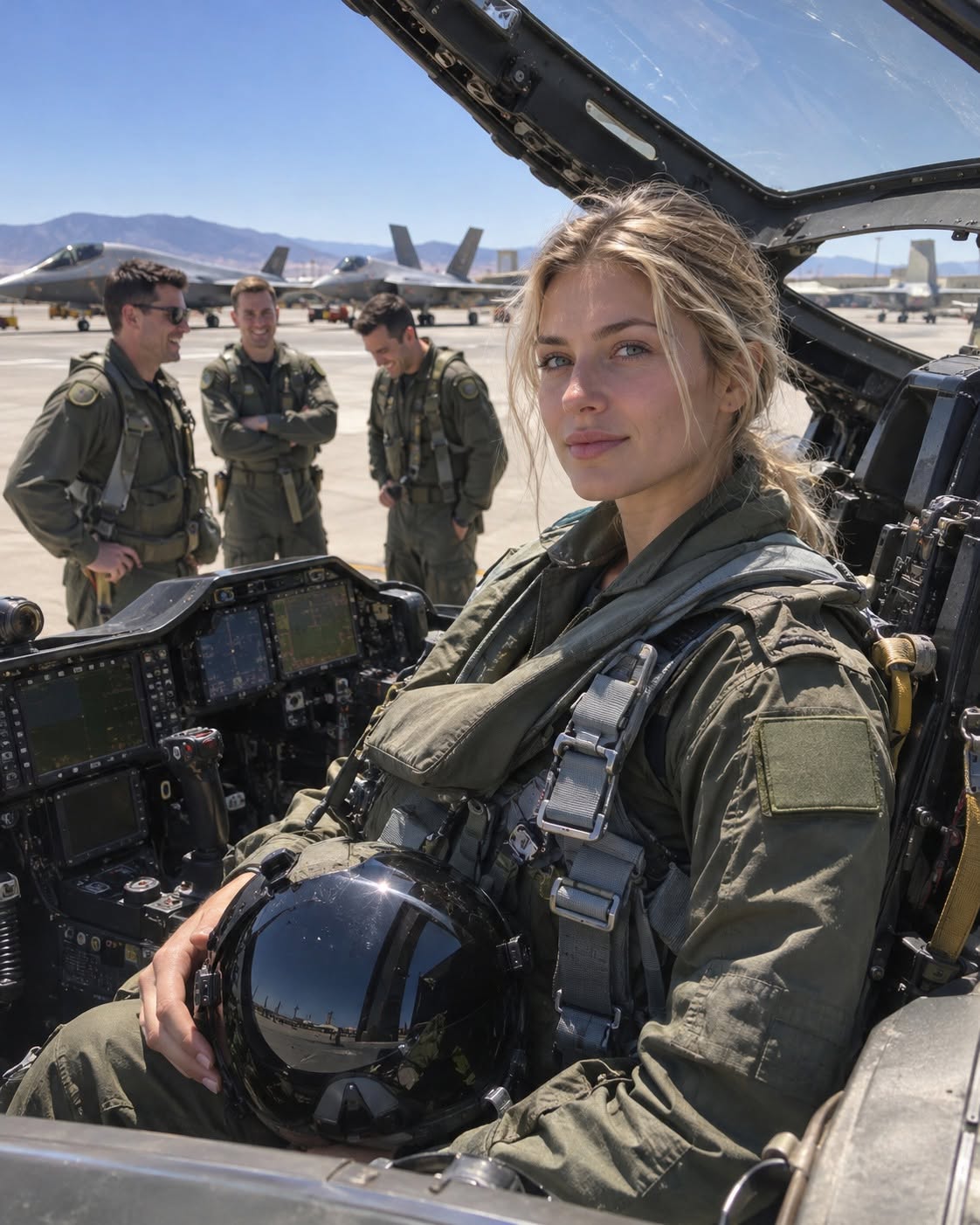
I turned around.
It was the man from row seven.
He was standing near the ambulance, wrapped in a silver emergency blanket. His face was pale, and his eyes were red. A paramedic had apparently cleared him to leave, but he hadn’t gone anywhere.
“I know this isn’t the right time,” he said, “but I need to tell you something.”
I removed my headset.
“What’s wrong?”
He swallowed.
“My name is Richard. I’m a cardiac surgeon. I’ve spent thirty years saving people, and today I couldn’t even keep myself conscious.”
He glanced toward the aircraft.
“When I first sat beside you, I thought you were just another nervous passenger. I laughed at your hands shaking. I even made a joke about you being afraid of flying.”
He lowered his eyes.
“Then I woke up in the hospital and learned that the person I had mocked was the only reason I was still alive.”
I didn’t know what to say.
He reached into his jacket and pulled out a small folded piece of paper.
“My daughter gave me this before I boarded. She’s studying to become a pilot. I used to tell her it was too dangerous, that she should choose something safer.”
He looked at me.
“After today, I don’t think I’ll ever tell her what she can or cannot become again.”
I accepted the paper.
It was a child’s drawing of an airplane, with three figures standing beneath it. One was clearly meant to be Richard. The other two were probably his wife and daughter.
At the bottom, in uneven handwriting, were the words:
Daddy, fly safely. Come home.
Richard wiped his eyes.
“I want to apologize properly. Not because you saved my life, but because I judged you without knowing what you were carrying.”
I handed the drawing back.
“You don’t owe me anything. Just go home to your daughter.”
He nodded, then walked toward the ambulance.
I watched him disappear into the crowd.
For the first time that day, I realized something.
Perhaps the hardest part of surviving an emergency wasn’t getting everyone safely to the ground.
Perhaps it was learning how to live with what happened afterward.
And I wasn’t sure I was ready for that.
Three days later, I was sitting in a small hotel room overlooking the airport.
My phone had barely stopped ringing since the incident.
News channels were reporting that a passenger aircraft had experienced a catastrophic cabin depressurization after a failure in its environmental control system. Investigators were examining a chain of technical malfunctions that had prevented the pilots from responding in time.
The aircraft manufacturer had already issued a preliminary statement.
The airline had promised a full investigation.
And my name had somehow become part of the story.
One headline read:
FORMER MILITARY PILOT SAVES 186 PASSENGERS AFTER BOTH CAPTAINS LOSE CONSCIOUSNESS.
Another said:
THE WOMAN WHO REFUSED TO FLY AGAIN BECOMES THE HERO OF FLIGHT 728.
I hated that last one.
They made it sound as though I had been waiting for an opportunity to prove something.
The truth was much less heroic.
I had been terrified.
I had nearly passed out.
And when I first saw the cockpit controls, my mind had filled with memories I had spent years trying to escape.
I turned off the television.
There was a knock at the door.
Daniel stood outside holding two cups of coffee.
“Thought you might need one.”
“I don’t drink coffee anymore.”
“Since when?”
“Since I started associating it with emergency landings.”
He laughed and handed me the cup anyway.
We sat by the window.
For several minutes, neither of us spoke.
Finally, Daniel placed a folder on the table.
“Here’s the proposal.”
I opened it.
The organization was called the International Aviation Emergency Response Initiative. It was a joint program involving former military aviators, commercial flight instructors, medical specialists, and aviation safety investigators.
Its mission was to improve emergency preparedness in civilian aviation.
Daniel had already written my name on the first page.
Director of Flight Operations Training.
I closed the folder.
“You’ve already decided for me.”
“No. I’ve given you something to consider.”
“Why me?”
He leaned back.
“Do you remember the night before our final deployment?”
I nodded reluctantly.
We had been stationed at an air base overseas. A violent storm was moving across the region, and our squadron had been preparing for a difficult mission.
Daniel had been the newest pilot then.
He had been so nervous that he couldn’t sleep.
I had sat beside him in the hangar until sunrise, explaining that courage wasn’t the absence of fear.
It was knowing what mattered more than your fear.
“You told me something that night,” he said.
“What?”
“You said a pilot’s greatest responsibility wasn’t to be fearless. It was to make sure nobody else paid the price for his fear.”
I stared into my coffee.
“I remember.”
“You taught me that. Then, when you needed someone to remind you, nobody was there.”
His voice softened.
“I’m here now.”
I looked away.
The folder remained between us.
And for the first time, I considered that accepting the position might not mean returning to the life I had lost.
It might mean building something entirely different.
The following morning, I visited the hospital.
Most of the passengers from Flight 728 had been discharged, but several remained under observation.
The captain was recovering.
His name was Michael Harris, a man in his late fifties who had spent nearly three decades flying commercial aircraft.
When I entered his room, he was sitting upright, reading a newspaper.
He looked up and smiled weakly.
“Well, look who decided to visit.”
“I wanted to see how you were doing.”
“Better than I deserve, apparently.”
I pulled a chair beside his bed.
For a moment, he looked at me without speaking.
Then his expression changed.
“I owe you more than an apology.”
“You don’t owe me anything.”
“I was responsible for those passengers. I was supposed to keep them safe.”
“You were unconscious. You couldn’t have known what was happening.”
He shook his head.
“That’s not what bothers me.”
He folded the newspaper.
“Before we took off, I received a maintenance notification about an intermittent pressure-control warning. The ground team said the system had been checked and cleared. I accepted their assessment.”
I listened carefully.
“After the incident, investigators told me the warning had appeared on earlier flights, too. It wasn’t treated as seriously as it should have been.”
He looked toward the window.
“If that warning had been properly investigated, we might never have taken off.”
A cold feeling settled in my stomach.
“Are they investigating the maintenance records?”
“They are. But there’s something else.”
He reached into the drawer beside his bed and removed a small envelope.
“Someone sent this to me yesterday. It was addressed to the flight crew.”
Inside was a handwritten note.
Some failures are accidents. Others happen because people are afraid to report the truth.
There was no signature.
I read it twice.
“Who sent this?”
“I don’t know.”
I returned the note.
Michael looked directly at me.
“I think what happened on that plane was bigger than one broken system.”
Two weeks passed.
I accepted Daniel’s offer, but only under one condition.
I wanted to investigate the entire chain of events surrounding Flight 728.
Not to assign blame prematurely, but to understand why multiple warnings had gone unanswered.
Daniel agreed.
My first assignment was to attend a safety review at the airline’s headquarters.
The room was filled with executives, engineers, investigators, and legal representatives.
A large screen displayed the aircraft’s maintenance history.
At first, everything looked ordinary.
Routine inspections.
Minor repairs.
Standard operational reports.
Then an engineer named Thomas Blake presented a series of pressure-control alerts recorded during the previous six months.
There were eleven.
Eleven separate warnings.
Every single one had been marked as resolved.
“Who signed off on these inspections?” I asked.
Thomas checked his notes.
“The maintenance supervisor at the regional facility.”
“Name?”
“Victor Hale.”
I recognized it.
Victor had been mentioned in the preliminary report.
He was a senior maintenance manager with an excellent professional reputation.
I requested the original inspection logs.
The legal representative immediately objected.
“Those documents are part of an ongoing internal review.”
“Then give them to the investigators,” I replied.
“We’re handling this through the appropriate channels.”
I leaned forward.
“With respect, 186 people nearly died. A woman is still recovering from complications. A flight attendant has permanent nerve damage in one hand. This isn’t a public relations problem.”
The room went quiet.
The chairman cleared his throat.
“Let’s remain professional.”
“I am being professional. I’m asking why eleven warnings were ignored.”
Nobody answered.
After the meeting, Thomas approached me in the hallway.
“There’s something you should know.”
He looked over his shoulder before continuing.
“I found discrepancies in the digital records. Some maintenance entries were modified after the inspections were supposedly completed.”
“Modified by whom?”
“I can’t prove that yet.”
“Can you show me?”
He hesitated.
“Not here.”
He gave me an address and asked me to meet him the following evening.
That night, I barely slept.
The old memories were returning, but something else had changed.
This time, I wasn’t afraid of what I might discover.
I was afraid of what might happen if nobody looked.
The following evening, I arrived at a small restaurant near the airport.
Thomas was already there.
He had brought a laptop and a thick envelope.
“I checked the records again,” he said.
He opened the laptop.
Several maintenance entries appeared on the screen.
Each had been digitally approved by Victor Hale.
But the approval timestamps were impossible.
Some had been entered before the inspections were completed.
Others had been changed days afterward.
“Someone falsified the records,” I said.
Thomas nodded.
“I think so.”
“Why would anyone risk doing that?”
He looked uncomfortable.
“Because the airline was facing pressure to keep its aircraft available. Every grounded plane cost money. Delays affected contracts, schedules, and bonuses.”
He opened another document.
“This is an internal message from the maintenance department.”
I read it.
The message instructed technicians to classify recurring pressure-system alerts as temporary sensor faults unless a complete system failure could be demonstrated.
My stomach tightened.
“That isn’t a technical judgment. That’s a business decision.”
“Exactly.”
I closed the laptop.
“We need to take this to the investigators.”
Thomas nodded, but he didn’t look relieved.
“There is one more thing.”
He slid a photograph across the table.
It showed a maintenance technician standing beside an aircraft component.
On the back was a handwritten date.
Three days before Flight 728.
“Who is he?”
“James Porter. He was the technician who first reported the pressure-control problem.”
“What happened to him?”
“He was dismissed for allegedly violating company procedure.”
I stared at the photograph.
“Where is he now?”
Thomas lowered his voice.
“He disappeared from the industry. But I found an address where he might be staying.”
I put the photograph in my bag.
The next morning, I would find James Porter.
But I had no idea that he had been waiting for someone to ask the right questions.
James lived in a small house outside the city.
When he opened the door, he looked at me with immediate suspicion.
“I don’t talk to reporters.”
“I’m not a reporter.”
“Then what do you want?”
I showed him the photograph.
His expression changed.
“Where did you get that?”
“From someone who believes you were telling the truth.”
He stared at me for several seconds before stepping aside.
His living room was modest. A stack of aviation manuals sat beside an old toolbox. On the wall hung a framed photograph of a younger man standing beside an aircraft engine.
James noticed me looking at it.
“My son,” he said quietly.
“Does he fly?”
“He wanted to. He was studying aircraft maintenance when he died.”
I didn’t ask how.
He poured two cups of tea and sat opposite me.
“Three months before Flight 728, I discovered that the aircraft’s pressure-control system was behaving unpredictably. I reported it immediately.”
“What did they tell you?”
“They told me it was a sensor issue.”
“Was it?”
“No.”
He opened a drawer and removed a notebook.
“I kept copies of every report I submitted. When they told me to sign off on repairs I hadn’t performed, I refused.”
He turned several pages.
“Then they accused me of falsifying my own records.”
I studied the handwritten entries.
There were dates, measurements, part numbers, and signatures.
It was detailed enough to warrant a serious investigation.
“Why didn’t you go public?”
He gave a bitter laugh.
“I tried. Nobody wanted to listen. The company had lawyers. I had a mortgage and a daughter in college.”
He looked down.
“Eventually, I lost my job. My wife left because she couldn’t stand watching me fight a battle I couldn’t win.”
His voice broke.
“I started thinking maybe I should have kept quiet.”
I understood more than he realized.
For years, I had also believed that staying silent was easier than facing what happened.
I closed the notebook gently.
“James, I need you to tell the investigators everything.”
He looked at me.
“And if they destroy what’s left of my life?”
I leaned forward.
“Then we’ll make sure they have to answer for what they did.”
He studied my face.
“Why are you doing this?”
I thought about the passengers.
The unconscious pilots.
The man who had laughed at my shaking hands.
And the years I had spent hiding from my own memories.
“Because I know what happens when people convince themselves that silence is safer.”
Three days later, the investigation took a dramatic turn.
James submitted his records to the aviation safety authority.
Thomas provided the digital discrepancies.
The investigators secured the original maintenance database and began interviewing senior management.
Then Victor Hale resigned.
The airline announced that he was leaving for personal reasons.
Nobody believed it.
Within a week, the company suspended several maintenance executives.
The investigation also revealed that the pressure-control problem had been linked to an improperly installed valve assembly. Repeated sensor alerts had been dismissed, and critical records had been altered.
The incident had not been caused by one person’s mistake.
It had been the result of a system that rewarded keeping aircraft in service while discouraging people from reporting problems.
The airline eventually grounded several aircraft for inspection.
A formal inquiry followed.
James was cleared of the allegations against him and offered his job back.
He refused.
Instead, he accepted a position with our new aviation safety initiative.
When I told him we needed someone to train technicians to recognize and report dangerous faults, he smiled for the first time.
“Funny,” he said. “I spent years trying to make someone listen. Now you’re asking me to teach people how to speak.”
I shook his hand.
“That’s exactly why we need you.”
But the investigation wasn’t the only thing changing my life.
Daniel had been quietly arranging something else.
One afternoon, he invited me to an old military airfield.
I assumed he wanted to discuss the training program.
Instead, I found three familiar faces waiting beside a hangar.
Former members of my squadron.
People I hadn’t seen in years.
And standing at the center was Daniel.
“Welcome back, Lullaby.”
I stopped walking.
The word struck me harder than I expected.
One of the men stepped forward.
It was Marcus Bell, our former squadron commander.
He was older now, his hair almost completely gray, but his eyes were unmistakable.
“It’s been too long,” he said.
I tried to smile.
“I didn’t think you’d remember me.”
He laughed.
“Remember you? You once landed a damaged aircraft in weather that had three senior instructors refusing to fly.”
“That was a long time ago.”
“It was yesterday to some of us.”
He led me into the hangar.
Inside stood an old training aircraft.
Its silver fuselage reflected the afternoon sunlight.
I recognized the model immediately.
It was the type of aircraft I had flown during my military career.
I stopped beside it.
For several seconds, I couldn’t move.
The last time I had seen one up close, I had been standing on a runway after the worst day of my life.
A training mission had gone wrong.
My aircraft had suffered a mechanical failure during a difficult maneuver. I had managed to eject, but another pilot flying behind me hadn’t been as fortunate.
His name was Andrew Collins.
He had been my closest friend.
I had spent years believing that if I had made a different decision, he might have survived.
The official investigation had found that the mechanical failure was the primary cause.
There had been no disciplinary action against me.
But that hadn’t stopped the guilt.
I had left the military shortly afterward.
I had stopped flying.
And eventually, I had stopped talking to the people who reminded me of that life.
Marcus stood beside me.
“I know what you’re thinking.”
I swallowed.
“You don’t know what I’m thinking.”
“I know you’re still blaming yourself for Andrew.”
My eyes burned.
He continued quietly.
“We all lost him. But none of us ever believed you were responsible.”
I looked at him.
“Then why didn’t anyone tell me?”
“We did. You weren’t ready to hear it.”
He reached into his jacket and produced a small envelope.
“Andrew left this with me before that final training exercise. He asked me to give it to you if anything ever happened.”
My hands began shaking again.
I opened the envelope.
Inside was a photograph of the two of us standing beside our aircraft.
On the back, Andrew had written:
For the pilot who always reminds me that the sky is bigger than our fear. Keep flying, Lullaby. The world needs people who know how to bring others home.
I read it once.
Then again.
And then I broke down.
I cried in front of people I had once flown alongside, people who had seen me confident, fearless, and capable of handling almost anything.
Nobody laughed.
Nobody told me to stop.
Daniel simply placed a hand on my shoulder.
For the first time in years, I allowed myself to grieve without turning that grief into punishment.
A month later, I stood before a group of new aviation emergency instructors.
The room contained military veterans, commercial pilots, engineers, and flight attendants.
Some had spent decades in aviation.
Others were just beginning.
I had prepared a speech, but when I stepped onto the stage, I put my notes aside.
“I want to tell you about a flight I recently took.”
I described the emergency.
The unconscious passengers.
The cockpit.
The fighter jets.
The moment I heard my old call sign over the radio.
Then I told them about the man in row seven.
“I was sitting beside someone who judged me because my hands were shaking. He assumed that fear meant weakness.”
I paused.
“But fear doesn’t tell you what a person is capable of. Sometimes, the person who looks the most frightened is the one who will stand up when everyone else needs help.”
I looked around the room.
“And sometimes, the person who appears confident is carrying a problem they haven’t told anyone about. That’s why we train. That’s why we listen. And that’s why we never ignore a warning simply because acknowledging it is inconvenient.”
A few people nodded.
I continued.
“Your job isn’t to be perfect. Your job is to prepare, communicate, question, and take responsibility. If something feels wrong, speak up. If you make a mistake, report it. And if someone beside you is struggling, don’t assume you understand their story.”
The room remained silent.
Then someone began clapping.
Within seconds, the entire room was on its feet.
I stepped away from the microphone.
For once, I didn’t feel like an impostor standing in a place where I didn’t belong.
I felt exactly where I was supposed to be.
Six months after Flight 728, our emergency response program conducted its first large-scale training exercise.
We invited airline crews, airport rescue teams, military pilots, and aviation engineers.
The simulation involved a passenger aircraft experiencing cabin depressurization while its crew struggled to maintain control.
We deliberately introduced conflicting information, equipment failures, and communication problems.
The goal wasn’t to make the exercise impossible.
It was to reveal weaknesses before real passengers ever had to face them.
During the final session, a young female pilot approached me.
Her name was Emily Carter.
She was twenty-four, recently certified, and visibly nervous.
“Ma’am, can I ask you something?”
“Of course.”
“Do you ever get scared when you fly?”
I smiled.
“Every now and then.”
She looked surprised.
“But you’re an instructor.”
“That doesn’t make me immune to fear.”
She hesitated.
“I thought good pilots weren’t supposed to be afraid.”
I leaned against the table.
“Let me tell you something, Emily. The most dangerous pilot isn’t necessarily the one who’s afraid. It’s the one who believes being afraid is unacceptable and hides it from everyone.”
She considered that.
“What if I freeze?”
“Then you rely on your training. You communicate. You ask for help. You take the next correct step.”
“And if I make a mistake?”
“You learn from it. You don’t pretend it never happened.”
She smiled slightly.
“I wish someone had told me that before my first solo flight.”
I laughed.
“Someone should have.”
Before she left, she turned around.
“Will you be watching tomorrow’s exercise?”
“I’ll be there.”
“Good. I think I’ll do better if I know you’re watching.”
After she walked away, I realized something important.
I had spent years believing my greatest contribution to aviation was the ability to control an aircraft.
But perhaps my real contribution was helping someone else believe they could do it.
The following morning, I received an unexpected message.
It was from Richard, the passenger who had once laughed at my shaking hands.
He had attached a photograph.
It showed him standing beside a young woman in a flight-training uniform.
His daughter.
Underneath the photograph, he had written:
You told me to go home to my daughter. I did. We had a long conversation. I apologized for discouraging her dream, and yesterday I watched her complete her first solo flight. She wants to become an airline pilot. I want you to know that I am now her biggest supporter.
A second message arrived.
She asked me to tell you something. She said that if a person can be afraid and still do something extraordinary, then maybe fear isn’t the opposite of courage.
I stared at the screen for a long time.
Then I saved the photograph.
It reminded me of the drawing Richard had shown me in the hospital.
The little airplane.
The three figures.
The words asking him to come home safely.
I wondered whether his daughter knew how close she had come to losing her father.
I wondered whether he understood how close I had come to losing myself.
And I wondered how many lives had been changed by a flight that nearly ended in tragedy.
One year after the incident, the aviation authority released its final report.
It confirmed that Flight 728 had experienced a serious cabin pressurization failure caused by a defective valve assembly and inadequate maintenance procedures.
The report also identified failures in recordkeeping, safety oversight, and the handling of repeated technical warnings.
Several executives faced legal consequences.
The airline introduced mandatory reporting procedures, independent maintenance audits, and stricter aircraft grounding requirements.
More importantly, the new regulations protected technicians and crew members who reported safety concerns in good faith.
James attended the public hearing.
He sat in the front row, holding the same notebook he had carried for years.
When the chairman formally acknowledged his earlier warnings, James lowered his head.
I watched him wipe away a tear.
After the hearing, he approached me.
“They finally listened,” he said.
“Yes.”
He looked at the notebook.
“I used to think I had wasted my life fighting this.”
“You didn’t.”
He smiled sadly.
“No. I suppose I didn’t.”
Then he handed me the notebook.
I looked confused.
“Why are you giving me this?”
“Because you taught me something. Evidence matters, but so does having someone willing to stand beside you when telling the truth becomes difficult.”
I accepted it.
“I’ll keep it safe.”
He shook his head.
“Don’t keep it safe. Use it to teach the next generation.”
That evening, Daniel called me.
“There’s something happening tomorrow morning,” he said.
“What?”
“I think you should come to the airfield.”
“Daniel, you know I have a training session.”
“Move it.”
“What’s going on?”
He laughed.
“Just trust me.”
I arrived shortly before sunrise.
The airfield was quiet.
A thin layer of mist hovered above the runway, and the first sunlight was beginning to touch the hangar roofs.
Daniel was waiting beside a small aircraft.
Not the military trainer from before.
A civilian training aircraft.
“You’re late,” he said.
“It’s six in the morning.”
“Exactly.”
I looked at the aircraft.
Then at him.
“No.”
He smiled.
“I haven’t even asked yet.”
“I know what you’re thinking.”
“Do you?”
“You want me to fly.”
He nodded.
I shook my head.
“Daniel, I can teach. I can coordinate. I can run the program. But I don’t know if I can get back into a cockpit.”
He didn’t argue.
Instead, he opened the passenger door.
“Then don’t fly.”
I stared at him.
“What?”
“Just sit inside. No pressure. No engine. No takeoff. Just sit in the cockpit and remember what it feels like.”
I considered walking away.
But something inside me wanted to try.
I climbed into the aircraft.
The smell of aviation fuel, leather, and metal filled the cabin.
My heartbeat accelerated.
My palms became damp.
For a moment, I was back in that old cockpit, hearing Andrew’s voice over the radio.
I closed my eyes.
Daniel remained beside me.
“You’re safe,” he said.
I nodded.
I touched the control stick.
Then the instrument panel.
Nothing moved.
Nothing went wrong.
The sky outside was turning gold.
I took a slow breath.
“Can we start the engine?”
Daniel looked at me carefully.
“Are you sure?”
“No,” I admitted. “But I want to try.”
He smiled.
“That’s enough.”
We completed the necessary preflight checks with an instructor present. I didn’t attempt anything beyond the agreed training exercise.
When the engine finally started, the familiar vibration traveled through the seat.
My hands shook.
But this time, I didn’t pull away.
We taxied slowly toward the practice area.
I kept my eyes on the instruments.
Daniel’s voice came through the headset.
“Whenever you’re ready.”
I placed my hands on the controls.
For several seconds, I couldn’t speak.
Then I said two words.
“I’m ready.”
The aircraft accelerated.
The wheels left the ground.
And the sky opened in front of me.
I didn’t feel fearless.
I didn’t suddenly forget Andrew.
I didn’t become the person I had been twenty years earlier.
But I was flying.
And that was enough.
We returned to the airfield after a short training circuit.
As the aircraft slowed to a stop, Daniel turned toward me.
“How was it?”
I removed my headset.
“Terrifying.”
He laughed.
“Anything else?”
I looked through the windshield at the runway.
“Beautiful.”
He nodded.
“Welcome back.”
I smiled.
“I’m not sure I’m back.”
“Then we’ll call it a beginning.”
When I stepped out of the aircraft, I noticed a small group of people standing near the hangar.
Emily was there.
James was there.
Marcus and several former squadron members had also come.
And standing beside them was Richard, accompanied by his daughter.
She was wearing her flight-training uniform.
Richard waved.
His daughter approached me.
“I’m Sarah,” she said. “My dad told me everything about Flight 728.”
I smiled.
“I heard you’ve been flying.”
She nodded excitedly.
“I passed my first solo assessment.”
“Congratulations.”
She hesitated before asking, “Can I ask you something?”
“Of course.”
“When you were sitting beside my dad, were you really afraid?”
I glanced at Daniel.
Then at the aircraft.
“Yes,” I answered. “I was more afraid than I’ve ever been willing to admit.”
“But you still went into the cockpit.”
“Because people needed help.”
She looked down at her hands.
“Sometimes I get scared that I’ll never be good enough.”
I placed a hand on her shoulder.
“Don’t waste your life trying to become someone who never feels fear. Become someone who knows what to do when fear arrives.”
She smiled.
“I’ll remember that.”
Richard stepped forward.
“I also brought something for you.”
He handed me a small frame.
Inside was the original drawing his daughter had made before Flight 728.
The little airplane.
The three figures.
The words:
Daddy, fly safely. Come home.
But something had been added beneath the original handwriting.
In smaller, more careful letters, Sarah had written:
And thank you to the woman who brought him home.
I couldn’t speak.
I hugged her.
Then I hugged Richard.
For a few moments, the airfield disappeared around us.
There were no headlines.
No investigators.
No emergency sirens.
Just people who had somehow found their way into one another’s lives because of a terrible day.
Later that afternoon, I returned to my office.
On the wall behind my desk hung two photographs.
One showed Andrew and me beside our military aircraft.
The other showed the passengers and crew of Flight 728 standing together after the incident.
Between them was a small handwritten note:
Fear is a warning, not a verdict.
I sat down and opened the notebook James had given me.
Its pages contained years of observations, technical reports, and unanswered questions.
I began writing a new training manual.
Not just about aircraft systems.
Not just about emergency procedures.
I wanted to include the things that rarely appeared in official aviation textbooks.
How to recognize when someone is too afraid to speak.
How to challenge a decision made by someone more powerful than you.
How to admit when you don’t know the answer.
How to keep going after a mistake.
And how to forgive yourself when the past refuses to let go.
My phone rang.
It was Daniel.
“Lullaby?”
“I’m listening.”
“We have a new group of trainees arriving next week. Think you can handle them?”
I smiled.
“Only if you promise not to let them get too comfortable.”
He laughed.
“I’ll see what I can do.”
After we hung up, I looked once more at Andrew’s photograph.
For years, I had thought moving forward meant forgetting him.
I had been wrong.
Moving forward meant carrying the memory without allowing it to control every decision I made.
I couldn’t change what happened during that military mission.
I couldn’t undo the fear I had carried for years.
And I couldn’t guarantee that every emergency would end safely.
But I could make sure the next generation had better training, stronger safety systems, and the courage to speak when something wasn’t right.
I could help someone else find their way through the darkness.
And perhaps that was the closest thing to redemption I would ever need.
A few weeks later, I was teaching a new class when a young trainee raised his hand.
“Ma’am, what do you think separates a great pilot from an ordinary one?”
I considered the question.
“Experience helps. Technical knowledge matters. Discipline is essential. But none of those things means much if you can’t accept responsibility.”
He nodded.
I continued.
“A great pilot isn’t someone who never makes mistakes. It’s someone who understands the consequences of those mistakes, learns from them, and never allows pride to put other people’s lives at risk.”
The trainee wrote something in his notebook.
Then another student raised her hand.
“What about fear?”
I smiled.
“Fear is part of the job. The important thing is not to let it make your decisions for you.”
I walked toward the window.
Outside, a passenger aircraft was climbing into the morning sky.
For a moment, I remembered row seven.
The man who laughed.
The woman who collapsed.
The pilots who couldn’t respond.
The radio call.
And the voice that had brought me back from a life I thought was over.
I remembered how my hands had shaken when I reached for the controls.
I remembered how certain I had been that I would never fly again.
Then I looked at the trainees.
“There’s one more thing I want you to remember,” I said.
“Never judge someone by how they look in the middle of a crisis. You don’t know what they’ve survived, what they’re carrying, or what they’re capable of doing when someone needs them.”
The room became quiet.
I returned to the front of the classroom.
“Now, let’s get to work.”
Outside, the aircraft disappeared into the clouds.
And for the first time in many years, I watched it go without feeling that I had to run away.
Because I had finally understood something.
My past had not been the end of my story.
It had been the reason I could help write a better ending for someone else’s.
And if there was one thing I wanted every person who entered my classroom to remember, it was this:
Courage doesn’t mean your hands never shake. It means you don’t let them stop you from reaching for the lives that need you.