The maintenance worker walked into my boardroom without permission, placed a stack of yellowed blueprints on the table
The decision I made that afternoon would determine more than the future of a $180 million renovation. It would determine whether Farrell Properties Group became a company that protected its reputation or one that finally deserved its reputation.
I looked at Noah.
“I’m not asking you to take responsibility for everything that went wrong,” I said. “And I’m not asking you to fix this alone. But I want you involved in the independent review. I want you to help us understand what happened, what needs to be repaired, and what we may have overlooked.”
Noah studied me for several seconds.
“Who will have the final authority over the findings?”
“The independent engineering firm.”
“Will I be allowed to speak directly to them?”
“Yes.”
“Will my reports become part of the official investigation?”
“All eleven of them.”
He glanced toward Arthur.
“And if the investigation discovers that someone on this board knew about the problems?”
Arthur didn’t hesitate.
“Then that person will be investigated, too.”
For the first time, Noah seemed to consider that we might actually mean what we were saying.
“Then I’ll help,” he replied. “But I have one condition.”
“Name it,” I said.
“When this is over, don’t make this about me being some forgotten genius who saved the company. Make it about the people who work in that building every day. They’re the ones who deserve to know the truth.”
I nodded.
“Agreed.”
I thought that was the hardest decision I would make.
I was wrong.
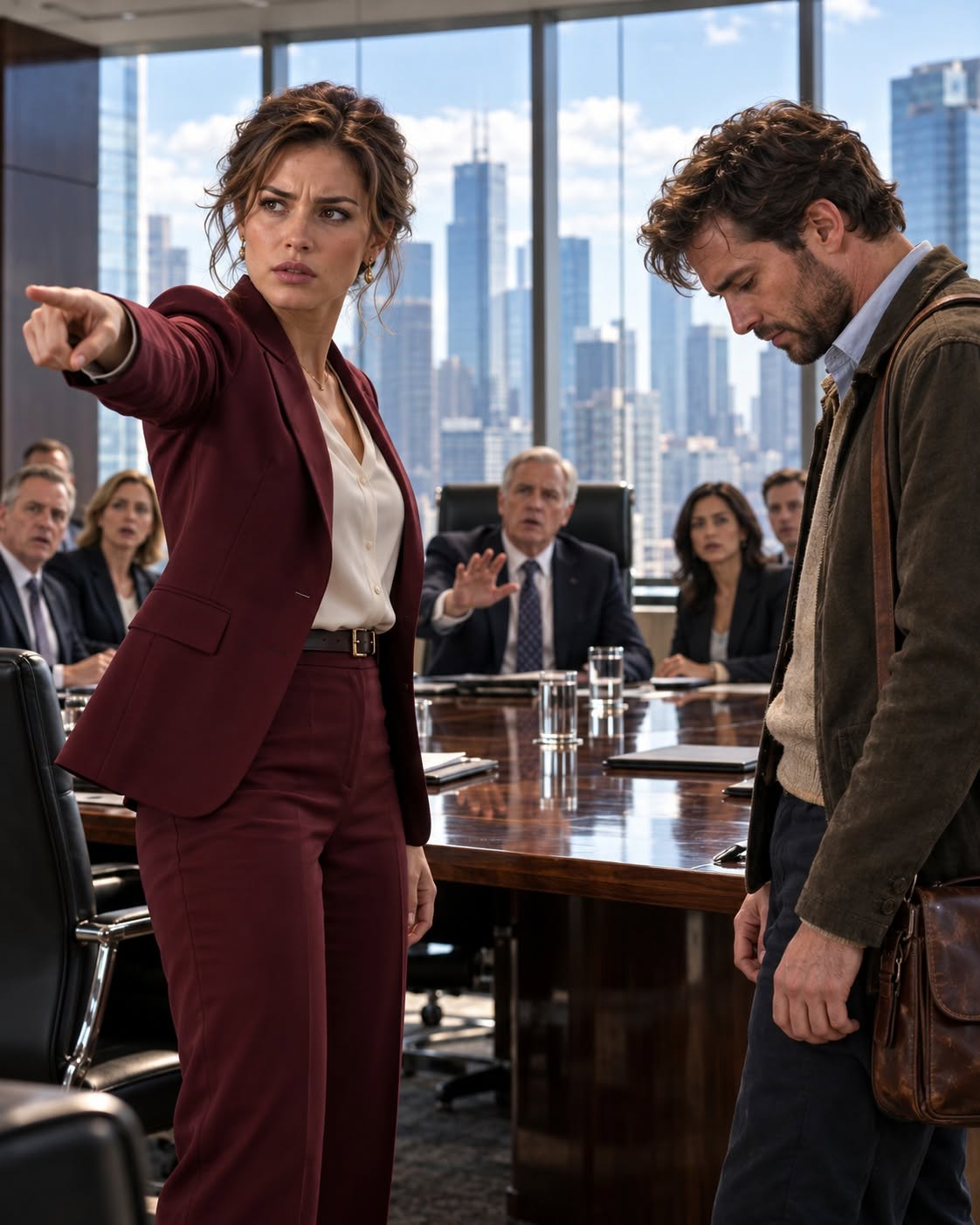
The following morning, I announced that the entire renovation had been suspended indefinitely. We hired an independent structural engineering firm with no previous relationship with Farrell Properties Group. The firm was instructed to report directly to the board’s audit and risk committees, not to me, not to Arthur, and certainly not to anyone from Victor’s former development team.
We also notified the appropriate building authorities and arranged for an immediate safety assessment.
The announcement sent shock waves through the company.
Within hours, reporters were calling. Tenants wanted answers. Investors demanded explanations. Employees wondered whether they would still have jobs by the end of the month.
Our stock price dropped sharply.
A major tenant threatened to terminate its lease. Another demanded that we pay for temporary office space while the building was being assessed.
The board wanted to know how long the investigation would take and how much money we could potentially lose.
I had inherited a company worth hundreds of millions of dollars.
Now I was watching its reputation unravel in real time.
And every time I looked at the building’s towering glass exterior, I wondered how many people had walked through those doors trusting us to keep them safe.
On the third day of the investigation, the independent engineering team arrived.
Their lead investigator was a woman named Dr. Evelyn Brooks, a structural engineer with more than thirty years of experience in high-rise construction and forensic assessments.
She was professional, direct, and unimpressed by corporate titles.
When she met Noah, she initially assumed he was part of the maintenance staff assigned to escort her through the building.
Noah didn’t correct her.
Instead, he handed her a folder containing the original structural drawings, his eleven warnings, and a detailed comparison of the proposed renovation plans.
She spent nearly forty minutes examining the documents without saying much.
Then she looked up.
“Who prepared this analysis?”
“I did,” Noah replied.
Dr. Brooks studied him.
“You understand the original structural system?”
“I helped design it.”
She lowered the folder.
“You helped design it?”
“The original building. Thirty-one years ago.”
For a moment, she said nothing.
Then she pulled a chair closer to the table.
“Tell me everything.”
That conversation lasted almost three hours.
By the time it ended, Dr. Brooks had requested additional access to the building’s archived construction records and asked Noah to accompany her team during selected inspections.
Over the next two weeks, the investigation uncovered problems far more extensive than we had anticipated.
Several structural reinforcement components listed as completed in Victor’s progress reports had never been installed.
Certain connection plates specified in the renovation drawings were inadequate for the loads they were expected to carry.
And the proposed removal of the fire-rated shear wall had been approved without the engineering documentation required to demonstrate that an alternative safety system would meet the building’s original design requirements.
The team did not conclude that the entire skyscraper was on the verge of collapse. But they found enough deficiencies to justify serious concern, immediate restrictions, and a comprehensive remediation plan.
One finding was particularly disturbing.
A section of the building’s mechanical floor had undergone modifications that were not reflected in the official construction records.
The changes had been made during a previous phase of the renovation, and the contractor’s completion report claimed that all work had been inspected and approved.
But when Dr. Brooks compared the report with the physical structure, she found that the installed components did not match the approved specifications.
Noah examined the photographs.
Then he went quiet.
I had learned by then that his silence often meant he had noticed something important.
“What is it?” I asked.
He pointed to a connection detail on the photograph.
“This wasn’t an accident.”
Dr. Brooks leaned closer.
“Why do you say that?”
“Because whoever installed this knew exactly what the approved design required. They used a different component, but they positioned it so that someone reviewing the photographs from a distance might assume it was the correct one.”
He paused.
“Someone wanted the paperwork to look right without doing the work.”
That sentence changed the direction of the investigation.
Until then, we had been treating the missing work as a financial fraud involving false invoices and negligent oversight.
Now we had reason to investigate whether the physical construction itself had been deliberately altered to conceal noncompliance.
Arthur ordered the company to preserve every relevant record.
We turned over the financial documents, contractor communications, approval histories, and archived emails to the forensic investigators.
I also requested that Victor’s company devices and project records be secured according to legal and company procedures.
What we found over the next month was worse than anything I had imagined.
Victor had not acted alone.
Several project approvals had passed through multiple departments, and at least two employees had knowingly signed off on incomplete documentation.
One was a project manager who had worked directly under Victor.
The other was a senior procurement officer who had authorized payments to the consulting company registered under Victor’s brother-in-law.
The company had been billed for engineering assessments, structural modifications, and materials that could not be accounted for.
Some invoices described work that had never been performed.
Others included inflated quantities and duplicated charges.
The total amount under investigation eventually exceeded $3.4 million.
But the financial losses were only part of the story.
A more troubling discovery came from an email exchange recovered from Victor’s archived project account.
Nine months earlier, Noah had sent a detailed warning about the proposed shear wall removal.
Victor had forwarded the email to the project manager with a short instruction:
“Keep this out of the formal review. He is no longer part of engineering, and we don’t need another delay.”
The project manager had replied:
“Understood. I’ll make sure the updated documentation doesn’t include his comments.”
I read the exchange twice.
Then a third time.
I felt physically sick.
Noah had not simply been overlooked.
Someone had deliberately ensured that his warnings would never reach the people responsible for protecting the building.
When I showed him the email, he stared at the screen for a long time.
“I wondered,” he finally said.
“I’m sorry,” I replied.
He shook his head.
“Don’t apologize for what you haven’t done.”
“But I trusted Victor. I approved his budgets. I repeated his assurances to the board. I never asked why eleven reports from someone who knew this building were being ignored.”
Noah closed the folder.
“Then don’t make the same mistake again.”
I wanted to ask him why he had stayed.
Why he had continued working in the building after being ignored.
Why he had accepted a maintenance position when he had once been one of the engineers responsible for designing a 42-story skyscraper.
But I knew those questions were not mine to demand answers to.
Helen was the one who eventually told me more.
It happened late one evening when most of the offices had emptied.
She brought two cups of coffee into my temporary office and placed one beside my laptop.
“You should understand something about Noah,” she said.
“I know he designed the building.”
“That’s only part of it.”
She sat down.
“Thirty years ago, Noah was married to a woman named Claire. They had a little boy, Daniel. He was seven years old when he died in a car accident.”
I looked up.
Helen continued carefully.
“Noah had been driving. A truck crossed the center line during a storm. The accident wasn’t his fault, but he never stopped blaming himself.”
She explained that after Daniel’s death, Noah gradually withdrew from engineering. He left the profession, separated from his wife, and eventually lost the confidence to return to the work he had once loved.
For years, he took jobs that required little interaction with people. He repaired equipment, maintained facilities, and quietly solved problems most employees never noticed.
When he eventually joined Farrell Properties Group, he discovered that the building he had helped design was being renovated.
At first, he was simply curious.
Then he noticed the structural discrepancies.
He submitted his first report.
Nothing happened.
He submitted a second.
Then a third.
By the eleventh, he had stopped expecting anyone to respond.
“He could have walked away,” Helen said. “Nobody would have blamed him. He had already spent enough of his life feeling responsible for something he couldn’t control.”
I stared at the coffee.
“Why didn’t he?”
Helen looked toward the window.
“Because he knows what it feels like to lose someone. And he couldn’t bear the thought of another family receiving a phone call because people had decided that paperwork mattered more than human lives.”
I didn’t sleep much that night.
The next morning, I asked Noah if he would have lunch with me.
He agreed, although he looked slightly uncomfortable when I suggested we leave the building.
We went to a small restaurant across the street.
For the first twenty minutes, we discussed the investigation, the engineering review, and the schedule for the necessary repairs.
Then I put down my fork.
“Why did you keep trying?”
He looked at me.
“Helen told you about Daniel?”
“Yes.”
He was quiet for a moment.
“I used to believe that if I worked hard enough, I could make sure nothing bad ever happened to the people I loved.”
He looked out the window.
“After the accident, I realized how little control we actually have. But there are things we can prevent. There are warnings we can listen to. There are decisions we can make before someone gets hurt.”
He folded his napkin.
“I couldn’t save my son. But I could refuse to ignore something that might put someone else’s child in danger.”
I didn’t know what to say.
So I didn’t try to offer him a comforting speech.
I simply listened.
And for the first time since becoming CEO, I understood that some of the most important conversations in a company would never happen in a boardroom.
Six weeks after the emergency meeting, Dr. Brooks delivered her preliminary report.
The building required substantial remediation before the renovation could safely continue.
Several sections needed additional reinforcement. The improperly modified connections had to be replaced. The proposed shear wall removal had to be redesigned, and the fire protection system required a separate review.
The building would remain partially evacuated during the most intrusive work.
The additional costs were substantial.
Our original $180 million budget was no longer realistic.
The revised estimate approached $218 million, excluding certain potential legal claims and tenant relocation costs.
At the board meeting, the directors were furious.
One suggested we abandon the renovation entirely.
Another argued that we should sell the property and limit our exposure.
A third said the company couldn’t afford to spend another dollar until the investigation was finished.
I listened to every argument.
Then I placed a photograph on the table.
It showed a group of employees standing outside the building during the first day of the partial evacuation.
There were receptionists, cleaners, security guards, technicians, office workers, and contractors.
Ordinary people.
People who had never seen Victor’s blueprints or attended a single board meeting.
But they were the ones who would have faced the consequences if we had continued without investigating the warnings.
“We can debate the financial consequences all day,” I said. “But we cannot treat the safety of people inside our buildings as an optional expense.”
A director leaned back.
“That’s easy to say when it’s not your money.”
I looked at him.
“It is our money. And it was our responsibility before this scandal ever became public.”
The room fell silent.
I recommended that we proceed with the remediation under independent supervision, maintain appropriate evacuation restrictions, and establish a protected fund to cover necessary safety work and tenant support.
I also proposed that no executive involved in the original project would have authority over the investigation or the repair approvals.
The board approved the plan.
Not unanimously.
But enough.
The following week, the story broke publicly.
A local newspaper published an article titled, “Major Skyscraper Renovation Halted After Safety Concerns and Financial Irregularities.”
The article mentioned Victor, the missing engineering work, and the company’s investigation.
Within hours, the story was picked up by larger publications.
My phone wouldn’t stop ringing.
Some reporters wanted interviews.
Others wanted to know whether I had known about the problems before becoming CEO.
Investors wanted reassurance.
Employees wanted certainty.
Tenants wanted to know whether their offices were safe.
I held a press conference.
I could have blamed Victor.
I could have described myself as the new CEO who had inherited a disaster and acted decisively once the truth emerged.
That would have been an easy story to tell.
But it wouldn’t have been entirely honest.
So I stood in front of the cameras and said something different.
“We have discovered serious failures in our renovation process. We are investigating the individuals and systems responsible. But I want to be clear about one thing: the responsibility for protecting this building belongs to Farrell Properties Group. It does not disappear because one executive may have acted dishonestly.”
I explained that the renovation had been suspended, that independent engineers were conducting the assessment, and that the appropriate authorities had been informed.
Then I addressed the eleven reports.
“A maintenance employee raised repeated concerns about the project’s structural safety. Those concerns were not properly addressed. That failure is unacceptable. His job title should never have determined whether his warnings deserved to be heard.”
After the conference, one journalist approached me.
“Are you saying the company ignored a warning because it came from a maintenance worker?”
I paused.
“I’m saying we created an environment where that could happen. And we are responsible for changing it.”
That statement cost us some investor confidence in the short term.
But it also marked the beginning of something I had not expected.
People started coming forward.
Employees from different departments contacted the investigation team with information about previous projects, questionable approvals, and concerns they had been afraid to report.
Some had been ignored.
Others had been told to keep quiet.
A few admitted they had signed documents without checking the underlying work.
The investigation expanded beyond the flagship building.
We discovered weaknesses in the company’s project approval process and inconsistencies in several older development contracts.
Not every discrepancy involved fraud, but the pattern was serious enough to require a broader review.
Arthur called me into his office one afternoon.
He looked older than he had a month earlier.
“Your father would have been proud of the way you’ve handled this,” he said.
I looked at him.
“Would he?”
Arthur nodded.
“He trusted people. Sometimes too much. He believed that giving talented people responsibility was how a company grew.”
I waited.
“But he also believed that trust should never replace accountability.”
Arthur opened a drawer and removed an old photograph.
It showed my father standing in front of the building shortly after its completion.
Beside him was a much younger Noah, wearing a hard hat and holding a set of drawings.
I stared at the photograph.
“Why have I never seen this?”
“Your father kept it in his office. Noah was one of the engineers he respected most.”
Arthur turned the photograph over.
On the back, my father’s handwriting read:
Good buildings are built with concrete and steel. Good companies are built by people who care enough to tell the truth.
I felt my throat tighten.
“Did my father know what happened to Noah?”
Arthur nodded.
“He knew about Daniel. He offered Noah a position when he left engineering, but Noah declined. Later, when Noah applied for the maintenance role, your father approved it personally.”
“Why didn’t anyone tell me?”
“Because your father believed Noah deserved the dignity of choosing how much of his story he wanted to share.”
I looked again at the photograph.
For years, I had thought my father built Farrell Properties Group through ambition, negotiation, and financial discipline.
Now I was beginning to understand that his greatest achievement had been something less visible.
He had known that a company’s real strength was determined by the people it chose to value.
The next several months were difficult.
The remediation work moved slowly because Dr. Brooks refused to approve shortcuts.
Every structural component had to be verified.
Every contractor had to demonstrate that the work matched the approved specifications.
Every inspection was documented independently.
There were delays, disagreements, and several tense meetings with regulators.
One afternoon, a contractor complained that Noah was being too cautious.
“He’s holding up the entire schedule over a few details,” the man said.
Noah was standing nearby.
He didn’t respond.
I turned toward the contractor.
“Those details are the reason we’re doing this properly. If you cannot work under the approved safety requirements, we will find someone who can.”
The contractor stopped arguing.
Later, Noah approached me.
“You didn’t have to do that.”
“Yes, I did.”
He gave a small, almost reluctant smile.
“Then perhaps you’re learning.”
It was the closest thing to praise I had received from him.
But the biggest confrontation was still ahead.
Four months into the investigation, Victor’s legal team requested a meeting.
His lawyers argued that he had been unfairly blamed for decisions made by the broader project team.
They claimed that he had relied on professional certifications and contractor assurances, and that any errors were administrative rather than intentional.
They also suggested that Noah’s involvement created a conflict of interest because he had worked on the original design decades earlier.
The board asked me to attend the meeting.
Victor arrived looking different from the confident executive who had walked into the emergency boardroom.
His suit was still expensive, but his face appeared tired.
He avoided looking at me.
His lawyer began presenting their position.
Then Victor finally spoke.
“You have to understand something. Projects of this scale are complicated. Things get delegated. People make mistakes. I didn’t personally install every component.”
I looked at him.
“You personally approved payments for work that the independent engineers could not verify.”
“I relied on the reports.”
“You instructed your team to exclude Noah’s warnings from the formal review.”
He shifted in his chair.
“I was trying to keep the project moving.”
“You were trying to keep the board from asking questions.”
He said nothing.
Then I placed a printed copy of the email exchange on the table.
“Did you write this?”
His lawyer leaned toward him.
Victor looked down.
After several seconds, he admitted that he had.
But then he said something that surprised me.
“I wasn’t the only one who knew the project was in trouble.”
The room went still.
He claimed that an earlier internal review had identified discrepancies in the consulting invoices and questioned the structural modifications.
According to Victor, he had raised the issue with a member of the executive committee months before Noah entered the boardroom.
The executive, he alleged, had told him that the project was too important to delay and that the board expected results.
I immediately requested the name.
Victor looked at Arthur.
“Richard Coleman.”
Richard had been one of our longest-serving board members.
He had also been one of my father’s closest business associates.
For a moment, I couldn’t speak.
Richard had voted in favor of every major renovation decision.
He had publicly defended Victor during previous budget disputes.
And he had been the person who repeatedly told me that a successful CEO needed to learn when not to interfere with experienced executives.
Arthur’s expression hardened.
“Are you certain?”
Victor nodded.
“I have the emails.”
The meeting ended immediately.
Within forty-eight hours, the independent investigators obtained the correspondence.
Richard had indeed received a report about the questionable consulting payments months earlier.
He had responded by instructing Victor to resolve the matter quietly and avoid creating a delay that could affect the company’s financial reporting.
There was no evidence that Richard had personally received money from the consulting company.
But the documents established that he had knowingly allowed serious concerns to remain unresolved.
At the next board meeting, Richard resigned.
He released a statement describing his decision as an effort to protect the company’s stability.
I read it once and put it aside.
The company didn’t need another carefully worded explanation.
It needed accountability.
Victor and the other individuals involved became subjects of formal investigations. The company pursued recovery of the misappropriated funds and referred the relevant evidence to the appropriate authorities.
We also began reviewing our insurance coverage and legal options.
Nothing about the process was quick.
Nothing about it was simple.
But the truth was finally moving through the company instead of being buried beneath another layer of paperwork.
Six months after Noah first walked into my boardroom, the independent engineering team completed its principal remediation work.
The building had passed the required inspections for the areas approved for reoccupation, and the necessary regulatory clearances had been obtained.
The renovation continued under a new project director, with Dr. Brooks overseeing independent verification.
The final cost exceeded our original budget by more than $40 million.
Some investors never forgave us for the delays.
A few tenants chose not to renew their leases.
The company lost contracts and spent months repairing its reputation.
But no one had to pay for those failures with their life.
And that mattered more to me than any quarterly earnings report.
One morning, I arrived early and found Noah standing in the lobby.
He was looking up toward the ceiling, where sunlight reflected off the newly restored stonework.
“Everything all right?” I asked.
He nodded.
“Just remembering.”
“What?”
“The first time I walked into this building. Your father was standing right there.”
He pointed toward the entrance.
“He asked me whether I thought the structure would still be standing fifty years from then.”
“What did you tell him?”
“I told him that concrete and steel could last a long time, provided people respected what they were designed to do.”
He smiled faintly.
“He said that sounded like a very expensive way of telling him to hire good engineers.”
I laughed.
It was the first time I had heard Noah laugh.
Then he turned toward me.
“Your father cared about this place.”
“I know.”
“No. I mean he cared about the people who would never know his name. The cleaning staff. The security guards. The receptionists. The visitors. He understood that most people enter a building without thinking about what holds it up.”
He looked around the lobby.
“That’s the responsibility of the people who build them.”
I stood beside him for a moment.
Then I asked the question I had been thinking about for weeks.
“What do you want to do now?”
He looked surprised.
“What do you mean?”
“I’d like you to return to engineering, if that’s something you want. Not because we need someone to repair our reputation. Not because I want a good story for the newspapers. Because you have knowledge this company needs, and I believe you deserve the opportunity to use it.”
I explained that the board had approved the creation of a new independent structural safety office.
It would have direct access to the audit committee, authority to stop work when credible safety concerns arose, and protection against retaliation for employees who reported problems.
Noah would be offered the position of Senior Structural Safety Advisor, with responsibility for helping establish the department and mentoring younger engineers.
He listened without interrupting.
When I finished, he looked down at his hands.
“These hands have spent years fixing leaking pipes and broken equipment.”
“They’re still the hands that recognized a dangerous structural design.”
He shook his head.
“I don’t know if I can go back to being an engineer.”
“You don’t have to decide today.”
He looked at me.
“Why are you offering this to me?”
“Because you were right when everyone else was wrong.”
He considered that for a moment.
Then he said something I would remember for the rest of my career.
“Don’t hire me because I was right once. Build a system where the next person doesn’t have to be right eleven times before someone listens.”
I nodded.
“That is exactly what we’re going to do.”
He accepted the position three weeks later.
His first request was not for a larger office, a better parking space, or a new title on his business card.
He asked for a modest training room where maintenance employees, junior engineers, and project managers could meet regularly to discuss building safety.
He wanted to teach people how to recognize warning signs before they became emergencies.
We approved the room.
He named it the Daniel Parker Safety and Engineering Center.
When I asked why he had chosen his son’s name, he replied:
“Because I want something good to come from the pain. And because every person who learns to prevent an accident is protecting somebody’s child.”
The dedication ceremony took place on a quiet Friday morning.
Helen attended.
Arthur attended.
Dr. Brooks came with several members of her team.
A number of employees who had worked alongside Noah in maintenance stood near the entrance.
Noah was visibly uncomfortable when I invited him to speak.
He preferred drawings to microphones, and he told me so.
But eventually, he stepped forward.
He didn’t talk about the investigation or the money.
He didn’t mention Victor.
Instead, he spoke about the people who maintained buildings every day.
“The person who changes a light fixture might notice a crack nobody else sees. The cleaner might discover water leaking from a ceiling. The security guard might notice a door that no longer closes properly. The maintenance worker might hear a sound that wasn’t there yesterday.”
He paused.
“None of those people needs to be a structural engineer to recognize that something is wrong. But they need to know that somebody will listen when they speak.”
He looked around the room.
“A safe building isn’t created by one brilliant person. It’s created by hundreds of people who take their responsibilities seriously and are allowed to tell the truth.”
There was a long silence.
Then the room filled with applause.
I watched Noah return to his seat.
For years, he had been invisible to people who walked past him in the hallways.
Now the company was finally listening.
But I knew a ceremony and a new job title were not enough.
We had to change the way Farrell Properties Group operated.
Over the following year, we introduced several major reforms.
Every capital project received independent technical oversight.
Financial approvals were separated from project execution.
Contractors were required to provide verifiable documentation before payments could be released.
Employees at every level received access to a confidential reporting system.
Most importantly, we created a formal policy guaranteeing that credible safety concerns would be investigated regardless of the employee’s position.
The board also established quarterly safety reviews, with reports presented directly to directors rather than filtered through development executives.
Some managers complained that the new procedures slowed everything down.
I told them that if a project could only succeed by ignoring the people responsible for keeping it safe, then it wasn’t a successful project.
It was a disaster waiting for permission.
A year after the emergency board meeting, the flagship building was fully operational again.
The renovation had been completed under independent supervision.
The final inspection certificates were in place, the outstanding structural issues had been addressed, and the fire protection systems had been verified.
We held a small reopening event.
There were no extravagant speeches or expensive celebrations.
I wanted the day to belong to the people who had worked through the uncertainty.
The receptionists who had answered angry calls.
The maintenance crews who had kept the building functioning.
The engineers who had spent countless nights reviewing drawings.
The contractors who had returned to correct work that should never have been approved in the first place.
And the people who had spoken up when remaining silent would have been easier.
After the event, I found Noah standing near the main entrance.
He was holding the original blueprints.
They were no longer yellowed and folded at the edges. We had carefully restored them and placed a framed copy in the new safety center.
“Looks different now,” I said.
He nodded.
“Buildings change.”
“People too, apparently.”
He gave me a small smile.
Then he looked toward the upper floors.
“Do you remember the first day I walked into your boardroom?”
“I remember almost calling security.”
“I remember.”
“I owe you an apology for that.”
He shook his head.
“You were new. You were trying to prove yourself.”
“That doesn’t excuse it.”
“No,” he agreed. “But what matters is what you did after you realized you were wrong.”
I looked at him.
“Do you think my father would have made the same decision?”
Noah thought for a moment.
“I think your father would have wanted to make sure nobody had to walk into a boardroom eleven times before being heard.”
I smiled.
Then he added:
“And I think he would have been proud that you finally opened the door.”
We stood there for a while, watching people move through the lobby.
The building was full again.
People were laughing, talking, carrying coffee, hurrying to meetings, and living the ordinary lives that make a place feel alive.
None of them knew how close the company had come to making a terrible mistake.
Most would never know Noah’s name.
And that was fine.
He had never wanted to become a hero.
He had only wanted the building to be safe.
A few weeks later, I received a handwritten letter from him.
It was short.
He wrote that returning to engineering had been harder than he expected. Some days brought back memories he had spent years trying to avoid. Other days reminded him why he had loved the profession in the first place.
At the bottom, he had written:
I spent a long time believing that walking away from engineering meant I had lost the most important part of myself. I was wrong. The most important part was never my title. It was the reason I became an engineer in the first place: to protect people.
I kept the letter in the same drawer where I now kept the photograph of my father and the original building plans.
Sometimes, when the pressure of running the company became overwhelming, I would take them out and read those words again.
The following year, Farrell Properties Group received an industry award for its new building safety and accountability program.
During the ceremony, the organizers asked me to accept the award on behalf of the company.
I declined.
Instead, I asked them to invite Noah Parker to the stage.
He looked genuinely startled when his name was announced.
He walked slowly toward the microphone, wearing the same modest expression I remembered from the first day he entered my boardroom.
The audience applauded.
I watched him accept the award, and I thought about the difference between the person who had once been dismissed as a maintenance worker and the person now standing before hundreds of industry leaders.
But perhaps that was the wrong way to think about it.
He hadn’t become more valuable.
We had finally recognized the value that had been there all along.
After the ceremony, a young engineer approached him.
She told him she had recently started her career and had been struggling to speak up during project meetings because the senior managers often dismissed her concerns.
Noah listened.
Then he said something simple.
“Don’t confuse someone’s authority with their ability to be right.”
The young engineer nodded.
“And don’t stop asking questions,” he added. “But make sure you bring the evidence, understand the risks, and keep speaking up when something doesn’t make sense.”
I watched them talking.
And I realized that the most important thing we had recovered from the scandal wasn’t the money.
It wasn’t the building.
It wasn’t even the company’s reputation.
It was the willingness to listen.
That evening, I returned to my office and opened the photograph of my father standing beside Noah thirty-one years earlier.
For the first time, I noticed something I had overlooked before.
My father was looking directly at Noah, not at the camera.
He was listening to him.
I wondered how many times my father had made decisions that nobody applauded.
How many people he had supported without expecting recognition.
And how much of his success came from understanding that leadership was not about standing above everyone else.
It was about taking responsibility for the people who depended on you.
I used to believe that becoming CEO meant proving I could make decisions faster, negotiate harder, and command a room with confidence.
I thought leadership was something people recognized when you walked through the door.
But Noah taught me something very different.
Leadership begins when someone walks through that door whom nobody expects to hear.
And you choose to listen.
Today, the original yellowed blueprints still hang inside the Daniel Parker Safety and Engineering Center.
Beside them is a framed copy of Noah’s first warning report.
Not because we want to celebrate the mistakes that nearly destroyed the project.
But because we never want to forget how those mistakes were discovered.
There is also a small plaque beneath the documents.
It carries a sentence Noah suggested himself:
“The greatest danger is not always the problem nobody sees. Sometimes it is the warning everybody sees but nobody wants to hear.”
I visit that room whenever I can.
Sometimes I find Noah teaching young engineers how to read structural drawings.
Sometimes he’s sitting with maintenance workers, listening to their concerns about equipment or building conditions.
And sometimes he’s simply standing by the window, looking out over the city.
He never asks for special treatment.
He never reminds anyone that he designed the building.
He simply does the work.
As for me, I still make mistakes.
I still face difficult decisions.
I still have days when the board disagrees with me and investors question my judgment.
But I no longer measure my leadership by how many people agree with me.
I measure it by whether people feel safe enough to disagree.
Because the most dangerous person in a company isn’t necessarily the one who makes a mistake.
It’s the person who has enough power to make a mistake, enough influence to hide it, and enough confidence that nobody will dare challenge them.
And the most valuable person in the room isn’t necessarily the one with the biggest title.
Sometimes it’s the quiet person holding a stack of old blueprints, waiting for someone to finally listen.
I nearly had Noah Parker escorted out of my boardroom.
Instead, he helped me rebuild something far more important than a skyscraper.
He helped me rebuild the kind of company my father had always wanted Farrell Properties Group to become.
And every time I walk into that building, I remember one truth:
A company can survive losing millions of dollars. It can survive a delayed project, a damaged reputation, and even the departure of its most powerful executives. But when it stops listening to the people who are trying to protect it, it risks losing something money can never replace.
Trust.
And sometimes, all it takes to save that trust is one person brave enough to speak—and one leader humble enough to listen.