At 9:00 a.m., I was supposed to be interviewing for the most important job of my life. At 9:27, I arrived soaked, breathless
The first thing I learned about my new job at Sterling Dynamics was that a good deed could open a door.
The second thing I learned was that walking through that door could be much harder than opening it.
On my first Monday, I arrived twenty minutes early, wearing the same borrowed suit I’d worn to the interview I never got to attend. My shoes were polished, my tie was straight, and my new employee badge felt strangely heavy against my chest.
For the first time in years, I wasn’t exhausted before my day had even begun.
I had slept for seven uninterrupted hours.
I had eaten breakfast without calculating whether I could afford lunch.
And I had kissed Chloe goodbye that morning without promising her I’d try to be home before she fell asleep.
It felt like stepping into someone else’s life.
Then I entered the operations department and discovered that everyone already knew my story.
A few employees smiled at me with genuine warmth. Others looked at me with open curiosity. Two men near the coffee machine whispered until they noticed me approaching.
“That’s him,” one said.
“The guy who saved the CEO’s daughter.”
I pretended not to hear them.
Victoria Vance had hired me because she believed my judgment under pressure was worth more than a missed appointment. I intended to prove that belief had been justified.
But by lunchtime, I understood that not everyone agreed with her.
My direct supervisor was Daniel Mercer, Sterling Dynamics’ senior vice president of operations. He was a tall, impeccably dressed man in his early fifties who spoke in short sentences and seemed to consider every conversation an unnecessary interruption.
He had been with the company for fourteen years.
He had expected to oversee the new employee safety division himself.
Instead, Victoria had given the position to a warehouse worker he’d never heard of until the morning I rescued Maya.
When he shook my hand, his smile never reached his eyes.
“Quite a story you’ve got,” he said.
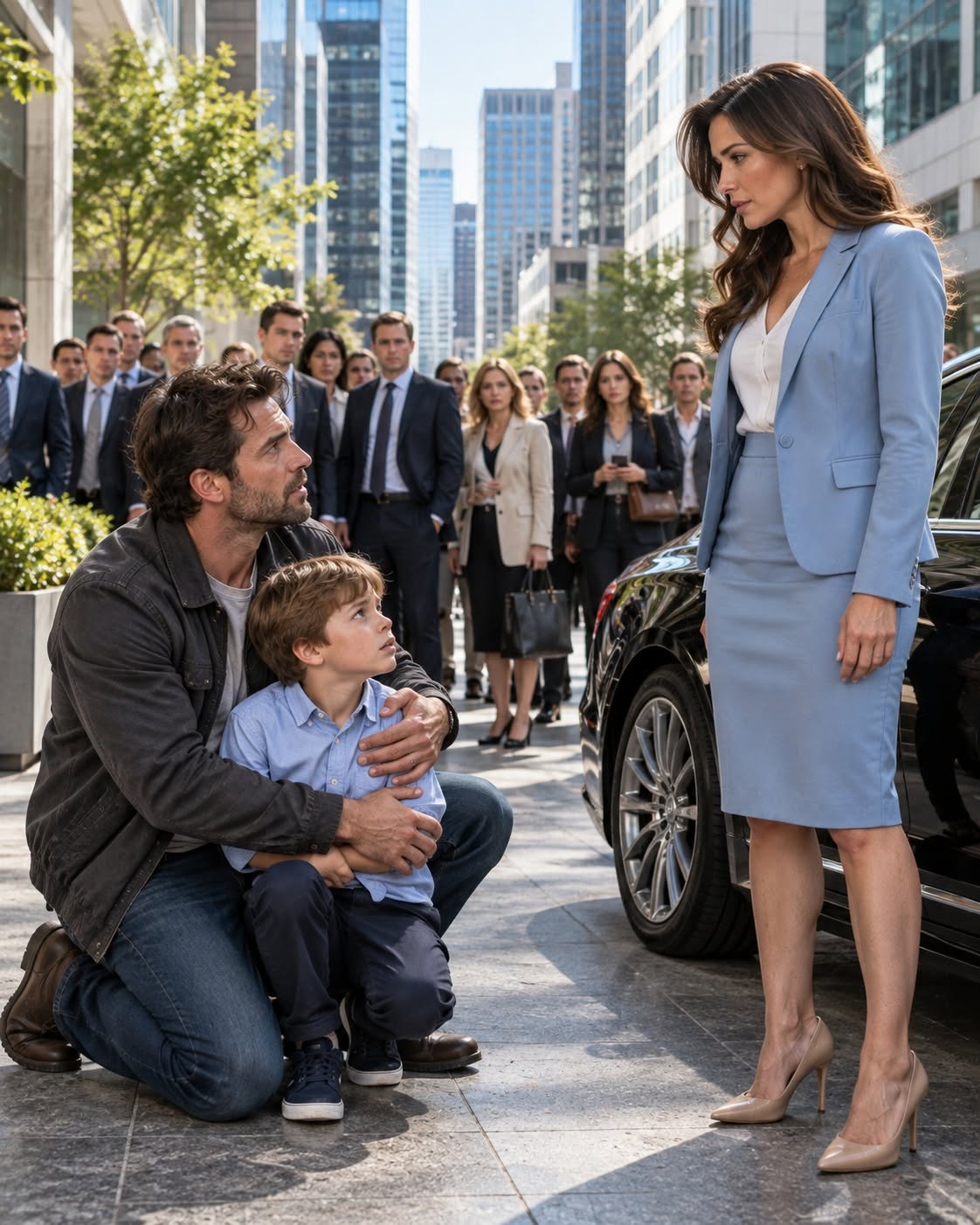
“I suppose so.”
“Stories are useful, Mr. Bennett. But they don’t run a company.”
“I agree.”
His eyebrows lifted slightly, perhaps because he’d expected me to defend myself.
“Good. Then you’ll understand why I expect results.”
“I wouldn’t want it any other way.”
He released my hand and gestured toward a stack of folders on his desk.
“Your first assignment is to review our safety procedures. All of them. I want a complete assessment by Friday.”
There were more than two hundred documents in the stack.
I glanced at the calendar. It was Monday.
“Is there a particular area you’d like me to prioritize?”
“Everything.”
He returned to his computer, making it clear that our conversation was over.
I carried the folders to my office and closed the door.
For a moment, I stood in silence.
Then I rolled up my sleeves and got to work.
I wasn’t going to let anyone convince me that I belonged there because of a lucky coincidence. I had eight years of experience, a lifetime of learning to adapt, and a daughter who believed her father could do almost anything.
That last thing mattered more than all the rest.
By Wednesday, I’d identified several outdated emergency procedures, inconsistent reporting requirements, and a confusing system for communicating hazards between departments.
On Thursday morning, I noticed something more troubling.
The company had recently expanded its distribution center, adding a second loading bay and increasing the number of delivery vehicles entering and leaving the property. Yet the emergency evacuation plan hadn’t been updated to account for the changes.
Worse, the pedestrian walkway behind the loading area crossed a vehicle route without a physical barrier.
A small sign warned drivers to slow down.
That was all.
I asked the facility manager why the walkway had been left that way.
He shrugged.
“We’ve been meaning to fix it.”
“How long?”
“Since the expansion.”
“That’s six months.”
He looked uncomfortable.
“Budget approval takes time.”
I walked the route myself. I watched employees carrying boxes pass within a few feet of reversing trucks. I listened to the warning alarms, which were difficult to hear over the machinery. I checked the emergency exits and discovered that one was partially blocked by stacked packaging materials.
Every problem seemed small enough to excuse on its own.
Together, they painted a frightening picture.
I submitted my preliminary findings to Daniel that afternoon.
He read the first page without changing his expression.
“You’re recommending physical barriers, revised traffic routes, additional alarms, and a temporary restriction on the loading bay.”
“Until the most dangerous crossings are corrected, yes.”
“That will disrupt operations.”
“Not as much as an accident would.”
He leaned back.
“Do you know how much it costs to shut down a loading bay for even half a day?”
“Less than a serious injury.”
His eyes hardened.
“You’re new here, Bennett. Don’t mistake a few weeks managing warehouse pallets for understanding a multinational operation.”
I felt the sting of the insult, but I kept my voice level.
“I’m not suggesting we stop operations indefinitely. I’m recommending that we correct a documented hazard before someone gets hurt.”
Daniel closed the folder.
“Submit your final report. I’ll decide what happens next.”
When I left his office, I knew he wasn’t going to make this easy.
That evening, I arrived home later than I’d promised Chloe.
She was sitting at the kitchen table with her homework spread in front of her. The moment she saw me, she looked at the clock.
“You said six.”
“I know, sweetheart. I’m sorry.”
“Did something happen?”
“Work got complicated.”
She studied my face with the serious expression she sometimes wore when she was trying to understand adult problems.
“Is your new job bad?”
The question caught me off guard.
“No. Not bad.”
“Then why do you look like you did when you worked nights?”
I sat beside her.
“Because sometimes having a good job means being responsible for things that aren’t easy.”
“Like paying bills?”
“Sometimes.”
She considered that.
“Or making sure people don’t get hurt?”
I looked at her.
“Exactly like that.”
She nodded, satisfied, and returned to her homework.
Then she pushed a small drawing toward me.
It showed a stick figure wearing a tie beside a huge building. Above the building, she’d written, MY DAD’S NEW JOB.
At the bottom, in crooked letters, were the words, HE HELPS PEOPLE.
I folded the paper carefully and slipped it into my work bag beside her original note.
I didn’t know it then, but I would need both reminders before the week was over.
On Friday morning, Sterling Dynamics held its quarterly operations meeting.
Victoria sat at the head of the conference table, with Daniel on her right and department directors arranged along both sides. I presented my findings, explaining the risks, the necessary corrections, and the steps we could take without bringing the entire facility to a standstill.
When I finished, the room remained quiet.
Victoria studied the report.
“How serious is the pedestrian crossing?”
“Serious enough that I wouldn’t allow my own child to use it.”
Her expression changed.
“And if we do nothing?”
“I can’t predict exactly when an accident might occur. But the current arrangement creates an avoidable risk every single day.”
Daniel cleared his throat.
“We should be careful not to overreact to theoretical possibilities. Every industrial facility has risks. The question is whether the proposed measures justify their expense.”
I turned toward him.
“The risk isn’t theoretical. The vehicles are moving. The employees are walking. The crossing is unprotected. We’re simply fortunate that nothing serious has happened yet.”
“Fortunate,” Daniel repeated. “An interesting word from someone whose entire career here began with a fortunate coincidence.”
A few people shifted in their chairs.
Victoria looked directly at him.
“Mr. Bennett’s appointment was based on my assessment of his qualifications.”
“Of course,” Daniel said smoothly. “I only want to ensure that we’re making decisions based on operational data rather than emotion.”
Victoria looked back at me.
“What would you do if this were your facility?”
“I’d redirect vehicle traffic immediately, close the unsafe crossing, and install temporary barriers. Then I’d authorize the permanent modifications while we review the rest of the emergency procedures.”
She was silent for several seconds.
“Approved. Begin today.”
Daniel’s jaw tightened.
Victoria continued.
“And I want a full review of every distribution site, not just this one.”
The meeting moved on, but I could feel Daniel’s resentment following me out of the room.
By the end of the day, temporary barriers were being installed, and the loading routes had been changed.
I went home tired, but for the first time since joining Sterling Dynamics, I felt that I had accomplished something that mattered.
I didn’t realize how quickly everything could unravel.
Three weeks later, on a rainy Tuesday afternoon, my phone rang while I was reviewing an emergency response plan.
It was the facility manager.
His voice was strained.
“There’s been an incident at the east distribution center.”
I stood up.
“What kind of incident?”
“A structural failure. Part of the upper storage rack collapsed. Several employees are injured, and one person is still unaccounted for.”
For a second, the room seemed to tilt.
“Have emergency services been called?”
“Yes. They’re on their way.”
“Evacuate the surrounding aisles. Stop all equipment movement. Keep everyone clear of the damaged racks, and don’t let anyone reenter until emergency responders say it’s safe.”
I grabbed my jacket and headed for the door.
The east distribution center was nearly forty minutes away.
I called Victoria on the way.
She answered immediately.
“I’ve heard,” she said. “I’m arranging transport to the site.”
“I’m already on my way.”
“Keep me informed.”
When I arrived, flashing lights illuminated the rain-soaked loading yard. Ambulances were parked near the entrance, and employees stood behind a temporary cordon, some crying, others staring at the building in stunned silence.
A paramedic was treating a man with a deep cut across his forehead.
Another employee sat on the pavement, clutching his injured wrist.
I found the facility manager near the entrance.
“Who is missing?”
“Elena Ruiz. Inventory coordinator. She was checking the upper storage section when it happened.”
“Where was the collapse?”
“Row D, near the back wall.”
I looked toward the damaged building.
The upper rack had buckled, sending boxes and metal components crashing onto the floor. A section of the structure leaned dangerously over the neighboring aisle.
“Has anyone checked the adjacent rows?”
“Emergency services are doing that now.”
“Good. Nobody goes back inside without authorization.”
I helped organize the employee headcount and worked with the emergency responders to identify the last confirmed locations of the workers who had been in the building.
Every minute felt unbearable.
Then a firefighter emerged from the damaged section.
“We’ve located the missing employee. She’s alive, but she’s trapped behind a fallen support beam.”
Elena was conscious, but part of the rack had pinned her leg. The responders were assessing the structure before attempting to reach her.
I wanted to run inside.
Instead, I forced myself to remain where I was and gave the team the information they needed: the layout of the storage rows, the locations of the heavier inventory, and the access routes that could avoid the unstable section.
The rescue took nearly an hour.
When Elena finally emerged on a stretcher, she was pale and trembling, but she was alive.
Her husband arrived just as the ambulance doors closed. He grabbed her hand and bent his head over it, unable to speak.
I turned away for a moment.
I knew that look. It was the face of someone who had come terrifyingly close to losing everything.
And I couldn’t stop thinking about the safety report I’d submitted three weeks earlier.
Because the rack failure wasn’t entirely unexpected.
During my review of the company’s facilities, I’d discovered that the east distribution center had postponed several structural inspections. I had flagged the issue and requested maintenance records, but the final assessment had not yet been completed.
Now someone had nearly died.
Victoria arrived shortly afterward, accompanied by two senior executives.
She listened as I explained what we knew.
“Do we know why the rack failed?” she asked.
“Not yet. We need the inspection records, maintenance history, and the original load specifications.”
“Get them.”
Daniel arrived twenty minutes later.
Unlike Victoria, he seemed more concerned about the growing crowd of employees than the injured workers.
“We need to control the narrative,” he told her. “The press will hear about this. We cannot afford speculation before the facts are established.”
Victoria looked at him coldly.
“Three employees are in hospital, and one nearly died. The facts are exactly what we need to establish.”
“Naturally. But we must protect the company from unnecessary liability.”
“We protect the company by protecting the people who work for it.”
Daniel fell silent.
The following morning, an internal review began.
I spent hours examining maintenance records, inspection reports, and purchase orders. Several documents showed that the damaged rack had been flagged for repairs months earlier.
The repairs had been delayed.
The stated reason was budget prioritization.
I followed the approval trail through the system until I reached a document that made my stomach tighten.
The maintenance funds had been reassigned to a different project.
The authorization carried Daniel Mercer’s approval.
I read the document twice, then checked the dates.
There was no ambiguity. He had signed off on delaying the repairs.
But the document alone didn’t explain whether he knew the rack was in immediate danger, or whether someone had deliberately concealed information from him.
I needed more than suspicion.
I requested the original inspection reports.
The facility manager sent them that afternoon.
One report contained a handwritten note from the structural inspector: RECOMMEND IMMEDIATE REPAIR. LOAD LIMIT MAY BE COMPROMISED.
Below it was a second note, entered three days later: TEMPORARY OPERATIONAL CONTROLS ACCEPTED PENDING BUDGET REVIEW.
The approval was attributed to Daniel.
I sat back in my chair.
This was no longer simply a question of poor judgment. Someone had received a clear warning and allowed employees to continue working beneath a potentially compromised structure.
I took the records directly to Victoria.
She read them in silence.
When she reached the second note, she placed the papers on her desk.
“Did Daniel know the rack could collapse?”
“The report indicates that he received a warning. We need to establish exactly what he was told and whether further information was withheld.”
Victoria’s face had gone pale with anger.
“Have you discussed this with him?”
“Not yet. I wanted you to see the original documents first.”
She nodded slowly.
“Good. Preserve everything. No one is to alter or remove any records. I’ll have our legal and compliance teams conduct an independent investigation.”
I hesitated.
“There’s something else.”
She looked up.
“The employees need to know we’re taking this seriously. They deserve honest answers, not just a statement from the communications department.”
Victoria studied me for a long moment.
“You’re right.”
That afternoon, she addressed the employees at the distribution center.
She didn’t hide behind technical language or blame the accident on bad luck. She acknowledged that the company had failed to identify and correct a serious hazard before someone was hurt.
She promised an independent investigation, medical support for the injured workers, and a review of safety procedures across every Sterling facility.
Most importantly, she promised that employees who reported safety concerns would be heard without fear of retaliation.
I watched from the back of the room.
For the first time, I understood that leadership wasn’t simply about making the right decision. It was about accepting responsibility when the right decision had been delayed, ignored, or never made at all.
The investigation continued for two weeks.
During that time, Daniel became increasingly hostile.
He questioned my qualifications in front of other managers, challenged my recommendations, and suggested that I was using the accident to build my reputation.
I documented every interaction and continued cooperating with the investigators.
Then, on a Thursday morning, he summoned me to his office.
A folder lay open on his desk.
“Sit down, Bennett.”
I remained standing.
“What is this about?”
He tapped the folder.
“Your conduct during the review has raised concerns.”
“What concerns?”
“Confidential documents have been circulated beyond their intended recipients. Your decisions have disrupted operations. Your recommendations have caused unnecessary expense.”
“Which documents have I circulated?”
He slid a printed email across the desk.
It appeared to show that I’d sent internal inspection records to an outside address.
I stared at it.
“I didn’t send this.”
“The system indicates otherwise.”
“Then the system needs to be examined. I have never sent these documents outside the company.”
Daniel folded his hands.
“You’re in a difficult position. A senior executive is under investigation, and you’re the person making the accusations. If you cooperate with me, perhaps we can resolve this quietly.”
There it was.
He wasn’t asking me to explain the evidence. He was offering me a way to make the problem disappear.
“What would cooperation mean?” I asked.
He leaned forward.
“You withdraw your concerns about the maintenance approvals. You acknowledge that the incident resulted from a breakdown in communication, not deliberate negligence. We move forward.”
“And the safety violations?”
“They’ll be addressed.”
“Will the employees be told what happened?”
“That depends on the investigation.”
I thought about Elena in the hospital. I thought about her husband standing in the rain, holding her hand as though the world might take her away if he let go.
Then I thought about Chloe’s drawing.
HE HELPS PEOPLE.
I placed the printed email back on the desk.
“I won’t withdraw a report supported by the evidence.”
Daniel’s expression hardened.
“Be careful, Bennett. You have a lot to lose.”
For a moment, I felt the old fear rising in my chest.
I had a daughter to support. A new job I couldn’t afford to lose. Bills that would not disappear simply because I had decided to stand on principle.
But I had learned something during those years at the warehouse.
Fear could tell you what was at stake.
It couldn’t tell you what was right.
“If telling the truth costs me this position,” I said, “then I’ll deal with that. But I won’t sign something I know is false.”
I left his office before he could answer.
That evening, I told Chloe that I might have a difficult week at work.
She was sitting on the living room floor, building a tower from colored blocks.
“Are you getting fired?”
“I don’t know.”
She considered this with surprising calm.
“Would we have to move?”
“Not immediately.”
“Would you go back to the warehouse?”
I sat beside her.
“Maybe. I hope not, but I could find another job if I had to.”
She was quiet for a moment.
Then she handed me a blue block.
“Put this one at the bottom.”
“Why?”
“Because the bottom has to be strong. Otherwise, everything falls over.”
I looked at the tower.
She was right. The smallest blocks at the bottom supported everything above them.
I smiled and placed the block where she’d pointed.
“That’s very good advice.”
“I’m nine,” she said matter-of-factly. “I know things.”
I laughed for the first time that day.
The next morning, I arrived at Sterling Dynamics to find a message from the company’s compliance director requesting an urgent meeting.
Victoria was there, along with the head of internal audit and an outside investigator.
On the table lay the original email logs, system access records, and copies of the inspection reports.
The investigator gestured toward an empty chair.
“Mr. Bennett, please sit down. We’ve completed the initial forensic review.”
My pulse quickened.
“What did you find?”
“The email attributed to your account was sent using a session associated with your credentials. However, the access logs indicate that the session originated from a different terminal.”
He turned a page.
“Your account was accessed from Mr. Mercer’s executive office shortly before the email was sent.”
Silence filled the room.
Victoria’s expression was unreadable.
The investigator continued.
“We have not reached a final conclusion regarding intent, but the available evidence contradicts the claim that you personally transmitted the documents. We are also examining the approval history surrounding the delayed rack repairs.”
Daniel had been called to the meeting but had not yet arrived.
When he entered, he looked at the documents, then at the people around the table.
For the first time since I’d met him, he appeared uncertain.
The investigator asked him to explain the access records and the maintenance approvals.
Daniel denied deliberately falsifying anything. He argued that the repairs had been postponed under financial pressure and that he had believed the temporary measures were sufficient.
When asked why he had not disclosed the original inspection warning during the first review, he said he had considered it an internal administrative matter.
Victoria listened without interrupting.
Finally, she spoke.
“Did you knowingly allow employees to work beneath a structure that had been identified as potentially unsafe?”
Daniel opened his mouth, then closed it.
“I believed the risk was manageable.”
“That wasn’t my question.”
He looked down at the papers.
“I approved the postponement.”
“And the email accusing Mr. Bennett?”
“I did not send it.”
The investigator pointed to the access logs.
“Your office terminal was used to access his account. We will need your full cooperation to establish who was responsible.”
Daniel’s face reddened.
“This is becoming a witch hunt.”
“No,” Victoria replied. “It is becoming an investigation.”
The meeting lasted another two hours.
By the end, Daniel had been placed on administrative leave pending the completion of the inquiry. The company also suspended several other approvals connected to the maintenance budget and commissioned independent structural inspections at every distribution site.
I walked out feeling neither triumphant nor relieved.
An employee had been injured. A family had endured a terrible week. Trust had been broken.
There was nothing to celebrate.
Three days later, I received a call from Elena Ruiz.
She was recovering at home, her leg supported by a brace, and her voice was still weak.
“I wanted to thank you,” she said.
“You don’t have to thank me.”
“Yes, I do. My husband told me you stayed until they found me. He said you helped the rescue team understand where I was.”
“I was just doing my job.”
“No,” she said gently. “You were doing more than that.”
I didn’t know what to say.
Then she added, “They told us the safety review you started led them to inspect the other racks. They found two more that needed immediate repairs.”
I closed my eyes.
Two more.
Two places where someone might have been standing when metal gave way.
“Are they fixing them?”
“Already started, according to the union representative.”
I thanked her for calling and sat quietly after we hung up.
I had spent years believing that doing a good job meant keeping things running, solving problems, and making sure nobody noticed how hard I was working.
Now I understood that sometimes the most important work was stopping something before it could happen.
The independent investigation took another month.
It confirmed that Daniel had approved the postponement of critical repairs despite receiving warnings about the rack’s condition. Investigators also found evidence that his office had been used to access my account and create the misleading email.
The company did not publicly speculate about his motives, but Daniel resigned before the disciplinary process concluded. The matter was referred to the appropriate authorities for further review.
Victoria never celebrated his departure.
Instead, she announced a company-wide safety initiative, increased funding for maintenance, and created a confidential reporting system that allowed employees to raise concerns directly with an independent compliance team.
She asked me to lead the initiative.
“I want you to build a system that doesn’t depend on one person being brave enough to speak up,” she told me. “It should be difficult for dangerous decisions to go unnoticed in the first place.”
I thought about that carefully.
“Then we need more than policies. We need to change what happens when someone raises a concern.”
“What do you suggest?”
“Every report should receive a documented response. Employees need to know who is responsible for addressing it, when action will be taken, and how they can escalate it if nothing happens. And no manager should be able to close a serious safety issue without independent verification.”
Victoria nodded.
“Build it.”
Over the following months, I worked with engineers, warehouse employees, supervisors, and safety specialists to create a system that gave people a voice before an incident became a tragedy.
We introduced mandatory inspections, improved emergency training, redesigned vehicle routes, and required managers to explain any decision to postpone critical maintenance.
We also began holding regular meetings where employees could speak directly to senior leadership without worrying that their concerns would damage their careers.
At first, attendance was low.
People had learned to keep their heads down.
Then an older maintenance worker named George stood up at one meeting and described a recurring electrical problem that had been ignored for weeks.
The issue was investigated and repaired within forty-eight hours.
At the next meeting, three more employees spoke.
By the end of the quarter, the meetings had become one of the most valuable parts of our safety program.
The numbers began to change, too.
Near-miss reports increased. Hazards were being identified earlier. Injuries requiring time away from work declined.
Someone from finance complained that the new system generated too much paperwork.
I showed them the cost of the emergency repairs we’d once postponed, the disruption caused by the rack collapse, and the time lost during the investigation.
Then I showed them the human cost that no spreadsheet could fully capture.
They stopped complaining about the paperwork.
Meanwhile, life at home changed in ways I hadn’t expected.
I bought a reliable used car, paid off two overdue bills, and started putting a little money into savings each month. Chloe no longer had to hear me say, “Maybe next time,” every time she asked about a school trip.
But the best change wasn’t financial.
It was time.
I began leaving work at a reasonable hour whenever I could. I attended Chloe’s school presentations, helped with science projects, and learned that nine-year-olds could turn a simple question about the moon into a forty-minute debate.
One Friday, she invited me to speak at her class about my job.
I nearly declined.
“What would I even talk about?” I asked her.
“Safety.”
“I’m not sure your classmates want to hear about safety procedures.”
“They do if you tell it properly.”
“Is that so?”
She nodded solemnly.
“Mrs. Parker said we should invite someone whose work helps other people.”
I couldn’t argue with that.
On the morning of the presentation, I stood in front of twenty-four children and explained how safety wasn’t just about hard hats, warning signs, or emergency exits.
“It’s about noticing when something might hurt someone,” I told them. “And then doing something about it, even if it’s inconvenient.”
A boy in the front row raised his hand.
“What if your boss tells you not to?”
The classroom grew quiet.
I thought of Daniel’s office, the misleading email, and the fear I’d felt when my new job had seemed to hang by a thread.
“Then you need to understand why the problem matters,” I said. “You should explain the danger clearly, ask for help when you need it, and keep speaking up through the proper channels. Doing the right thing isn’t always easy, but being afraid doesn’t make a dangerous situation less dangerous.”
Another child raised her hand.
“Have you ever saved someone’s life?”
I glanced at Chloe.
She was watching me with a smile that made me think of the little girl in the road and the truck that had thundered past.
“I once helped a child who was in danger,” I said. “But I don’t think that makes me special. What matters is remembering that the person who needs help is more important than whatever inconvenience helping might cause you.”
After the presentation, Mrs. Parker thanked me.
Chloe took my hand as we walked toward the school entrance.
“You were good,” she said.
“I was nervous.”
“I know.”
“How?”
“You kept touching your tie.”
I laughed.
Then she looked up at me.
“Dad?”
“Yes?”
“Do you think the little girl you saved remembers you?”
I considered the question.
“I don’t know, sweetheart. Maybe.”
“I hope she does.”
“Why?”
“Because then she’ll remember that somebody helped her when she was scared.”
I squeezed her hand.
“I hope she remembers that, too.”
A week later, I received an unexpected invitation from Victoria.
She wanted me to attend a small event celebrating the first year of the company’s new safety initiative. Several employees who had helped develop the program would be recognized, along with the emergency responders who had assisted during the warehouse incident.
I asked whether I could bring Chloe.
“Of course,” Victoria replied. “I’d like to see her again.”
The event was held in a bright conference room overlooking the city. Employees gathered around small tables while Victoria spoke about the importance of building a workplace where people could raise concerns without fear.
Then she invited me to the front.
I hadn’t prepared a speech, and I was perfectly happy to remain in my seat.
But as I stood beside her, I noticed a familiar face near the entrance.
An elderly woman was holding the hand of a little girl in a yellow dress.
Maya.
She was older by only a few months, but her expression was unmistakable. The moment she saw me, she tugged at her grandmother’s hand and hurried across the room.
“Daddy says you’re the man who saved me!”
She stopped in front of me, looking up with enormous eyes.
I knelt to meet her.
“How are you doing, Maya?”
“I’m good!” she said. “I don’t run into the road anymore.”
Her grandmother laughed softly, though her eyes were shining.
“We’ve talked about road safety every day since that morning.”
Maya reached into her little bag and pulled out a folded piece of paper.
“I made you something.”
She handed it to me.
It was a drawing of a man holding a little girl’s hand beside a road. A huge truck stood in the background, and the sun was drawn as a yellow circle in the corner.
At the top, in uneven letters, she’d written: THANK YOU FOR HELPING ME.
I stared at the drawing for a moment, unable to speak.
Then I thanked her and tucked it carefully into my jacket pocket.
Across the room, Victoria watched us with a quiet smile.
After the event, she approached me while Chloe was talking with Maya and her grandmother.
“Do you remember what I asked you the first night we met?” she said.
“Why I hadn’t told anyone what happened.”
“That’s right.”
“I remember.”
Victoria looked toward the girls.
“I’ve thought about your answer many times since then. I used to believe that good leadership was about finding exceptional people and putting them in positions where they could make a difference.”
“And now?”
“Now I think it’s about building a place where ordinary people can make the right decision without having to risk everything to do it.”
I nodded.
“That sounds like a better system.”
“It is. And you helped us build it.”
For a moment, neither of us spoke.
Then she said something I hadn’t expected.
“When I hired you, I thought I was giving you an opportunity. I didn’t realize how much you would change the way we work.”
“I didn’t realize that missing an interview would lead to all this.”
She smiled.
“Perhaps it was never really about the interview.”
I looked at Chloe, who was now showing Maya how to draw a cat.
“No,” I said. “I suppose it wasn’t.”
That evening, after the event, Chloe and I walked to the car beneath a sky turning orange at the edges.
She carried Maya’s drawing carefully, having asked permission to take a picture of it before we left. I carried her original note, which had remained in my work bag for nearly a year.
“Dad,” she said, “can I ask you something?”
“Anything.”
“If you could go back to that morning, knowing you would miss the interview, would you still save Maya?”
I stopped walking.
It was a simple question, but I wanted to answer it properly.
“Yes.”
“Even if Victoria had never offered you the job?”
“Yes.”
“Even if you had to keep working nights?”
I knelt beside her.
“Sweetheart, I would have been disappointed. I would have worried about our bills, and I probably would have spent a few nights wondering what might have happened if I’d made a different choice. I’m human. I would have felt all of that.”
She waited.
“But I would still have helped her. Because I don’t get to decide that another person’s life matters less just because I’m having a difficult day.”
Chloe looked down at her shoes.
“That’s what I thought you’d say.”
I smiled.
“Then why did you ask?”
“Because sometimes grown-ups say things are important, but I want to know if they’re still important when things get hard.”
Her words settled between us.
I thought about the warehouse years, the missed interview, the fear of losing my new position, and the decision to keep speaking up when doing so could have cost me everything.
“That’s a very good question,” I told her.
She slipped her hand into mine.
“I think I understand now.”
We continued toward the car.
For a long time, I’d measured my life by what I could provide: the rent paid on time, the lights that stayed on, the food in the refrigerator, and the small promises I could finally afford to keep.
Those things still mattered. They mattered enormously.
But I had learned that providing for Chloe meant more than making sure she had enough money.
It meant showing her what to do when fear and responsibility collided. It meant teaching her that a person’s worth wasn’t measured by their job title, salary, or the number of people who knew their name.
And it meant building a life in which kindness wasn’t something we practiced only when it was convenient.
A year earlier, I had stood in the lobby of Sterling Dynamics, soaked to the skin, watching an opportunity disappear behind a pair of glass doors.
I had believed that one missed interview might change the course of my daughter’s future.
In a way, it had.
But not because a CEO had rewarded me for saving her child, and not because the universe had promised to repay me for doing something good.
The real change began when I chose to help a frightened little girl without knowing whether anything would come of it.
Everything afterward—the job, the safety initiative, the people who were protected, the time I gained with Chloe—had grown from a decision I would have made even if nobody had ever noticed.
I still keep Chloe’s handwritten note in my work bag.
The paper has softened at the folds, and the ink has faded slightly, but I can still read every word.
You’re the hardest worker I know. You’re going to do great.
Beside it, I keep Maya’s drawing.
Two small pieces of paper from two little girls, reminding me of two things I never want to forget.
One reminds me why I work so hard.
The other reminds me what all that work is supposed to mean.
Sometimes life gives us opportunities we never expected. Sometimes it takes them away before we can even reach the door. And sometimes, in the middle of an ordinary morning, we face a choice that reveals far more about us than any interview ever could.
We cannot always control what happens after we make that choice.
We cannot guarantee that kindness will be rewarded, that honesty will protect our careers, or that doing the right thing will make our lives easier.
But we can decide who we want to be when the consequences arrive.
And if there’s one thing I hope Chloe remembers when she’s grown, it’s this:
Never let the fear of losing an opportunity convince you to abandon your humanity.
A job can change your circumstances. Money can give your family security. Success can open doors you never imagined walking through.
But character is what you carry when every door closes.
And sometimes, the most important thing you will ever do in your life is something nobody asked you to do, nobody promised to reward, and nobody may ever know about.
Do it anyway.
Because the measure of a good life isn’t how often the world gives you something in return.
It’s how faithfully you choose to give something of yourself when another human being needs you.