“You’ll have your own room, fair wages, and full control of my kitchen,” the rancher said. “But there’s one thing you should know before you accept.”
Walter unfolded the paper and placed it on the kitchen table.
“Seems our new cook forgot to mention why she left her last position.”
Nora recognized the handwriting immediately. It belonged to Mrs. Hensley, the owner of the boarding house where she had worked for nearly four years.
Daniel picked up the letter.
His eyes moved slowly across the page.
According to Mrs. Hensley, Nora had been dismissed for dishonesty, insubordination, and the suspected theft of household money.
Walter leaned against the doorway.
“Interesting coincidence, isn’t it? She arrives here, and suddenly she’s accusing honest men of stealing.”
Nora felt the familiar humiliation rising inside her.
She had experienced this before. Someone made an accusation, everyone believed it, and nobody bothered asking for her side of the story.
Daniel lowered the letter.
“Is this true?”
“No.”
“Were you dismissed?”
“I resigned after Mrs. Hensley refused to pay me three months of wages. She accused me of stealing when I threatened to report her.”
Walter laughed.
“Convenient explanation.”
Daniel turned toward him.
“How did you get this letter?”
Walter’s smile disappeared.
“I made some inquiries.”
“Before or after Nora discovered the missing supplies?”
The kitchen became painfully quiet.
Walter shifted his weight.
“I’m protecting your interests, boss.”
“Then bring me the delivery records tomorrow morning.”
“But—”
“That will be all.”
Walter left without another word.
Nora stared at Daniel, hardly believing what had just happened.
“You aren’t going to dismiss me?”
“Do you have any intention of stealing from me?”
“Of course not.”
“Then I suggest we finish examining these numbers.”
For several seconds, Nora couldn’t speak.
It was the first time an employer had given her the opportunity to defend herself without already deciding she was guilty.
She sat down again.
But neither of them noticed Walter standing beneath the kitchen window, listening to every word.
The following morning, Nora awoke before sunrise and discovered that the pantry door was open.
Two sacks of flour were missing.
So was the ledger.
She immediately went outside.
Fresh wagon tracks cut through the snow behind the storage building, leading toward the northern pasture.
Daniel found her examining them.
“What’s happened?”
“Someone is trying very hard to make me look incompetent.”
He crouched beside the tracks.
“These were made recently.”
“Then perhaps we should follow them.”
Daniel saddled two horses, and within minutes they were riding through the bitter morning cold.
Nora hadn’t ridden in years. Her father had taught her before his death, back when her family still owned a small farm in Nebraska.
She managed well enough, although the saddle was uncomfortable and the wind made her eyes water.
The tracks eventually disappeared near an abandoned equipment shed.
Daniel dismounted.
Inside, they found the missing flour.
But that wasn’t all.
Crates of coffee, barrels of salted pork, sacks of beans, and several boxes of canned peaches filled the building.
Nora approached one of the crates.
It carried the same merchant’s stamp she had seen on the ranch invoices.
“These are your missing supplies.”
Daniel’s expression hardened.
Someone had been hiding provisions less than two miles from his own house.
Then Nora noticed a wooden box beneath a pile of blankets.
Inside were several receipts and a small notebook.
She opened it.
The notebook contained dates, quantities, and payments from a merchant named Silas Crowe.
Daniel knew the name.
Crowe owned a trading establishment across the county line.
“He’s been buying stolen supplies,” Nora whispered.
Daniel took the notebook.
“Walter has worked for my family for seventeen years.”
Nora looked at him carefully.
“Sometimes knowing someone for a long time only means they’ve had longer to learn how to deceive you.”
A horse suddenly whinnied outside.
Daniel reached for his revolver.
By the time he stepped through the doorway, a rider was disappearing behind the distant trees.
Someone had followed them.
And whoever it was now knew what they had discovered.
When Daniel returned to the ranch, Walter was gone.
His horse was missing, along with his winter coat and personal belongings.
Daniel gathered the ranch hands.
“Until further notice, Samuel Reed will act as foreman.”
Several men exchanged uneasy glances.
Samuel, a quiet older cowboy with a gray beard, stepped forward.
“What happened to Walter?”
“He has some questions to answer.”
Daniel didn’t reveal everything.
He wanted the sheriff to examine the evidence before rumors spread.
Unfortunately, the weather had other plans.
By afternoon, dark clouds gathered above the mountains.
Samuel studied the sky.
“That’s going to be a bad one.”
Daniel sent two men to retrieve the hidden provisions.
They returned shortly before nightfall with a wagon loaded with food.
Nora supervised the unloading and carefully recorded every item.
For the first time since arriving, she felt the ranch might survive the winter comfortably.
Then she heard shouting from the barn.
One of the younger cowboys, eighteen-year-old Thomas Bell, came running toward the house.
“Mr. Hayes! Someone cut the harnesses!”
Daniel rushed outside.
Every spare wagon harness had been sliced apart. Two saddles were damaged, and the largest wagon had a broken wheel.
The destruction hadn’t happened accidentally.
Someone wanted to prevent them from leaving.
Daniel immediately ordered the men to secure the livestock and bring extra firewood inside.
Nora watched the snow begin falling.
“Do you think Walter did this?”
“I think Walter isn’t finished with us.”
By midnight, the blizzard had swallowed the ranch.
The wind screamed around the buildings, rattling windows and driving snow beneath the doors.
Nora remained awake, preparing bread and filling kettles with water.
Daniel entered the kitchen carrying another armful of wood.
“You’ve been working since before dawn.”
“So have you.”
He set the wood beside the stove.
For a moment, they stood together in the warm kitchen while the storm raged outside.
“Why did you really take this job?” he asked.
Nora dusted flour from her hands.
“Because I was tired of begging people to treat me decently.”
Daniel nodded slowly.
“My mother used to say that a person’s character is revealed by how they treat someone who cannot benefit them.”
“She sounds like a wise woman.”
“She was.”
His voice softened.
“She died six years ago. My father followed her the next winter. Walter helped keep this ranch running while I was grieving.”
Nora finally understood why the betrayal hurt him so deeply.
Walter hadn’t merely stolen food.
He had taken advantage of Daniel’s trust during the loneliest years of his life.
“His choices don’t make your kindness a mistake,” she said.
Daniel looked at her.
Before he could answer, someone began pounding on the front door.
Samuel entered, covered in snow.
“Boss, we’ve got trouble.”
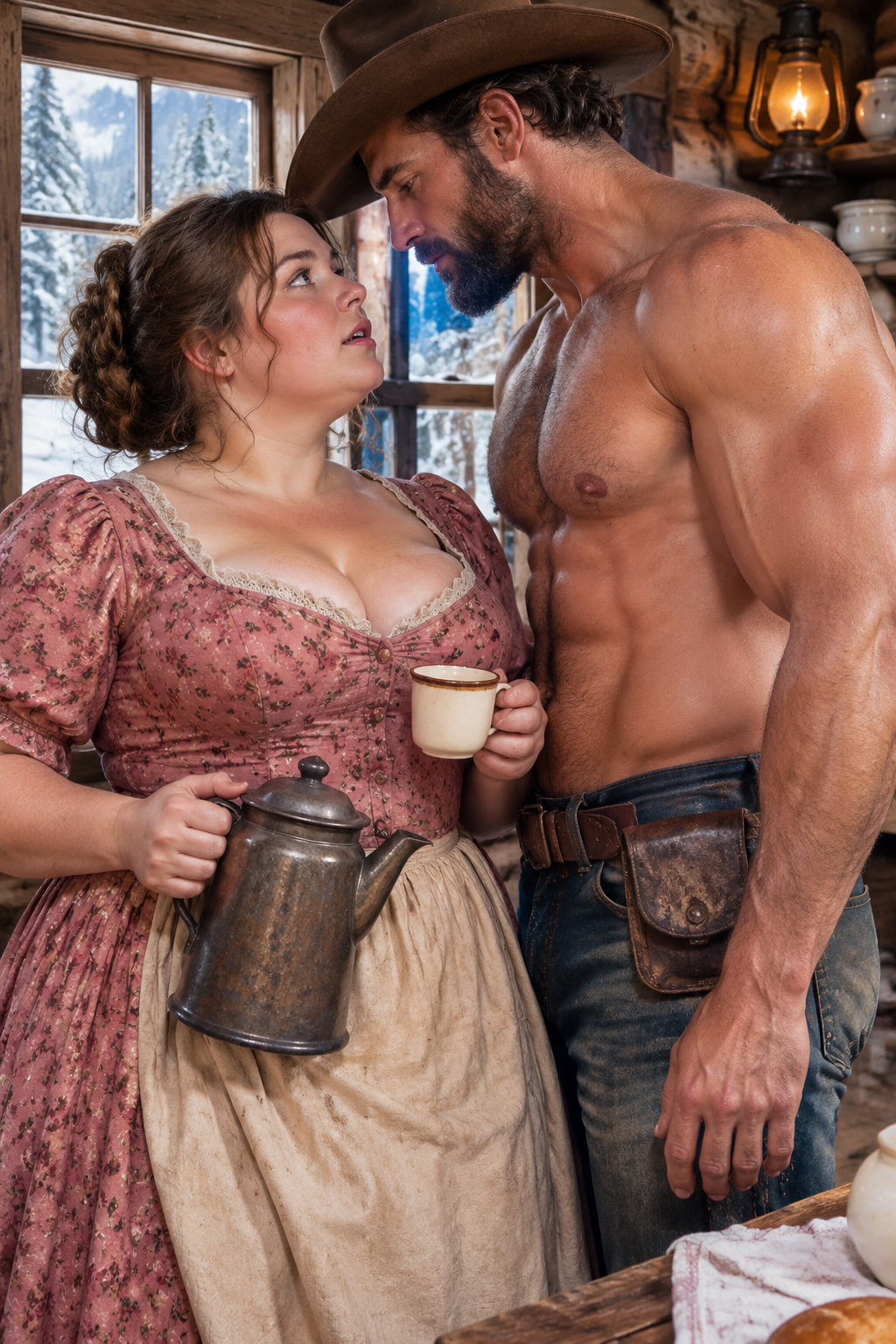
The northern cattle shelter had partially collapsed beneath the weight of the snow.
Several animals were trapped, and Thomas was missing.
Daniel grabbed his coat.
Nora immediately filled a flask with hot coffee and wrapped several blankets around her shoulders.
“I’m coming.”
“No. It’s too dangerous.”
“Then you’ll need someone who can help when you bring him back.”
Daniel hesitated before nodding.
They found Thomas nearly forty minutes later, pinned beneath a fallen beam.
His face was pale, and his left leg was badly injured.
Daniel and Samuel lifted the timber while Nora pulled the young man free.
Thomas cried out in pain.
“I’m sorry,” he gasped. “I was trying to save the calves.”
“You can apologize when you’re warm,” Nora told him.
Getting him back to the ranch was exhausting.
The snow reached Nora’s knees, and the wind threatened to knock her down.
Halfway to the house, Daniel slipped while carrying Thomas.
Nora caught the young man’s shoulders before he struck the ground.
Together, they managed to bring him inside.
She cleaned his wounds, immobilized his injured leg, and kept him warm while Daniel tended to the remaining cattle.
By morning, Thomas was sleeping peacefully.
Nora finally sat down.
Her hands trembled from exhaustion.
Daniel placed a cup of coffee before her.
“Those men owe you more than they realize.”
“They don’t owe me anything.”
“Thomas might disagree.”
For the first time, Daniel smiled at her.
It changed his entire face.
Nora quickly looked away, surprised by the warmth spreading through her chest.
Over the next four days, the storm refused to weaken.
Nora rationed the supplies carefully, making nourishing meals from simple ingredients.
The cowboys who had initially doubted her began asking what they could do to help.
One repaired pantry shelves.
Another carried water.
Even Samuel learned how to knead bread.
The kitchen became the heart of the ranch.
Then, on the fifth evening, a terrible discovery shattered their growing sense of safety.
Nora opened a recently recovered flour sack and noticed an unusual gray powder near the bottom.
She examined another sack.
The same powder was there.
“Daniel!”
He hurried inside.
Nora pointed toward the flour.
“Something has been mixed into these.”
Samuel examined the substance without touching it.
His expression changed.
“Looks like the rat poison we keep in the equipment shed.”
Daniel went completely still.
They immediately separated every recovered provision from the original supplies.
Three sacks of flour had been contaminated.
Fortunately, Nora hadn’t used any of them.
Daniel struck the table with his fist.
“He could have killed everyone here.”
Nora looked toward the dark window.
“Perhaps that was the intention.”
The realization frightened them both.
Walter had known that once the missing provisions were discovered, they would eventually be brought back to the kitchen.
He had prepared for that possibility.
But there was something else.
If Walter wanted to destroy the evidence against him, poisoning the ranch hands wasn’t his only option.
Nora suddenly remembered the notebook.
“Where are the receipts?”
“In my office.”
“Are they locked away?”
Daniel hurried down the hallway.
Moments later, Nora heard him curse.
The office window had been forced open.
The notebook and receipts were gone.
Someone had entered the ranch house during the storm.
Walter couldn’t have traveled far in such weather.
He had been hiding nearby.
And he was still watching them.
Daniel doubled the night guard.
Nobody was permitted outside alone.
For two days, nothing happened.
Then the storm finally began to weaken.
A faint patch of blue appeared above the mountains.
Samuel prepared to ride to town for the sheriff.
Before leaving, he entered the kitchen.
“Miss Whitfield, there’s something I should have told you sooner.”
Nora set down her knife.
“What is it?”
“Walter’s been selling more than food.”
Samuel explained that cattle had disappeared throughout the previous year.
Walter always blamed wolves, disease, or broken fences.
Samuel had suspected something but remained silent because Walter threatened to dismiss him.
“I’ve got a wife and three children,” he admitted. “Couldn’t afford to lose my wages.”
Nora understood that fear better than most people.
“Tell Daniel everything when you return with the sheriff.”
Samuel nodded.
“And Samuel?”
“Yes, ma’am?”
“Being afraid doesn’t make you a coward. Staying silent forever would be another matter.”
He left shortly afterward.
Daniel spent the afternoon inspecting the southern fences.
Nora was alone in the kitchen when she heard the back door open.
She assumed one of the cowboys had returned.
Then a familiar voice spoke behind her.
“You’ve caused quite a mess, haven’t you?”
Nora turned.
Walter stood beside the door, holding a revolver.
His beard was untrimmed, his clothes filthy, and his eyes filled with hatred.
“Where’s Daniel?” he demanded.
“Outside.”
Walter stepped closer.
“Seventeen years. That’s how long I worked for his family. And he chooses to believe some fat boarding house cook over me.”
Nora’s heart pounded.
But she refused to lower her eyes.
“He chose to believe the evidence.”
Walter grabbed her arm.
“You should have minded your own business.”
“The kitchen is my business.”
His grip tightened.
“Where’s the other notebook?”
Nora stared at him.
“What other notebook?”
“The one you copied the figures into.”
She realized Walter must have seen her writing at the kitchen table.
He believed she had copied the evidence before the original disappeared.
Fortunately, he was right.
Nora had spent an entire evening transferring every suspicious transaction into her personal account book.
It was hidden beneath a loose floorboard in her bedroom.
“You won’t find it,” she said.
Walter raised the revolver.
“Then you’ll tell me.”
A floorboard creaked in the hallway.
Walter spun around.
Daniel stood at the entrance, his expression terrifyingly calm.
“Take your hands off her.”
Walter pulled Nora against him and pointed the revolver toward Daniel.
“You should’ve stayed out of this, boy.”
Daniel’s eyes narrowed.
“You tried to poison my men.”
Walter laughed bitterly.
“I was trying to make sure your precious cook got blamed. Everything would’ve been fine if she’d kept her mouth shut.”
“You stole from my father, too, didn’t you?”
Walter’s silence answered the question.
Daniel looked devastated.
“My father trusted you with everything.”
“And your father paid me like a servant while he got rich.”
“He paid you more than any foreman in this county.”
“Not enough!”
Walter’s voice echoed through the house.
Nora noticed his attention had shifted entirely toward Daniel.
She also noticed the heavy iron skillet resting on the stove beside her.
Daniel slowly raised his hands.
“You can still walk away from this without killing anyone.”
Walter shook his head.
“Not anymore.”
He lifted the revolver.
Nora moved.
She seized the skillet and struck Walter’s wrist with all her strength.
The gun fired.
Daniel staggered backward.
Walter screamed and released Nora.
She struck his arm again, knocking the revolver onto the floor.
Daniel lunged forward despite the blood spreading across his shoulder.
The two men crashed against the kitchen table.
Walter fought desperately, overturning chairs and sending dishes shattering across the floor.
Nora grabbed the revolver.
“Stop!”
Walter froze.
Daniel forced him to the ground.
Two cowboys rushed inside after hearing the gunshot.
Within moments, Walter was restrained.
Nora dropped the weapon and hurried to Daniel.
Blood soaked his shirt.
“Sit down.”
“I’m fine.”
“You’re bleeding all over my clean kitchen.”
Despite the pain, Daniel laughed.
Then he collapsed into a chair.
Nora cut away the fabric and examined the wound.
The bullet had passed through the outer part of his shoulder.
She pressed clean cloth against it.
Daniel watched her pale face.
“Nora.”
“Don’t talk.”
“I’m all right.”
Her eyes filled with tears.
“You could have been killed.”
“So could you.”
She tightened the bandage.
Neither spoke for a long moment.
Then Daniel reached for her hand.
She let him hold it.
When Samuel returned the following afternoon, the sheriff accompanied him.
Walter was arrested, and Nora presented her account book.
The copied transactions, contaminated flour, damaged equipment, and testimony from the ranch hands provided overwhelming evidence.
Walter’s accomplice, Silas Crowe, was arrested several days later.
The investigation revealed that the men had stolen thousands of dollars’ worth of cattle and supplies over nearly three years.
Walter eventually confessed to most of the crimes.
But Nora had one final question.
“Why did Mrs. Hensley send that letter?”
The sheriff explained that Crowe was Mrs. Hensley’s brother.
Walter had learned about Nora’s former employment and asked Crowe to obtain something that would discredit her.
The accusation had been deliberately manufactured.
Mrs. Hensley was later forced to answer for withholding wages from several former employees.
When Nora received the money she was owed, she stared at the envelope for nearly an hour.
It wasn’t a fortune.
But it represented years of being told that her work didn’t matter.
Daniel found her sitting beside the kitchen window.
“What will you do with it?”
“Save it.”
“For something special?”
“For the freedom to leave anywhere I’m not respected.”
Daniel nodded.
“That’s a good reason.”
Winter slowly surrendered to spring.
Thomas recovered and returned to light duties.
Samuel became the permanent foreman, and the ranch prospered under his careful supervision.
Nora established a new system for ordering provisions.
Every delivery required two signatures, and every worker could report concerns without fear of dismissal.
Daniel adopted the same principles throughout the ranch.
But something else had changed between him and Nora.
He began joining her for coffee before breakfast.
Sometimes they talked about business.
Other mornings, they discussed their childhoods, their dreams, and the things they had lost.
One evening, Daniel asked her to walk with him.
The snow had melted from the lower pastures, and wildflowers were beginning to appear.
They stopped beside a wooden fence overlooking the valley.
“I’ve been thinking about building another house,” Daniel said.
“Is something wrong with the one you have?”
“No. I was thinking about building one for a family.”
Nora smiled faintly.
“Have you found someone willing to marry you?”
“I hope so.”
She looked at him.
Daniel removed his hat.
“Nora, I love you.”
The words caught her completely unprepared.
She turned toward the mountains.
“Daniel, you don’t have to marry me because I helped save your ranch.”
“That’s not why I’m asking.”
“People will talk.”
“People generally do.”
She swallowed hard.
“You could marry a beautiful woman from a wealthy family.”
Daniel stepped closer.
“I could marry someone I don’t love. But that seems like a remarkably foolish thing to do.”
Nora’s eyes filled with tears.
For years, she had believed that love was something reserved for women who looked different from her.
Daniel gently took her hands.
“I love your courage, your intelligence, your stubbornness, and the way you laugh when you think nobody’s listening. And I happen to think you’re beautiful.”
Nora finally looked at him.
“Are you certain?”
“More certain than I’ve ever been about anything.”
She smiled through her tears.
“Then yes.”
They married in early summer beneath a cottonwood tree near the ranch house.
Thomas carried the rings.
Samuel stood beside Daniel, and the ranch hands prepared a celebration that lasted well into the evening.
Nora wore a simple ivory dress she had purchased with her recovered wages.
She had never felt more beautiful.
Not because Daniel had chosen her, but because she had finally stopped measuring her worth through the eyes of people who had mistreated her.
In the years that followed, Nora and Daniel expanded the ranch and built a small schoolhouse for the workers’ children.
They hired women who had been dismissed elsewhere for reasons that had nothing to do with their abilities.
Every employee received a written agreement, fair wages, and the right to speak without fear.
One winter evening, nearly ten years after Nora first arrived, a frightened young woman appeared at their door seeking employment.
She wore a patched dress and carried everything she owned in a battered suitcase.
“I know I’m not much to look at,” the woman whispered. “But I’m a good worker.”
Nora invited her inside and placed a warm meal before her.
“Your appearance isn’t part of the employment agreement.”
The young woman stared at her.
“You really mean that?”
Nora smiled.
“Every word.”
Daniel watched from the doorway as his wife retrieved a fresh sheet of paper and began writing the terms of employment.
He remembered another winter, another agreement, and a woman who had arrived expecting nothing more than the chance to work honestly.
That woman had saved his ranch, exposed a dangerous betrayal, and taught him that loyalty meant little without integrity.
But Nora had learned something equally important.
She had spent years waiting for someone to recognize her value, never realizing that the cruelty of others had no power to determine it.
And now, in the warmth of a home filled with laughter, she was giving someone else the opportunity that had once changed her life.
Outside, snow began falling across the Wyoming countryside.
Inside, there was enough food, enough warmth, and room at the table for another person.
Daniel walked over and kissed Nora gently on the forehead.
“Best decision I ever made,” he whispered.
Nora looked around the kitchen, remembering the dirty dishes, the missing supplies, and the frightened woman she had once been.
Then she smiled.
“Mine too.”
Sometimes the greatest changes in life begin with something remarkably simple: the courage to demand respect, the willingness to recognize another person’s worth, and the decision to offer someone a chance when the rest of the world has turned them away.
For Nora Whitfield, that chance had become a life more beautiful than anything she had ever dared to imagine.
But the young woman who appeared at Nora’s door that winter was carrying more than a battered suitcase.
Her name was Clara Bennett, and she was twenty-two years old.
For the first three days, she barely spoke. She worked quietly, apologized whenever someone approached her, and seemed terrified of making even the smallest mistake.
Nora recognized that behavior.
It was the behavior of someone who had spent years being punished for things beyond her control.
On the fourth evening, Nora found Clara crying beside the pantry.
“What’s wrong, sweetheart?”
Clara quickly wiped her eyes.
“Nothing, Mrs. Hayes.”
Nora sat beside her.
“You don’t have to tell me. But you should know that nobody here will punish you for having a difficult day.”
Clara looked toward the kitchen door.
Then she whispered something that made Nora’s blood run cold.
“My father is coming for me.”
Nora learned that Clara’s father had arranged her marriage to a wealthy landowner nearly three times her age. When Clara refused, he threatened to lock her inside their house until she agreed.
She had escaped with seven dollars and the clothes in her suitcase.
“He told me nobody would ever help a disobedient daughter,” Clara whispered.
Nora reached for her hand.
“Your father was wrong.”
Two days later, a carriage arrived at the ranch.
A well-dressed man stepped out, accompanied by another gentleman and a deputy sheriff.
“I’m looking for my daughter,” he announced.
Daniel stepped onto the porch.
“Who might that be?”
“Clara Bennett. I understand your wife has been harboring her.”
Nora appeared beside Daniel.
“Clara works here.”
“She’s coming home.”
“That’s her decision.”
The man’s face darkened.
“You have no authority over my family.”
“And you have no authority over a grown woman who has chosen to leave your house.”
The deputy shifted uncomfortably.
“Mr. Bennett claims his daughter stole money before disappearing.”
Clara emerged from the kitchen.
Her face was pale, but she held a small envelope.
“I didn’t steal anything.”
Inside were letters from her late mother, along with documents showing that the money Clara had taken belonged to her.
Nora had encouraged her to keep every piece of evidence.
The deputy examined the papers.
After several minutes, he returned them.
“I’m afraid there’s no grounds for an arrest, Mr. Bennett.”
Clara’s father stared at his daughter.
“You’ll regret this.”
For the first time, Clara stood straight.
“I already regret spending so many years believing you.”
Her father climbed into his carriage without another word.
As it disappeared down the road, Clara began trembling.
Nora wrapped an arm around her shoulders.
“Being brave doesn’t mean you’re never frightened,” she said. “It means you refuse to let fear make every decision for you.”
Clara remained at the ranch.
Over the following years, she became an excellent bookkeeper and eventually managed the ranch’s financial records.
She purchased a small house in town with her own savings and married a kind carpenter who respected her independence.
At her wedding, she asked Nora to stand beside her in place of her mother.
Nora accepted with tears in her eyes.
Time continued moving.
The young cowboys became older men. Samuel retired, Thomas took his place as foreman, and the little schoolhouse grew until another classroom had to be built.
Daniel’s dark hair turned silver.
Nora’s hands became slower, but her kitchen remained the warmest place on the ranch.
Then, one autumn morning, Daniel collapsed while walking toward the barn.
The doctor arrived shortly before sunset.
His expression told Nora everything before he spoke.
Daniel’s heart was failing.
There was little anyone could do.
Nora remained beside him through the following weeks.
One evening, as golden sunlight entered their bedroom, Daniel asked her to open the drawer beside his bed.
Inside was a folded piece of paper.
Nora recognized it immediately.
It was the employment agreement he had given her all those years ago.
“You kept this?”
Daniel smiled weakly.
“Of course.”
She unfolded the yellowed paper.
Fair wages. Private quarters. Authority over kitchen supplies. No unpaid duties.
At the bottom were their signatures.
“I thought I was hiring a cook,” Daniel whispered.
Nora laughed through her tears.
“And I thought I was escaping a miserable boarding house.”
“Neither of us knew what we were getting.”
She gently kissed his hand.
“Something better than we expected.”
Daniel looked toward the window.
“Promise me something.”
“Anything.”
“Keep the door open for people who need a chance.”
Nora squeezed his hand.
“I promise.”
Daniel passed away peacefully three mornings later, with Nora sitting beside him.
The entire county seemed to mourn.
Former ranch hands traveled hundreds of miles to attend his funeral. Families brought flowers, letters, and photographs. Children who had learned to read in his schoolhouse returned as teachers, doctors, farmers, and parents.
Standing beside Daniel’s grave, Nora realized that their greatest achievement had never been the size of their ranch or the money they had earned.
It was the number of lives that had become better because they had chosen to care.
Although grief remained with her, Nora continued managing the ranch.
She established a fund to help struggling women find employment, housing, and education.
Clara helped administer it.
Thomas ensured that the ranch continued operating according to the principles Daniel and Nora had established.
Nobody was turned away because of their appearance, their poverty, or the mistakes others claimed they had made.
Years later, when Nora was nearly seventy, a little girl approached her during a Christmas celebration at the schoolhouse.
“Mrs. Hayes, my mother says you changed her life.”
Nora smiled.
“Your mother changed her own life, sweetheart. I merely opened a door.”
The girl considered this carefully.
“Then I’m going to open doors for people when I grow up.”
Nora felt tears gather in her eyes.
“That would make me very happy.”
That evening, she returned to the ranch house and sat beside the fireplace.
Above the mantel hung a photograph of Daniel.
She took the old employment agreement from its wooden frame and read it one final time.
She remembered the frightened twenty-seven-year-old woman who had once believed she was too large, too unwanted, and too insignificant to deserve happiness.
How terribly wrong that woman had been.
Nora had not needed to become thinner, prettier, wealthier, or quieter to earn a meaningful life.
She had simply needed the opportunity to become everything she was already capable of being.
She closed her eyes and smiled.
Outside, the first snow of winter covered the Wyoming mountains.
Inside, the kitchen was filled with the smell of fresh bread, the laughter of children, and the voices of people who had become her family.
Nora passed away peacefully the following spring.
She was buried beside Daniel beneath the cottonwood tree where they had exchanged their wedding vows.
At her request, their gravestone carried no mention of wealth, property, or accomplishments.
Instead, it bore a simple inscription:
“Here lie two people who believed everyone deserved a chance.”
The ranch remained in operation for generations.
And whenever a frightened stranger arrived seeking work, the people who managed it followed a tradition that had begun with a single employment agreement many years before.
They offered a warm meal, a place to sit, and the opportunity to prove themselves.
Because Nora Whitfield’s story had taught them something that no amount of money could buy.
A person’s worth is not determined by their appearance, their circumstances, or the cruel opinions of others.
Sometimes, all someone needs is one person willing to see beyond those things.
And sometimes, the kindness we offer a stranger becomes the beginning of a legacy that outlives us all.
THE END.